It was listed by Jason Clarke Antiques. Sold pieces stay on Sellingantiques as a record of what has passed through, and the next one is rarely far away.
Jason Clarke Antiques has dated this piece to the 1800s.
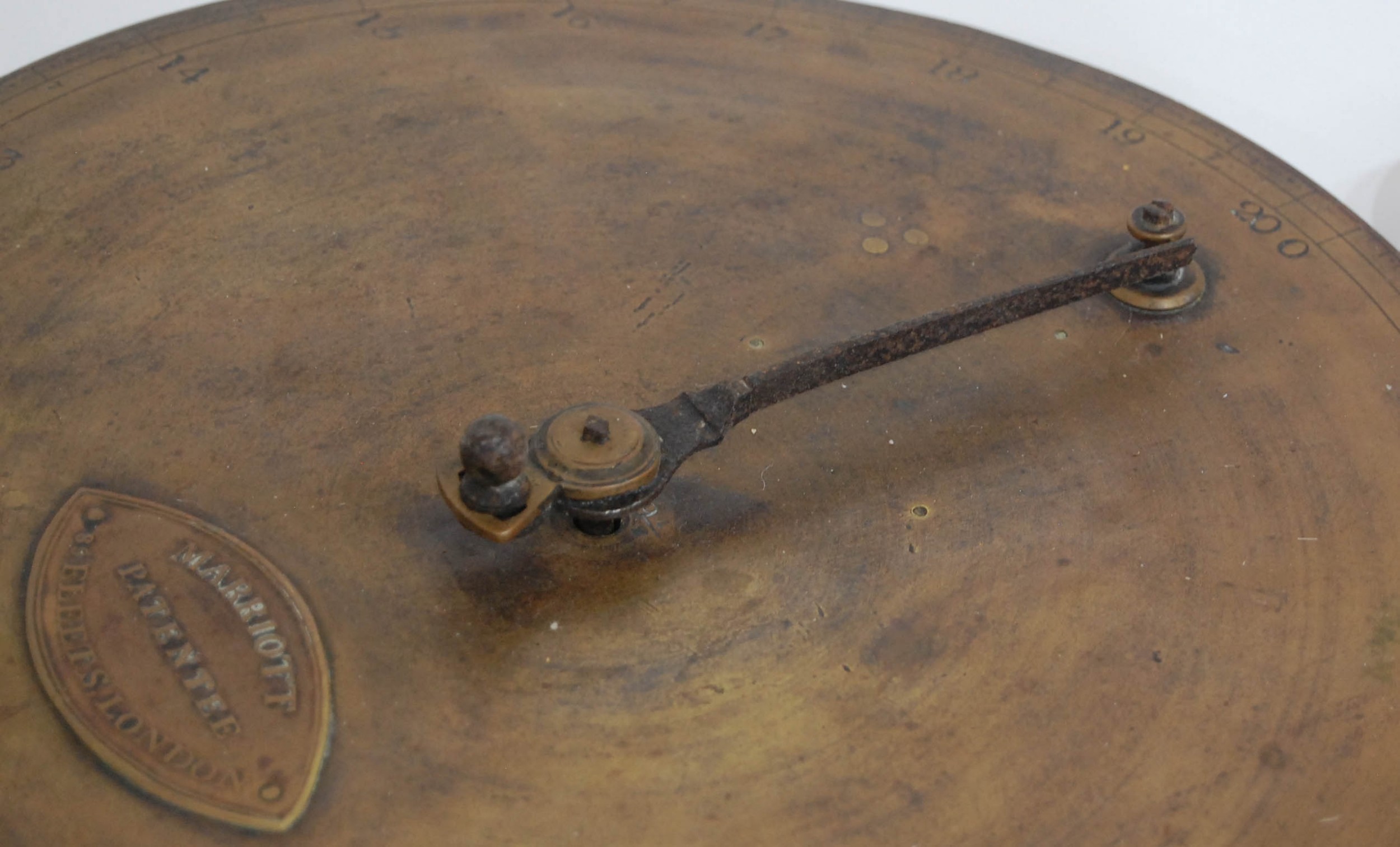
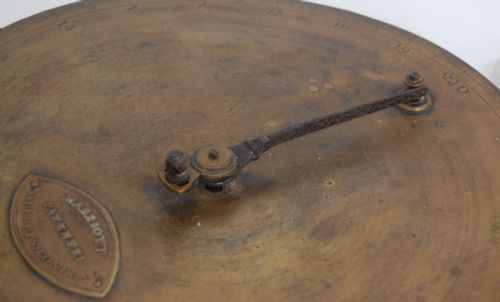
The plate holds an iron and brass pointer attached to a central shaft and a brass back stop at the zero point.
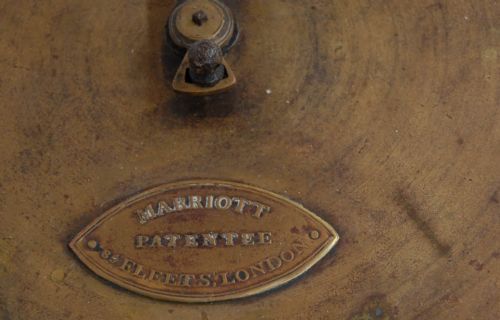
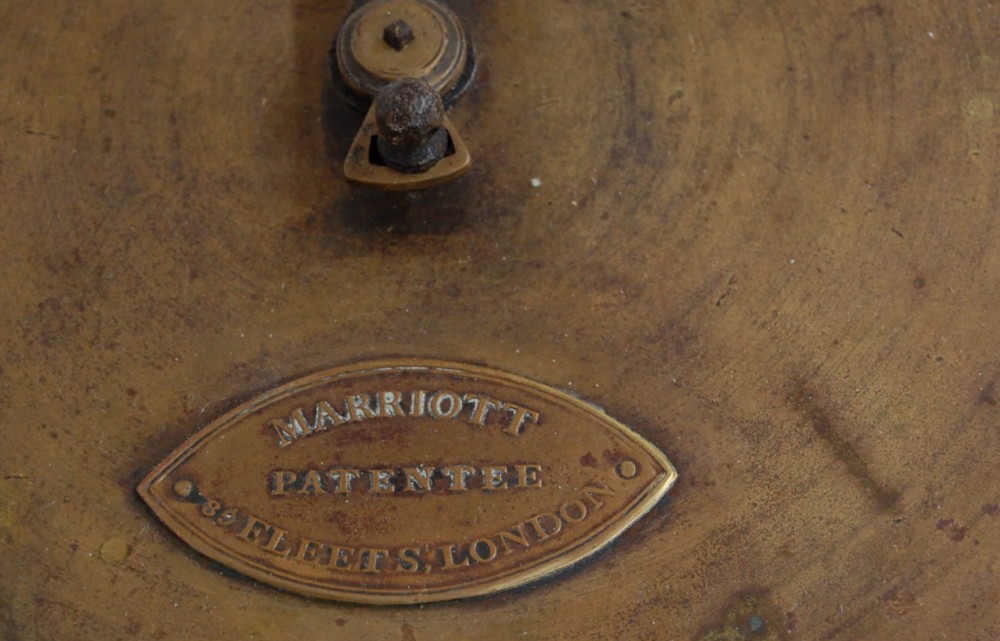
Underneath the central shaft is a brass plaque stamped to “Marriott Patentee, 89 Fleet Street, London”.
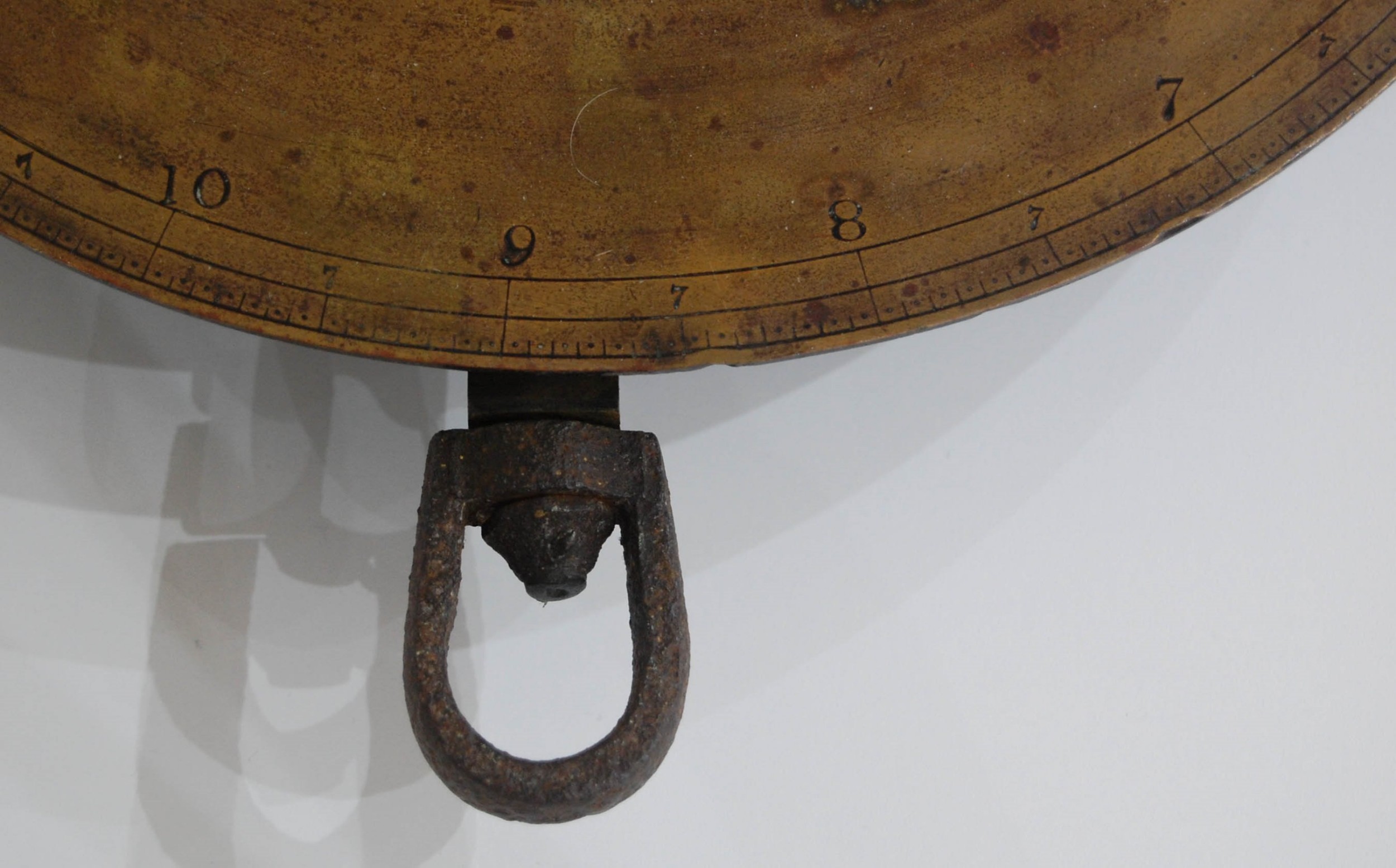
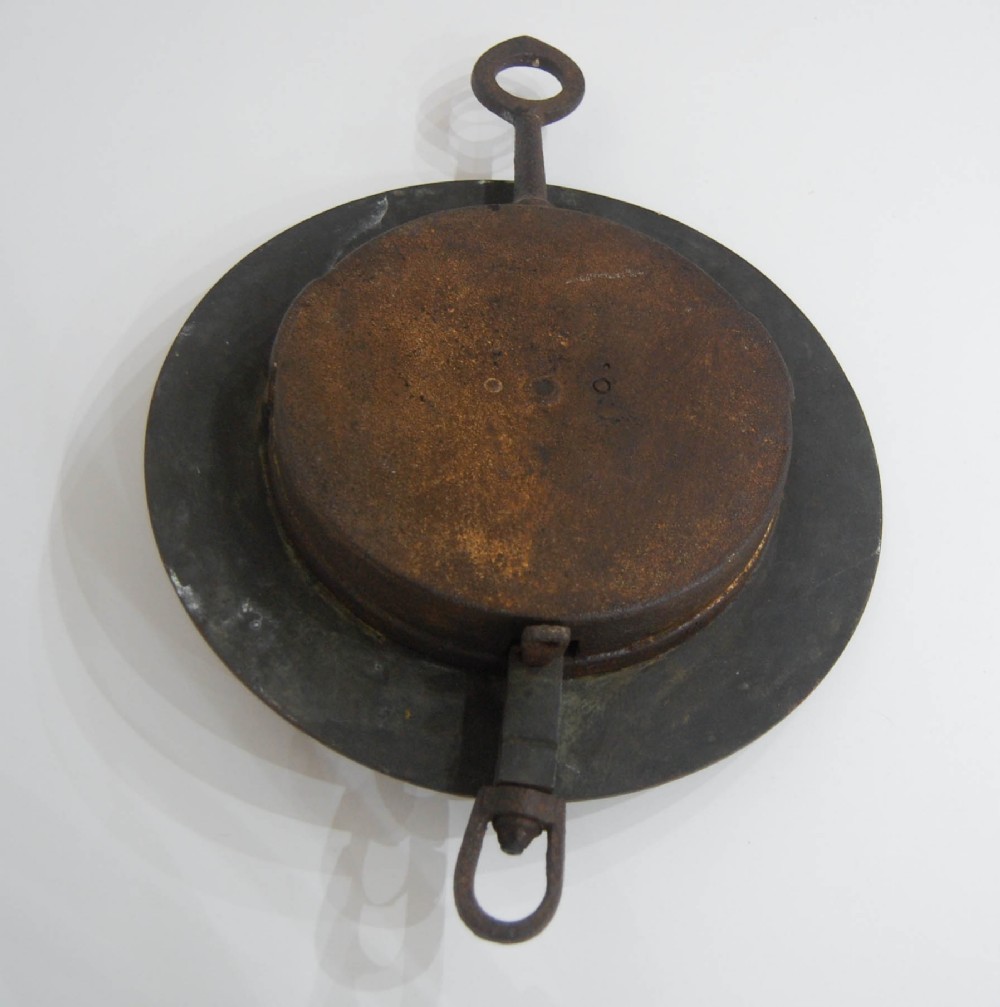
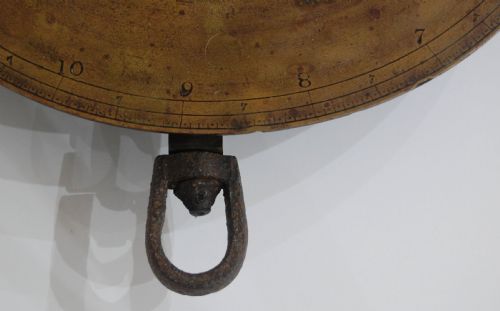
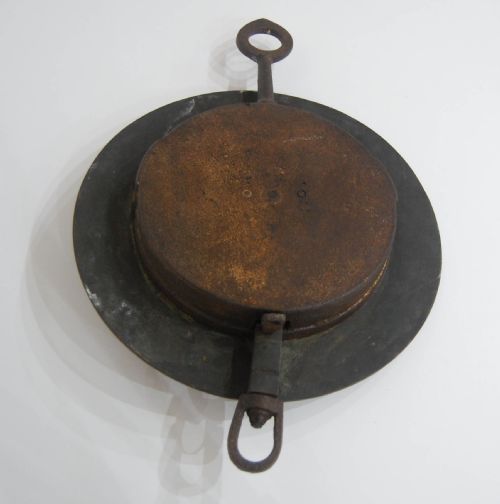
The scale plate is attached to an iron cased back which contains the original working spring and fixed ring support to the top for hanging and a ring support at the base which would be used for attaching the item to be measured.
The manufacturer of this early scale was a Henry Marriott who is listed in most directories as an ironmonger and inventor. His early career is somewhat difficult to deduce but Marriott must have reached some level of prominence during the reign of George III as by 1820, he was one of the largest ironmongers in London with an insured stockholding of £8600.
Marriott was also a prolific patentee and throughout the 1820’s he is documented as having lodged patents for water closets (1824), stoves (1825) and hydraulic machines (1828), the latter being co-patented with Augustus Siebe of Siebe & Gorman fame.
The “patent dial weighing machines” was advertised in the John Bull newspaper by 1821 but an interesting letter in The New Sporting Magazine of 1839 raises questions as to the real inventor of this scale. Augustus Siebe’s obituary reflects that he moved to Britain in 1814 and after perfecting his English became a foreman at an engineering firm (probably Marriott’s). He is also listed as having patented his own spring balance weighing machine in 1819.
The 1839 publication contains a letter to a friend, which recommends a “Sportsman’s weighing machine” associated with fishing and he quotes:
“It is altogether, a very beautiful contrivance, and by the way, emanates from the same clever engineer, who amongst other things, invented what is called, ‘Marriott’s Patent Circular Dial Weighing Machine’, so universally used, and also the well-known diving helmet and dress”.
This reference from this obscure publication of the first years of Queen Victoria’s reign provides two useful pieces of information, firstly that the design saw enduring popularity for at least twenty years and that although the machine was widely considered to be of Marriott’s design, it was actually one of the first inventions of Augustus Siebe. It seems likely therefore that Marriott bought or obtained the rights from Siebe (who is listed as the patentee) but by using the words ‘patentee’ has since been considered to be the inventor. In any case, the issue seems not to have been a problem for Siebe as he co-patented a hydraulic machine with Marriott nine years later.
Marriott’s advertisements from 1821 are therefore somewhat deceiving and he probably worded the first sentence in the following quote to obscure the fact that he had “obtained” the rights from a third party:
“Dial Weighing Machines – H. Marriott having obtained His Majesty’s Royal Letter Patent for an invaluable improvement in weighing machines, begs leave to recommend them to the public, as the most perfect and useful article for that purpose ever constructed for accuracy, simplicity, expedition & reliability, it stands unrivalled as it instantaneously shews the exact weight from one ounce to a ton without the use of weights, thereby saving time and labour. Being perfectly portable, it may be used in any situation…”
It is commonly understood that the spring balance was first invented by Richard Salter of Bilston in 1770. Together with his nephews John and George his invention built a company that still exists today. The differentiation in Siebe’s patent is explained i
Jason Clarke Antiques has dated this piece to the 1800s.
You can view the stock and full dealer information on the Jason Clarke Antiques Profile Page
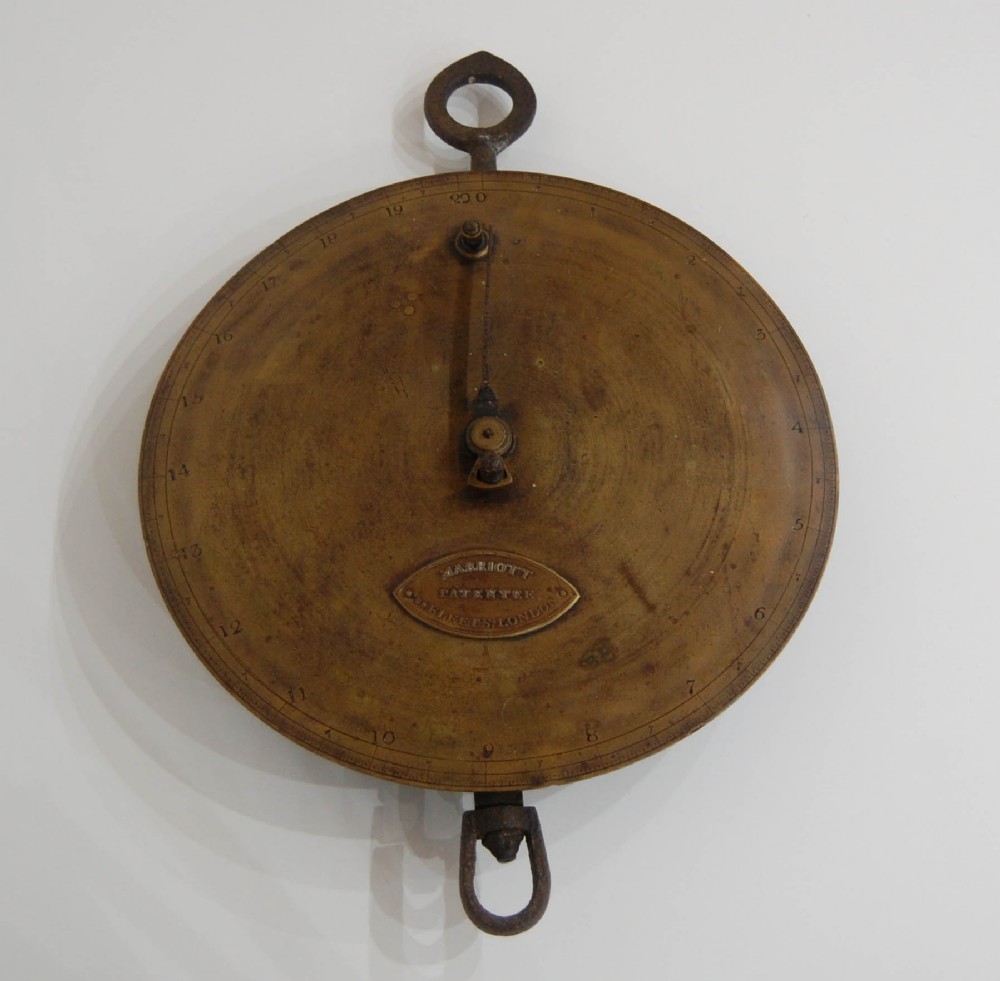
Augustus Siebe Patent Dial Weighing Machine by Marriott of 89 Fleet Street