It was listed by Jason Clarke Antiques. Sold pieces stay on Sellingantiques as a record of what has passed through, and the next one is rarely far away.
Jason Clarke Antiques has dated this piece to the 1800s.
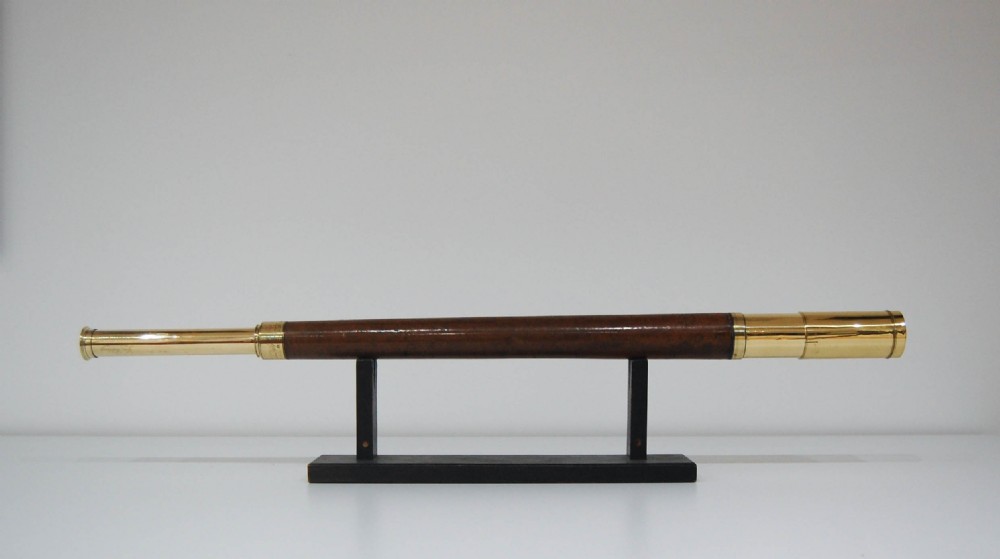
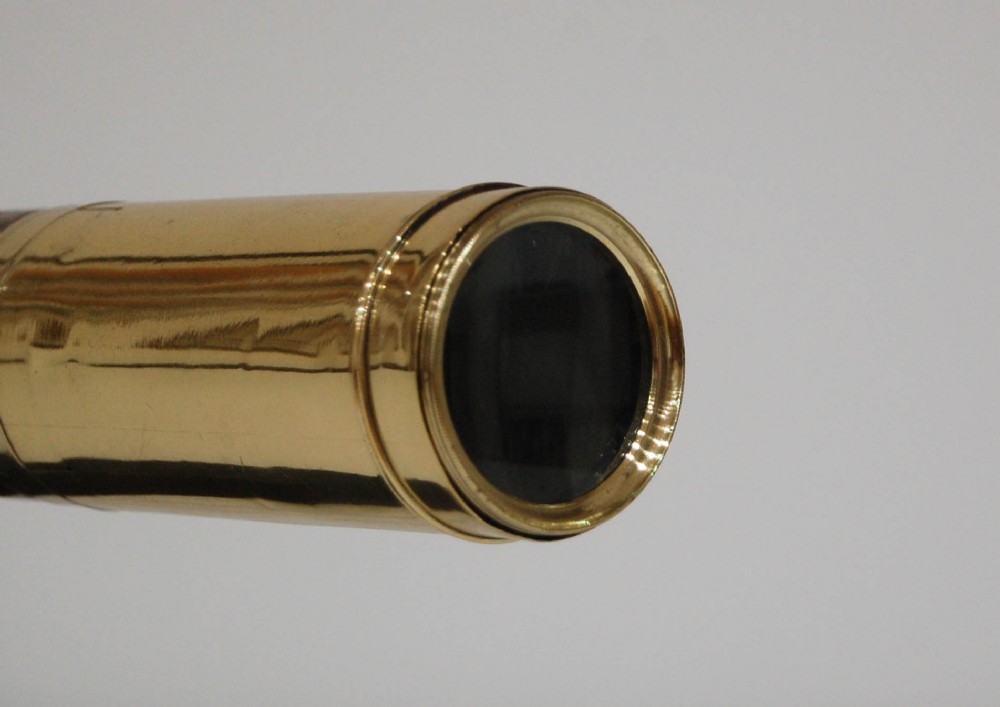
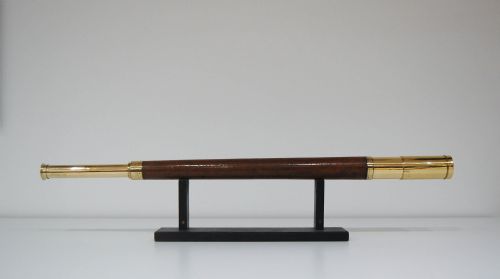
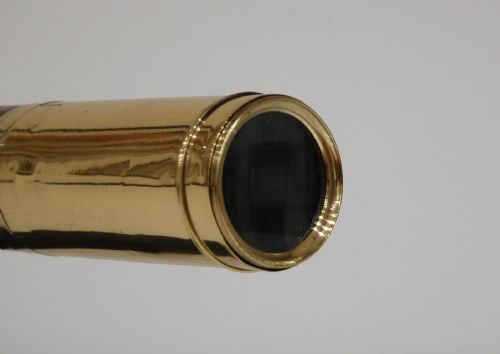
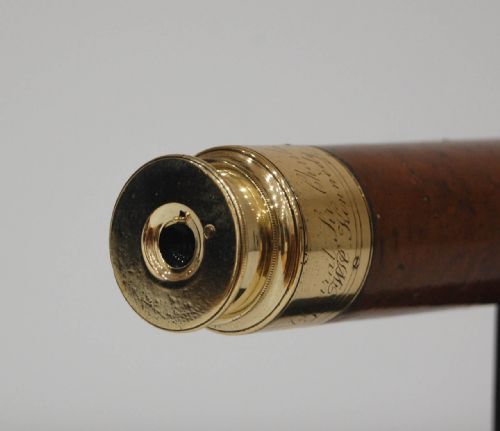
With the single draw extended it measures 30 and a quarter inches and 33 and a quarter inches including the sunshade. The objective lens measures one and three quarter inches in diameter.
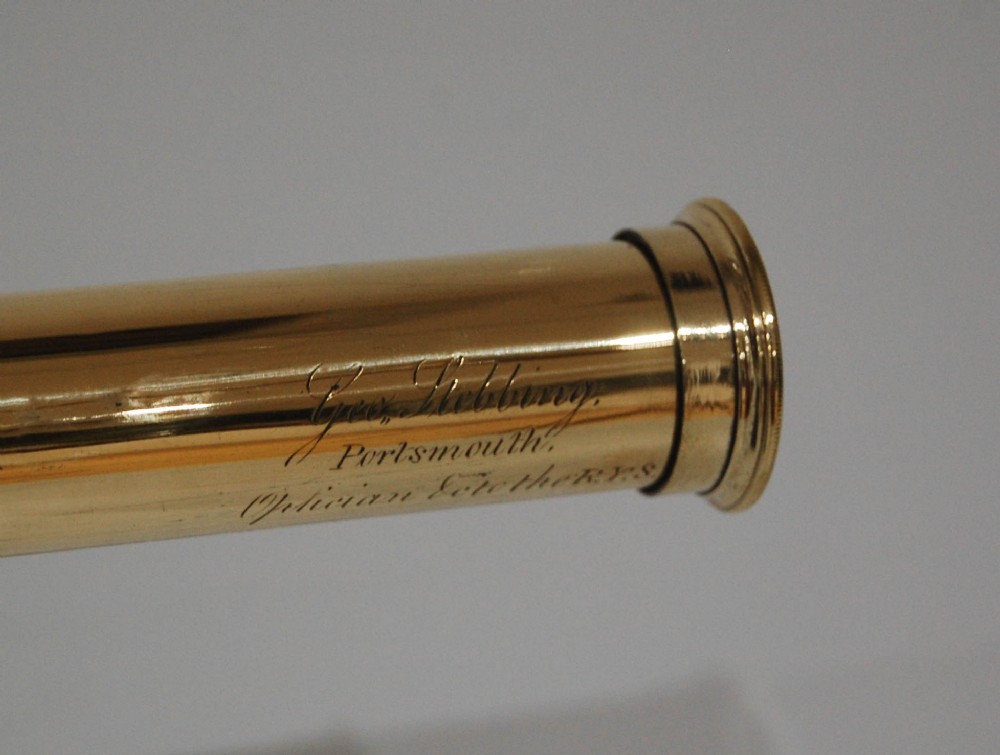
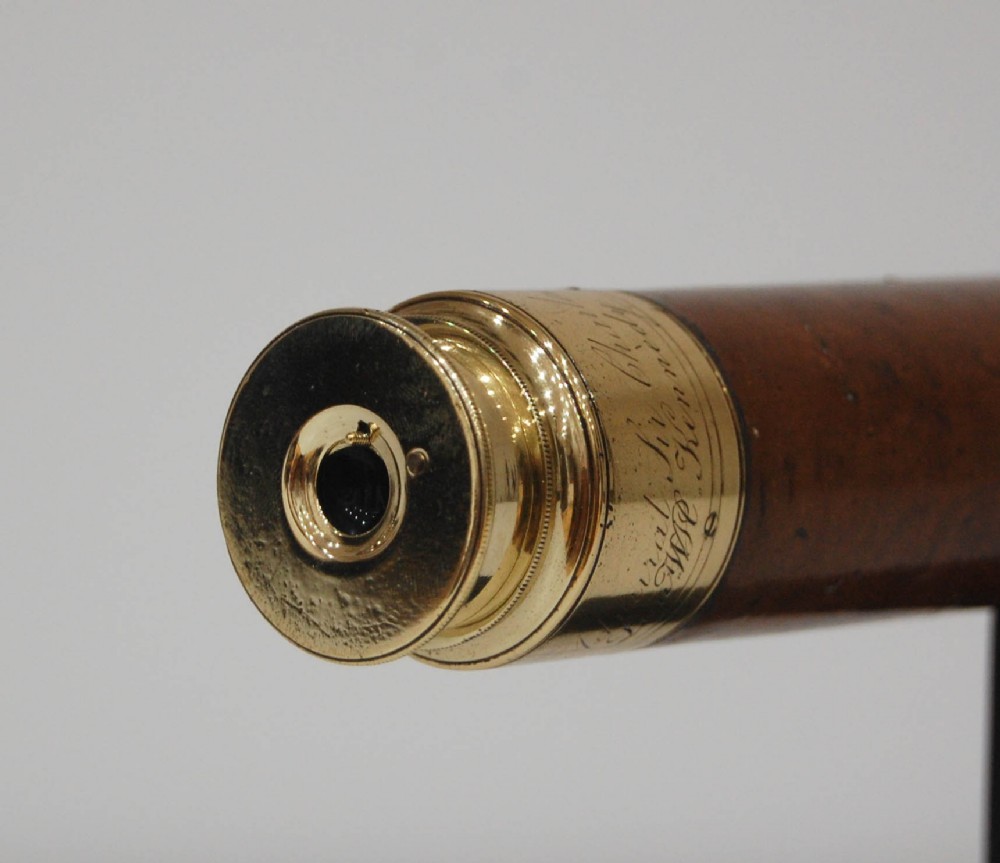
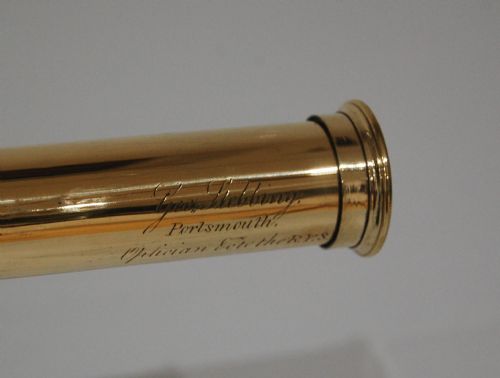
The draw tube is engraved to the famous instrument maker and optician, “George Stebbing, Portsmouth. Optician to the RYS” (Royal Yacht Squadron).
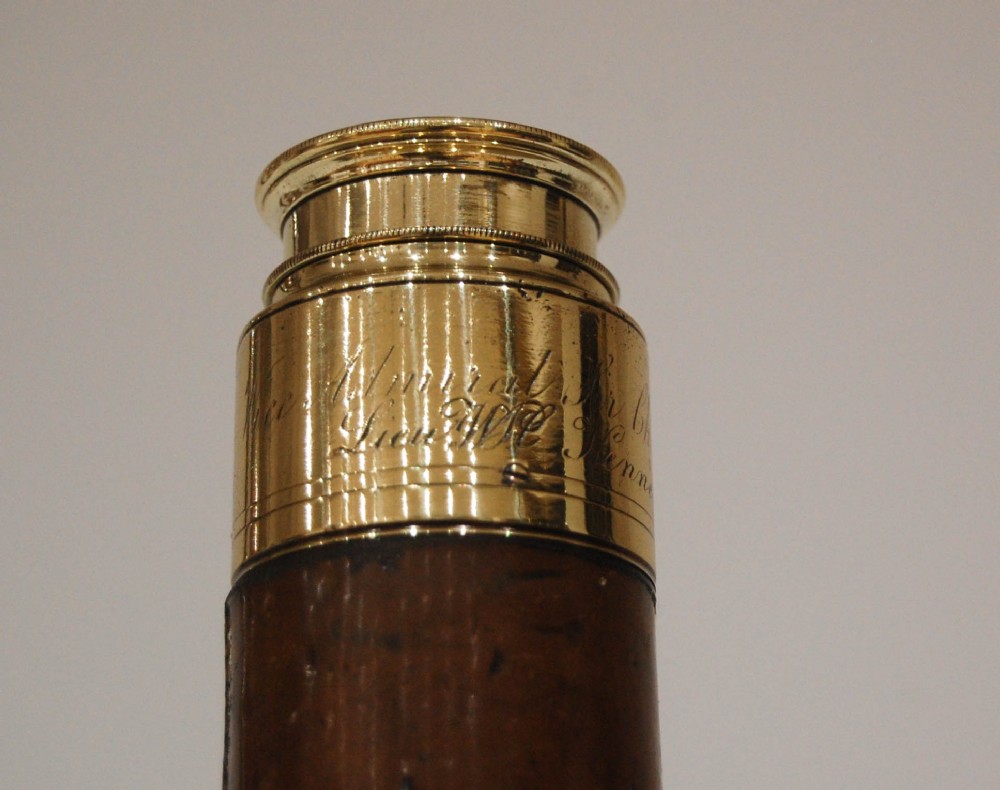
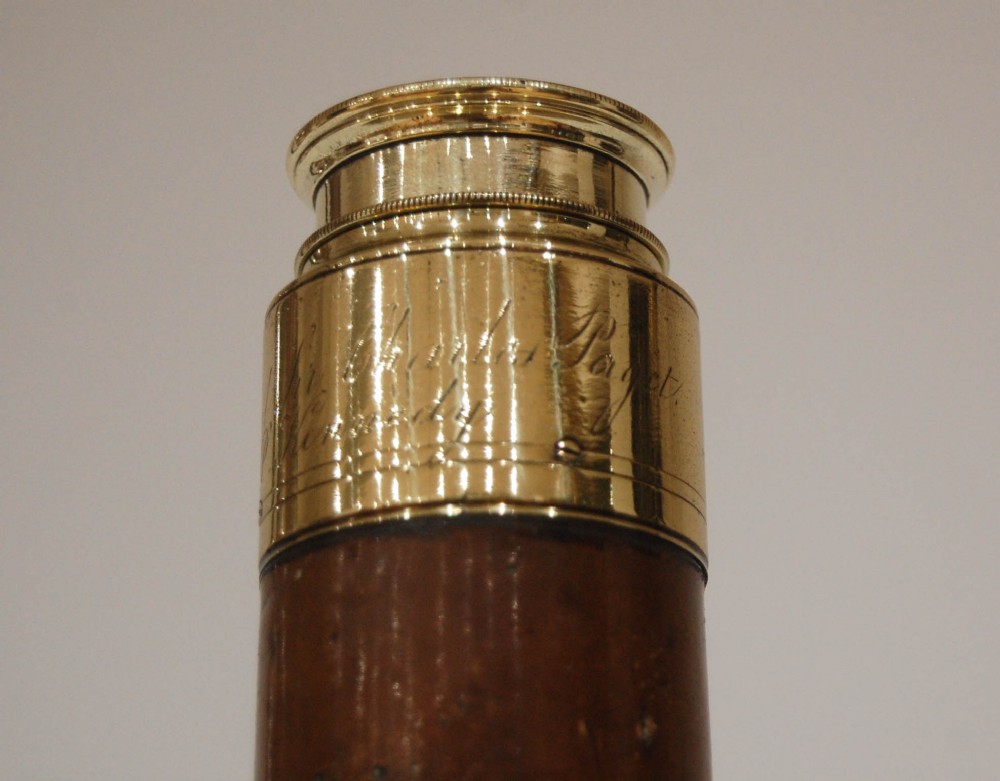
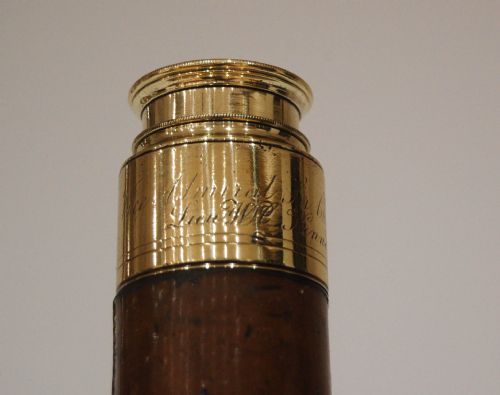
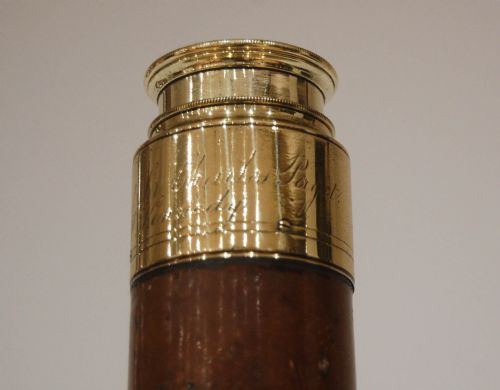
The brass edge to the top of the main is further engraved to, “Vice Admiral Sir Charles Paget” with the name of his son-in-law, “Lieutenant WH Kennedy” below.
Charles Paget was born in October 1778 the son of the Earl of Uxbridge and entered the Royal Navy in 1790 as a naval cadet and Captain’s Servant. During this early period, he served on the Goliath and then on the Guard Ship Alcide until August of 1791. The following year saw an eight month cruise off Newfoundland on The Assistance under Admiral Sir Richard King and a further 3 months in The North Sea under Captain Manley on The Syren when in early 1793 the war with France began. During this latter stint of duty, Paget was promoted to Midshipman and served on six different vessels from 1793 to December 1796 whereafter he was appointed acting Lieutenant aboard The Latona.
In June 1797 he became Lieutenant of The Centaur under Captain Markham and just one month later was promoted Captain in command of the sloop Martin undertaking service in the North Sea. During this period, Captain Paget saw action at The Battle of Camperdown under Admiral Duncan and repeated signals for the starboard division of Duncan’s fleet. The battle ended in complete victory for the Royal Navy, with the capture of seven Dutch ships of the line and four frigates captured. The crumbling of the Dutch force, effectively stifled French power in The North Sea and was widely celebrated at the time.
Following this significant event, Paget, now a Post-Captain, took command of The Penelope in October 1798 and The Brilliant shortly after. In August of 1800, Paget again saw action off the coast of Spain in The Attack on Ferrol under Rear Admiral Sir John Borlase Warren. The action landed a small force of riflemen under Lieutenant-General Sir James Pulteney however it was largely unsuccessful owing to the Spanish defences.
From this point until 1803, Paget sailed in both the Brilliant and The Hydra and saw service off the coasts of France, Portugal and in The Mediterranean. He captured various enemy ships and was responsible for entertaining Nelson’s superior officer Lord Keith in Valetta. Nelson was of course based in Sicily at the time and was nurturing his infamous affair with Lady Hamilton.
April of 1803 saw Paget’s transfer to The Endymion at Portsmouth with a First Lieutenant Charles John Austen (younger brother of the famous novelist, Jane Austen). In May, Paget must have been flattered to have received a seventeen gun salute from Lord Nelson’s flagship, HMS Victory and he immediately enriched his reputation by capturing the fine French corvette Bacchante which was accompanied back to Britain and subsequently incorporated into the Royal Naval Fleet. By the end of his command in 1805, Paget had captured another seven Spanish treasure ships which must have significantly increased his income owing to the prize money involved. Within the Paget family papers a letter exist from Charles Paget to his brother Arthur stating that, “in short my dear fellow, my whack of Prize Money at a moderate calculation will be about fifty thousand pounds, which for a younger brother is not a bad fortune to have made.”
Jason Clarke Antiques has dated this piece to the 1800s.
You can view the stock and full dealer information on the Jason Clarke Antiques Profile Page
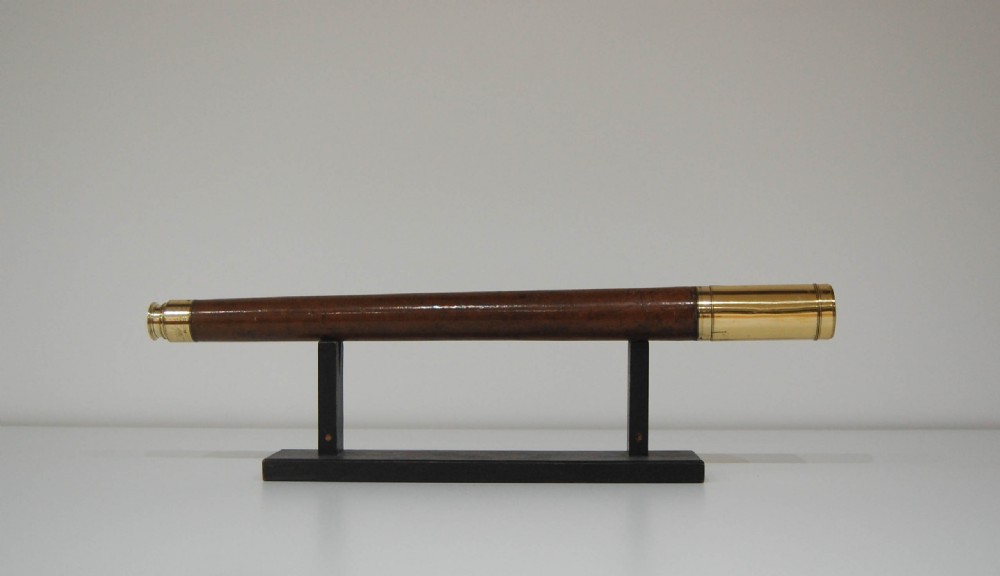
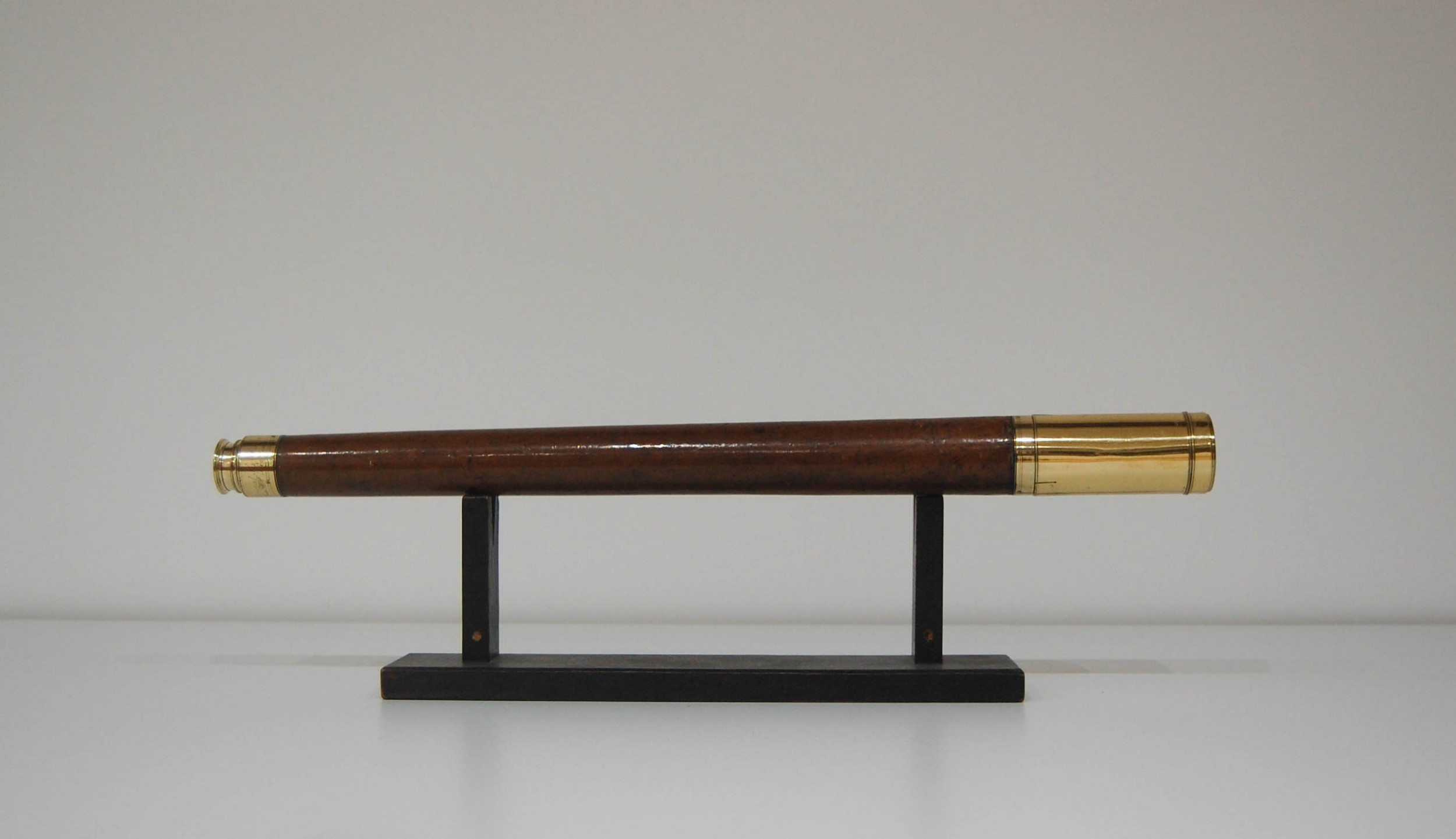
Vice-admiral Sir Charles Paget's Marine Telescope by George Stebbing of Portsmouth