It was listed by Jason Clarke Antiques. Sold pieces stay on Sellingantiques as a record of what has passed through, and the next one is rarely far away.
Jason Clarke Antiques has dated this piece to the 1800s.
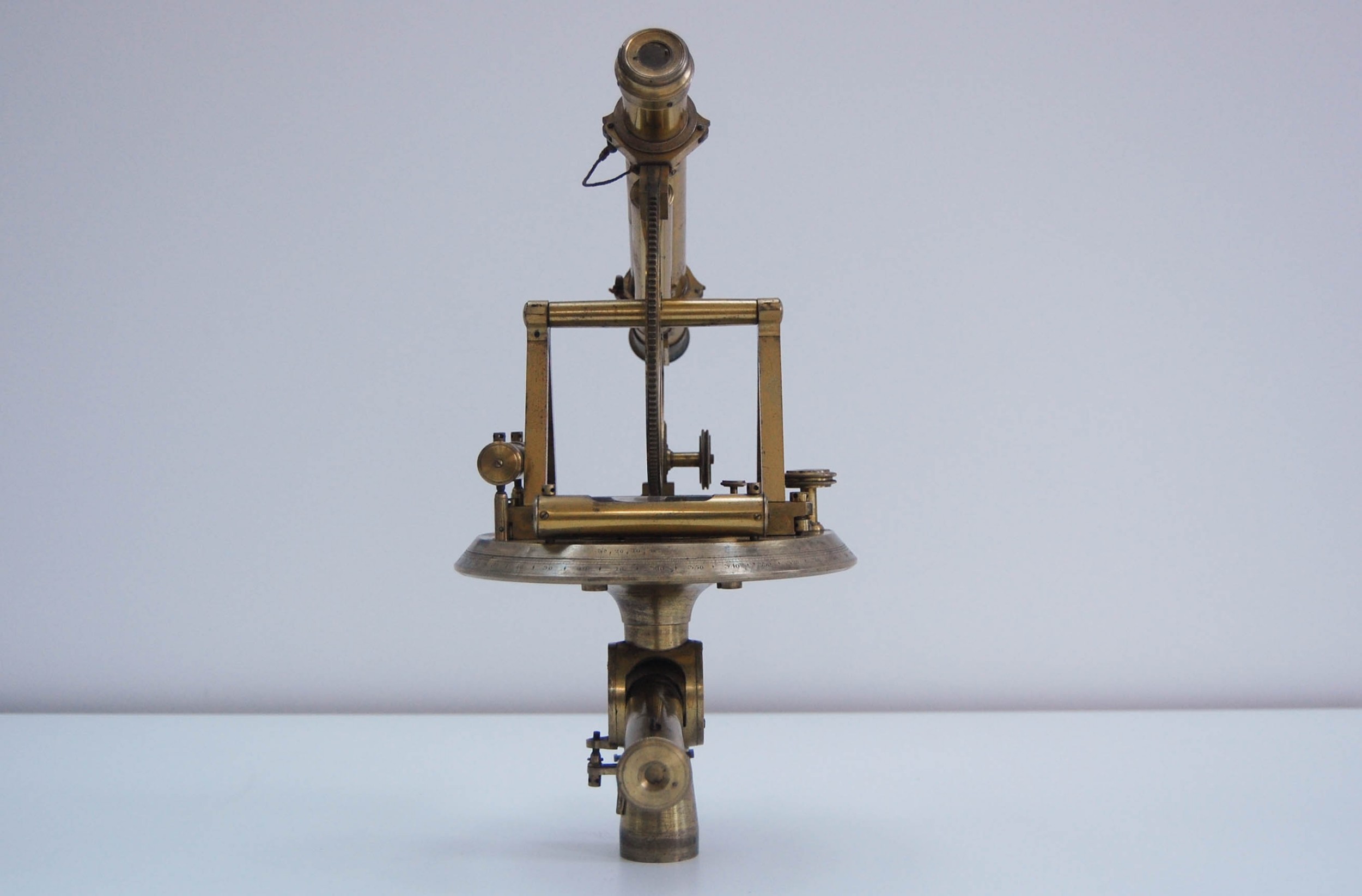
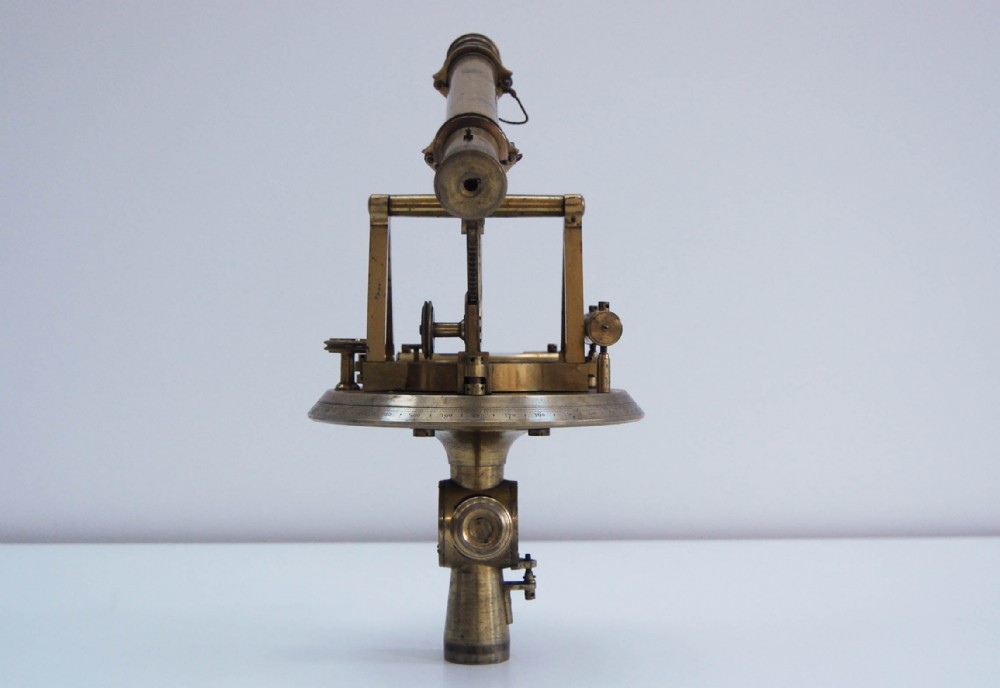
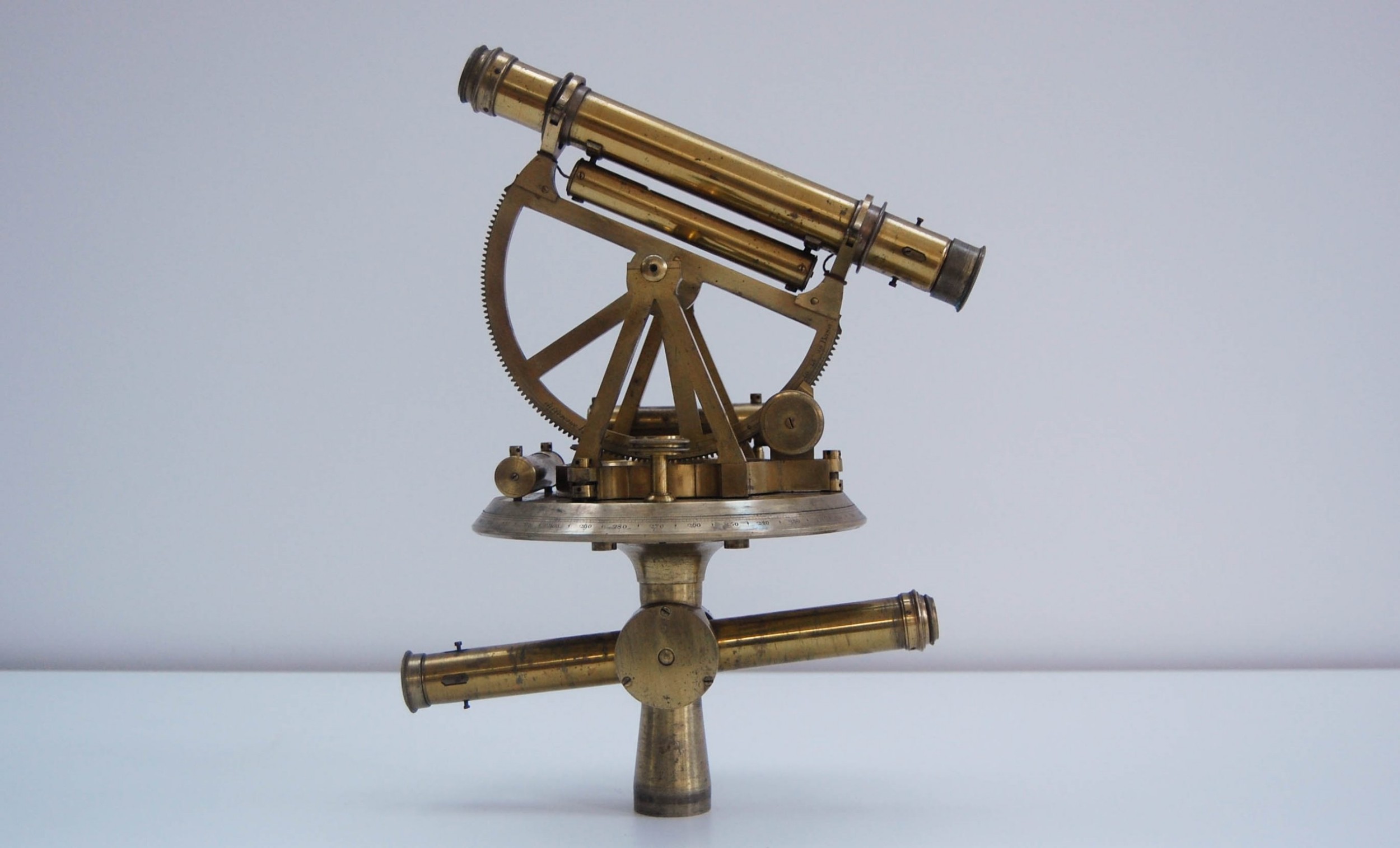
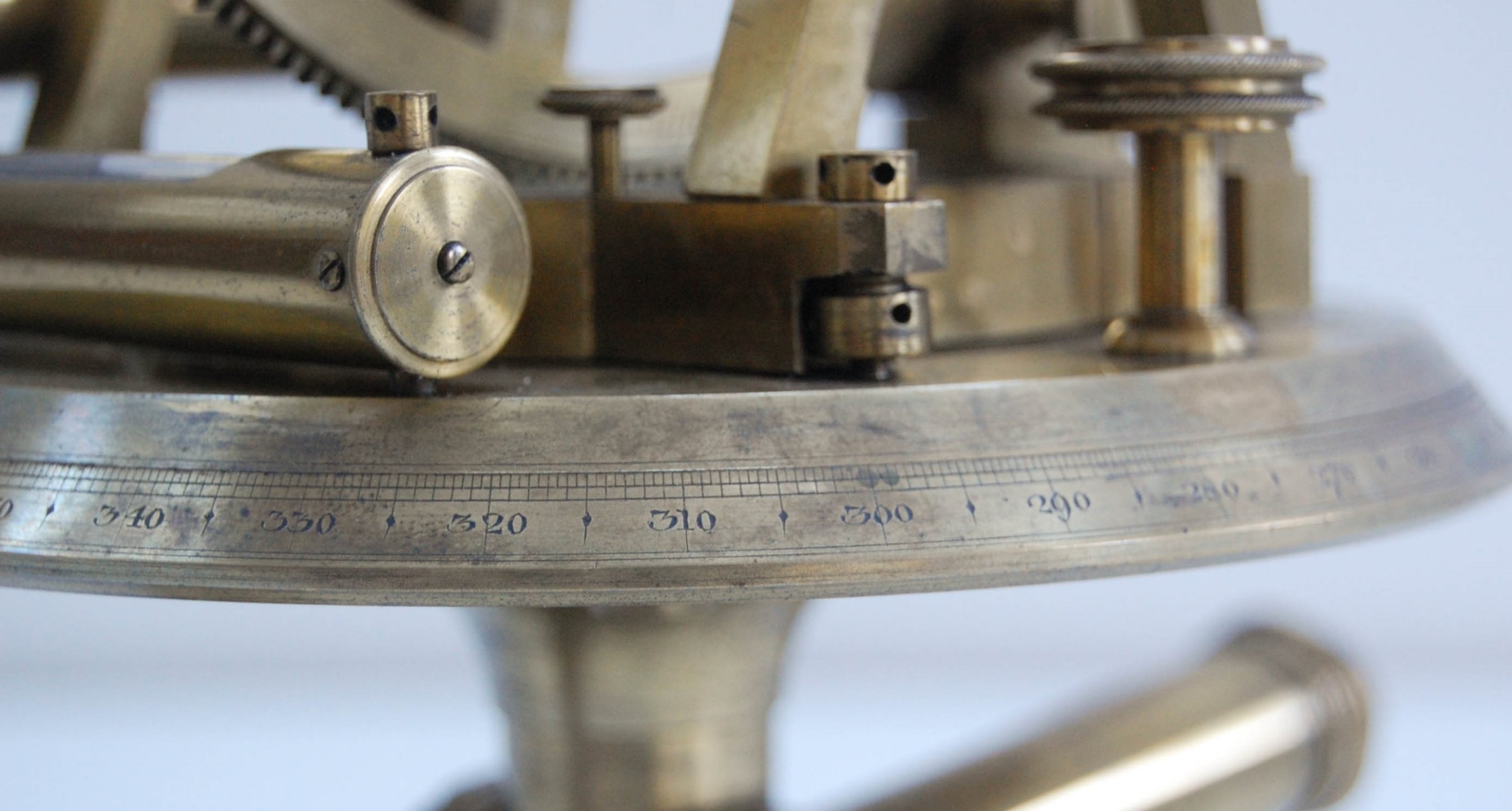
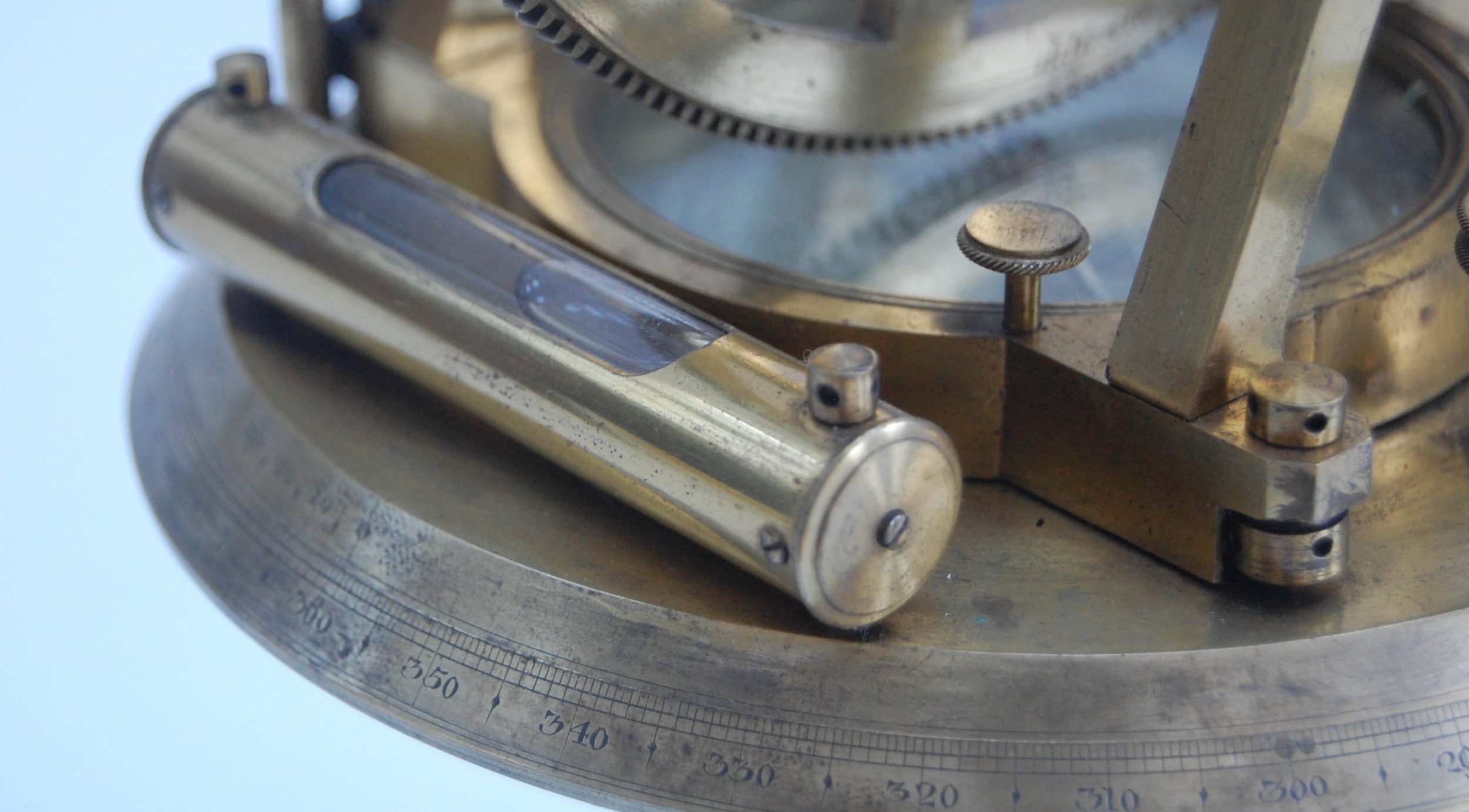
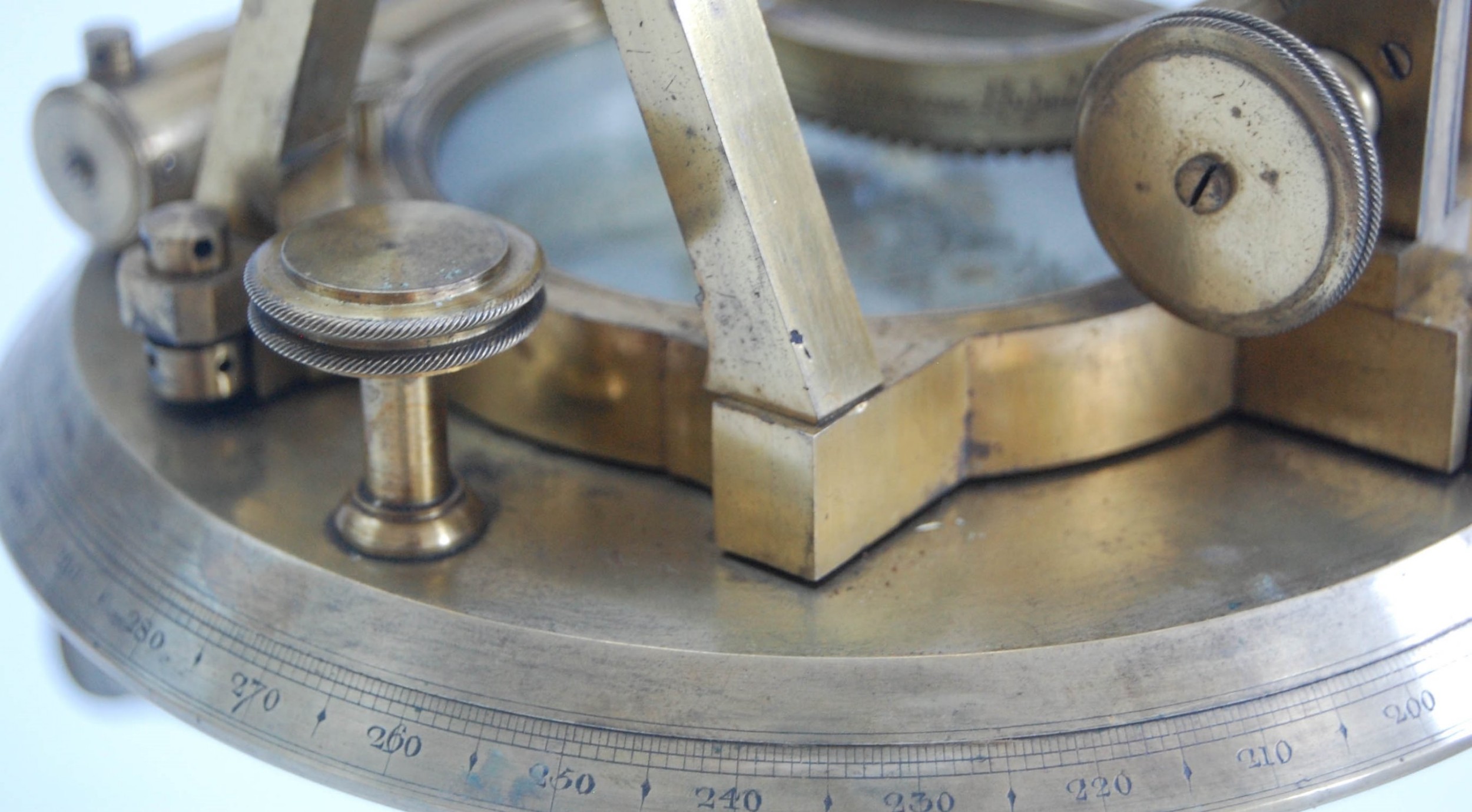
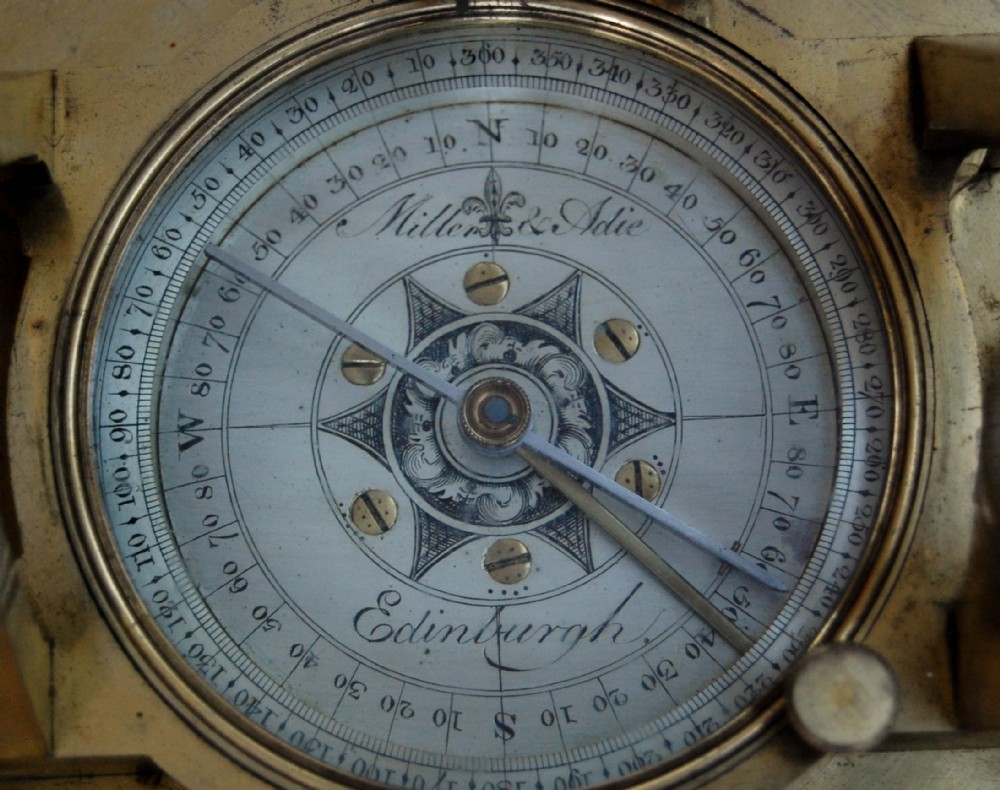
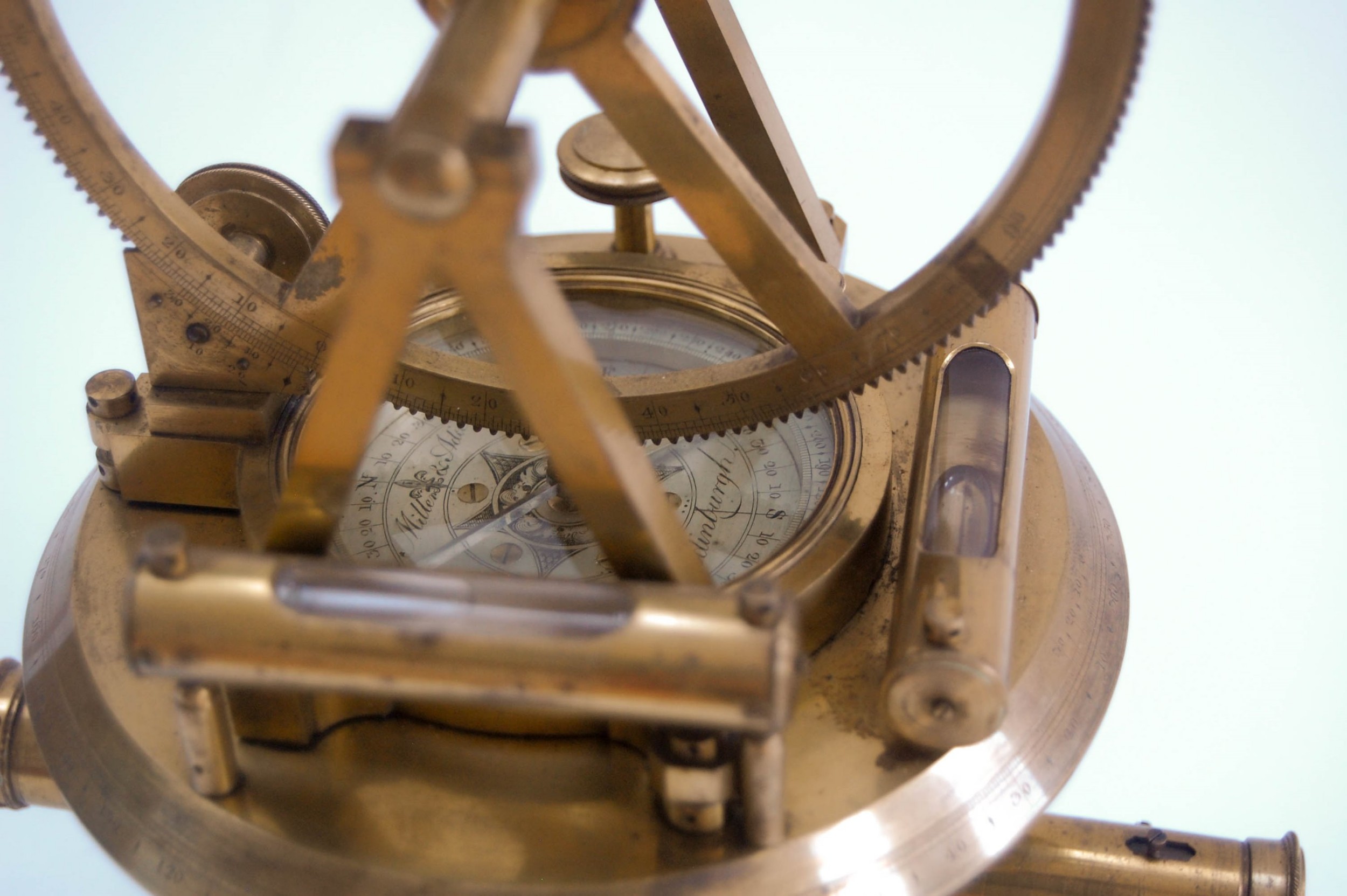
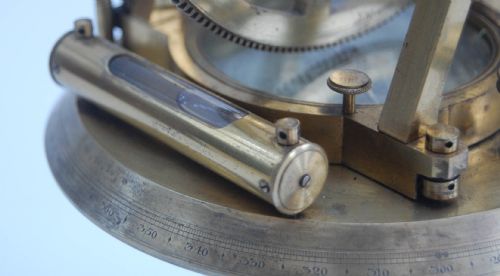
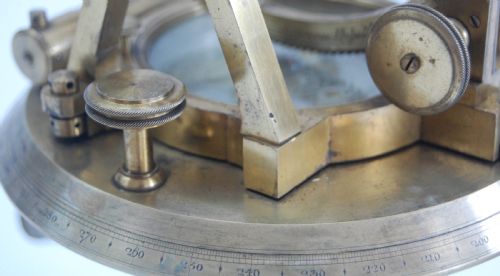
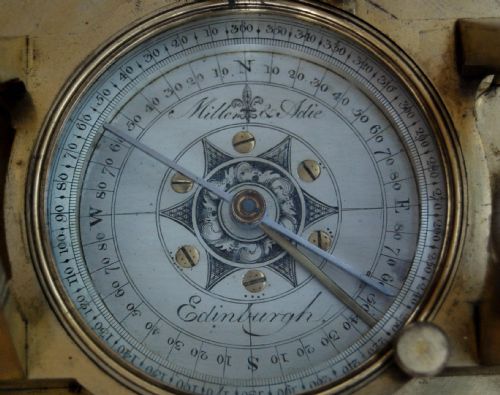
The centre contains an expertly engraved and silvered compass with a smaller brass screw to hold or release the movement and two sides of the outer edge are provided with a glass level housed in a protective brass case.
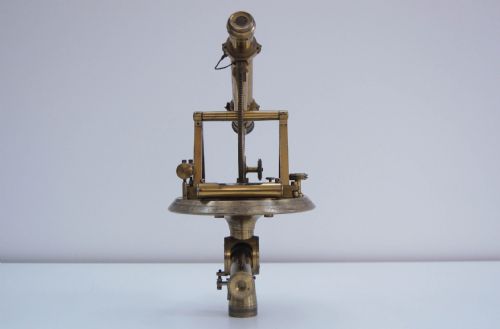
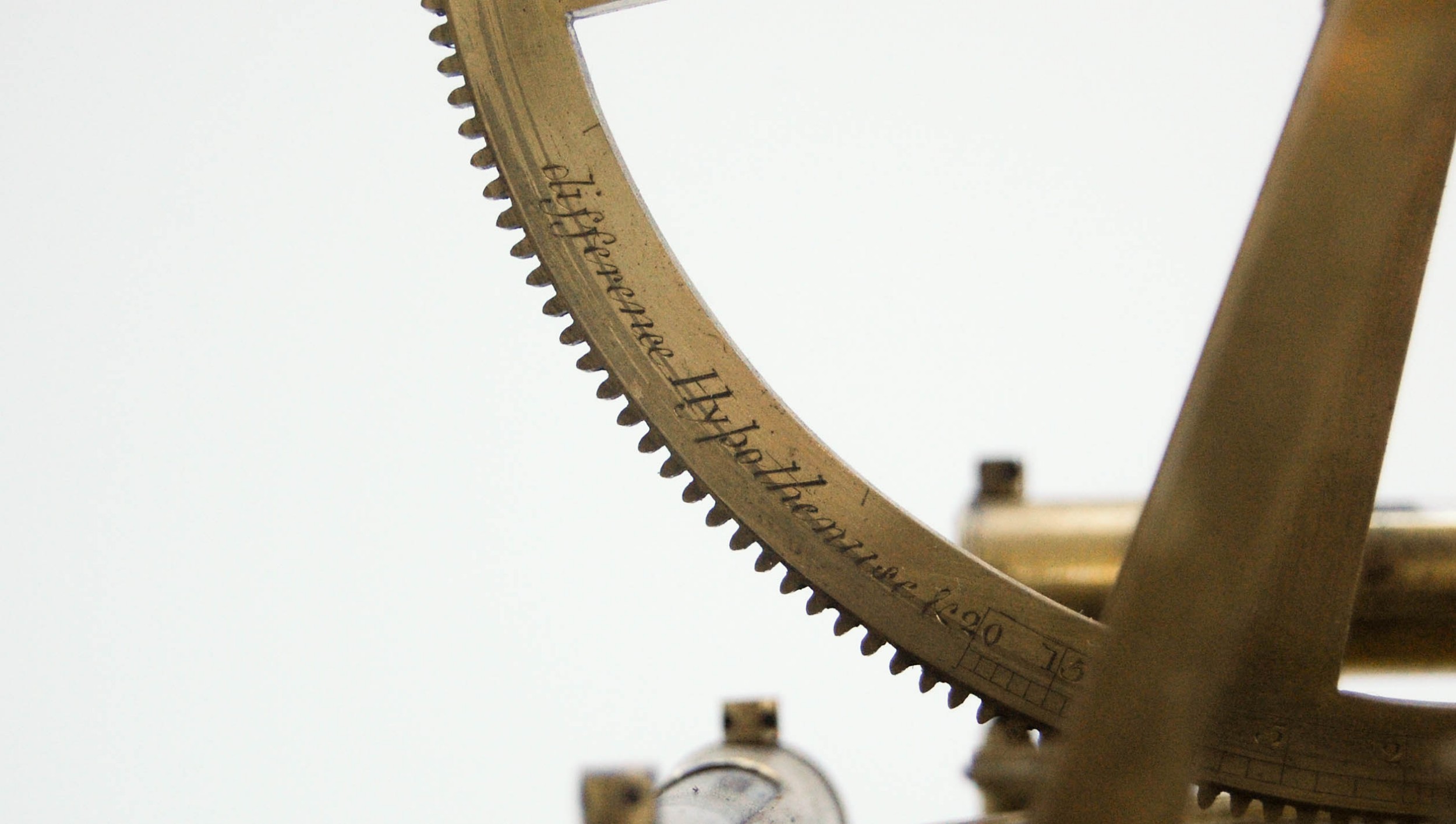
Two brass A frame type struts either side of the compass provide support for the semi-circular divided arc with geared outer edge to allow for adjustment from the brass knob at the front of the instrument. The arc is further completed with a nine inch telescope and an attached glass level, again housed in a protective brass sleeve.
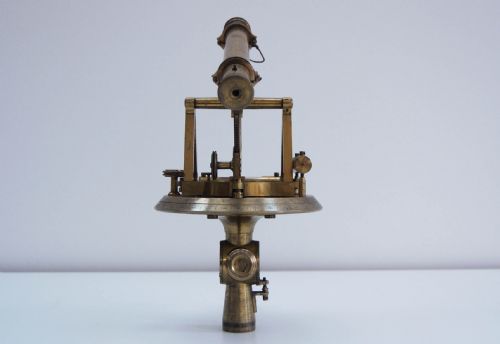
Below the horizontal base is attached a shaft for fixing to a tripod which is hollowed out to the centre to accommodate a second eight and a half inch telescope which points in the opposite direction to the upper example.
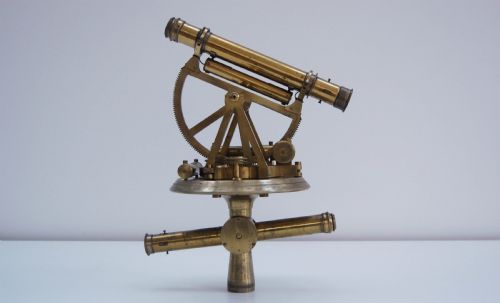
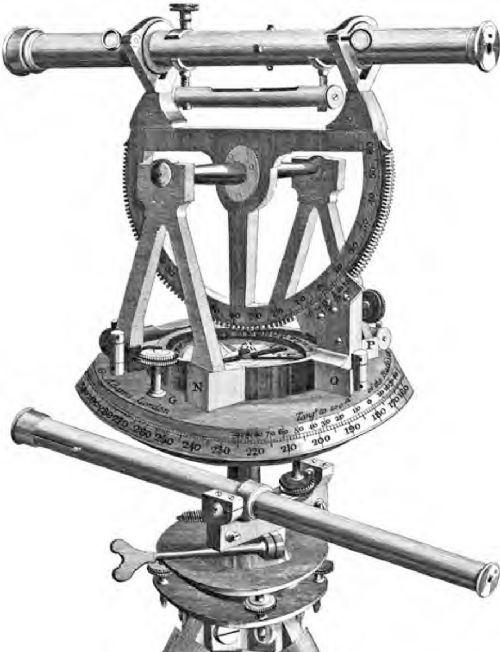
This seldom encountered model first appeared in George Adams Junior’s publication, “Geometrical and Graphical Essays” in 1791. The accompanying description for the plates in the book relate:
“The theodolite as improved by (Jesse) Ramsden, consisting of an instrument with telescopic sights broadly similar to the second best theodolite, but with refinements of construction to improve its accuracy, and having a second telescopic sight underneath the horizontal circle. The second telescope could be set to observe a reference object while measurements were taken with the main instrument. Theodolites of this pattern, said Adams, were normally made with horizontal circles of 6, 7 and 8 inches diameter, but generally of 7 inches.”
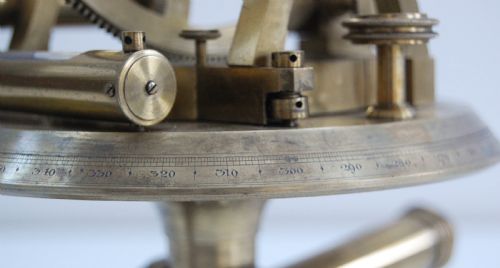
It must be presumed that the second telescope was the improvement that Jesse Ramsden refined to this already superior model of theodolite for the period, with Adams replicating the design for his own use. Both men were in combination, perhaps the most successful London scientific instrument makers of the late eighteenth century and this example is all the more interesting given that John Miller (one half of the partnership who made this example) had himself worked under George Adams Senior and must therefore have been closely familiar with the pair.
Adie & Miller was the original firm that gave birth to the Adie dynasty that dominated Nineteenth century instrument making. It began in 1776 with the celebrated Edinburgh scientific instrument maker John Miller (1746-1815). The son of an Edinburgh turner, Miller was apprenticed (or simply worked) under the world renowned maker George Adams and eventually returned to Edinburgh from London in 1769. He is listed as trading from various Edinburgh addresses from 1775 and received early commissions from the physician Dr James Lind.
In 1776, Lind left Edinburgh but by that time, Miller’s reputation had already grown to such an extent that he had begun equipping the classroom and laboratories of Edinburgh University on behalf of John Robinson, who had recently been appointed to the Chair of Natural Philosophy there.
Four years prior to this date, Miller’s sister Betty had married John Adie, a printer and proprietor of The Edinburgh Evening Courant. The pair had two sons with the second (Alexander Adie) being born in January 1775 just three months after his father’s early death. Betty died shortly after, leaving John Miller’s father (also John) to look after and adopt the young Alexander and his older brother. Originally employed as a stocking maker, the death of his brother in 1787 finally led Alexander to the employment that would culminate in a partnership with his uncle.
From 1789, Adie (1775 – 1858) began his apprenticeship with Miller and by 1803, a partnership was agreed which traded at
Jason Clarke Antiques has dated this piece to the 1800s.
You can view the stock and full dealer information on the Jason Clarke Antiques Profile Page
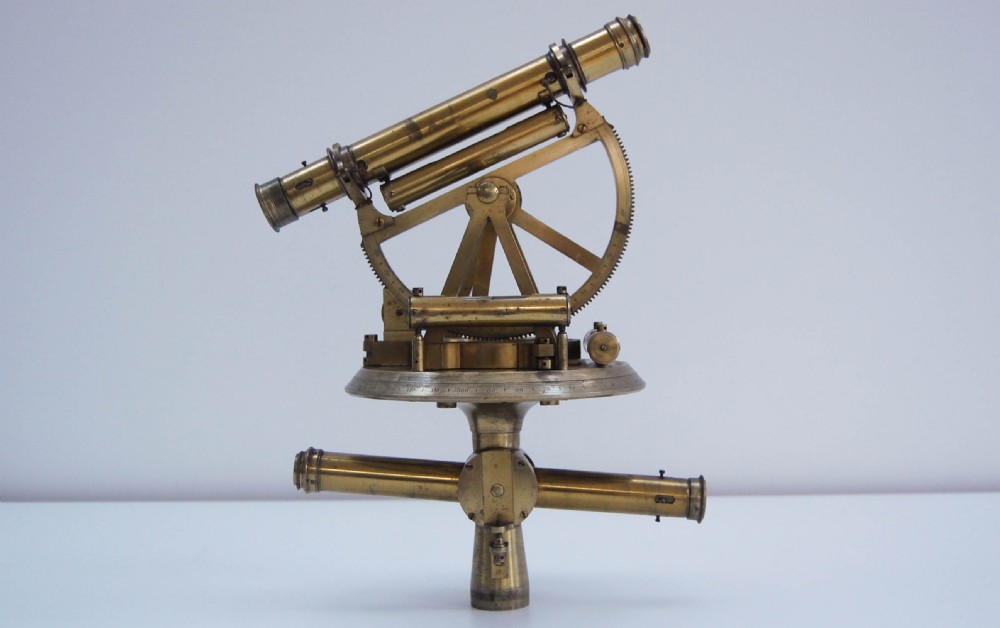

George III Cased Altazimuth Double Telescope Theodolite by Miller & Adie of Edinburgh