It was listed by Jason Clarke Antiques. Sold pieces stay on Sellingantiques as a record of what has passed through, and the next one is rarely far away.
Jason Clarke Antiques has dated this piece to the 1900s.
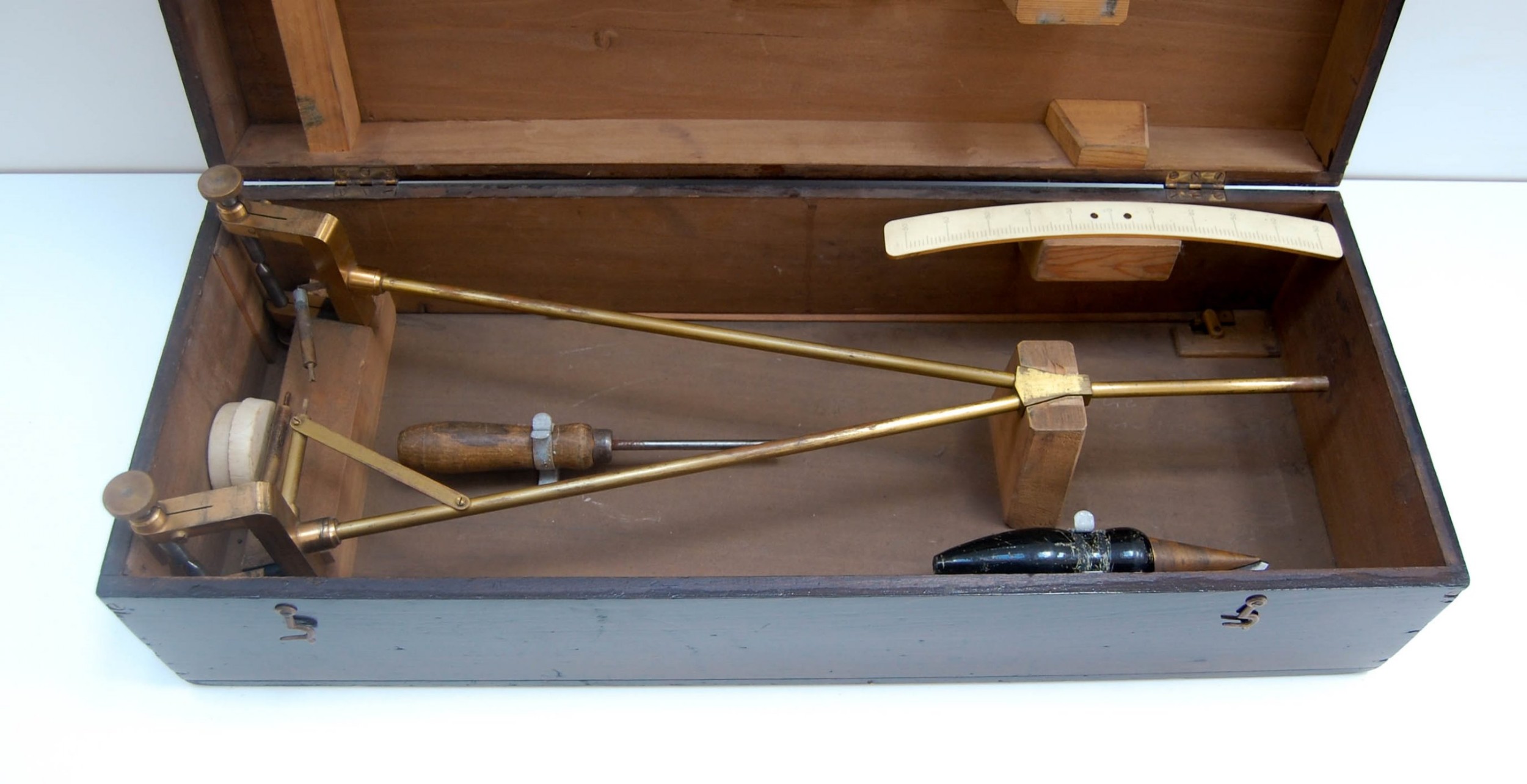
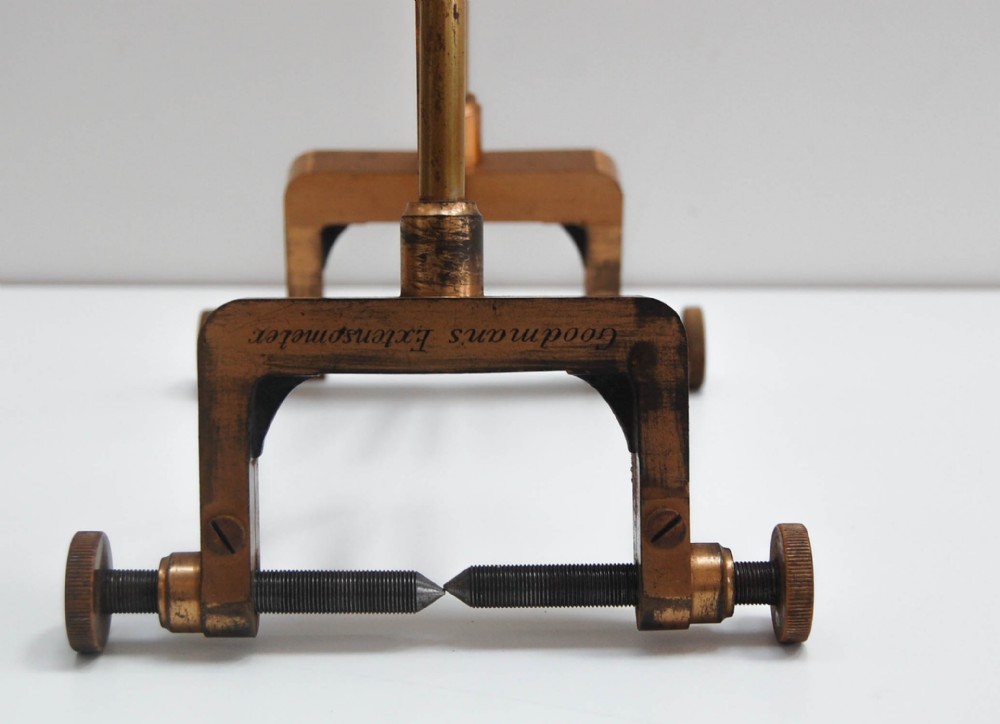
Extensometers are instruments for measuring the elastic strength of materials in tension or compression and this particular example is featured in the 1916 publication: “The Strength of Materials, A Text-Book for Engineers and Architects by Ewart S Andrews.
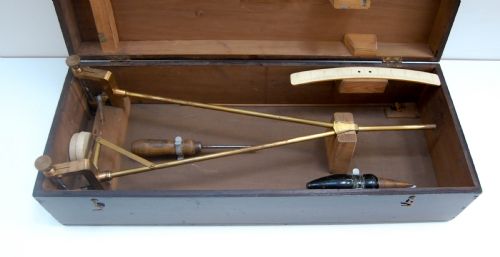
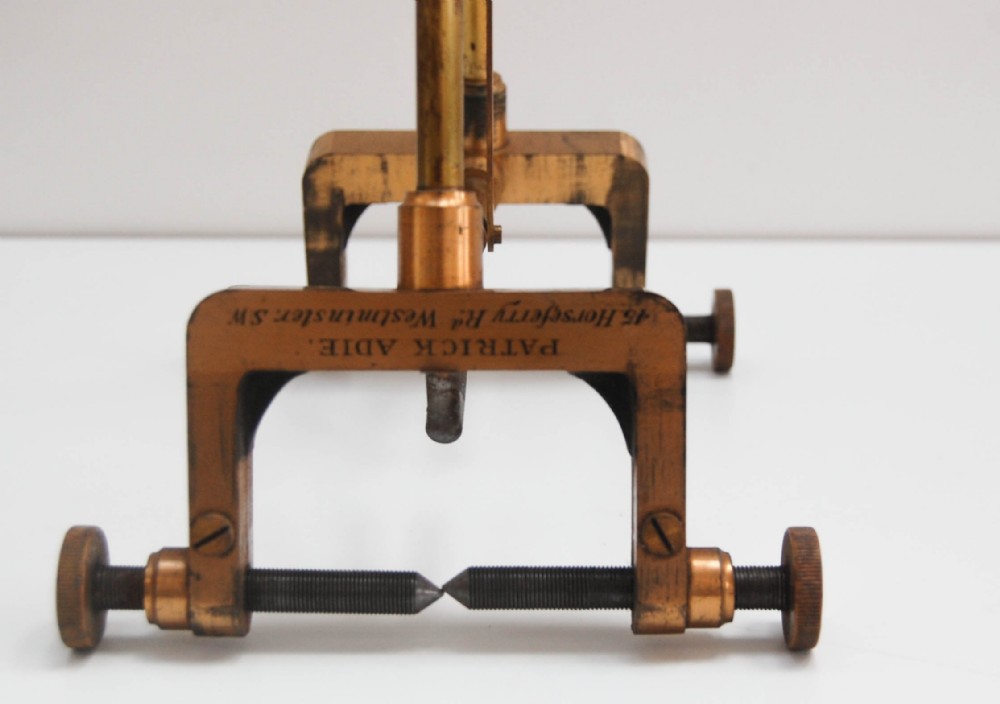
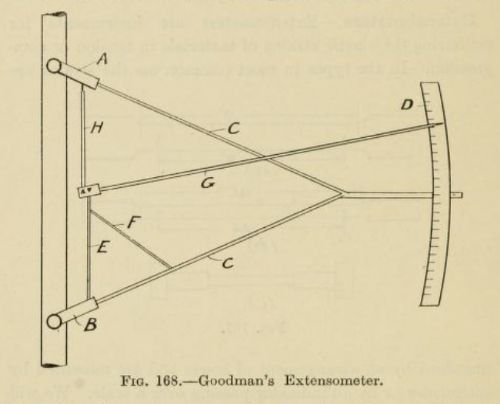
“This extensometer is of very simple form and was designed by Professor Goodman of Leeds. It consists of two forked clips, (AB) which carry pointed screws engaging in the centre punch marks in the specimen and are connected to rods (C) which join at their ends and carry a scale (D) on a projecting piece.
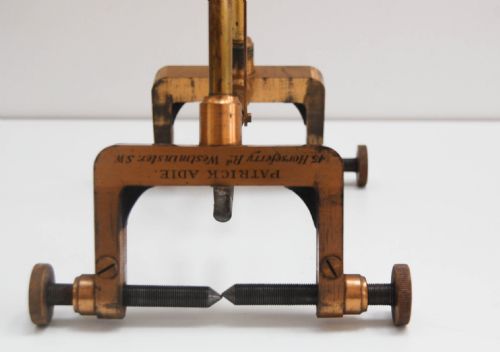
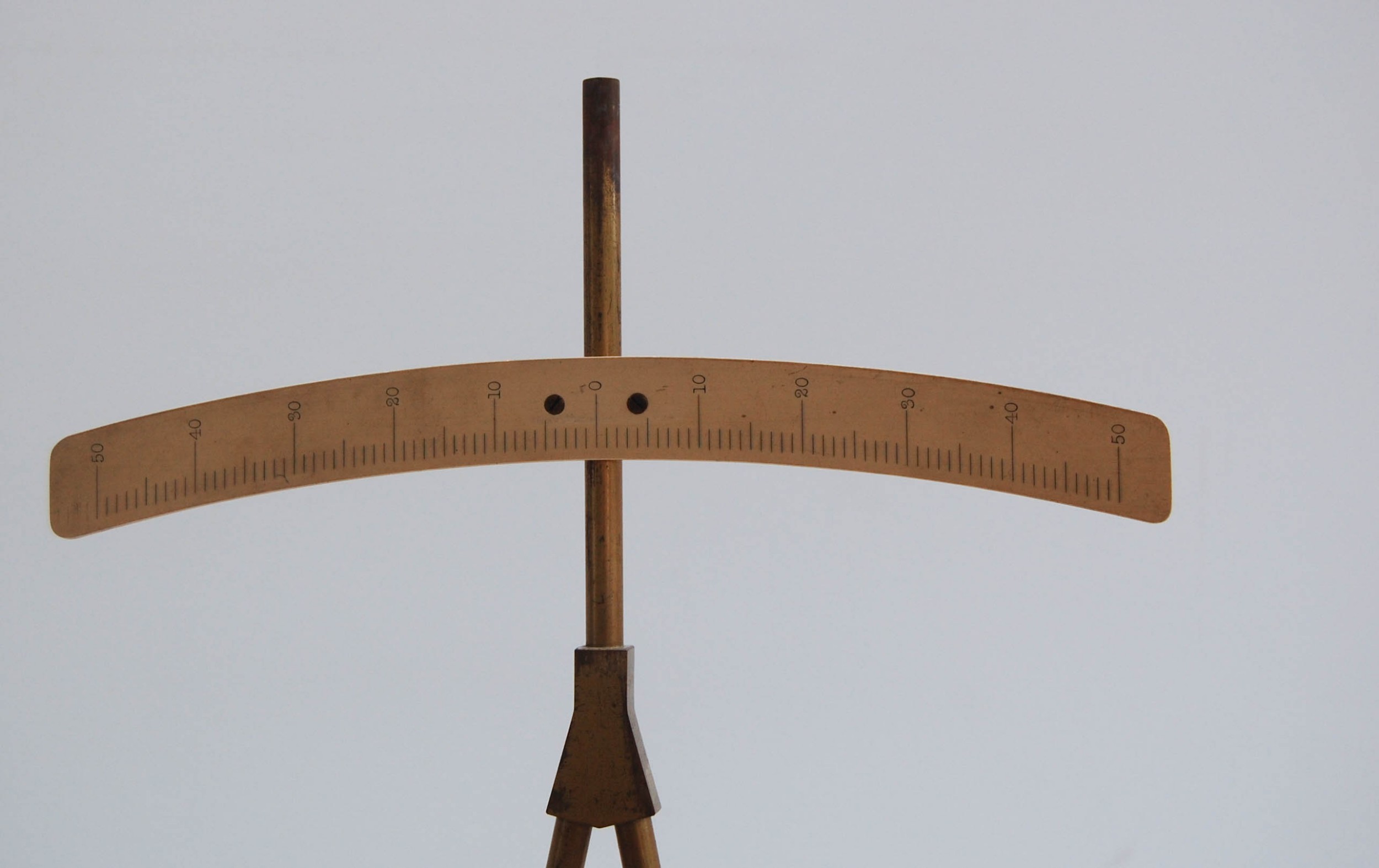
Two light rods (EF) form a fixed triangle, and the vertical rod (E) projects and has a small groove at its end which forms a bearing for a knife edge carried by the pointer (P). A second knife edge on the latter rests upon a second vertical rod (H) depending from the upper clip (A). A small screw is provided for bringing the pointer to zero at the beginning of a test. The strain of a specimen causes the rod (H) to move slightly relative to the rod (E), this movement being magnified 100 times by the pointer lever.
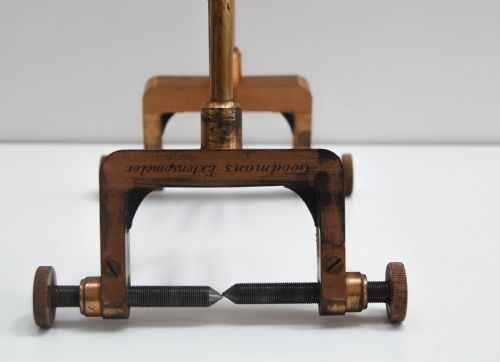
This and most other extensometers should be taken off the specimen as soon as the yield point is reached.”
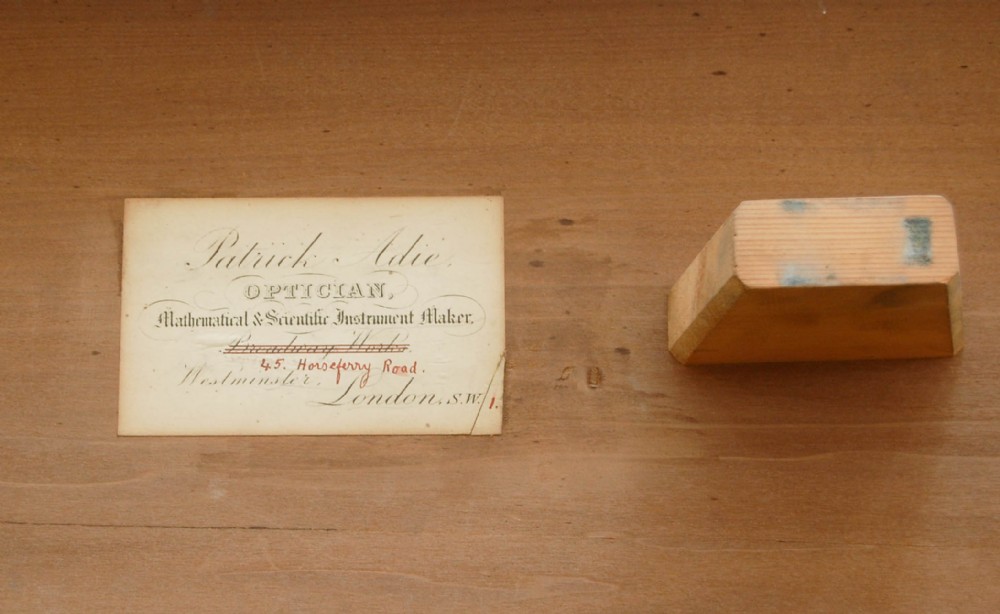
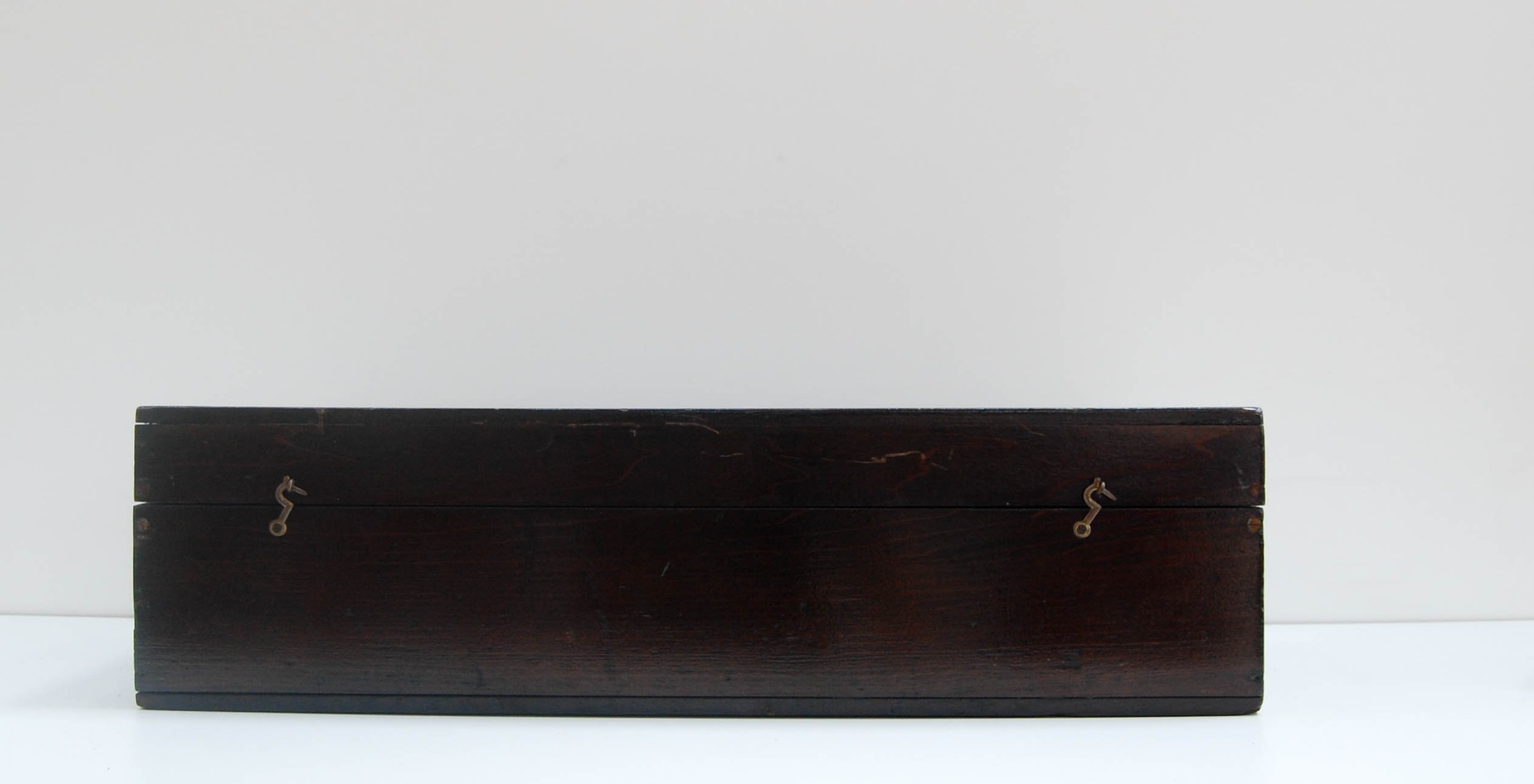
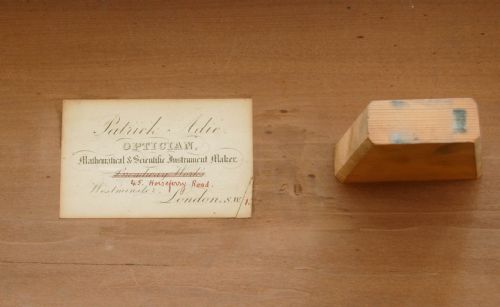
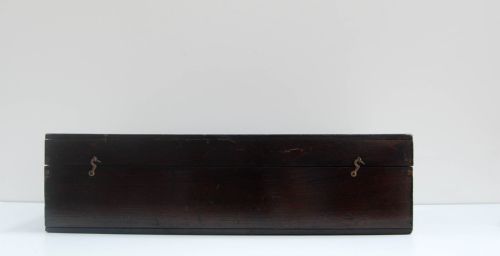
This unusual instrument is constructed of solid brass, with bone engraved scale and wooden scale pointer all incorporated in its original box which maintains its trade label to “Patrick Adie, Optician, Mathematical & Scientific Instrument Maker. Broadway Works, Westminster. London”. It should also be noted that the original address of Broadway Works has been crossed out and replaced in red ink with the address of 45 Horseferry road.
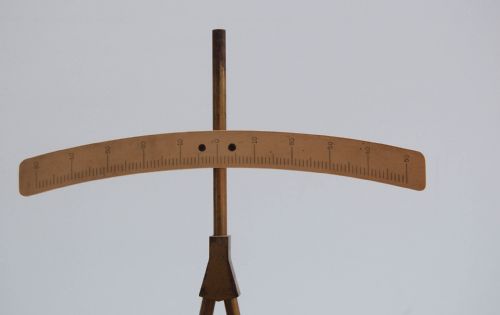
This change is significant for dating in that the Patrick Adie Company moved from Broadway Works n and around 1901 so it is likely that this instrument was manufactured at Broadway and was late sold at Horseferry after the company’s relocation.
The history of the Adie dynasty began in 1776 with the celebrated Edinburgh scientific instrument maker John Miller, the uncle of Alexander Adie. Miller himself had been apprenticed under the world renowned maker George Adams so Alexander was privileged to have had an uncle from such a prestigious background.
From 1789, Adie (1774 – 1858) undertook his apprenticeship with Miller and by 1804, a partnership was agreed which traded at various addresses on Nicholson Street. Miller & Adie continued to trade until 1822 (although Miller had died by 1815) whereafter the business was renamed solely to Alexander Adie. By this point, Adie was himself an accomplished maker with a focus on meteorological instruments and had by 1818 taken out a patent (No: 4323) for a sympiesometer, a type of barometer designed initially for marine use which contained hydrogen and almond oil instead of mercury. Perhaps the most well-known instrument that the Adie family are now recognised for, this invention was patented as, “An improvement on the air barometer” an instrument that had been conceived as early as 1668 by Robert Hooke but never brought into practical use until Adie’s later developments.
By 1822, Adie had a family of three sons, John (1805-1857), Richard (1810-1881) and Patrick (1821-1886) and it is sensible to presume that all undertook some kind of apprenticeship under him. The eldest, John went into business with his Father to form Adie & Son in 1835 and Richard is also known to have worked for the firm. Like many scientific instrument making firms of the period, both Richard and Patrick were to go on to set up their own successful satellite firms under their own names both in Liverpool and London respectively.
In Edinburgh, the partnership between Alexander and John contin
Jason Clarke Antiques has dated this piece to the 1900s.
You can view the stock and full dealer information on the Jason Clarke Antiques Profile Page
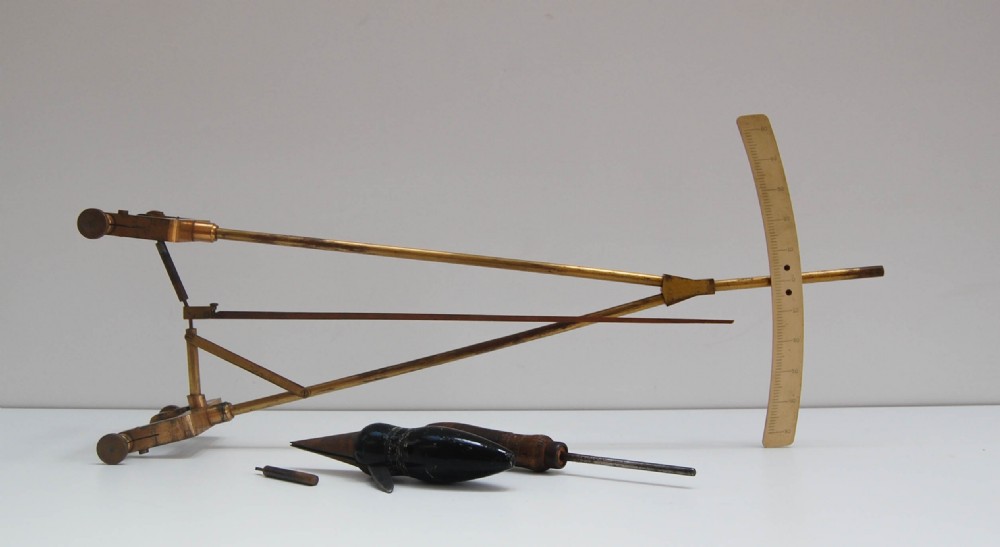
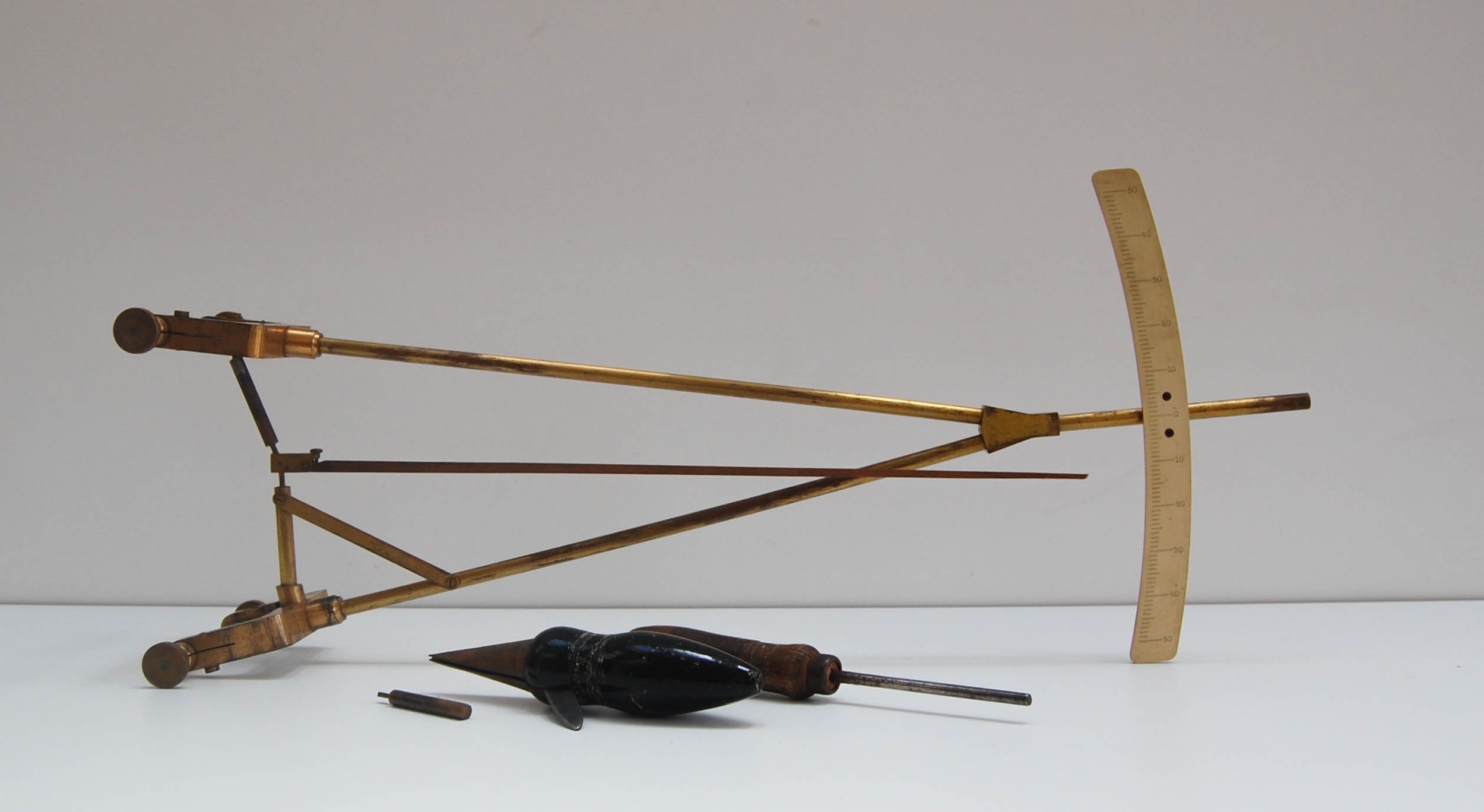
Rare Edwardian Goodmans Extensometer by Patrick Adie of London