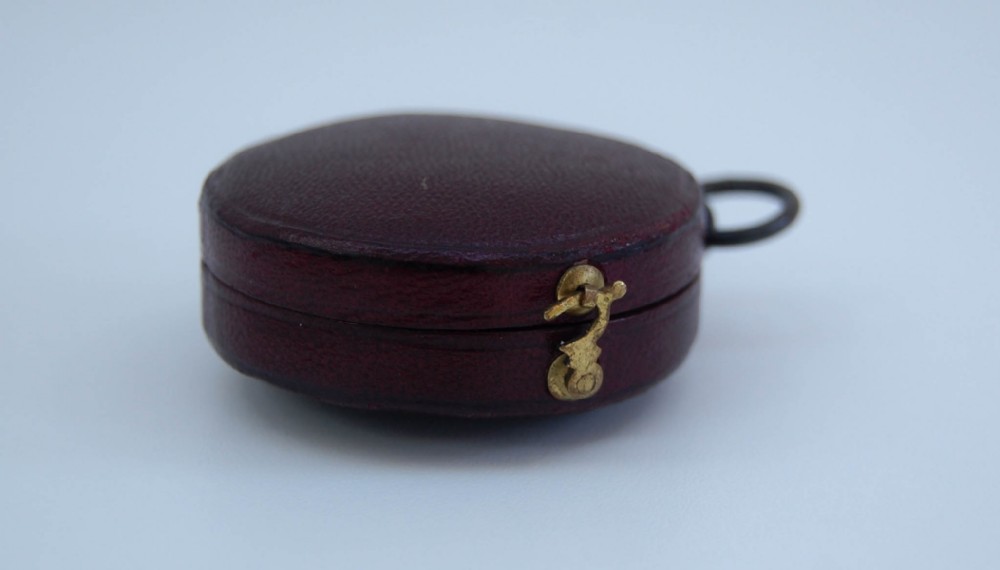
It was listed by Jason Clarke Antiques. Sold pieces stay on Sellingantiques as a record of what has passed through, and the next one is rarely far away.
Jason Clarke Antiques has dated this piece to the 1900s.
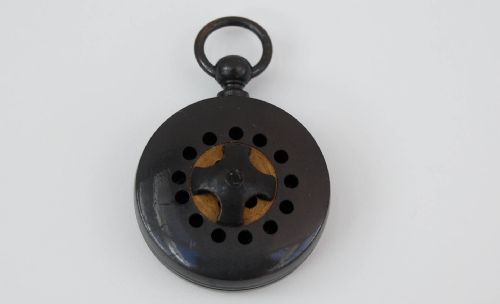
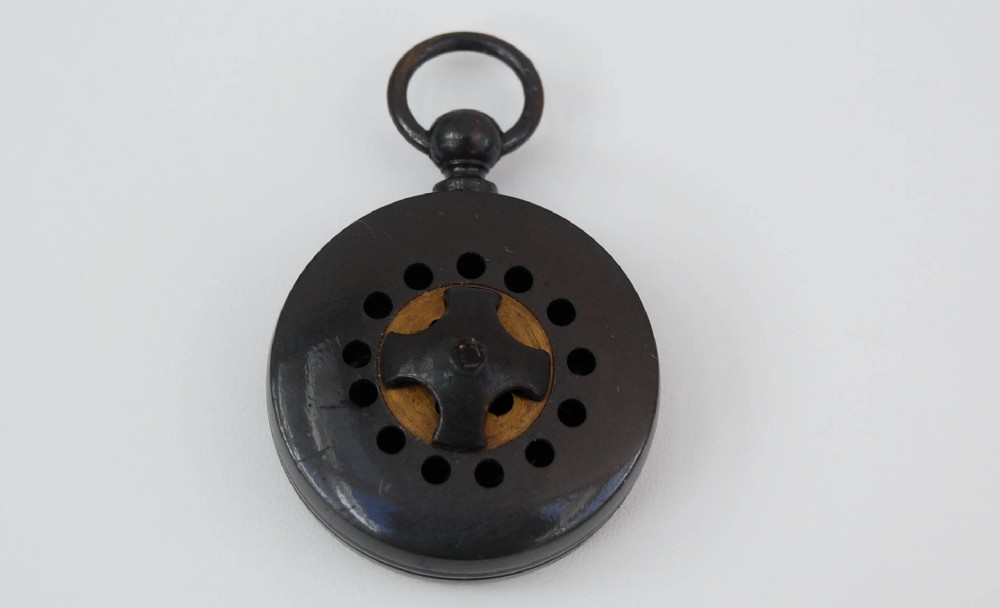
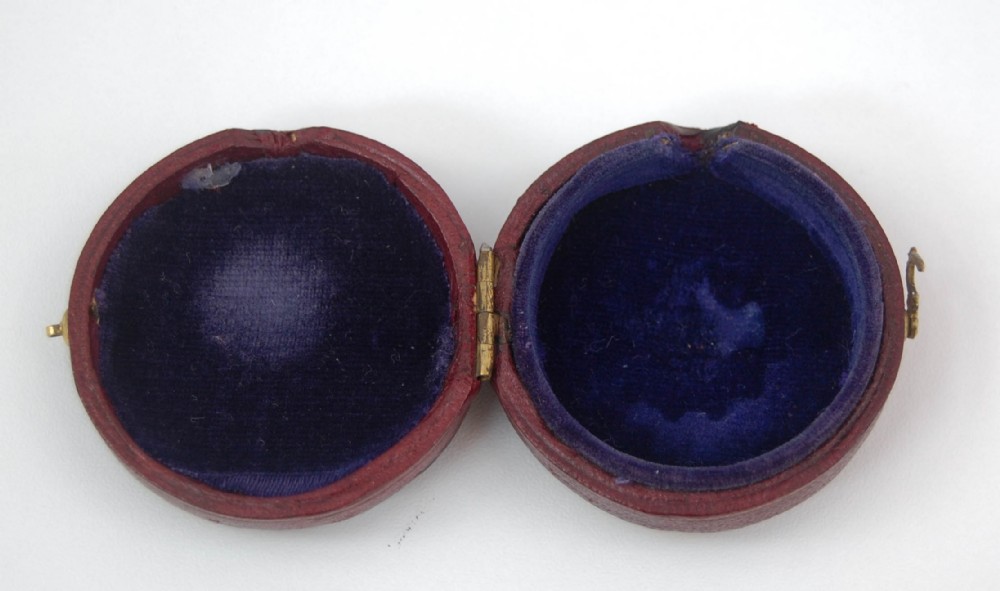
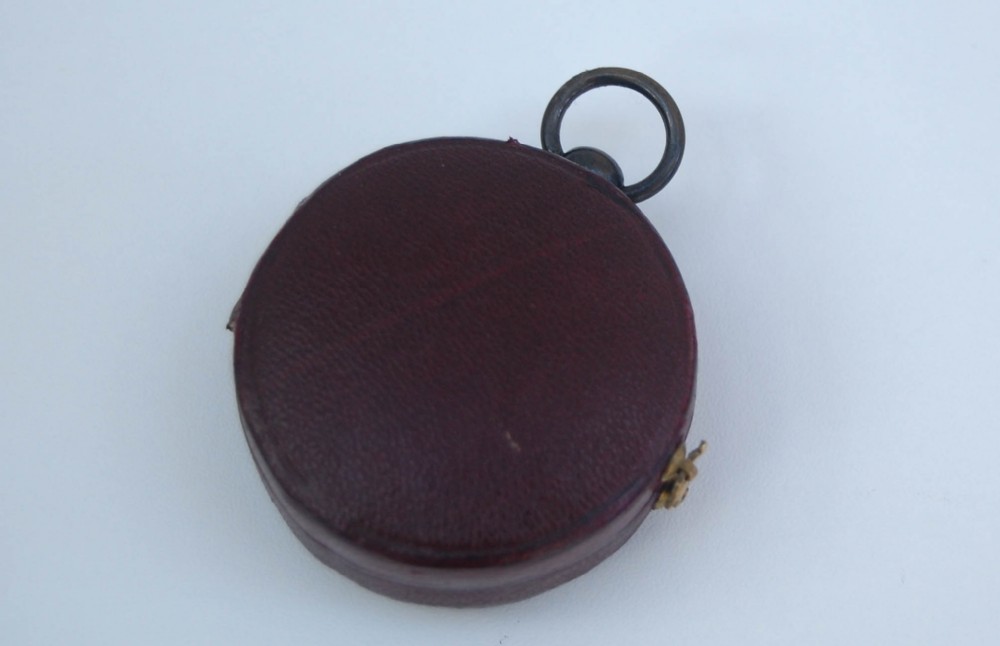
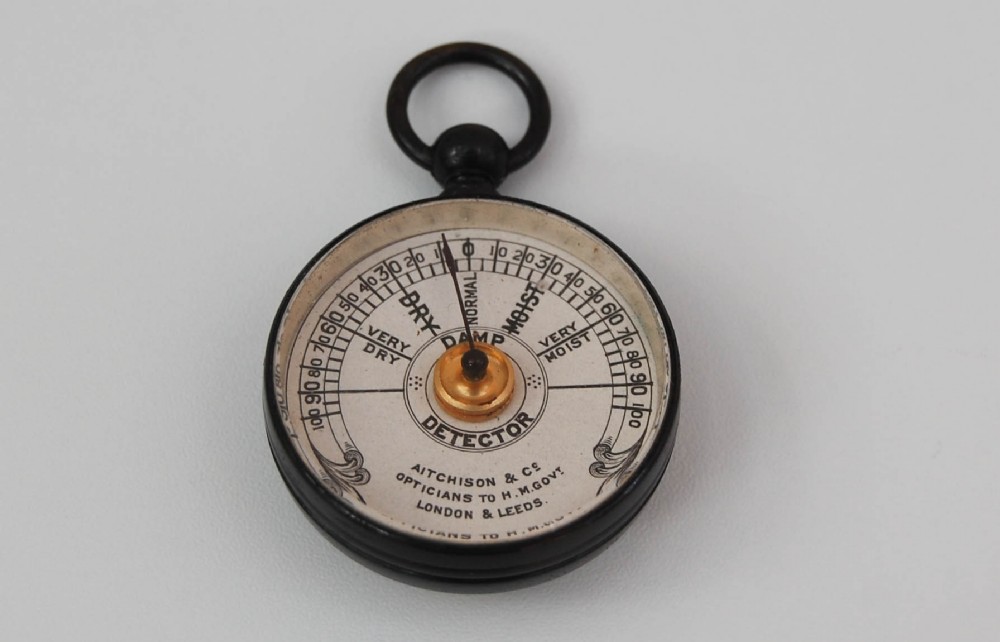
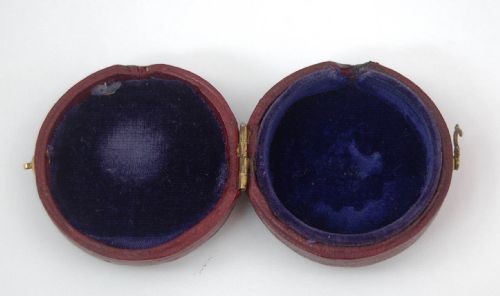
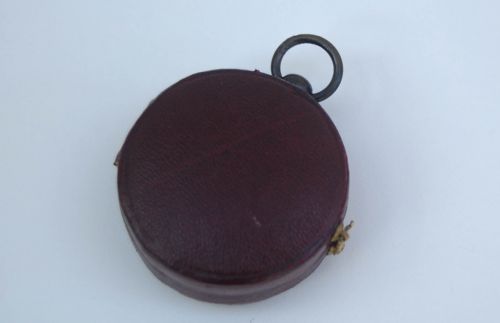
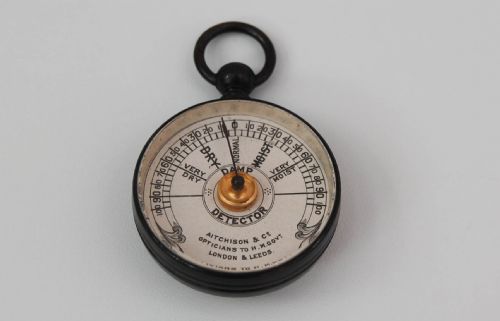
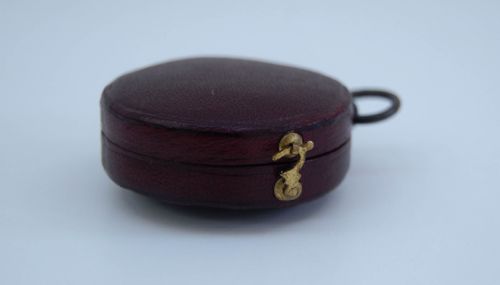
Unusually, the hygrometer remains with its original case and like the instrument itself, remains in near perfect condition and would have been retailed by Aitchison in London or in its regional Leeds branch. The naming of the Leeds branch is useful for dating purposes as this branch did not open until 1905.
These instruments gained popularity during the latter part of the nineteenth century where they were devised for measuring how damp cloth and linens were when they were returned from laundries used by the wealthy due to the lack of home facilities. The fear of cold and flu was a tangible concern at the time and these ‘pocket damp detectors’ were recommended for use in an 1889 publication named, “Suggestions to mothers on the management of their children” to ensure that healthy standards were met. Due to their portability, they are also considered to have been used for travelling purposes and the testing of hotel linens and overnight facilities for similar reasons.
Aitchison’s firm was founded in 1889 at 47 Fleet Street, he undertook his apprenticeship with an optician’s firm in High Holborn before setting up in business initially with Alexander Thomas Clarkson (of Broadhurst Clarkson fame). He is said to have been uncomfortable with the very basic methods that his previous employers used to examine and test patient’s eyes and in a time where glasses were becoming common place across all classes in Britain, he quickly carved himself a niche for supplying very good, high quality lenses at reasonable rates which appealed to the varying pocket sizes providing the public with gold, silver and steel frames for spectacles, lorgnettes, monocles and pince-nez.
Given his reasoning for leaving his previous employment, the subject of standards within the industry continued to be an issue close to Aitchison’s heart, the Worshipful Company of Spectacle Makers was, by then, purely a means of apprenticeship and for gaining practical skills in manufacture rather than for gaining an understanding of the science of optics. They showed little interest when in 1890, Charles Hyatt-Wolf proposed changes to the process which would include examination and certification and having received his re-buff, Wolf sought to organise a separate body to try to tackle the standards of practice. The journal “The Optician” was created in 1891 and in 1895 when Hyatt-Wolf created The British Optical Association (BOA), Aitchison was an enthusiastic founding member and supporter. By this time, he had dissolved his partnership with Clarkson (Gazette 1891) and opened two further branches at 6 Poultry (close to Robert Brettell Bates old premises) and at 428 The Strand. Little is known of Aitchison’s early partnership, Clarkson had owned his own company since 1873 which seems to have remained distinct throughout. As a result or as a precursor to the decision, Robert Henry Broadhurst joined Clarkson in 1892 and went on to form an equally famous partnership.
The Spectacle Maker’s Company were slow to respond to pressure but in 1898 they began an initial set of examinations which were regarded as unsatisfactory by the BOA and with the efforts to align their activities failing, the BOA brought out its own set of examinations later in the same year. Luckily for the students, the newly built College of Advanced Technology catered for both courses and The Spectacle Makers Company agreed to fund its tutors for the first two years.
Aitchison was amongst the first of The BOA members to undertake its tests but by 1899 had become unimpressed by both The C
Jason Clarke Antiques has dated this piece to the 1900s.
You can view the stock and full dealer information on the Jason Clarke Antiques Profile Page
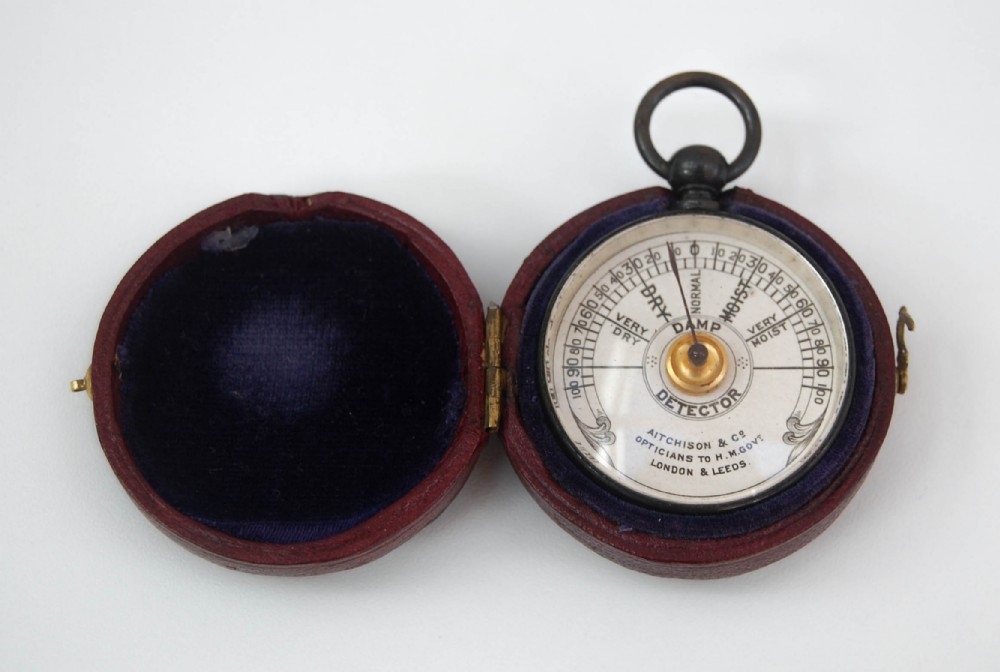
Edwardian Cased Pocket Damp Protector or Hygrometer by Aitchison & Co of London & Leeds