It was listed by Jason Clarke Antiques. Sold pieces stay on Sellingantiques as a record of what has passed through, and the next one is rarely far away.
Jason Clarke Antiques has dated this piece to the 1800s.
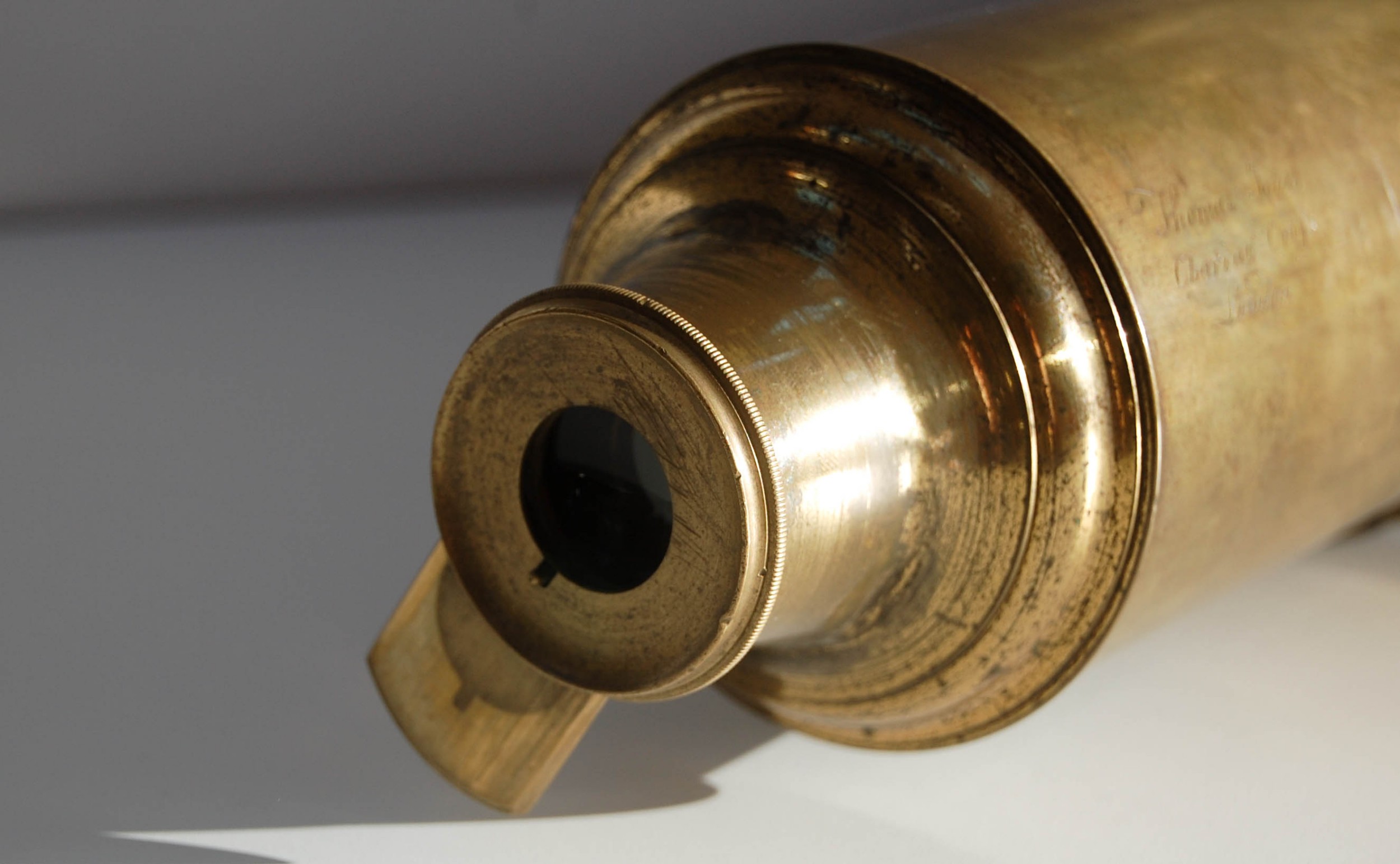
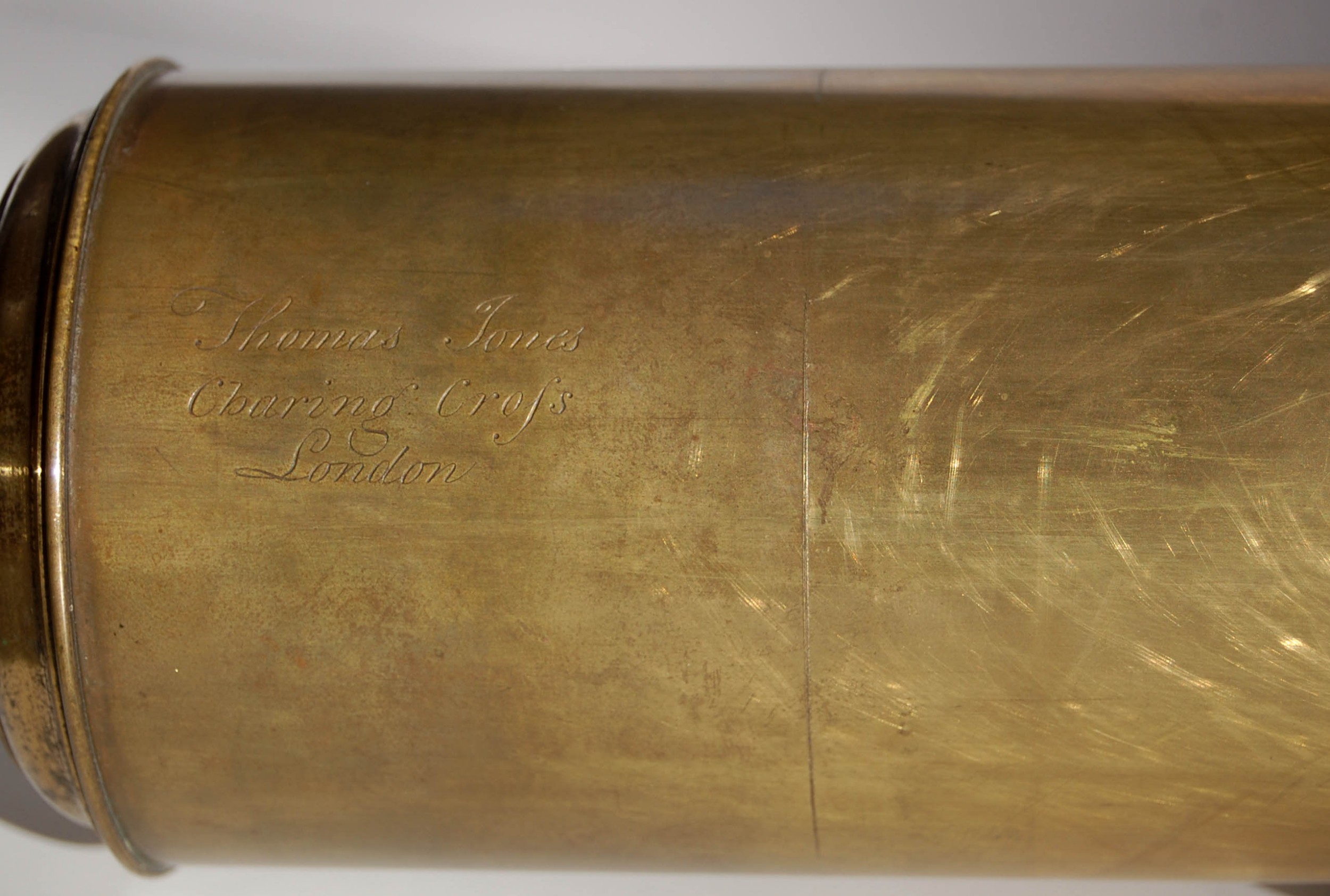
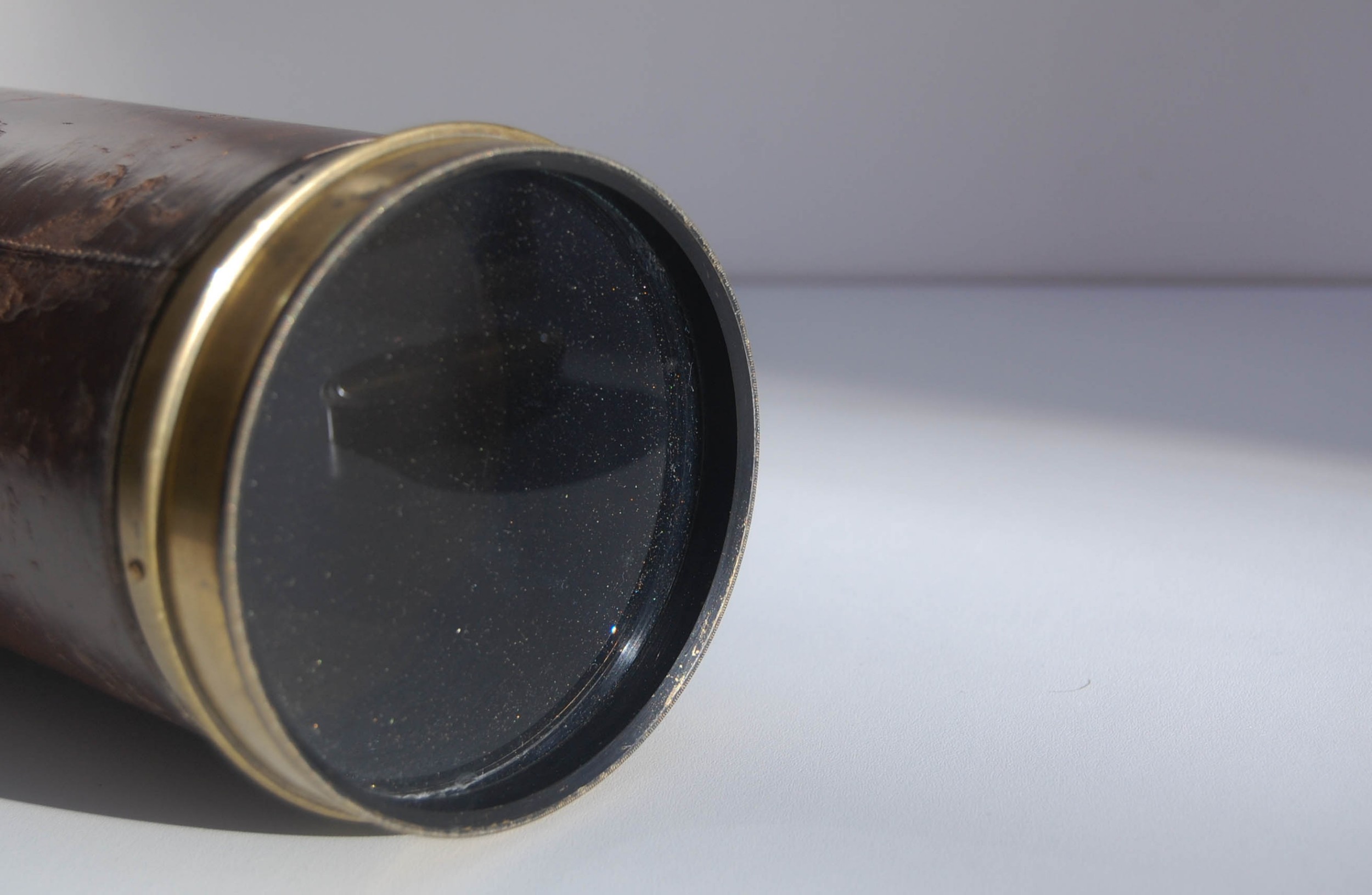
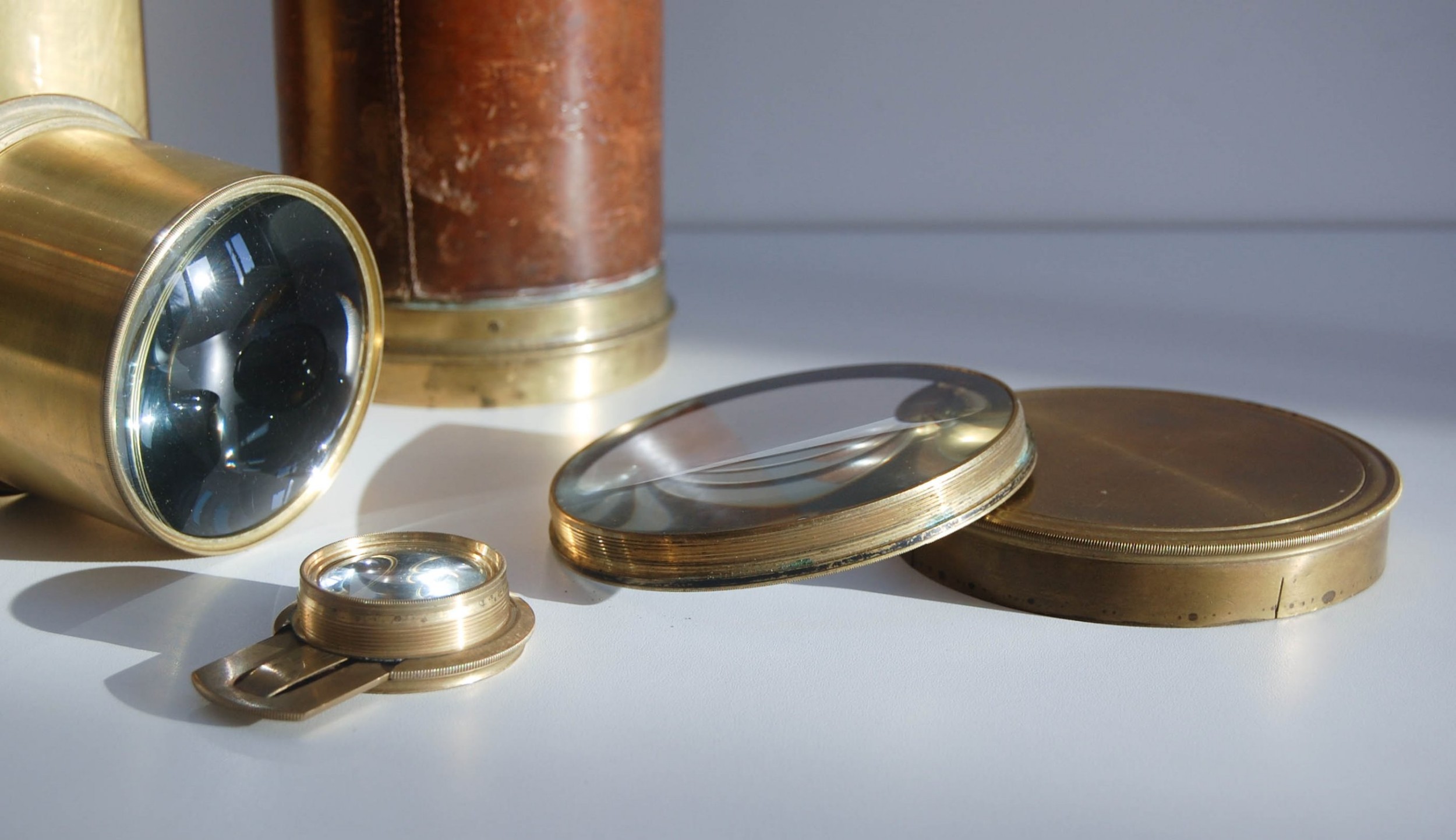
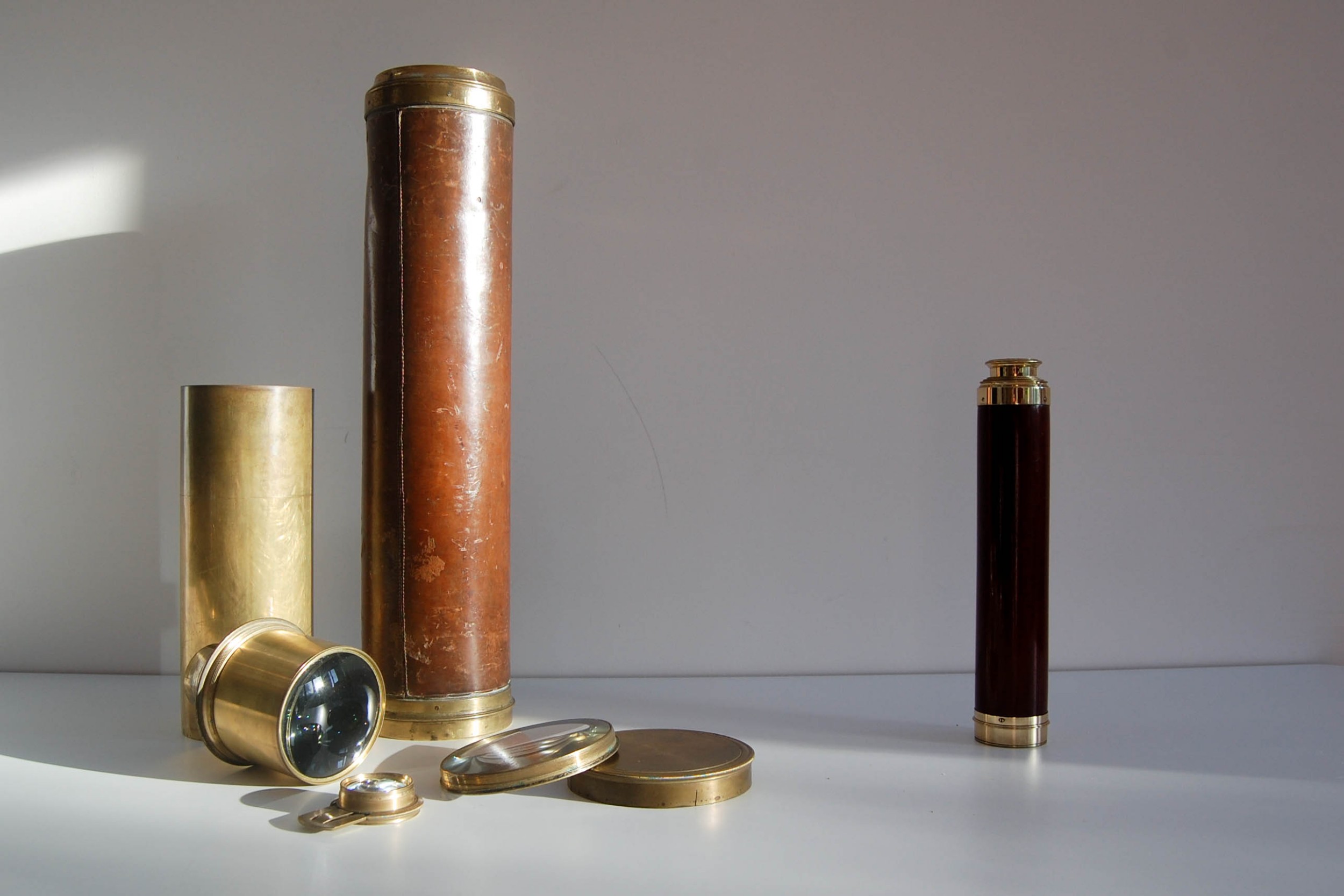
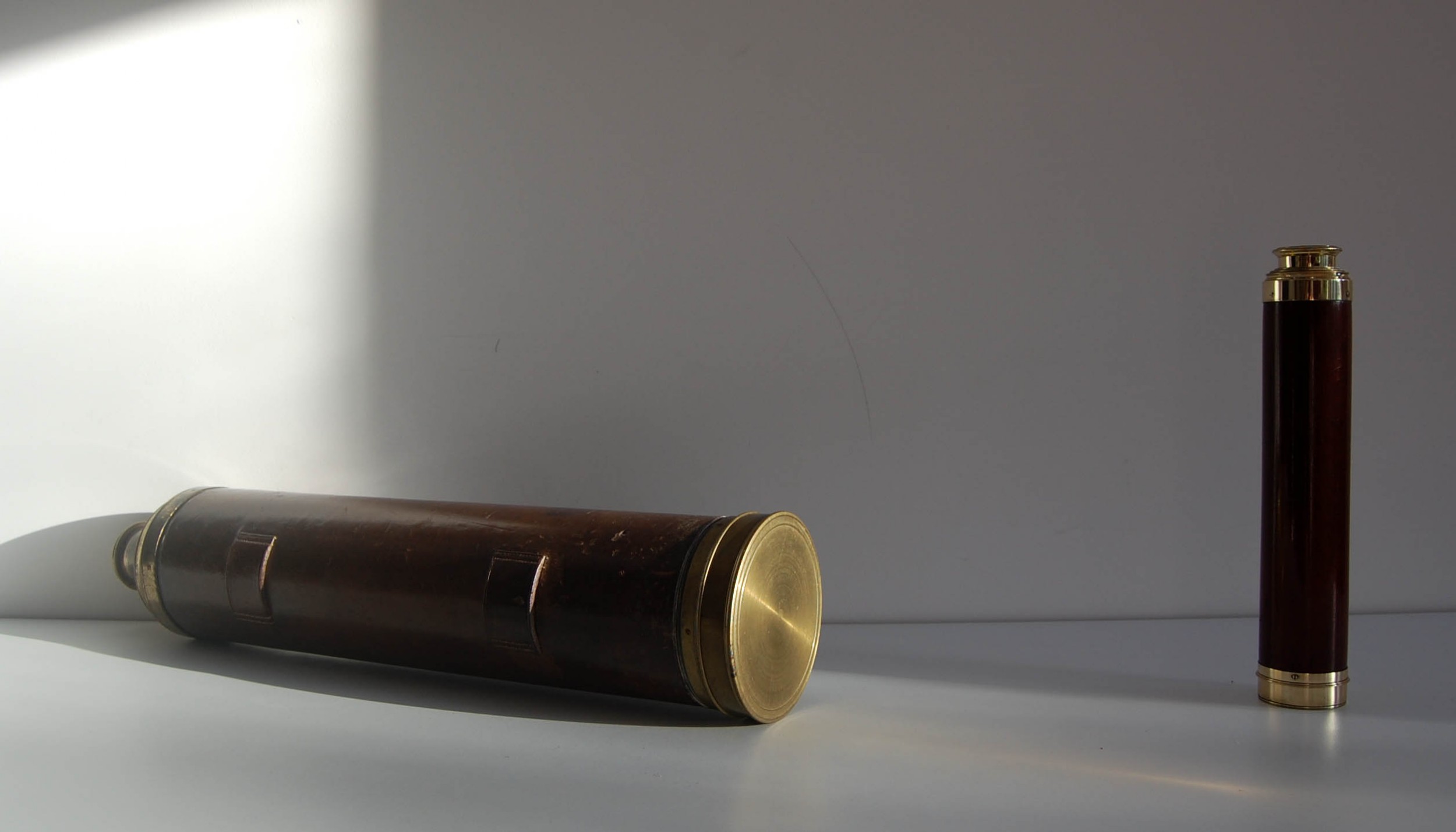
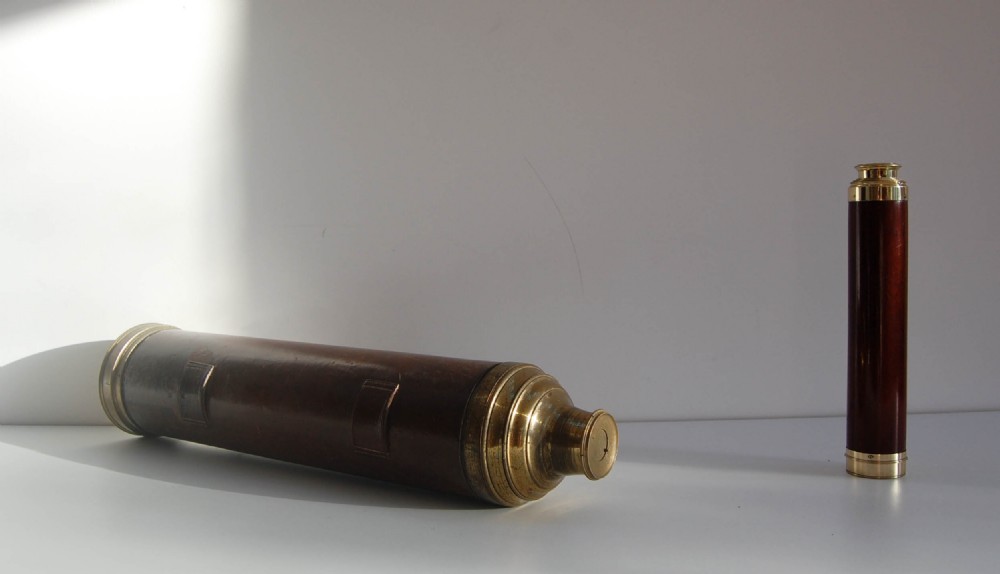
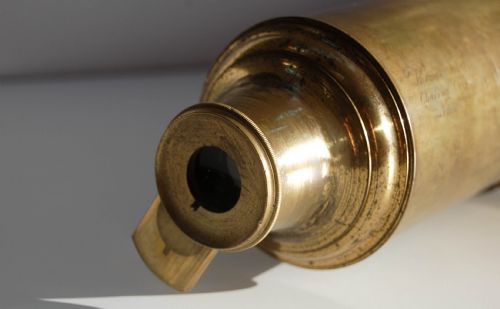
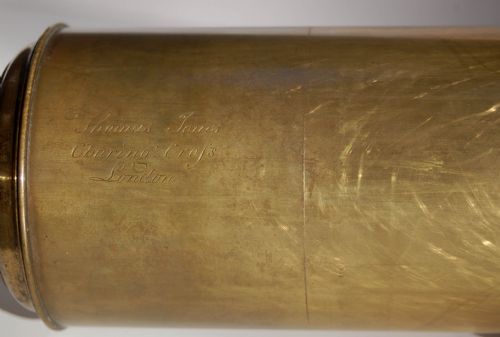
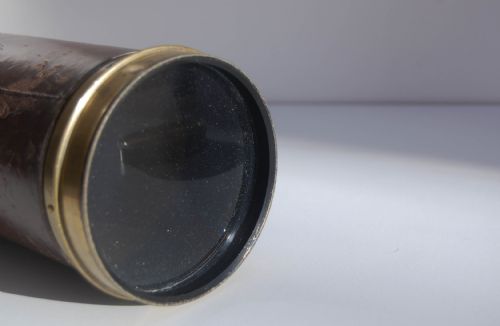
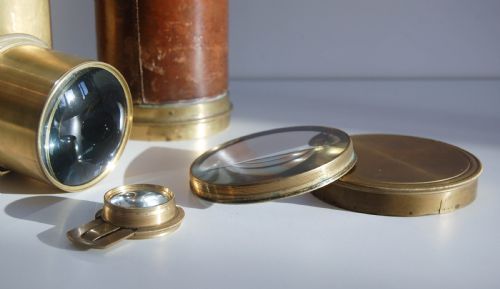
The large four inch objective lens would have been conceived to allow for as much natural light to enter the barrel of the telescope and the eyepiece contains a further two lenses in a short draw tube with no backstop as is typical of the form. The combination of lenses presents an intentionally inverted image as an additional erector lens (making it a refracting telescope) would also reduce the overall power of the instrument and thus defeating the purpose. The leather covered barrel measures 49cms when closed and 69cms when drawn to its full extent. The draw is engraved to the famous “Thomas Jones, Charing Cross, London” and also retains its original dust slide to the eyepiece and objective lens cap.
A contemporary publication of 1828, “The Panorama of Science & Art” by James Smith describes the night glass in the following way:
“The telescope called a night glass is nothing more than the common astronomical telescope with tubes, and made of a short length, with a small magnifying power. Its length is usually about two feet, and it is generally made to magnify from six to ten times. It is much used by navigators at night, for the purposes of discovering objects that are not very distant, but which cannot otherwise be seen for want of sufficient light, such as vessels, coast, rocks etc. From the smallness of its magnifying power, and the obscurity of the objects upon which it is employed, it admits of large glasses being used, and consequently has an extensive and well enlightened field of view”.
The maker Thomas Jones (1775 – 1852) was a superior maker of scientific instruments. Apprenticed to eminent maker of the period, Jesse Ramsden from 1789-1796 at a cost of 50 guineas, Jones continued to work for Ramsden until his death in 1800. Most sources have the firm’s working dates as starting in 1806 and references to work undertaken for Edward Troughton during this period would suggest that he worked as a jobbing instrument maker for the six years prior to opening his first premises in Mount Street. The history of the firm of Troughton & Simms also relates that Jones whilst working for Ramsden, provided the young William Simms with a supporting letter to The Royal Society for Simm’s “improved protractor” so we can be sure that a good working relationship existed. His first year of trading brought Jones’s first success in a commission from Mr HC Englefield to manufacture his new portable or “mountain barometer”. Englefield wrote that he had,
“Employed Mr Thomas Jones, of number 120 Mount St, Berkeley Square, pupil of the late Mr Ramsden, and who will furnish them at the price of two guineas and a half with the attached and detached thermometer”.
The barometer (although very rarely found on the market today) proved extremely popular, so much so that Jones wrote a pamphlet eleven years later in 1817 entitled, “A companion to the Mountain Barometer” wherein he states that “since its introduction in 1806 he had sold between 300 and 400 of these instruments”. It is also interesting to note that Jones signs himself off as, “Astronomical and philosophical instrument maker to his Royal Highness the Duke of Clarence” in this publication so he must have held the Royal Appointment for at least twenty years until William IV eventually died.
(Note: I have an Edward Troughton (pre-Troughton & Simms) Mountain Barometer of this type currently for sale if the reader is interested to see an example. It is of course possible that Jones may have made this for Troughton under contract, given his relationship to him).
In 1811, a fu
Jason Clarke Antiques has dated this piece to the 1800s.
You can view the stock and full dealer information on the Jason Clarke Antiques Profile Page
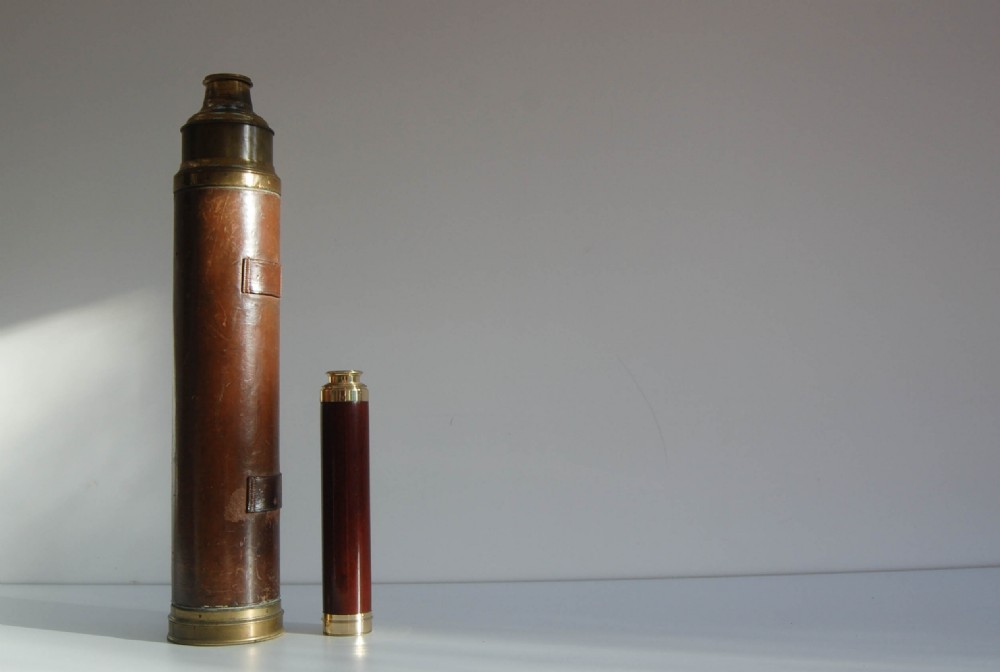

George III Period Night Glass or Night Telescope by Thomas Jones of Charing Cross, London