It was listed by Jason Clarke Antiques. Sold pieces stay on Sellingantiques as a record of what has passed through, and the next one is rarely far away.
Jason Clarke Antiques has dated this piece to the 1880s.
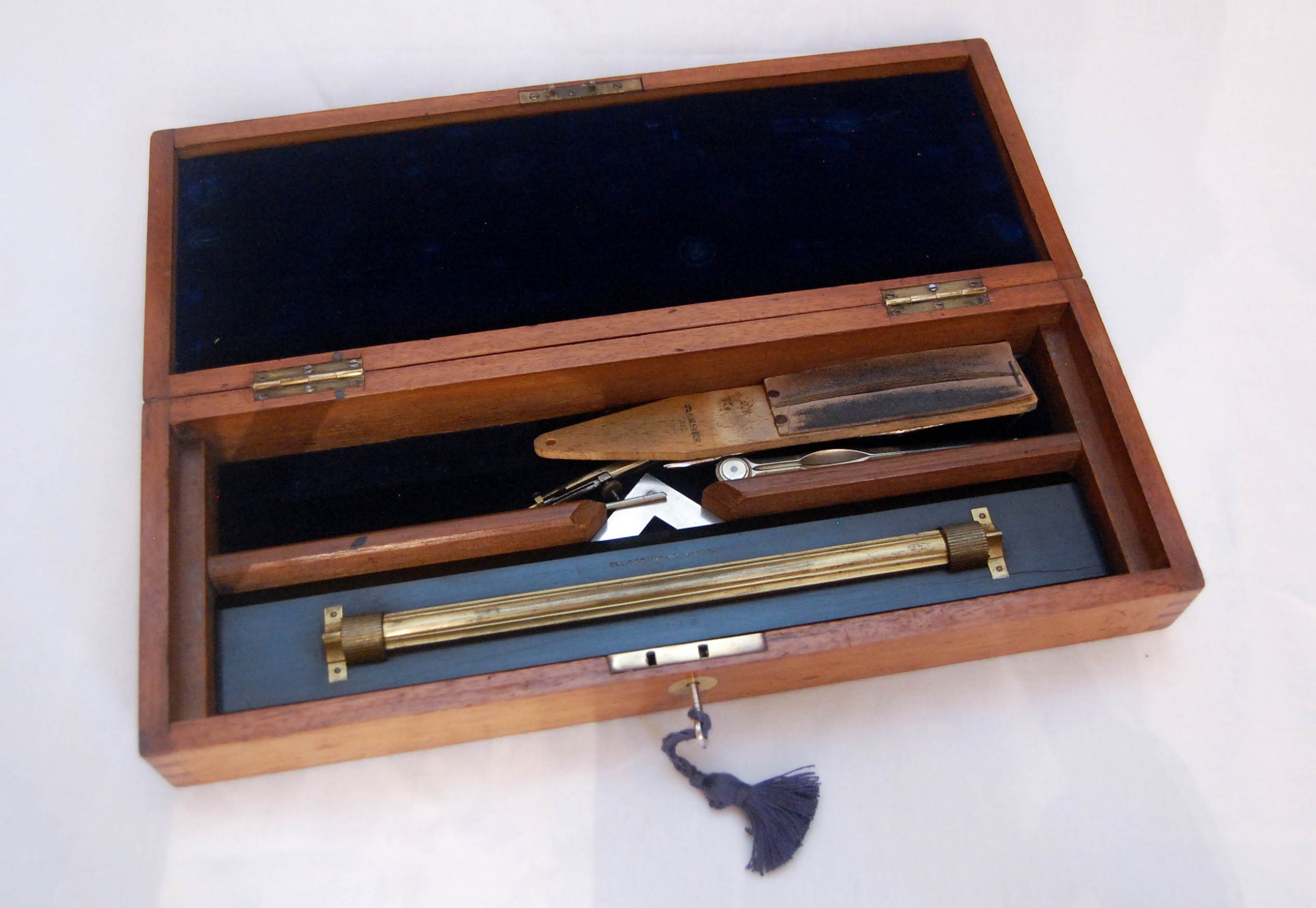
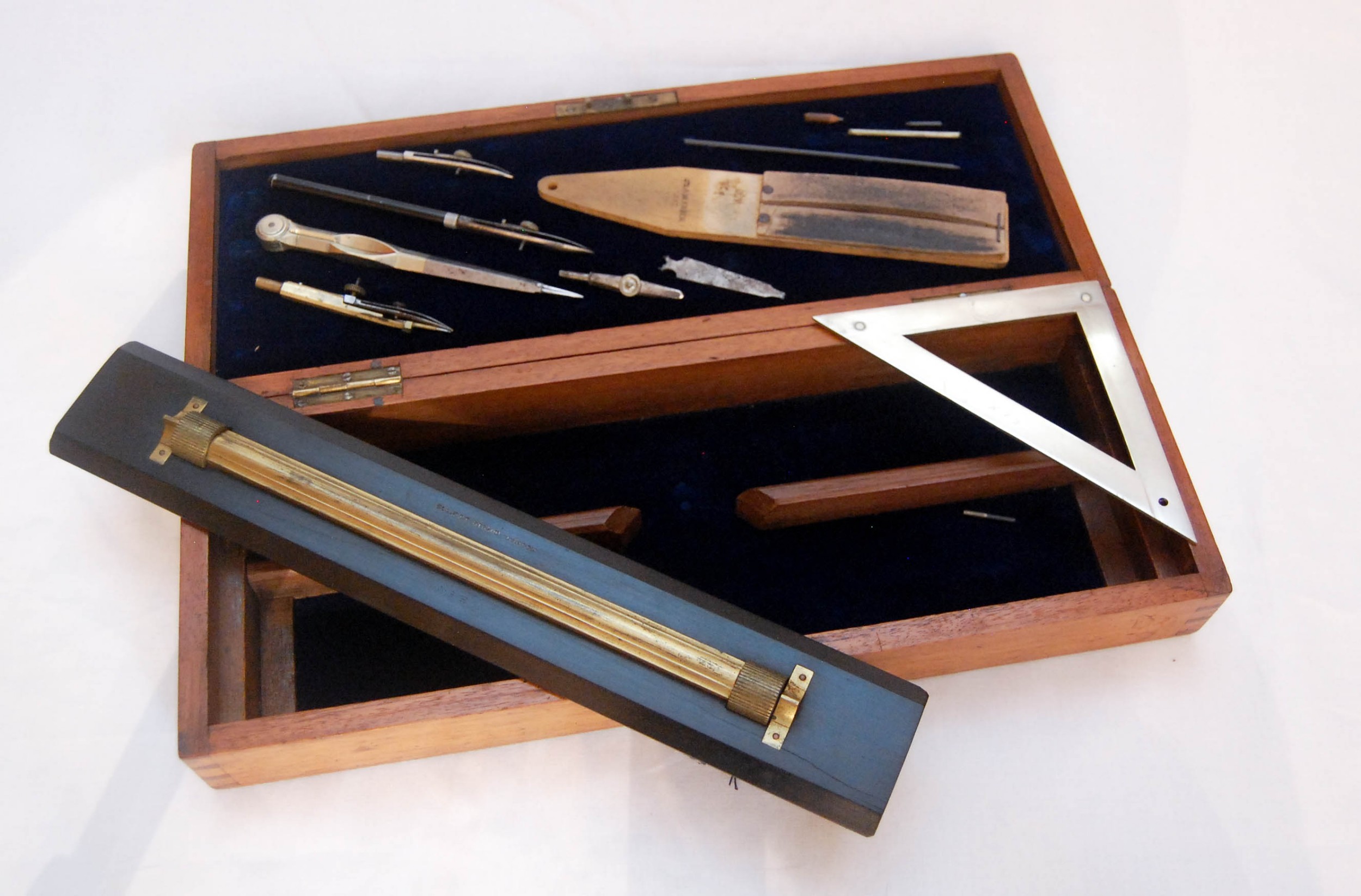
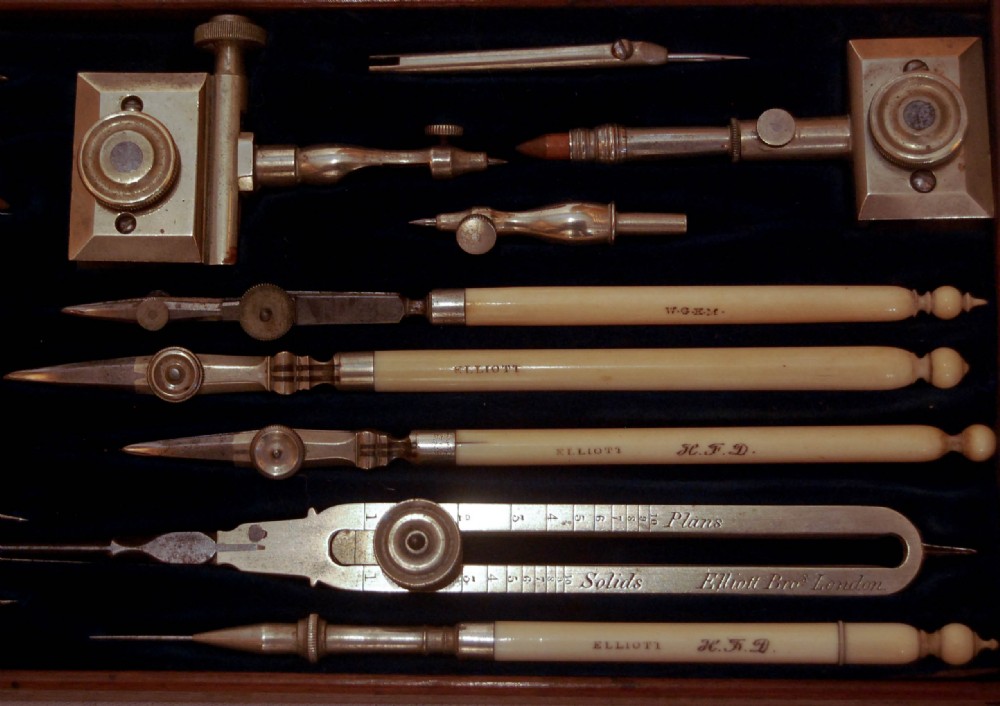
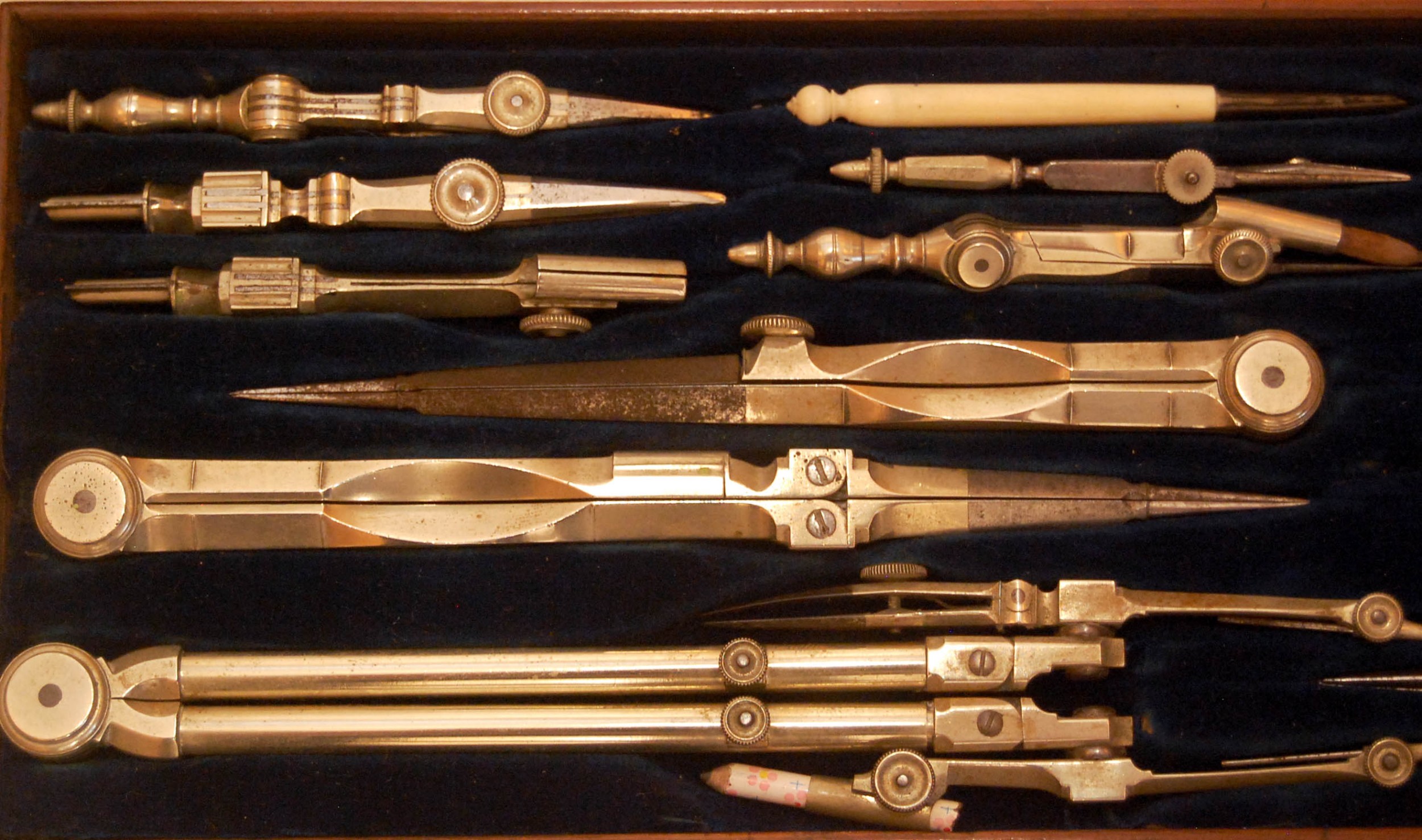
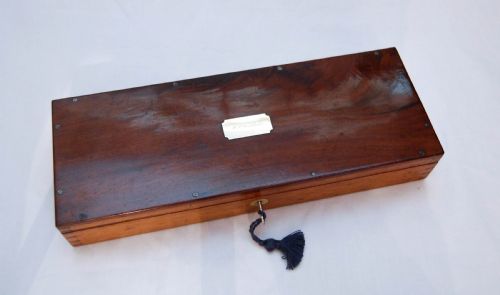
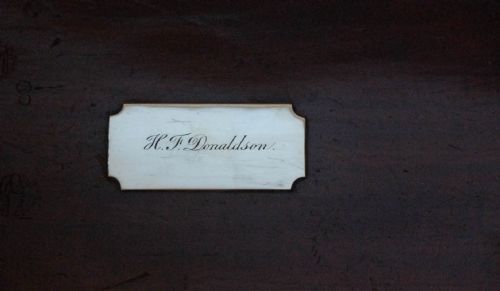
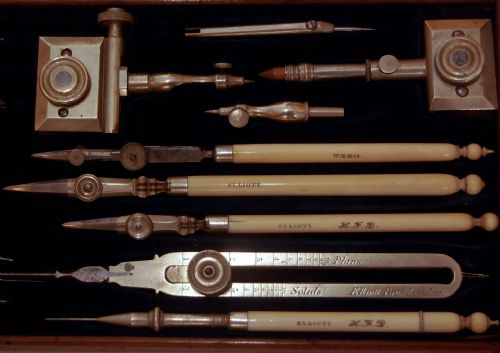
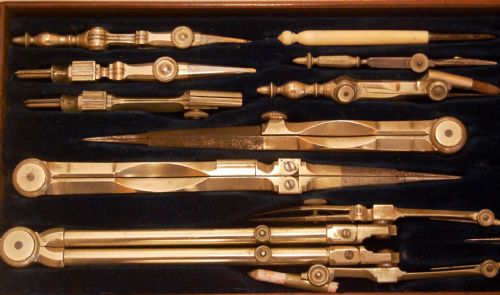
The lift out top section contains numerous dividers including a proportional divider, a pair of Swiss pattern trammels, pens and a rare telescopic turnabout compass. All instruments are marked to Elliott and/or engraved with Donaldson’s initials.
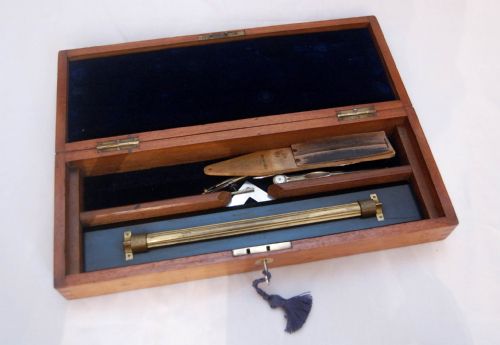
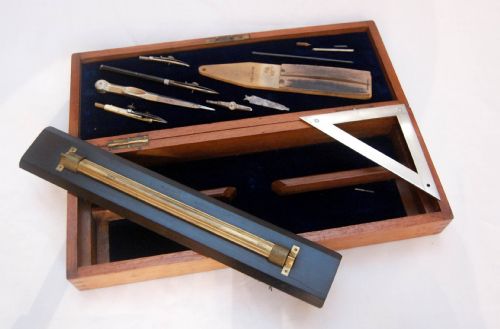
The base section has an ebonised wooden rolling parallel marked to “Elliott Strand London” and with initials HGD engraved to the top, numerous pen attachments including a further bone handled and stamped example, an initialled forty five degree set square and a later sanding block for creating points on pencil leads.
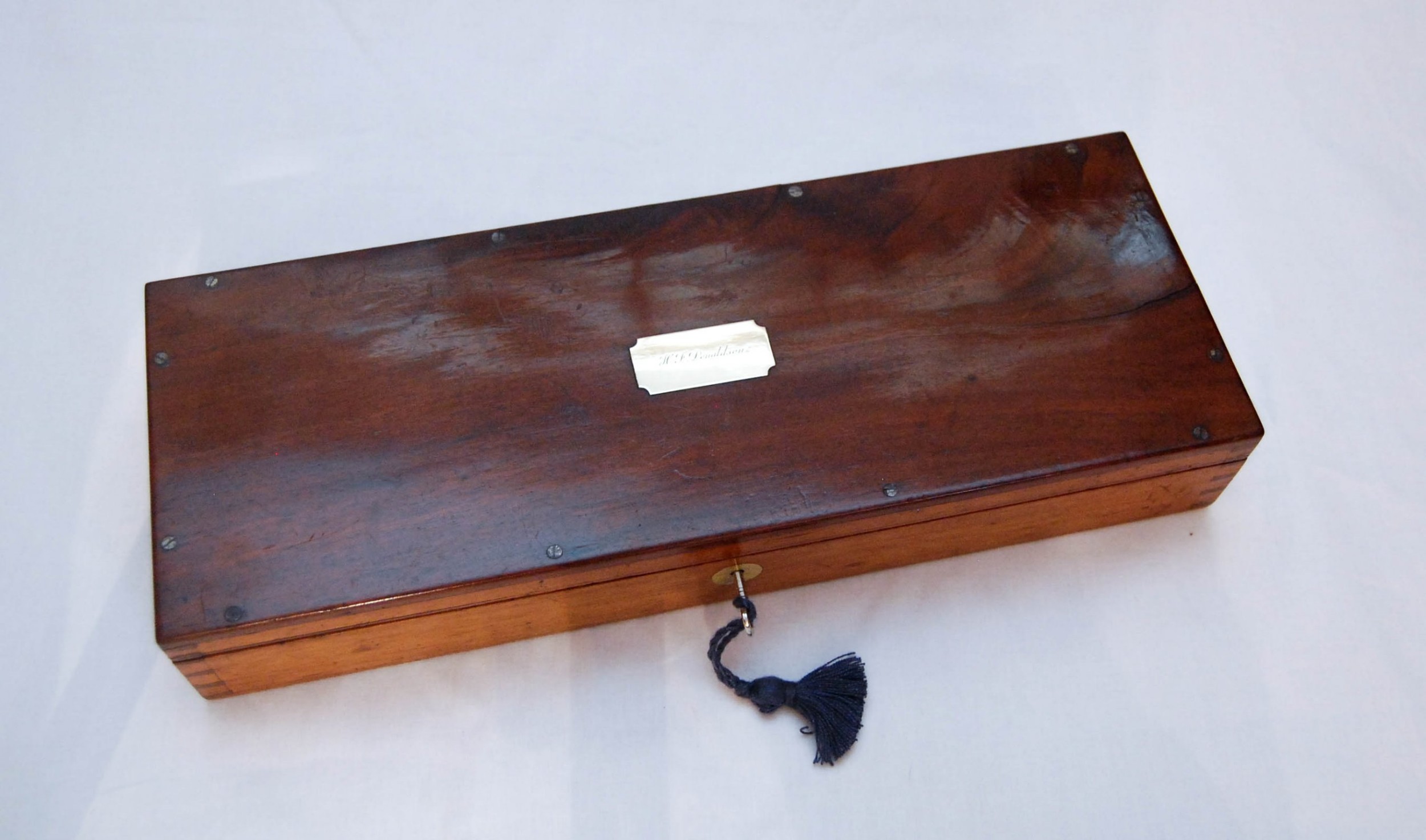
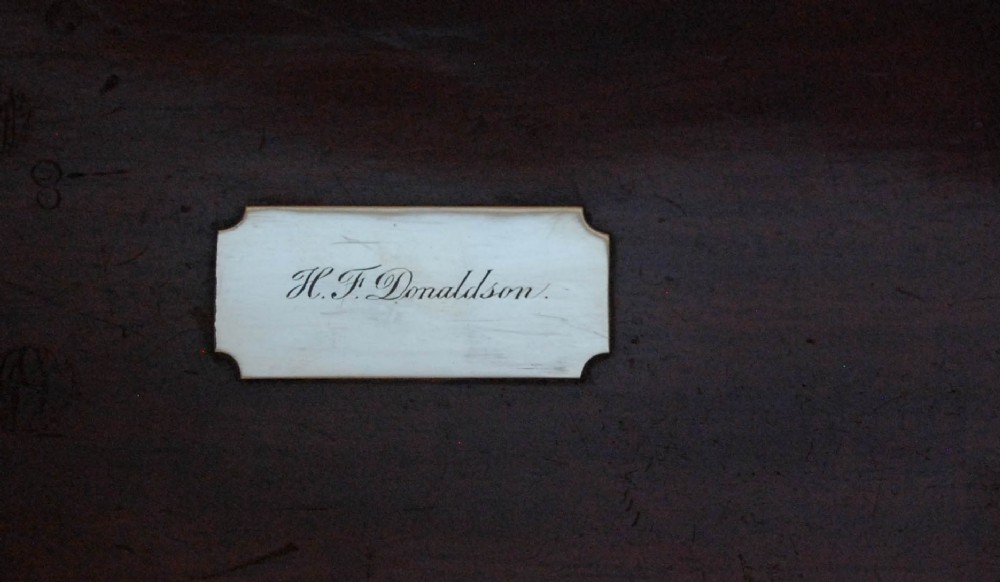
The owner of this superb set of drawing instruments Sir Hay Frederick Donaldson and his life’s works are sadly overshadowed by the unusual cause of his death. He was killed when the HMS Hampshire was struck by a mine off the coast of The Orkney Isles whilst leaving on a secretive mission headed by Lord Kitchener to bolster support from the Russian Tsar during the early part of World War One. Kitchener also died as a result of this event.
Numerous conspiracy theories have abounded for a century around the reasons for the Hampshire’s path through the mine field and a book on the subject, “HMS Hampshire: A Century of Myths and Mysteries Unravelled” has recently sought to correct the long debate. However, his contribution to Engineering industry in both the UK and on a global basis cannot be understated. The 1916 obituary written by the Institution of Civil engineers properly sums up this important character of the Late Victorian and Great War Periods.
Sir HAY FREDERICK DONALDSON, K.C.B., lost his life by the destruction of H.M.S. Hampshire off the Orkneys on the 5th June, 1916, whilst proceeding with Lord Kitchener to Russia. In the calamity which then befell the nation, The Institution suffered a threefold loss in the deaths of Lord Kitchener, Honorary Member, Sir Frederick Donaldson and Leslie S. Robertson.
The subject of this memoir was the second son of Sir Stuart Alexander Donaldson, the first Premier of New South Wales, and was born at Sydney on the 7th July, 1856. He was educated at Eton and at Trinity College, Cambridge, afterwards receiving technical training at Edinburgh University.
From 1875 to 1877 he served a term of pupilage and apprenticeship at the London and North Western Railway Works at Crewe, under the late Mr. F. W. Webb, and afterwards received further technical training, from 1877 to 1879, at Zurich Technical School and at Cambridge.
In 1880 he was employed on Parliamentary work and as engineer in charge of the construction of the Burnley tramways under the late Mr. Joseph Kincaid, being later - in September 1881 - appointed one of the assistant engineers, and shortly after made an executive engineer on the West of India Portuguese Railway and Harbour, under Mr. E. E. Sawyer. During part of his service with this company he held charge of the harbour works at Goa, but was mainly responsible for the construction of sections of the railway, involving much heavy work.
In 1887, on the completion of his duties in India, Mr. Donaldson, as he then was, returned to England, and in the autumn of the same year was appointed by the late Mr. Thomas A. Walker, contractor, as his engineer in charge of No. 1 section of the Manchester Ship Canal, this engagement involving the construction of entrance locks, estuary banks, and heavy piling work of great magnitude and importance. After leaving the Manchester Ship Canal he was engaged in 1891 and 1892 in private engineering practice, and on the 1st January, 1893, he was appointed Engineer-in-Chief to the London and India Dock
Jason Clarke Antiques has dated this piece to the 1880s.
You can view the stock and full dealer information on the Jason Clarke Antiques Profile Page
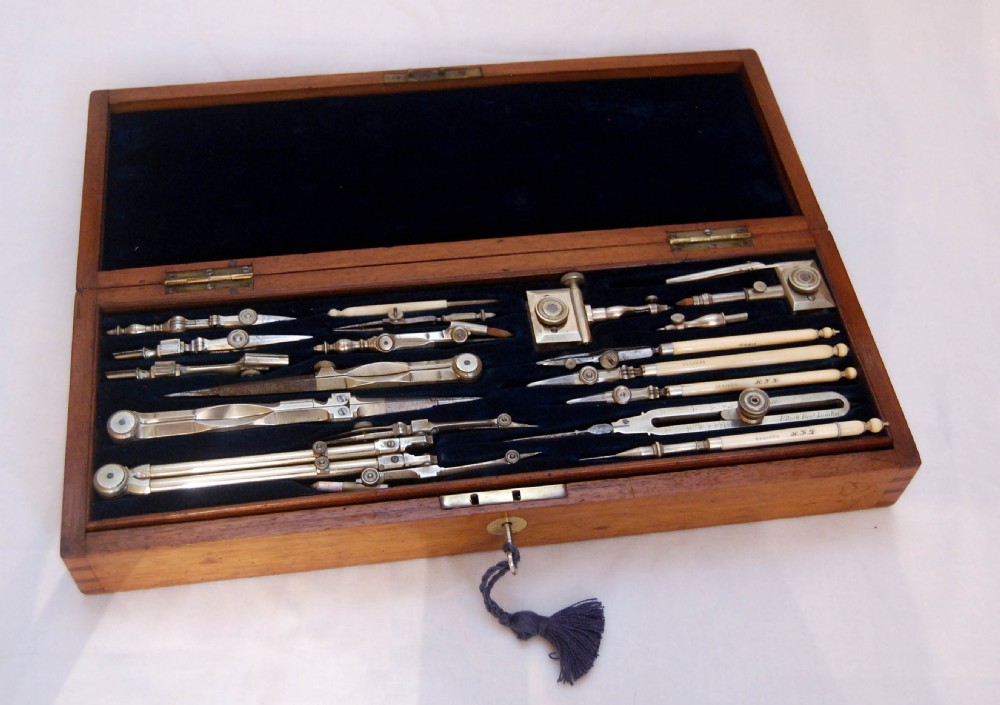

Victorian Drawing Instrument Set by Elliott Brothers London - Owned by Sir Hay Frederick Donaldson Kcb