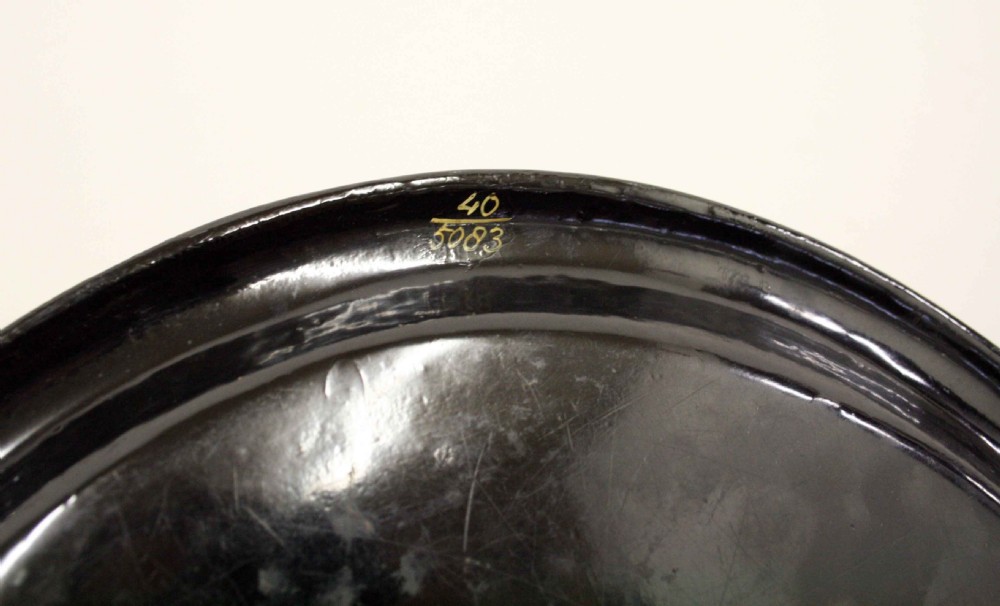
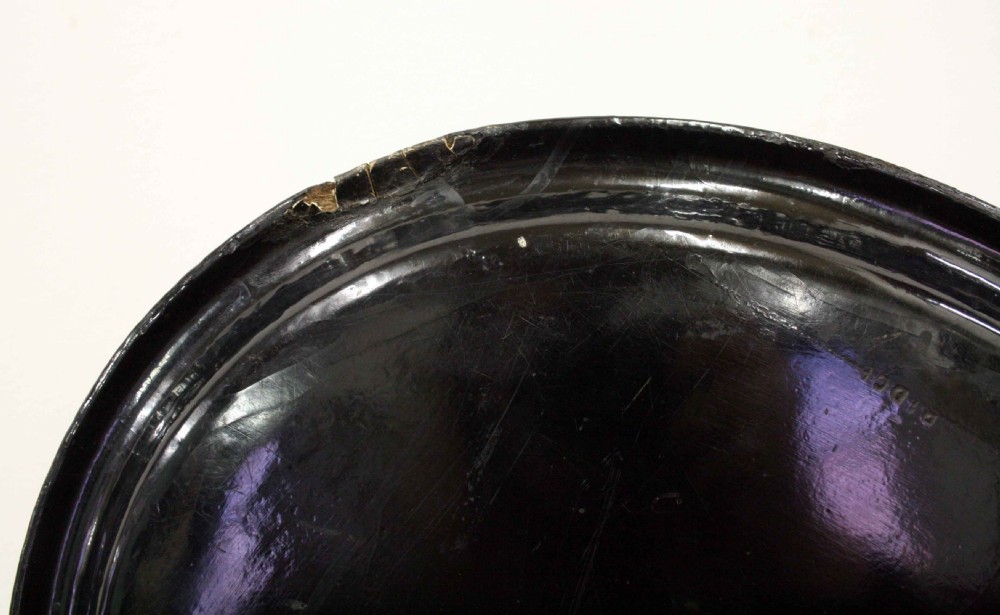
Georgian Antiques has dated this piece to the 1870s.
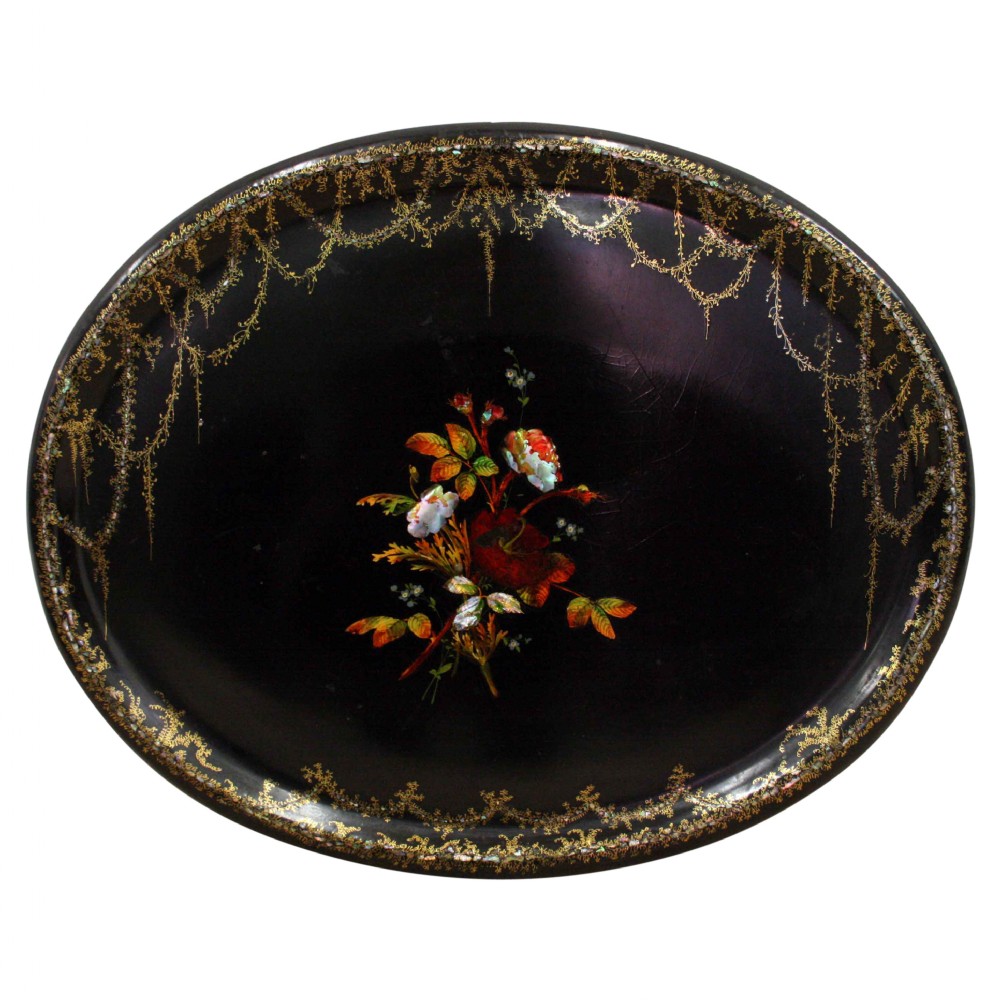
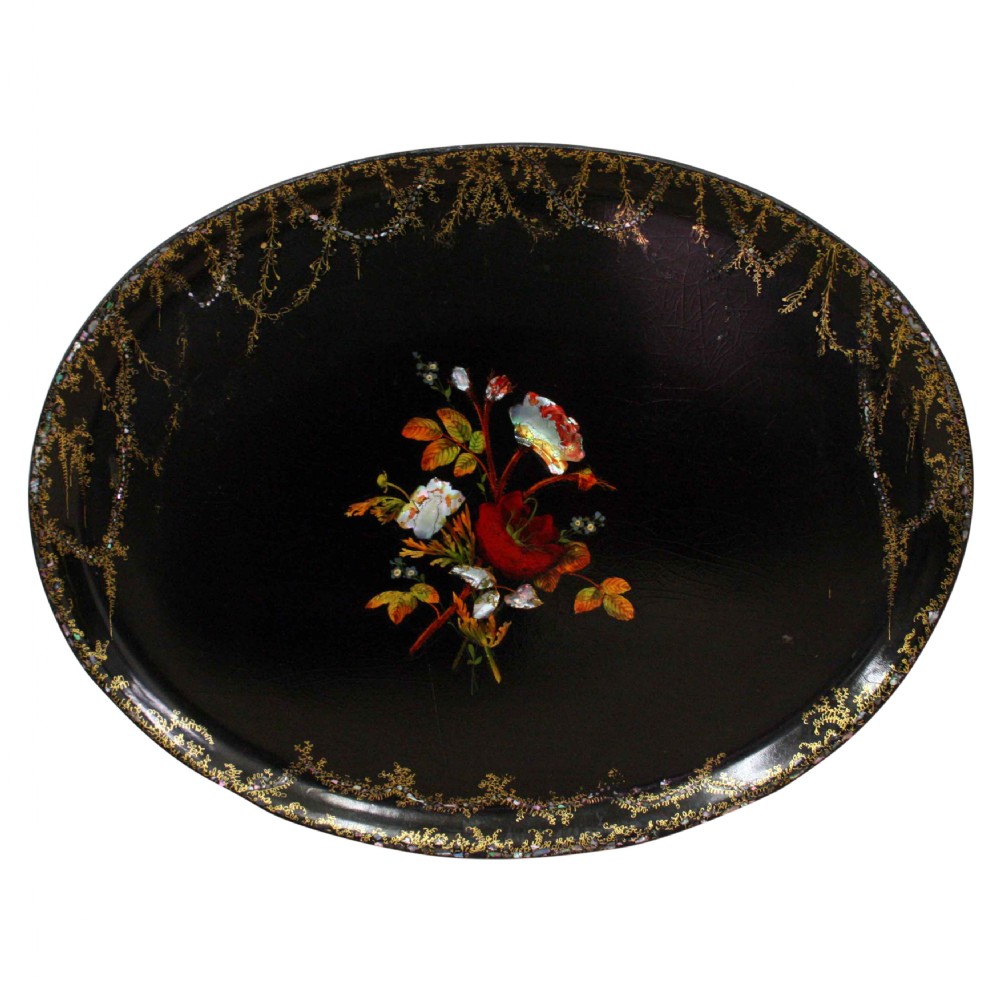
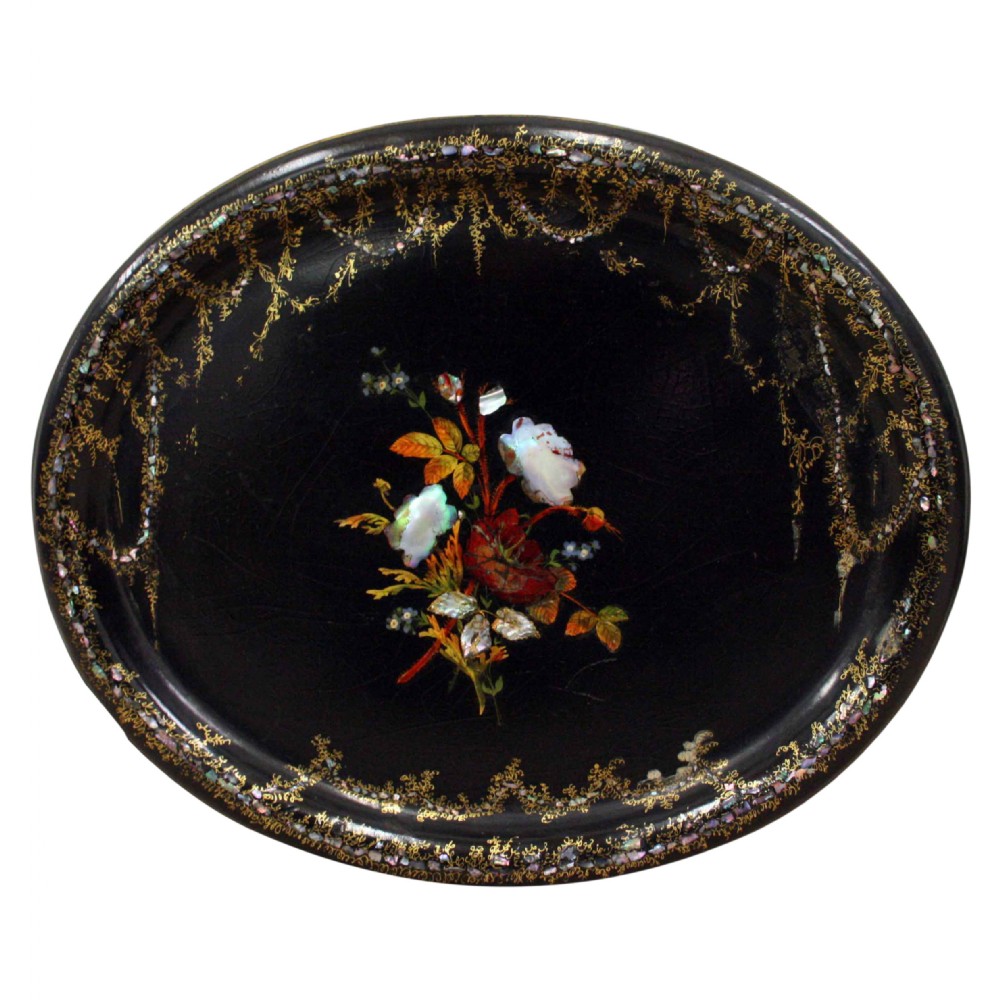
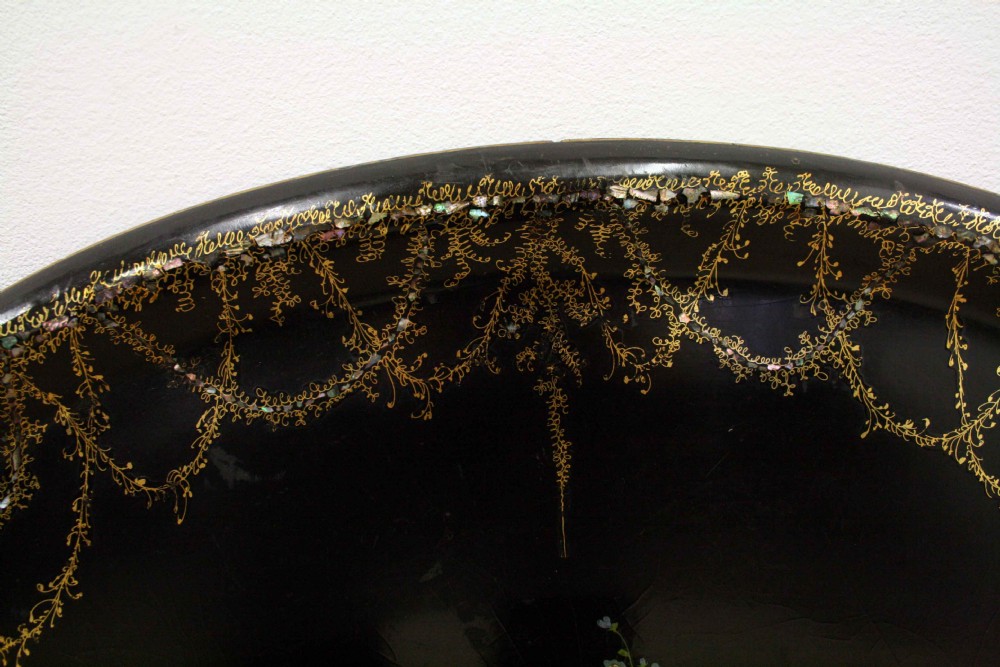
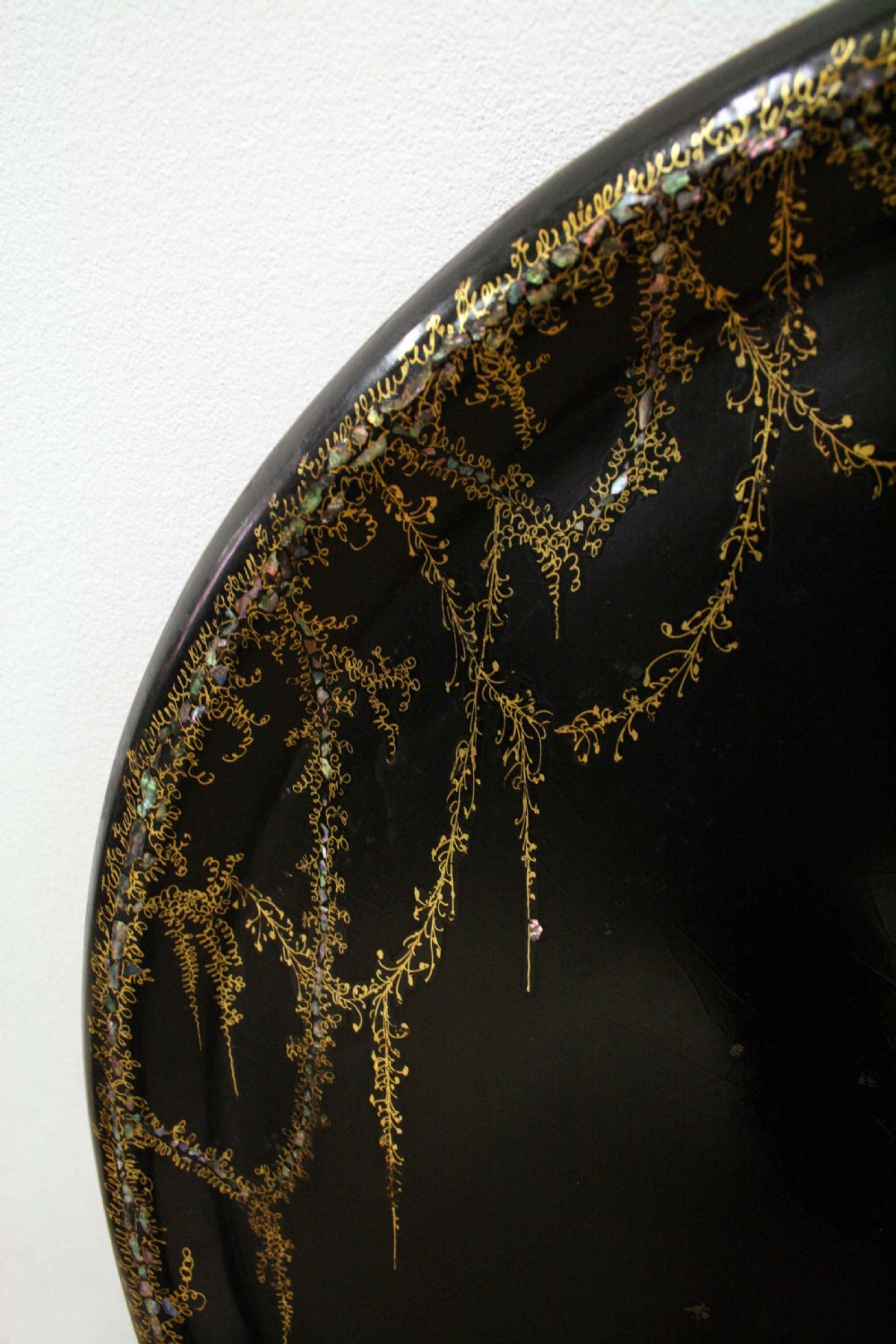
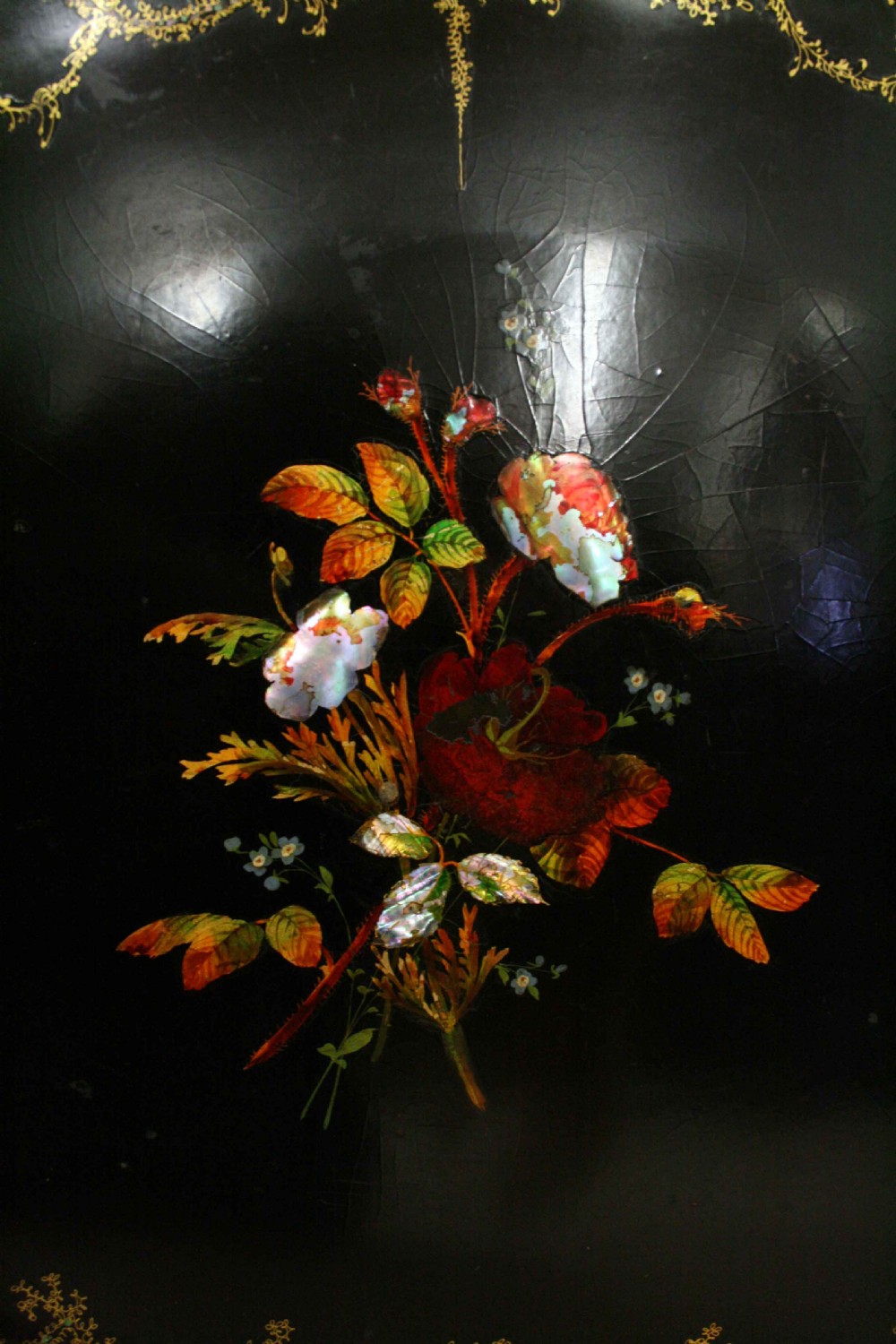
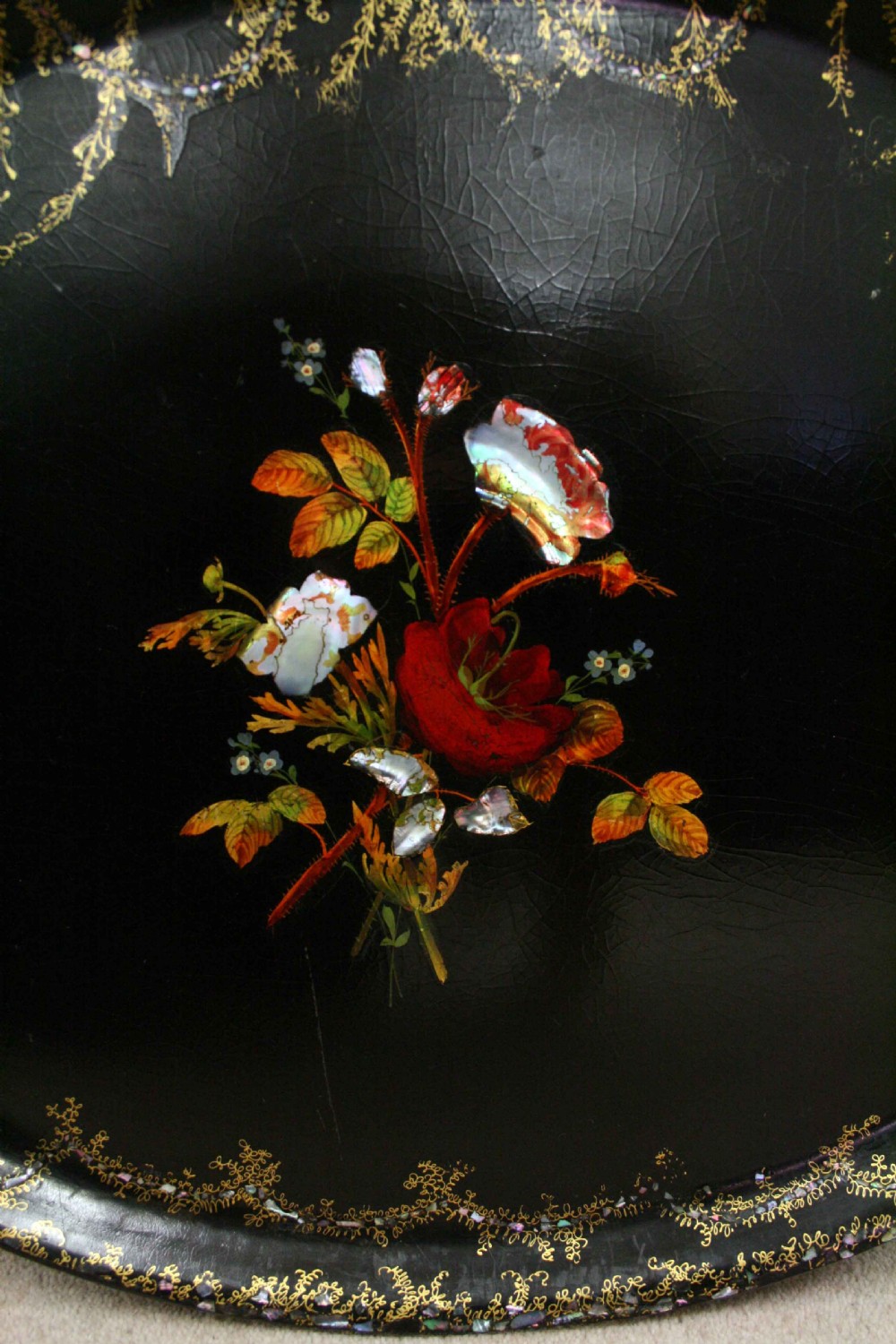
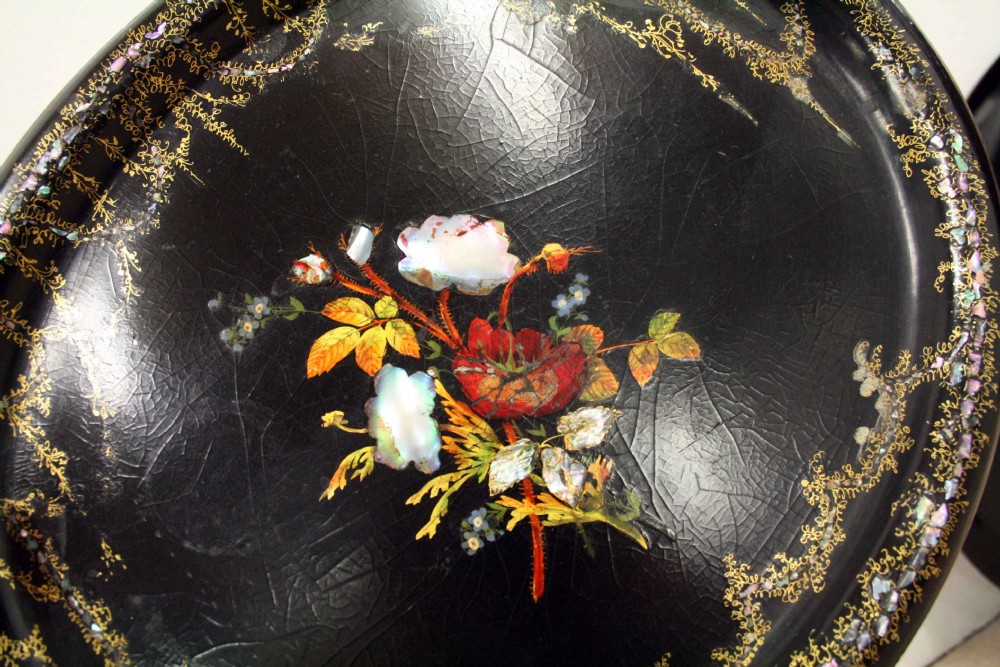
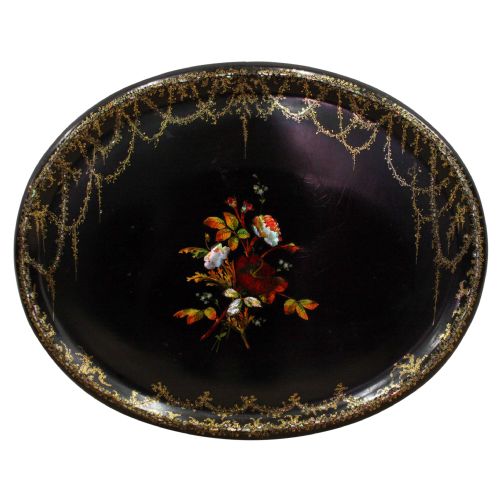
Along the border there is a wonderful pattern of swags and tails which is gilded and intermingled with mother of pearl inlay.
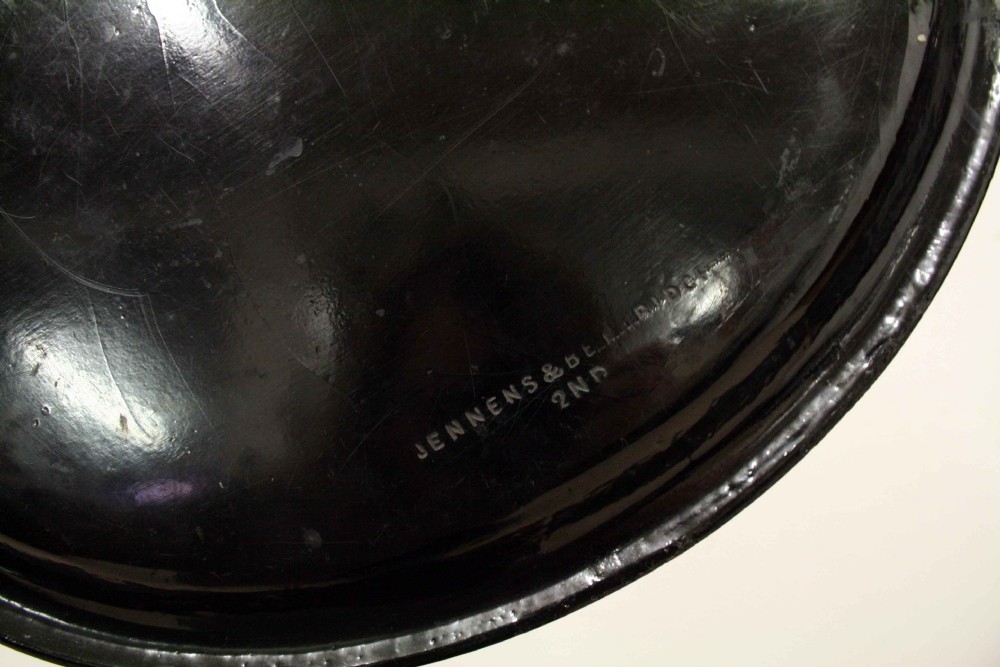
Jennens and Bettridge aka Aaron Jennens and T.H. Bettridge (fl. 1815-1864) were highly regarded for producing quality papier mâché wares. They acquired the workshops of Henry Clay, Japanner to George III and the Prince of Wales, in 1816. Their original premises were in Birmingham and they started a London branch at 3 West Halkin Street, Belgravia in 1837. Later offices were established in Paris and New York
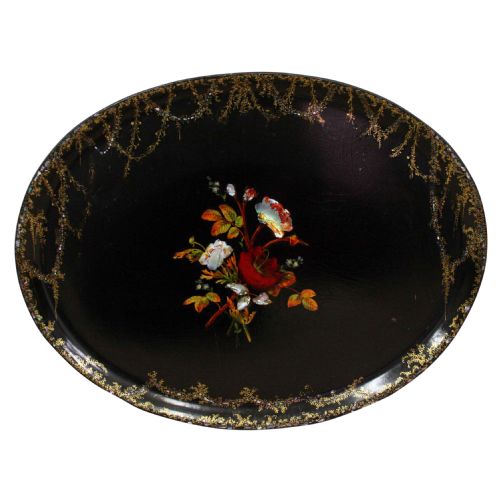
Starting around 1725 in Europe, gilded papier-mâché began to appear as a low-cost alternative to similarly treated plaster or carved wood in architecture. Henry Clay of Birmingham, England, patented a process for treating laminated sheets of paper with linseed oil to produce waterproof panels in 1772. These sheets were used for building coach door panels, amongst other structural uses. Theodore Jennens patented a process in 1847 for steaming and pressing these laminated sheets into various shapes, which were then used to manufacture trays, chair backs, and structural panels, usually laid over a wood or metal armature for strength. The papier-mâché was smoothed and lacquered, or finished with a pearl shell finish. The industry lasted through the 19th century.
Size 76cm x 60cm, 59cm x 45cm, 42cm x 34.5cm.
Georgian Antiques has dated this piece to the 1870s.
The largest selection of antiques in scotland
You can view the stock and full dealer information on the Georgian Antiques Profile Page
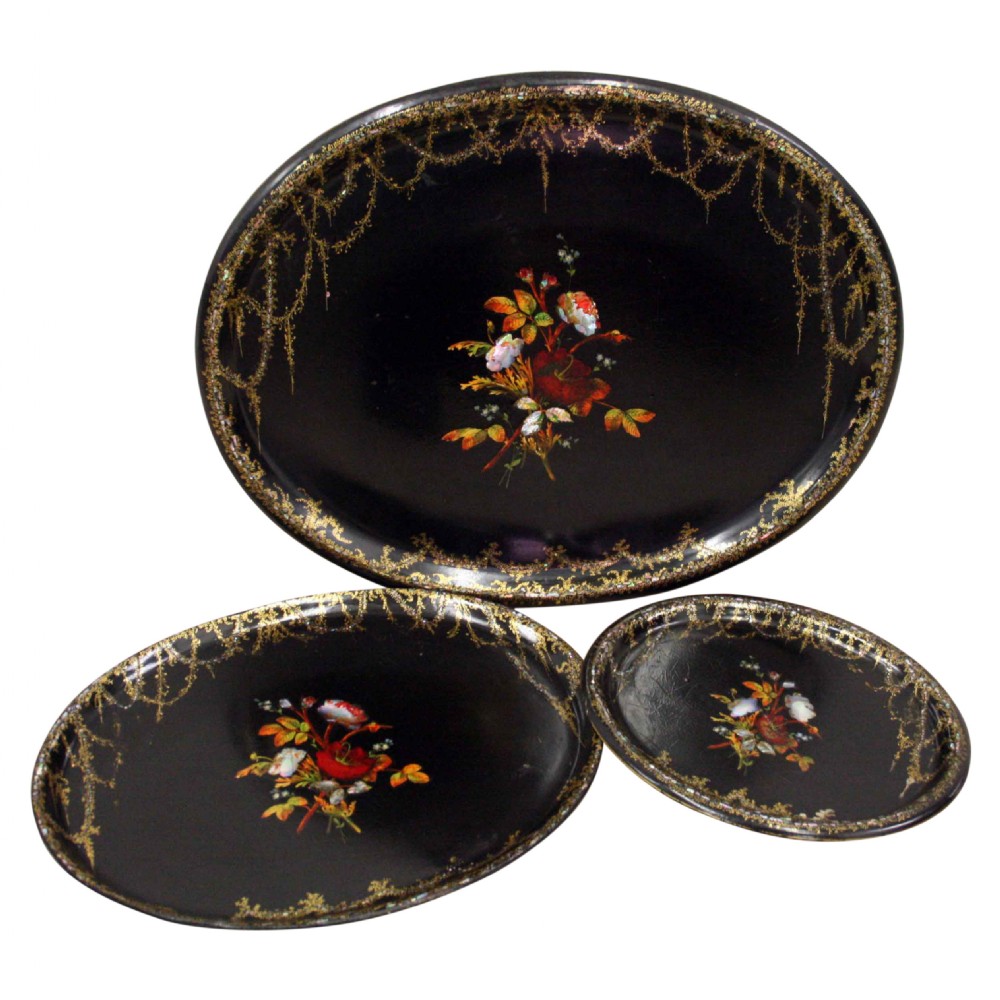
Set of 3 Jennens and Bettridge Papier-mâché Trays