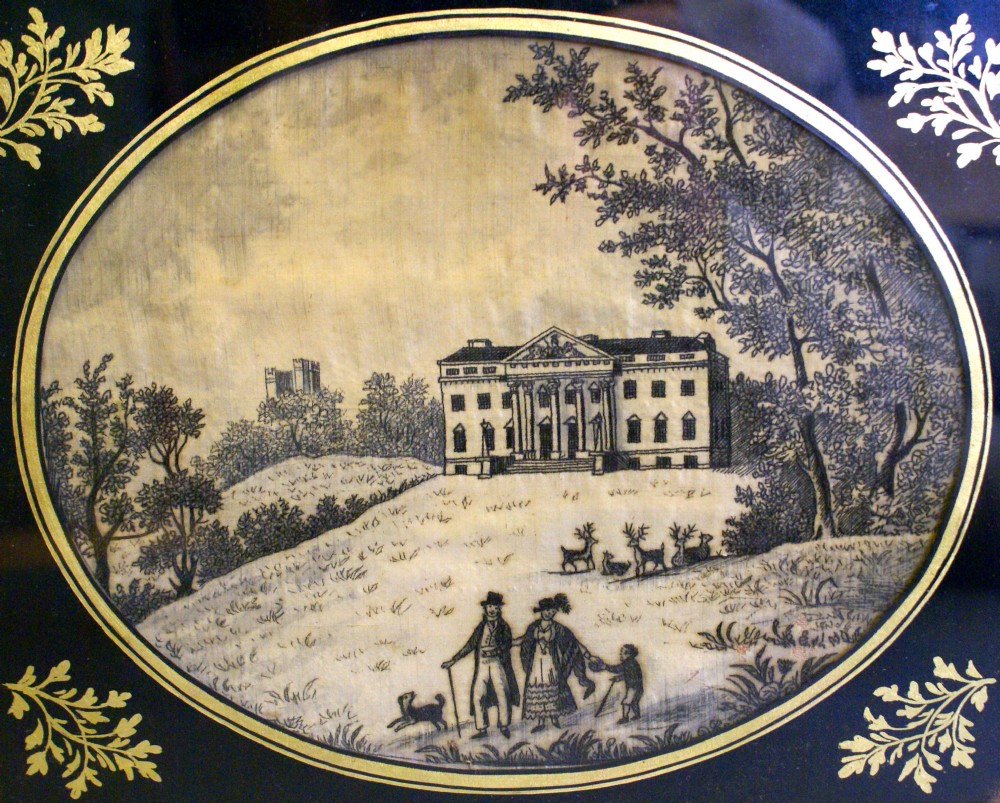
It was listed by W.J. Gravener Antiques Ltd.. Sold pieces stay on Sellingantiques as a record of what has passed through, and the next one is rarely far away.
W.J. Gravener Antiques Ltd. has dated this piece to the 1800s.
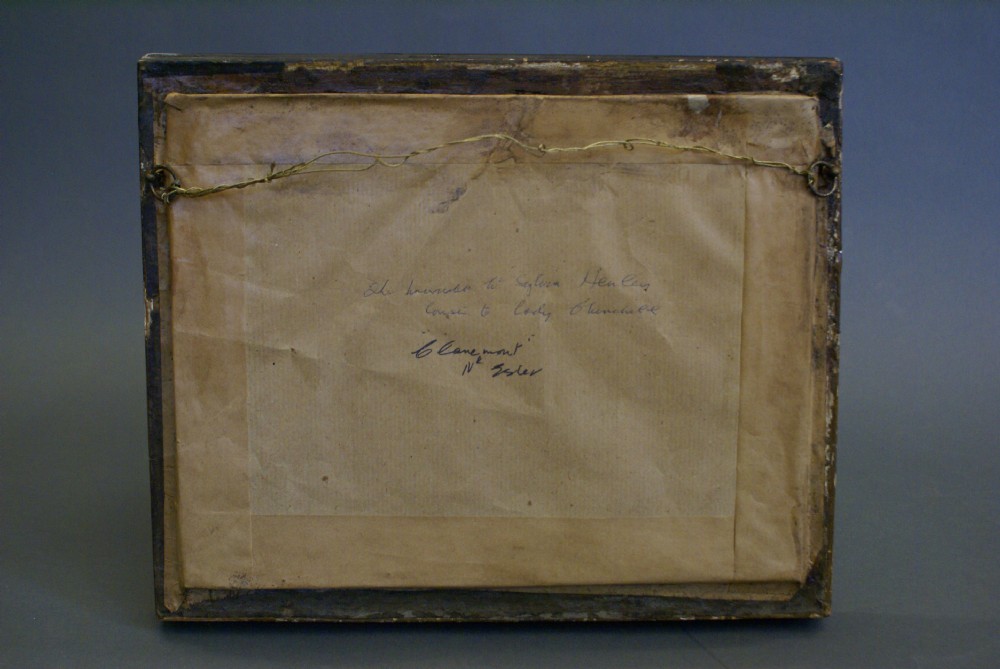
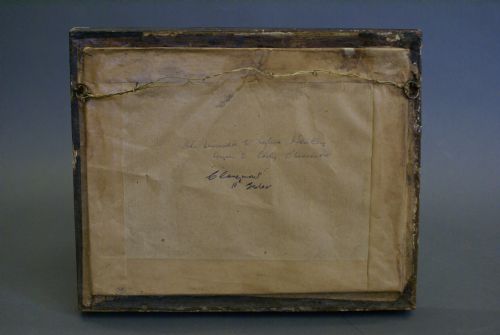
" The Honourable W Sylvia Henley
Consort to Lady Churchill
Claremont Nr Esher"
335 mm wide, 270 mm high and 45 mm deep.
The first house on the Claremont estate was built in 1708 by Sir John Vanbrugh for his own use.
This "very small box", as he described it, stood on the level ground in front of the present mansion. At the same time, he built the stables and the walled gardens, also probably White Cottage.
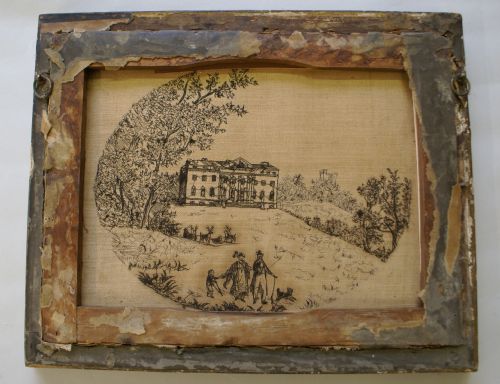
In 1714 he sold the house to the wealthy Whig politician Thomas Pelham-Holles, Earl of Clare, who later became Duke of Newcastle and served twice as Prime Minister. The Earl commissioned Vanbrugh to add two great wings to the house and to build a fortress-like turret on an adjoining knoll. From this so-called "prospect-house" or Belvedere he and his guests could admire the views of the Surrey countryside as they took refreshments and played hazard, a popular dice game. In the clear eighteenth-century air it was apparently possible to see Windsor Castle and St Paul's Cathedral. The Earl of Clare named his countryseat Clare-mount, later contracted to Claremont. The two lodges at the Copsem Lane entrance were added at this time.
When the Duke of Newcastle died in 1768, his widow sold the estate to Robert Clive, founder of Britain's Indian Empire. Clive, now a fabulously rich nabob, demolished the Vanbrugh house, because of its damp and low-lying site, and commissioned Lancelot "Capability" Brown and his future son-in-law Henry Holland to build the present Palladian mansion, upon the hill. Sadly, Clive never lived here, as he committed suicide in 1774 the year that the house was finished.
Among the many foreign royal personages who visited England during the 1814 Peace Celebrations was Prince Leopold of Saxe-Coburg, six years older than Princess Charlotte. Leopold expressed his admiration of Princess Charlotte. He lobbied for the right to court Charlotte. His continued attentions to Charlotte eventually won out. The Prince Regent favoured his suit in the end and the wedding took place in the Crimson State Room at Carlton House on the evening of 2 May 1816. After a honeymoon spent at Oatlands in Surrey, the countryseat of the Duke of York, the young couple took up residence at Claremont House, a grand affair just one mile south-west of Esher, which had been purchased for them at a cost of £69,000. In addition, Parliament had voted to give the princess a dowry of £60,000 and an income of £60,000 a year. Prince Leopold and Princess Charlotte lived happily at Claremont House. Tragically Princess Charlotte died there as a result of a botched childbirth after only 18 months of marriage. Prince Leopold stayed on at Claremont House until he was called to Belgium in 1831.
Today Claremont House is a school whilst the gardens are owned and maintained by the National Trust.
W.J. Gravener Antiques Ltd. has dated this piece to the 1800s.
English and continental furniture, mirrors and decorative objects from the 18th & 19th centuries.
You can view the stock and full dealer information on the W.J. Gravener Antiques Ltd. Profile Page
W.J. Gravener Antiques Ltd. is a registered member of LAPADA CINOA
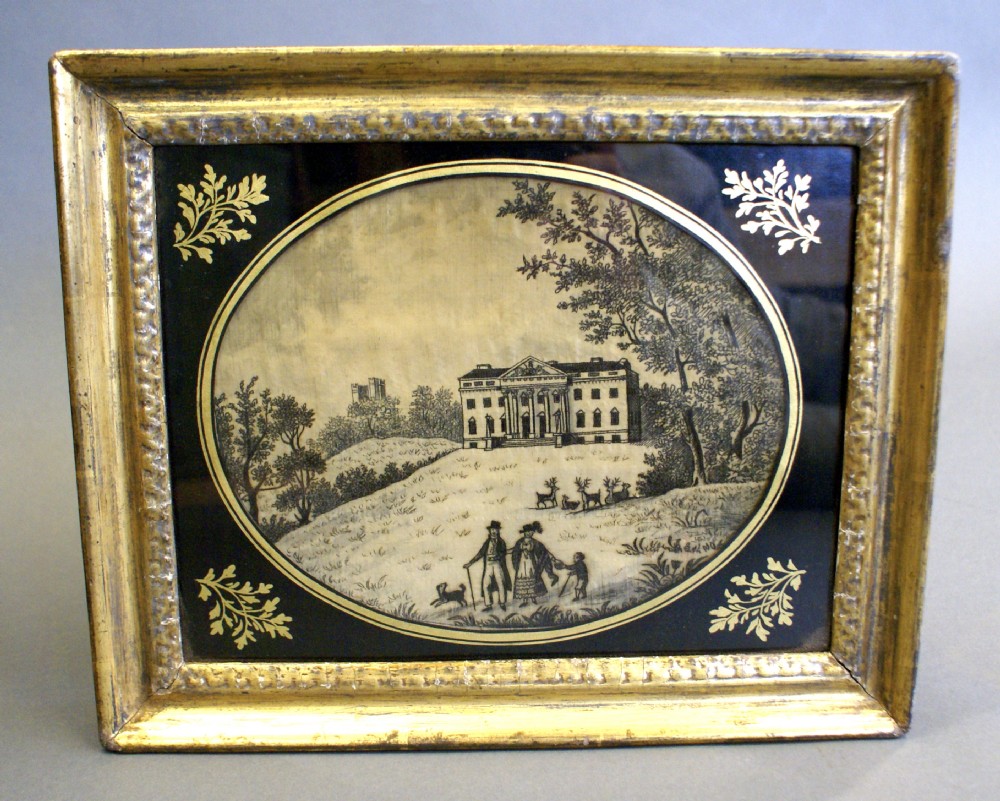
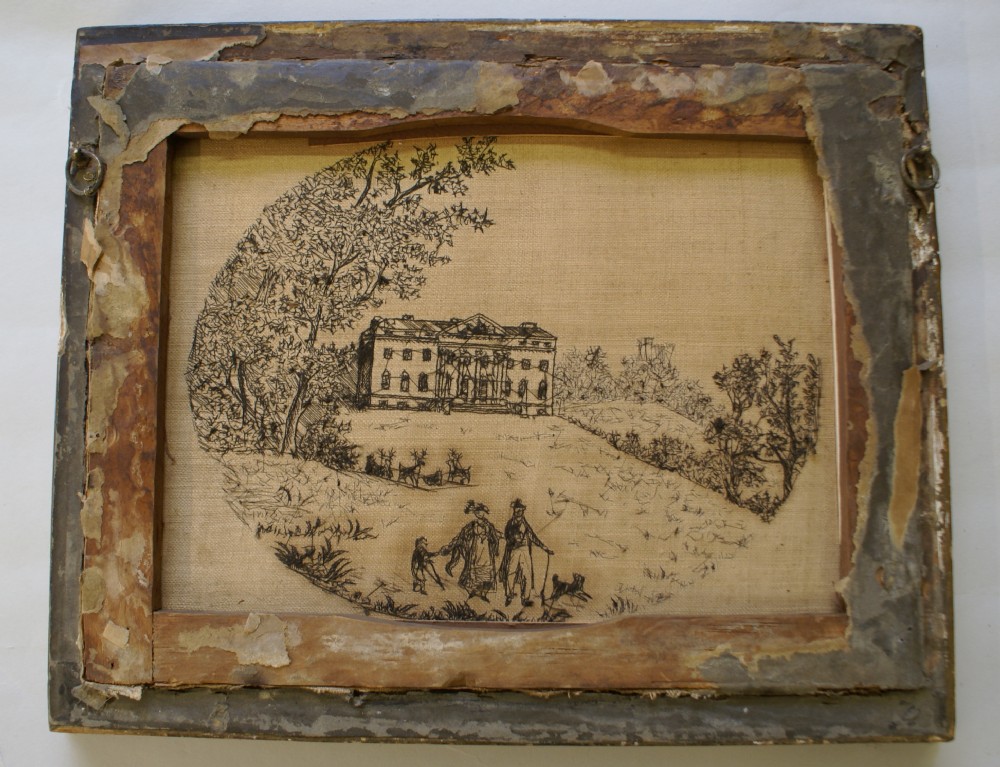
A Fine Late 18th/early 19th Century Needlework Picture Depicting Claremont House Nr. Esher, Surrey