48,262  PAGES BROWSED TODAY PAGES TODAY • 294 ANTIQUES UPLOADED TODAYNEW ARRIVALS
GIFTS
294 ITEMS ADDED TODAY
Sort Order
Items Per Page
Antiques dealer?
Join as a Seller
Browse Categories
Sort order
Items per page
for sale
€936     $1,016
£800
Selling price
This piece comes with
Ayre & Co.Shipping & CheckoutTM
  • Sold by Ayre & Co.
  • Delivered by Ayre & Co.
  • Instant purchase
  • Delivery price shown below
  • 14-day returns (you only pay for return shipping)
Delivery to any address in:

Ayre & Co.

Sellingantiques Verified Since Nov 2026
Browse dealers 5 items
Id #SA1248657
PDF SHARE
SAVE

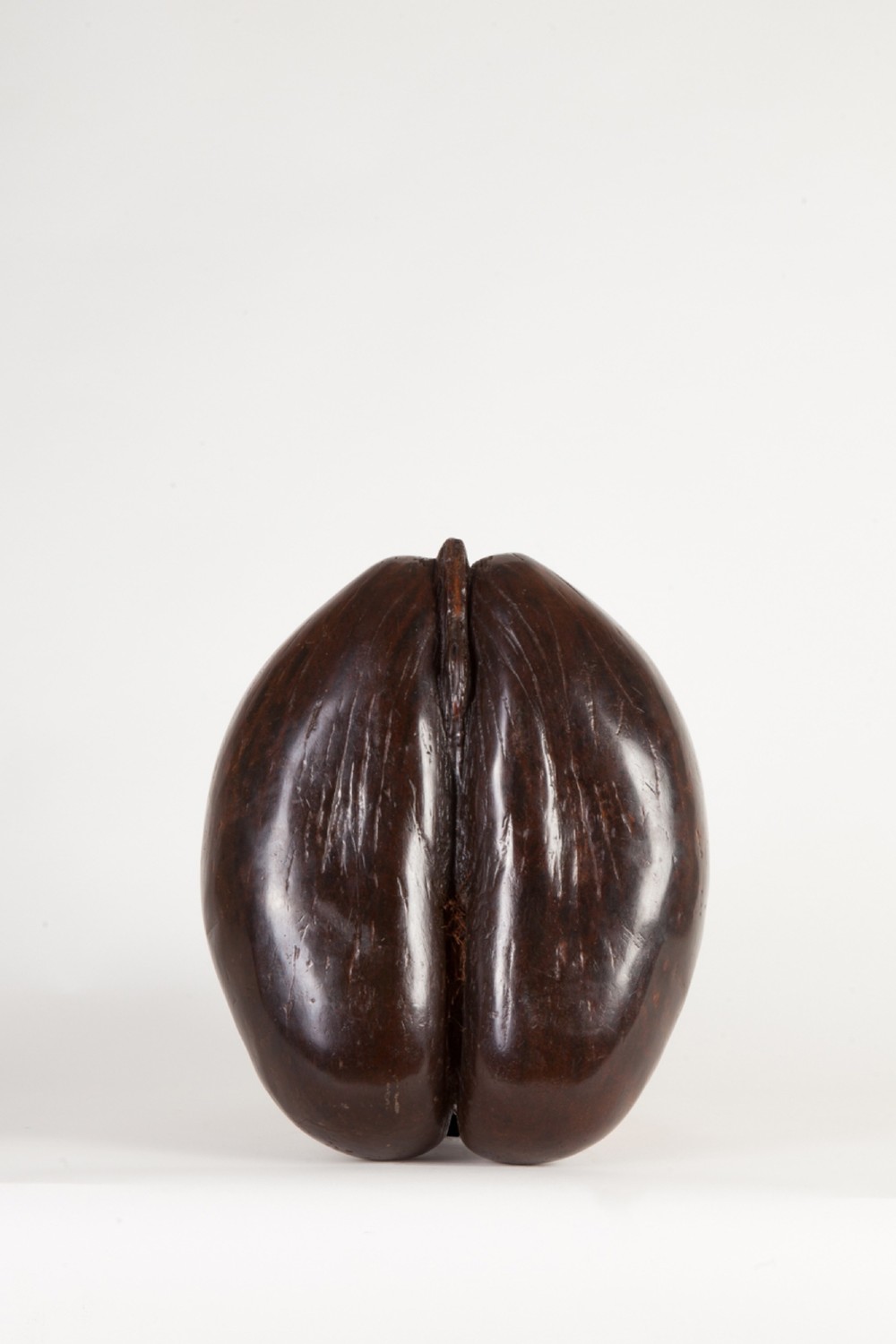
Large Coco De Mer

1940 - 1960
For Sale by Ayre & Co.
Description

The Coco De Mer was formerly known as the Maldive coconut. Its scientific name, Lodoicea maldivica, originated before the 18th century when the Seychelles were uninhabited. In centuries past, the fruit that fell from the trees and ended up in the sea would be carried away eastwards by the prevailing sea currents. The nuts can only float after the germination process, when they are hollow. In this way many drifted to the Maldives where they were gathered from the beaches and valued as an important trade and medicinal item. Until the true source of the nut was discovered in 1768 by Dufresne, it was believed by many to grow on a mythical tree at the bottom of the sea. European nobles in the sixteenth century would often have the shells of these nuts polished. The more erotic it's form, the more prized the specimen was. The coco de mer tree is now a rare and protected species.

Date of Manufacture

Ayre & Co. has dated this Large Coco De Mer to the 1950s.

Reference Numbers
Sellingantiques Reference
SA1248657
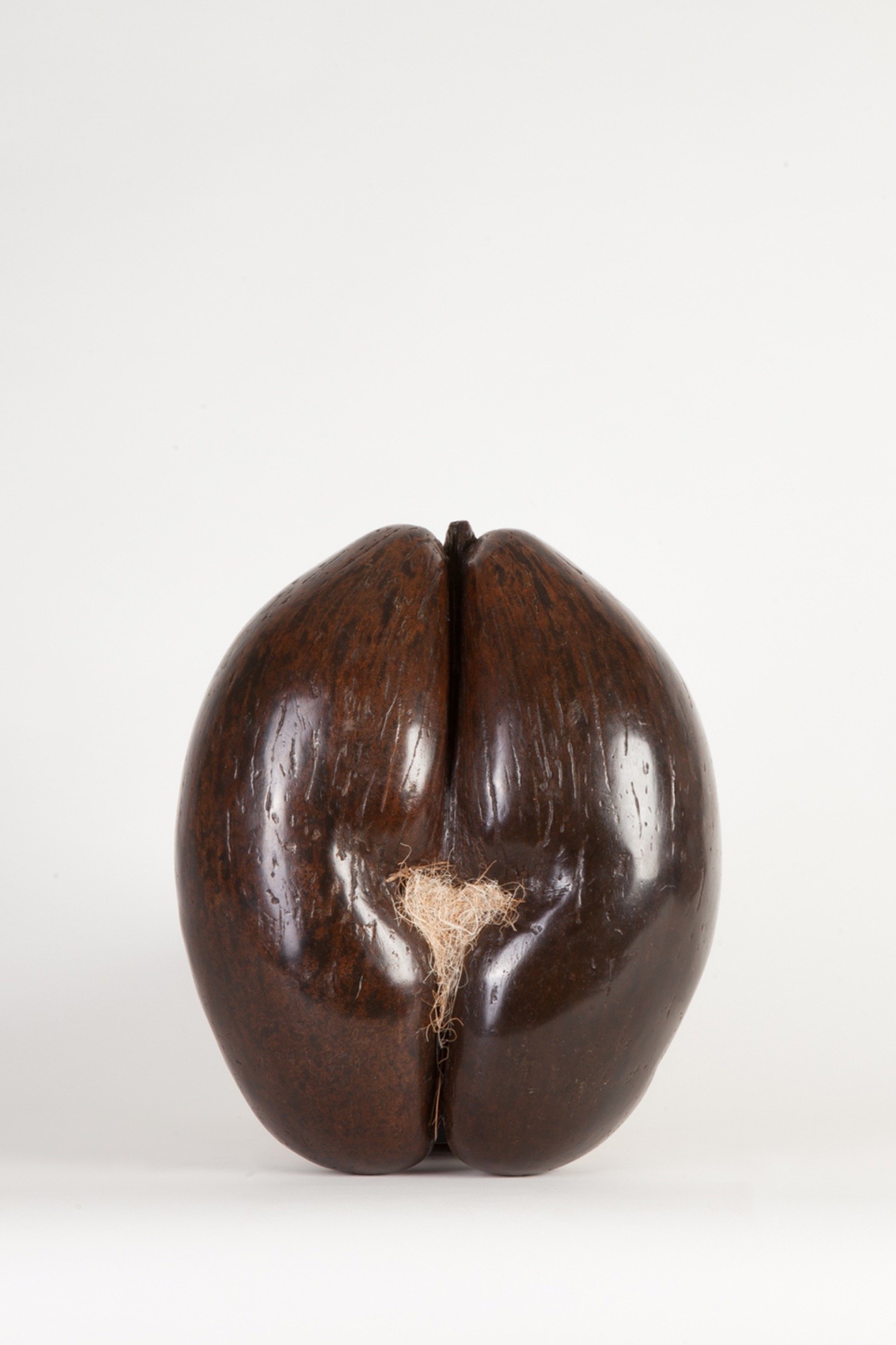
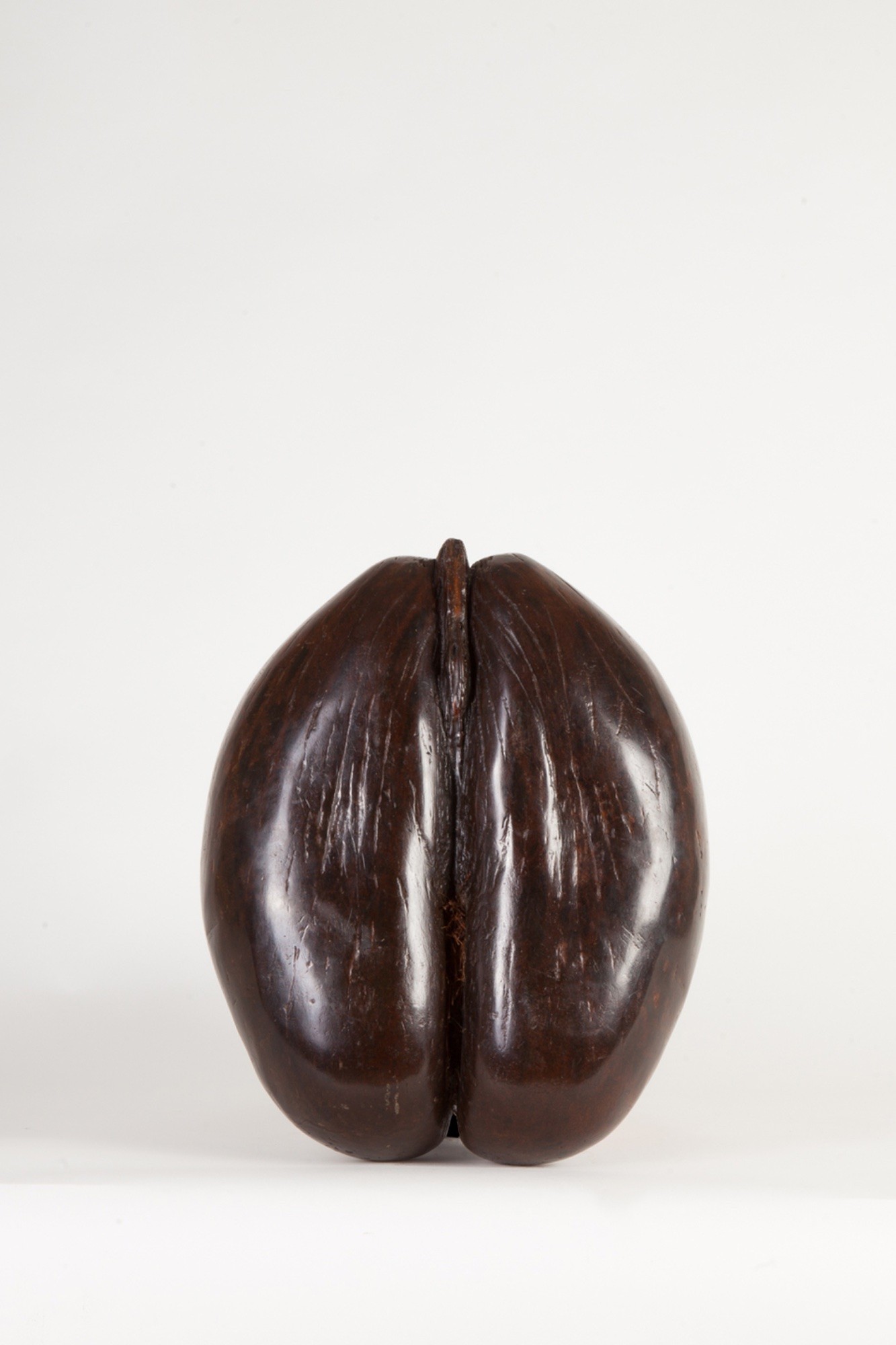
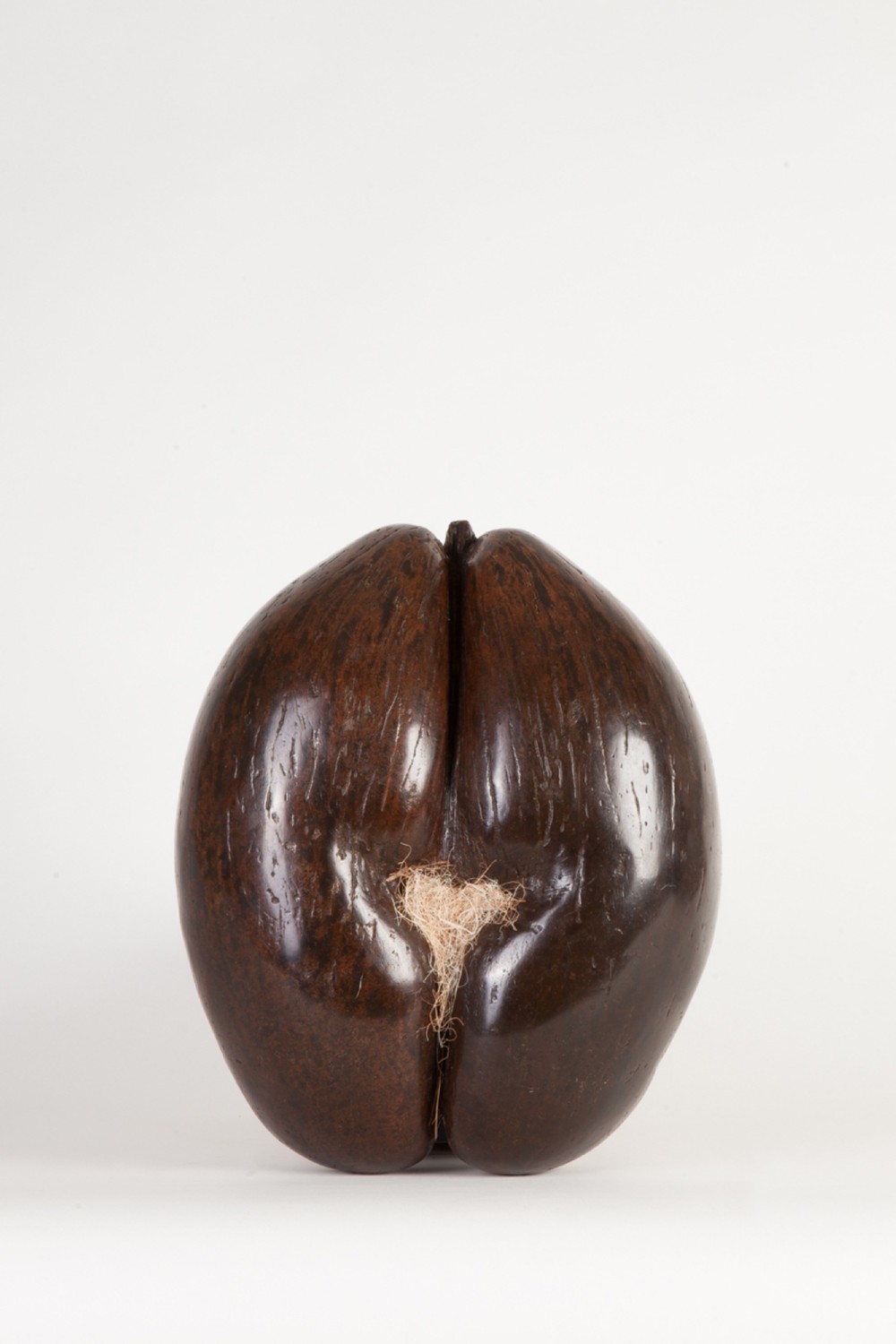
A large polished dark brown Coco de Mer nut featuring a distinctive double-lobed form and natural fibrous detail near the centre.Detail view 1
1 / 2
1950s · SA1248657
Large Coco De Mer
£800€936    $1,016
This piece comes with
Ayre & Co.Shipping & CheckoutTM
  • Sold by Ayre & Co.
  • Delivered by Ayre & Co.
  • Instant purchase
  • Delivery price shown below
  • 14-day returns (you only pay for return shipping)
Delivery to any address in:
Description
The Coco De Mer was formerly known as the Maldive coconut. Its scientific name, Lodoicea maldivica, originated before the 18th century when the Seychelles were uninhabited. In centuries past, the fruit that fell from the trees and ended up in the sea would be carried away eastwards by the prevailing sea currents. The nuts can only float after the germination process, when they are hollow. In this way many drifted to the Maldives where they were gathered from the beaches and valued as an important trade and medicinal item. Until the true source of the nut was discovered in 1768 by Dufresne, it was believed by many to grow on a mythical tree at the bottom of the sea. European nobles in the sixteenth century would often have the shells of these nuts polished. The more erotic it's form, the more prized the specimen was. The coco de mer tree is now a rare and protected species.
Date1950s
ReferenceSA1248657
Ayre & Co.Sellingantiques verified since Nov 2026
PDF SHARE
SAVE
Archive I A large polished dark brown Coco de Mer nut featuring a distinctive double-lobed form and natural fibrous detail near the centre.

Large Coco De Mer

Archive II A large polished dark brown Coco de Mer nut featuring a distinctive double-lobed form and natural fibrous detail near the centre. View II
Enlarged Archival View
Telephone 07988 698663
Location
United Kingdom
Verified Since Nov 2026
Items For Sale 5
Ayre & Co.
Verified Since Nov 2026
View Dealer Info
Location: United Kingdom
Verified
Nov 2026
For Sale
5
A large polished dark brown Coco de Mer nut featuring a distinctive double-lobed form and natural fibrous detail near the centre.
Large Coco De Mer
Ref: SA1248657
A large polished dark brown Coco de Mer nut featuring a distinctive double-lobed form and natural fibrous detail near the centre.
Detail View 1
Archival Detail
Every single antique dealer on our platform is individually approved by our internal team. We verify their professional trade history, ethical standards, and photographic quality to ensure a secure, high-standard buying environment. Upon joining, every dealer agrees to a strict 9-point code of conduct. While issues can occasionally arise, our dealers typically resolve them swiftly and directly with the buyer. In fact, since our founding in 2002, Sellingantiques has only had to step in to help resolve an issue on roughly five occasions—a true testament to the quality of our dealers and their dedication to your happiness.
Our dealers are highly experienced in packing and shipping fragile, high-value antiques. Because you are in direct contact with the dealer, you will be able to easily go through all available shipping and insurance options together to ensure your item arrives safely.
Antiques are the ultimate green purchase. By choosing historical pieces over newly manufactured goods, you completely eliminate the carbon footprint of modern mass production while preserving exceptional, timeless craftsmanship.
Written by Sellingantiques from the dealer’s photographs and listing
  • ObjectDecorative Objects
  • Period1940 - 1960
  • StyleNatural History / Curiosity
  • MaterialOrganic Shell, Fiber
  • ColourDark Brown
  • MotifsBilobed shape, Polished surface, Fibrous husk detail, Central cleft

The Coco de Mer is the seed of the Lodoicea maldivica palm tree native to the Seychelles islands. Historically prized as rare maritime discoveries and botanical curiosities, these specimens were frequently displayed in European cabinets of curiosities.

A preserved Coco de Mer consists of the hardened outer shell of the double coconut seed, which is typically hollowed out, dried, and smoothed or polished, sometimes retaining fibrous husk remnants.

Authentic specimens display a characteristic bilobed shape reminiscent of a double coconut, dense woody walls, natural surface striations, and a hollow interior structure.

Designers frequently position these organic forms on a sideboard top, bookshelf, or dedicated display pedestal to serve as a tactile, sculptured accent within eclectic or traditional interiors.

Dust the surface regularly with a dry, soft microfibre cloth and keep the specimen away from direct sunlight, central heating sources, and extreme moisture to prevent cracking of the organic shell.
items
Add keywords to the filter
Price
£100
£250000
Era
Period
Style
Material
Origin
Stock Location
Recently Added
Online Payments
Categories