47,117  PAGES BROWSED TODAY PAGES TODAY • 196 ANTIQUES UPLOADED TODAYNEW ARRIVALS
GIFTS
196 ITEMS ADDED TODAY
Sort Order
Items Per Page
Antiques dealer?
Join as a Seller
Browse Categories
Sort order
Relevant Links
Items per page
for sale
€38,025     $41,275
£32,500
Selling price
Loveday Antiques

Loveday Antiques

Sellingantiques Verified Since Mar 2012
Browse dealers 69 items
  • About Us
    Specialist furniture dealers 18th-20th century
  • Trade Associations
    Loveday Antiques is a registered member of LAPADA  BADA  CINOA
Id #SA1248156
PDF SHARE
SAVE

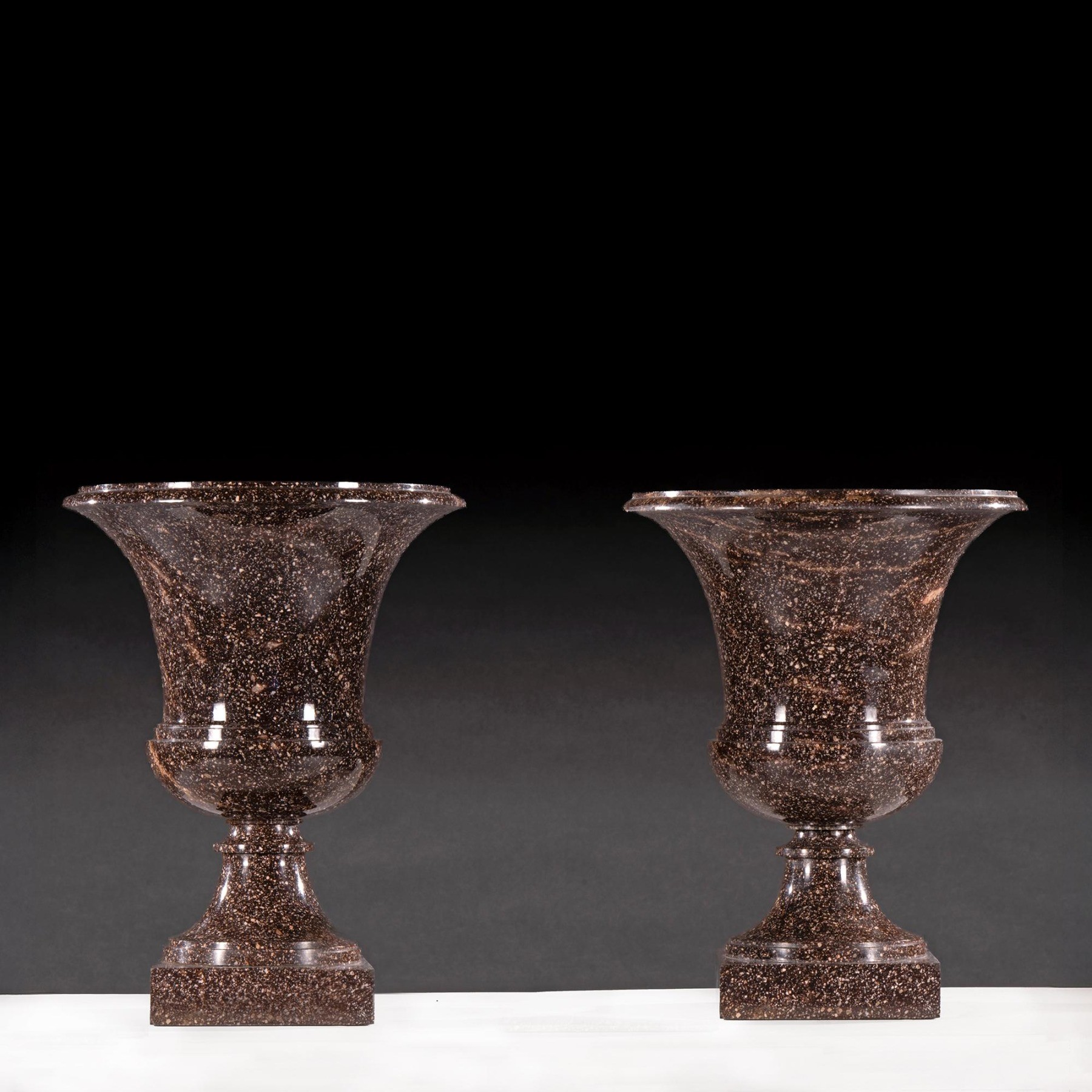
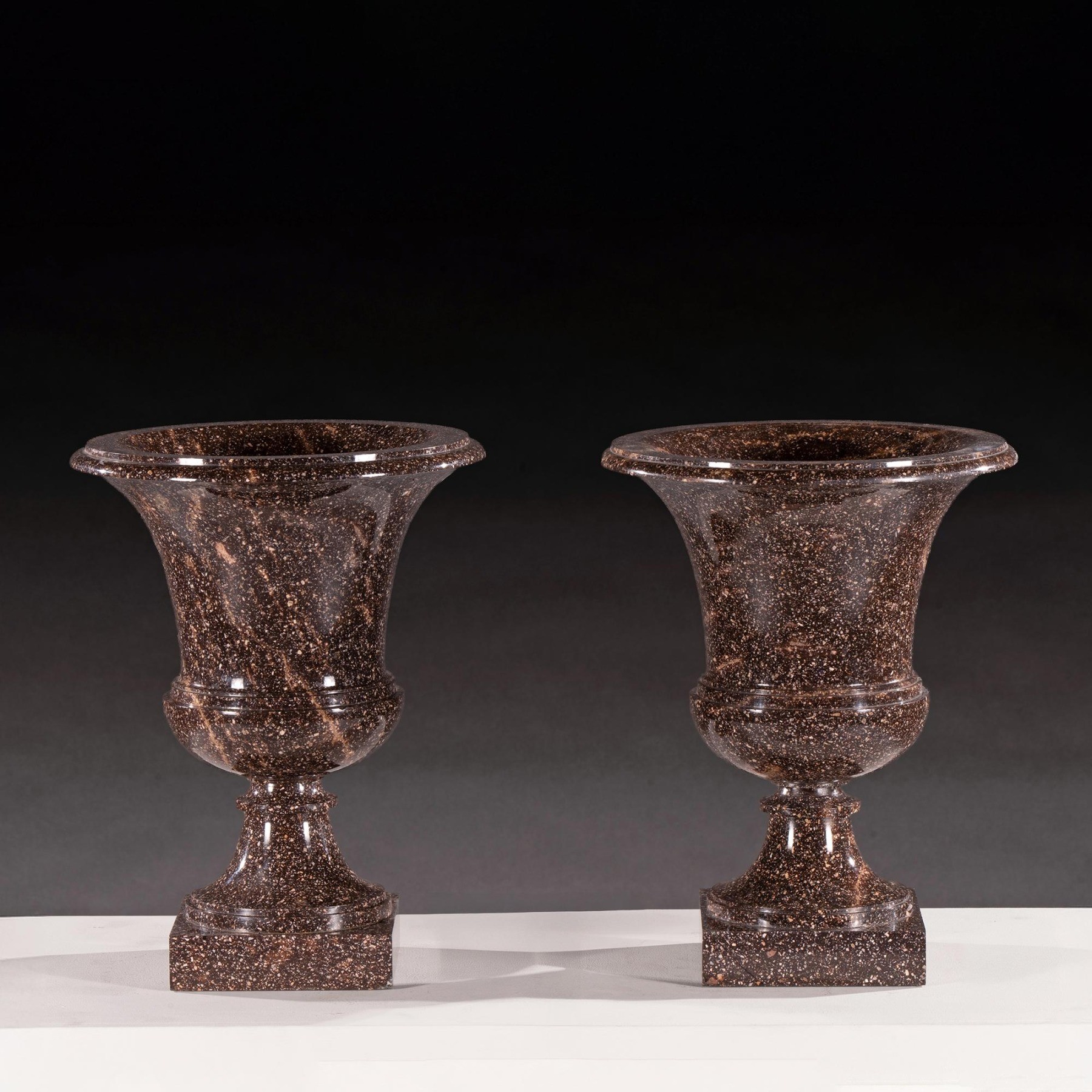
Grand Pair of Early 19th Century Swedish Blyberg Porphyry Campana Urns

19th century
For Sale by Loveday Antiques
Description

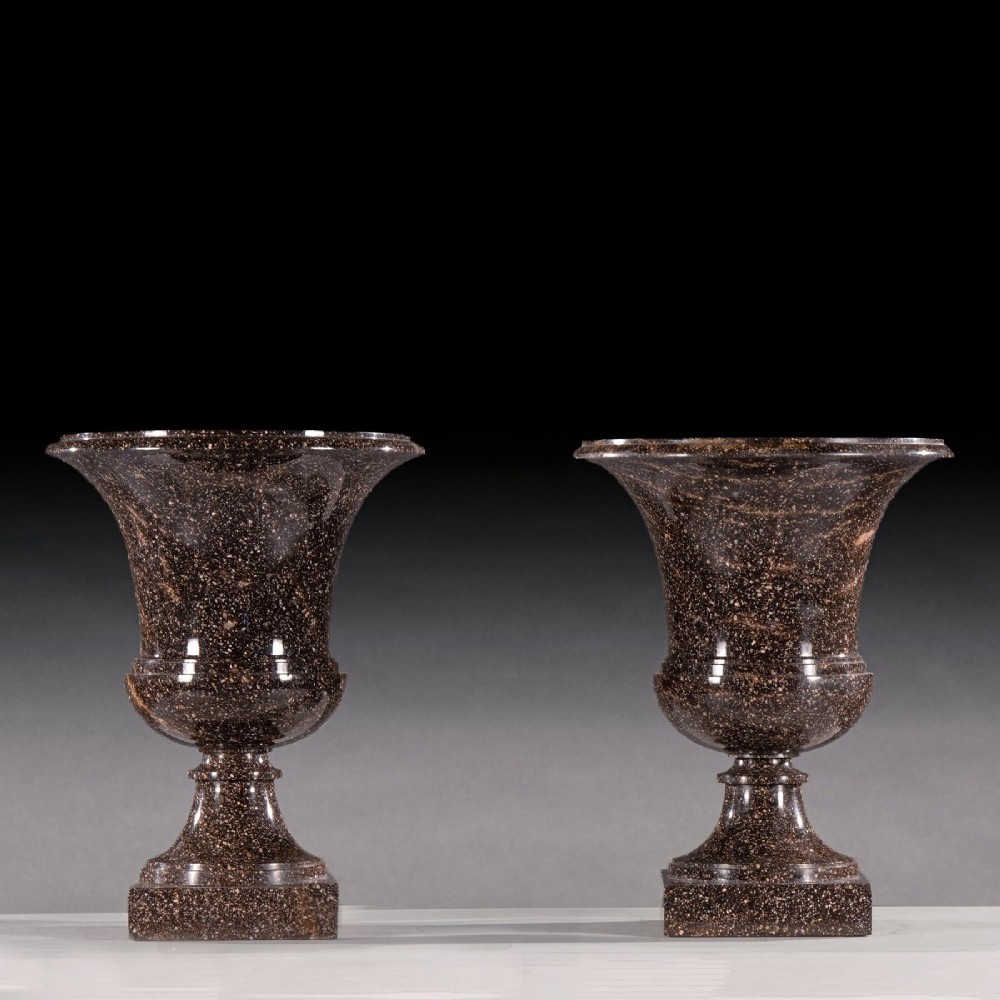
A rare pair of finely figured Swedish Blyberg Porphyry Campana Urns of grand scale dating to the early 19th Century.

Swedish Circa1820

This pair of superb large urns are of bell shaped form (campana in Italian) carved from highly figured Swedish Blyberg porphyry, one of the most desirable stones still being mined in Europe at the time of the urns' production. Unusually large at 36cm in height and also rare as a surviving pair with most having been split over the years, these urns are for the connoisseur collector that work equally well in a traditional interior and also a more contemporary one. Over the years, porphyry has entranced everyone from pharaohs and Roman emperors to the likes of William Beckford, George Watson-Taylor and Thomas Hope, not to mention the likes of King George IV who had his agents in Paris purchase this piece for him in the early 19th century

https://www.rct.uk/collection/search#/4/collection/4605/perfume-vase-and-cover

Amongst contemporary collectors the late great collector Philip Hewatt-Jaboor was renowned for his love of porphyry, even going so far as to commission a floor made from the material for his home in Jersey.

The present pair of urns are of the classical Roman campana shape, a form that gained renewed popularity in the neoclassical period in Europe. The head designer at the Swedish porphyry works was Louis Masreliez who, though born in Sweden, had trained in Rome and Paris bringing the imperial tastes from these countries back with him to his homeland. Although the porphyry quarries in Sweden were discovered in the early 18th century they gained royal patronage in the early 19th century having become a viable commercial enterprise in c.1788 and its objects were ultimately placed into the palaces and stately homes of foreign monarchs and distinguished dignitaries.

Egyptian porphyry was also the most highly regarded of stones, seen as suitable only for the use of pharaohs, and the Roman conquerors of Egypt revered the stone equally. It was therefore highly significant when it was discovered that another form of porphyry could be mined in Europe as the stock in Egypt had long been exhausted. One of the leading painters and decorators in Sweden, Masreliez designed a series of masterworks in porphyry and a pair of campana urns designed by him for Princess Sofia Albertina, sister of King Gustav III, were acquired from Sotheby's New York by the National Museum of Sweden in 2001

https://www.mynewsdesk.com/nationalmuseum/pressreleases/new-acquisition-works-in-swedish-porphyry-1693742

These vases are of similar form to our pair and it is likely that the porphyry works were still using the designs left by Masreliez long after his death in 1810. The porphyry works itself provided some of Sweden's most important exports until its destruction by fire in 1866, effectively bringing to a close production on any sort of scale.

Porphyry is extremely hard and difficult to work due to the density of the material and its scarcity and high value make it all the more tricky as a proposition for a would-be sculptor. It is no surprise, therefore, that the best designers and artists were employed by the manufactory to provide designs to the sculptors and the present pieces were created by this elite team who supplied both the local aristocracy and royals and crowned heads around Europe with this desirable material.

Dimensions

Height 14 1/4 inches - 36cm

Diameter 11 1/4 inches - 28.5cm

Base 15cm by 15cm

Date of Manufacture

Loveday Antiques has dated these Swedish Porphyry Campana Urns to the 19th Century.

Physical Dimensions
Height
36cm (14.17")
Width
28.5cm (11.22")
Depth
15cm (5.91")
Reference Numbers
Sellingantiques Reference
SA1248156
Dealers Internal Reference
3094
Dealers Notes

Loveday Antiques is a family run business originally established since 1969 in London.

Now in its second generation, Loveday Antiques specialises in an eclectic mix of 18th to 20th Century European furniture and works of art, with a strong emphasis on quality, uniqueness and colour.

As proud members of BADA & LAPADA, the largest association for professional art and antique dealers in the United Kingdom and members of CINOA, the worldwide association for antique dealers you can buy from us with 100% confidence and reassurance as we are committed to upholding and abiding by the strict standards of each association.

Our clients can rest assured that each item is as described and photographed.

All Items are sold with 100% satisfaction 14 day money back guarantee, return delivery will be charged for.

We deliver within the UK for usually between £60-£80 and ship worldwide with professional bespoke crating via air to almost all locations. Please contact us at Loveday Antiques with your full postal address for a very competitive quote.

Delivery within the mainland UK will usually be with 7 to 14 days but please allow up to 28 days. We also ship worldwide with a professional bespoke crating service and large International couriers via air and sea to almost all locations. Please contact us at Loveday Antiques with your full postal address for a very competitive quote.

GOODS

All items listed are in excellent condition having been restored using traditional methods by experienced cabinet makers and polishers keeping the original colour and patina wherever possible.

Please bear in mind you may find the usual markings with antique furniture that are commensurate with age which all add to beauty and uniqueness of the item.

VIEWINGS

We have a reputation for being long established antique dealers in London having had showrooms concurrently running in Islington, Chelsea and Ascot. We have relocated our new showroom, due to London overheads, easily reached between A1 or A10 to just outside of Hertford, Hertfordshire.

We will happily arrange for clients to be collected travelling via train. Local stations being Hertford North, Stevenage and Ware, all being a 10 minute drive from us.

Please contact us for location and appointments.

Telephone: 01438 869 819

Payments accepted are Bank Transfer, Cheque, Major Credit Cards or Cash.

Opening Times

Monday to Saturday 9.00am - 5.30pm Please email or call beforehand to make an appointment.

If outside of these times again please call to make an appointment

We have more than 40 years experience in supplying Antique furniture to the trade, public and interior designers from all parts of the world so please buy with confidence as we have passed the test of time.

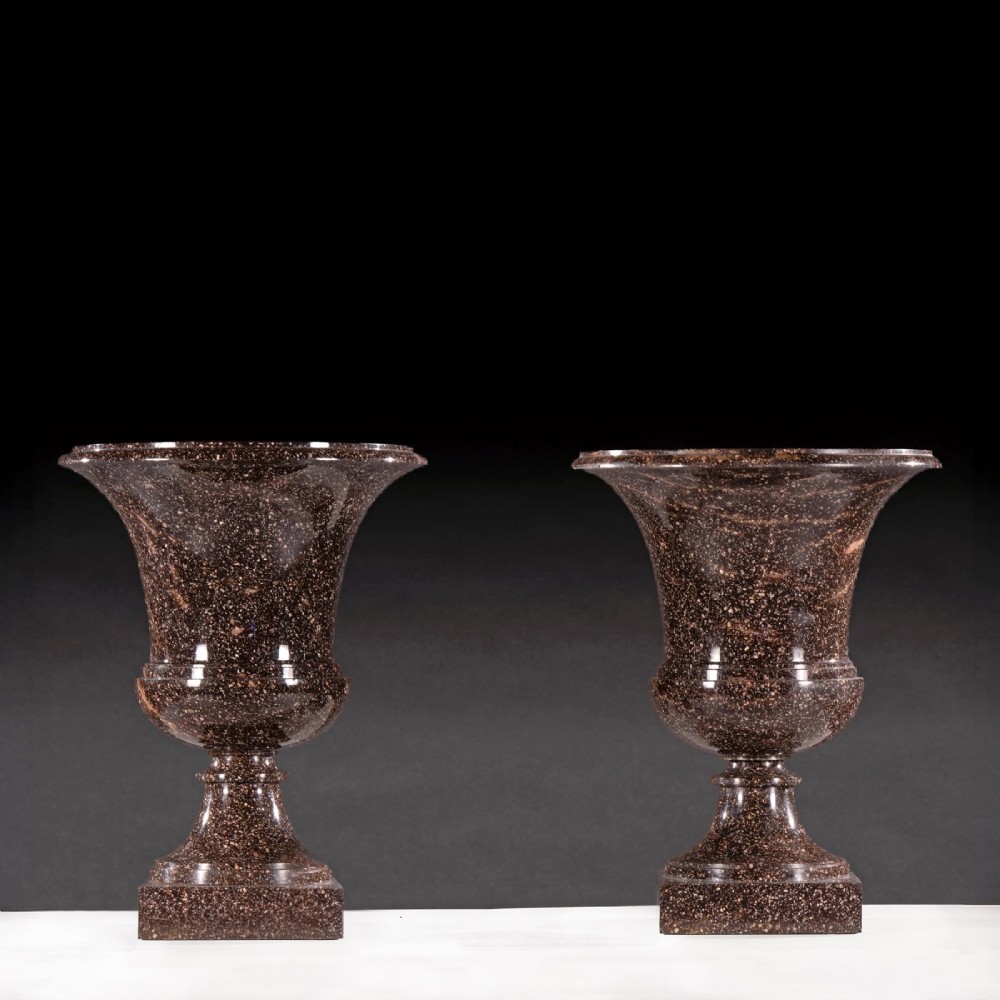
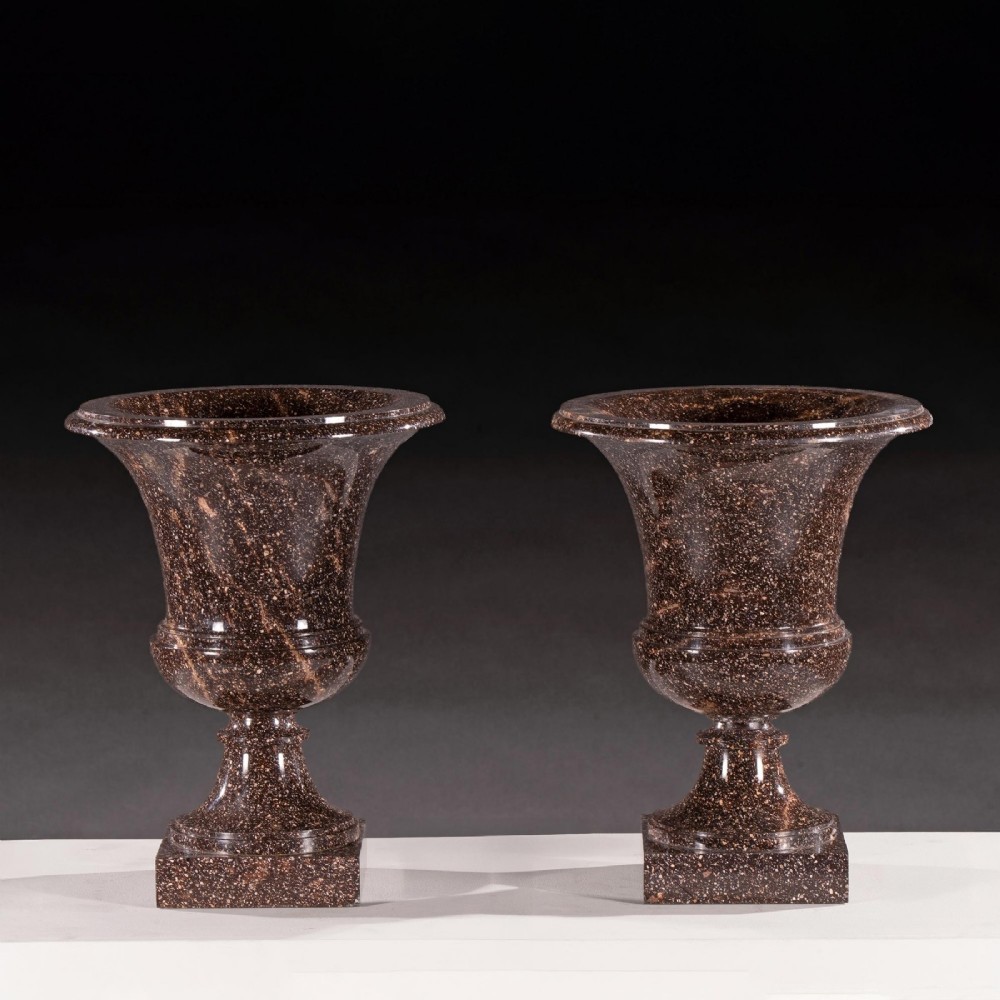
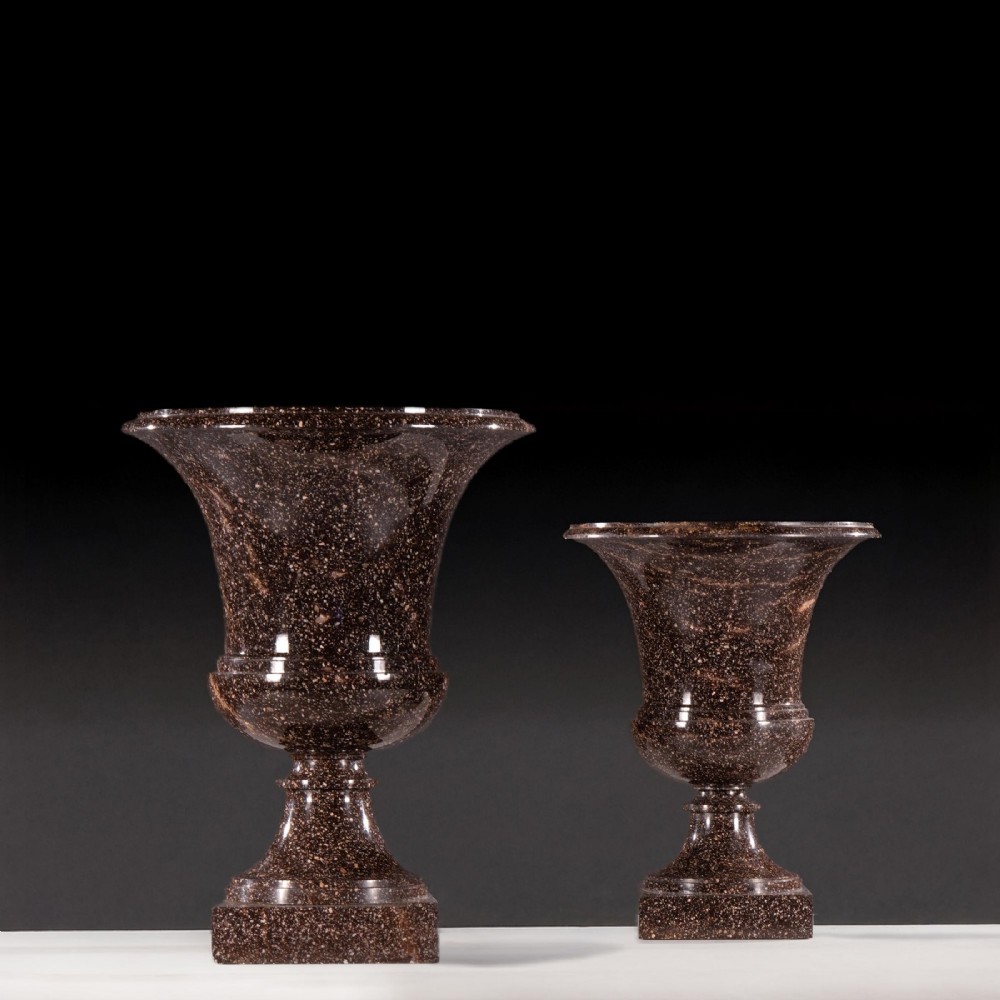
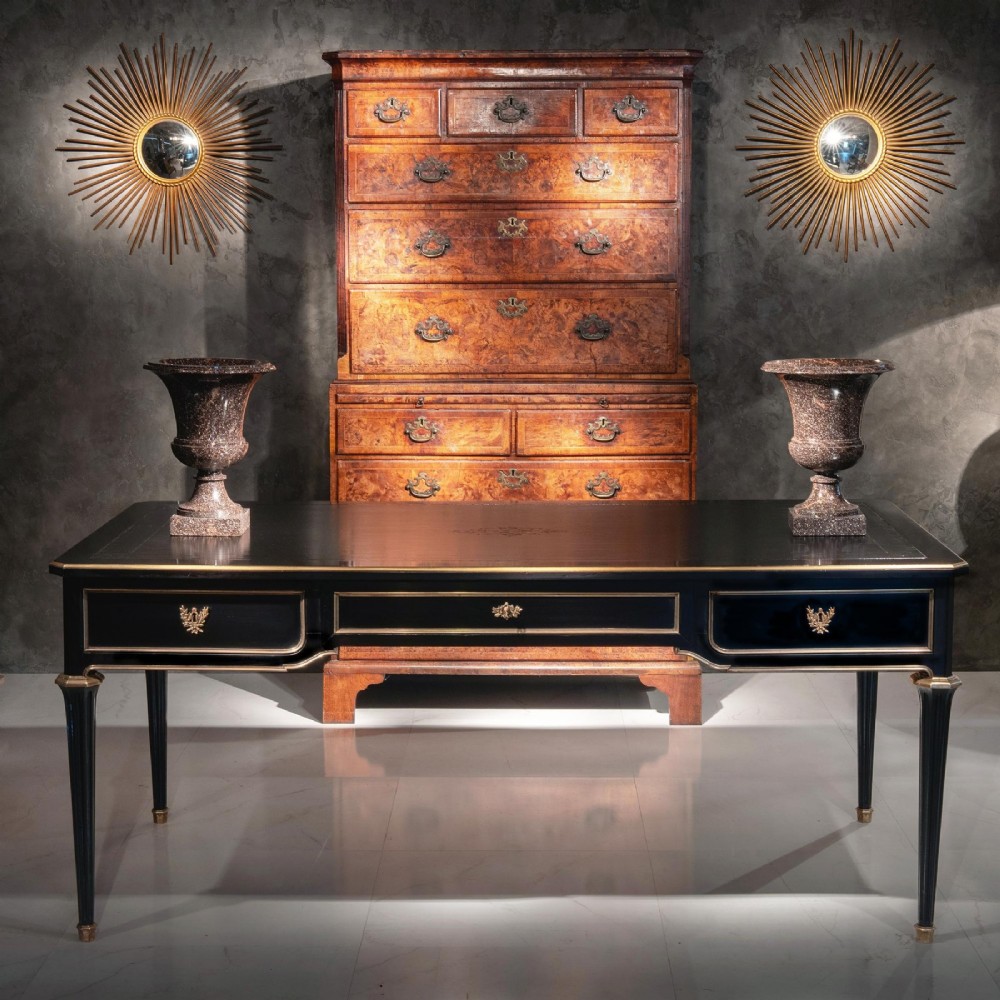
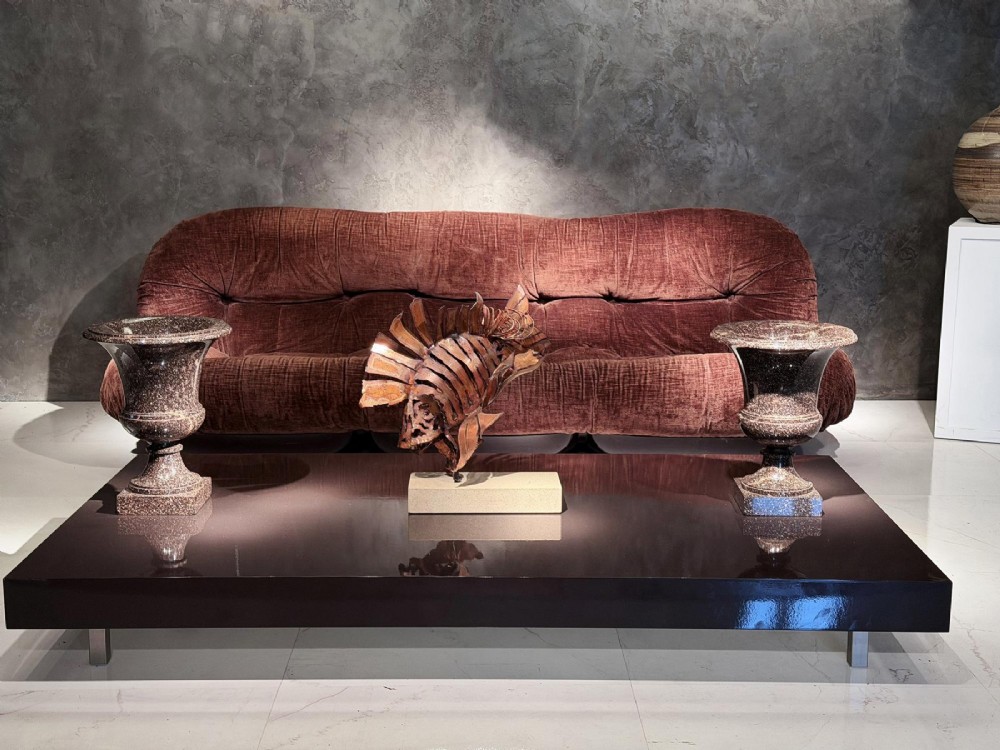
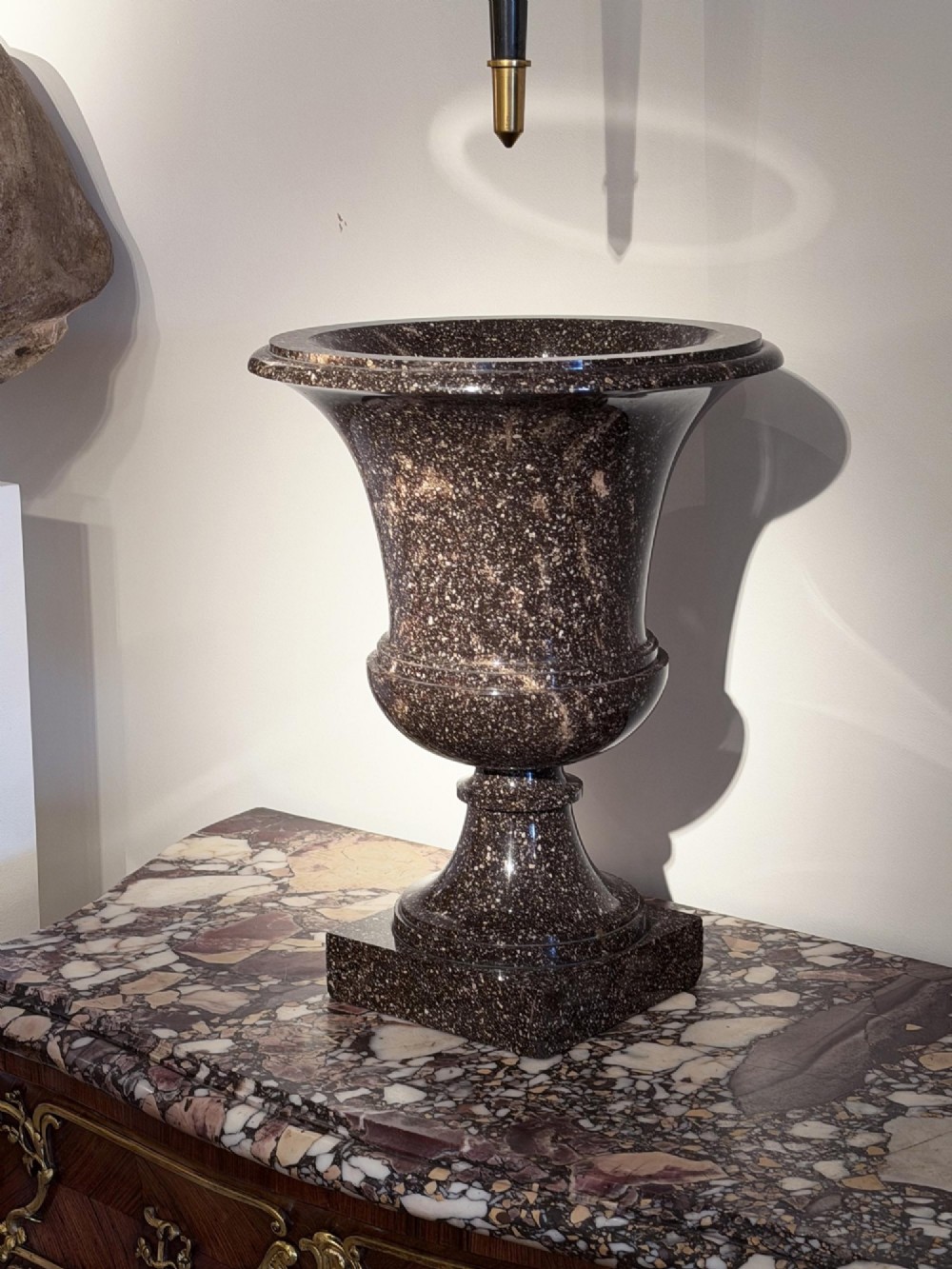
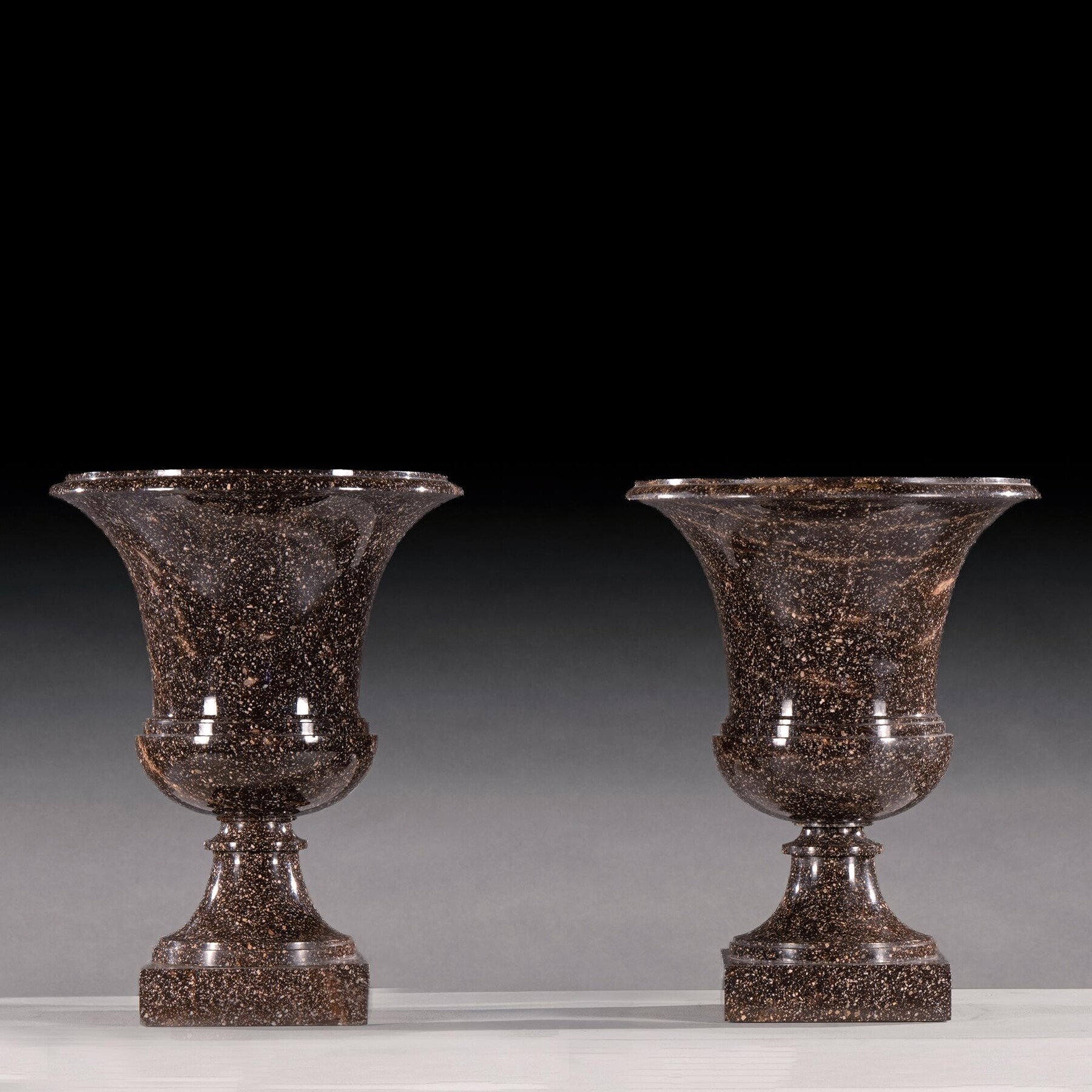
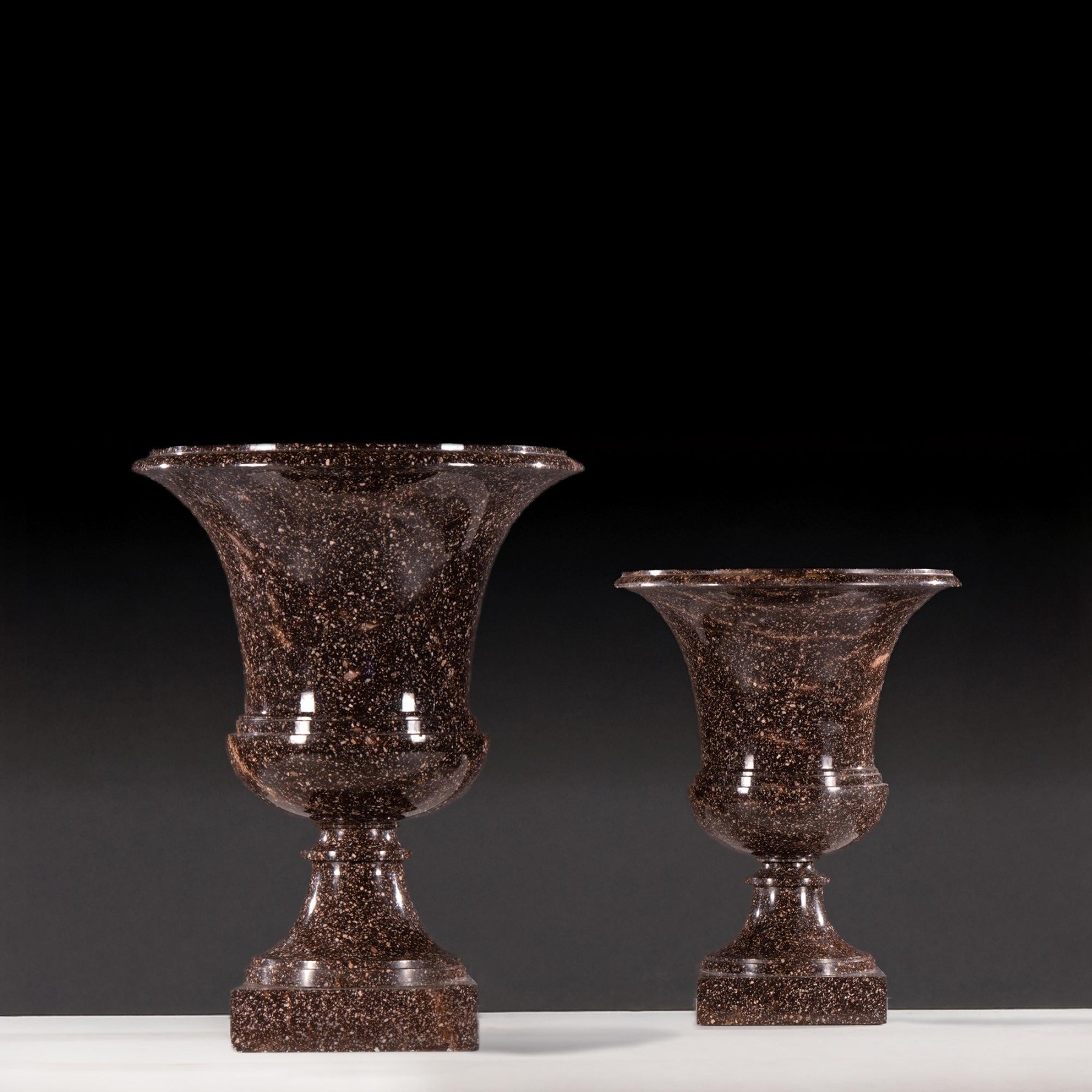
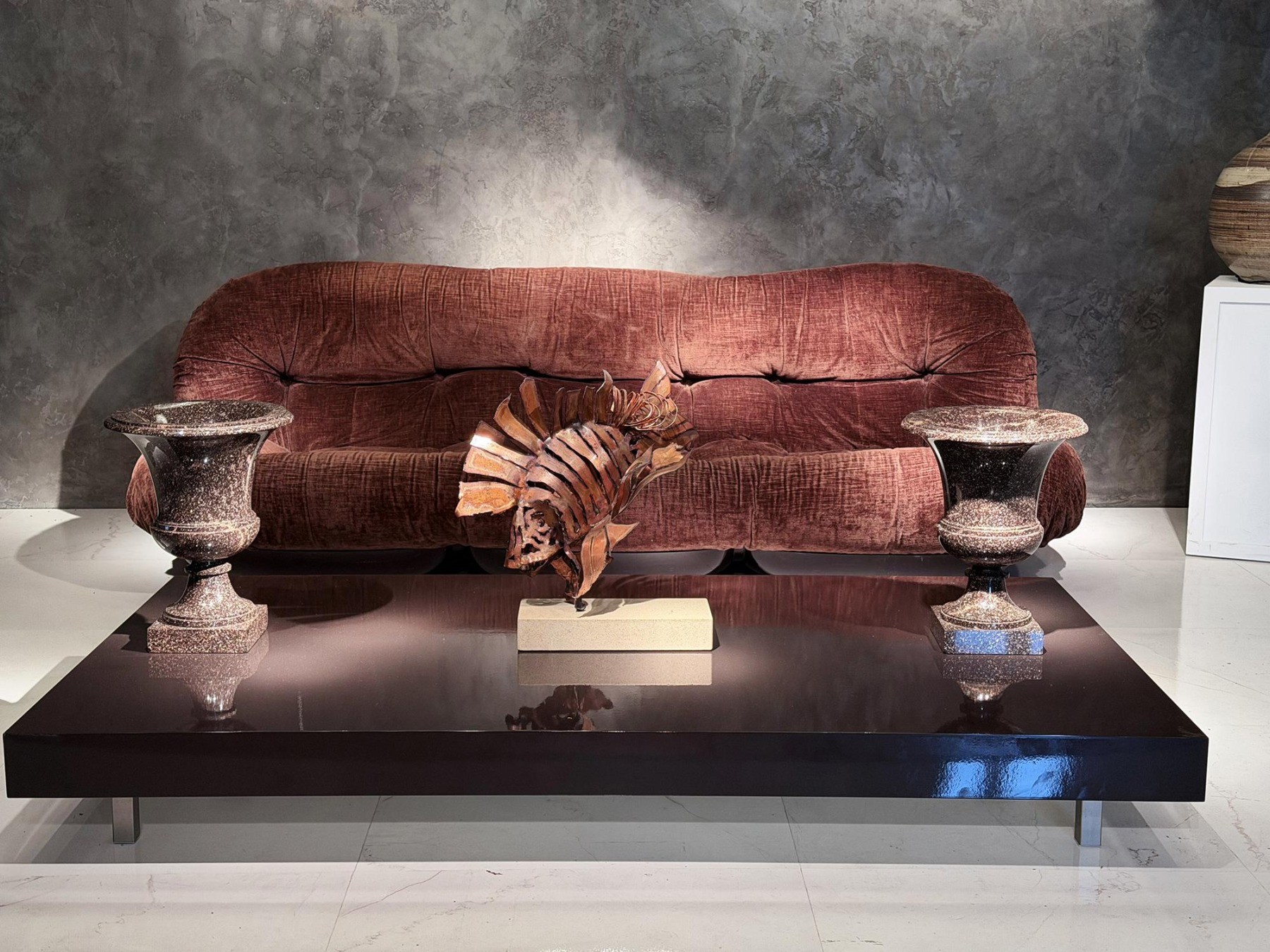
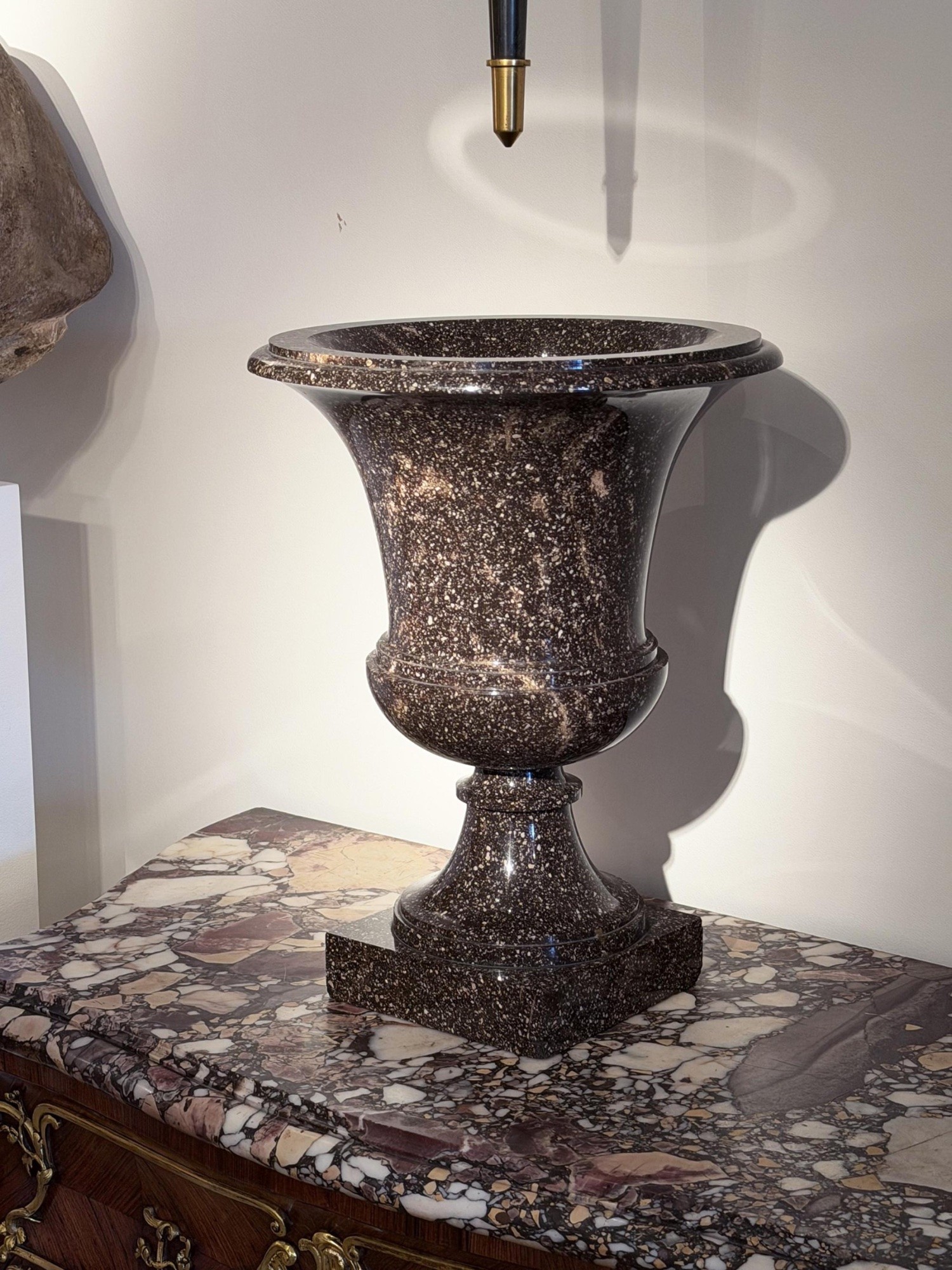
A pair of polished dark brown Blyberg porphyry urns in the Campana form resting on square pedestal bases.Detail view 1Detail view 2Detail view 3Detail view 4Detail view 5Detail view 6
1 / 7
19th Century · SA1248156
Grand Pair of Early 19th Century Swedish Blyberg Porphyry Campana Urns
£32,500€38,025    $41,275

Delivery and payment for this piece are arranged with the dealer.

Ask the dealer a question
Description
A rare pair of finely figured Swedish Blyberg Porphyry Campana Urns of grand scale dating to the early 19th Century.

Swedish Circa1820

This pair of superb large urns are of bell shaped form (campana in Italian) carved from highly figured Swedish Blyberg porphyry, one of the most desirable stones still being mined in Europe at the time of the urns' production. Unusually large at 36cm in height and also rare as a surviving pair with most having been split over the years, these urns are for the connoisseur collector that work equally well in a traditional interior and also a more contemporary one. Over the years, porphyry has entranced everyone from pharaohs and Roman emperors to the likes of William Beckford, George Watson-Taylor and Thomas Hope, not to mention the likes of King George IV who had his agents in Paris purchase this piece for him in the early 19th century

https://www.rct.uk/collection/search#/4/collection/4605/perfume-vase-and-cover

Amongst contemporary collectors the late great collector Philip Hewatt-Jaboor was renowned for his love of porphyry, even going so far as to commission a floor made from the material for his home in Jersey.

The present pair of urns are of the classical Roman campana shape, a form that gained renewed popularity in the neoclassical period in Europe. The head designer at the Swedish porphyry works was Louis Masreliez who, though born in Sweden, had trained in Rome and Paris bringing the imperial tastes from these countries back with him to his homeland. Although the porphyry quarries in Sweden were discovered in the early 18th century they gained royal patronage in the early 19th century having become a viable commercial enterprise in c.1788 and its objects were ultimately placed into the palaces and stately homes of foreign monarchs and distinguished dignitaries.

Egyptian porphyry was also the most highly regarded of stones, seen as suitable only for the use of pharaohs, and the Roman conquerors of Egypt revered the stone equally. It was therefore highly significant when it was discovered that another form of porphyry could be mined in Europe as the stock in Egypt had long been exhausted. One of the leading painters and decorators in Sweden, Masreliez designed a series of masterworks in porphyry and a pair of campana urns designed by him for Princess Sofia Albertina, sister of King Gustav III, were acquired from Sotheby's New York by the National Museum of Sweden in 2001

https://www.mynewsdesk.com/nationalmuseum/pressreleases/new-acquisition-works-in-swedish-porphyry-1693742

These vases are of similar form to our pair and it is likely that the porphyry works were still using the designs left by Masreliez long after his death in 1810. The porphyry works itself provided some of Sweden's most important exports until its destruction by fire in 1866, effectively bringing to a close production on any sort of scale.

Porphyry is extremely hard and difficult to work due to the density of the material and its scarcity and high value make it all the more tricky as a proposition for a would-be sculptor. It is no surprise, therefore, that the best designers and artists were employed by the manufactory to provide designs to the sculptors and the present pieces were created by this elite team who supplied both the local aristocracy and royals and crowned heads around Europe with this desirable material.

Dimensions

Height 14 1/4 inches - 36cm

Diameter 11 1/4 inches - 28.5cm

Base 15cm by 15cm
Date19th Century
Height36cm (14.17")
Width28.5cm (11.22")
Depth15cm (5.91")
ReferenceSA1248156
Dealer's reference3094
Loveday Antiques
Loveday AntiquesSellingantiques verified since Mar 2012

Specialist furniture dealers 18th-20th century

Member of LAPADA BADA CINOA

PDF SHARE
SAVE
£32,500
Ask the dealer
Archive I A pair of polished dark brown Blyberg porphyry urns in the Campana form resting on square pedestal bases.

Grand Pair of Early 19th Century Swedish Blyberg Porphyry Campana Urns

Archive II A pair of polished dark brown Blyberg porphyry urns in the Campana form resting on square pedestal bases. View II
Archive III A pair of polished dark brown Blyberg porphyry urns in the Campana form resting on square pedestal bases. View III
Archive IV A pair of polished dark brown Blyberg porphyry urns in the Campana form resting on square pedestal bases. View IV
Archive V A pair of polished dark brown Blyberg porphyry urns in the Campana form resting on square pedestal bases. View V
Archive VI A pair of polished dark brown Blyberg porphyry urns in the Campana form resting on square pedestal bases. View VI
Archive VII A pair of polished dark brown Blyberg porphyry urns in the Campana form resting on square pedestal bases. View VII
Enlarged Archival View
Telephone 01438 869819
Location
Benington
Hertfordshire
United Kingdom
Verified Since Mar 2012
Items For Sale 69
Items Sold 952
Loveday Antiques
Loveday Antiques
Verified Since Mar 2012
View Dealer Info
Location: Benington, Hertfordshire, United Kingdom
Verified
Mar 2012
For Sale
69
Sold
952
A pair of polished dark brown Blyberg porphyry urns in the Campana form resting on square pedestal bases.
GRAND PAIR OF EARLY 19TH CENTURY SWEDISH BLYBERG PORPHYRY CAMPANA URNS
Ref: SA1248156
A pair of polished dark brown Blyberg porphyry urns in the Campana form resting on square pedestal bases.
Detail View 1
Detail View 2
Detail View 3
Detail View 4
Detail View 5
Detail View 6
Archival Detail
Every single antique dealer on our platform is individually approved by our internal team. We verify their professional trade history, ethical standards, and photographic quality to ensure a secure, high-standard buying environment. Upon joining, every dealer agrees to a strict 9-point code of conduct. While issues can occasionally arise, our dealers typically resolve them swiftly and directly with the buyer. In fact, since our founding in 2002, Sellingantiques has only had to step in to help resolve an issue on roughly five occasions—a true testament to the quality of our dealers and their dedication to your happiness.
Our dealers are highly experienced in packing and shipping fragile, high-value antiques. Because you are in direct contact with the dealer, you will be able to easily go through all available shipping and insurance options together to ensure your item arrives safely.
Antiques are the ultimate green purchase. By choosing historical pieces over newly manufactured goods, you completely eliminate the carbon footprint of modern mass production while preserving exceptional, timeless craftsmanship.
Written by Sellingantiques from the dealer’s photographs and listing
  • ObjectDecorative Urns
  • Period19th century
  • StyleNeoclassical
  • MaterialBlyberg Porphyry, Hardstone
  • ColourDark Brown
  • MotifsCampana shape, Flared lip, Turned pedestal, Square plinth
  • SizeH 36 cm (14 in) x W 28.5 cm (11 in) x D 15 cm (6 in)

This pair of 19th-century decorative urns originates from Sweden and follows the neoclassical style. Carved from dark brown Blyberg porphyry hardstone, the pieces display a polished finish with natural mottled speckling in lighter brown and white tones. Each vessel features a traditional campana shape with a wide flared lip, a stepped circular moulding near the lower bowl, a turned pedestal foot, and a heavy square plinth base. The matching objects measure 36 cm high, 28.5 cm wide, and 15 cm deep. Designed for display in a traditional or contemporary home interior, these decorative urns sit well upon a sideboard top or display cabinet. The monumental scale and dense mineral composition reflect the heritage of the Swedish porphyry works active during the early 1800s. The pairing represents a complete surviving set of two urns from the period, retaining their symmetrical proportions and original geometric plinth profiles.

The Campana urn is modeled after ancient Roman bell-shaped wine mixing vessels (crater campano). It features a wide flared rim, a deep inverted bell body, a gadrooned or molded lower section, and a circular foot mounted on a square plinth.

Swedish porphyry urns were carved from extremely hard volcanic rock quarried in Dalarna, such as Blyberg or Alvdalen porphyry. The rock consists of feldspar or quartz crystals embedded in a fine-grained matrix, requiring water-powered machinery and iron tools to grind and polish.

Authentic pieces exhibit a highly polished, dense microcrystalline structure with characteristic flecks of cream, red, or grey feldspar embedded in a dark base. Early 19th-century examples display crisp lathe-turned profiles, weighted balance, and seamless hand-fitted components.

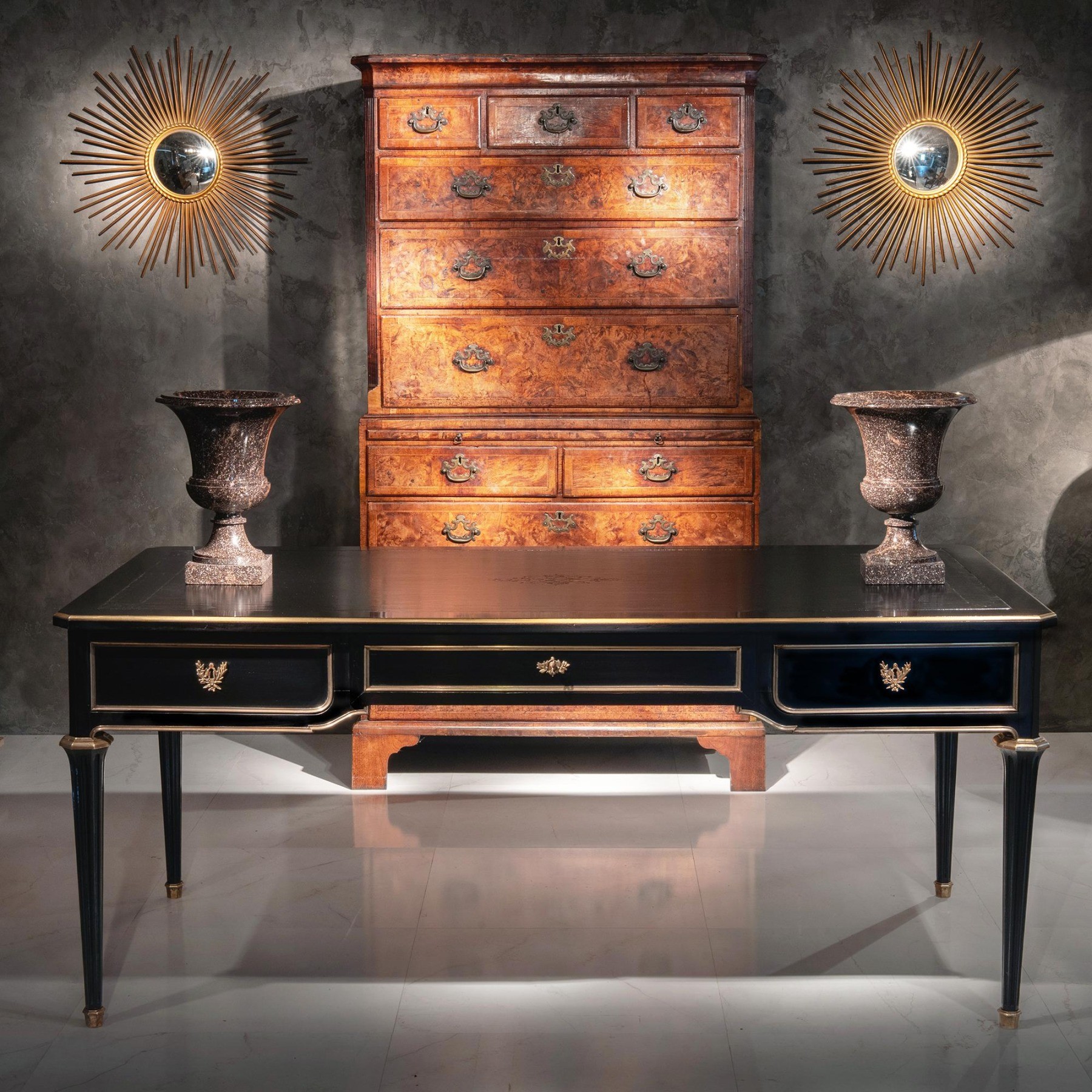
A pair of stone Campana urns is typically arranged symmetrically to provide visual balance. Common placements include flanking a chimneypiece mantel, anchoring either end of a large console table, or positioning atop pedestals within an entrance hall.

Polished hardstone surfaces should be dusted regularly with a soft, lint-free cloth. To remove surface dirt, use a slightly damp cloth with neutral soap, avoiding acidic or abrasive chemical cleaners that may dull the polished stone surface.
items
Add keywords to the filter
Price
£100
£250000
Era
Period
Style
Material
Origin
Stock Location
Recently Added
Online Payments
Categories