59,705  PAGES BROWSED TODAY PAGES TODAY • 211 ANTIQUES UPLOADED TODAYNEW ARRIVALS
GIFTS
211 ITEMS ADDED TODAY
Sort Order
Items Per Page
Browse Categories
Sort order
Items per page
ID #SA1239865
FOR SALE
£850
Email Phone Buy
Save
A Georgian Lignum Vitae Coffee Grinder
For sale by Opus Antiques
for sale €995     $1,080
£850
Opus Antiques

Opus Antiques

Sellingantiques Verified Since Oct 2014
Browse dealers 100 items
  • About Us
    Antique treen, boxes & decorative georgian items
Id #SA1239865
PDF SHARE
SAVE

A Georgian Lignum Vitae Coffee Grinder

18th century
For Sale by Opus Antiques
Description

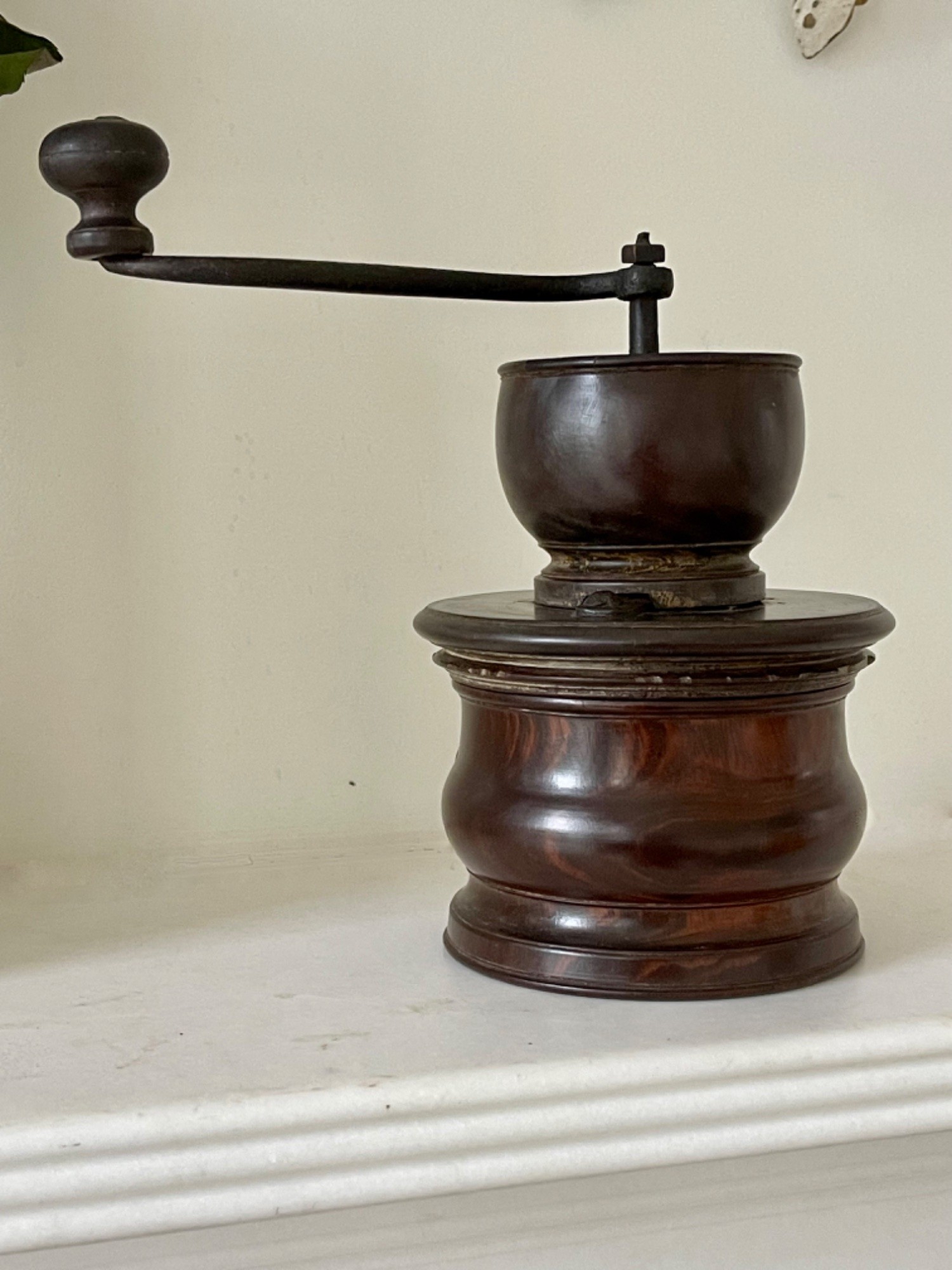
This  is a lovely lignum vitae coffee grinder, dating from around 1760.

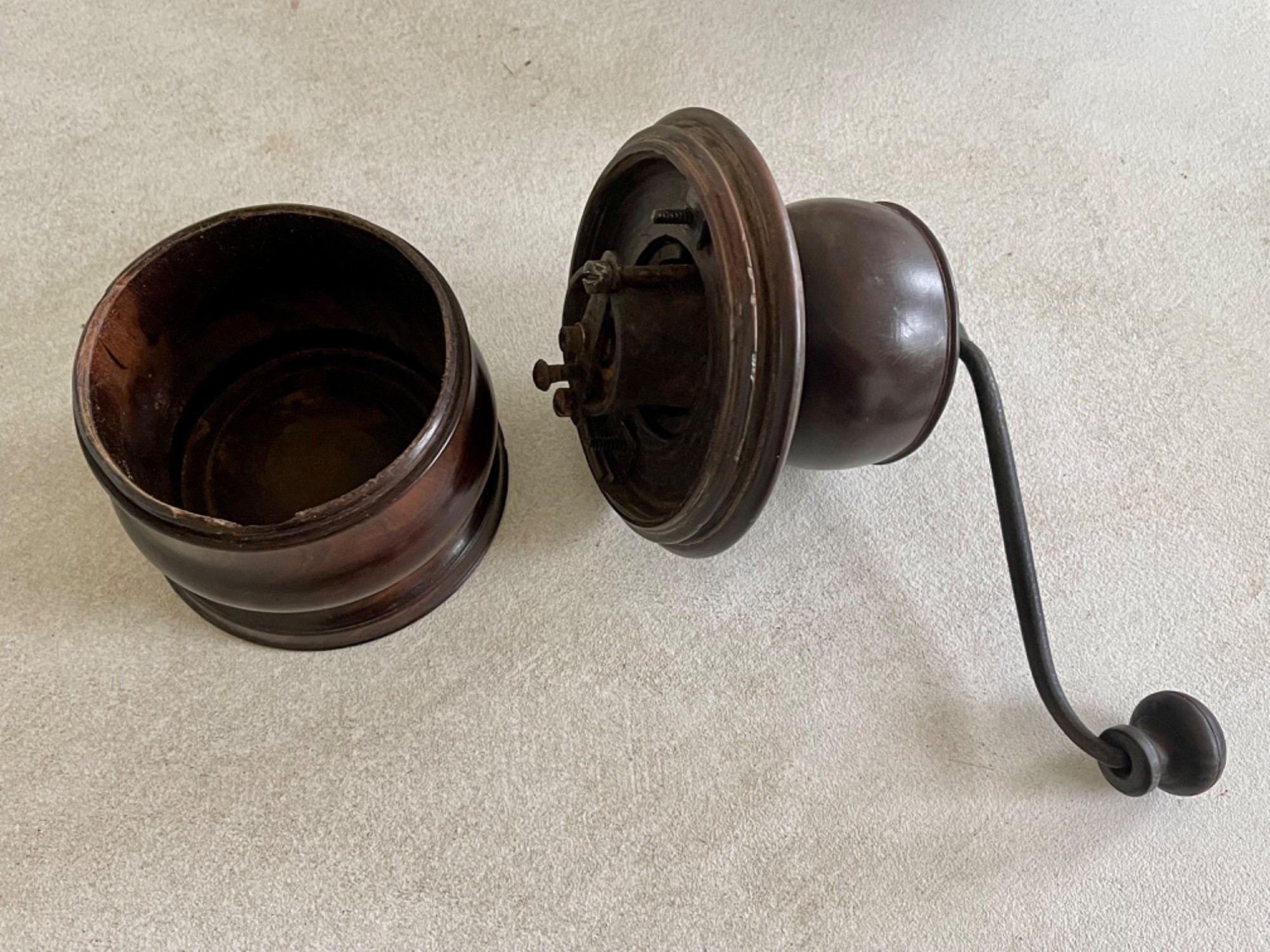
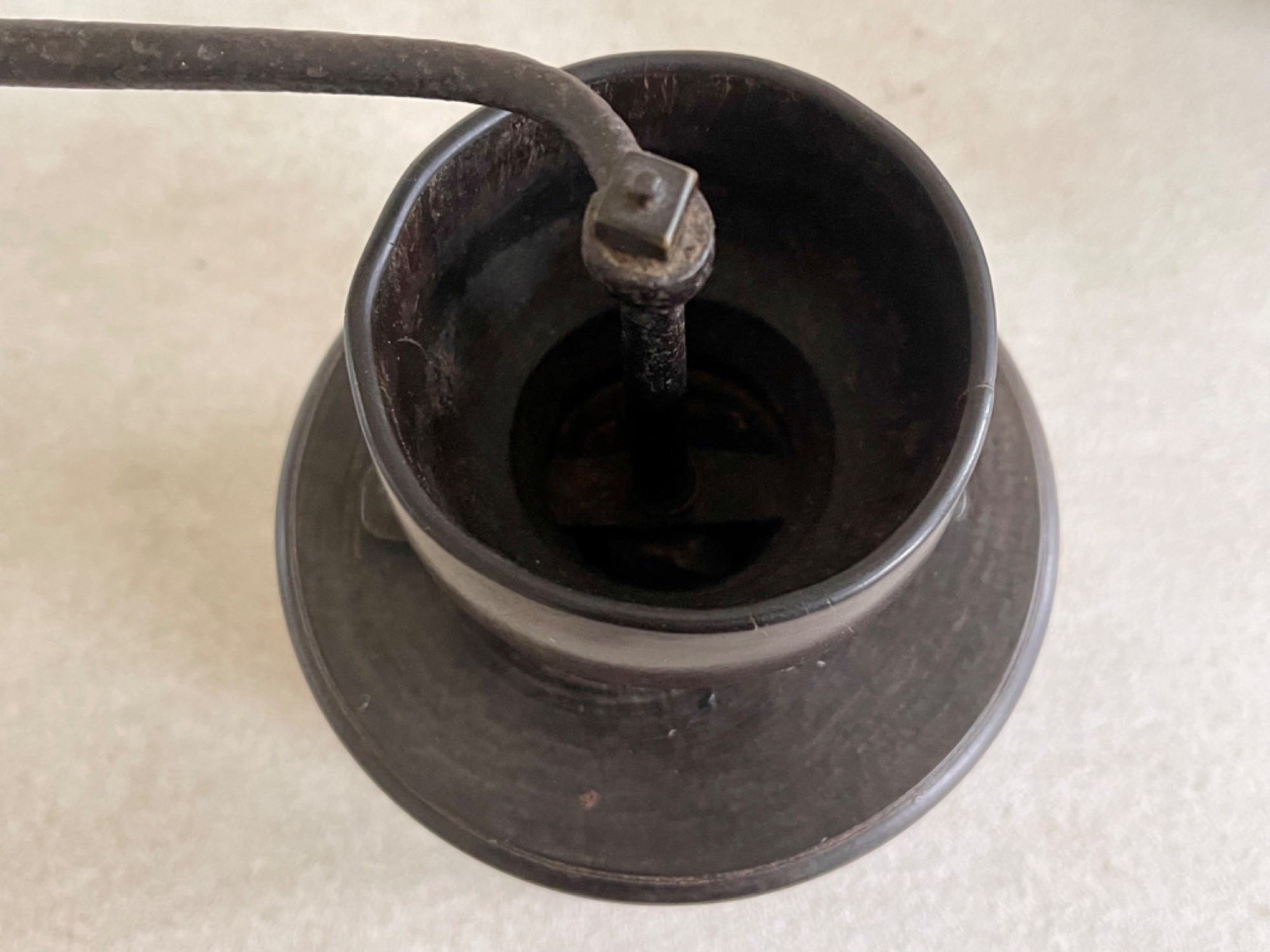
The top section is open to drop the coffee beans into, the  and the grinding mechanism is still present, along with the handle, the  middle section unscrews to retrieve the ground coffee.

The coffee grinder measures 15cm h excluding the handle x 10cm w at the base.

Coffee beans initially were crushed by a pestle and mortar which was very time consuming hence creating a demand for a mechanical coffee grinder. Sometime between 1657 and 59 a gentleman called Nicholas Brook living in St Tulies's Street London was the only known man to be making mills for grinding the coffee to powder. they were expensive being between 40 to 45 shillings per mill. They were however of very well made using lignum vitae wood, which in itself was very expensive at that time, and also they had grinding cogs of hand forged steel.

The first coffee house was believed to have opened in the UK in Oxford 1651/1652 closely followed by one opening in London. Coffee houses began to spring up all over London and in cities around the Uk. They were meeting places for men, women were excluded from these coffee houses and so was alcohol! Men would meet to conduct business, discuss politics, science, poetry and news.

There would be a long table in the coffee house, you would pay a penny for your coffee and sit down and meet and mingle with whoever was there. The coffee houses also provided newspapers and other reading materials.


Declaration

Opus Antiques has dated this Lignum Vitae Coffee Grinder to the Georgian era.
Reference Numbers
Sellingantiques Reference
SA1239865
Dealers Notes

Own a piece of history

Description
This  is a lovely lignum vitae coffee grinder, dating from around 1760.
“
The top section is open to drop the coffee beans into, the  and the grinding mechanism is still present, along with the handle, the  middle section unscrews to retrieve the ground coffee.
Opus Antiques
fig 1. A turned dark brown lignum vitae coffee grinder with a curved iron crank handle and turned wooden knob.
fig 1. A Georgian Lignum Vitae Coffee Grinder

The coffee grinder measures 15cm h excluding the handle x 10cm w at the base.

Coffee beans initially were crushed by a pestle and mortar which was very time consuming hence creating a demand for a mechanical coffee grinder. Sometime between 1657 and 59 a gentleman called Nicholas Brook living in St Tulies's Street London was the only known man to be making mills for grinding the coffee to powder. they were expensive being between 40 to 45 shillings per mill. They were however of very well made using lignum vitae wood, which in itself was very expensive at that time, and also they had grinding cogs of hand forged steel.
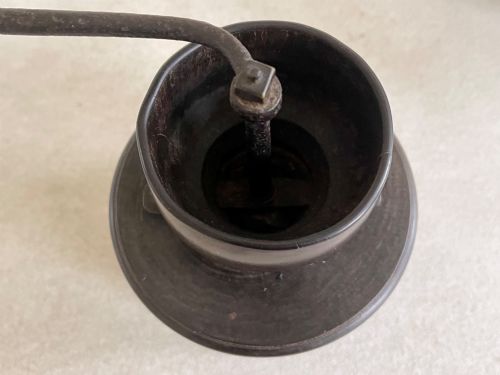
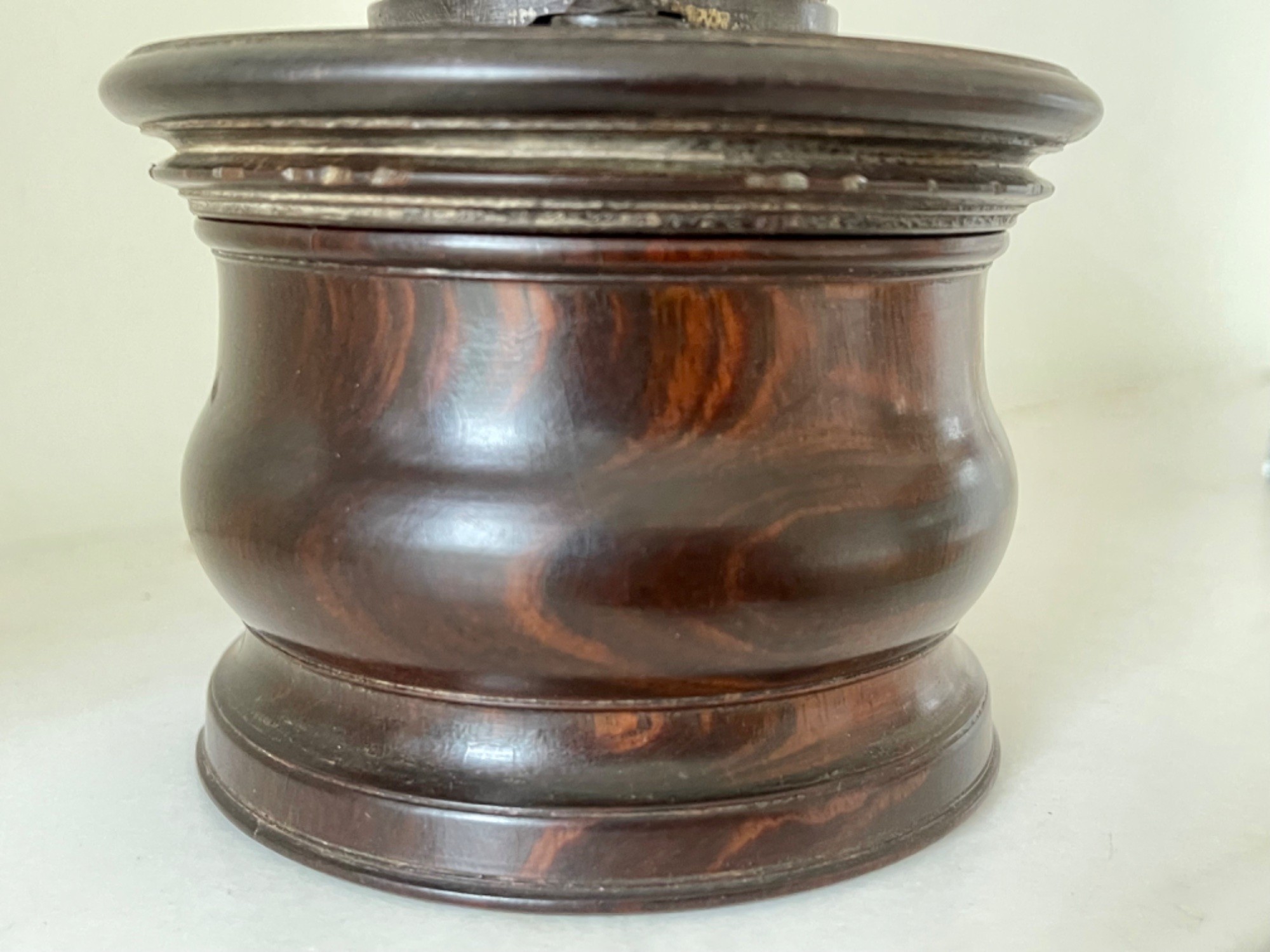
fig 2. A turned dark brown lignum vitae coffee grinder with a curved iron crank handle and turned wooden knob.
fig 2. A Georgian Lignum Vitae Coffee Grinder

The first coffee house was believed to have opened in the UK in Oxford 1651/1652 closely followed by one opening in London. Coffee houses began to spring up all over London and in cities around the Uk. They were meeting places for men, women were excluded from these coffee houses and so was alcohol! Men would meet to conduct business, discuss politics, science, poetry and news.
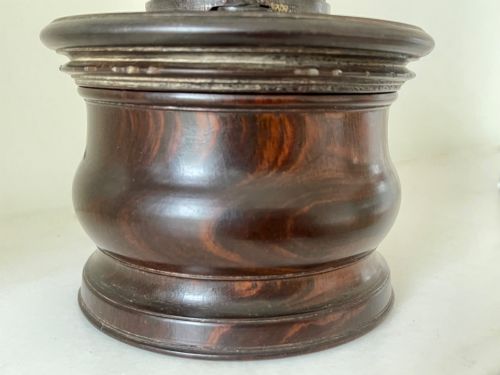
fig 3. A turned dark brown lignum vitae coffee grinder with a curved iron crank handle and turned wooden knob.
fig 3. A Georgian Lignum Vitae Coffee Grinder

There would be a long table in the coffee house, you would pay a penny for your coffee and sit down and meet and mingle with whoever was there. The coffee houses also provided newspapers and other reading materials.


Date of Manufacture

Opus Antiques has dated this Lignum Vitae Coffee Grinder to the Georgian era.

Reference Numbers
Sellingantiques Ref
SA1239865
Opus Antiques
Opus Antiques
Sellingantiques verified Since Oct 2014

Antique treen, boxes & decorative georgian items

Dealer Profile

You can view the stock and full dealer information on the Opus Antiques Profile Page
PDF SHARE
SAVE
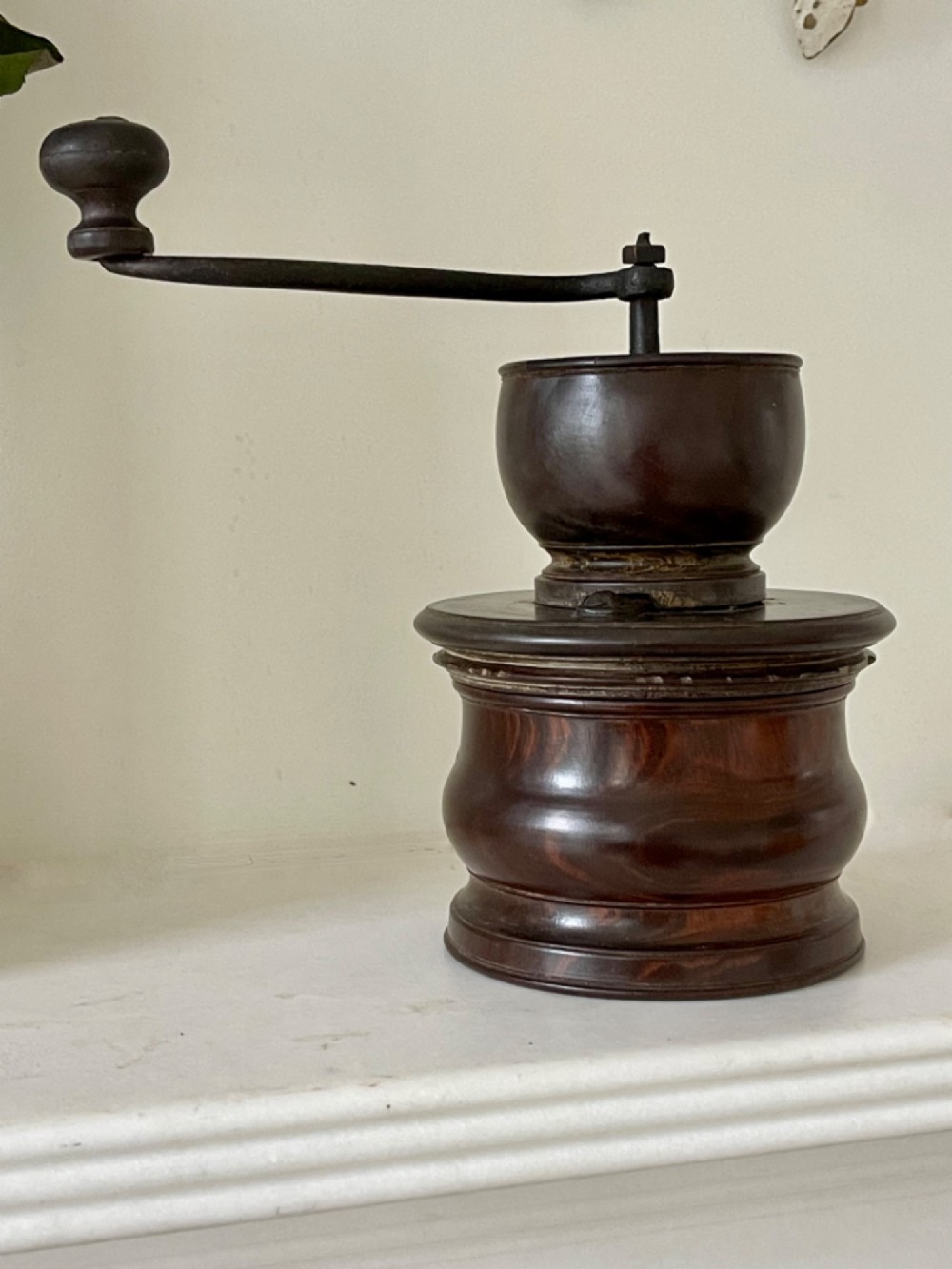
A turned dark brown lignum vitae coffee grinder with a curved iron crank handle and turned wooden knob.
1 / 5
Archive I A turned dark brown lignum vitae coffee grinder with a curved iron crank handle and turned wooden knob.

A Georgian Lignum Vitae Coffee Grinder
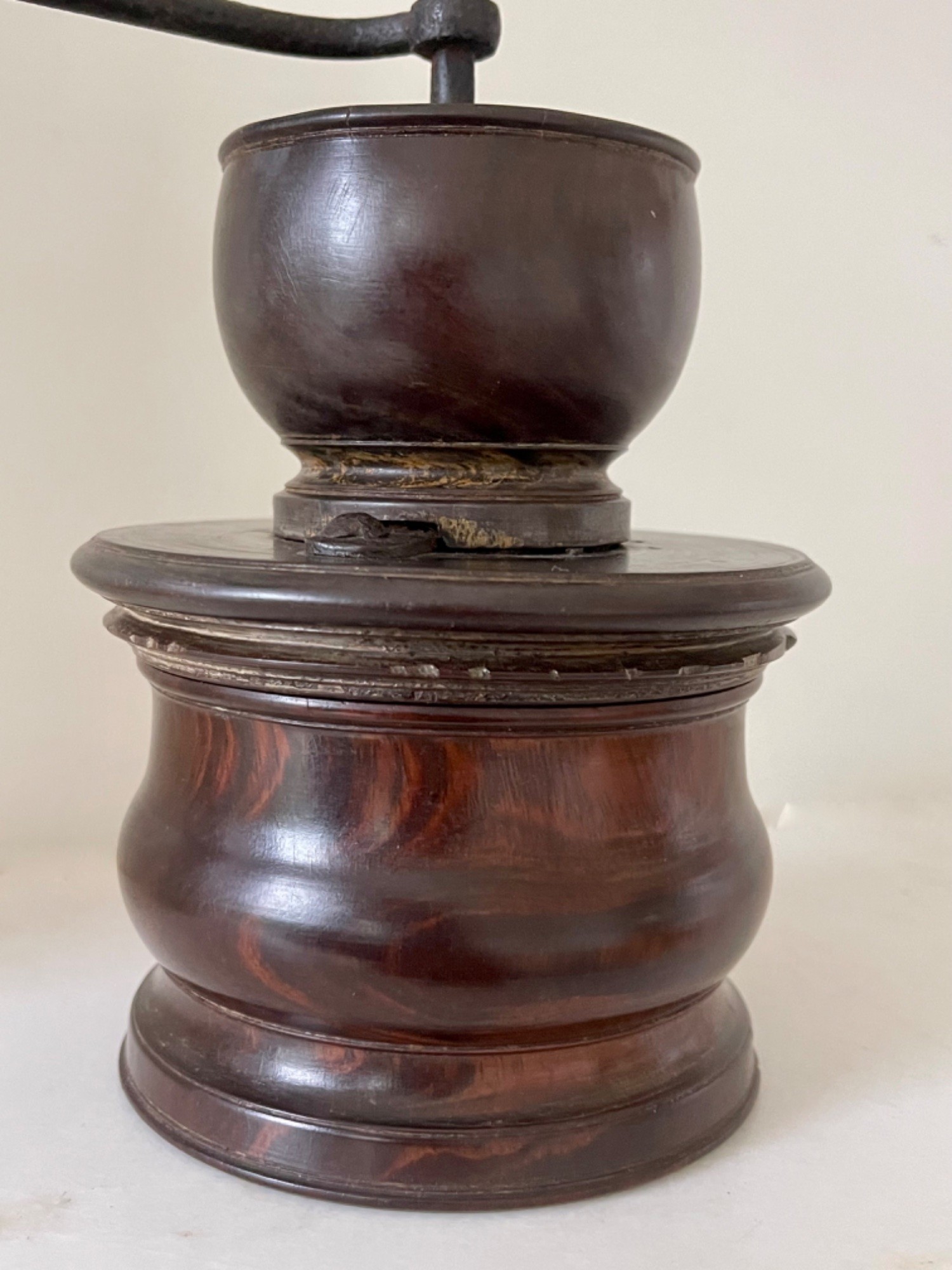
Archive II A turned dark brown lignum vitae coffee grinder with a curved iron crank handle and turned wooden knob. View II
Archive III A turned dark brown lignum vitae coffee grinder with a curved iron crank handle and turned wooden knob. View III
Archive IV A turned dark brown lignum vitae coffee grinder with a curved iron crank handle and turned wooden knob. View IV
Archive V A turned dark brown lignum vitae coffee grinder with a curved iron crank handle and turned wooden knob. View V
Enlarged Archival View
Telephone 07941 285 532
Location
North Devon
United Kingdom
Verified Since Oct 2014
Items For Sale 100
Items Sold 2,389
Opus Antiques
Opus Antiques
Verified Since Oct 2014
View Dealer Info
Location: North Devon, United Kingdom
Verified
Oct 2014
For Sale
100
Sold
2,389
A turned dark brown lignum vitae coffee grinder with a curved iron crank handle and turned wooden knob.
A Georgian Lignum Vitae Coffee Grinder
Ref: SA1239865
A turned dark brown lignum vitae coffee grinder with a curved iron crank handle and turned wooden knob.
Detail View 1
Detail View 2
Detail View 3
Detail View 4
Archival Detail
Every single antique dealer on our platform is individually approved by our internal team. We verify their professional trade history, ethical standards, and photographic quality to ensure a secure, high-standard buying environment. Upon joining, every dealer agrees to a strict 9-point code of conduct. While issues can occasionally arise, our dealers typically resolve them swiftly and directly with the buyer. In fact, since our founding in 2002, Sellingantiques has only had to step in to help resolve an issue on roughly five occasions—a true testament to the quality of our dealers and their dedication to your happiness.
Our dealers are highly experienced in packing and shipping fragile, high-value antiques. Because you are in direct contact with the dealer, you will be able to easily go through all available shipping and insurance options together to ensure your item arrives safely.
Antiques are the ultimate green purchase. By choosing historical pieces over newly manufactured goods, you completely eliminate the carbon footprint of modern mass production while preserving exceptional, timeless craftsmanship.
Written by Sellingantiques from the dealer’s photographs and listing
  • ObjectCoffee Mill
  • Period18th century
  • StyleGeorgian
  • MaterialLignum Vitae, Iron
  • ColourDark Brown
  • MotifsTurned wooden body, Iron crank handle, Cupped hopper

This Georgian coffee mill is fashioned from dark brown lignum vitae wood paired with an iron crank handle. The design incorporates a turned wooden body, a cupped hopper, and a curved handle finished with a turned wooden knob. The piece measures 15 cm high excluding the handle by 10 cm wide at the base. The top section opens to receive coffee beans, and the middle section unscrews to allow retrieval of the ground coffee. The internal grinding mechanism remains present alongside the metal handle. Suitable for placement on a kitchen island, this item serves as a functional decorative accent in a contemporary home setting.

A Georgian lignum vitae coffee grinder is a manual grinding mill crafted during the 18th or early 19th century, constructed from dense, durable lignum vitae wood designed to withstand heavy culinary use.

Traditional coffee mills from this era were crafted using dense hardwoods such as lignum vitae, boxwood, or mahogany, fitted with forged iron internal grinding mechanisms and crank handles.

Authentic pieces feature hand-turned wood construction, natural surface patination, heavy dense timber such as lignum vitae, and hand-forged iron components rather than modern cast fittings.

An antique wooden coffee mill can be placed on a kitchen island, open shelving, or a sideboard top to add historical texture and rich wood tones to culinary spaces.

Clean the wood gently with a soft dry cloth and apply a natural beeswax polish periodically, avoiding moisture exposure or chemical cleaners that could strip the original finish.
items
Add keywords to the filter
Price
£100
£250000
Era
Period
Style
Material
Origin
Stock Location
Recently Added
Online Payments
Categories