Folk and Fable Antiques has dated this piece to the 1910s.
This was acquired from a specialist political and social history ephemera dealer at the renowned York Book Fair.
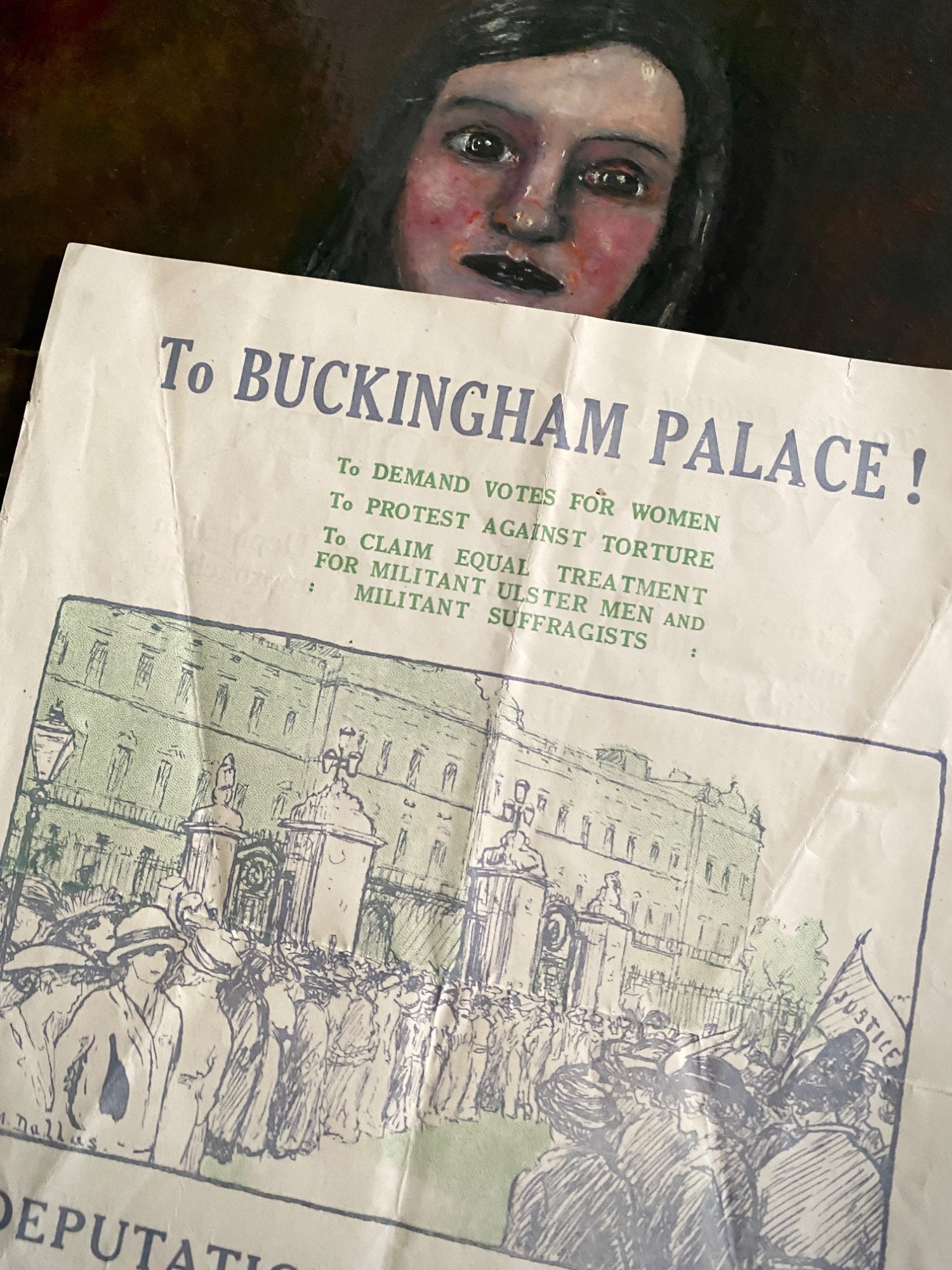
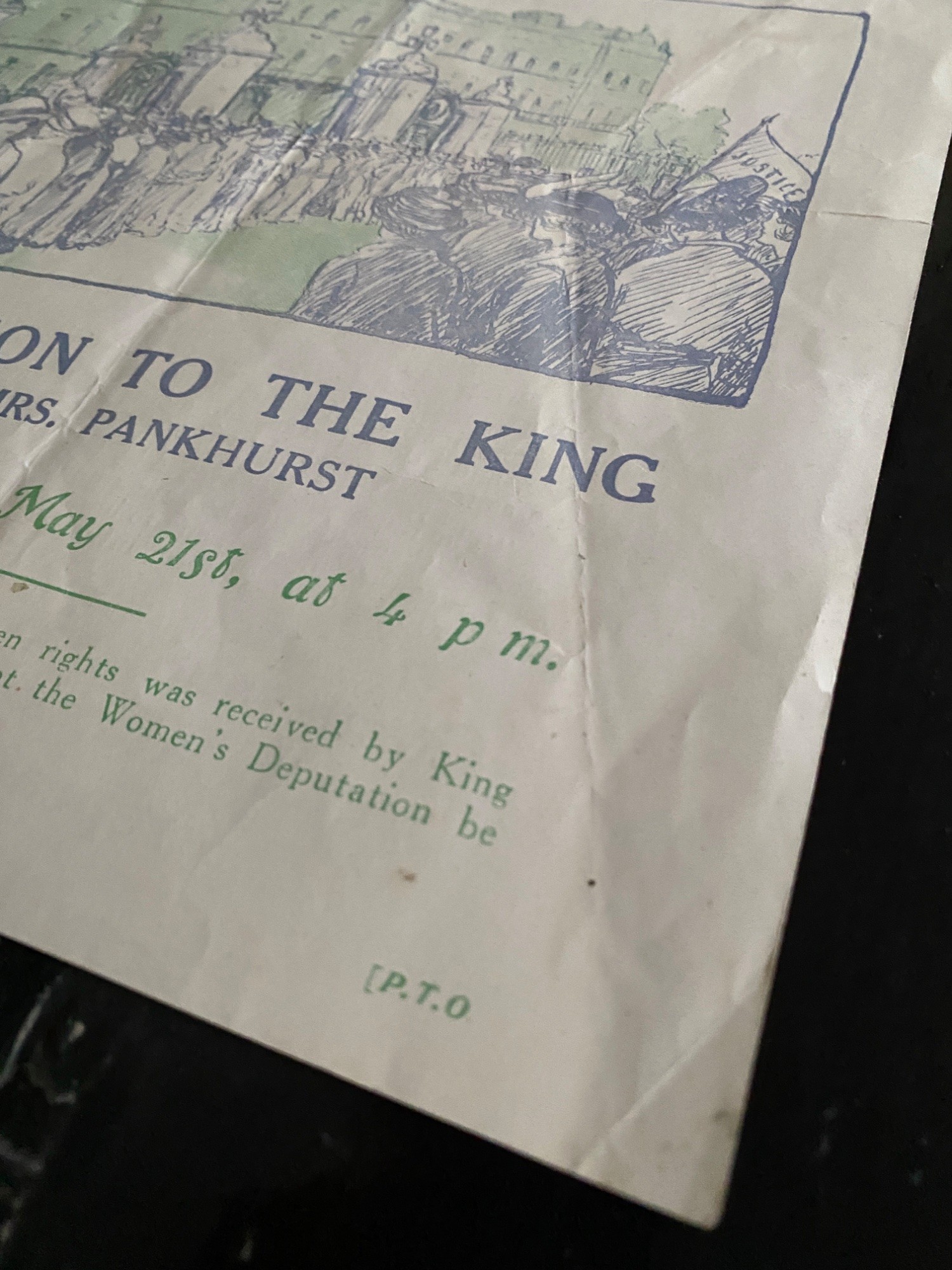
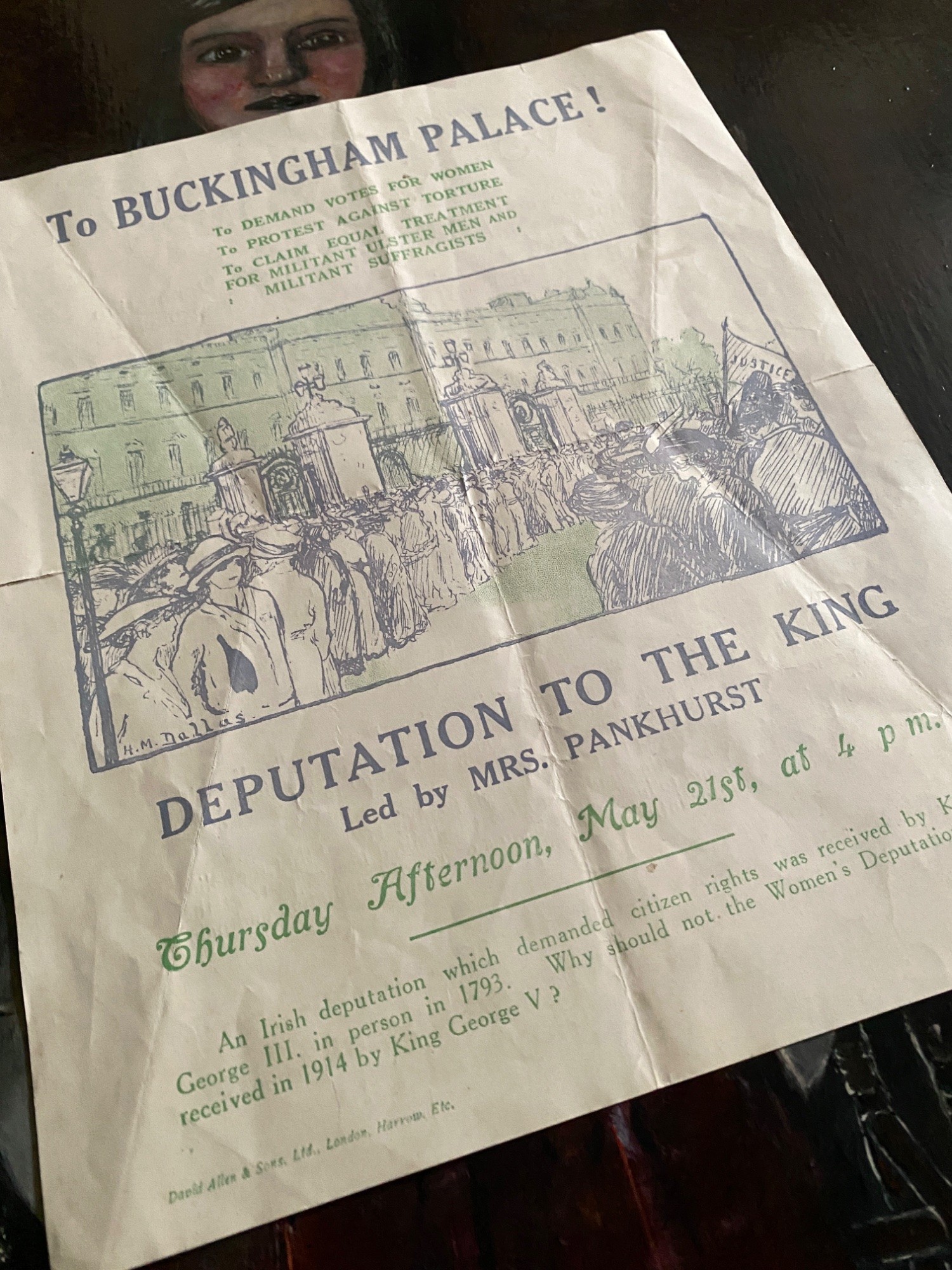
On 21 May 1914, a large group of suffragettes (up to 200 or more in some reports) tried to march to Buckingham Palace to present a petition to King George V. Emmeline Pankhurst led the deputation.
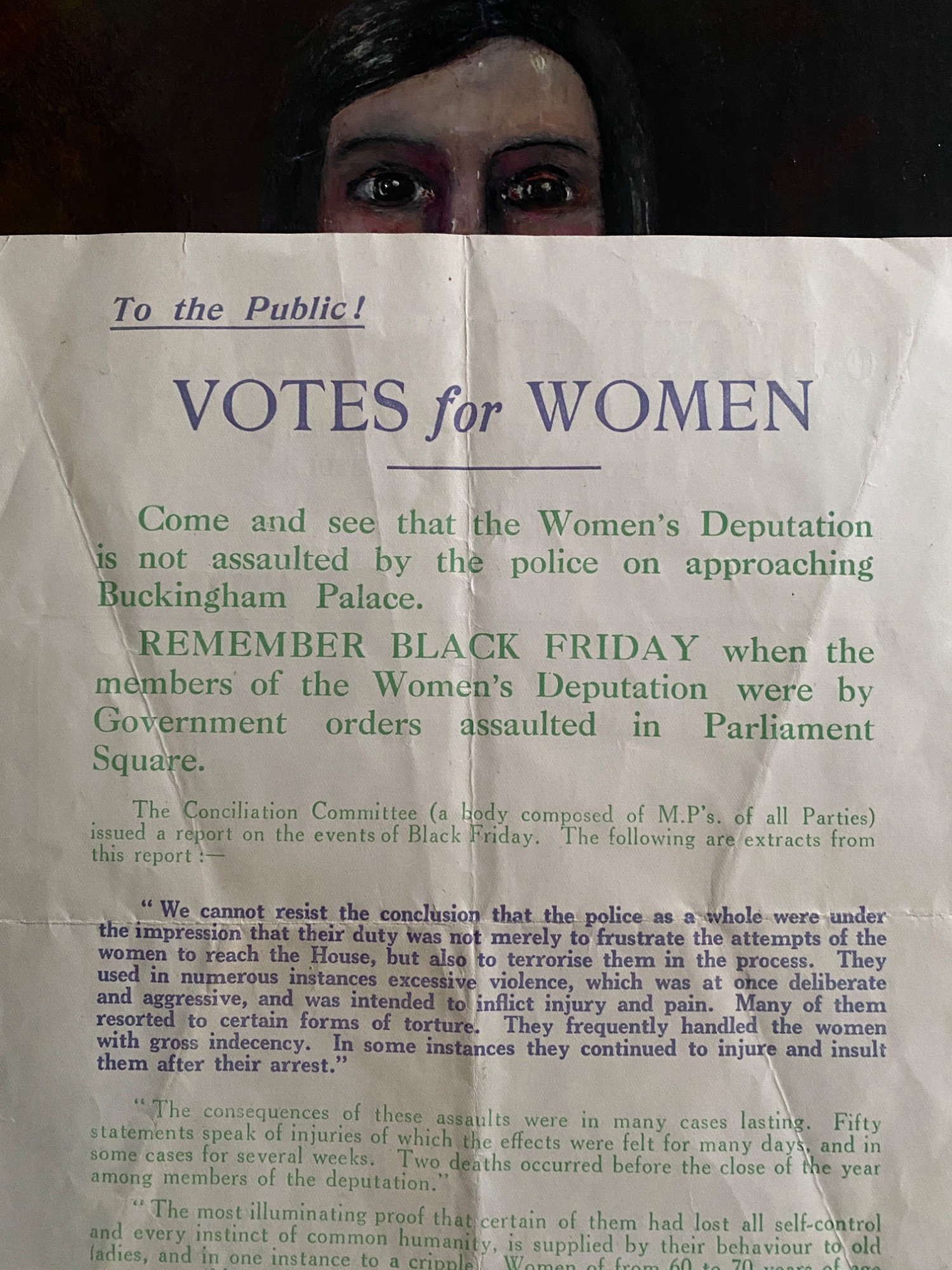
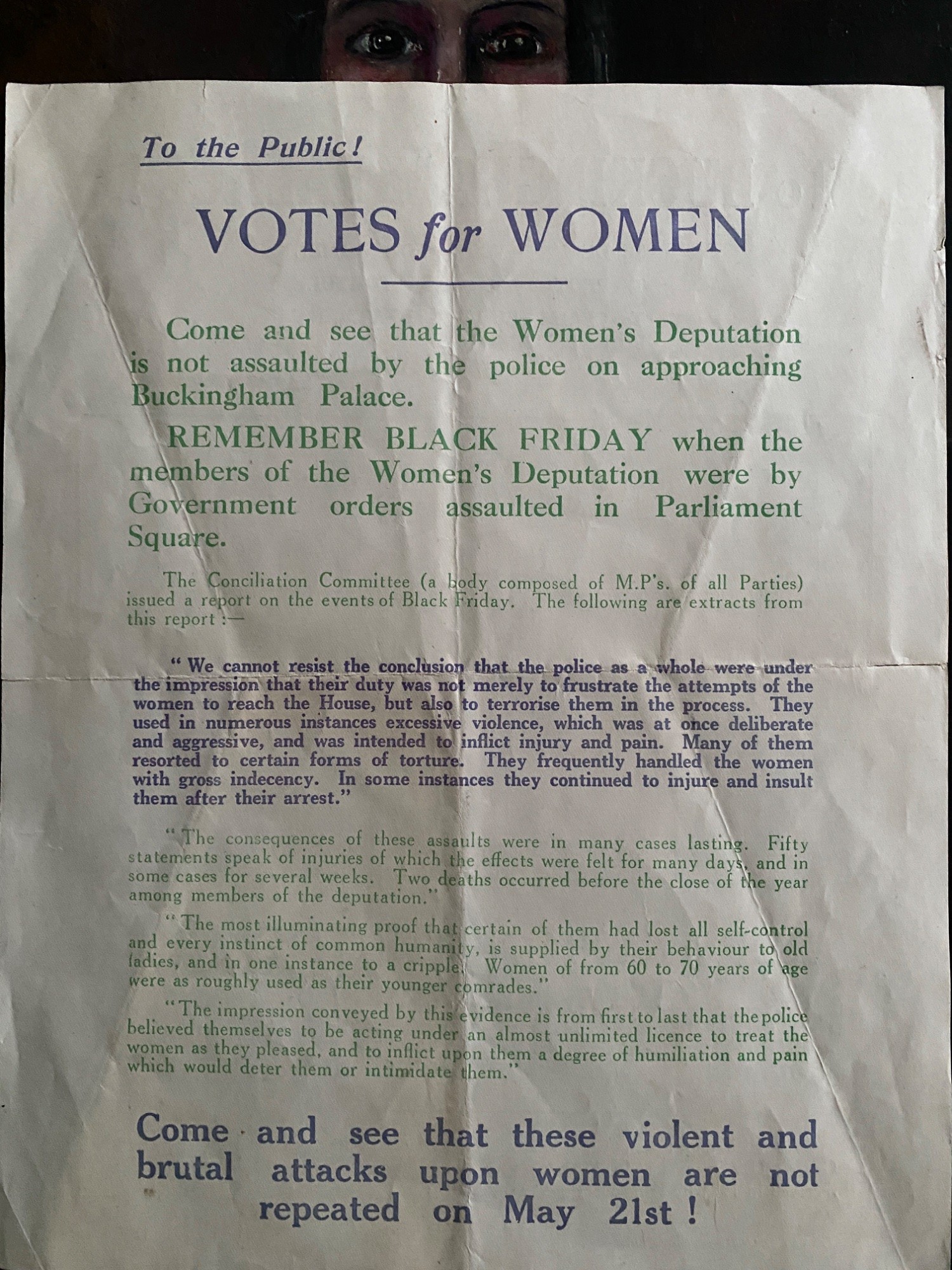
As they approached the palace gates, they were met by a substantial police force. Some of the women tried to push past, climbed on gates/railings, tried to force their way in, etc. There was a struggle.
The King refused to receive the deputation. Because of that refusal and the high police presence, things turned violent. Emmeline Pankhurst was arrested, carried bodily away by Chief Inspector (or Superintendent) Rolfe. At the time she called out, “Arrested at the gates of the Palace. Tell the King!” In total, 66 women and 2 men were arrested. Many women were injured. Ambulances were used for some of those hurt in clashes with police.
This was a turning point in the suffragette movement in terms of tactics: trying to address the monarch directly rather than just petitioning Parliament or Ministers. It illustrated both the frustration of suffragettes with being blocked at many levels and their willingness to engage in riskier, more confrontational actions. Publicity around the event was important: it generated wide coverage, images, newspaper headlines, etc., which helped make the broader public aware of the suffragettes’ grievances.
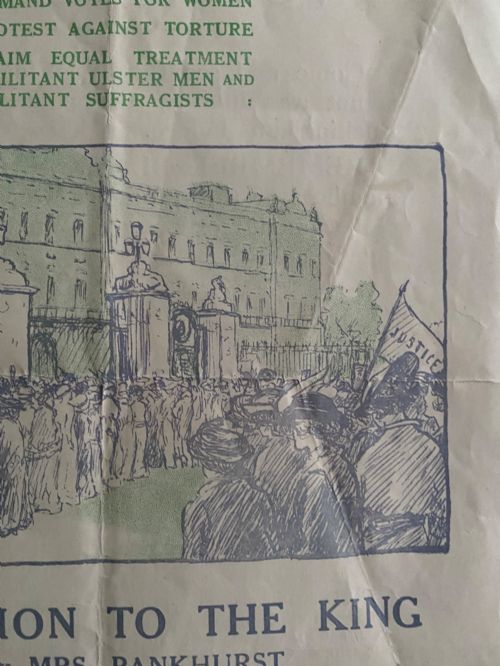
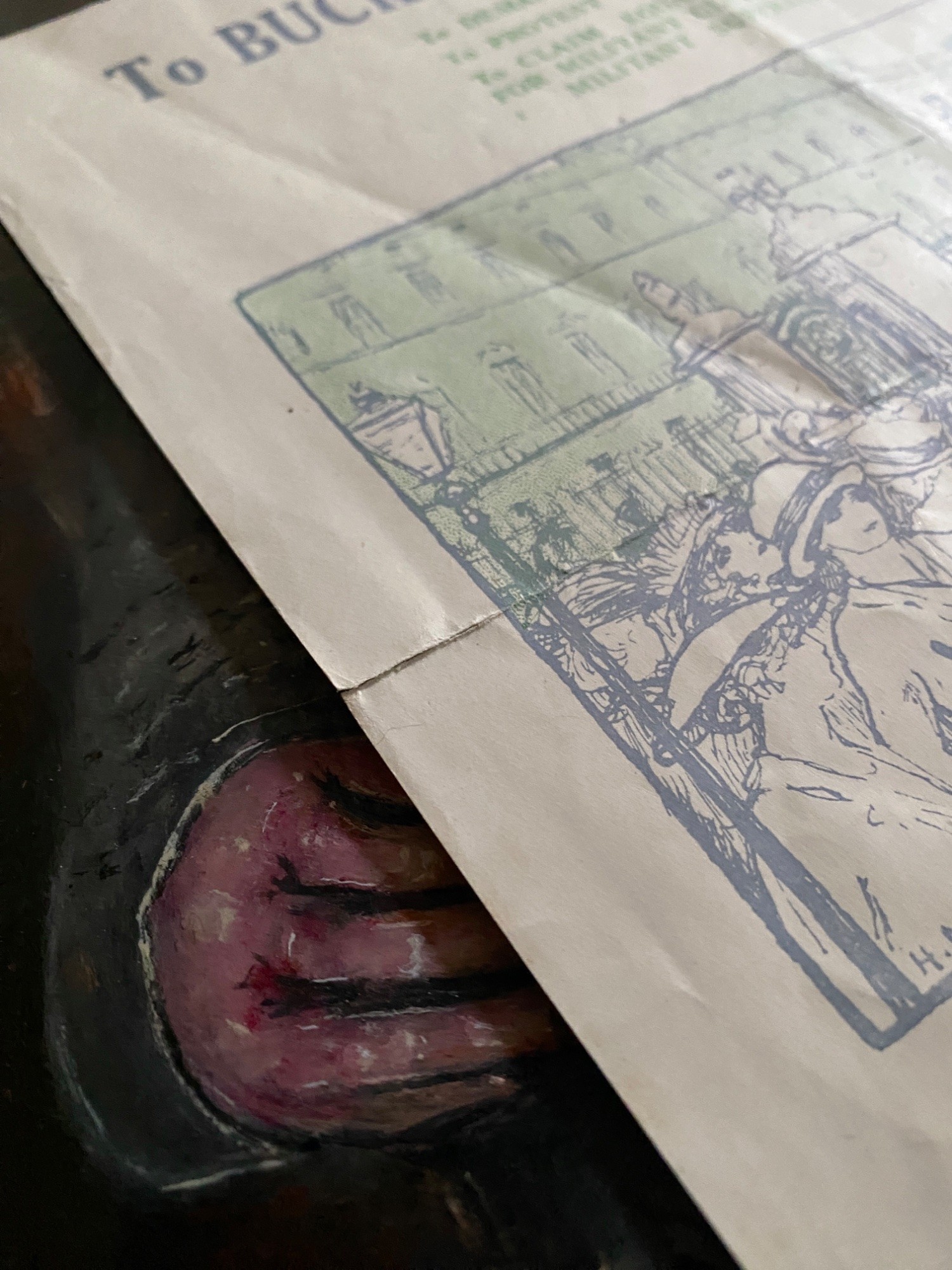
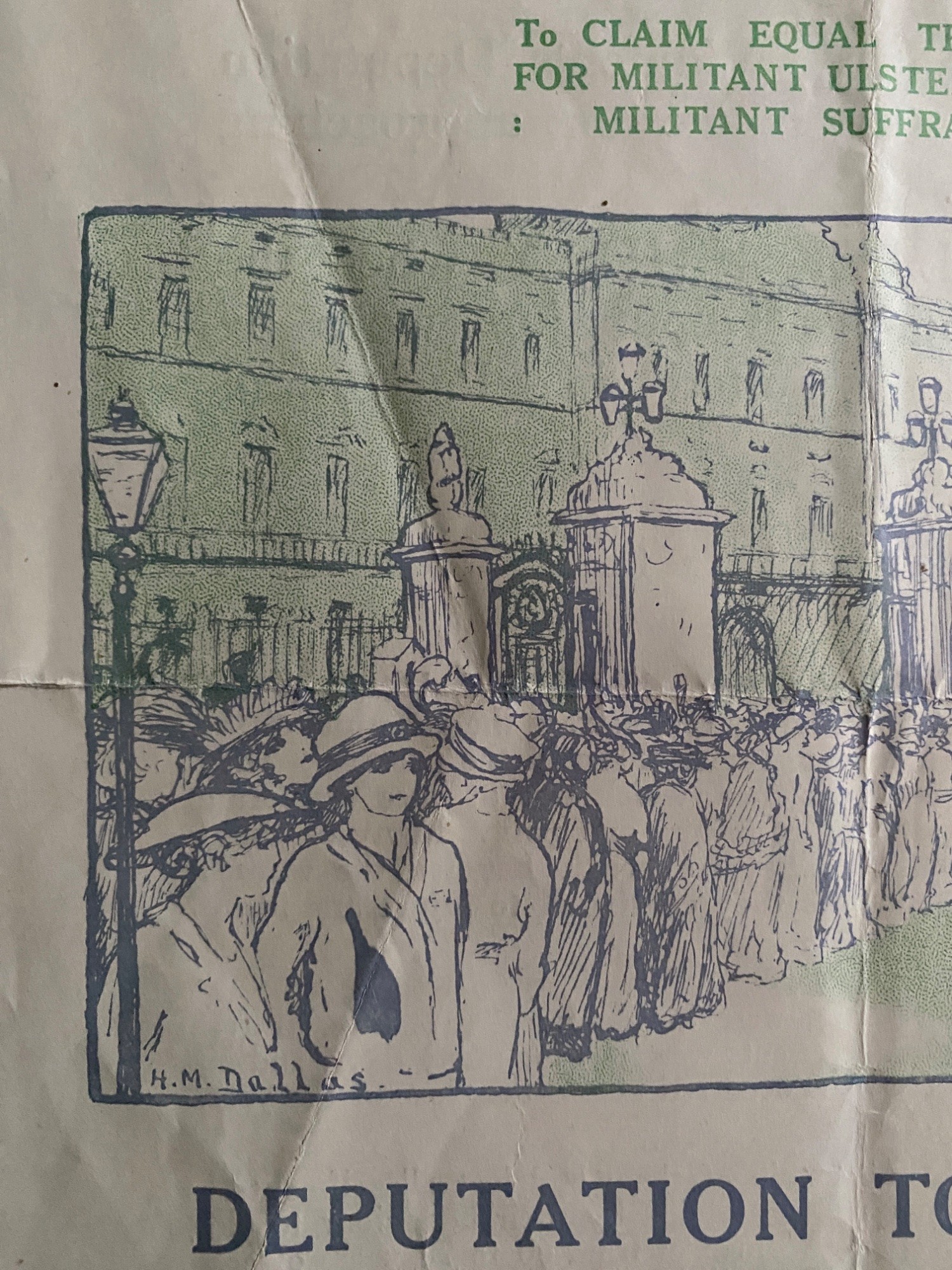
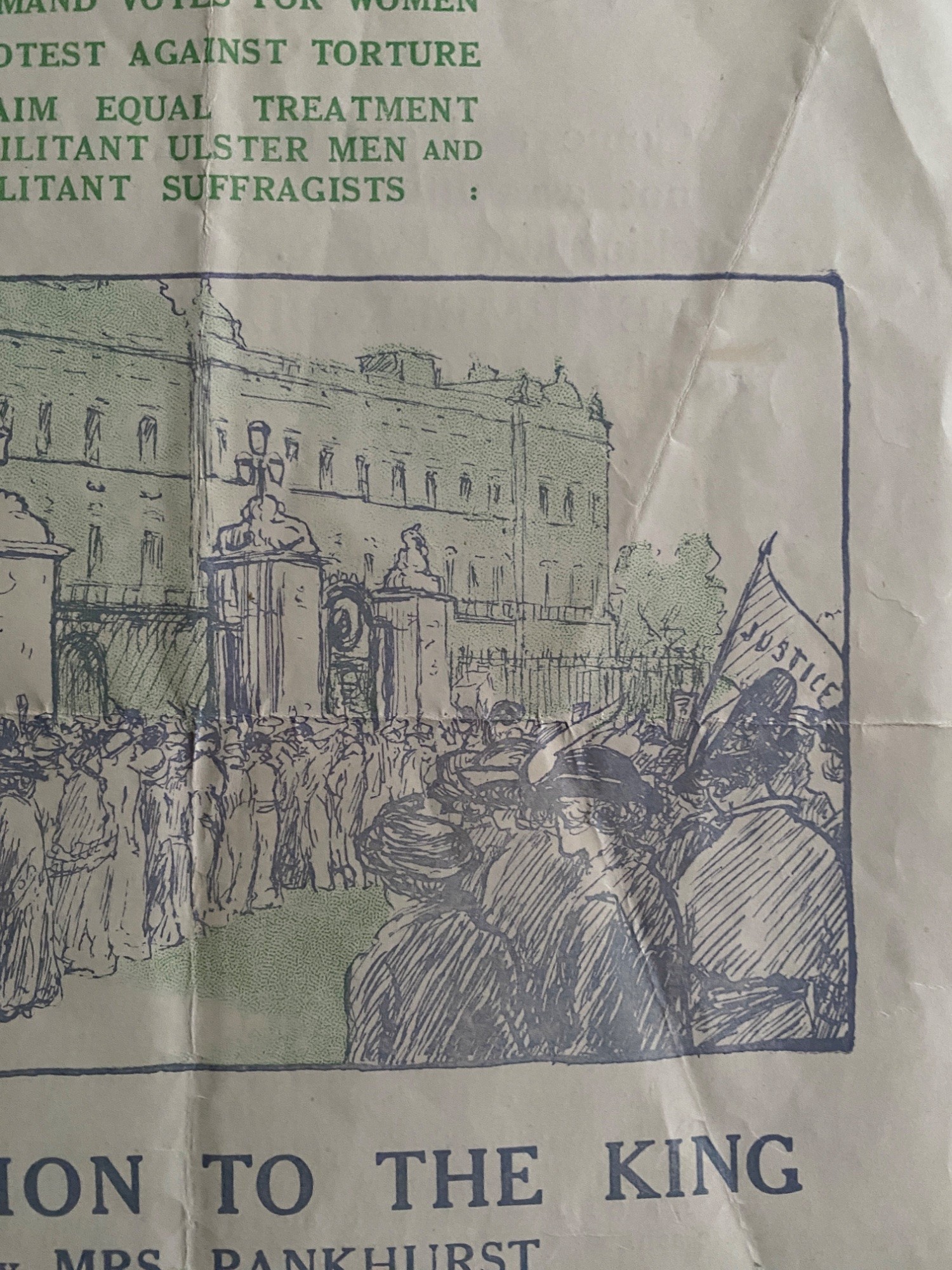
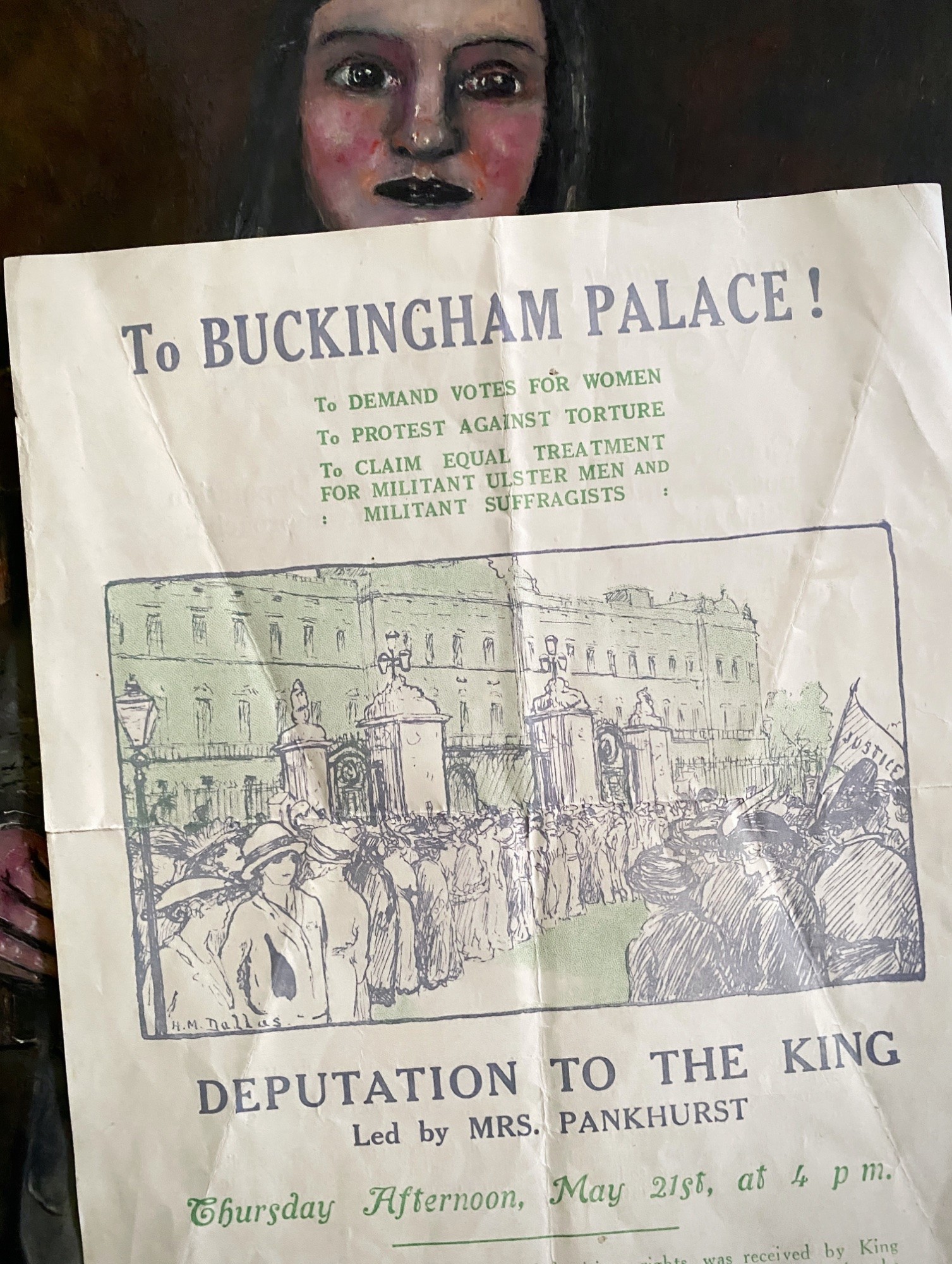
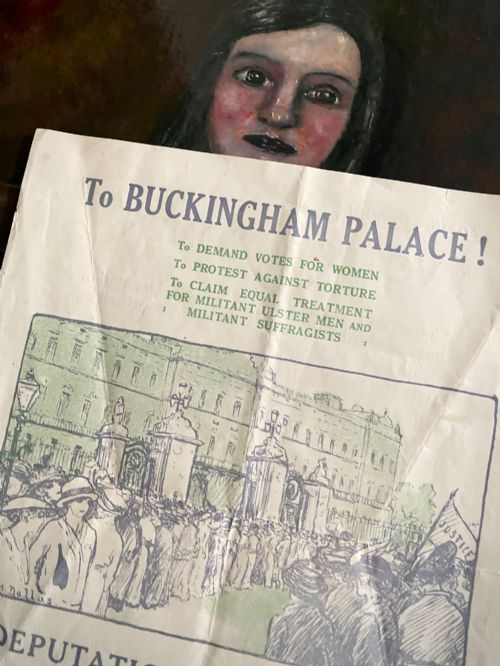
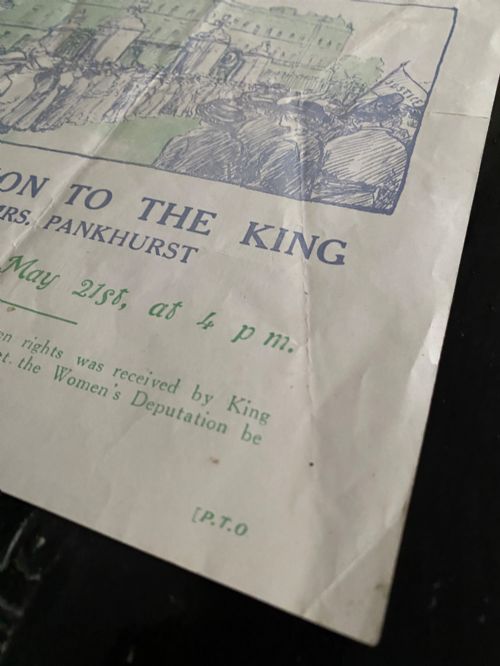
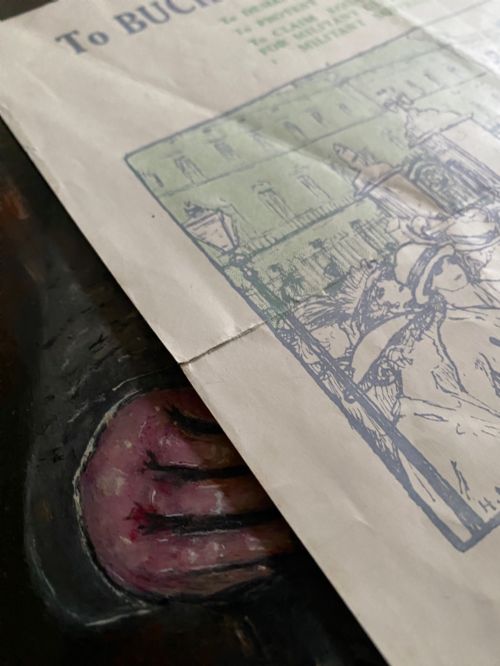
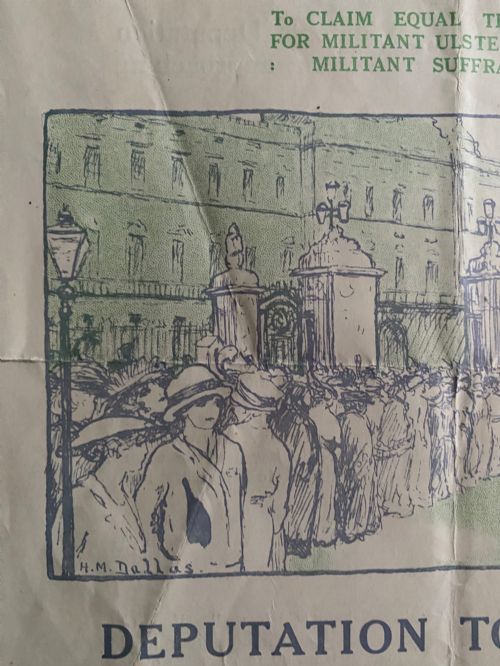
This flyer is dated 21 May 1914, announcing a Women’s Social and Political Union (WSPU) demonstration led by Mrs. Emmeline Pankhurst to Buckingham Palace. Printed in bold purple lettering with an illustration by H. M. Dallas and printed by David Allen & Sons, the poster called supporters to march in protest of the government’s continued refusal to grant women the vote.
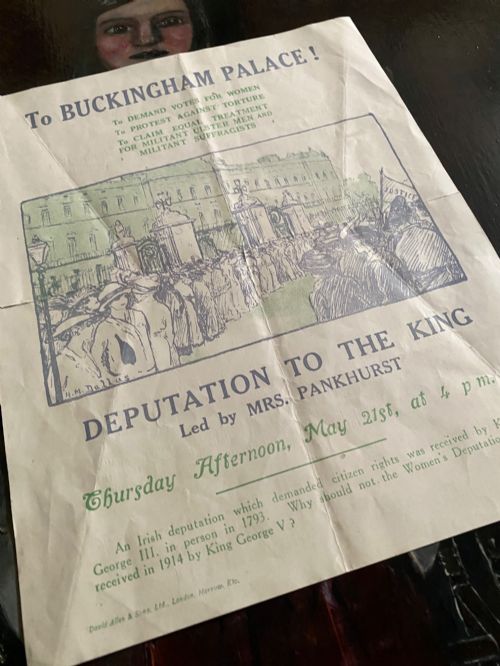
This particular deputation was among the last great militant actions of the suffragette movement before the outbreak of the First World War. It was staged against the backdrop of the notorious “Cat and Mouse Act” (Prisoners [Temporary Discharge for Ill Health] Act, 1913), under which hunger-striking suffragettes were released from prison when weakened, only to be rearrested once recovered. The flyer explicitly demands an end to the “torture of women” by force-feeding, and pointedly contrasts the harsh repression of suffragettes with the government’s tolerance of “militant Ulster men”, who were then threatening armed insurrection over Irish Home Rule.
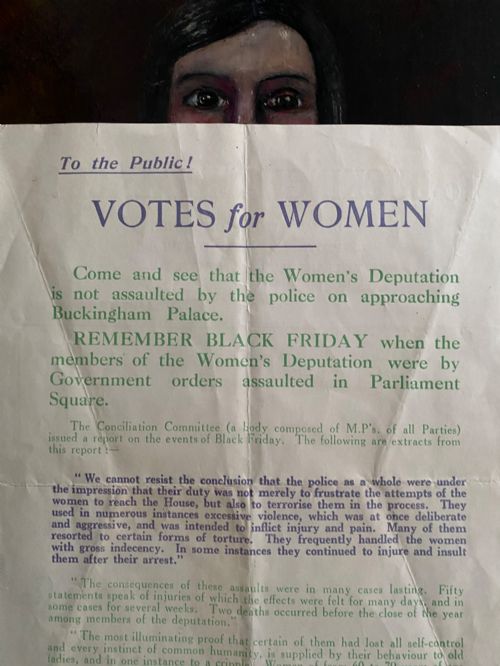
This is not only a powerful artefact of the suffragette struggle but also a direct link to Mrs. Pankhurst herself, the most iconic figure of the campaign for women’s enfranchisement.
Condition is good, some browning and creasing. Small tear to left edge.
Measures 26.5cm x 21cm
Folk and Fable Antiques has dated this piece to the 1910s.
Unique pieces for collectors and curious minds
You can view the stock and full dealer information on the Folk and Fable Antiques Profile Page
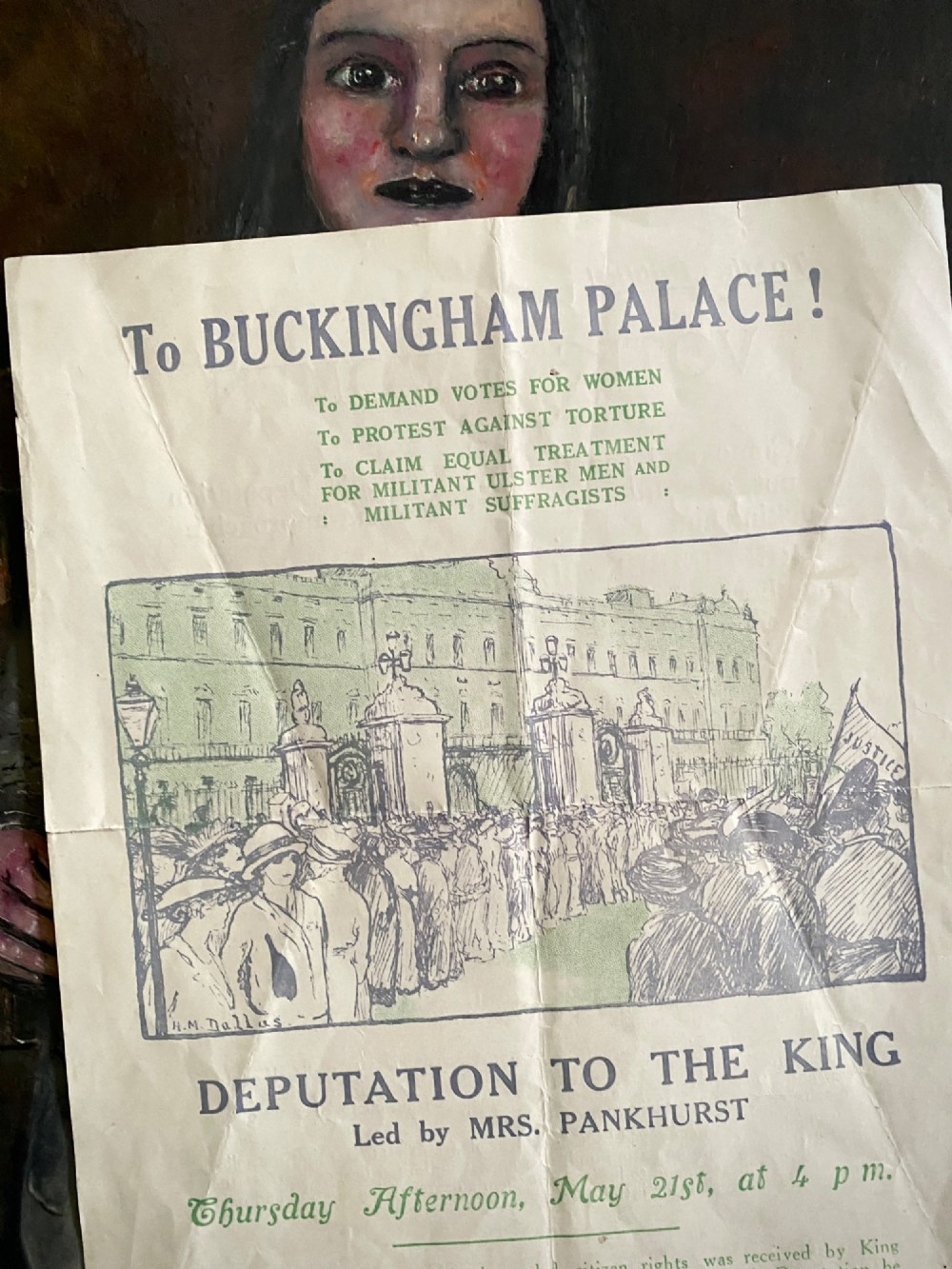
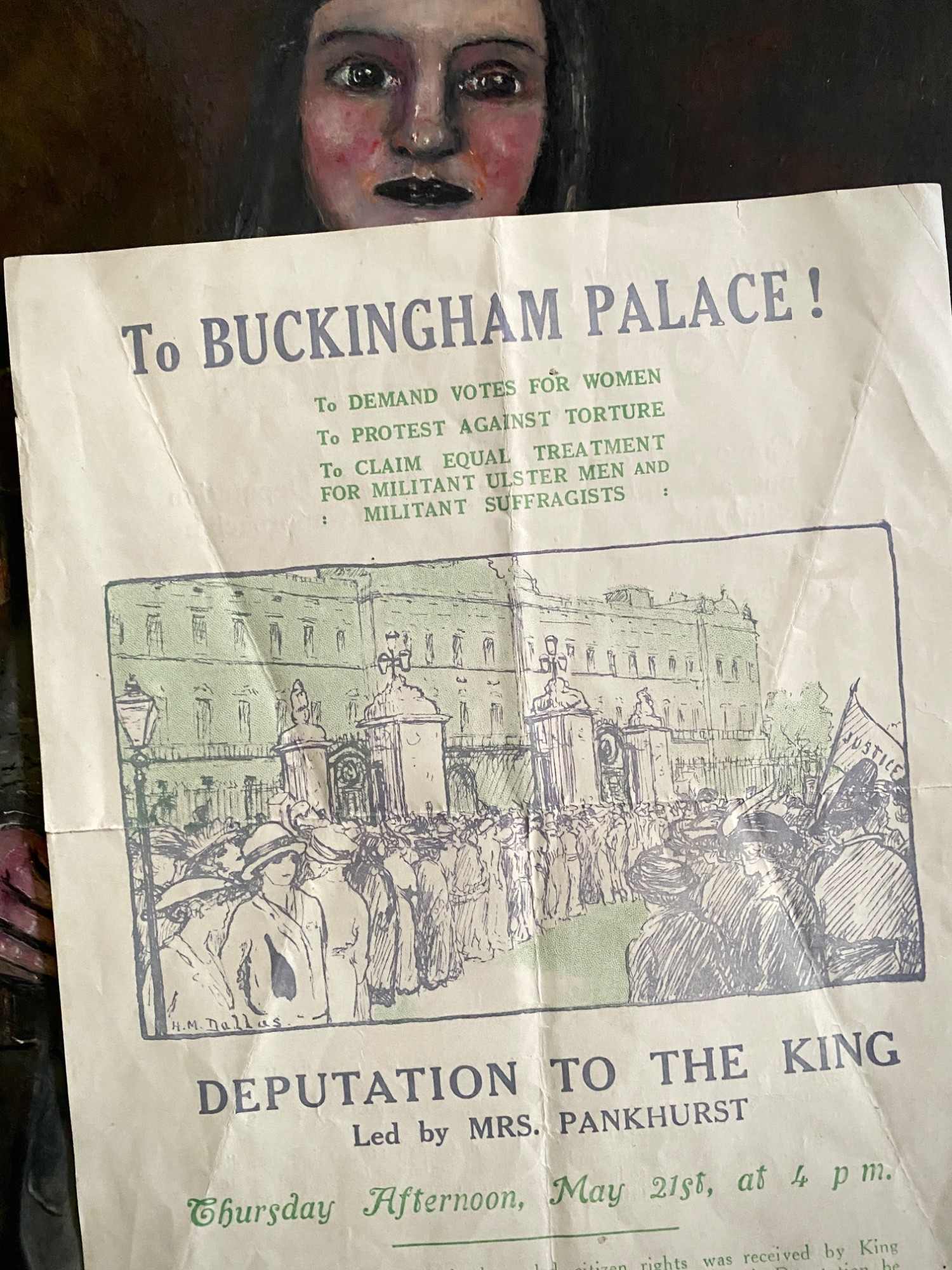
Rare Antique Original 1914 Suffragette Double Sided Flyer – Emmeline Pankhurst’s Deputation to Buckingham Palace