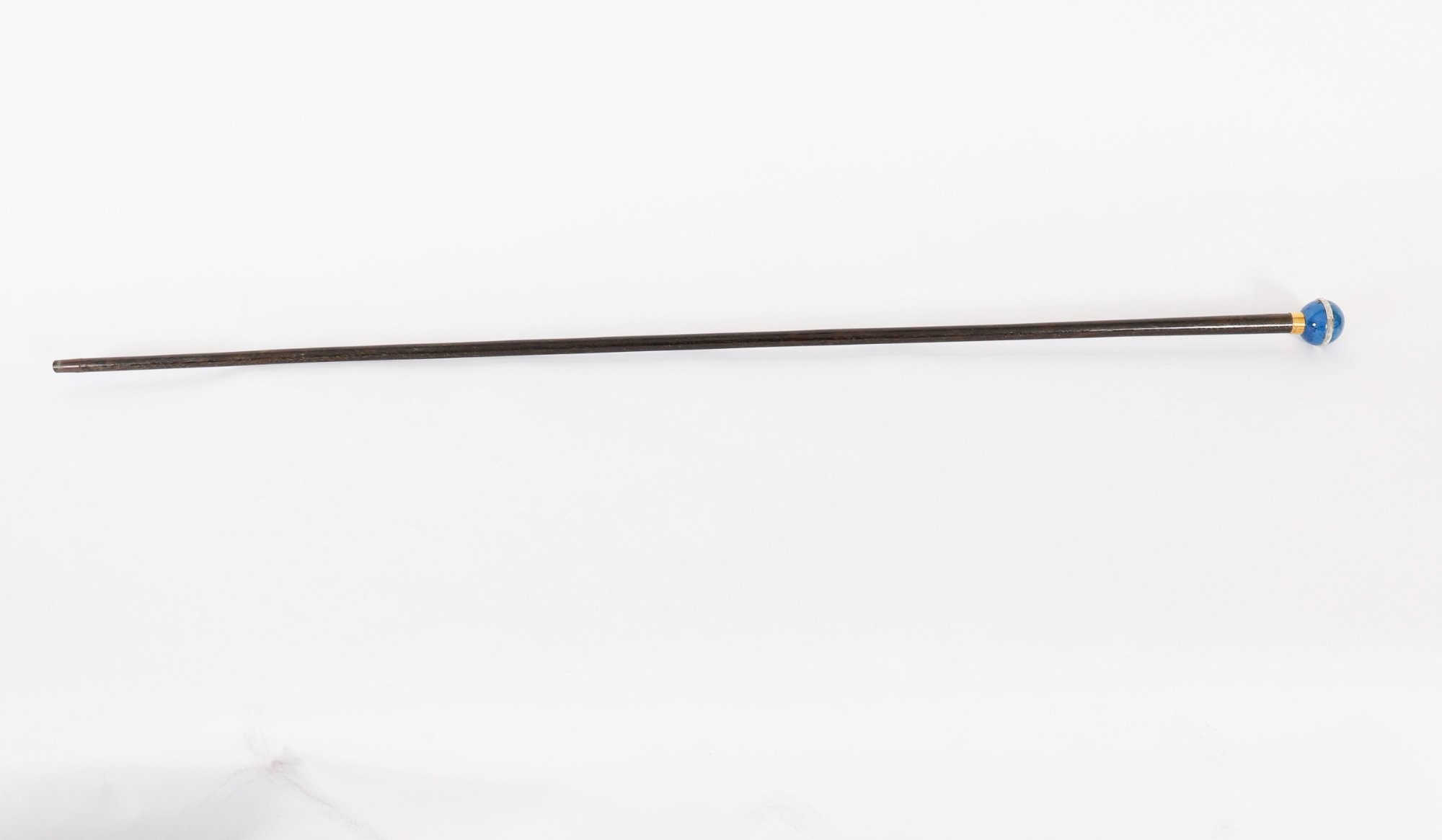
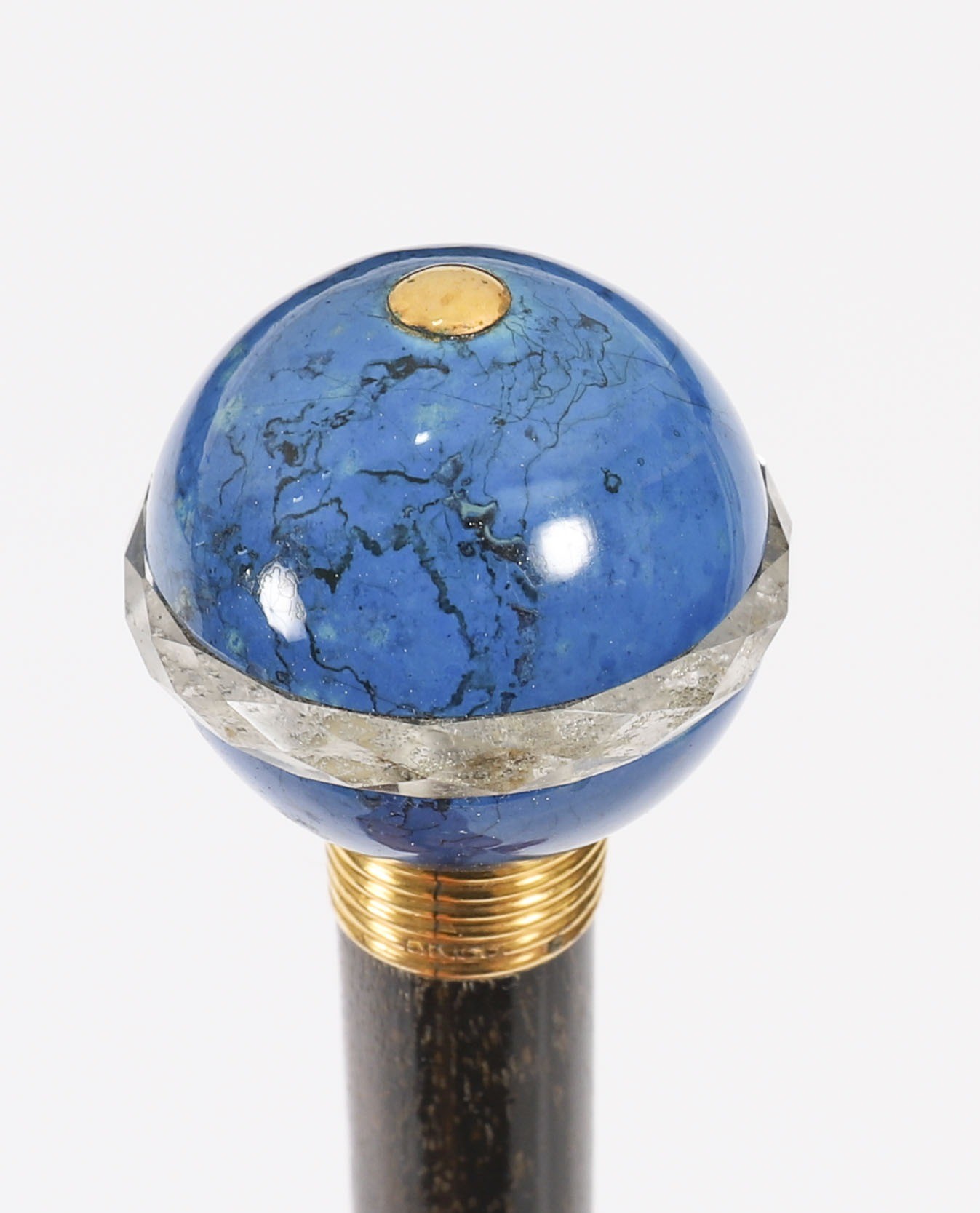
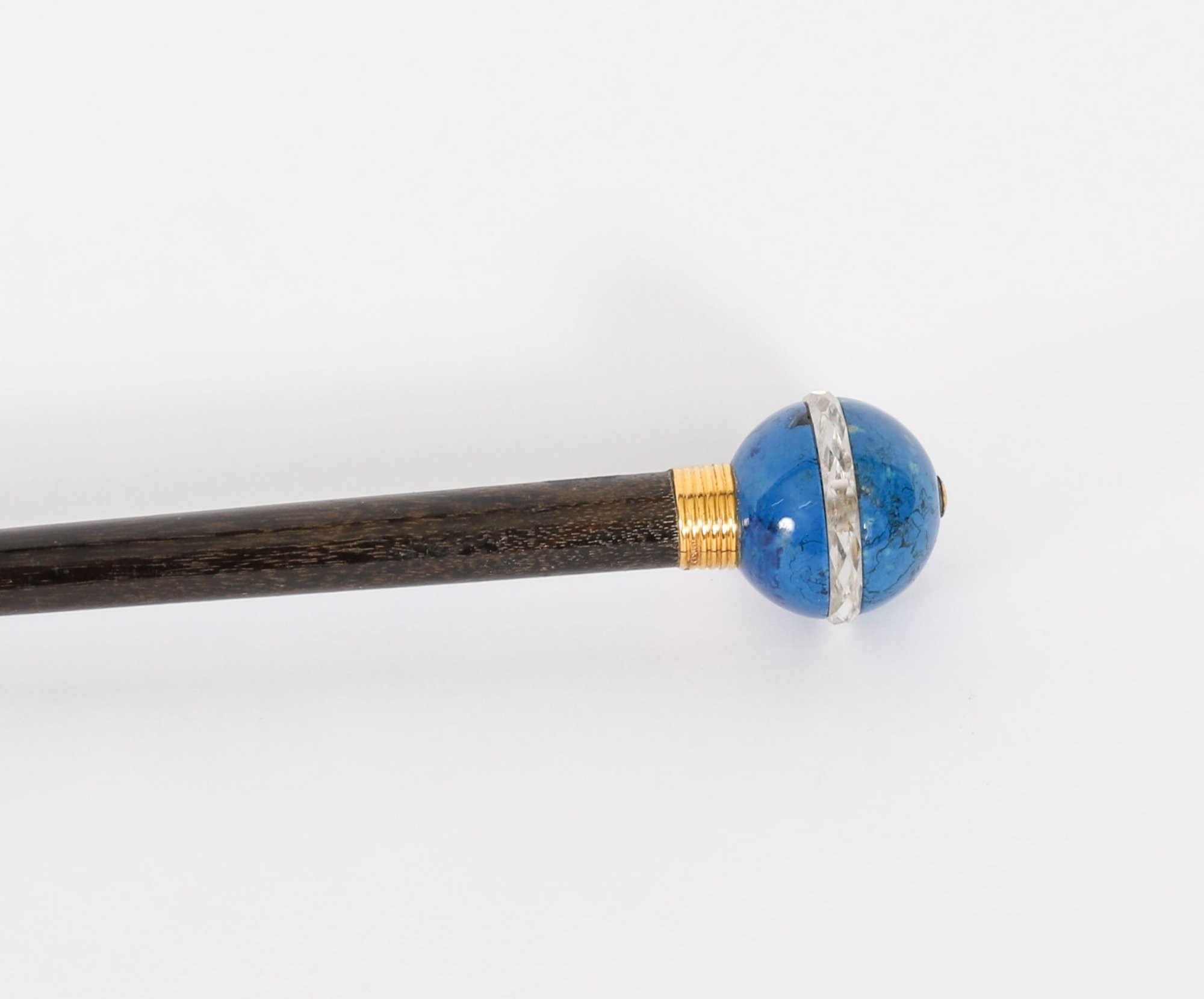
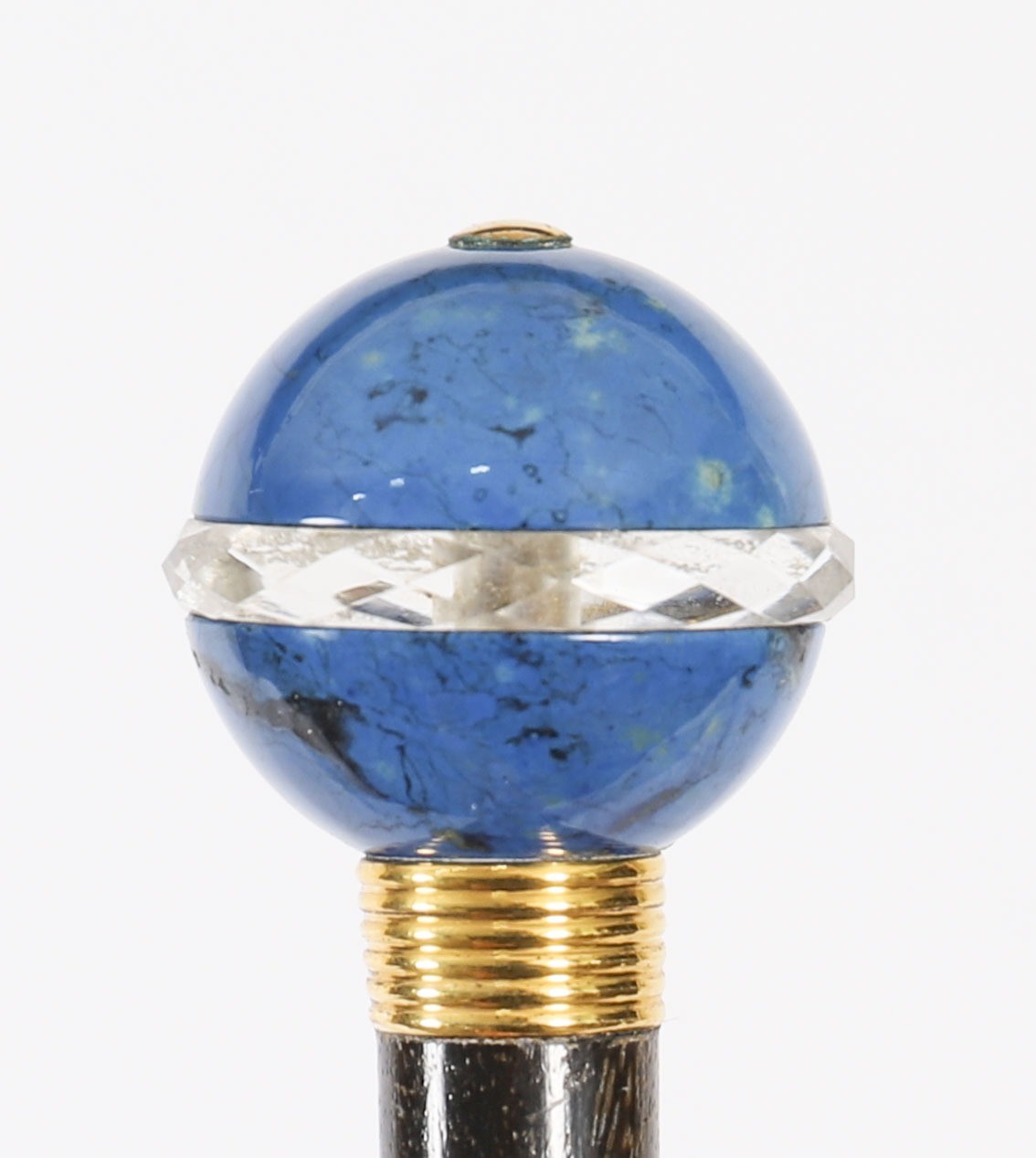
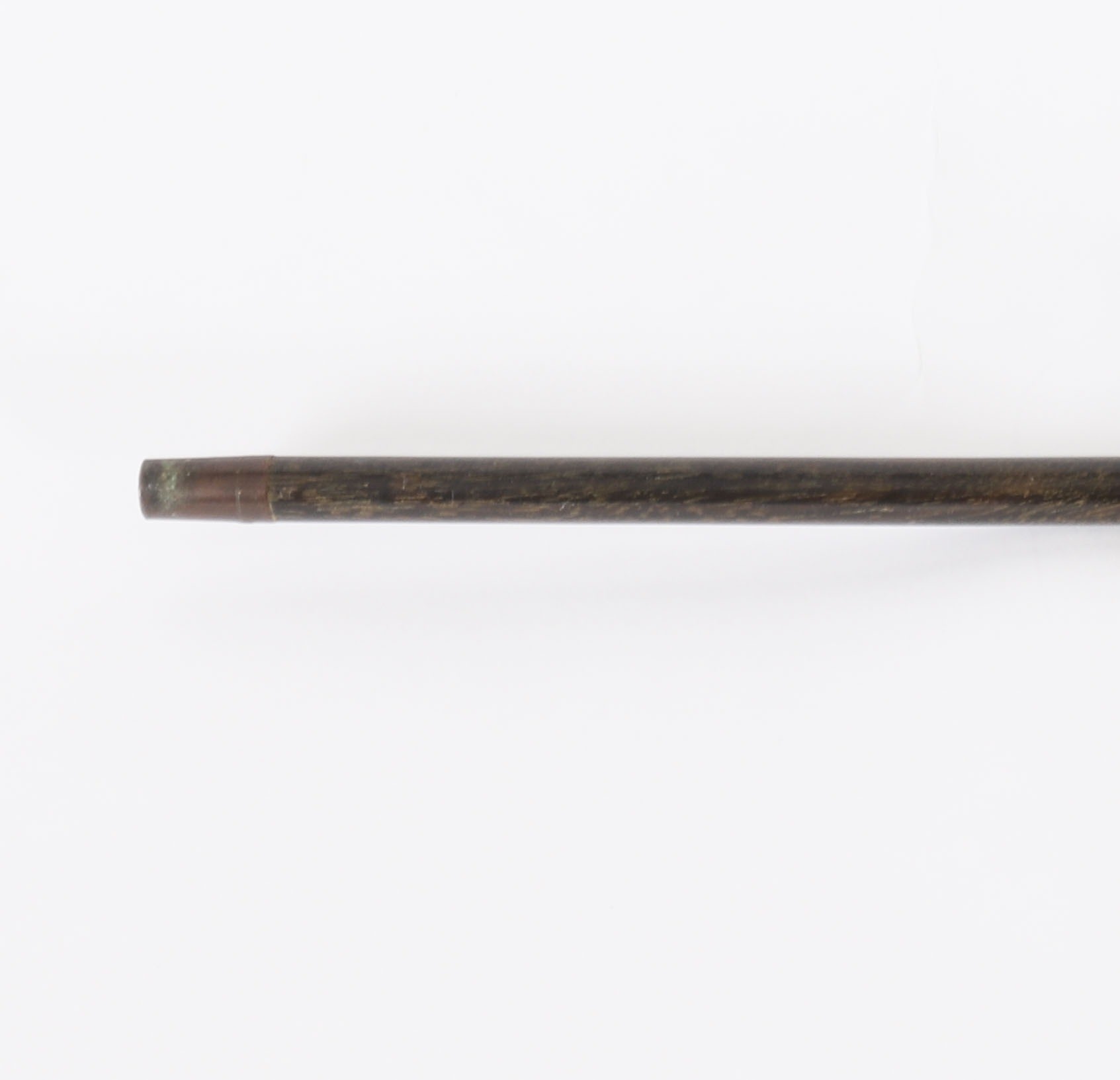
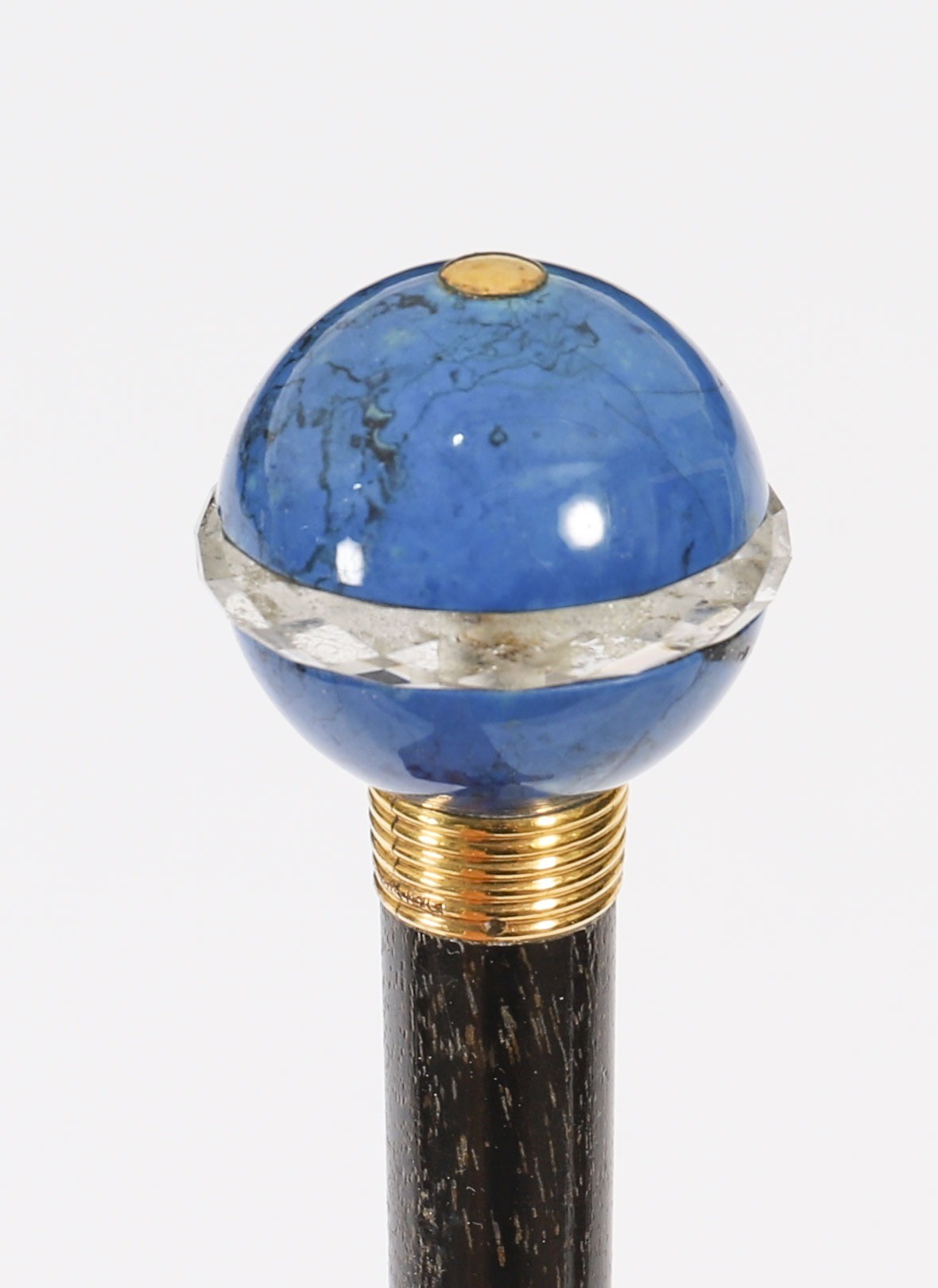
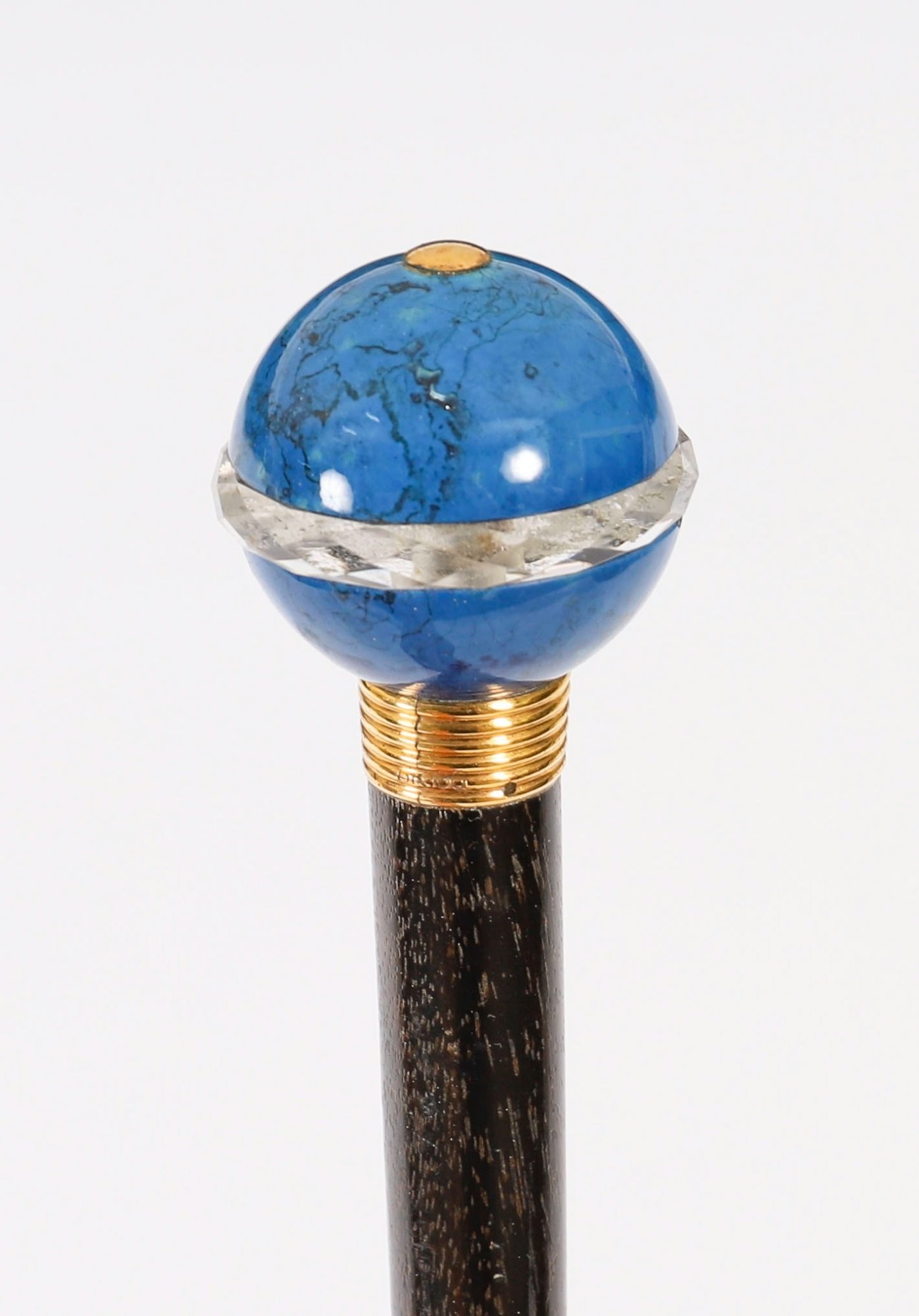
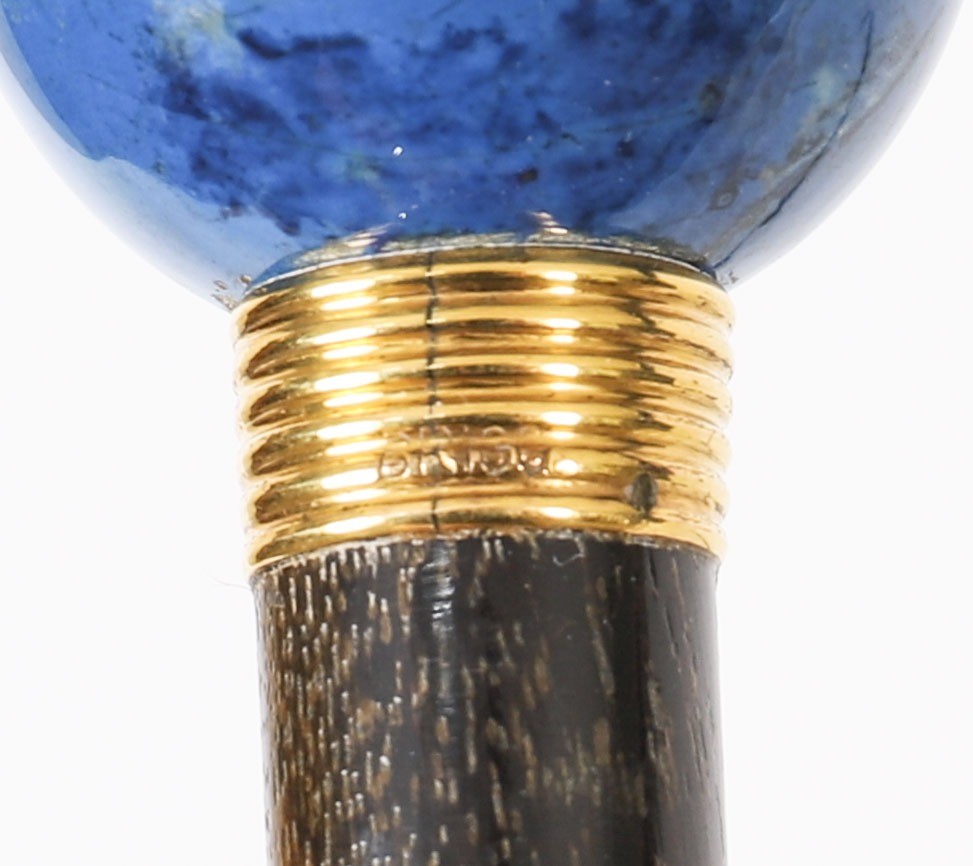
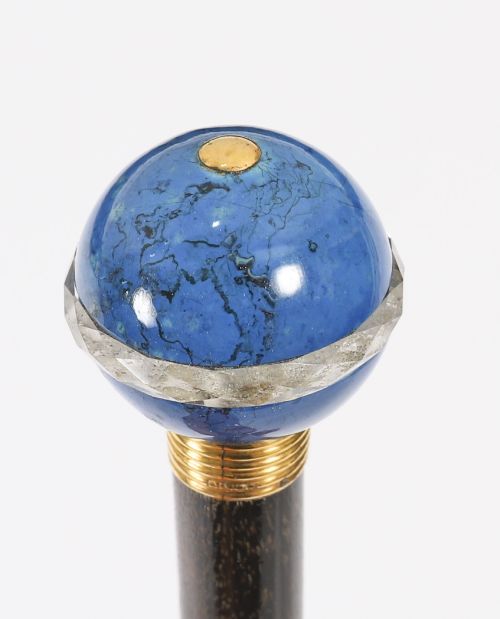
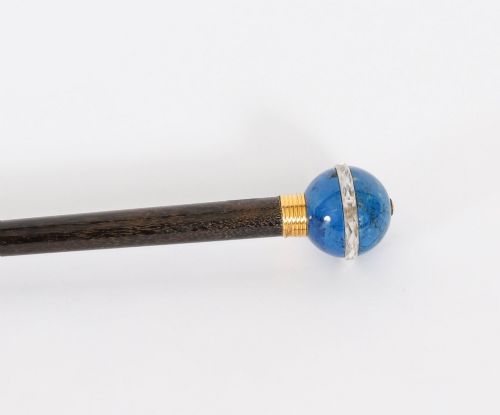
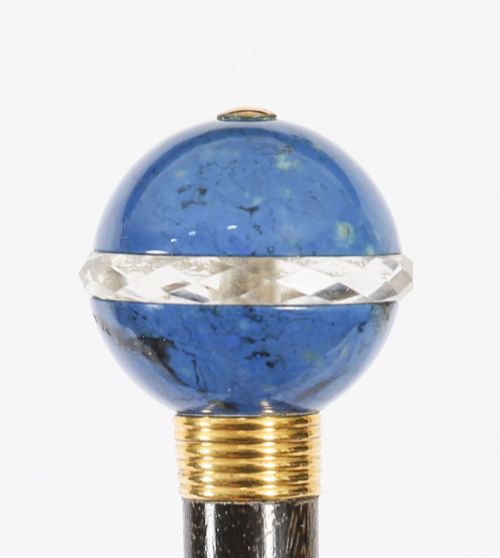
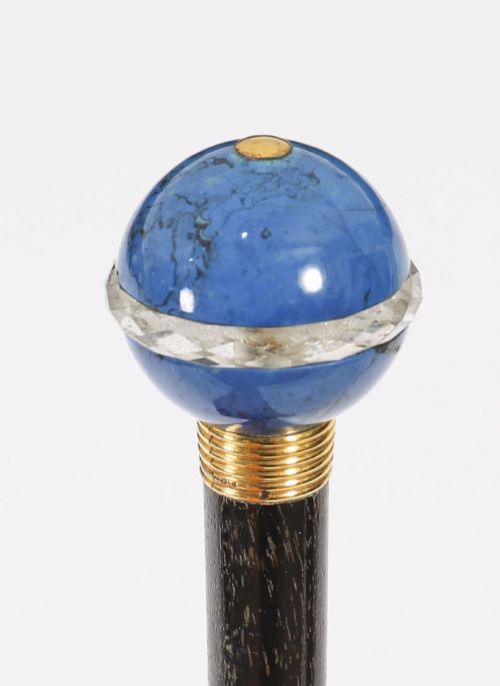
Regent Antiques has dated this Lapis Lazuli Walking Stick to the 1900s.
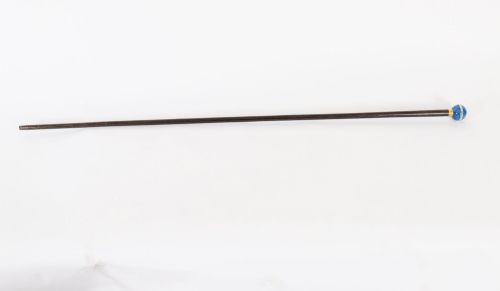
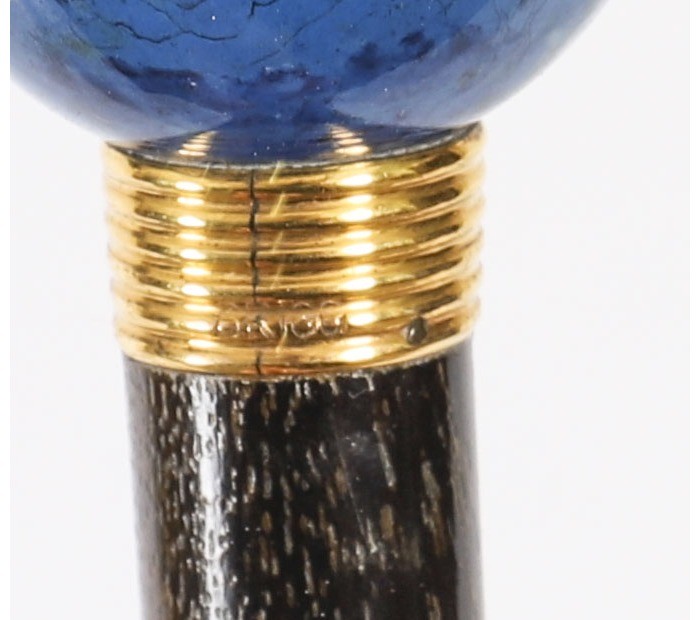
It features a decorative lapis lazuli sphere with a rock crystal ring and a banded 18K gold collar on a gently tapering ebonized hardwood shaft.
Thomas Brigg
Thomas Brigg, the eldest child of Charles Brigg, was born on March 29, 1805. In 1828, he established a separate retail location for the family business at 23 St. James Street. By August 1829, Thomas began diversifying the business by introducing new lines, including umbrellas, which quickly gained importance. By April 1830, Charles Brigg identified himself as an umbrella maker in his will. Following Charles's passing, his daughters inherited the Charing Cross branch, while Thomas took over the St. James branch.
In 1838, just a decade after founding his business, Thomas Brigg's shop at No. 23 St. James's Street was labelled as "Brigg - Umbrella, Cane & Whip Maker" on John Tallis's pictorial plan of the area. Recognising the popularity of walking sticks as a gentleman's accessory, Brigg decided to expand his range to include high-quality walking sticks in 1838. These sticks, rooted in seventeenth-century tradition and popularised by dandies in the late eighteenth century, became essential components of a stylish gentleman's wardrobe.
Thomas and his wife Fanny had at least six children, with the eldest born in 1831 eventually taking over the family business. They worked together until around 1850, and it is believed that shortly after William's twenty-first birthday, the business adopted the name Brigg & Sons. Later, when another son named Thomas, born in 1845, joined the business, it was renamed Thomas Brigg & Sons.
In a nutshell, Briggs now part of Swaine London, is a luxury British heritage brand established in 1836 that is famous for crafting high-end, traditional walking sticks, umbrellas, and leather goods
Add this superb collector's item to your collection.
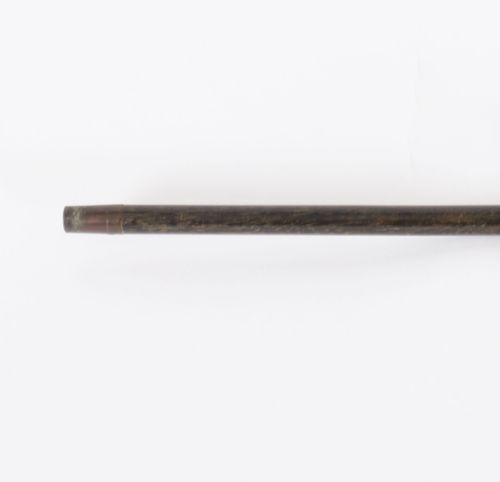
Condition:
In really excellent condition, please see photos for confirmation.
Dimensions in cm:
Height 98 cm x Width 5 cm x Depth 5 cm
Dimensions in inches:
Height 3 foot, 3 inches x Width 2 inches x Depth 2 inches
Size of cane that you need
Convert your height into inches. For example, if you are 5' 10” in your shoes, your height is 70 inches. Divide by two and then add ½ inch to determine your approximate cane size.In our example, if you are 70 inches tall (5' 10”), your approximate cane size would be 35” plus ½”= 35.5 inches.
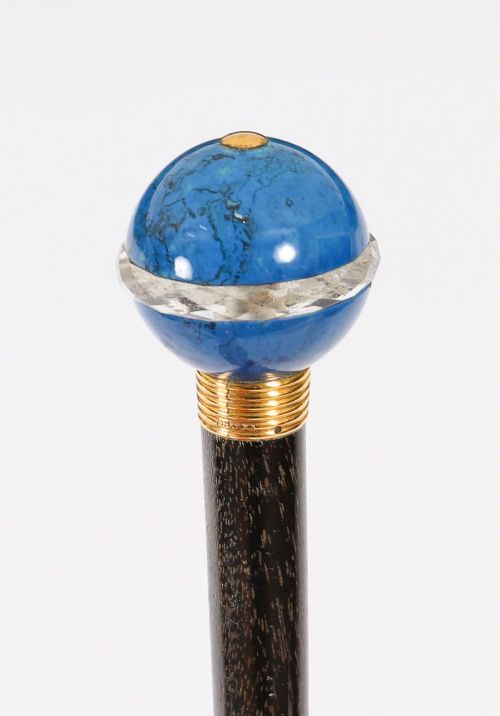
Lapis lazuli, or lapis for short, is a deep blue matamorphic rock used as a semi-precious stone that has been prized since antiquity for its intense color. As early as the 7th millennium BCE, lapis lazuli was mined in the Sar-i Sang mines, in Shortugai, and in other mines in Badakhshan province in northeast Afghanistan. Lapis was highly valued by the Indus Valley Civilisation (3300–1900 BC). Lapis beads have been found at Neolithic burials in Mehrgarh, the Caucasus, and even as far from Afghanistan as Mauritania. It was used in the funeral mask of Tutankhamum (1341–1323 BCE).
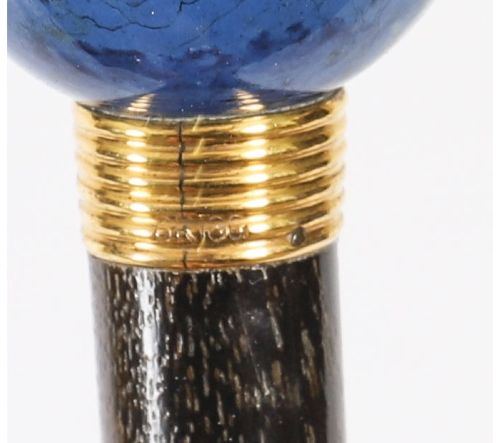
At the end of the Middle Ages, lapis lazuli began to be exported to Europe, where it was ground into powder and made into ultramarine, the finest and most expensive of all blue pigments. It was used by some of the most important artists of the Renaissance and Baroque, including Masaccio, Perugino, Titian and Vermeer, and was often reserved for the clothing of the central figures of their paintings, especially the Virgin Mary.
Our reference: A5400
Regent Antiques has dated this Lapis Lazuli Walking Stick to the 1900s.
We specialise in english and continental furniture, silver, porcelain and decorative items.
You can view the stock and full dealer information on the Regent Antiques Profile Page
Regent Antiques is a registered member of LAPADA CINOA
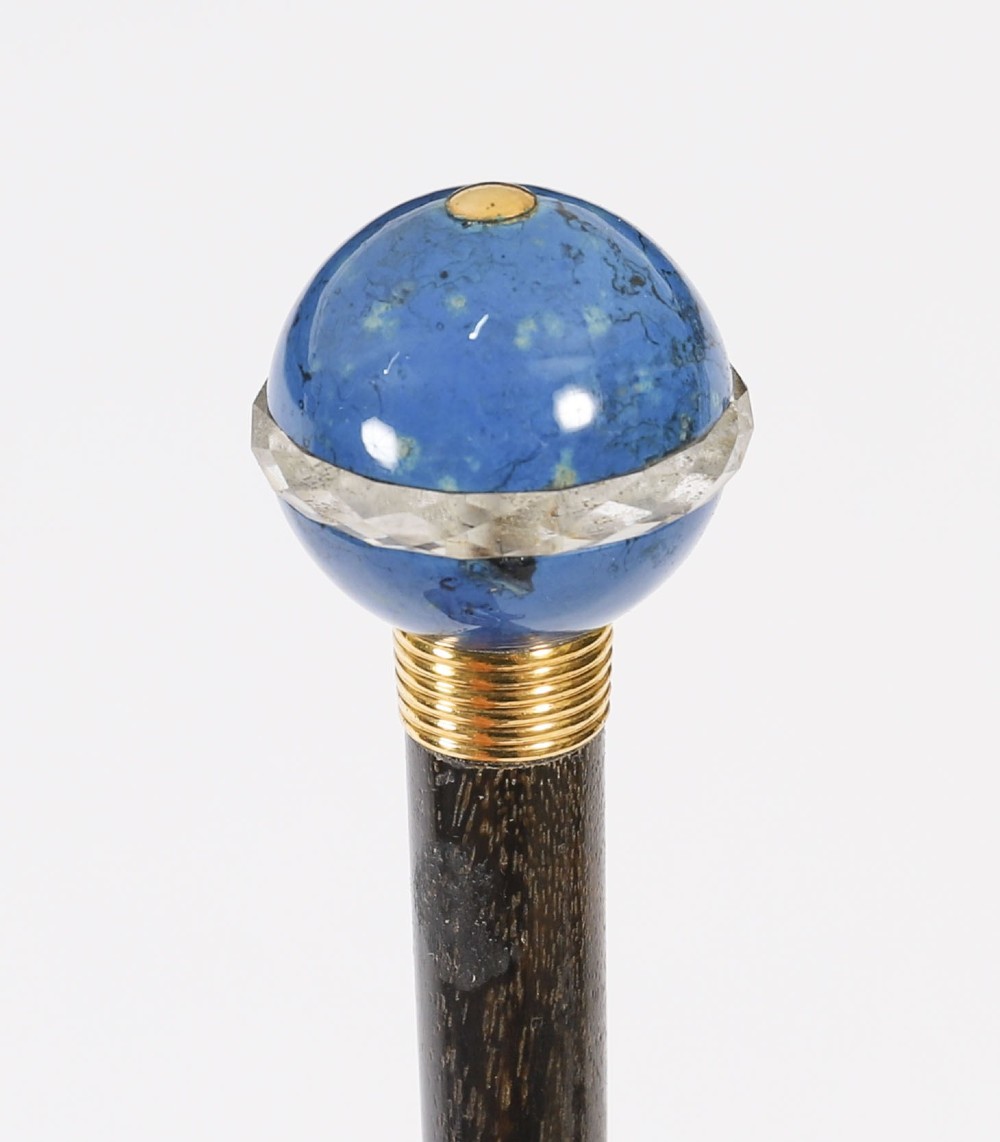
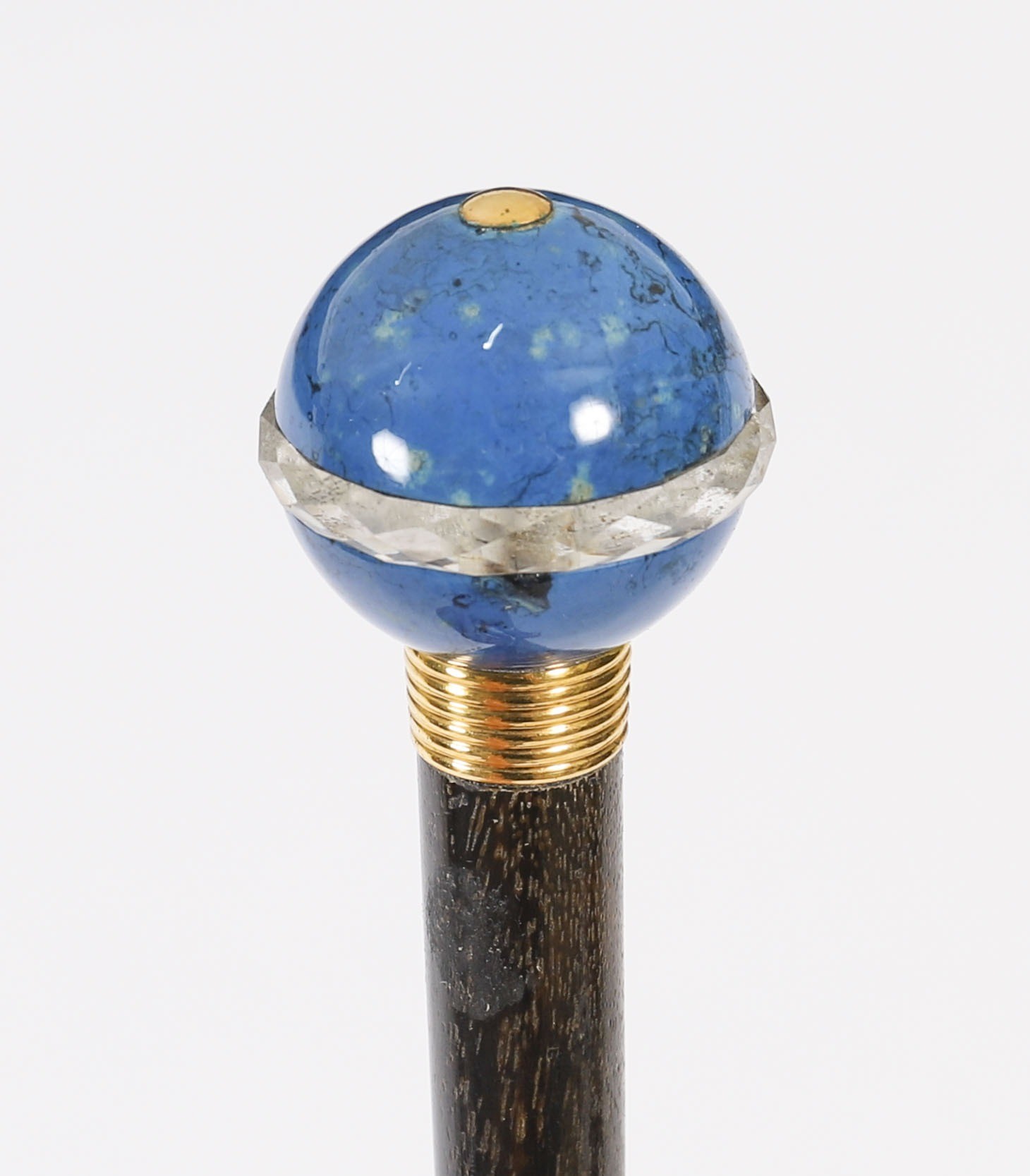
Antique Lapis Lazuli Walking Stick Cane by Briggs C1900 98cm-38.5 Inch