43,018  PAGES BROWSED TODAY PAGES TODAY 51 ANTIQUES UPLOADED TODAYNEW ARRIVALS
51 ITEMS ADDED TODAY
Sort Order
Items Per Page
Browse Categories
Sort order
Items per page
ID #SA1232120
FOR SALE
£7,500
Email
Save
Chinese Qing Dynasty Carved Tortoiseshell Ruyi Sceptre, Probably Late 19th Century
Gillers Antiques Ltd
for sale €8,775     $9,525
£7,500
Gillers Antiques Ltd

Gillers Antiques Ltd

Sellingantiques Verified Since Mar 2023
View Dealers Stock Page
Id #SA1232120
PDF SHARE
SAVE

Chinese Qing Dynasty Carved Tortoiseshell Ruyi Sceptre, Probably Late 19th Century

19th century
Description

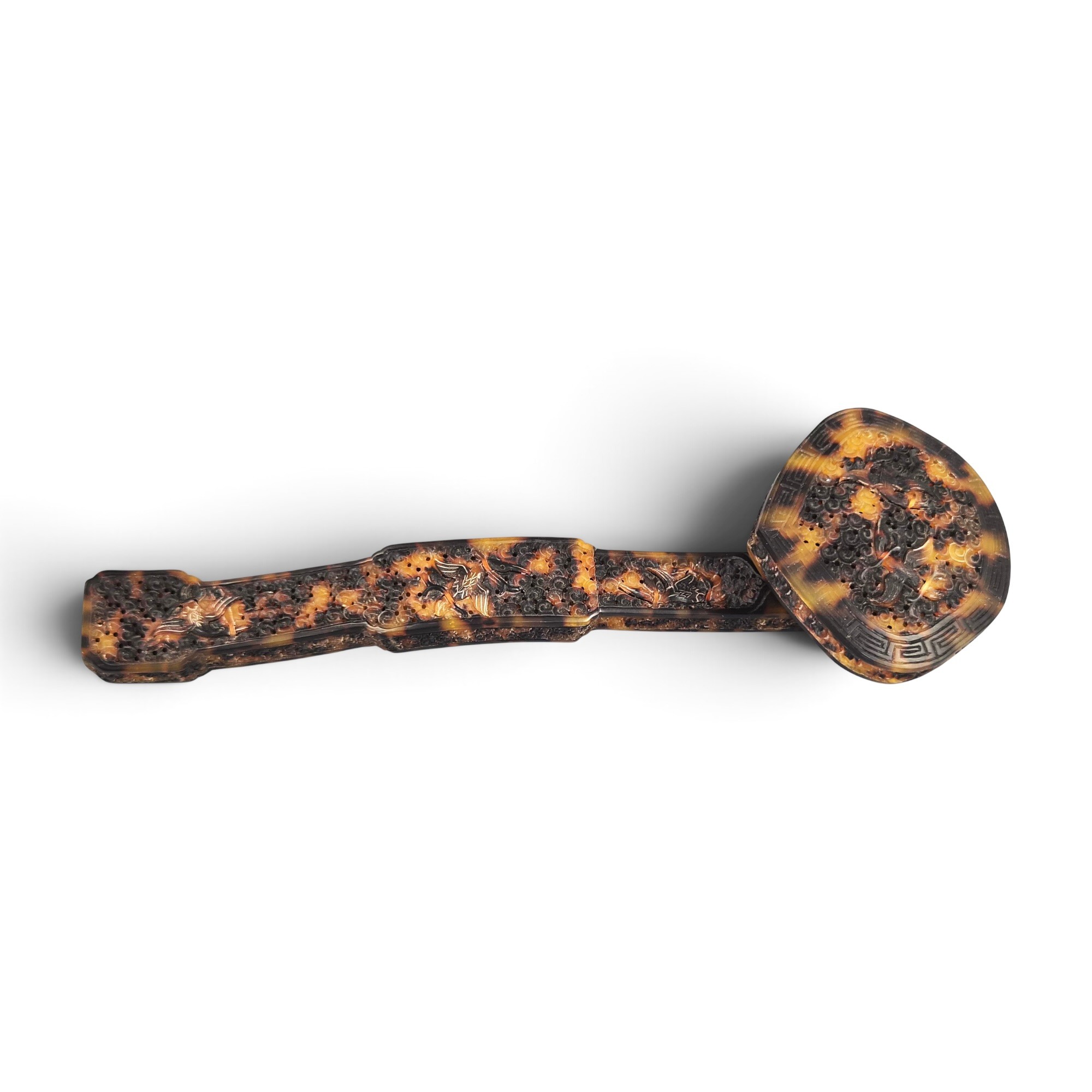
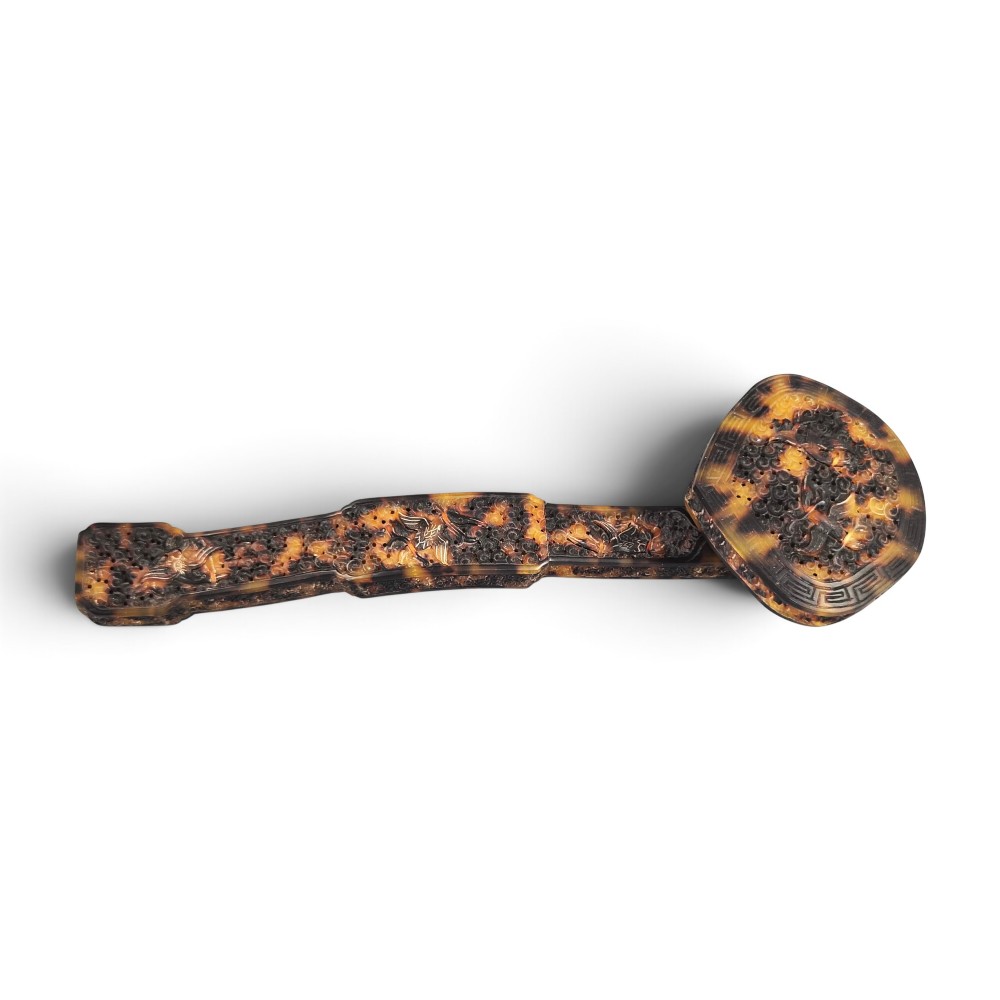
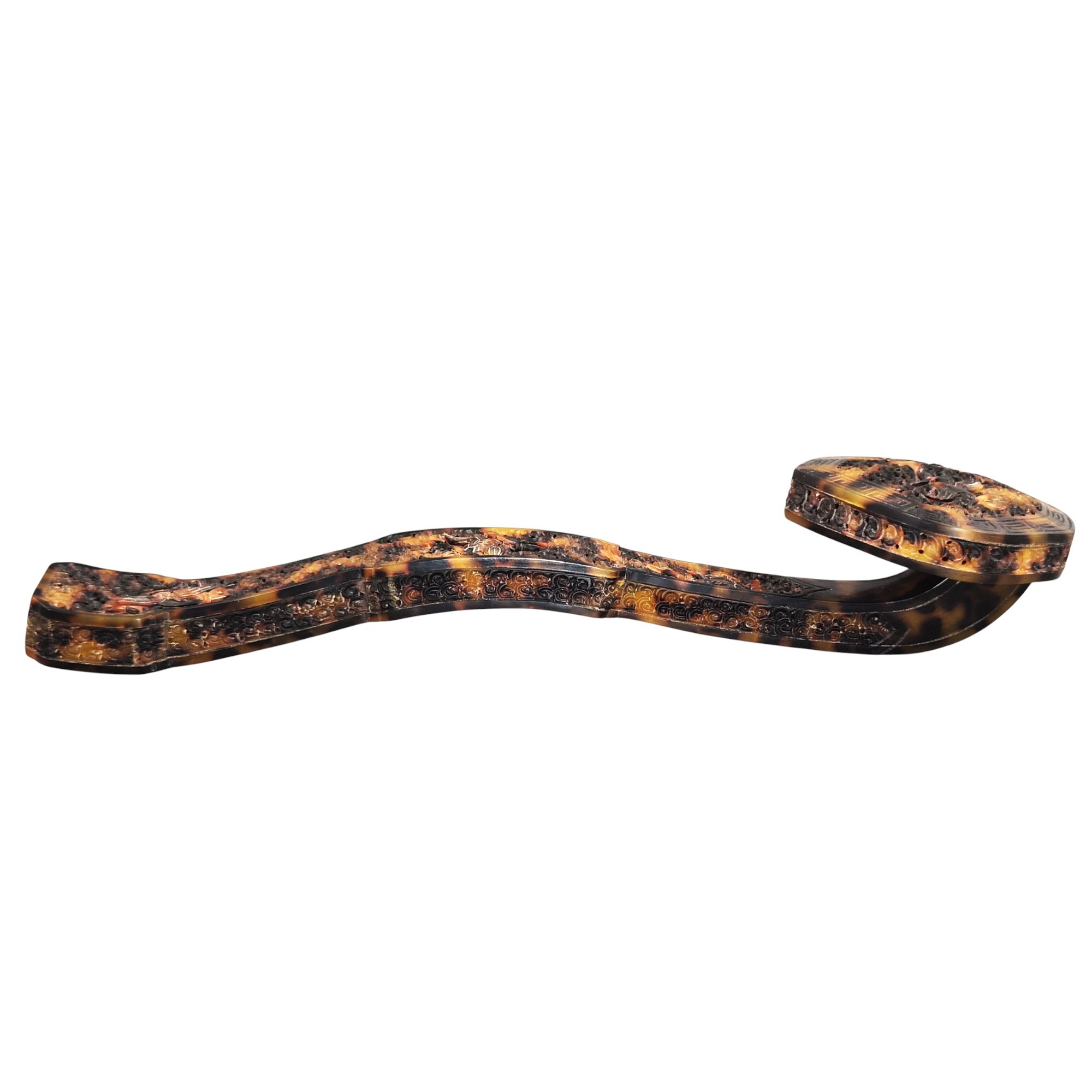
An exceptionally finely carved Chinese ruyi sceptre made from natural tortoiseshell, dating from the Qing dynasty and probably from the late 19th century.

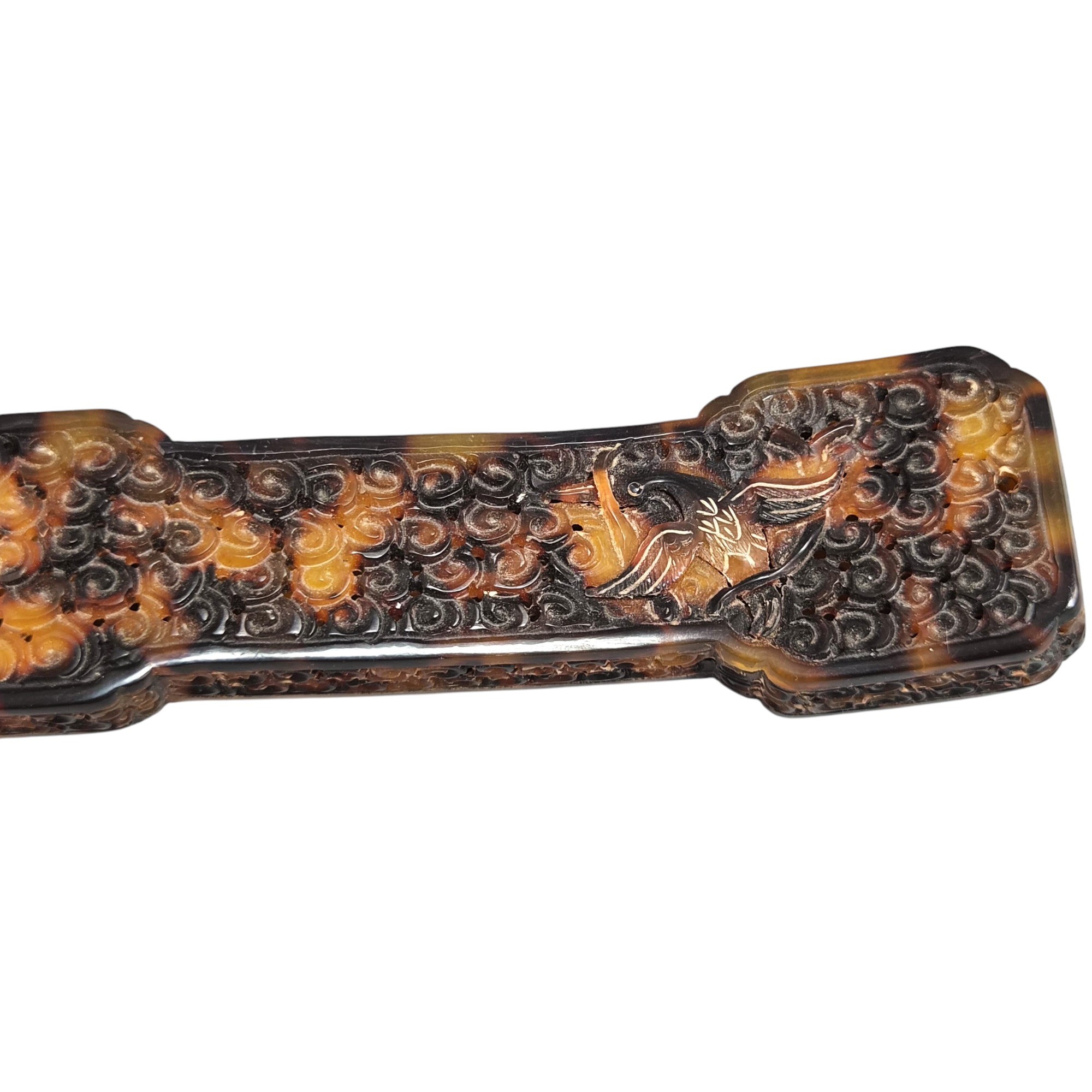
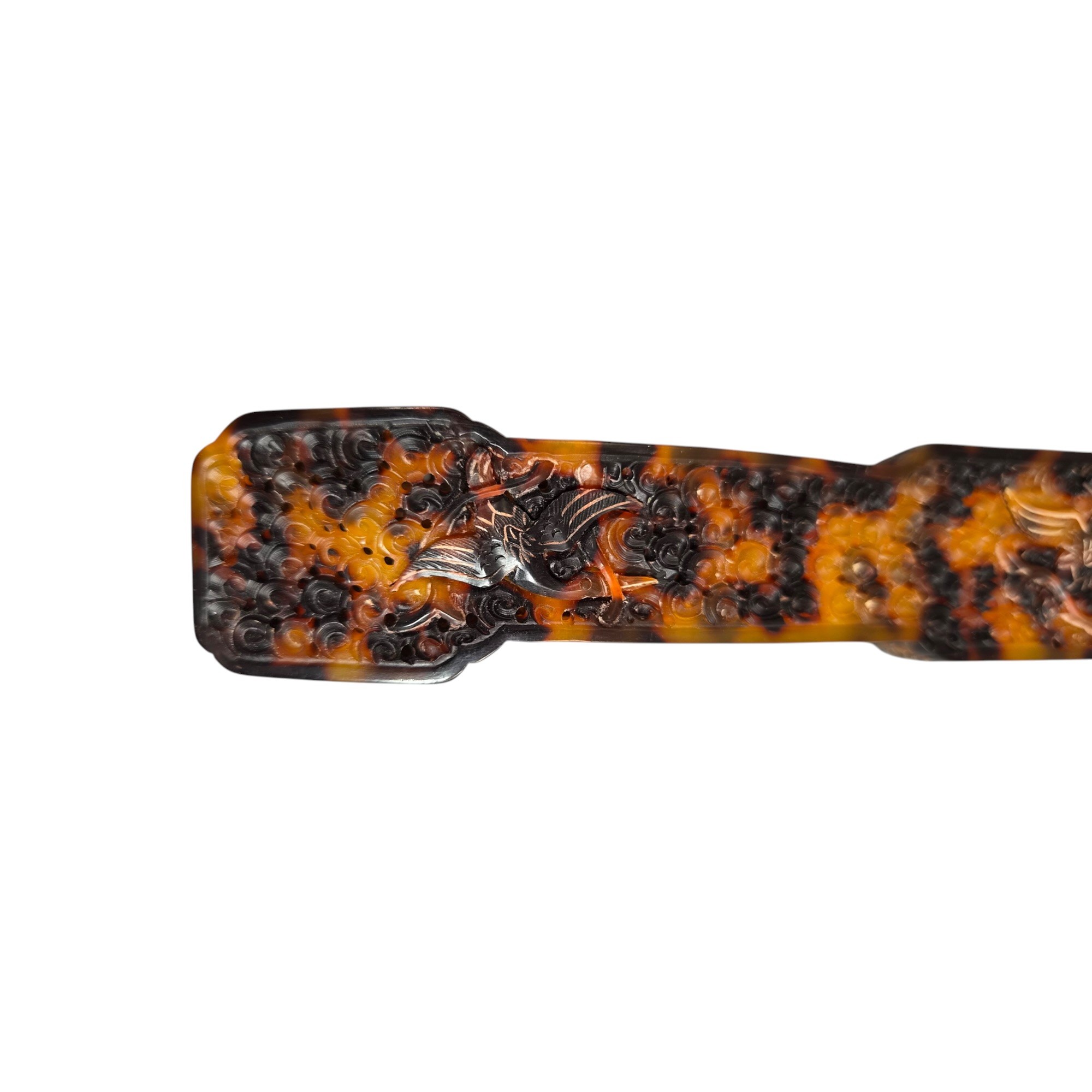
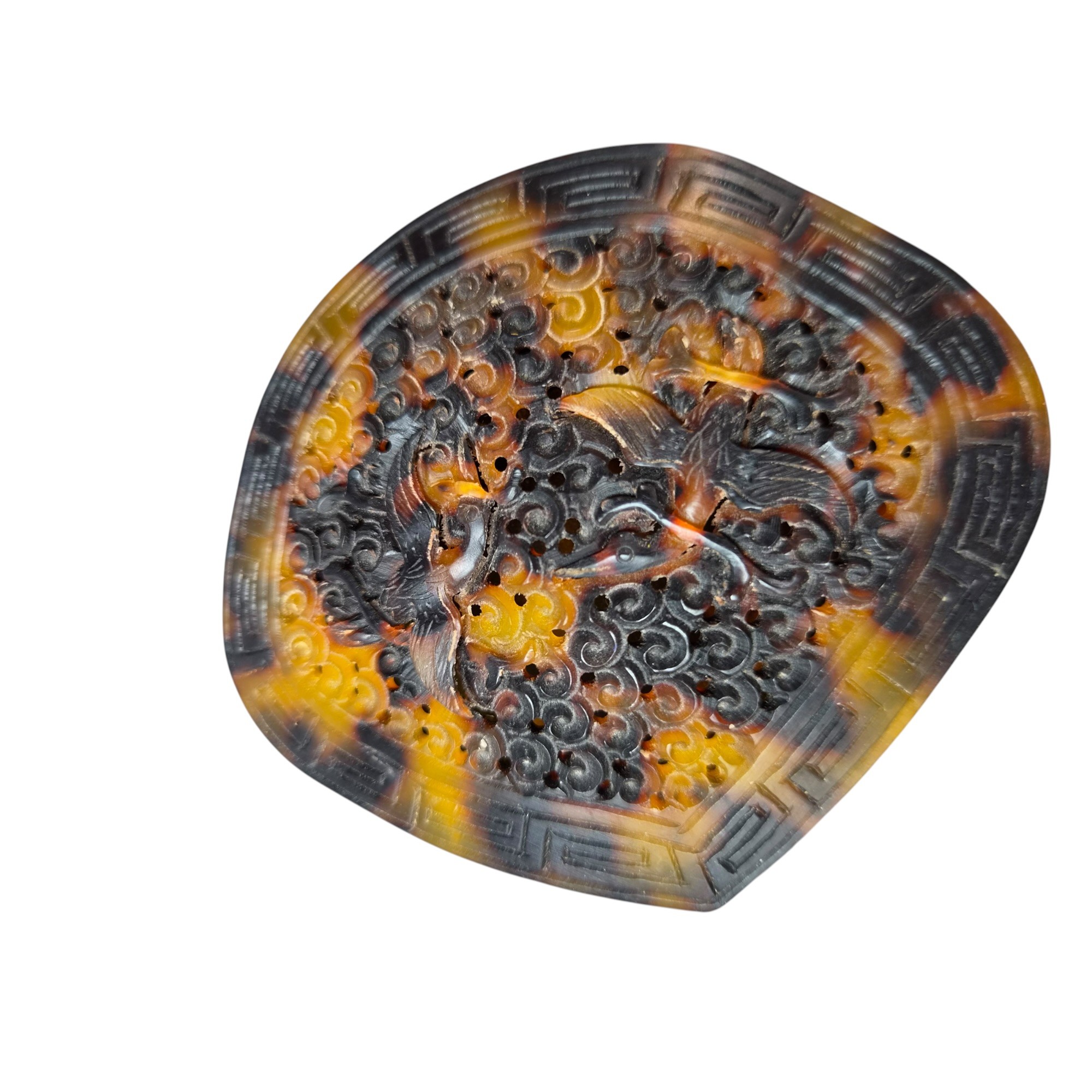
The material displays rich natural mottling ranging from translucent honey and amber tones to deep dark brown. The traditional ruyi form is combined with elaborate multi-layered decoration executed in high relief, finely incised detail and intricate pierced openwork.
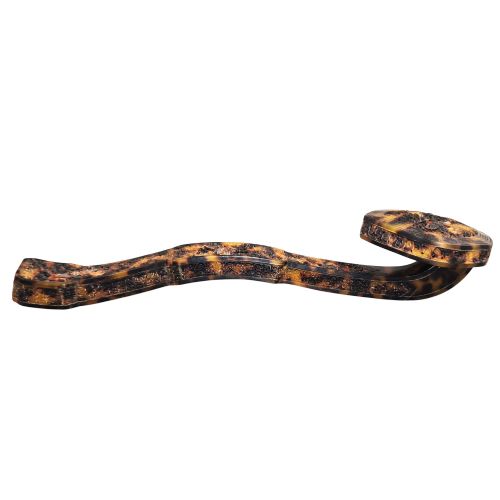
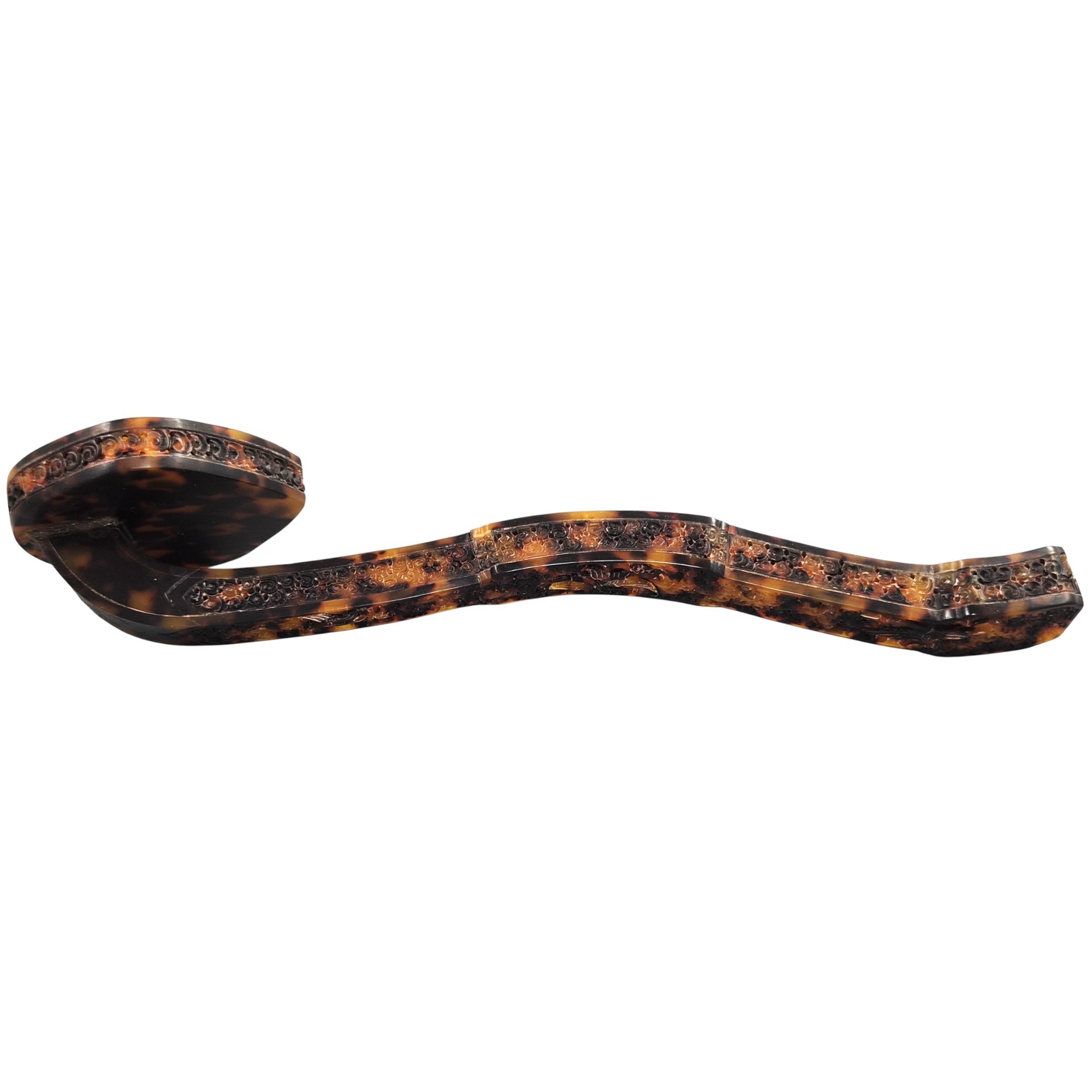
Ruyi, meaning “as you wish,” is a traditional Chinese ceremonial sceptre symbolising authority, good fortune and the fulfilment of wishes. Its curved handle terminates in a broad head derived from the lingzhi fungus, an ancient Chinese symbol of longevity and immortality.
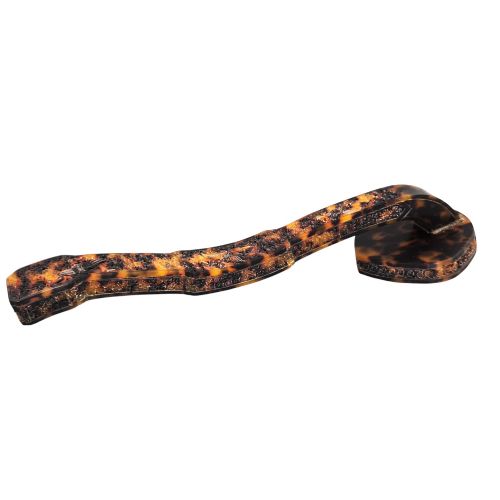
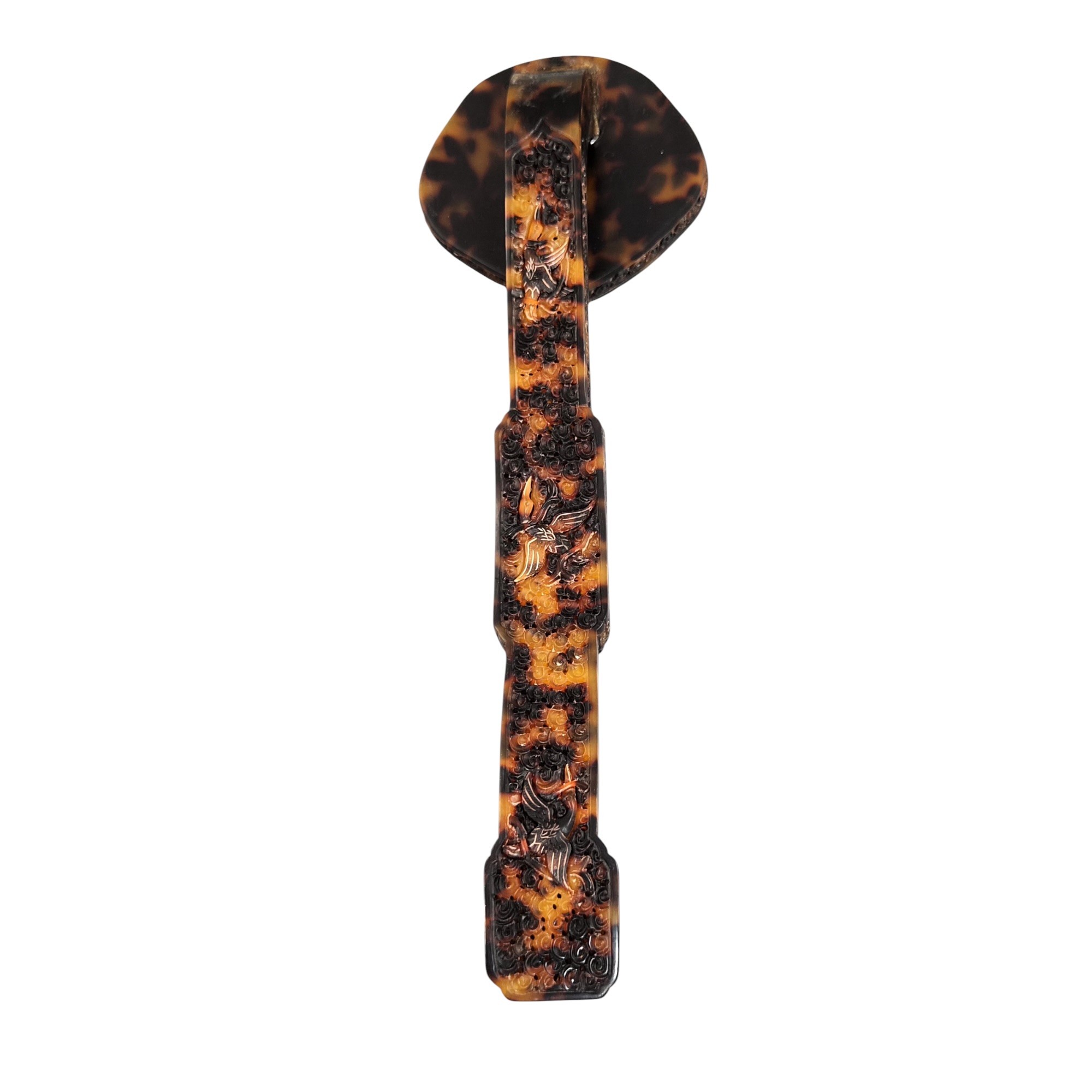
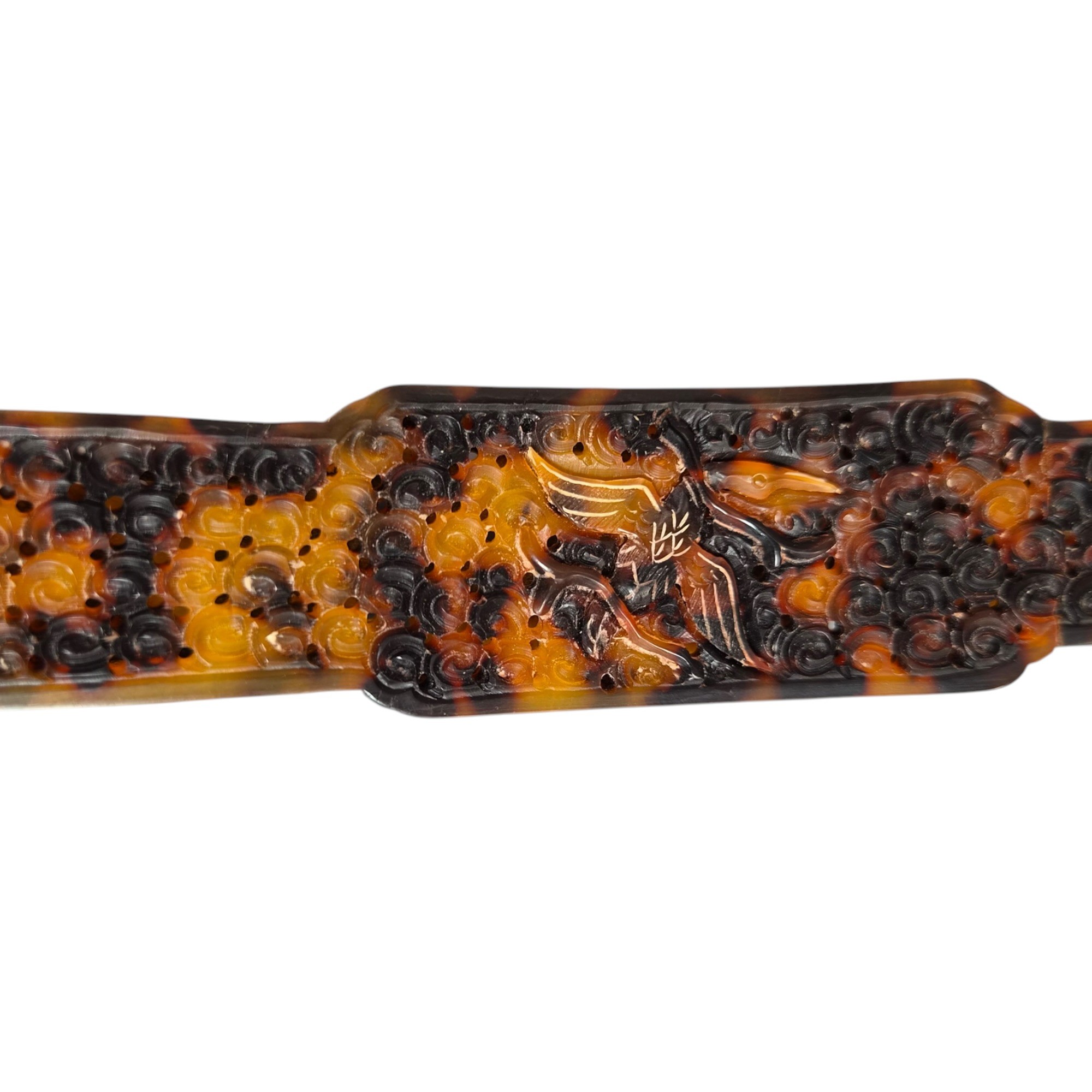
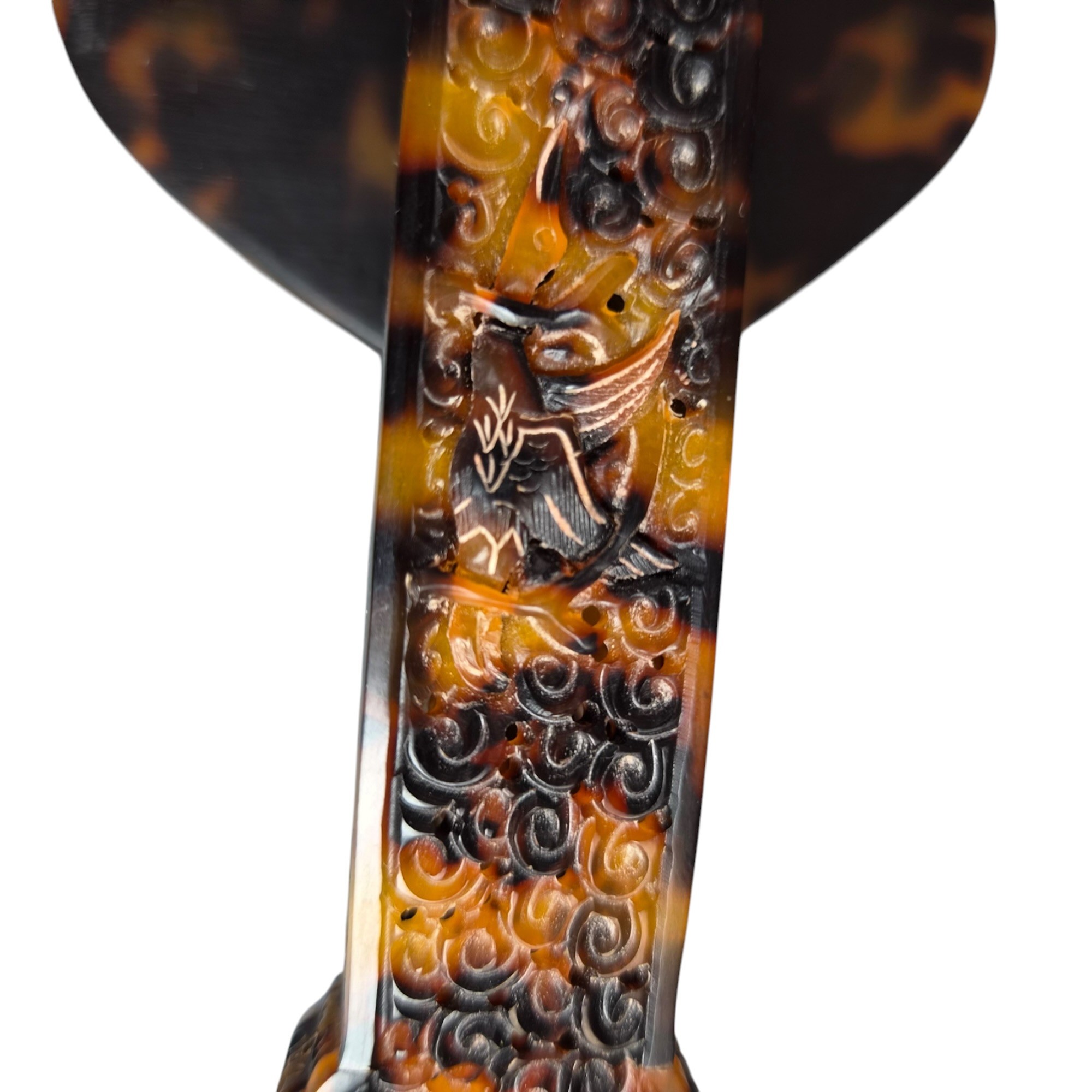
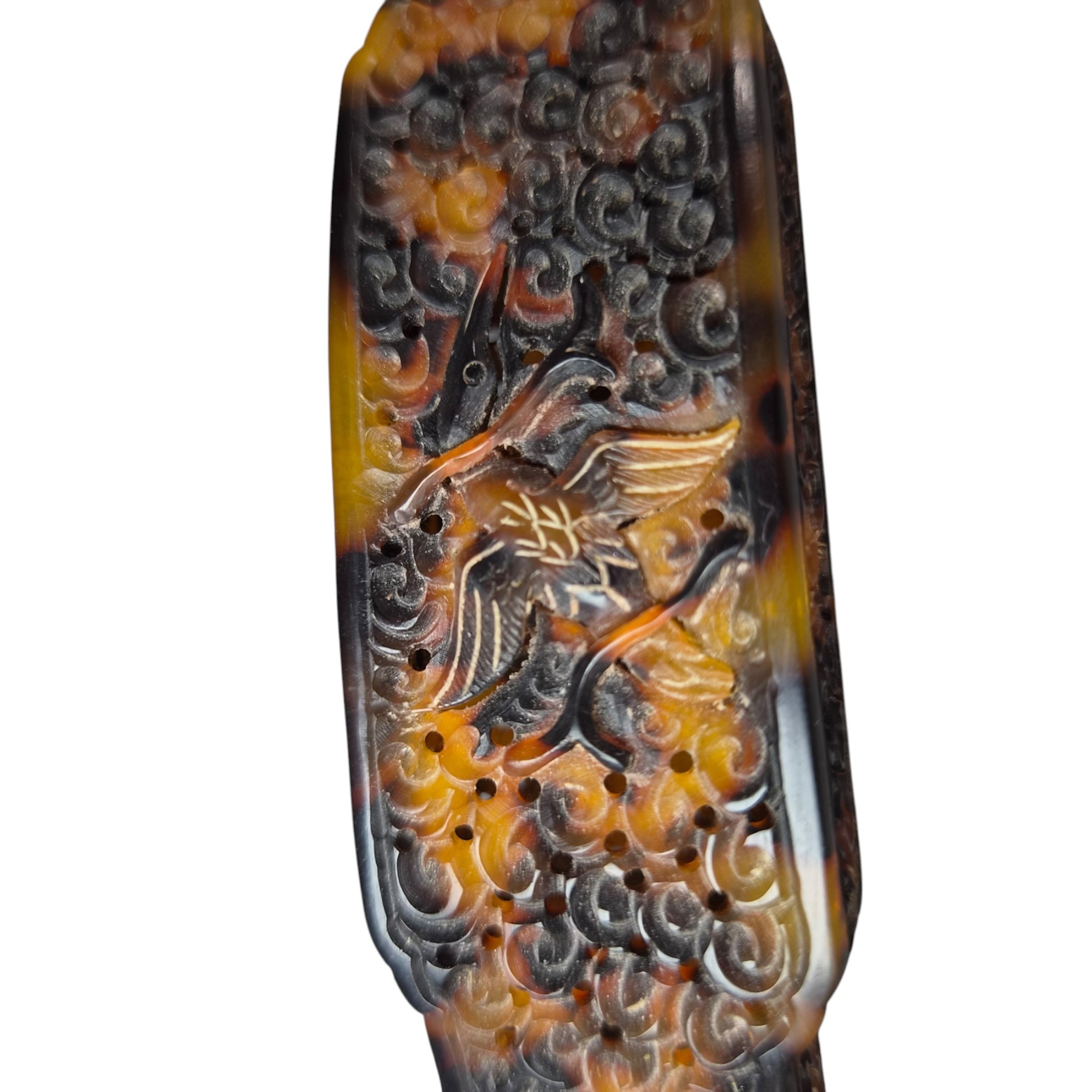
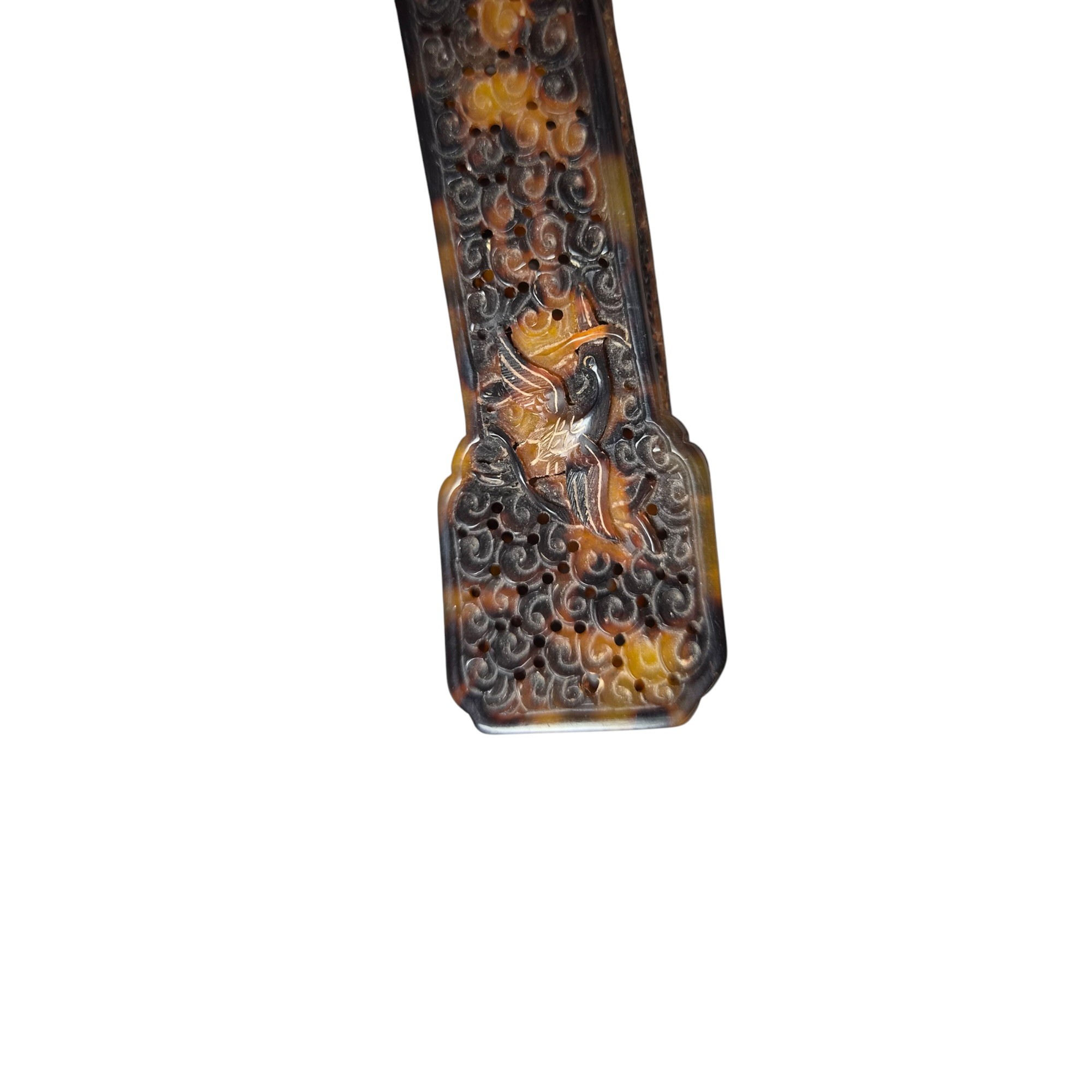
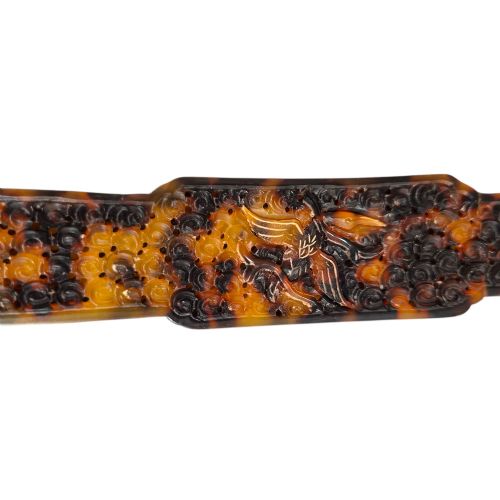
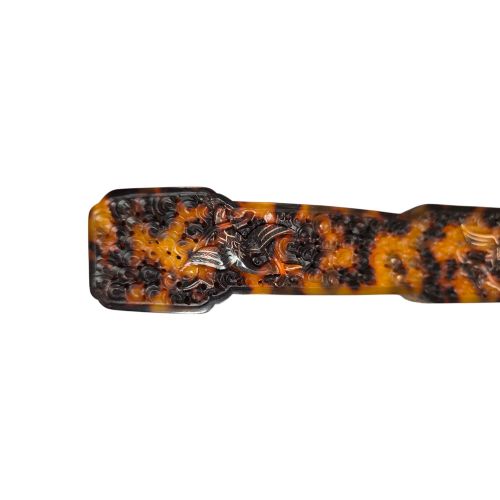
The principal decoration consists of eight articulated cranes among dense auspicious cloud scrolls.

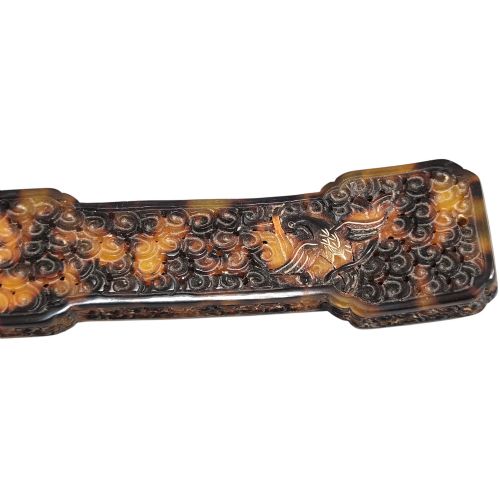
The most remarkable feature is the series of eight separately carved and articulated cranes. Each bird is mounted on a small pivot, allowing it to move independently while remaining securely retained within the pierced cloud-scroll decoration.
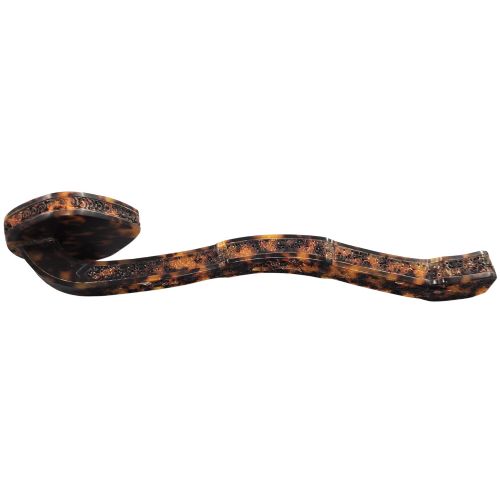
Producing freely moving elements within the surrounding openwork was technically demanding and required considerable precision. The articulated cranes give the composition an exceptional sense of depth, movement and three-dimensionality, distinguishing this ruyi from more commonly encountered examples with entirely static decoration.
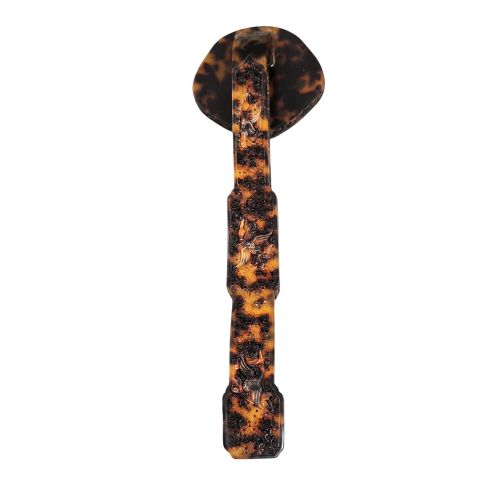
In Chinese and Daoist tradition, the crane is one of the principal symbols of longevity, spiritual elevation and immortality. Auspicious clouds represent heavenly favour, good fortune and the fulfilment of wishes. Together with the lingzhi-shaped head, these motifs form a unified symbolic composition expressing longevity, prosperity and wellbeing.
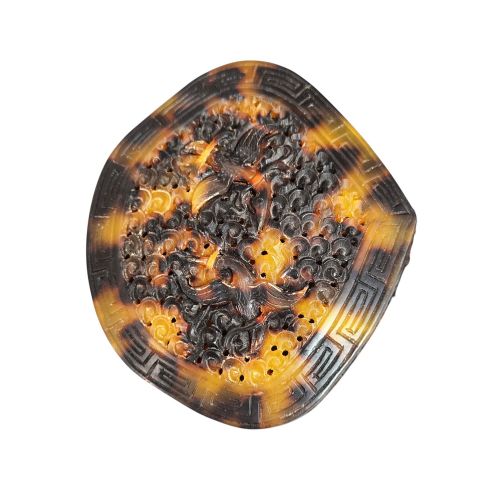
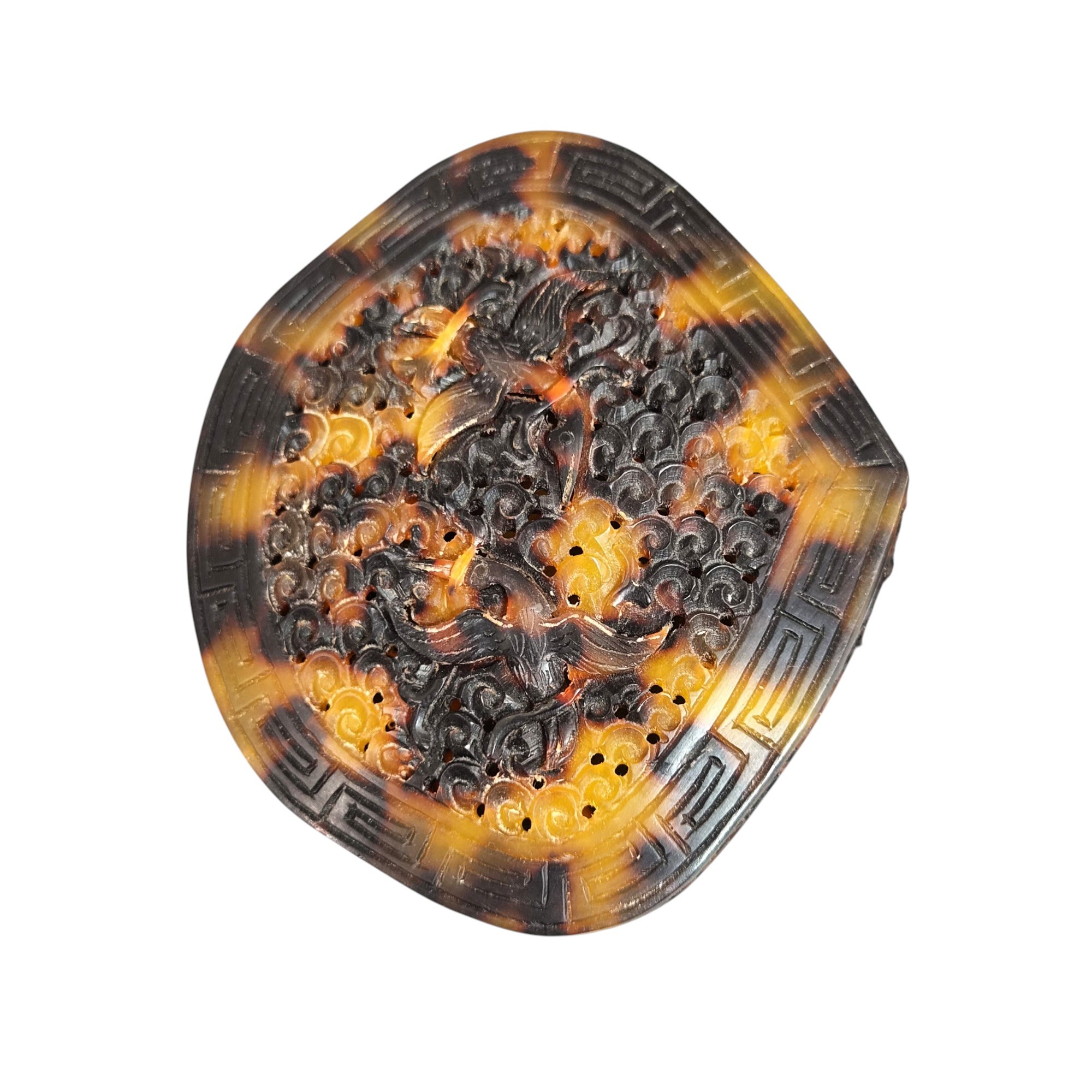
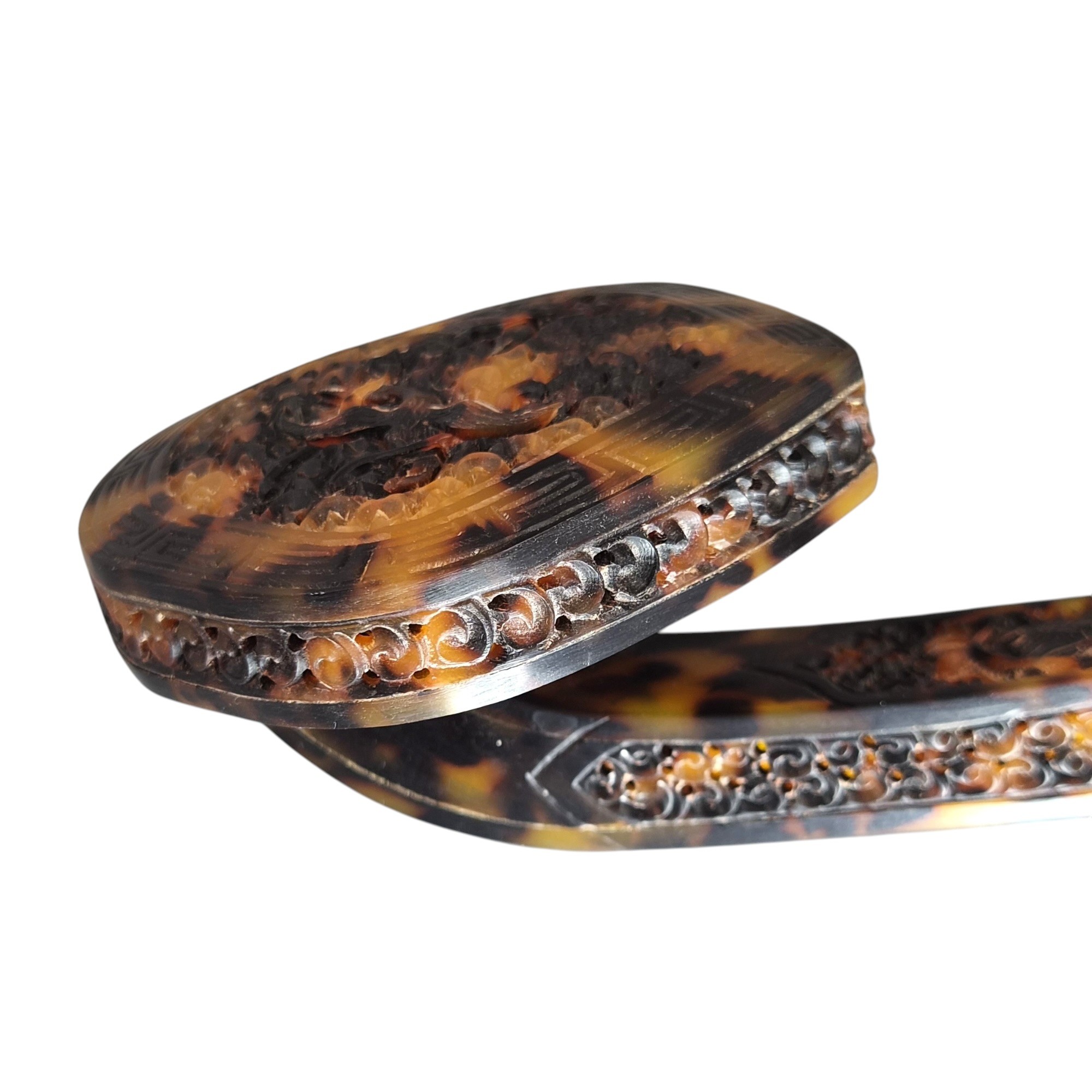
The carved decoration extends across almost the entire front surface. The ruyi head is framed by a geometric border, with a beaded border continuing around its side. The pierced carving allows light to pass through the translucent tortoiseshell, illuminating its warm amber tones and natural mottled pattern.
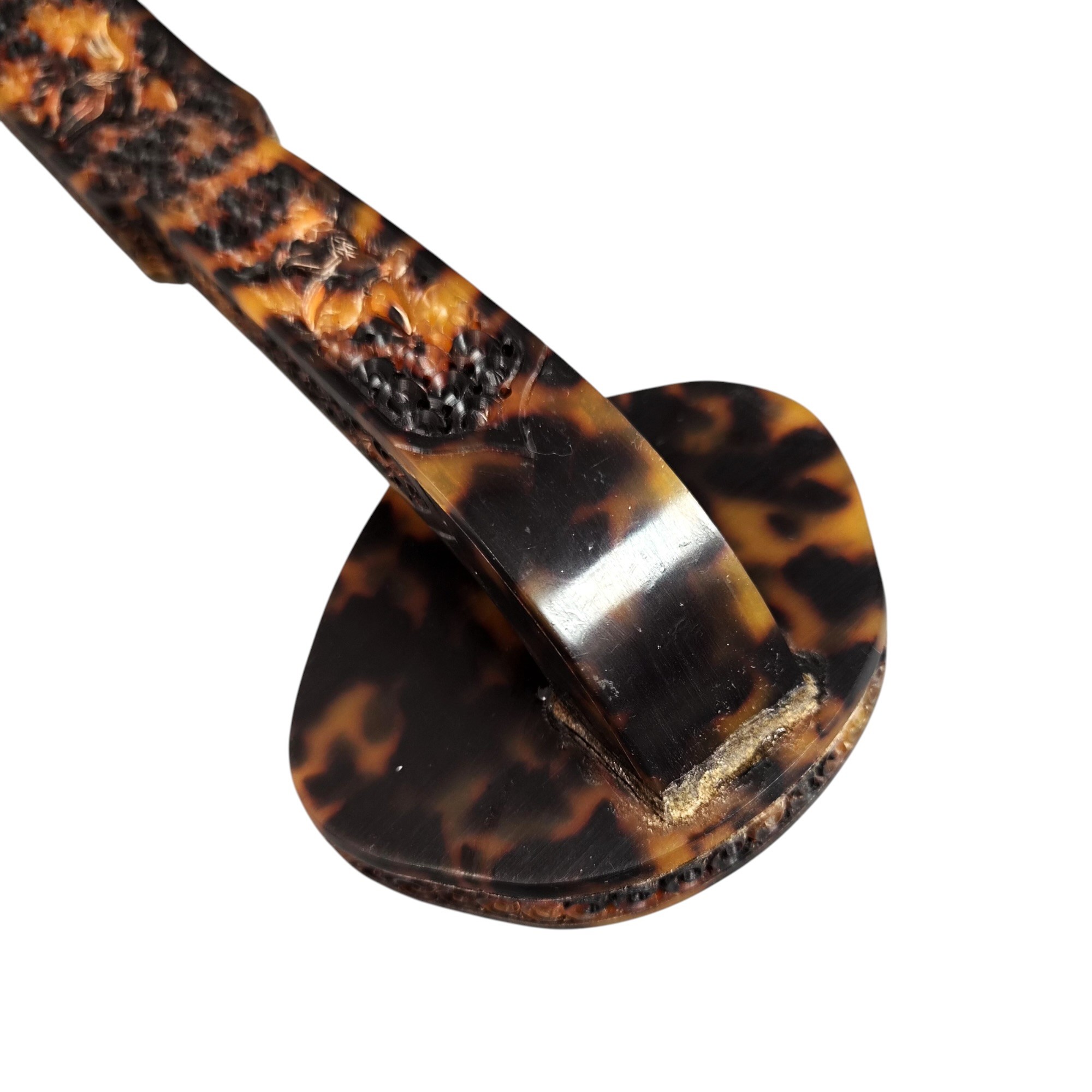
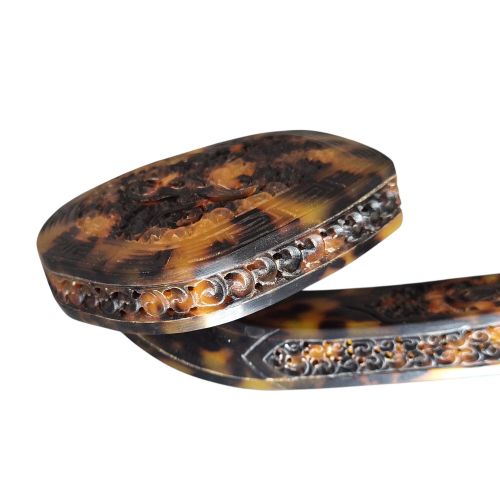
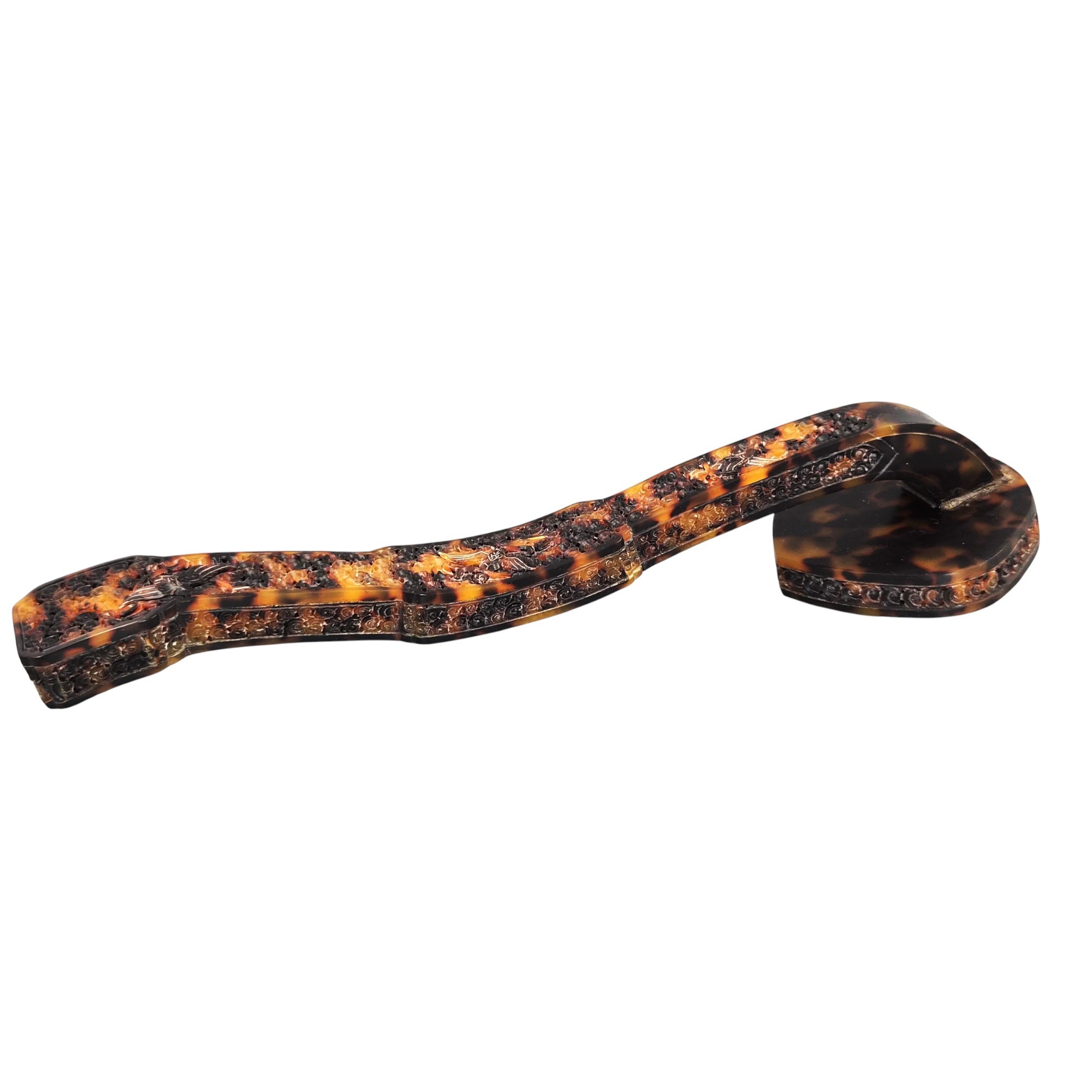
The underside of the ruyi head is smoothly finished, displaying the natural mottling of the material, while carved decoration continues along the shaft and side panels.

The sceptre is of complex assembled construction, necessary for the creation of its deep multi-layered relief and articulated figures. The combination of natural tortoiseshell, traditional auspicious symbolism, finely executed openwork and eight surviving articulated cranes demonstrates the high technical quality of this unusual Chinese ruyi.
Dimensions:

Length: 28 cm

Maximum width: 8.5 cm

Maximum height/depth: 5 cm

Condition:

Good antique condition, consistent with the age and complex assembled construction of the piece. All eight carved cranes are preserved and remain articulated.
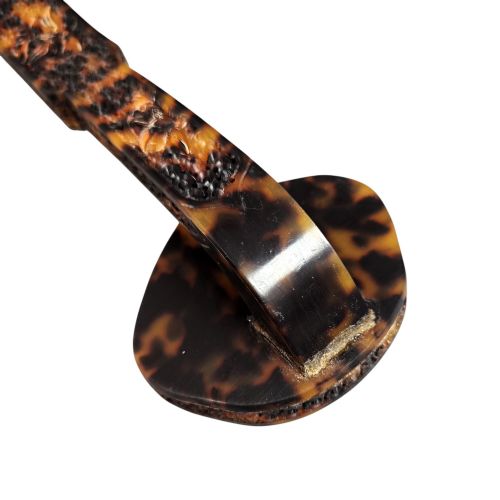
Historic adhesive lines are visible where the shaft joins the ruyi head. There are minor natural signs of age and careful use, none of which detract from the overall appearance, decorative integrity or display quality of the piece.
Please study all accompanying photographs carefully, as they form an integral part of the description and provide the clearest record of the condition, quality of carving and articulated construction.
Should you require any additional information, we will be pleased to assist. The item will be professionally packed and shipped with full tracking and insurance.

UK BUYERS ARE WELCOME.

BUYERS FROM OTHER COUNTRIES, PLEASE CONTACT US BEFORE MAKING ANY PAYMENT.

Physical Dimensions
Height
5cm (1.97")
Width
8.5cm (3.35")
Depth
28cm (11.02")
Declaration

Gillers Antiques Ltd has dated this Carved Tortoiseshell Ruyi Sceptre to the 19th Century.

Reference Numbers
Sellingantiques Reference
SA1232120
Dealers Internal Reference
B1851
Description
An exceptionally finely carved Chinese ruyi sceptre made from natural tortoiseshell, dating from the Qing dynasty and probably from the late 19th century.
The material displays rich natural mottling ranging from translucent honey and amber tones to deep dark brown.
Gillers Antiques Ltd

The traditional ruyi form is combined with elaborate multi-layered decoration executed in high relief, finely incised detail and intricate pierced openwork.

fig 1. A late 19th-century Chinese Qing Dynasty ruyi sceptre carved from translucent mottled amber and dark brown tortoiseshell with intricate relief carving along the handle and head.
fig 1. Chinese Qing Dynasty Carved Tortoiseshell Ruyi Sceptre, Probably Late 19th Century

Ruyi, meaning “as you wish,” is a traditional Chinese ceremonial sceptre symbolising authority, good fortune and the fulfilment of wishes. Its curved handle terminates in a broad head derived from the lingzhi fungus, an ancient Chinese symbol of longevity and immortality.

fig 2. A late 19th-century Chinese Qing Dynasty ruyi sceptre carved from translucent mottled amber and dark brown tortoiseshell with intricate relief carving along the handle and head.
fig 2. Chinese Qing Dynasty Carved Tortoiseshell Ruyi Sceptre, Probably Late 19th Century

The principal decoration consists of eight articulated cranes among dense auspicious cloud scrolls.

The most remarkable feature is the series of eight separately carved and articulated cranes. Each bird is mounted on a small pivot, allowing it to move independently while remaining securely retained within the pierced cloud-scroll decoration.

fig 3. A late 19th-century Chinese Qing Dynasty ruyi sceptre carved from translucent mottled amber and dark brown tortoiseshell with intricate relief carving along the handle and head.
fig 3. Chinese Qing Dynasty Carved Tortoiseshell Ruyi Sceptre, Probably Late 19th Century

Producing freely moving elements within the surrounding openwork was technically demanding and required considerable precision. The articulated cranes give the composition an exceptional sense of depth, movement and three-dimensionality, distinguishing this ruyi from more commonly encountered examples with entirely static decoration.

fig 4. A late 19th-century Chinese Qing Dynasty ruyi sceptre carved from translucent mottled amber and dark brown tortoiseshell with intricate relief carving along the handle and head.
fig 4. Chinese Qing Dynasty Carved Tortoiseshell Ruyi Sceptre, Probably Late 19th Century

In Chinese and Daoist tradition, the crane is one of the principal symbols of longevity, spiritual elevation and immortality. Auspicious clouds represent heavenly favour, good fortune and the fulfilment of wishes. Together with the lingzhi-shaped head, these motifs form a unified symbolic composition expressing longevity, prosperity and wellbeing.

fig 5. A late 19th-century Chinese Qing Dynasty ruyi sceptre carved from translucent mottled amber and dark brown tortoiseshell with intricate relief carving along the handle and head.
fig 5. Chinese Qing Dynasty Carved Tortoiseshell Ruyi Sceptre, Probably Late 19th Century

The carved decoration extends across almost the entire front surface. The ruyi head is framed by a geometric border, with a beaded border continuing around its side. The pierced carving allows light to pass through the translucent tortoiseshell, illuminating its warm amber tones and natural mottled pattern.

fig 6. A late 19th-century Chinese Qing Dynasty ruyi sceptre carved from translucent mottled amber and dark brown tortoiseshell with intricate relief carving along the handle and head.
fig 6. Chinese Qing Dynasty Carved Tortoiseshell Ruyi Sceptre, Probably Late 19th Century

The underside of the ruyi head is smoothly finished, displaying the natural mottling of the material, while carved decoration continues along the shaft and side panels.

The sceptre is of complex assembled construction, necessary for the creation of its deep multi-layered relief and articulated figures. The combination of natural tortoiseshell, traditional auspicious symbolism, finely executed openwork and eight surviving articulated cranes demonstrates the high technical quality of this unusual Chinese ruyi.

fig 7. A late 19th-century Chinese Qing Dynasty ruyi sceptre carved from translucent mottled amber and dark brown tortoiseshell with intricate relief carving along the handle and head.
fig 7. Chinese Qing Dynasty Carved Tortoiseshell Ruyi Sceptre, Probably Late 19th Century

Dimensions:

Length: 28 cm

Maximum width: 8.5 cm

Maximum height/depth: 5 cm

Condition:

Good antique condition, consistent with the age and complex assembled construction of the piece. All eight carved cranes are preserved and remain articulated.

fig 8. A late 19th-century Chinese Qing Dynasty ruyi sceptre carved from translucent mottled amber and dark brown tortoiseshell with intricate relief carving along the handle and head.
fig 8. Chinese Qing Dynasty Carved Tortoiseshell Ruyi Sceptre, Probably Late 19th Century

Historic adhesive lines are visible where the shaft joins the ruyi head. There are minor natural signs of age and careful use, none of which detract from the overall appearance, decorative integrity or display quality of the piece.

fig 9. A late 19th-century Chinese Qing Dynasty ruyi sceptre carved from translucent mottled amber and dark brown tortoiseshell with intricate relief carving along the handle and head.
fig 9. Chinese Qing Dynasty Carved Tortoiseshell Ruyi Sceptre, Probably Late 19th Century

Please study all accompanying photographs carefully, as they form an integral part of the description and provide the clearest record of the condition, quality of carving and articulated construction.

fig 10. A late 19th-century Chinese Qing Dynasty ruyi sceptre carved from translucent mottled amber and dark brown tortoiseshell with intricate relief carving along the handle and head.
fig 10. Chinese Qing Dynasty Carved Tortoiseshell Ruyi Sceptre, Probably Late 19th Century

Should you require any additional information, we will be pleased to assist. The item will be professionally packed and shipped with full tracking and insurance.

UK BUYERS ARE WELCOME.

BUYERS FROM OTHER COUNTRIES, PLEASE CONTACT US BEFORE MAKING ANY PAYMENT.

Height
5cm (1.97")
Width
8.5cm (3.35")
Depth
28cm (11.02")
Date of Manufacture

Gillers Antiques Ltd has dated this Carved Tortoiseshell Ruyi Sceptre to the 19th Century.

Reference Numbers
Sellingantiques Ref
SA1232120
Dealers Internal Ref
B1851
Gillers Antiques Ltd
Sellingantiques verified Since Mar 2023
Dealer Profile

You can view the stock and full dealer information on the Gillers Antiques Ltd Profile Page
PDF SHARE
SAVE
A late 19th-century Chinese Qing Dynasty ruyi sceptre carved from translucent mottled amber and dark brown tortoiseshell with intricate relief carving along the handle and head.
1 / 15
Archive I A late 19th-century Chinese Qing Dynasty ruyi sceptre carved from translucent mottled amber and dark brown tortoiseshell with intricate relief carving along the handle and head.

Chinese Qing Dynasty Carved Tortoiseshell Ruyi Sceptre, Probably Late 19th Century
Archive II A late 19th-century Chinese Qing Dynasty ruyi sceptre carved from translucent mottled amber and dark brown tortoiseshell with intricate relief carving along the handle and head. View II
Archive III A late 19th-century Chinese Qing Dynasty ruyi sceptre carved from translucent mottled amber and dark brown tortoiseshell with intricate relief carving along the handle and head. View III
Archive IV A late 19th-century Chinese Qing Dynasty ruyi sceptre carved from translucent mottled amber and dark brown tortoiseshell with intricate relief carving along the handle and head. View IV
Archive V A late 19th-century Chinese Qing Dynasty ruyi sceptre carved from translucent mottled amber and dark brown tortoiseshell with intricate relief carving along the handle and head. View V
Archive VI A late 19th-century Chinese Qing Dynasty ruyi sceptre carved from translucent mottled amber and dark brown tortoiseshell with intricate relief carving along the handle and head. View VI
Archive VII A late 19th-century Chinese Qing Dynasty ruyi sceptre carved from translucent mottled amber and dark brown tortoiseshell with intricate relief carving along the handle and head. View VII
Archive VIII A late 19th-century Chinese Qing Dynasty ruyi sceptre carved from translucent mottled amber and dark brown tortoiseshell with intricate relief carving along the handle and head. View VIII
Archive IX A late 19th-century Chinese Qing Dynasty ruyi sceptre carved from translucent mottled amber and dark brown tortoiseshell with intricate relief carving along the handle and head. View IX
Archive X A late 19th-century Chinese Qing Dynasty ruyi sceptre carved from translucent mottled amber and dark brown tortoiseshell with intricate relief carving along the handle and head. View X
Archive XI A late 19th-century Chinese Qing Dynasty ruyi sceptre carved from translucent mottled amber and dark brown tortoiseshell with intricate relief carving along the handle and head. View XI
Archive XII A late 19th-century Chinese Qing Dynasty ruyi sceptre carved from translucent mottled amber and dark brown tortoiseshell with intricate relief carving along the handle and head. View XII
Archive XIII A late 19th-century Chinese Qing Dynasty ruyi sceptre carved from translucent mottled amber and dark brown tortoiseshell with intricate relief carving along the handle and head. View XIII
Archive XIV A late 19th-century Chinese Qing Dynasty ruyi sceptre carved from translucent mottled amber and dark brown tortoiseshell with intricate relief carving along the handle and head. View XIV
Archive XV A late 19th-century Chinese Qing Dynasty ruyi sceptre carved from translucent mottled amber and dark brown tortoiseshell with intricate relief carving along the handle and head. View XV
Enlarged Archival View
Telephone 07738 009924
Location
Buckland House
Buntingford
Hertfordshire
SG9 0PY
United Kingdom
Verified Since Mar 2023
Items For Sale 399
Items Sold 568
Gillers Antiques Ltd
Verified Since Mar 2023
View Dealer Info
Location: Buckland House, Buntingford, Hertfordshire, SG9 0PY, United Kingdom
Verified
Mar 2023
For Sale
399
Sold
568
A late 19th-century Chinese Qing Dynasty ruyi sceptre carved from translucent mottled amber and dark brown tortoiseshell with intricate relief carving along the handle and head.
Chinese Qing Dynasty Carved Tortoiseshell Ruyi Sceptre, Probably Late 19th Century
Ref: SA1232120
A late 19th-century Chinese Qing Dynasty ruyi sceptre carved from translucent mottled amber and dark brown tortoiseshell with intricate relief carving along the handle and head.
Detail View 1
Detail View 2
Detail View 3
Detail View 4
Detail View 5
Detail View 6
Detail View 7
Detail View 8
Detail View 9
Detail View 10
Detail View 11
Detail View 12
Detail View 13
Detail View 14
Archival Detail
Every single antique dealer on our platform is individually approved by our internal team. We verify their professional trade history, ethical standards, and photographic quality to ensure a secure, high-standard buying environment. Upon joining, every dealer agrees to a strict 9-point code of conduct. While issues can occasionally arise, our dealers typically resolve them swiftly and directly with the buyer. In fact, since our founding in 2002, Sellingantiques has only had to step in to help resolve an issue on roughly five occasions—a true testament to the quality of our dealers and their dedication to your happiness.
Our dealers are highly experienced in packing and shipping fragile, high-value antiques. Because you are in direct contact with the dealer, you will be able to easily go through all available shipping and insurance options together to ensure your item arrives safely.
Antiques are the ultimate green purchase. By choosing historical pieces over newly manufactured goods, you completely eliminate the carbon footprint of modern mass production while preserving exceptional, timeless craftsmanship.

Originating in ancient China as a practical instrument or ceremonial pointer, the ruyi sceptre developed into a symbol of authority, peace, and good fortune. By the Qing Dynasty, these items were presented as formal gifts to imperial family members and high-ranking court officials.

Ruyi sceptres were constructed from precious and decorative materials including carved jade, zitan wood, cinnabar lacquer, cloisonne enamel, and natural tortoiseshell. High-status examples often featured complex openwork carving and detailed relief patterns.

Authentic period pieces exhibit characteristic natural mottling with translucent amber and dark brown tones, alongside hand-carved tool marks under magnification. Original tortoiseshell displays specific structural growth layers, unlike modern synthetic or resin imitations.

A ruyi sceptre is typically mounted on a bespoke display stand or placed flat inside a glass vitrine. It acts as a sculptural focal point on a library shelf, sideboard top, or desk alongside classical or contemporary decorative objects.

Tortoiseshell items require stable humidity levels and protection from direct sunlight to prevent warping and drying out. Dusting should be performed with a soft, lint-free cloth, avoiding liquid cleaners, chemical solvents, or extreme temperature fluctuations.
items
Add keywords to the filter
Price
£100
£250000
Era
Movements
Material
Origin
Stock Location
Freshness
Online Payments
Categories