60,930  PAGES BROWSED TODAY PAGES TODAY 0  ANTIQUES UPLOADED TODAY NEW ARRIVALS
ID #SA1216986
SOLD
Email
Save
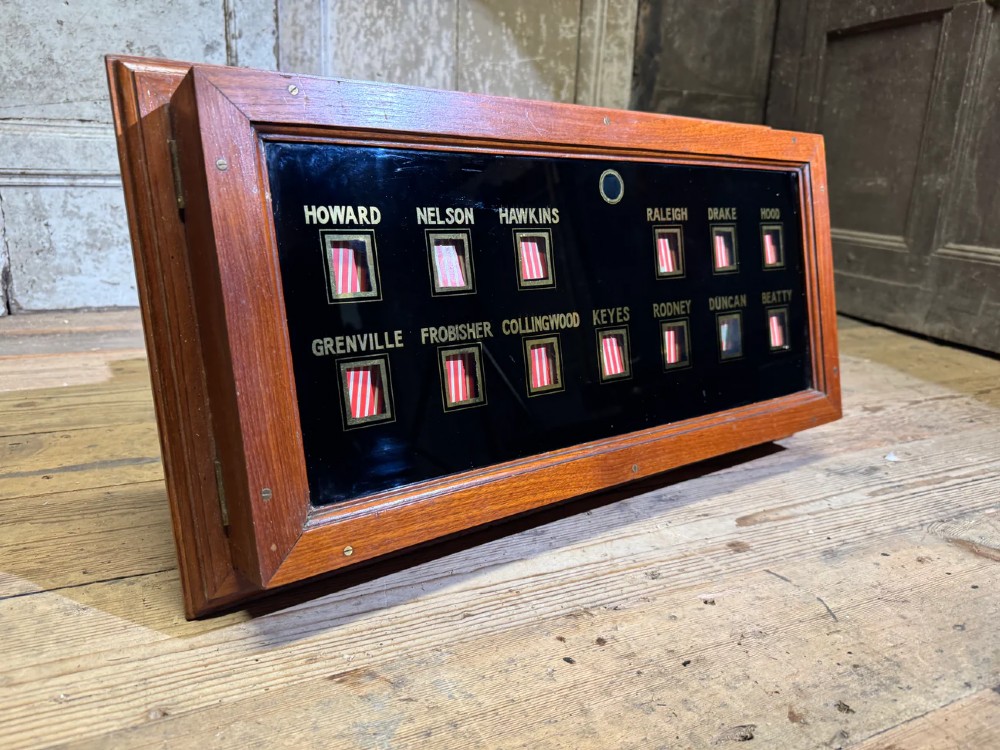
Original 1930s Dolphin Square Indicator Board, London – Espionage & Political History Interest
Rob Hall Antiques
sold SA1216986
Sorry, but this item has been sold.

Rob Hall Antiques

Sellingantiques Verified Since Aug 2025
View Dealers Stock Page
Id #SA1216986
PDF SHARE
SAVE

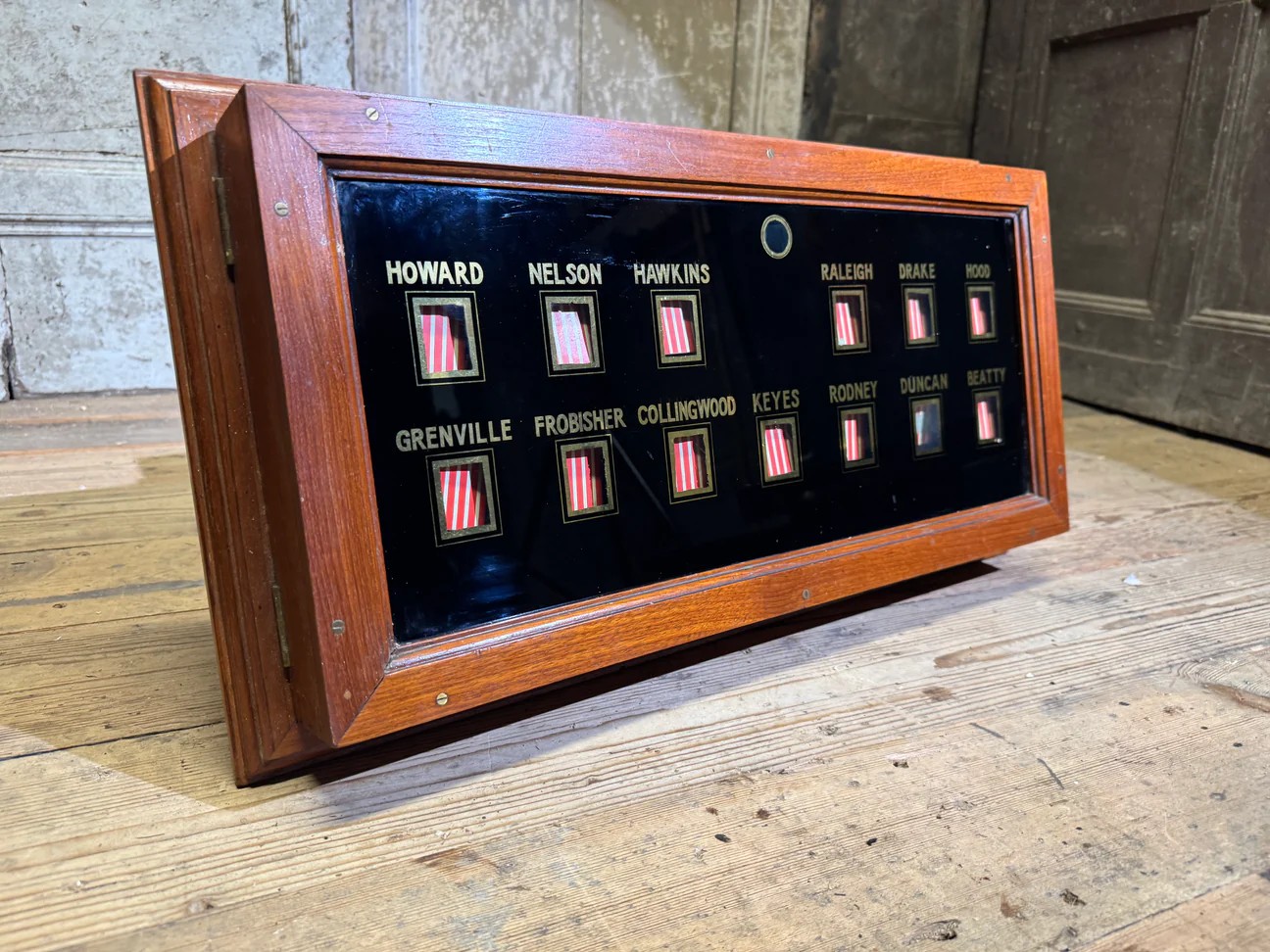
Original 1930s Dolphin Square Indicator Board, London – Espionage & Political History Interest

1920 - 1940
Description

Few residential buildings in London possess the aura of Dolphin Square. Long associated with espionage, political intrigue and wartime secrecy, the vast Pimlico complex became entwined over the decades with intelligence officers, diplomats, senior civil servants and the hidden machinery of the British establishment. Concealed behind a monumental neo-Georgian façade overlooking the Thames, it developed a reputation as one of London’s most discreet and enigmatic addresses — a place where power, secrecy and influence quietly intersected. During the Second World War, Grenville House became headquarters of General de Gaulle’s Free French administration, while MI5 operated Section B5(b) from 308 Hood House. The arrest of Soviet spy John Vassall at Flat 807, Hood House, in 1962 only deepened the mythology surrounding the complex and its long-standing association with Cold War intrigue.
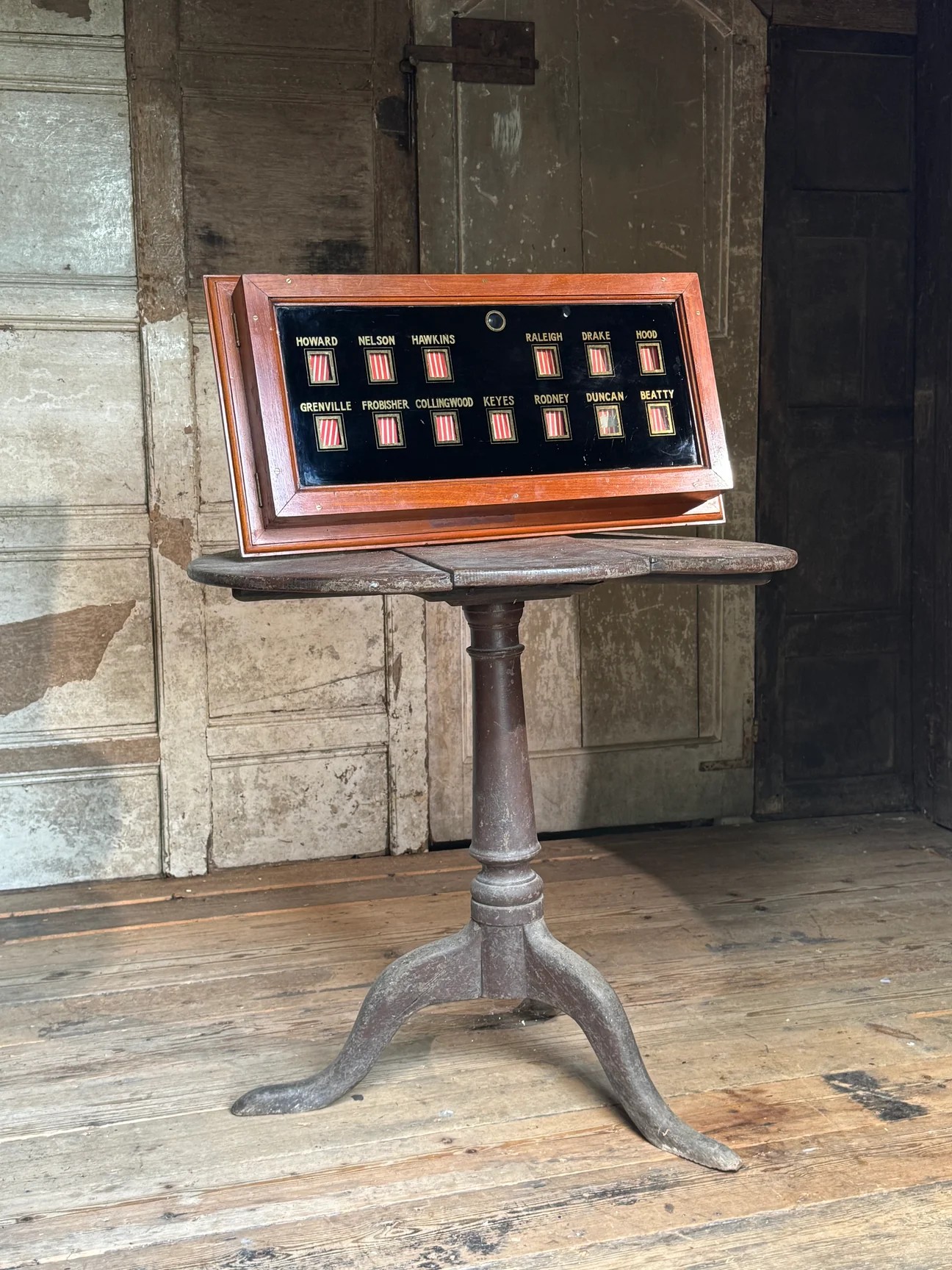
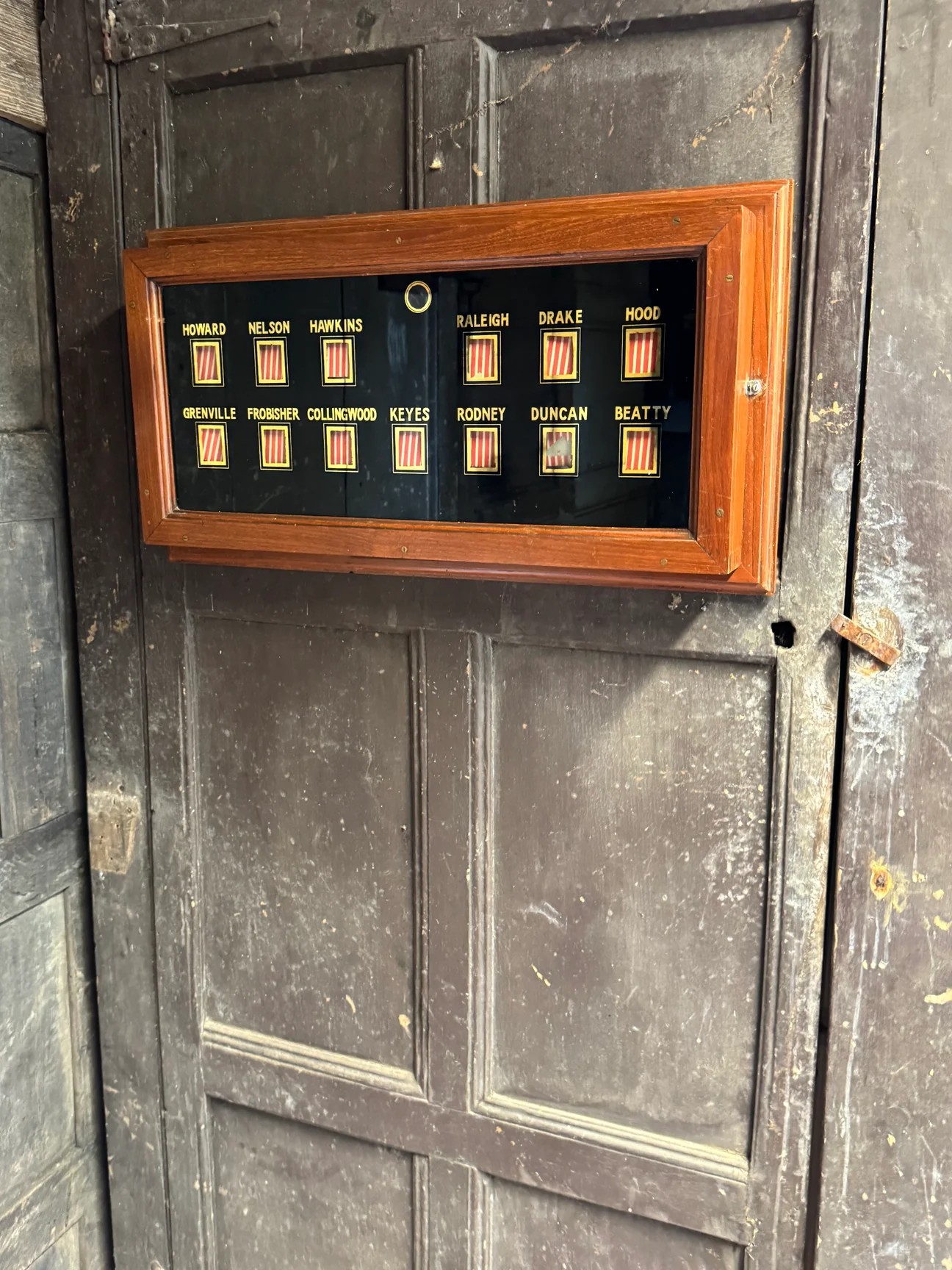
Constructed between 1935 and 1937, Dolphin Square was conceived as a self-contained modern city within a city, complete with restaurants, shops, laundries, garages and permanent concierge services. Its thirteen residential houses were each named after celebrated naval commanders and explorers associated with Britain’s maritime history — including Nelson, Drake, Raleigh, Hood and Grenville — lending the development an unmistakably imperial and establishment character typical of ambitious interwar architecture. The naming was deliberate: a statement of prestige, patriotism and permanence at the very heart of London.
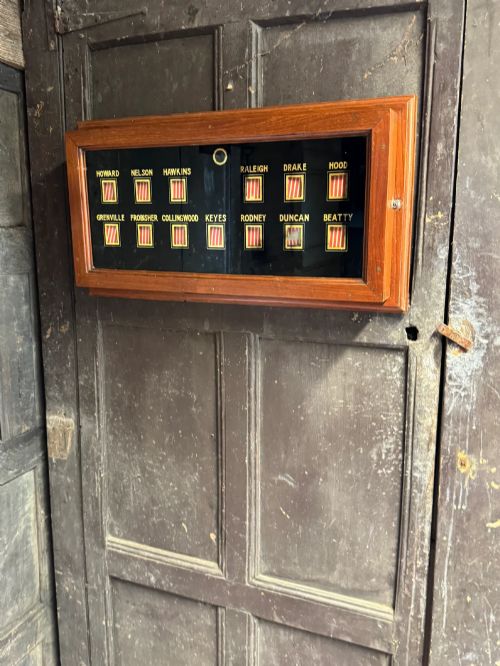
The thirteen houses at Dolphin Square were named after admirals, naval commanders and explorers associated with Britain’s maritime history. They were:

Grenville House — after Sir Richard Grenville

Drake House — after Sir Francis Drake

Raleigh House — after Sir Walter Raleigh

Hawkins House — after Sir John Hawkins

Nelson House — after Admiral Lord Nelson

Howard House — after Lord Howard of Effingham

Beatty House — after Admiral David Beatty

Duncan House — after Admiral Adam Duncan

Rodney House (now Dolphin House) — after Admiral George Rodney

Keyes House — after Admiral Roger Keyes

Hood House — after Admiral Samuel Hood

Collingwood House — after Admiral Cuthbert Collingwood

Frobisher House — after Sir Martin Frobisher

That mixture of Tudor explorers and Royal Navy admirals was deliberate and very typical of grand interwar developments — projecting imperial confidence, patriotism and establishment prestige in the years immediately before the Second World War.

This original indicator board formed part of the hidden infrastructure that kept the enormous development functioning behind the scenes. Almost certainly positioned within a porter’s office, concierge station or service area, it would have been used to identify which house or block within Dolphin Square required staff attention. In a development containing more than 1,200 flats spread across thirteen separate residential houses, such systems were essential to the smooth running of the building long before electronic intercoms and digital communications arrived. Functional rather than decorative, boards such as this acted as the silent operational nerve centres of major residential institutions.

Over the decades Dolphin Square became home to an extraordinary range of notable residents, among them Prime Minister Harold Wilson, Princess Anne and William Hague, while its atmosphere of discretion and political proximity drew countless figures connected to Westminster and Whitehall. The complex also entered the wider mythology of the Profumo era through its association with Christine Keeler and Mandy Rice-Davies, further strengthening its reputation as a place woven into the political, social and clandestine undercurrents of post-war Britain.

Measuring: 63 cm x 33 cm x 9 cm

London, England, 1930s

Declaration

Rob Hall Antiques has dated this piece to the 1930s.

Reference Numbers
Sellingantiques Reference
SA1216986
Description
Few residential buildings in London possess the aura of Dolphin Square. Long associated with espionage, political intrigue and wartime secrecy, the vast Pimlico complex became entwined over the decades with intelligence officers, diplomats, senior civil servants and the hidden machinery of the British establishment. Concealed behind a monumental neo-Georgian façade overlooking the Thames, it developed a reputation as one of London’s most discreet and enigmatic addresses — a place where power, secrecy and influence quietly intersected.
During the Second World War, Grenville House became headquarters of General de Gaulle’s Free French administration, while MI5 operated Section B5(b) from 308 Hood House.
Rob Hall Antiques

The arrest of Soviet spy John Vassall at Flat 807, Hood House, in 1962 only deepened the mythology surrounding the complex and its long-standing association with Cold War intrigue.

fig 1. ORIGINAL 1930S DOLPHIN SQUARE INDICATOR BOARD, LONDON – ESPIONAGE & POLITICAL HISTORY INTEREST
fig 1. Original 1930s Dolphin Square Indicator Board, London – Espionage & Political History Interest

Constructed between 1935 and 1937, Dolphin Square was conceived as a self-contained modern city within a city, complete with restaurants, shops, laundries, garages and permanent concierge services. Its thirteen residential houses were each named after celebrated naval commanders and explorers associated with Britain’s maritime history — including Nelson, Drake, Raleigh, Hood and Grenville — lending the development an unmistakably imperial and establishment character typical of ambitious interwar architecture. The naming was deliberate: a statement of prestige, patriotism and permanence at the very heart of London.

fig 2. ORIGINAL 1930S DOLPHIN SQUARE INDICATOR BOARD, LONDON – ESPIONAGE & POLITICAL HISTORY INTEREST
fig 2. Original 1930s Dolphin Square Indicator Board, London – Espionage & Political History Interest

The thirteen houses at Dolphin Square were named after admirals, naval commanders and explorers associated with Britain’s maritime history. They were:

Grenville House — after Sir Richard Grenville

Drake House — after Sir Francis Drake

Raleigh House — after Sir Walter Raleigh

Hawkins House — after Sir John Hawkins

Nelson House — after Admiral Lord Nelson

Howard House — after Lord Howard of Effingham

Beatty House — after Admiral David Beatty

Duncan House — after Admiral Adam Duncan

Rodney House (now Dolphin House) — after Admiral George Rodney

Keyes House — after Admiral Roger Keyes

Hood House — after Admiral Samuel Hood

Collingwood House — after Admiral Cuthbert Collingwood

Frobisher House — after Sir Martin Frobisher

That mixture of Tudor explorers and Royal Navy admirals was deliberate and very typical of grand interwar developments — projecting imperial confidence, patriotism and establishment prestige in the years immediately before the Second World War.

This original indicator board formed part of the hidden infrastructure that kept the enormous development functioning behind the scenes. Almost certainly positioned within a porter’s office, concierge station or service area, it would have been used to identify which house or block within Dolphin Square required staff attention. In a development containing more than 1,200 flats spread across thirteen separate residential houses, such systems were essential to the smooth running of the building long before electronic intercoms and digital communications arrived. Functional rather than decorative, boards such as this acted as the silent operational nerve centres of major residential institutions.

Over the decades Dolphin Square became home to an extraordinary range of notable residents, among them Prime Minister Harold Wilson, Princess Anne and William Hague, while its atmosphere of discretion and political proximity drew countless figures connected to Westminster and Whitehall. The complex also entered the wider mythology of the Profumo era through its association with Christine Keeler and Mandy Rice-Davies, further strengthening its reputation as a place woven into the political, social and clandestine undercurrents of post-war Britain.

Measuring: 63 cm x 33 cm x 9 cm

London, England, 1930s

Date of Manufacture

Rob Hall Antiques has dated this piece to the 1930s.

Reference Numbers
Sellingantiques Ref
SA1216986
Rob Hall Antiques
Sellingantiques verified Since Aug 2025
Dealer Profile

You can view the stock and full dealer information on the Rob Hall Antiques Profile Page
PDF SHARE
SAVE
ORIGINAL 1930S DOLPHIN SQUARE INDICATOR BOARD, LONDON – ESPIONAGE & POLITICAL HISTORY INTEREST
1 / 3
Archive I ORIGINAL 1930S DOLPHIN SQUARE INDICATOR BOARD, LONDON – ESPIONAGE & POLITICAL HISTORY INTEREST

Original 1930s Dolphin Square Indicator Board, London – Espionage & Political History Interest
Archive II ORIGINAL 1930S DOLPHIN SQUARE INDICATOR BOARD, LONDON – ESPIONAGE & POLITICAL HISTORY INTEREST View II
Archive III ORIGINAL 1930S DOLPHIN SQUARE INDICATOR BOARD, LONDON – ESPIONAGE & POLITICAL HISTORY INTEREST View III
Enlarged Archival View
Telephone 07858 820345
Location
Northamptonshire
United Kingdom
Verified Since Aug 2025
Items For Sale 47
Items Sold 24
Rob Hall Antiques
Verified Since Aug 2025
View Dealer Info
Location: Northamptonshire, United Kingdom
Verified
Aug 2025
For Sale
47
Sold
24
ORIGINAL 1930S DOLPHIN SQUARE INDICATOR BOARD, LONDON – ESPIONAGE & POLITICAL HISTORY INTEREST
Ref: SA1216986
ORIGINAL 1930S DOLPHIN SQUARE INDICATOR BOARD, LONDON – ESPIONAGE & POLITICAL HISTORY INTEREST
Detail View 1
Detail View 2
Archival Detail
Every single antique dealer on our platform is individually approved by our internal team. We verify their professional trade history, ethical standards, and photographic quality to ensure a secure, high-standard buying environment. Upon joining, every dealer agrees to a strict 9-point code of conduct. While issues can occasionally arise, our dealers typically resolve them swiftly and directly with the buyer. In fact, since our founding in 2002, Sellingantiques has only had to step in to help resolve an issue on roughly five occasions—a true testament to the quality of our dealers and their dedication to your happiness.
Our dealers are highly experienced in packing and shipping fragile, high-value antiques. Because you are in direct contact with the dealer, you will be able to easily go through all available shipping and insurance options together to ensure your item arrives safely.
Antiques are the ultimate green purchase. By choosing historical pieces over newly manufactured goods, you completely eliminate the carbon footprint of modern mass production while preserving exceptional, timeless craftsmanship.
items
Add keywords to the filter
Price
£100
£250000
Era
Movements
Material
Origin
Stock Location
Freshness
Online Payments
Categories