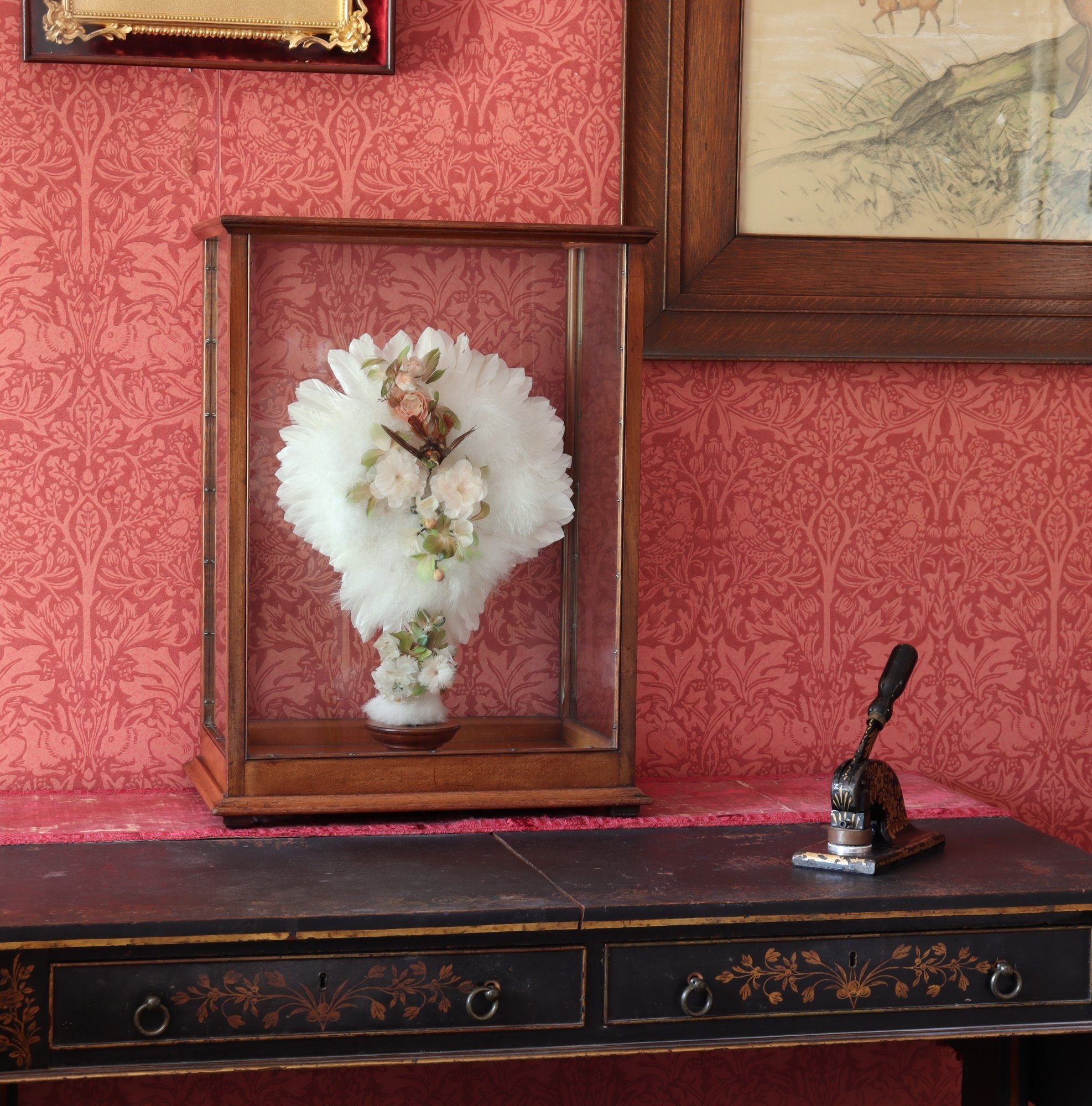
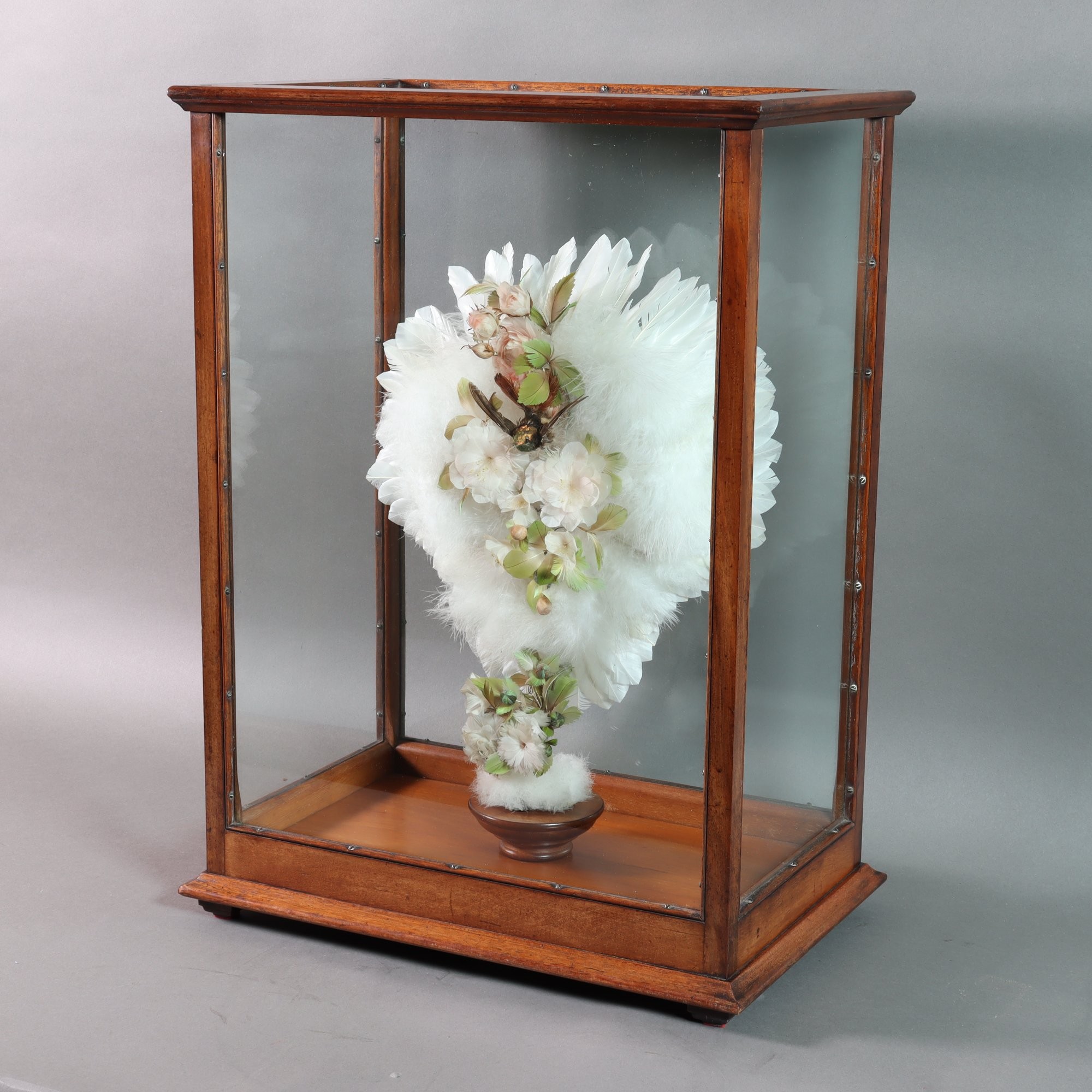
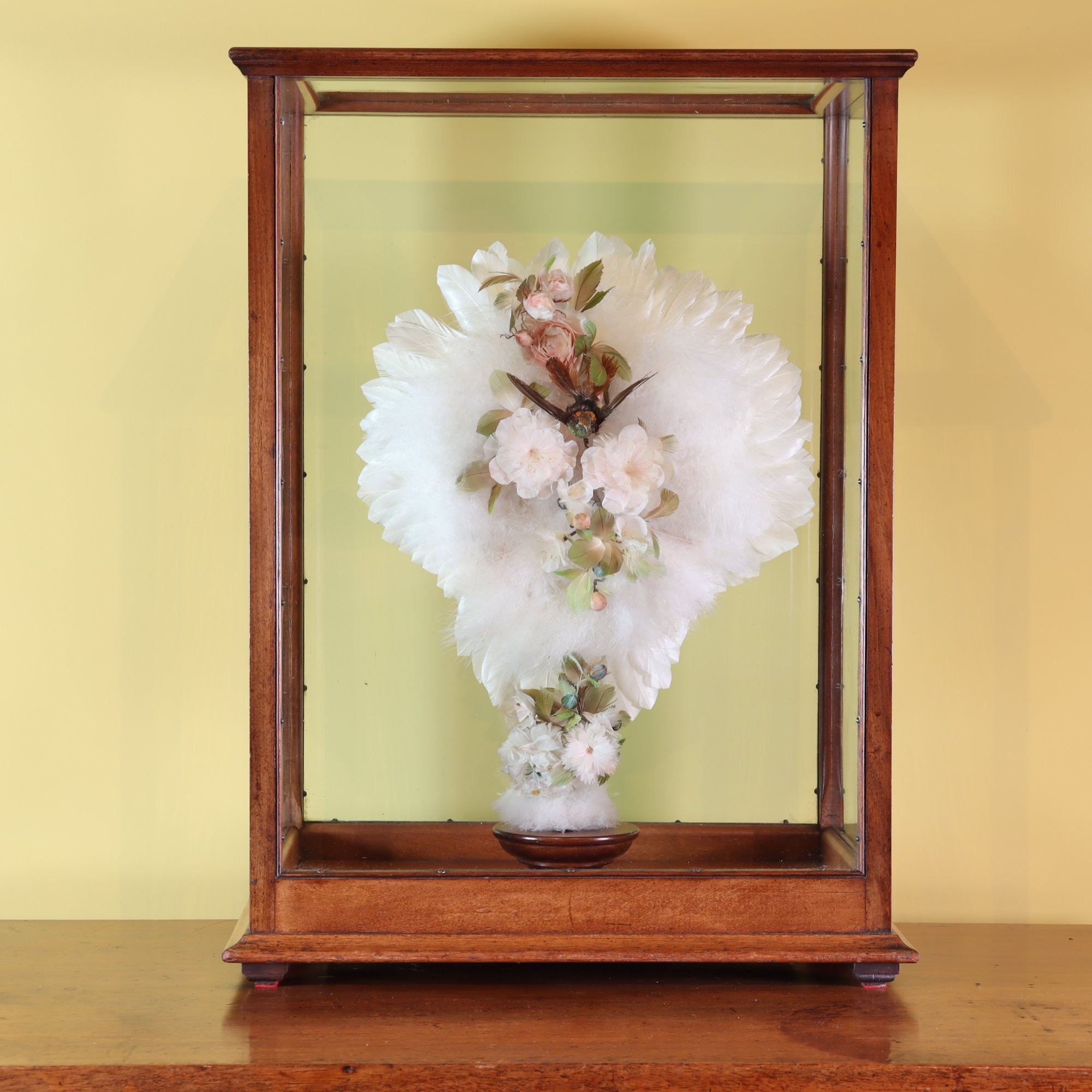
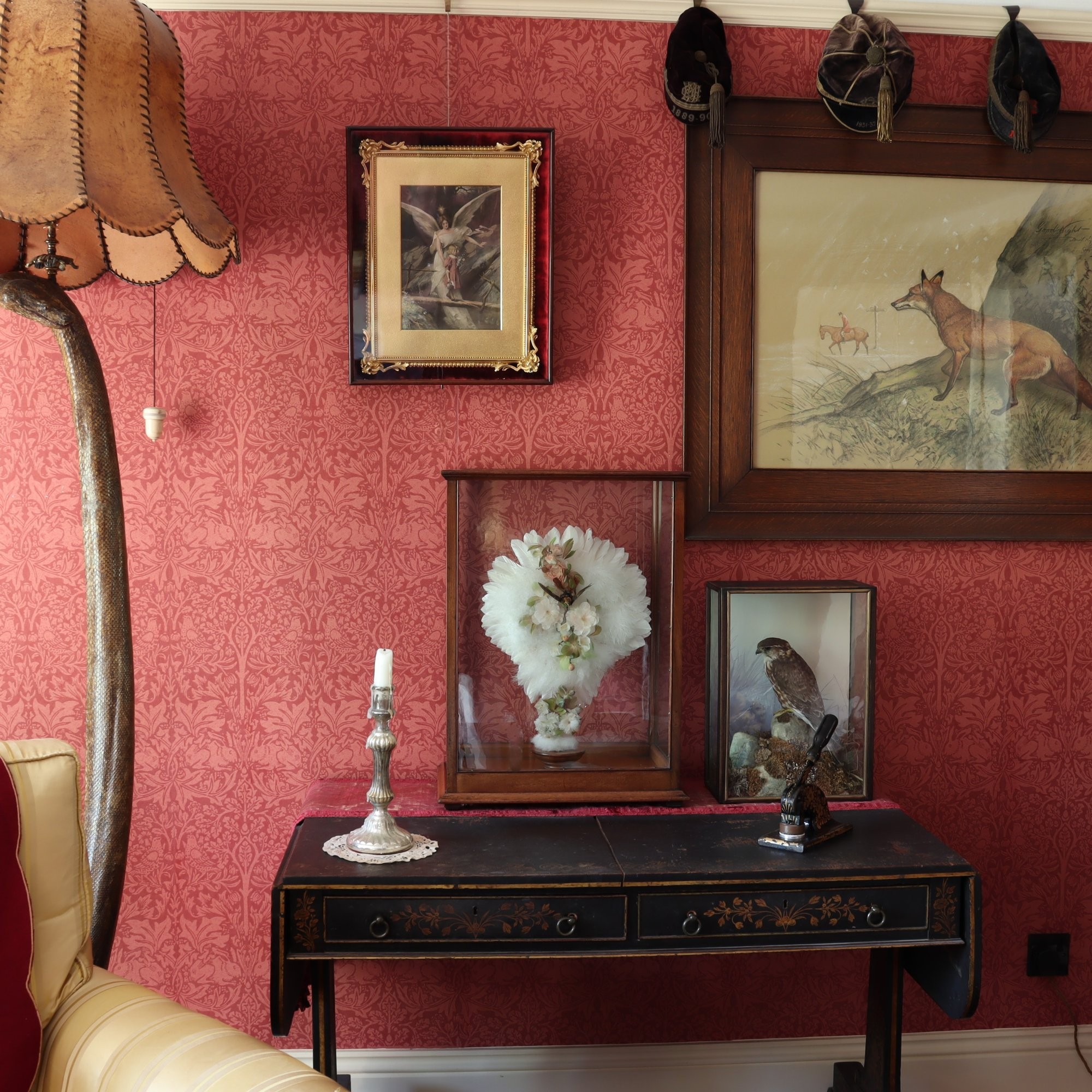
Kendall House Antiques Ltd. has dated this piece to the 1880s.
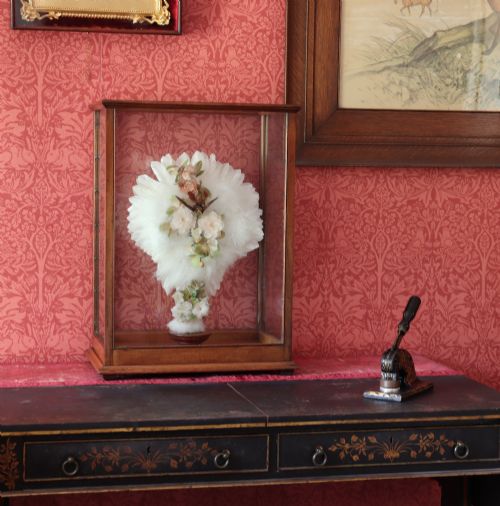
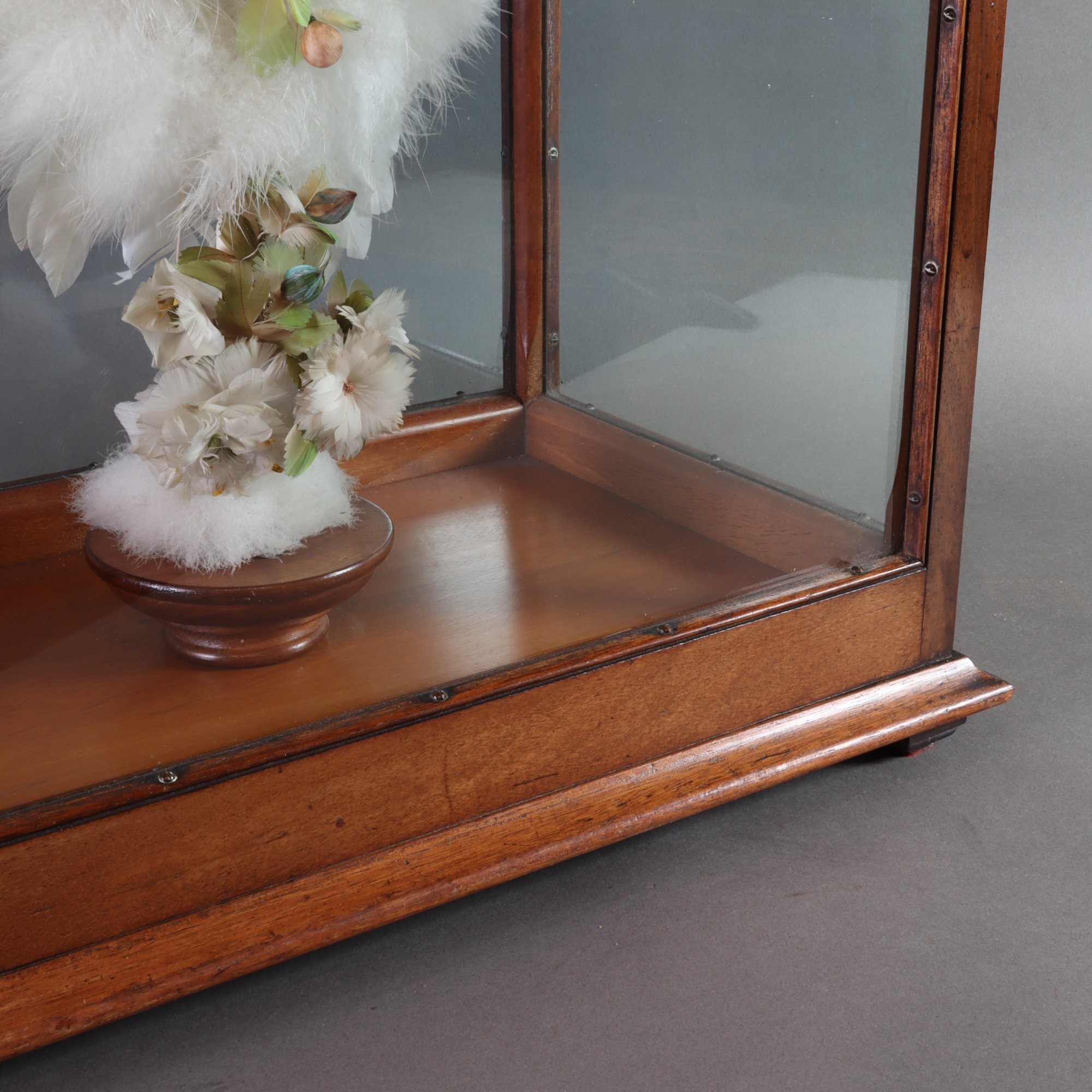
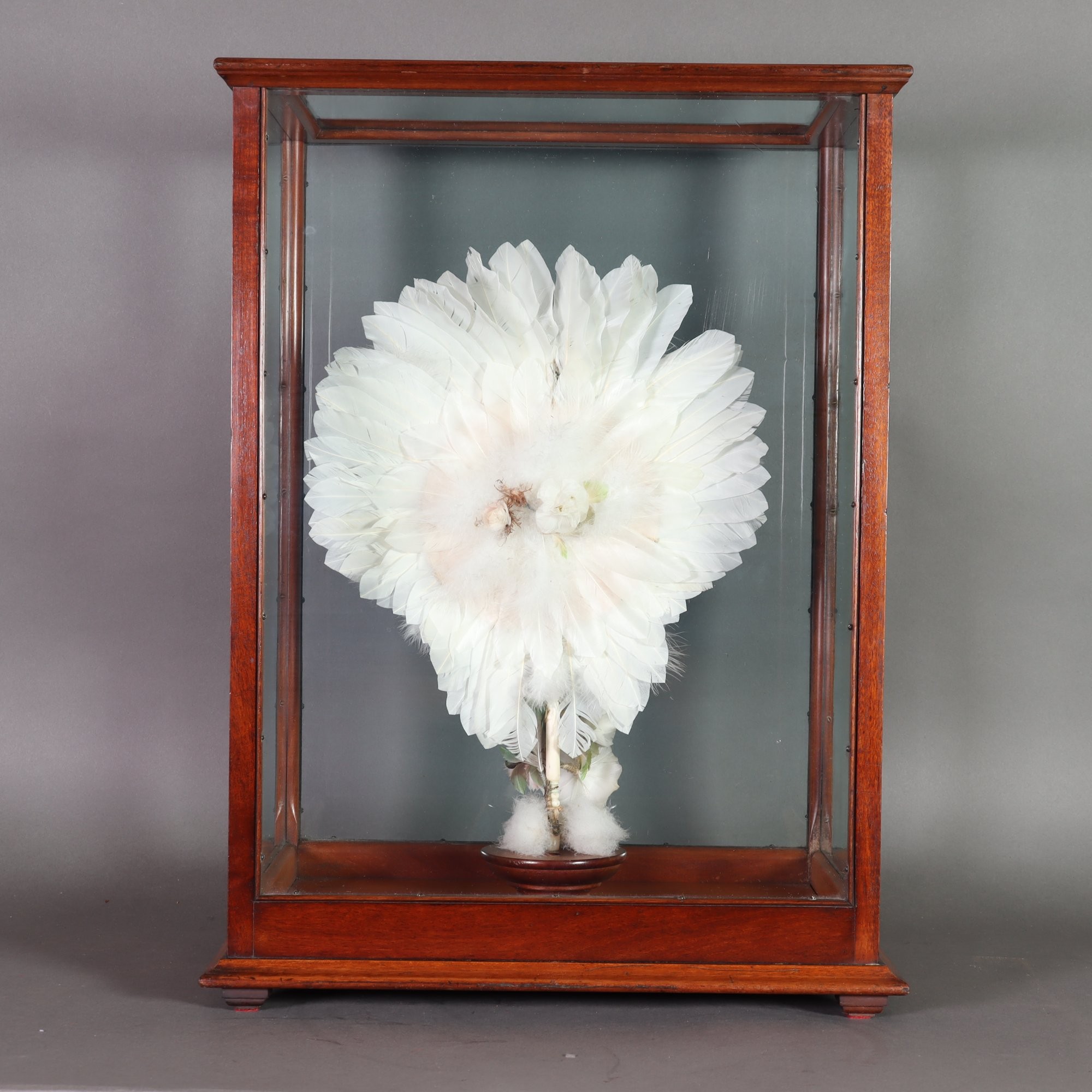
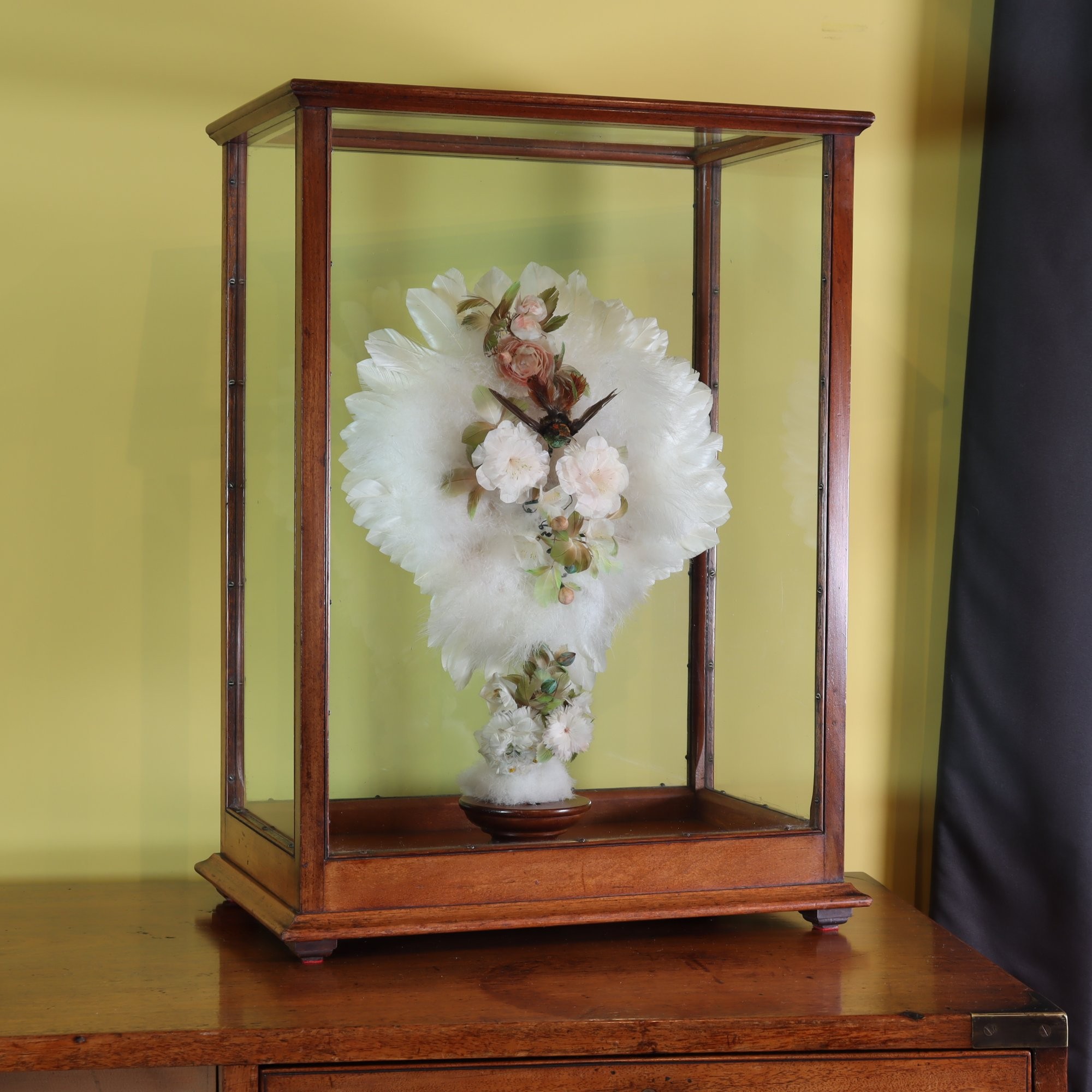
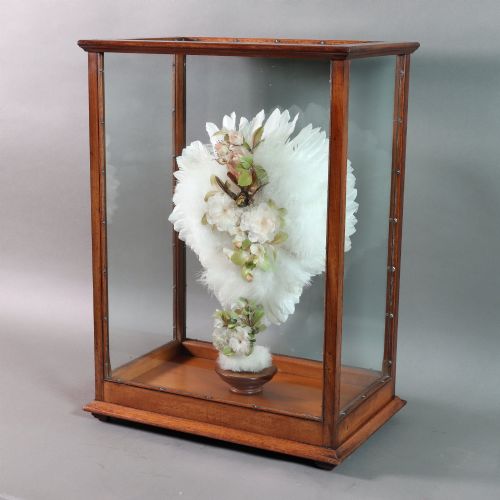
Case measures 57cm High x 33cm Wide x 27cm Depth.
This type of skilled work had existed in Brazil since the mid-18th century and had become internationally known through the agency of travellers and naturalists interested in natural history products. The precursors of the art of feathered flowers were the nuns Josefa Maria and Maria da Trindade, Ursuline sisters within the convent ‘Our Lady of the Soledade’ founded in 1739 in Salvador, Bahia.
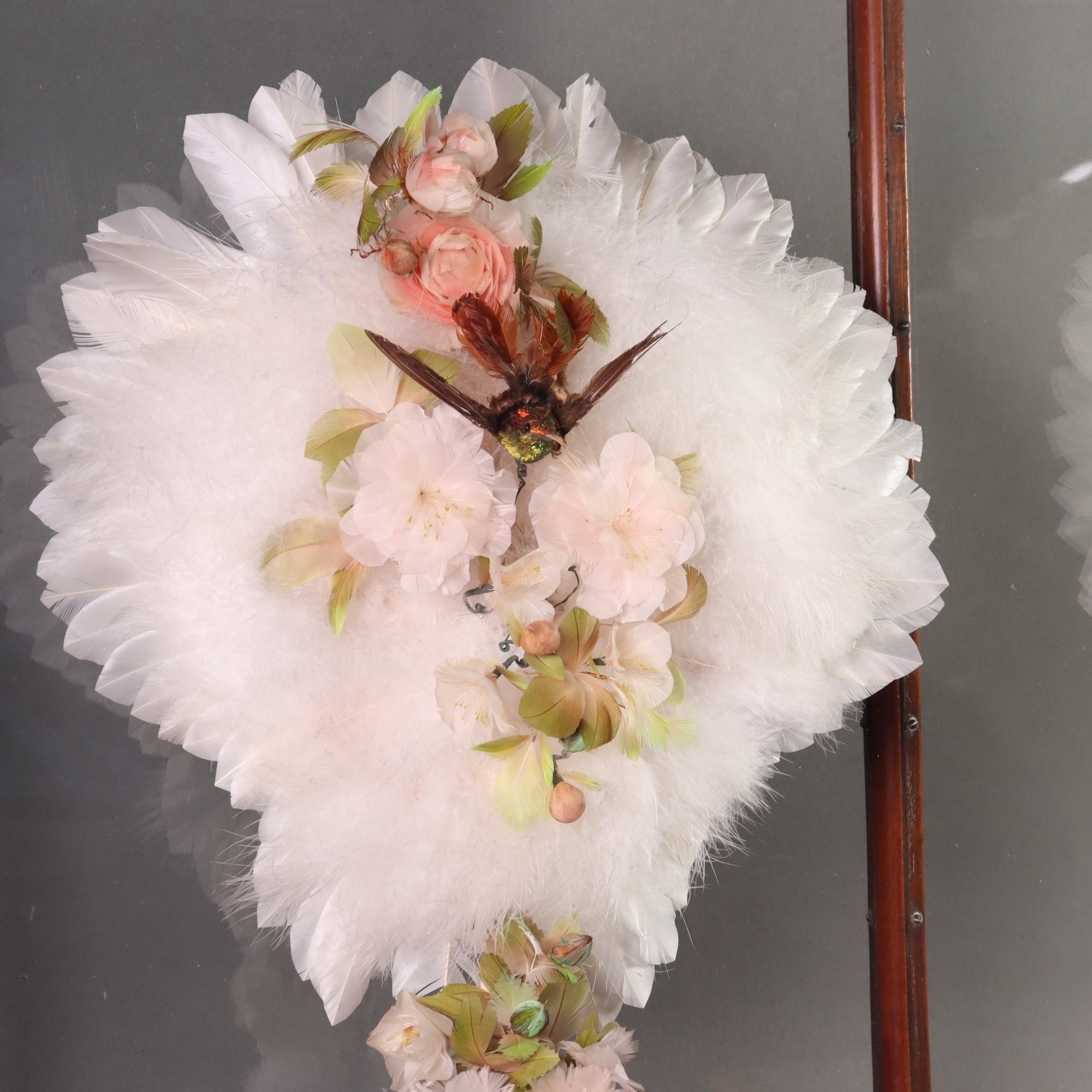
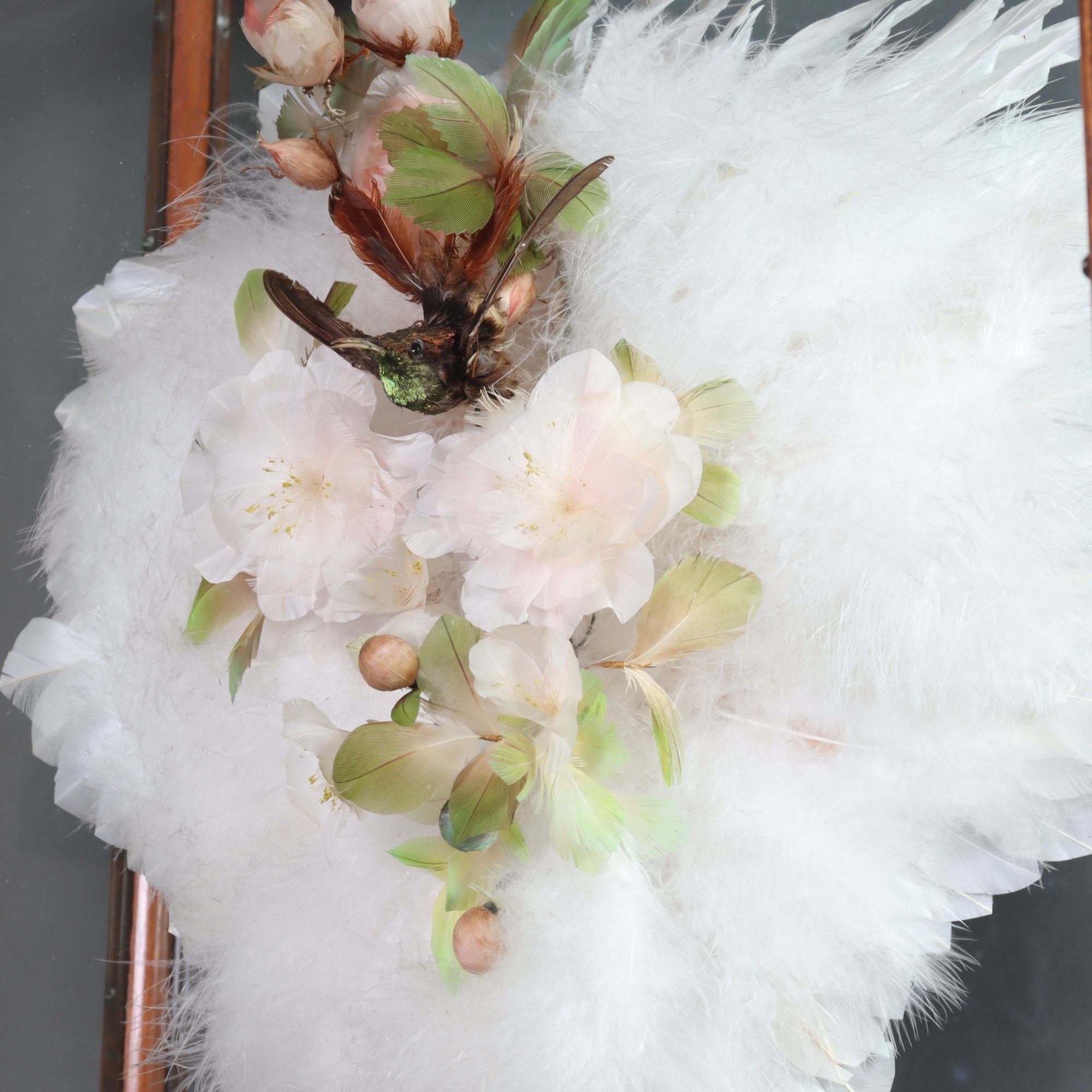
In Rio de Janeiro, this use of feathers was linked to fashions coming from Paris in the ads published in magazines, while in France it was initially attributed to the South American natives. Later, the combination of feathered flowers with colourful hummingbirds and iridescent insects became known in Europe as Brazilian style, perceived as a fusion of tropical nature with French taste.
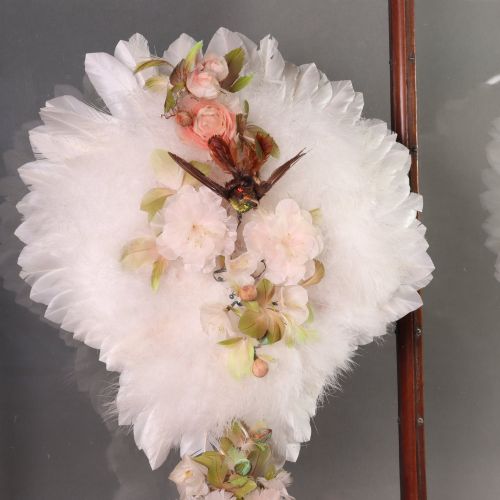
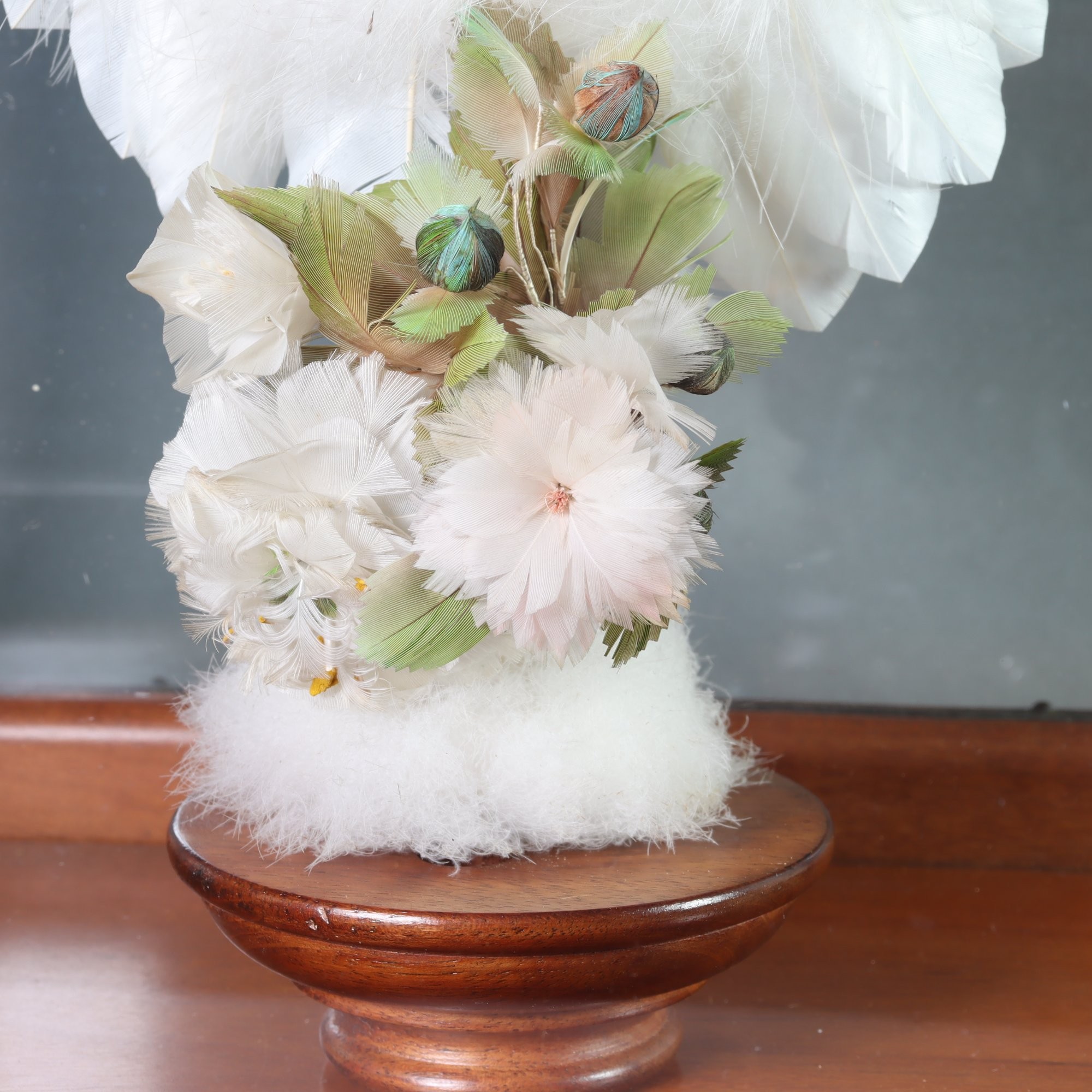
In the Victorian era, these were considered "flamboyant" and fashionable accessories, popularized in 1871 by the Princess of Wales (later Queen Alexandra) when she was photographed at a society ball holding a similar fan.
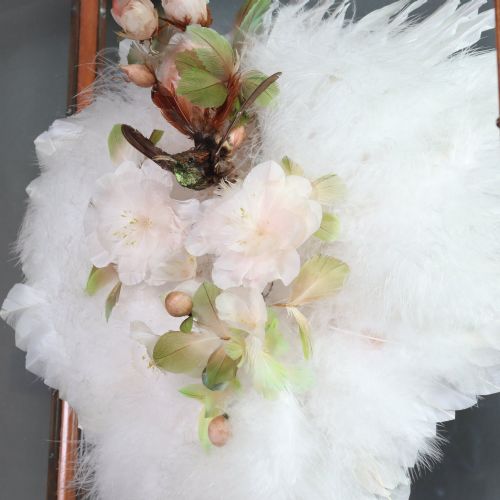
While intended as hand-held fans for formal events like balls, they were occasionally preserved and displayed as ornamental objects within glass domes, to protect their delicate structure.
Similar fans (albeit none in a glazed display case) can be found:
The Fan Museum at Greenwich London has a hummingbird fan complete in its original box.
The Metropolitan Museum of Art has a hummingbird and feather fan from the late 1880s.
The Maria Cristina Volpi collection has a hummingbird and feather fan, circa 1872-1877, Brazilian work, made by Domingos L. da Cunha.
Kendall House Antiques Ltd. has dated this piece to the 1880s.
Kendall house antiques a traditional shop in the north cotswold’s market town of chipping campden.
You can view the stock and full dealer information on the Kendall House Antiques Ltd. Profile Page
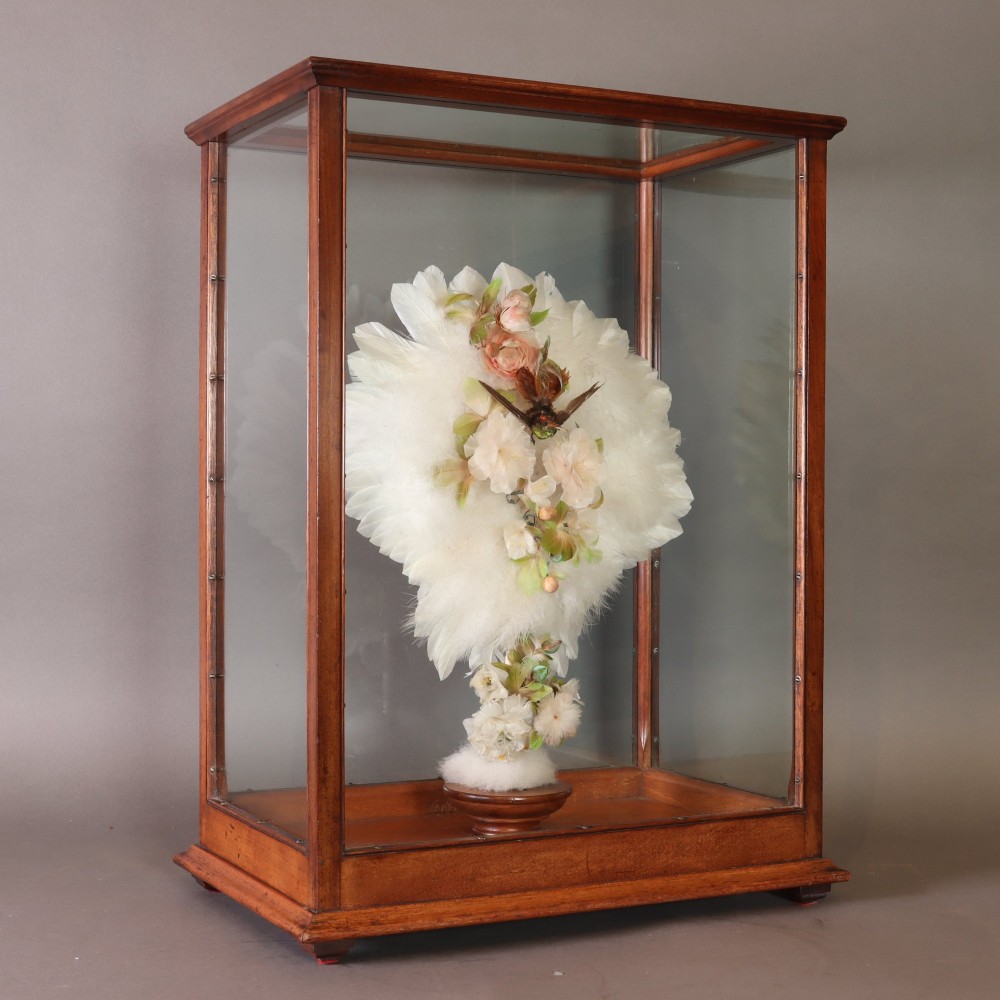
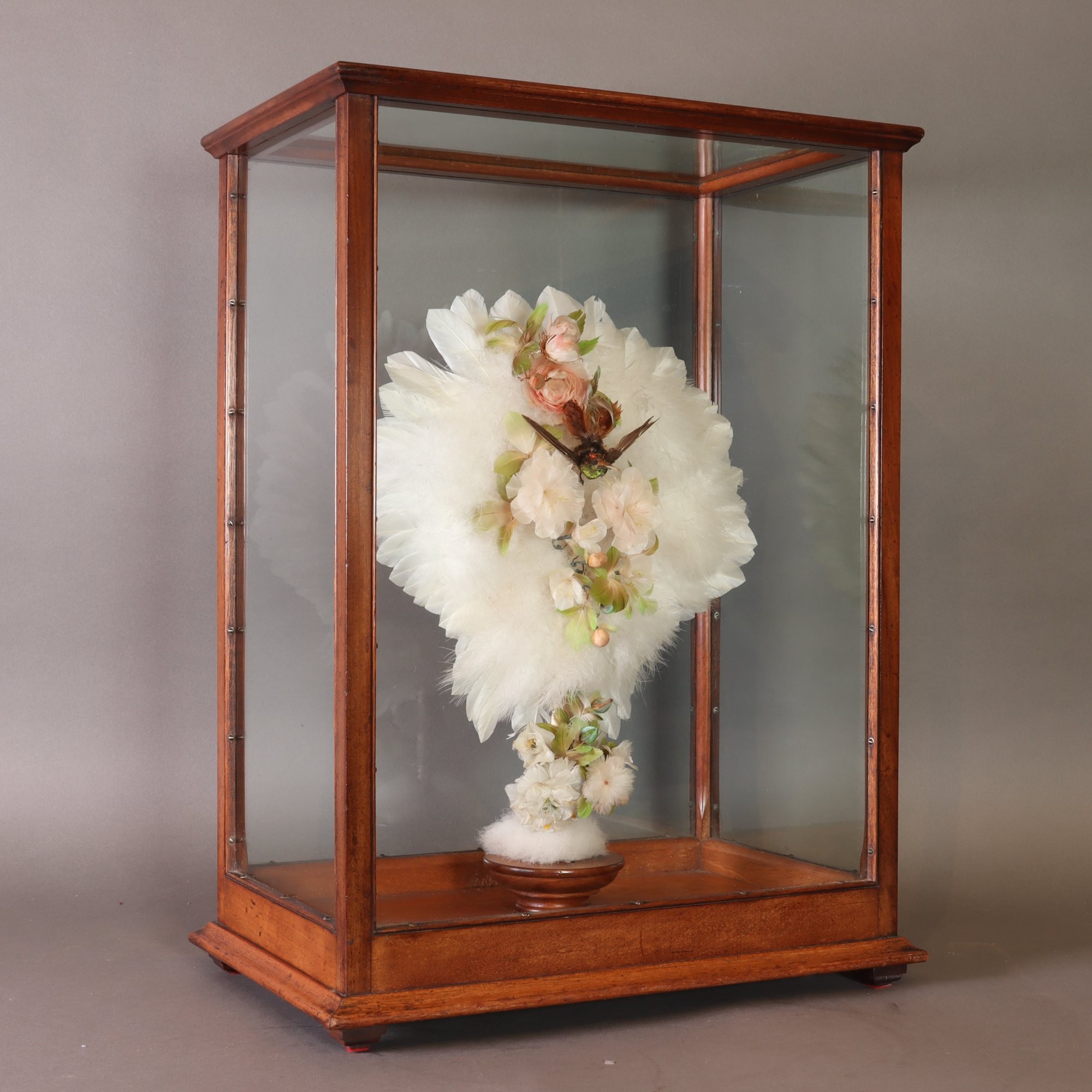
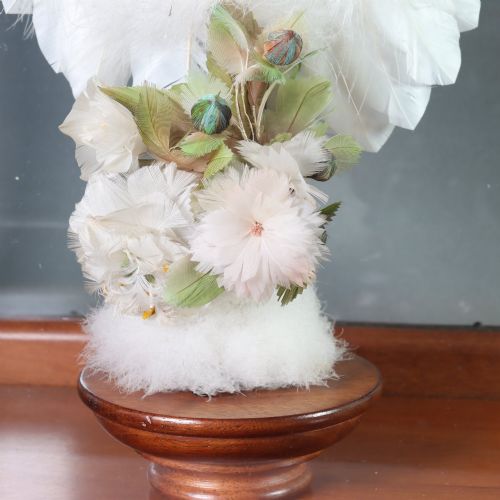
Victorian Taxidermy - A Lady’s Humming Bird and Feather Fan in a Museum Quality Mahogany Case