5,968  PAGES BROWSED TODAY PAGES TODAY • 0 ANTIQUES UPLOADED TODAYNEW ARRIVALS
GIFTS
LATEST STOCK
Sort Order
Items Per Page
Browse Categories
Sort order
Relevant Links
Items per page
ID #SA1166839
SOLD
Email Phone
Save
Iatmul Carved Wooden Anthropomorphic Flute Stopper, Middle Sepik River Papua New Guinea
Sold by Hand of Glory
sold SA1166839
Sorry, but this item has been sold.
Hand of Glory

Hand of Glory

Sellingantiques Verified Since Jul 2012
Browse dealers 171 items
  • About Us
    Decorative antiques & interiors
Id #SA1166839
PDF SHARE
SAVE

Iatmul Carved Wooden Anthropomorphic Flute Stopper, Middle Sepik River Papua New Guinea

1920 - 1940
Sold 27 November 2025 · Hand of Glory
This “Iatmul Carved Wooden Anthropomorphic Flute Stopper, Middle Sepik River Papua New Guinea” found a buyer.

It was listed by Hand of Glory. Sold pieces stay on Sellingantiques as a record of what has passed through, and the next one is rarely far away.

Description

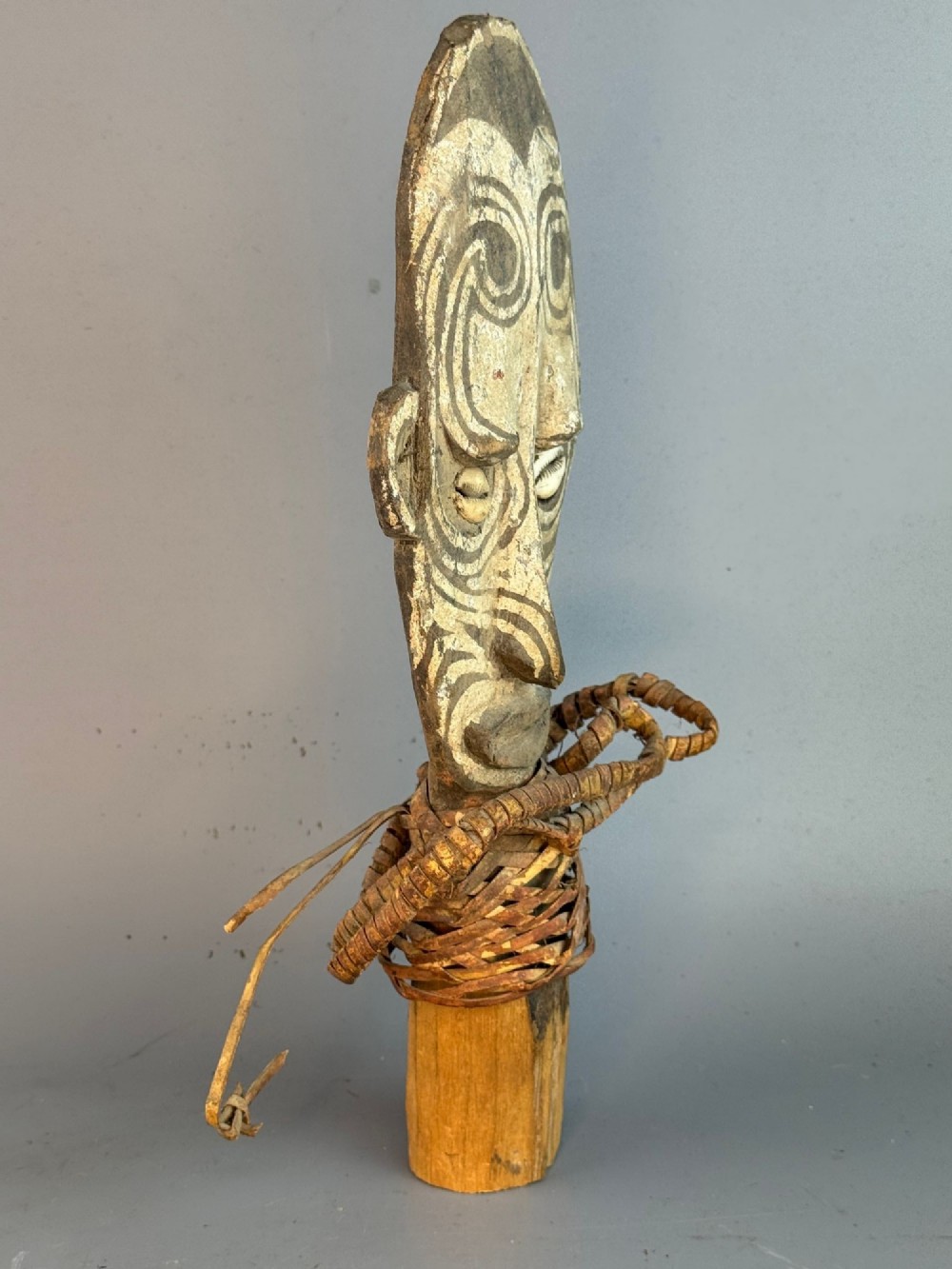
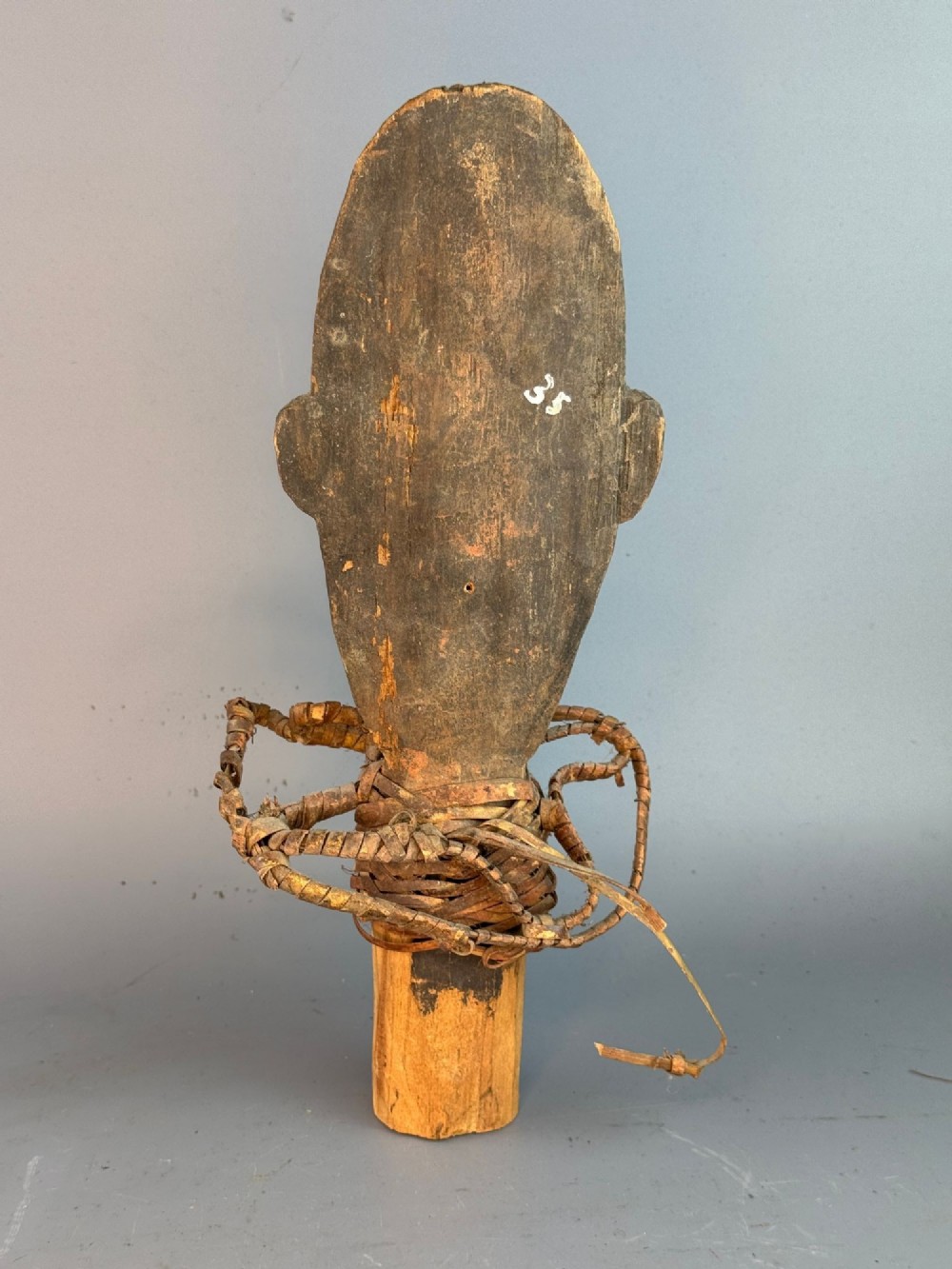
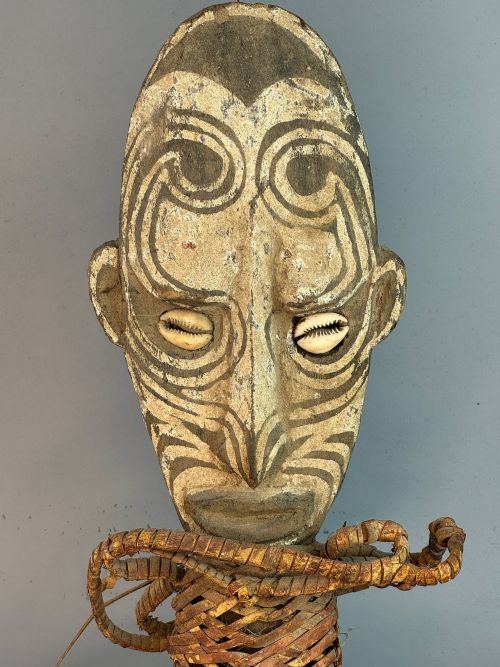
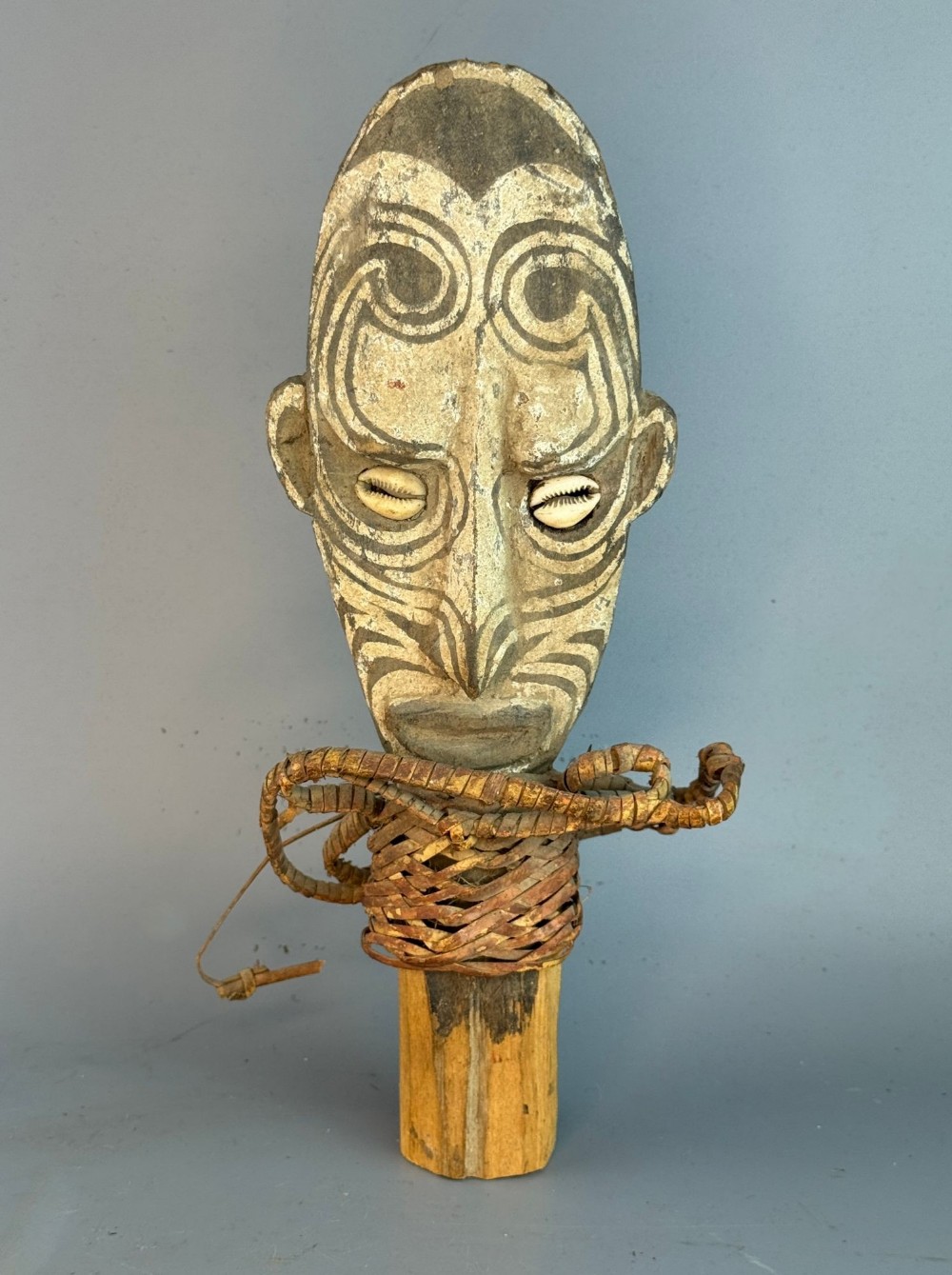
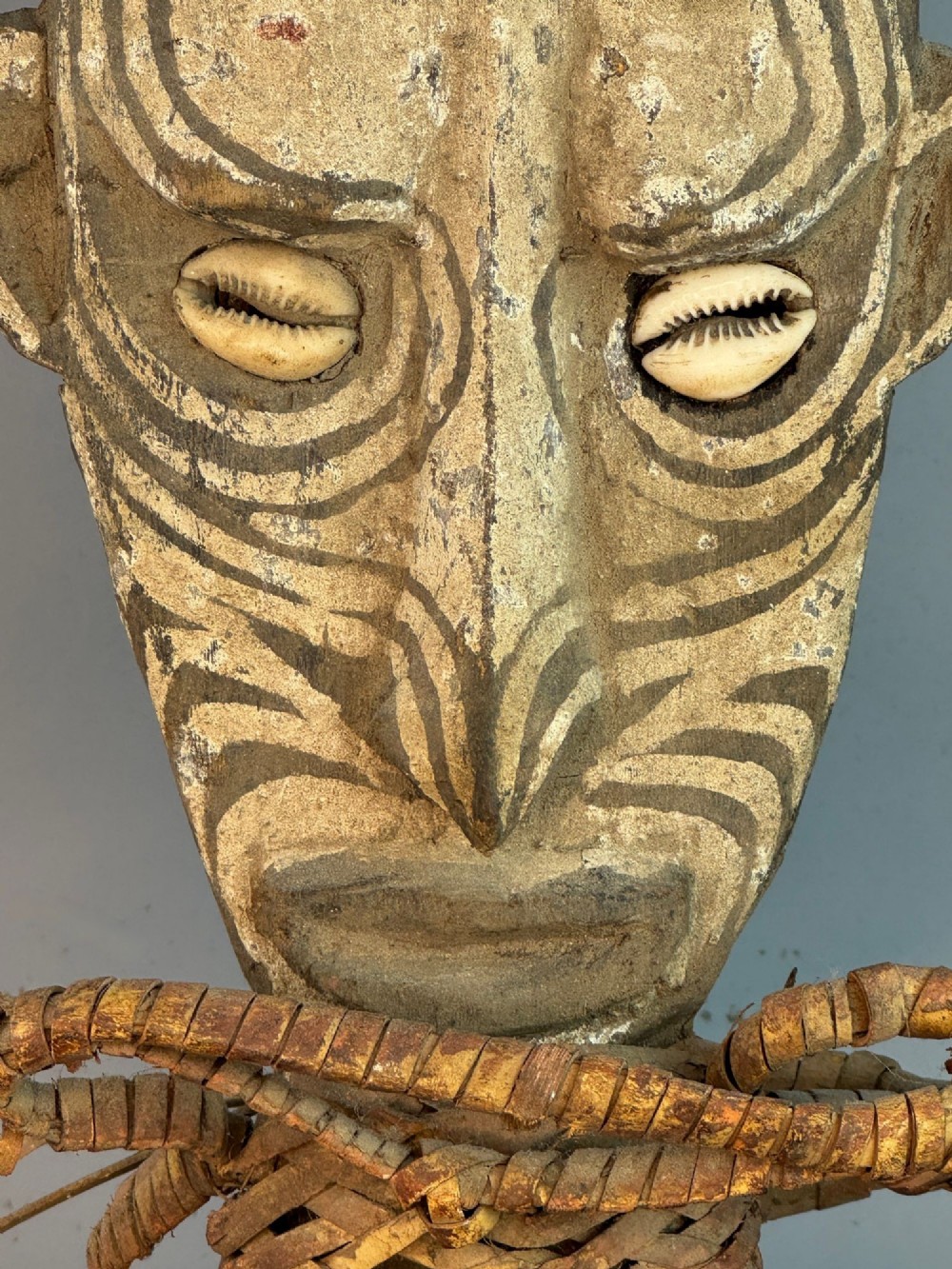
An Iatmul carved wooden anthropomorphic flute stopper, Middle Sepik River, Papua New Guinea, the painted face with cowrie inset eyes and vine bark collar. 33 cms high.

From the collection of Nicolas Kinlock, collected 2014 in Papua New Guinea.
NB: The Iatmul are an indigenous group residing along the middle Sepik River in Papua New Guinea, known for their rich cultural heritage, particularly their intricate carvings, elaborate spiritual beliefs, and significant role in regional trade networks before European contact. Their culture is deeply tied to the river, with their villages built on stilts to withstand seasonal floods, and their religious practices often feature the crocodile, which they revere as a powerful spirit.

The flute stopper' is a carved, ornamental effigy that seals the end of a hollow bamboo flute used in sacred ceremonies. Not just a decorative piece, the stoppers served as a vital part of the flute, transforming it into a voice for spirits, ancestors, or ceremonial leaders during initiations and other rituals. They often depict stylized human figures, animal spirits, or mythological beings, creating a visual and spiritual link to the unseen world.

Physical Dimensions
Height
33cm (12.99")
Width
22cm (8.66")
Depth
9cm (3.54")
Declaration

Hand of Glory has dated this Papuan Wooden Flute Stopper to the 1930s.

Reference Numbers
Sellingantiques Reference
SA1166839
Dealers Internal Reference
SKU00000942
Description
An Iatmul carved wooden anthropomorphic flute stopper, Middle Sepik River, Papua New Guinea, the painted face with cowrie inset eyes and vine bark collar. 33 cms high.

From the collection of Nicolas Kinlock, collected 2014 in Papua New Guinea.

fig 1. A carved wooden anthropomorphic flute stopper from the Sepik River featuring inlaid cowrie shell eyes, spiral facial motifs, and a woven fibre collar.
fig 1. Iatmul Carved Wooden Anthropomorphic Flute Stopper, Middle Sepik River Papua New Guinea

NB: The Iatmul are an indigenous group residing along the middle Sepik River in Papua New Guinea, known for their rich cultural heritage, particularly their intricate carvings, elaborate spiritual beliefs, and significant role in regional trade networks before European contact. Their culture is deeply tied to the river, with their villages built on stilts to withstand seasonal floods, and their religious practices often feature the crocodile, which they revere as a powerful spirit.

“
The flute stopper' is a carved, ornamental effigy that seals the end of a hollow bamboo flute used in sacred ceremonies.
Hand of Glory

Not just a decorative piece, the stoppers served as a vital part of the flute, transforming it into a voice for spirits, ancestors, or ceremonial leaders during initiations and other rituals. They often depict stylized human figures, animal spirits, or mythological beings, creating a visual and spiritual link to the unseen world.

Height
33cm (12.99")
Width
22cm (8.66")
Depth
9cm (3.54")
Date of Manufacture

Hand of Glory has dated this Papuan Wooden Flute Stopper to the 1930s.

Reference Numbers
Sellingantiques Ref
SA1166839
Dealers Internal Ref
SKU00000942
Hand of Glory
Hand of Glory
Sellingantiques verified Since Jul 2012

Decorative antiques & interiors

Dealer Profile

You can view the stock and full dealer information on the Hand of Glory Profile Page
PDF SHARE
SAVE
A carved wooden anthropomorphic flute stopper from the Sepik River featuring inlaid cowrie shell eyes, spiral facial motifs, and a woven fibre collar. SOLD6+ MONTHS AGO
1 / 5
Archive I A carved wooden anthropomorphic flute stopper from the Sepik River featuring inlaid cowrie shell eyes, spiral facial motifs, and a woven fibre collar. SOLD6+ MONTHS AGO

Iatmul Carved Wooden Anthropomorphic Flute Stopper, Middle Sepik River Papua New Guinea
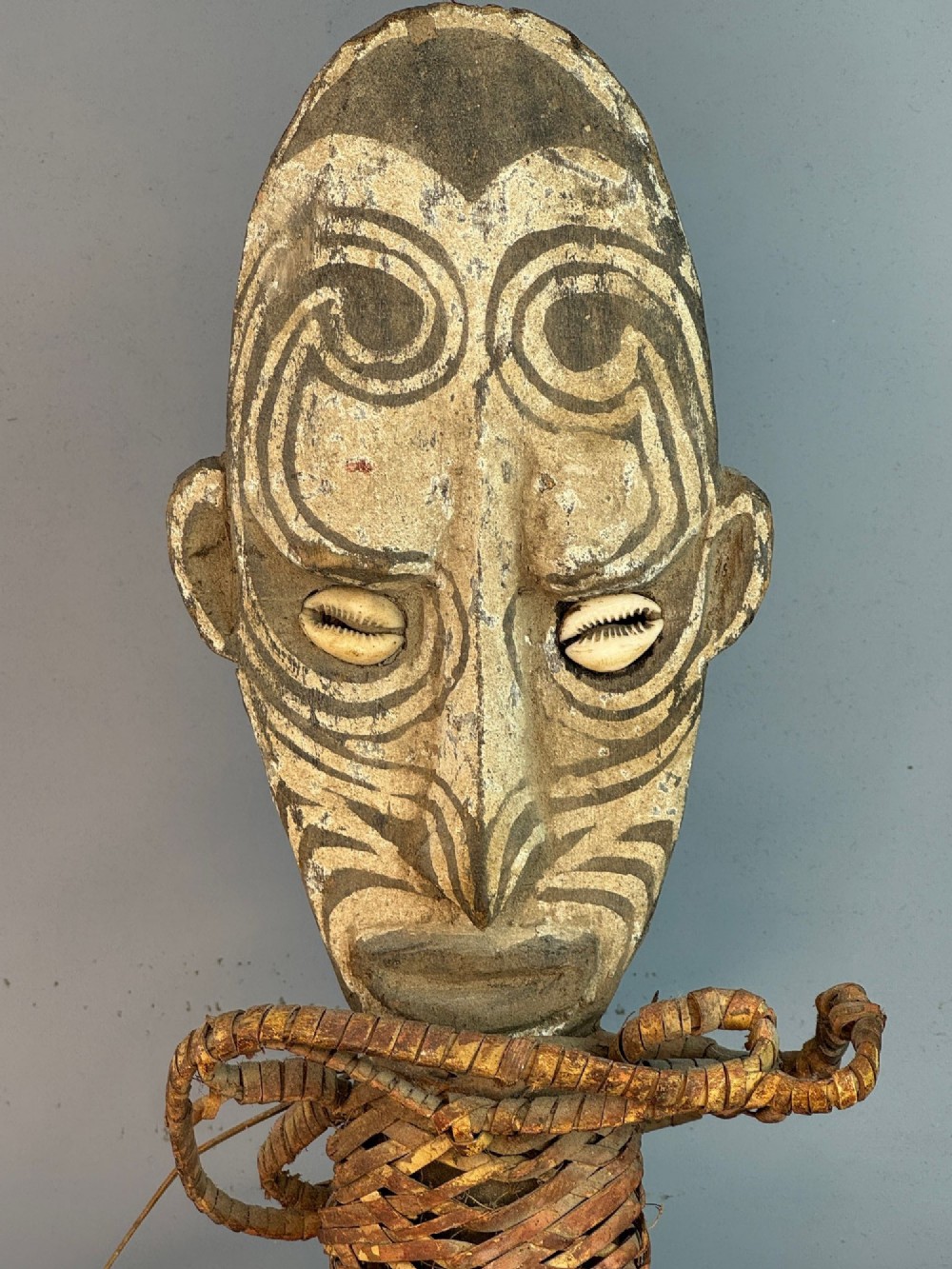
Archive II A carved wooden anthropomorphic flute stopper from the Sepik River featuring inlaid cowrie shell eyes, spiral facial motifs, and a woven fibre collar. View II
Archive III A carved wooden anthropomorphic flute stopper from the Sepik River featuring inlaid cowrie shell eyes, spiral facial motifs, and a woven fibre collar. View III
Archive IV A carved wooden anthropomorphic flute stopper from the Sepik River featuring inlaid cowrie shell eyes, spiral facial motifs, and a woven fibre collar. View IV
Archive V A carved wooden anthropomorphic flute stopper from the Sepik River featuring inlaid cowrie shell eyes, spiral facial motifs, and a woven fibre collar. View V
Enlarged Archival View
Location
Hand of Glory Antiques
34 Market Place
Chippenham
Wiltshire
SN15 3HP
United Kingdom
Verified Since Jul 2012
Items For Sale 171
Items Sold 2,459
Hand of Glory
Hand of Glory
Verified Since Jul 2012
View Dealer Info
Location: Hand of Glory Antiques, 34 Market Place, Chippenham, Wiltshire, SN15 3HP, United Kingdom
Verified
Jul 2012
For Sale
171
Sold
2,459
A carved wooden anthropomorphic flute stopper from the Sepik River featuring inlaid cowrie shell eyes, spiral facial motifs, and a woven fibre collar.
Iatmul carved wooden anthropomorphic flute stopper, Middle Sepik River Papua New Guinea
Ref: SA1166839
A carved wooden anthropomorphic flute stopper from the Sepik River featuring inlaid cowrie shell eyes, spiral facial motifs, and a woven fibre collar.
Detail View 1
Detail View 2
Detail View 3
Detail View 4
Archival Detail
Every single antique dealer on our platform is individually approved by our internal team. We verify their professional trade history, ethical standards, and photographic quality to ensure a secure, high-standard buying environment. Upon joining, every dealer agrees to a strict 9-point code of conduct. While issues can occasionally arise, our dealers typically resolve them swiftly and directly with the buyer. In fact, since our founding in 2002, Sellingantiques has only had to step in to help resolve an issue on roughly five occasions—a true testament to the quality of our dealers and their dedication to your happiness.
Our dealers are highly experienced in packing and shipping fragile, high-value antiques. Because you are in direct contact with the dealer, you will be able to easily go through all available shipping and insurance options together to ensure your item arrives safely.
Antiques are the ultimate green purchase. By choosing historical pieces over newly manufactured goods, you completely eliminate the carbon footprint of modern mass production while preserving exceptional, timeless craftsmanship.
Written by Sellingantiques from the dealer’s photographs and listing
  • ObjectSculptures & Carvings
  • Period1920 - 1940
  • StyleOceanic Tribal
  • MaterialWood, Cowrie shells, Plant fibre, Pigment
  • ColourEarth tones
  • MotifsAnthropomorphic face, Cowrie shell inlay, Spiral facial patterns, Woven fibre base
  • SizeH 33 cm (13 in) x W 22 cm (9 in) x D 9 cm (4 in)

Artifacts from the Sepik River region of Papua New Guinea are traditionally tied to spiritual practices, ancestral veneration, and initiation ceremonies within local communities.

Carvers typically use native hardwoods, natural pigments such as lime and clay, and organic adornments like cowrie shells and plant fibres to construct ritual items.

Authentic pieces often exhibit tool marks, genuine age-related wear, traditional pigment patinas, and indigenous construction methods rather than modern mechanical fabrication.

Displaying these objects on neutral mounts or plinths allows the sculptural form and textural details to stand out as focal points within modern spaces.

Keep wooden pieces away from direct sunlight and fluctuating humidity levels to prevent cracking, and gently dust with a soft, dry cloth without applying liquid cleaners.
items
Add keywords to the filter
Price
£100
£250000
Era
Period
Style
Material
Origin
Stock Location
Recently Added
Online Payments
Categories