7,798  PAGES BROWSED TODAY PAGES TODAY 36  ANTIQUES UPLOADED TODAY NEW ARRIVALS
ID #SA1161597
FOR SALE
£550
Email
Save
A Rare Royal Flying Corps Finger Plate 1912-1918
Rob Hall Antiques
for sale €644     $699
£550

Rob Hall Antiques

Sellingantiques Verified Since Aug 2025
View Dealers Stock Page
Id #SA1161597
PDF SHARE
SAVE

A Rare Royal Flying Corps Finger Plate 1912-1918

1900 - 1920
Description

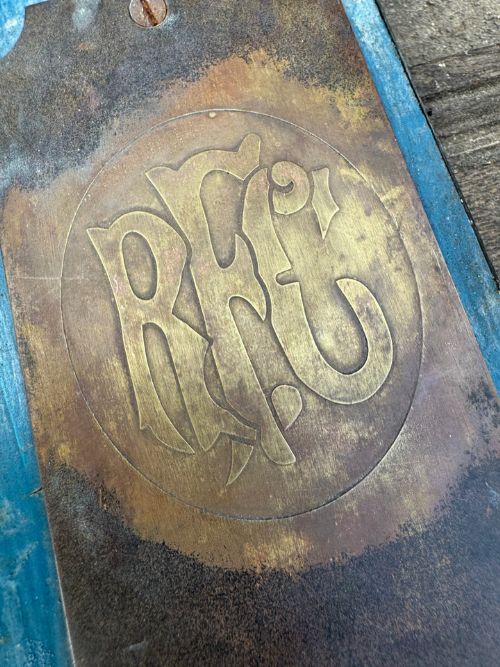
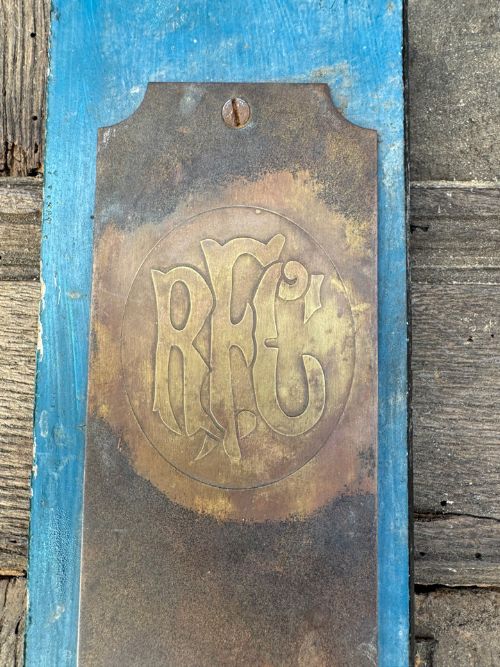
A rare Royal Flying Corps brass finger plate, c.1912–1918. Engraved with the RFC monogram within a circular cartouche, this plate would likely have adorned the door of a squadron office or officers’ mess during the British Army’s pioneering air service.

The Royal Flying Corps, formed in April 1912, pioneered military aviation during the First World War. Initial roles focused on reconnaissance and artillery observation, but soon expanded into aerial combat and ground attack. Pilots flew rudimentary wood-and-canvas biplanes without parachutes, radios, or modern safety systems. Casualties were catastrophic—over 9,300 RFC/RNAS personnel were killed or went missing, including more than 700 aircrew in 1916 alone, and losses peaked during “Bloody April” of 1917 when 316 aircrew were killed or went missing in the space of a month. Parachutes weren’t issued to fixed-wing pilots until late 1918—long after many had already perished—making every sortie a fight for survival.

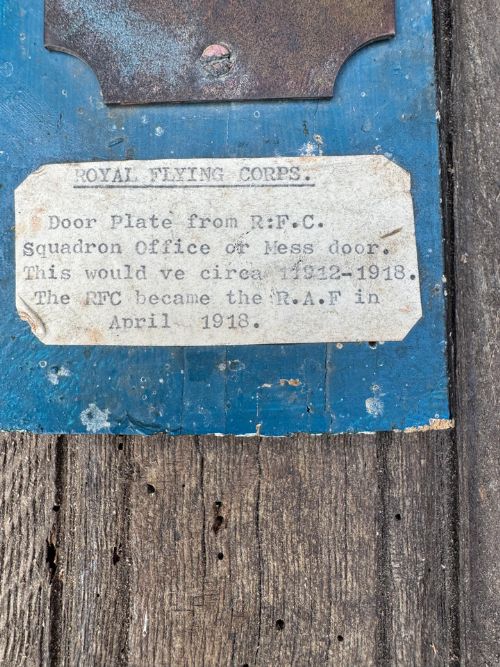
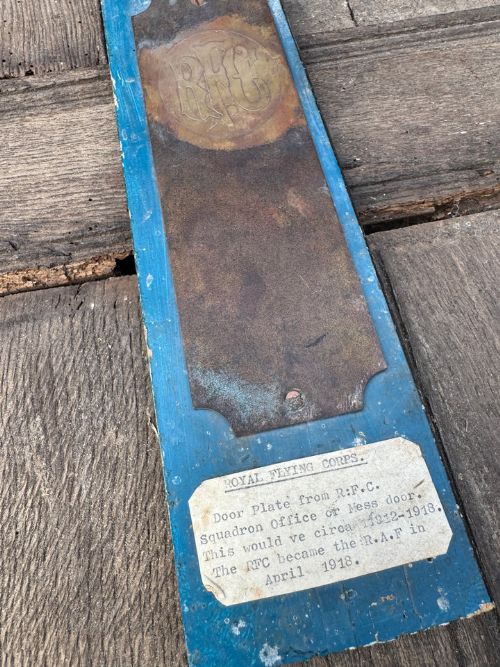
Surviving hardware like this finger plate is exceptionally rare. Most items were removed, scrapped, or lost when the RFC was amalgamated with the RNAS to form the Royal Air Force on 1 April 1918. Presented on a later-painted board with a typed provenance label “ROYAL FLYING CORPS. Door Plate from R.F.C. Squadron Office or Mess door. This would be circa 1912–1918. The RFC became the R.A.F in April 1918." This is a tangible relic of the deadly dawn of air warfare.

Measuring: 24 cm high, 8 cm wide (plate)

England, c.1912–1918

Physical Dimensions
Height
24cm (9.45")
Width
8cm (3.15")
Declaration

Rob Hall Antiques has dated this Royal Flying Corps Finger Plate to the 1910s.
Reference Numbers
Sellingantiques Reference
SA1161597
Description
A rare Royal Flying Corps brass finger plate, c.1912–1918.
Engraved with the RFC monogram within a circular cartouche, this plate would likely have adorned the door of a squadron office or officers’ mess during the British Army’s pioneering air service.
Rob Hall Antiques
fig 1. An aged brass door finger plate featuring an embossed Royal Flying Corps monogram mounted on a rectangular blue painted wooden board.
fig 1. A Rare Royal Flying Corps Finger Plate 1912-1918

The Royal Flying Corps, formed in April 1912, pioneered military aviation during the First World War. Initial roles focused on reconnaissance and artillery observation, but soon expanded into aerial combat and ground attack. Pilots flew rudimentary wood-and-canvas biplanes without parachutes, radios, or modern safety systems. Casualties were catastrophic—over 9,300 RFC/RNAS personnel were killed or went missing, including more than 700 aircrew in 1916 alone, and losses peaked during “Bloody April” of 1917 when 316 aircrew were killed or went missing in the space of a month. Parachutes weren’t issued to fixed-wing pilots until late 1918—long after many had already perished—making every sortie a fight for survival.
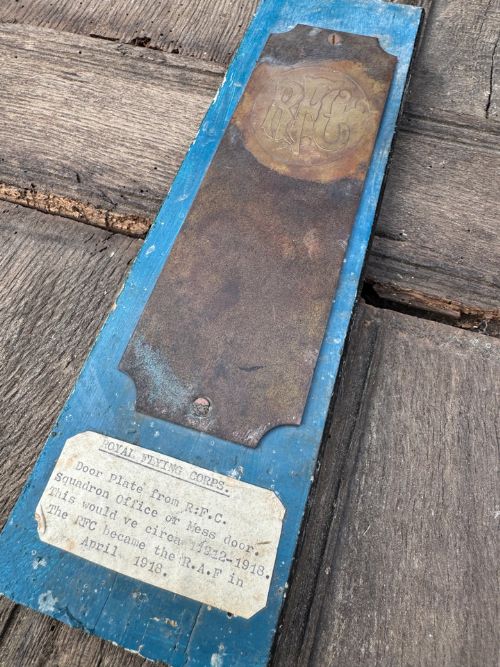
fig 2. An aged brass door finger plate featuring an embossed Royal Flying Corps monogram mounted on a rectangular blue painted wooden board.
fig 2. A Rare Royal Flying Corps Finger Plate 1912-1918

Surviving hardware like this finger plate is exceptionally rare. Most items were removed, scrapped, or lost when the RFC was amalgamated with the RNAS to form the Royal Air Force on 1 April 1918. Presented on a later-painted board with a typed provenance label “ROYAL FLYING CORPS. Door Plate from R.F.C. Squadron Office or Mess door. This would be circa 1912–1918. The RFC became the R.A.F in April 1918." This is a tangible relic of the deadly dawn of air warfare.

Measuring: 24 cm high, 8 cm wide (plate)

England, c.1912–1918

Height
24cm (9.45")
Width
8cm (3.15")
Date of Manufacture

Rob Hall Antiques has dated this Royal Flying Corps Finger Plate to the 1910s.

Reference Numbers
Sellingantiques Ref
SA1161597
Rob Hall Antiques
Sellingantiques verified Since Aug 2025
Dealer Profile

You can view the stock and full dealer information on the Rob Hall Antiques Profile Page

PDF SHARE
SAVE
An aged brass door finger plate featuring an embossed Royal Flying Corps monogram mounted on a rectangular blue painted wooden board.
1 / 6
Archive I An aged brass door finger plate featuring an embossed Royal Flying Corps monogram mounted on a rectangular blue painted wooden board.

A rare Royal Flying Corps finger plate 1912-1918

Archive II An aged brass door finger plate featuring an embossed Royal Flying Corps monogram mounted on a rectangular blue painted wooden board. View II
Archive III An aged brass door finger plate featuring an embossed Royal Flying Corps monogram mounted on a rectangular blue painted wooden board. View III
Archive IV An aged brass door finger plate featuring an embossed Royal Flying Corps monogram mounted on a rectangular blue painted wooden board. View IV
Archive V An aged brass door finger plate featuring an embossed Royal Flying Corps monogram mounted on a rectangular blue painted wooden board. View V
Archive VI An aged brass door finger plate featuring an embossed Royal Flying Corps monogram mounted on a rectangular blue painted wooden board. View VI
Enlarged Archival View
Telephone 07858 820345
Location
Northamptonshire
United Kingdom
Verified Since Aug 2025
Items For Sale 47
Items Sold 24
Rob Hall Antiques
Verified Since Aug 2025
View Dealer Info
Location: Northamptonshire, United Kingdom
Verified
Aug 2025
For Sale
47
Sold
24
An aged brass door finger plate featuring an embossed Royal Flying Corps monogram mounted on a rectangular blue painted wooden board.
A rare Royal Flying Corps finger plate 1912-1918
Ref: SA1161597
An aged brass door finger plate featuring an embossed Royal Flying Corps monogram mounted on a rectangular blue painted wooden board.
Detail View 1
Detail View 2
Detail View 3
Detail View 4
Detail View 5
Archival Detail
Every single antique dealer on our platform is individually approved by our internal team. We verify their professional trade history, ethical standards, and photographic quality to ensure a secure, high-standard buying environment. Upon joining, every dealer agrees to a strict 9-point code of conduct. While issues can occasionally arise, our dealers typically resolve them swiftly and directly with the buyer. In fact, since our founding in 2002, Sellingantiques has only had to step in to help resolve an issue on roughly five occasions—a true testament to the quality of our dealers and their dedication to your happiness.
Our dealers are highly experienced in packing and shipping fragile, high-value antiques. Because you are in direct contact with the dealer, you will be able to easily go through all available shipping and insurance options together to ensure your item arrives safely.
Antiques are the ultimate green purchase. By choosing historical pieces over newly manufactured goods, you completely eliminate the carbon footprint of modern mass production while preserving exceptional, timeless craftsmanship.

A finger plate, or push plate, is a protective panel fitted to a door near the handle to prevent wear and staining, with Royal Flying Corps examples dating from between 1912 and 1918 prior to the formation of the Royal Air Force.

Door plates from this era were typically stamped or cast from brass, bronze, or copper, often secured to timber doors or backings using flush brass screws.

Authentic pieces feature period-correct monograms or insignia, natural surface oxidisation and patination, precise period typography, and hand-cut fixing holes.

These historical architectural items can be displayed on a bookshelf or desk as decorative curiosities, framed within a shadow box, or reinstated on period timber doors.

Maintain the surface by dusting with a dry microfiber cloth and avoid abrasive chemical cleaners that strip historical patina; microcrystalline wax can be applied to stabilize the metal.
items
Add keywords to the filter
Price
£100
£250000
Era
Movements
Material
Origin
Stock Location
Freshness
Online Payments
Categories