29,022  PAGES BROWSED TODAY PAGES TODAY • 105 ANTIQUES UPLOADED TODAYNEW ARRIVALS
GIFTS
105 ITEMS ADDED TODAY
Sort Order
Items Per Page
Antiques dealer?
Join as a Seller
Browse Categories
Sort order
Relevant Links
Items per page
sold SA1119315
Sorry, but this item has been sold.
Regent Antiques

Regent Antiques

Sellingantiques Verified Since Sep 2016
Browse dealers 639 items
  • About Us
    We specialise in english and continental furniture, silver, porcelain and decorative items.
  • Trade Associations
    Regent Antiques is a registered member of LAPADA  CINOA
Id #SA1119315
SHARE
SAVE

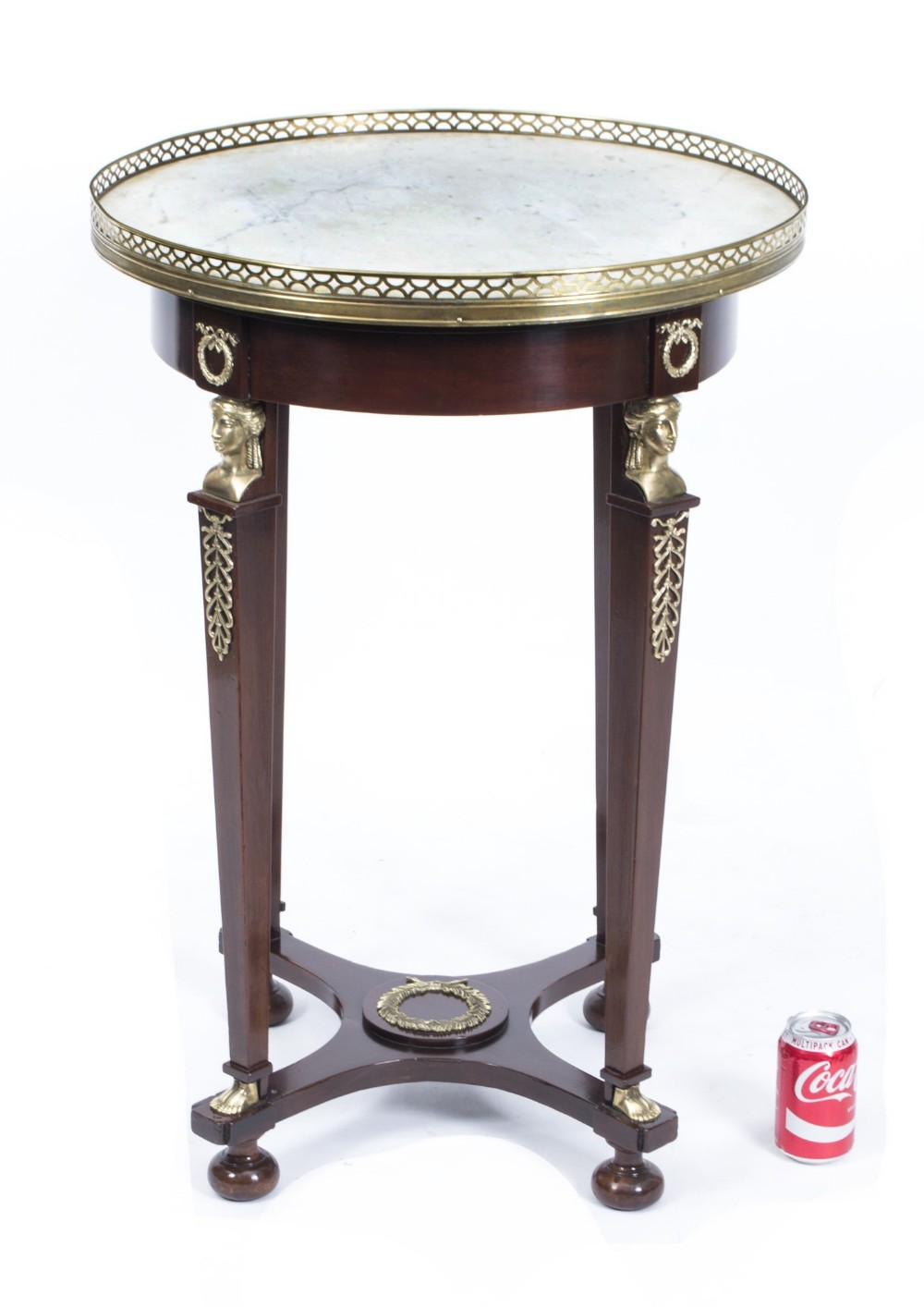
Antique French Empire Marble & Ormolu Occasional Table C.1830

19th century
Sold 6 May 2025 · Regent Antiques
This “Antique French Empire Marble & Ormolu Occasional Table C.1830” found a buyer.

It was listed by Regent Antiques. Sold pieces stay on Sellingantiques as a record of what has passed through, and the next one is rarely far away.

Description

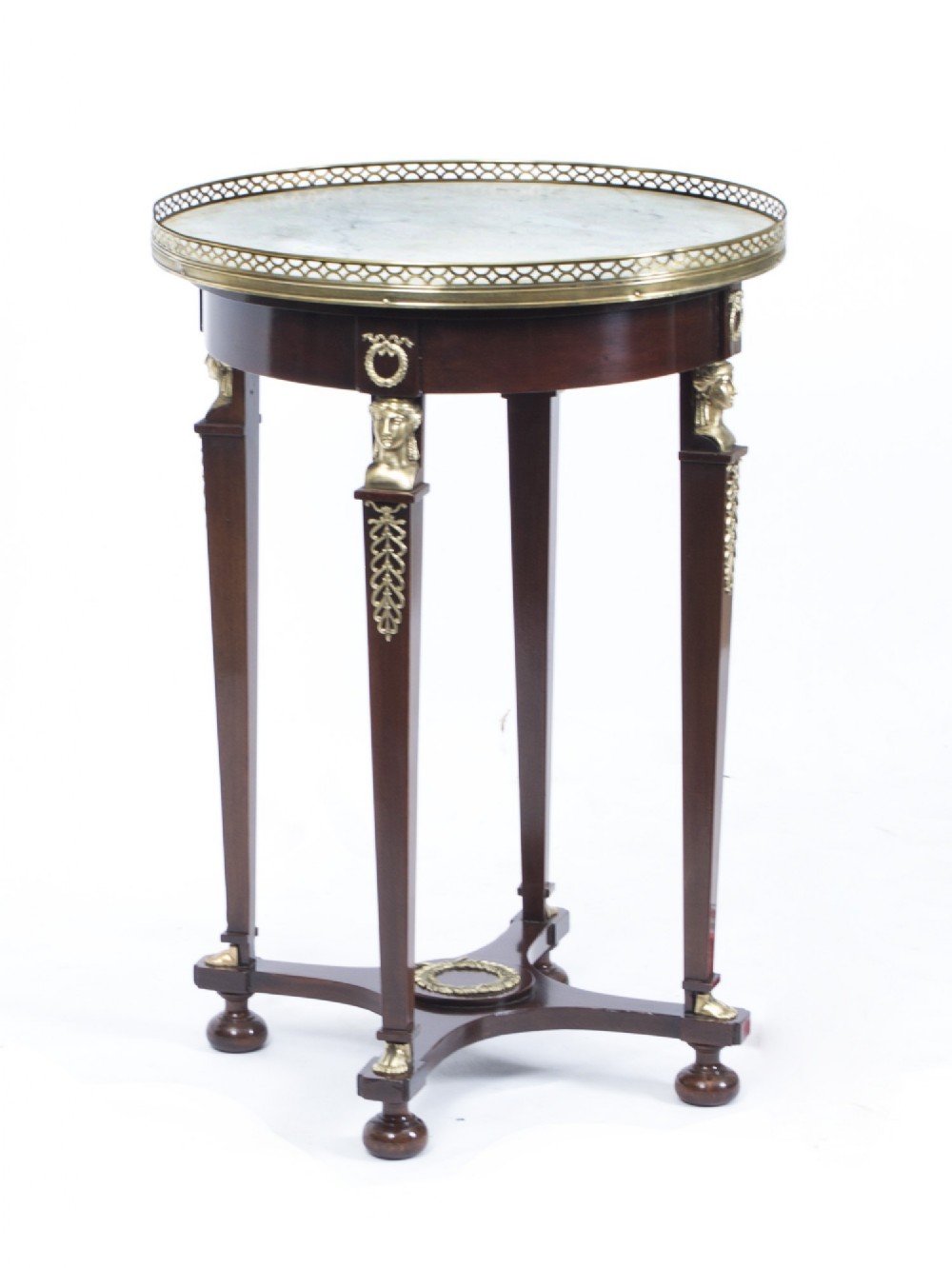
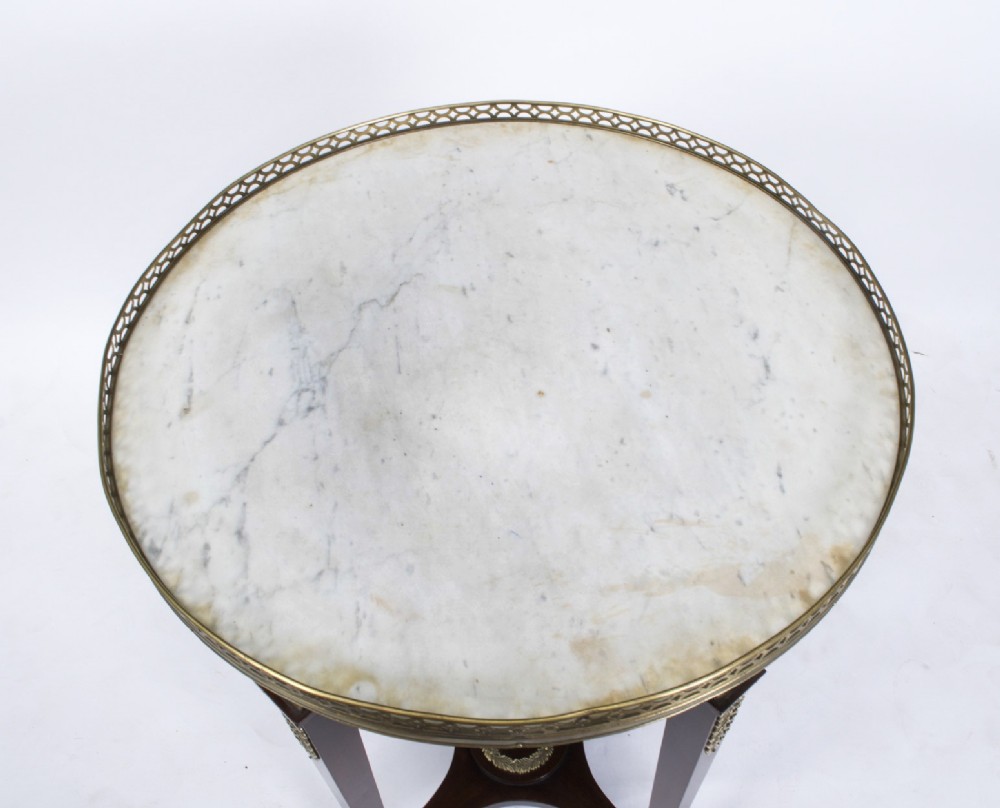
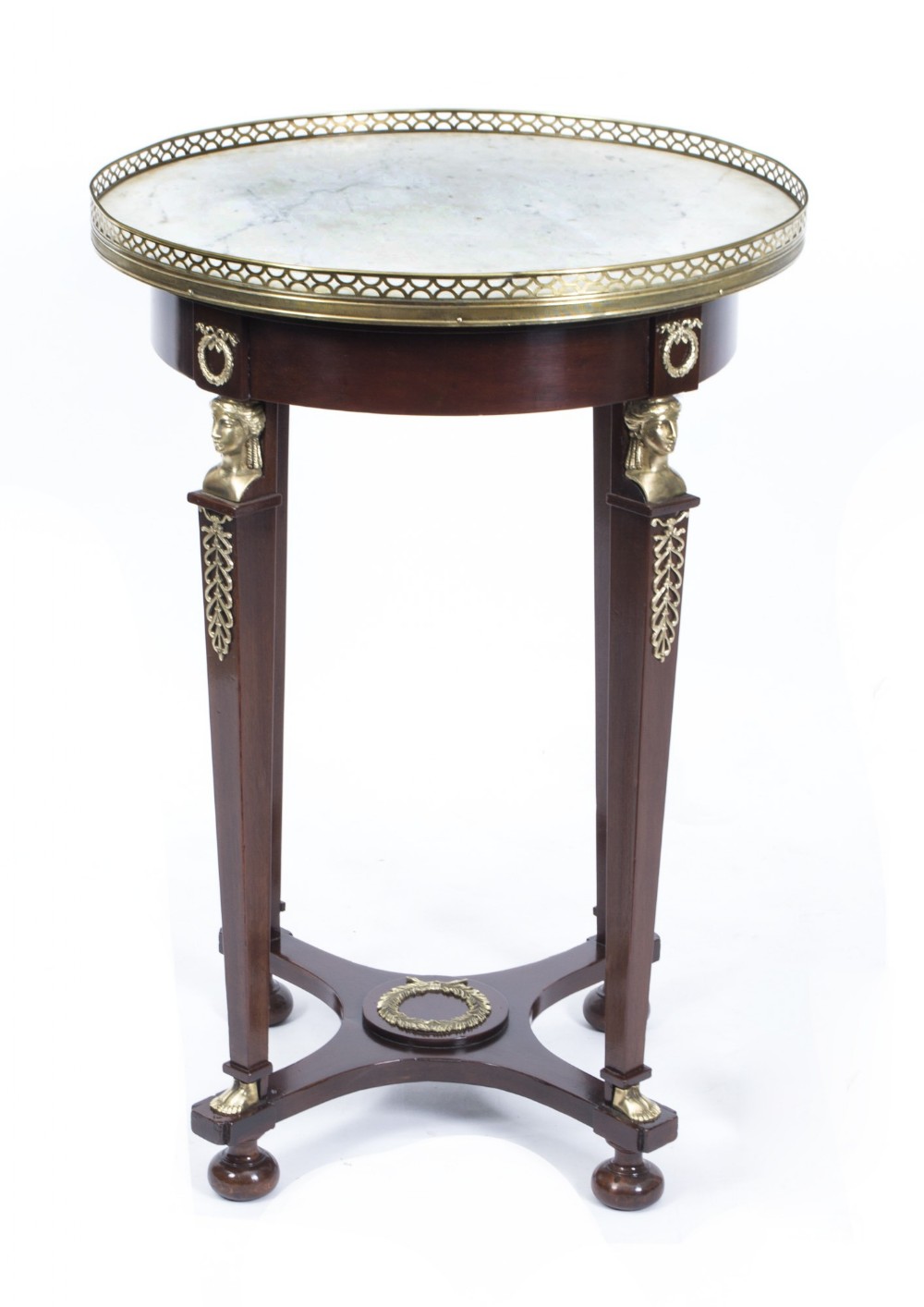
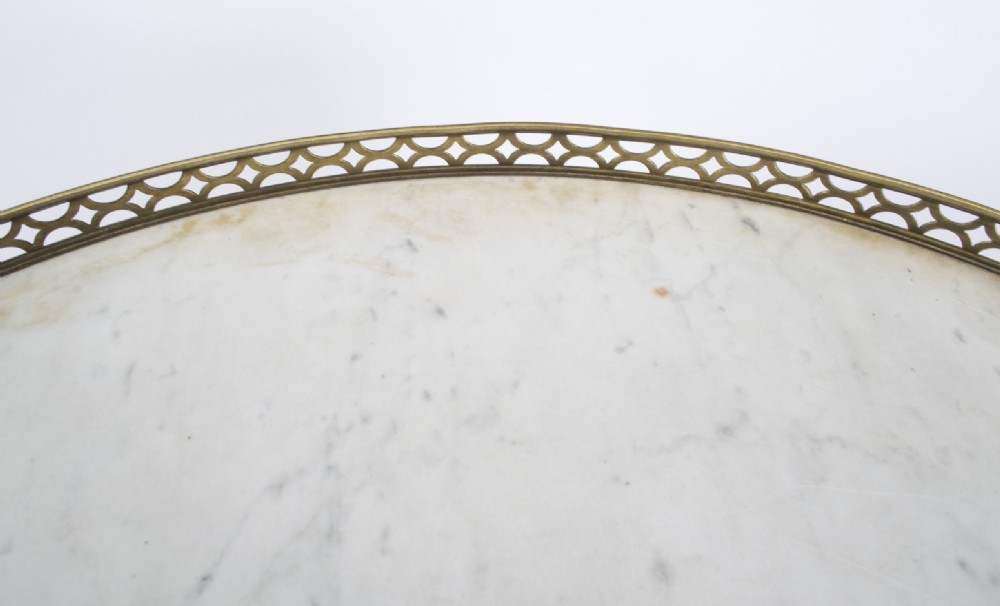
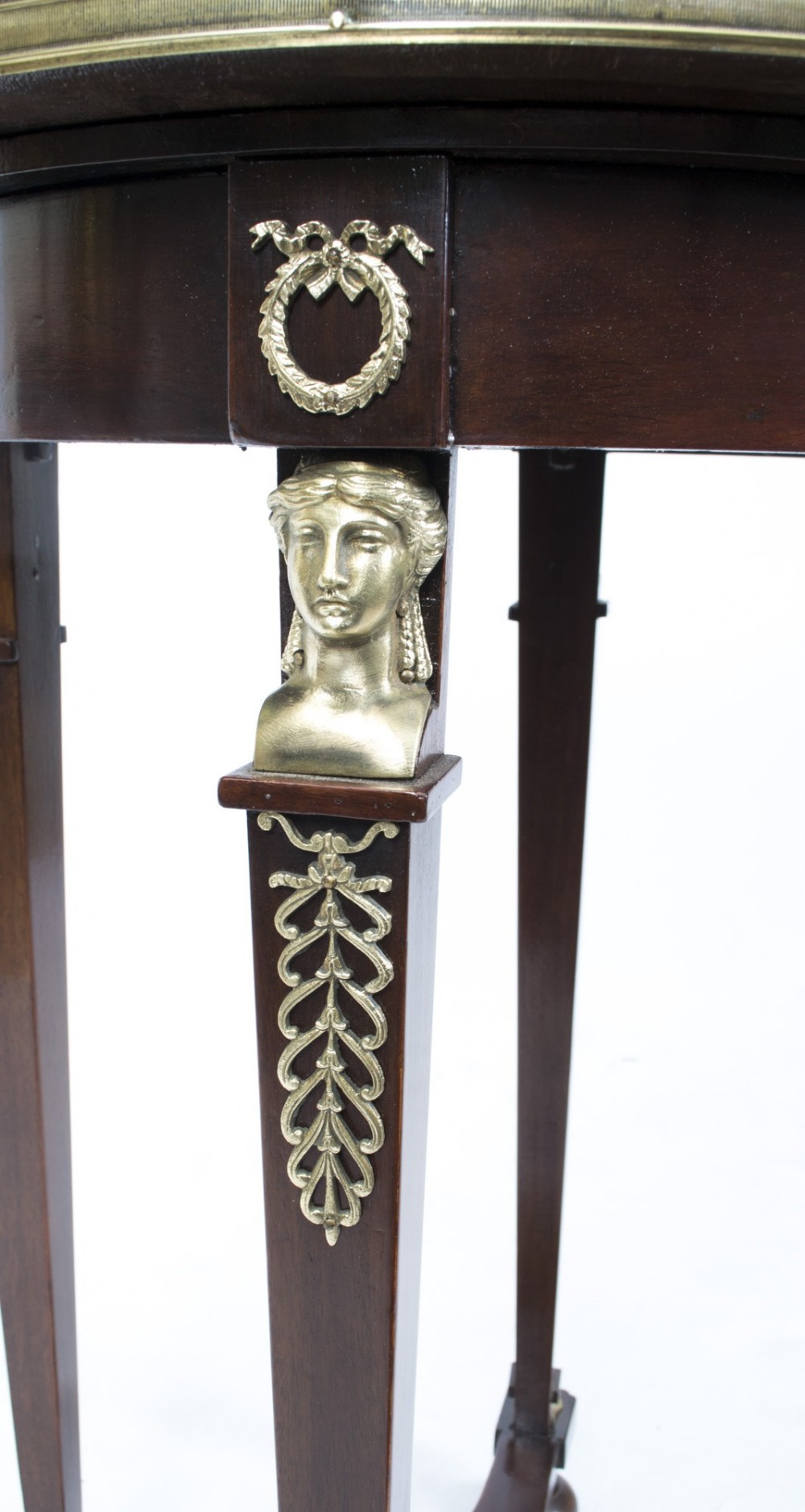
This is a beautiful antique French Empire circular centre table with ornate ormolu decoration typical of the Empire period and a beautiful inset white "Marmo di Carrara" marble top, circa 1830.

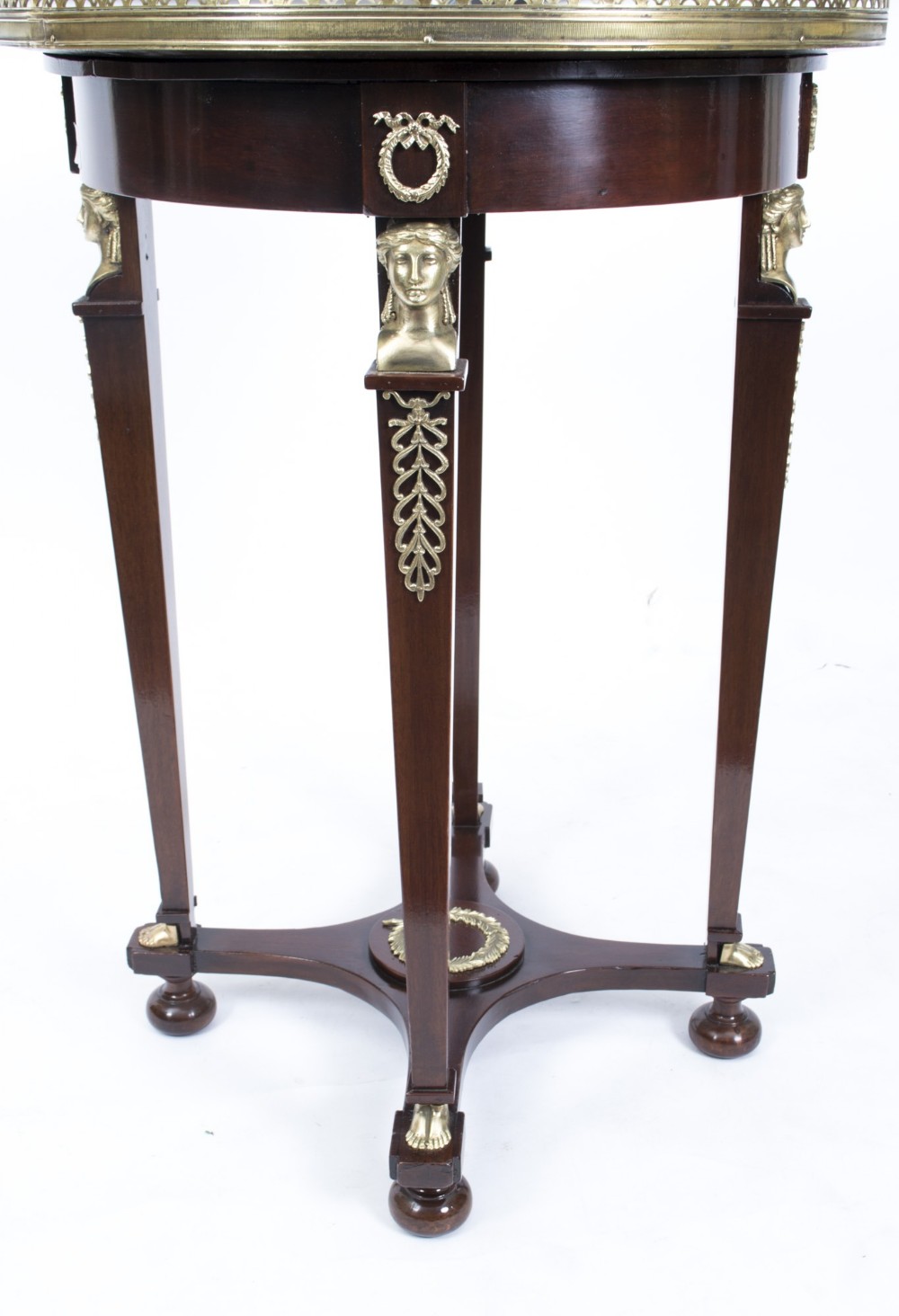
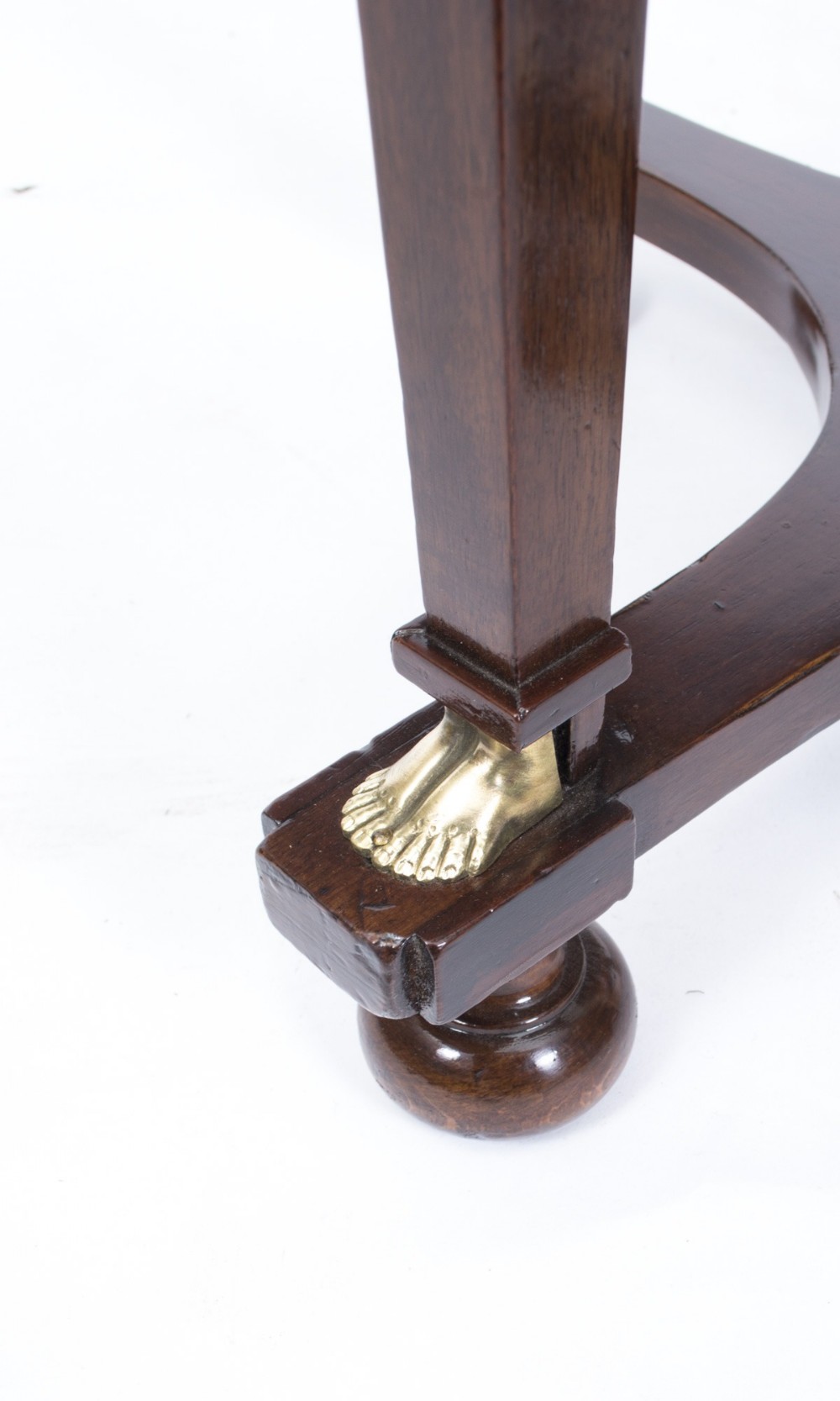
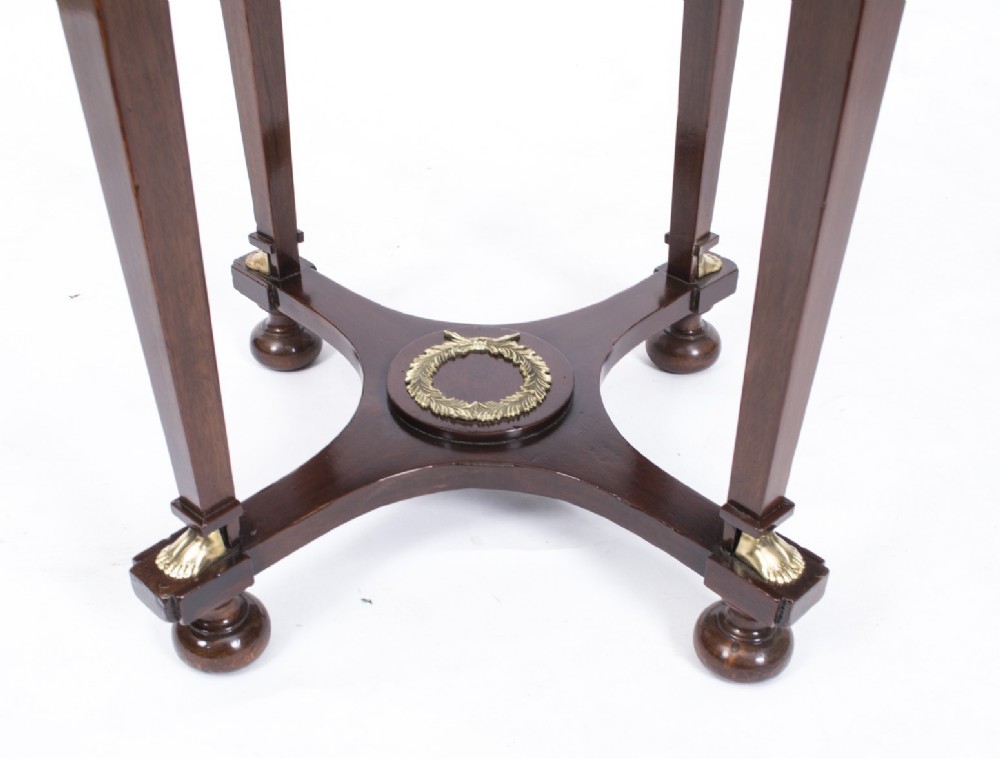
It is masterfully crafted in a deep rich mahogany with intricate ormolu decoration and standing on bun feet. The inset  marble top has a decorative pierced brass gallery around it which is the finishing touch to this beautiful table.

There is no mistaking the unique quality and elaborate design, which is certain to make it a talking point in your home and a fine embellishment to your reception room.

Condition:

In excellent condition having been beautifully restored in our workshops, please see photos for confirmation.

Dimensions in cm:

Height 80 cm x Width 56 cm x Depth 56 cm

Dimensions in inches:

Height 2 foot, 7 inches x Width 1 foot, 10 inches x Depth 1 foot, 10 inches

Empire style,

is an early-19th-century design movement in architecture, furniture, other decorative arts, and the visual arts followed in Europe and America until around 1830.

The style originated in and takes its name from the rule of Napoleon I in the First French Empire, where it was intended to idealize Napoleon's leadership and the French state. The style corresponds to the Biedermeier style in the German-speaking lands, Federal style in the United States and to the Regency style in Britain. The previous style was called Louis XVI style, in France.

The Empire style was based on aspects of the Roman Empire. It is the second phase of neoclassicism which is also called "Directoire", after a goverment system.

Furniture typically had symbols and ornaments borrowed from the glorious ancient Greek and Roman empires.

The furniture was made from heavy woods such as mahogany and ebony, imported from the colonies, with dark finishes often with decorative bronze mounts. Marble tops were popular as were Egyptian motifs like sphinxes, griffins, urns and eagles and the Napoleonic symbols, the eagle, the bee, the initials "I" and a large "N."

Gilded bronze (ormolu) details displayed a high level of craftsmanship.

Thomas Sheraton - 18th century furniture designer, once characterized mahogany as "best suited to furniture where strength is demanded as well as a wood that works up easily, has a beautiful figure and polishes so well that it is an ornament to any room in which it may be placed." Matching his words to his work, Sheraton designed much mahogany furniture.

Ormolu (from French 'or moulu', signifying ground or pounded gold) is an 18th-century English term for applying finely ground, high-carat gold in a mercury amalgam to an object of bronze.The mercury is driven off in a kiln leaving behind a gold-coloured veneer known as 'gilt bronze'.

The manufacture of true ormolu employs a process known as mercury-gilding or fire-gilding, in which a solution of nitrate of mercury is applied to a piece of copper, brass, or bronze, followed by the application of an amalgam of gold and mercury. The item was then exposed to extreme heat until the mercury burned off and the gold remained, adhered to the metal object.

Carrara marble - is a type of white or blue-grey marble popular for use in sculpture and building decor. It is quarried at the city of Carrara in the province of Massa-Carrara (Tuscany, Italy).

Carrara marble has been used since the time of Ancient Rome; the Pantheon and Trajan's Column in Rome are constructed of it. Many sculptures of the Renaissance, such as Michelangelo's David, were carved from Carrara marble. For Michelangelo at least, Carrara marble was valued above all other stone, except perhaps that of his own quarry in Pietrasanta. The Marble Arch in London and the Duomo di Siena are also made from this stone, as are the interiors of Manila Cathedral, the cold-white marbles of the Sheikh Zayed Mosque and the camp

Date of Manufacture

Regent Antiques has dated this French Empire Occasional Table to the 1800s.

Physical Dimensions
Height
80cm (31.50")
Width
56cm (22.05")
Depth
56cm (22.05")
Reference Numbers
Sellingantiques Reference
SA1119315
Dealers Internal Reference
A2993
A round antique French Empire occasional table featuring a marble top with a pierced brass gallery, supported by slender mahogany legs with ormolu mounts and caryatid capitals.Detail view 1Detail view 2Detail view 3Detail view 4Detail view 5Detail view 6Detail view 7Detail view 8
SOLD6+ MONTHS AGO
1 / 9
1800s · SA1119315
Antique French Empire Marble & Ormolu Occasional Table C.1830
Sorry, but this item has been sold.
Description
This is a beautiful antique French Empire circular centre table with ornate ormolu decoration typical of the Empire period and a beautiful inset white "Marmo di Carrara" marble top, circa 1830.

It is masterfully crafted in a deep rich mahogany with intricate ormolu decoration and standing on bun feet. The inset  marble top has a decorative pierced brass gallery around it which is the finishing touch to this beautiful table.

There is no mistaking the unique quality and elaborate design, which is certain to make it a talking point in your home and a fine embellishment to your reception room.

Condition:

In excellent condition having been beautifully restored in our workshops, please see photos for confirmation.

Dimensions in cm:

Height 80 cm x Width 56 cm x Depth 56 cm

Dimensions in inches:

Height 2 foot, 7 inches x Width 1 foot, 10 inches x Depth 1 foot, 10 inches

Empire style,

is an early-19th-century design movement in architecture, furniture, other decorative arts, and the visual arts followed in Europe and America until around 1830.

The style originated in and takes its name from the rule of Napoleon I in the First French Empire, where it was intended to idealize Napoleon's leadership and the French state. The style corresponds to the Biedermeier style in the German-speaking lands, Federal style in the United States and to the Regency style in Britain. The previous style was called Louis XVI style, in France.

The Empire style was based on aspects of the Roman Empire. It is the second phase of neoclassicism which is also called "Directoire", after a goverment system.

Furniture typically had symbols and ornaments borrowed from the glorious ancient Greek and Roman empires.

The furniture was made from heavy woods such as mahogany and ebony, imported from the colonies, with dark finishes often with decorative bronze mounts. Marble tops were popular as were Egyptian motifs like sphinxes, griffins, urns and eagles and the Napoleonic symbols, the eagle, the bee, the initials "I" and a large "N."

Gilded bronze (ormolu) details displayed a high level of craftsmanship.

Thomas Sheraton - 18th century furniture designer, once characterized mahogany as "best suited to furniture where strength is demanded as well as a wood that works up easily, has a beautiful figure and polishes so well that it is an ornament to any room in which it may be placed." Matching his words to his work, Sheraton designed much mahogany furniture.

Ormolu (from French 'or moulu', signifying ground or pounded gold) is an 18th-century English term for applying finely ground, high-carat gold in a mercury amalgam to an object of bronze.The mercury is driven off in a kiln leaving behind a gold-coloured veneer known as 'gilt bronze'.

The manufacture of true ormolu employs a process known as mercury-gilding or fire-gilding, in which a solution of nitrate of mercury is applied to a piece of copper, brass, or bronze, followed by the application of an amalgam of gold and mercury. The item was then exposed to extreme heat until the mercury burned off and the gold remained, adhered to the metal object.

Carrara marble - is a type of white or blue-grey marble popular for use in sculpture and building decor. It is quarried at the city of Carrara in the province of Massa-Carrara (Tuscany, Italy).

Carrara marble has been used since the time of Ancient Rome; the Pantheon and Trajan's Column in Rome are constructed of it. Many sculptures of the Renaissance, such as Michelangelo's David, were carved from Carrara marble. For Michelangelo at least, Carrara marble was valued above all other stone, except perhaps that of his own quarry in Pietrasanta. The Marble Arch in London and the Duomo di Siena are also made from this stone, as are the interiors of Manila Cathedral, the cold-white marbles of the Sheikh Zayed Mosque and the camp
Date1800s
Height80cm (31.50")
Width56cm (22.05")
Depth56cm (22.05")
ReferenceSA1119315
Dealer's referenceA2993
Regent Antiques
Regent AntiquesSellingantiques verified since Sep 2016

We specialise in english and continental furniture, silver, porcelain and decorative items.

Member of LAPADA CINOA

SHARE
SAVE
Archive I A round antique French Empire occasional table featuring a marble top with a pierced brass gallery, supported by slender mahogany legs with ormolu mounts and caryatid capitals. SOLD6+ MONTHS AGO

Antique French Empire Marble & Ormolu Occasional Table C.1830

Archive II A round antique French Empire occasional table featuring a marble top with a pierced brass gallery, supported by slender mahogany legs with ormolu mounts and caryatid capitals. View II
Archive III A round antique French Empire occasional table featuring a marble top with a pierced brass gallery, supported by slender mahogany legs with ormolu mounts and caryatid capitals. View III
Archive IV A round antique French Empire occasional table featuring a marble top with a pierced brass gallery, supported by slender mahogany legs with ormolu mounts and caryatid capitals. View IV
Archive V A round antique French Empire occasional table featuring a marble top with a pierced brass gallery, supported by slender mahogany legs with ormolu mounts and caryatid capitals. View V
Archive VI A round antique French Empire occasional table featuring a marble top with a pierced brass gallery, supported by slender mahogany legs with ormolu mounts and caryatid capitals. View VI
Archive VII A round antique French Empire occasional table featuring a marble top with a pierced brass gallery, supported by slender mahogany legs with ormolu mounts and caryatid capitals. View VII
Archive VIII A round antique French Empire occasional table featuring a marble top with a pierced brass gallery, supported by slender mahogany legs with ormolu mounts and caryatid capitals. View VIII
Archive IX A round antique French Empire occasional table featuring a marble top with a pierced brass gallery, supported by slender mahogany legs with ormolu mounts and caryatid capitals. View IX
FURTHER BROWSING

Visitors also looked at these ⇣

Enlarged Archival View
Location
Manor Warehouse
318 Green Lanes
London
N4 1BX
United Kingdom
Verified Since Sep 2016
Items For Sale 639
Items Sold 2,756
Regent Antiques
Regent Antiques
Verified Since Sep 2016
View Dealer Info
Location: Manor Warehouse, 318 Green Lanes, London, N4 1BX, United Kingdom
Verified
Sep 2016
For Sale
639
Sold
2,756
A round antique French Empire occasional table featuring a marble top with a pierced brass gallery, supported by slender mahogany legs with ormolu mounts and caryatid capitals.
Antique French Empire Marble & Ormolu Occasional Table c.1830
Ref: SA1119315
A round antique French Empire occasional table featuring a marble top with a pierced brass gallery, supported by slender mahogany legs with ormolu mounts and caryatid capitals.
Detail View 1
Detail View 2
Detail View 3
Detail View 4
Detail View 5
Detail View 6
Detail View 7
Detail View 8
Archival Detail
Every single antique dealer on our platform is individually approved by our internal team. We verify their professional trade history, ethical standards, and photographic quality to ensure a secure, high-standard buying environment. Upon joining, every dealer agrees to a strict 9-point code of conduct. While issues can occasionally arise, our dealers typically resolve them swiftly and directly with the buyer. In fact, since our founding in 2002, Sellingantiques has only had to step in to help resolve an issue on roughly five occasions—a true testament to the quality of our dealers and their dedication to your happiness.
Our dealers are highly experienced in packing and shipping fragile, high-value antiques. Because you are in direct contact with the dealer, you will be able to easily go through all available shipping and insurance options together to ensure your item arrives safely.
Antiques are the ultimate green purchase. By choosing historical pieces over newly manufactured goods, you completely eliminate the carbon footprint of modern mass production while preserving exceptional, timeless craftsmanship.
Written by Sellingantiques from the dealer’s photographs and listing
  • ObjectOccasional Tables
  • Period19th century
  • StyleFrench Empire
  • MaterialMahogany, Marble, Ormolu
  • ColourDark Brown
  • MotifsPierced brass gallery, Caryatid mounts, X-form stretcher, Turned feet
  • SizeH 80 cm (31 in) x W 56 cm (22 in) x D 56 cm (22 in)

The French Empire style emerged during the early 19th century, heavily influenced by neoclassical motifs from ancient Greece and Rome, characterised by symmetry, grandeur, and military-inspired symbolism.

These pieces typically utilized dense hardwoods such as mahogany or ebony, accented with polished white or grey marble tops and fire-gilded bronze or brass mounts known as ormolu.

Authentic pieces exhibit period-correct joinery, fire-gilt ormolu mounts with crisp hand-chasing, heavy natural marble inserts, and traditional hand-rubbed timber finishes consistent with c.1830 manufacturing methods.

This piece works effectively as a sophisticated accent in contemporary rooms, contrasting clean modern upholstery with classical lines, or paired with minimalist lighting to highlight the metallic ormolu details.

Maintain the timber using pH-neutral beeswax to preserve the patina, and clean the marble top using a soft, damp cloth without acidic cleaners that can etch the stone surface.
items
Add keywords to the filter
Price
£100
£250000
Era
Period
Style
Material
Origin
Stock Location
Recently Added
Online Payments
Categories