70,619  PAGES BROWSED TODAY PAGES TODAY • 251 ANTIQUES UPLOADED TODAYNEW ARRIVALS
GIFTS
251 ITEMS ADDED TODAY
Sort Order
Items Per Page
Antiques dealer?
Join as a Seller
Browse Categories
Sort order
Relevant Links
Items per page
ID #SA1093193
SOLD
Email Phone
Save
Antique Porcelain Figurine ‘Boy with Monkeys’ by Satsuma, Japan, Meiji Period (1868 -1912).
Sold by Gillers Antiques Ltd
Id #SA1093193
PDF SHARE
SAVE

Antique Porcelain Figurine ‘Boy with Monkeys’ by Satsuma, Japan, Meiji Period (1868 -1912).

19th century
Sold 14 September 2024 · Gillers Antiques Ltd
This “Antique Porcelain Figurine ‘Boy with Monkeys’ by Satsuma, Japan, Meiji Period (1868 -1912)” found a buyer.

It was listed by Gillers Antiques Ltd. Sold pieces stay on Sellingantiques as a record of what has passed through, and the next one is rarely far away.

Description

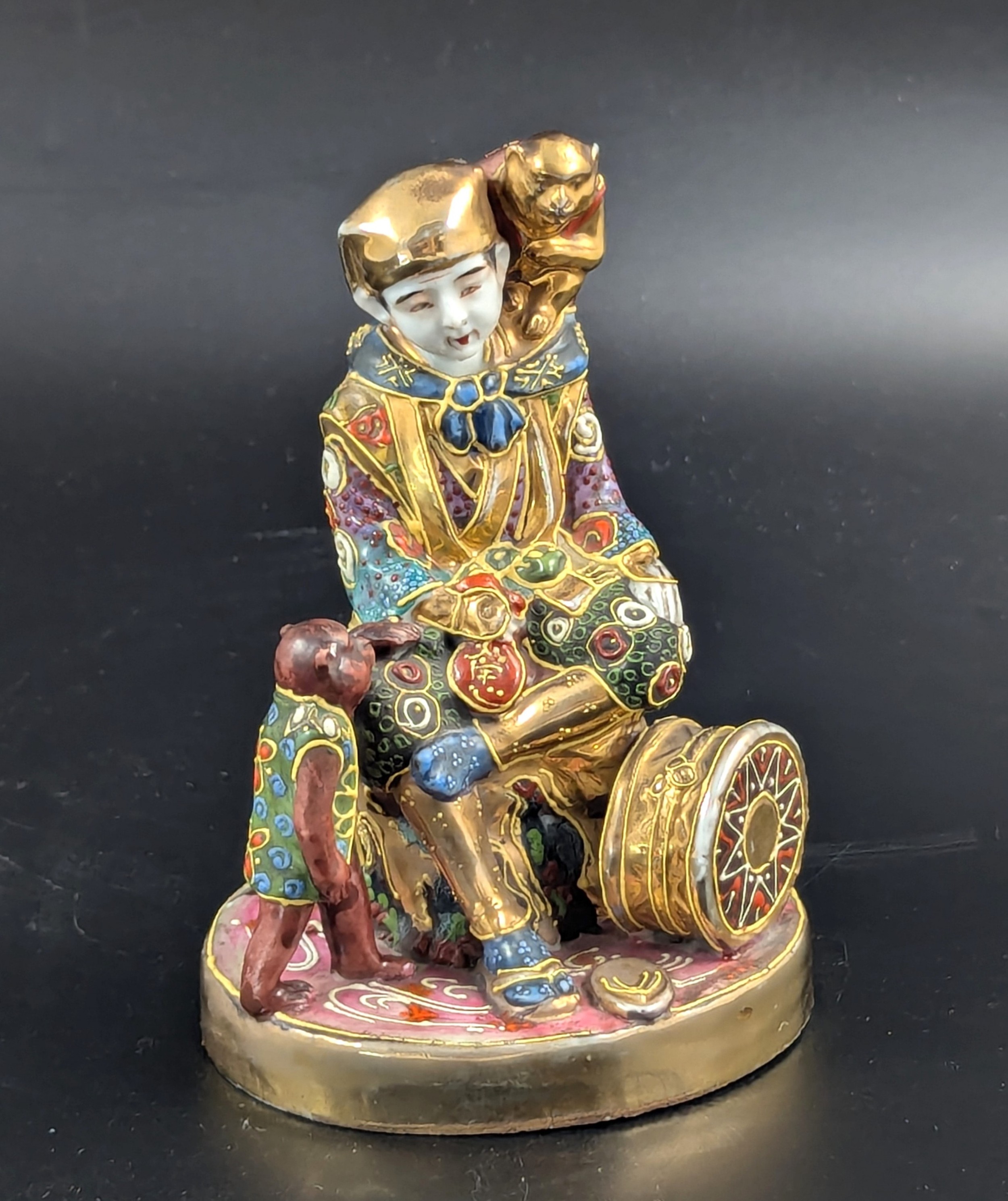
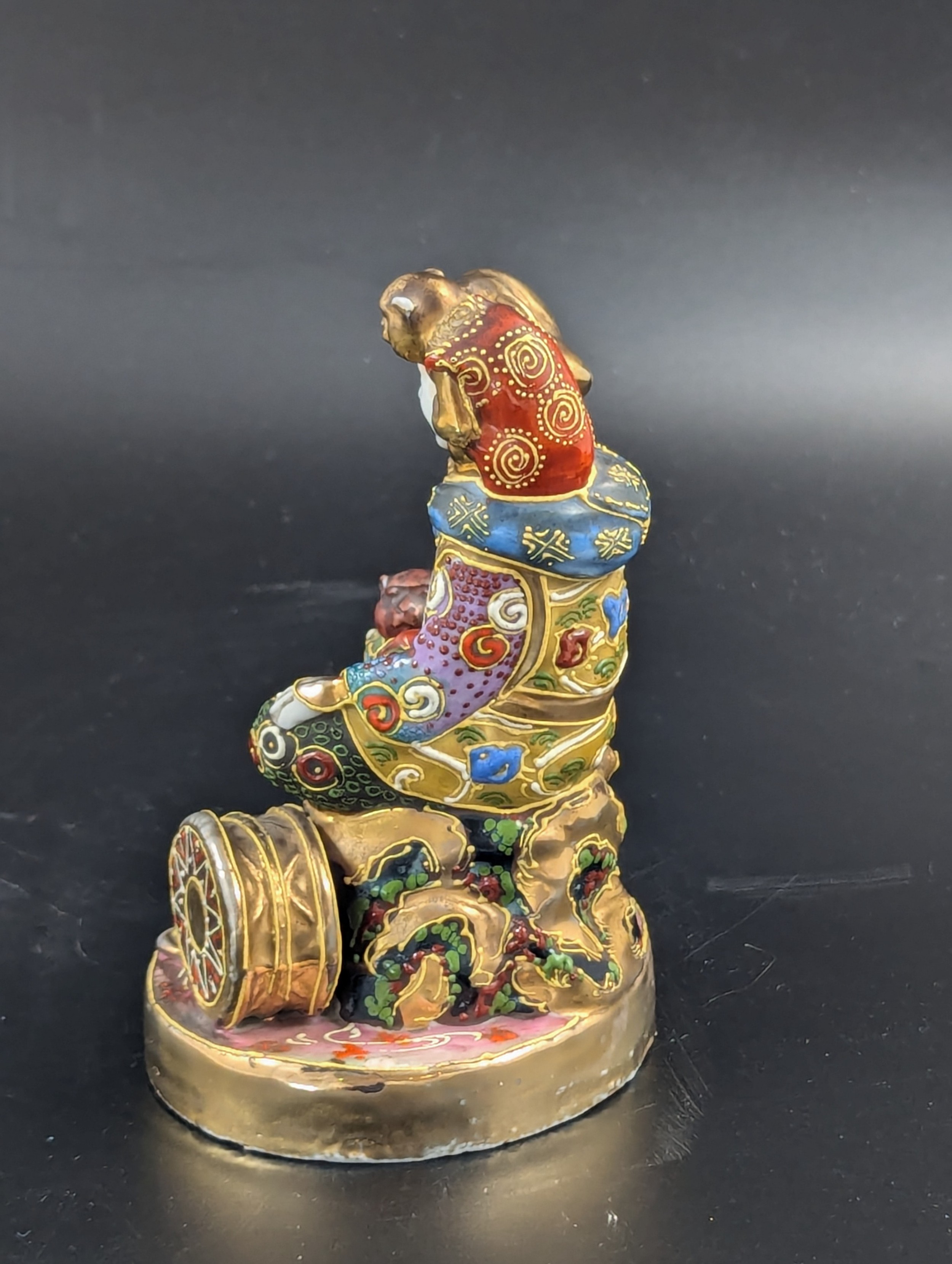
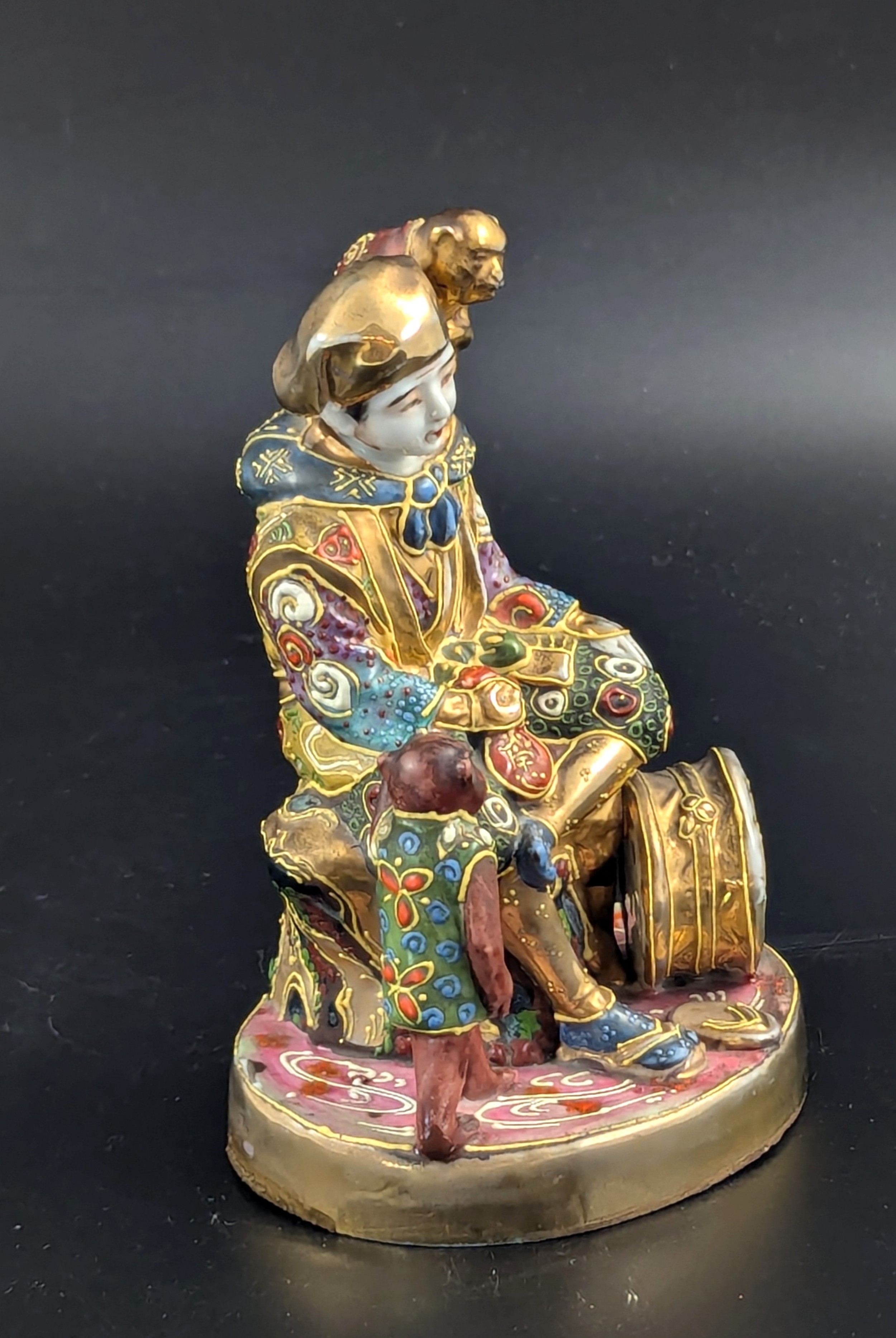
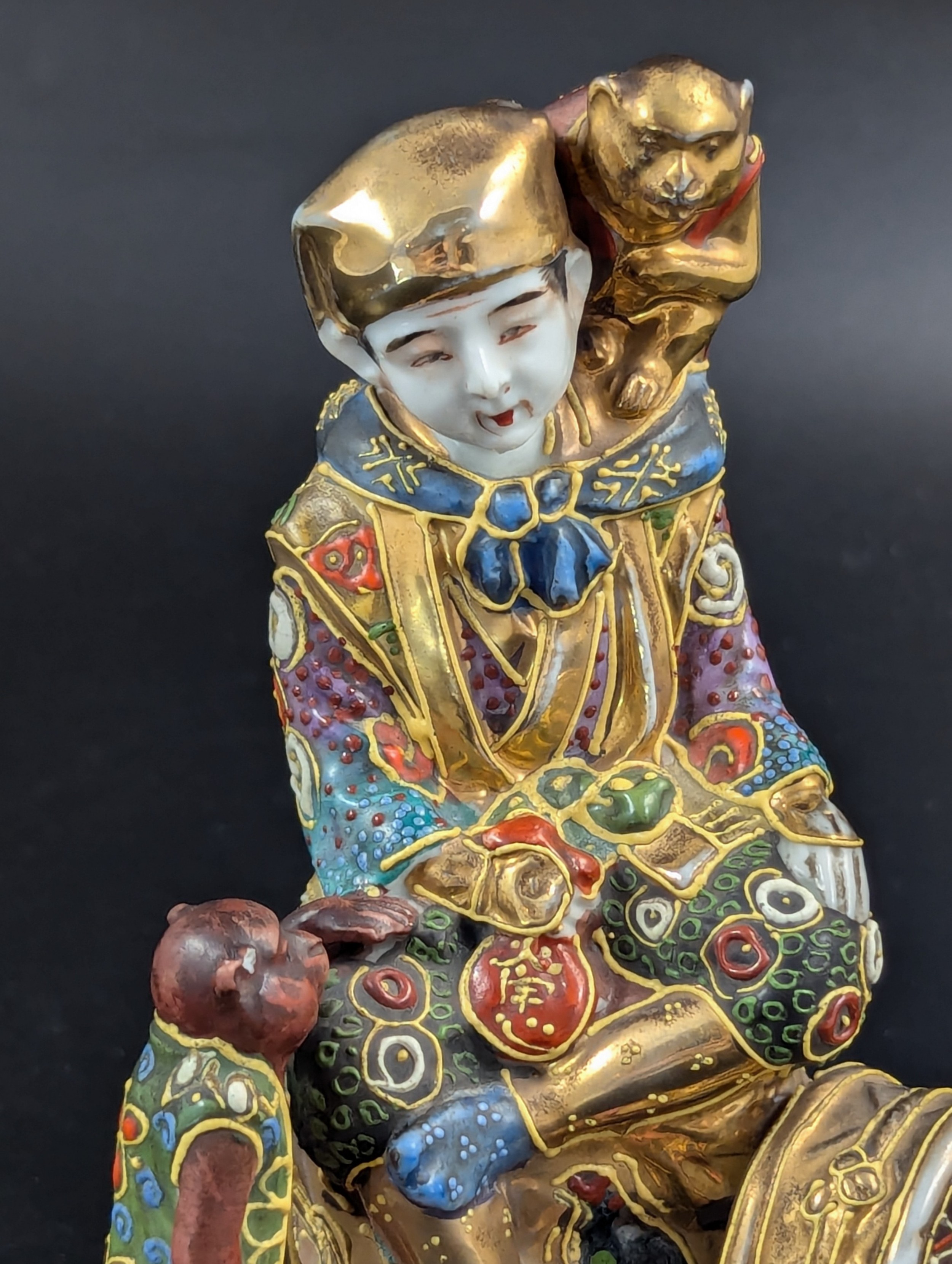
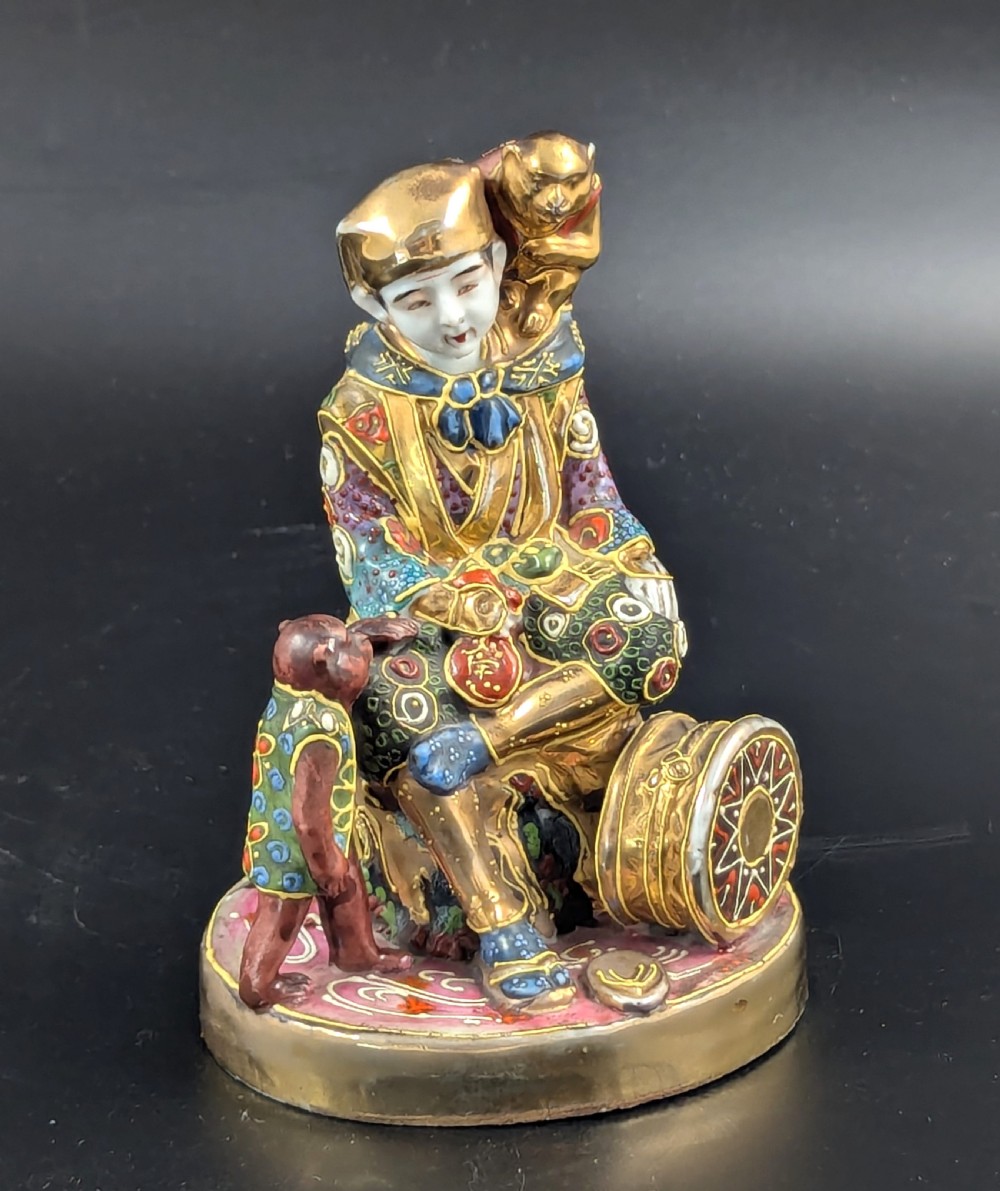
An antique and rare Japanese Satsuma porcelain figurine, hand-painted, depicting a seated boy with a drum and two monkeys. The piece is beautifully adorned with colored enamels and lavish gilding. One monkey, in its natural color and dressed in a green waistcoat with a floral pattern, rests its hand on the boy's knee, observing him intently. The second monkey, fully gilded and dressed in a purple waistcoat, perches on the boy's shoulder. It seems as though the boy has paused to rest before resuming his street performance with the monkeys.
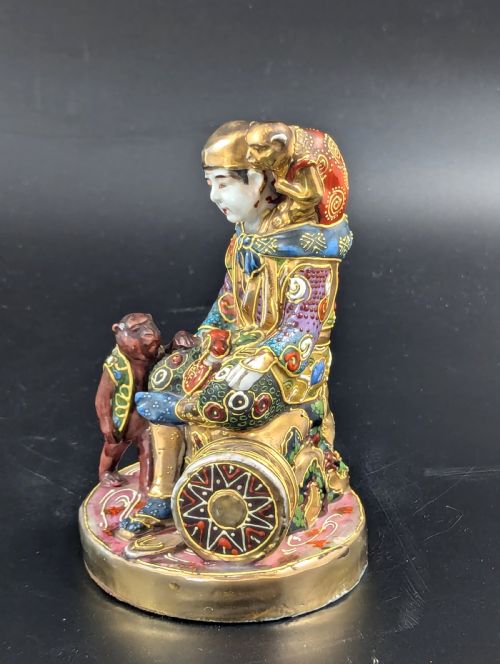
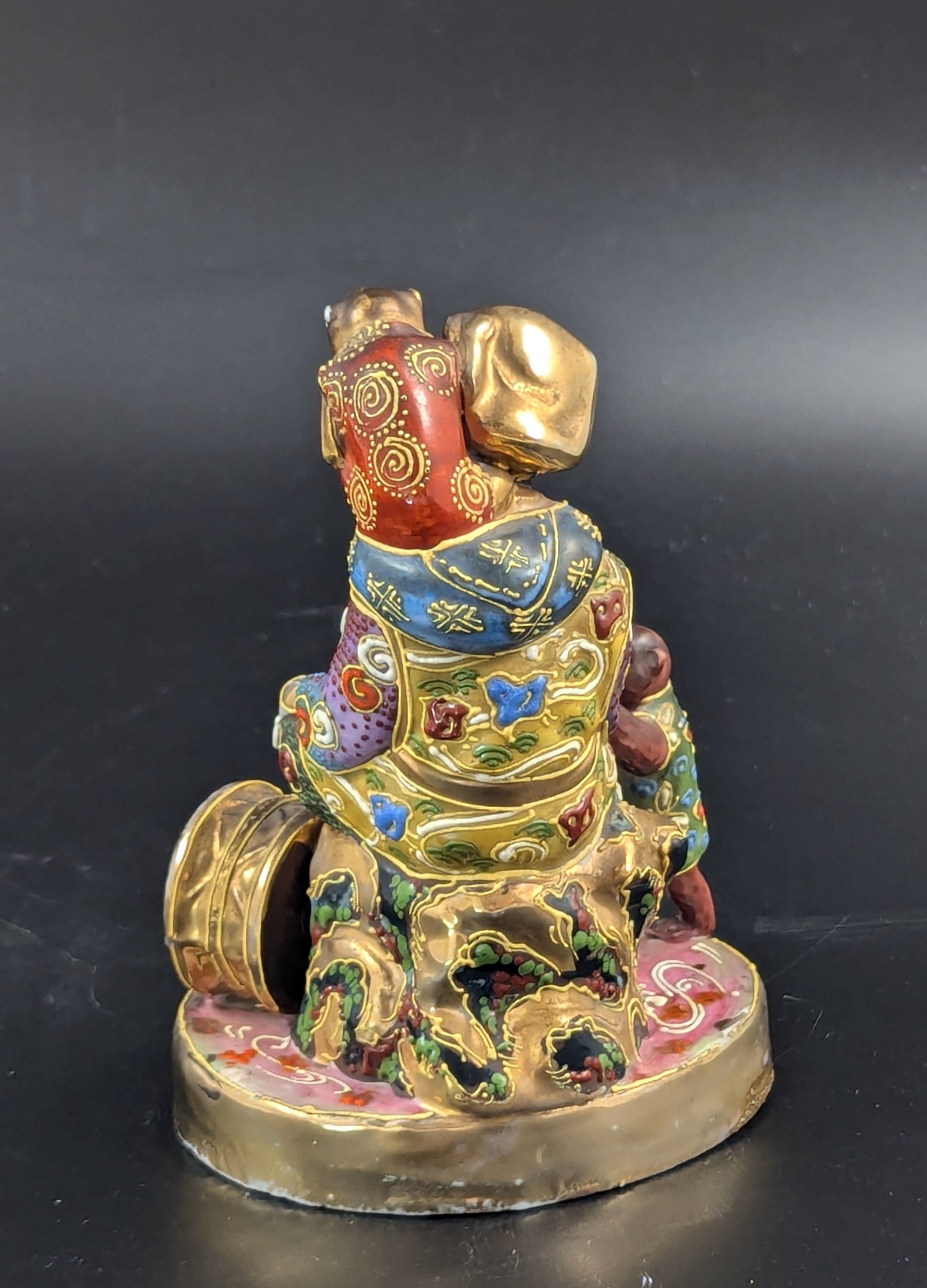
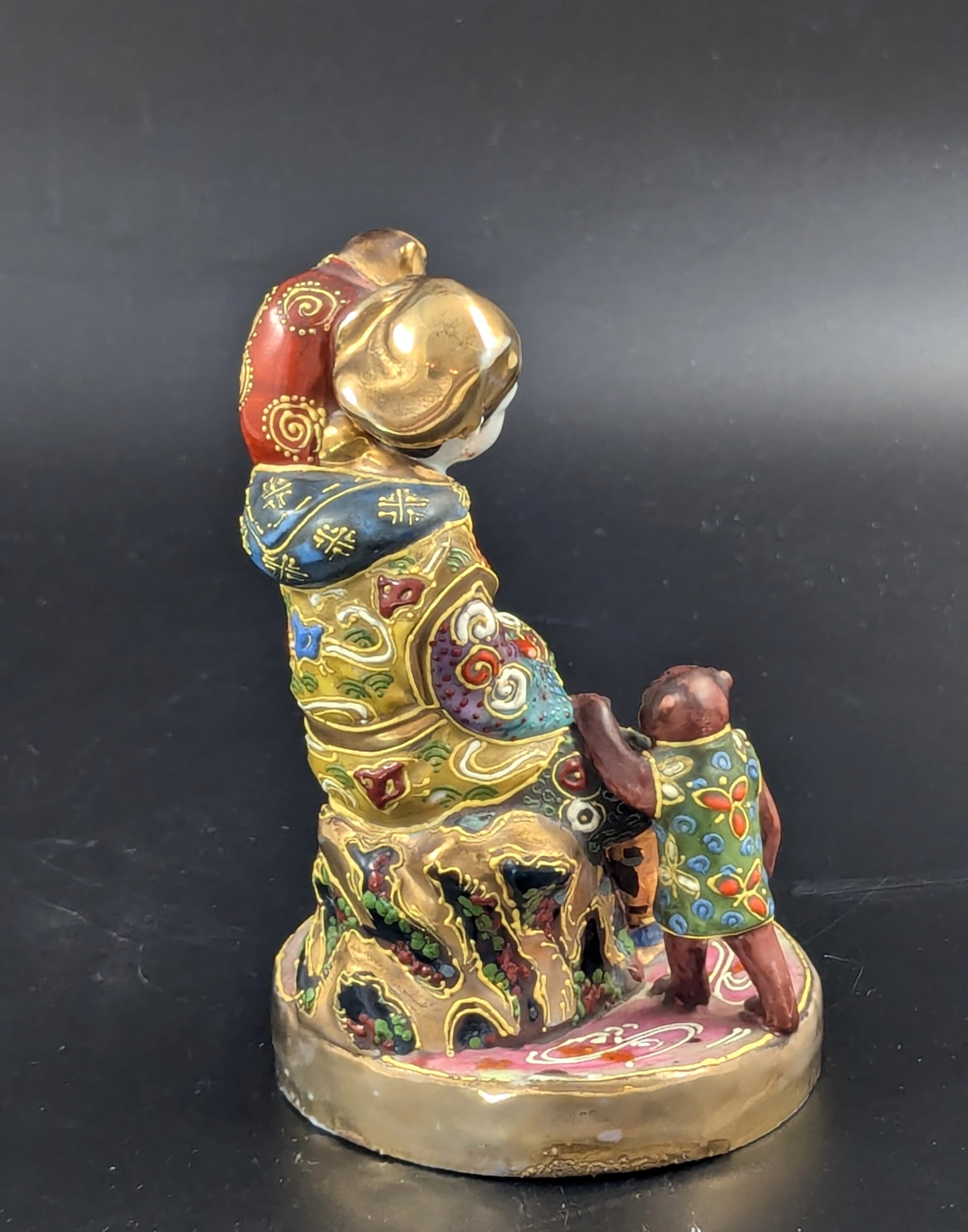
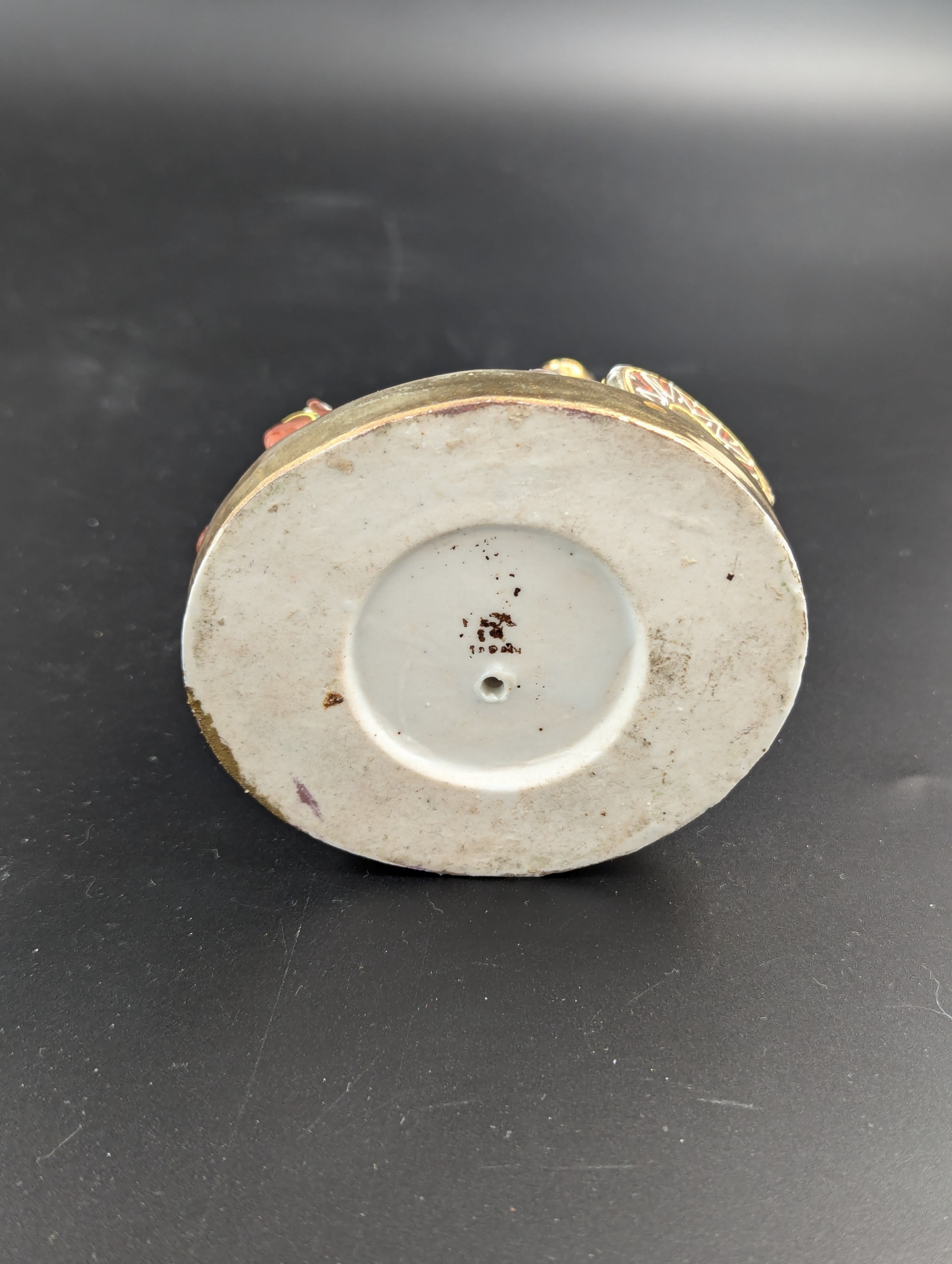
The figurine highlights the boy’s richly decorated attire, meticulously hand-painted with intricate patterns, showcasing the artistry involved. His kimono, adorned with multi-colored glazed enamel, and his golden cap stand out prominently. The round base is gold-plated along the perimeter, and the bottom is marked with slightly erased "Made in Japan," indicating that this piece was made specifically for export. Satsuma ware originated in Japan during the seventeenth century in the southern region of Kyushu, under the control of the Shimazu clan (Satsuma-han, officially Kagoshima and surrounding areas). Initially, the pottery was quite plain, made from dark clay, in contrast to the more elaborate 19th-century export pieces. Satsuma ware gained international recognition at the 1867 Paris Exposition, where it was a star attraction. This helped establish the aesthetic that became familiar in the West. The export style reflected the tastes of the time, with many pieces featuring typical Japanese scenes such as pagodas, cherry blossoms, birds, flowers, and noblemen in traditional attire.
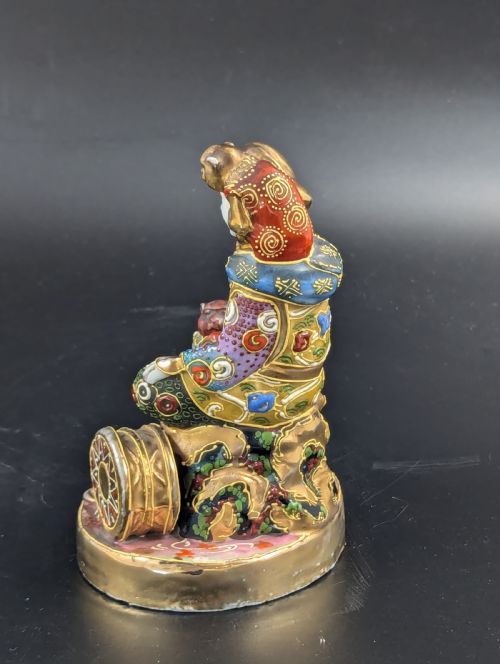
By the early Meiji period, around 1885, Satsuma ware had reached the peak of its popularity. However, by the 1890s, the market became flooded with cheaper, mass-produced pieces that lacked the quality of earlier works. Although it lost favor with critics, Satsuma ware remained popular with the general public and continued to be produced into the 20th century, with some factories operating until the 1980s. Today, Satsuma products are highly valued in the antique porcelain market, with demand steadily increasing in recent years.
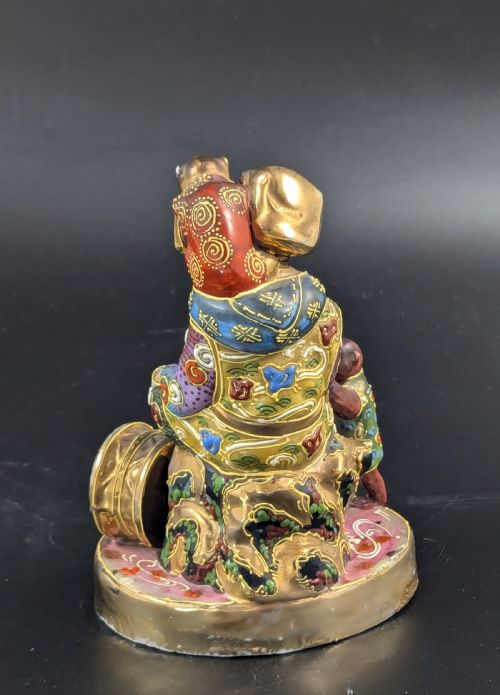
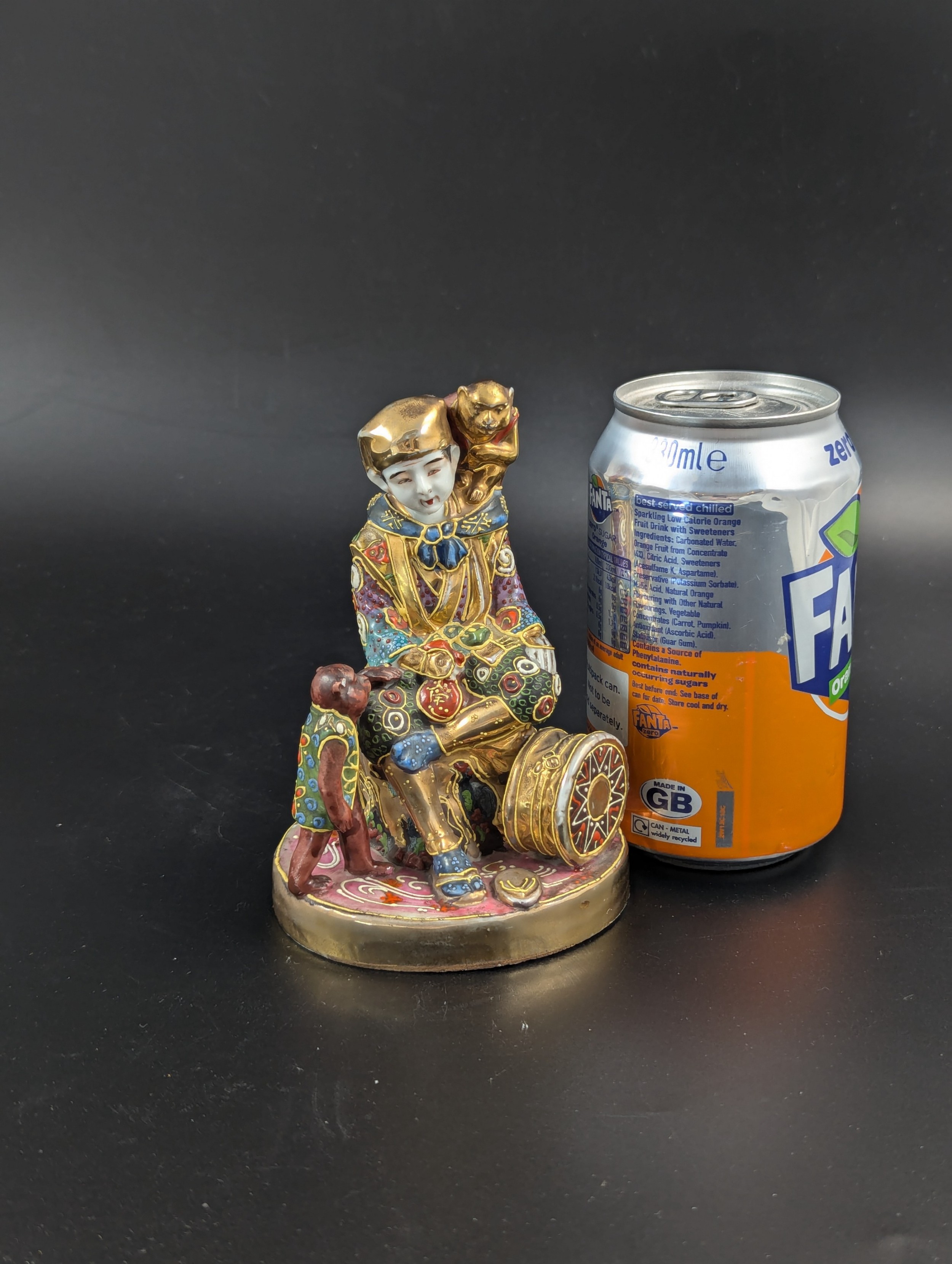
Dimensions: height 13 cm, diameter of the base 8, 5 cm, weight 343 grams.

Condition: slight loss of gilding and paint, otherwise all excellent.

Please review the accompanying photographs carefully, as they are an integral part of this description. The item will be shipped with full tracking and insurance. Note that shipping costs include labor, packaging, and postage.

Date of Manufacture

Gillers Antiques Ltd has dated this Antique Satsuma Figurine to the 19th Century.

Reference Numbers
Sellingantiques Reference
SA1093193
Description
An antique and rare Japanese Satsuma porcelain figurine, hand-painted, depicting a seated boy with a drum and two monkeys. The piece is beautifully adorned with colored enamels and lavish gilding.
“
One monkey, in its natural color and dressed in a green waistcoat with a floral pattern, rests its hand on the boy's knee, observing him intently.
Gillers Antiques Ltd

The second monkey, fully gilded and dressed in a purple waistcoat, perches on the boy's shoulder. It seems as though the boy has paused to rest before resuming his street performance with the monkeys.

fig 1. An intricately painted antique Satsuma ceramic figurine depicting a figure with monkeys and a drum, finished with extensive gold gilt and coloured enamels.
fig 1. Antique Porcelain Figurine ‘Boy with Monkeys’ by Satsuma, Japan, Meiji Period (1868 -1912).

The figurine highlights the boy’s richly decorated attire, meticulously hand-painted with intricate patterns, showcasing the artistry involved. His kimono, adorned with multi-colored glazed enamel, and his golden cap stand out prominently. The round base is gold-plated along the perimeter, and the bottom is marked with slightly erased "Made in Japan," indicating that this piece was made specifically for export. Satsuma ware originated in Japan during the seventeenth century in the southern region of Kyushu, under the control of the Shimazu clan (Satsuma-han, officially Kagoshima and surrounding areas). Initially, the pottery was quite plain, made from dark clay, in contrast to the more elaborate 19th-century export pieces. Satsuma ware gained international recognition at the 1867 Paris Exposition, where it was a star attraction. This helped establish the aesthetic that became familiar in the West. The export style reflected the tastes of the time, with many pieces featuring typical Japanese scenes such as pagodas, cherry blossoms, birds, flowers, and noblemen in traditional attire.

fig 2. An intricately painted antique Satsuma ceramic figurine depicting a figure with monkeys and a drum, finished with extensive gold gilt and coloured enamels.
fig 2. Antique Porcelain Figurine ‘Boy with Monkeys’ by Satsuma, Japan, Meiji Period (1868 -1912).

By the early Meiji period, around 1885, Satsuma ware had reached the peak of its popularity. However, by the 1890s, the market became flooded with cheaper, mass-produced pieces that lacked the quality of earlier works. Although it lost favor with critics, Satsuma ware remained popular with the general public and continued to be produced into the 20th century, with some factories operating until the 1980s. Today, Satsuma products are highly valued in the antique porcelain market, with demand steadily increasing in recent years.

fig 3. An intricately painted antique Satsuma ceramic figurine depicting a figure with monkeys and a drum, finished with extensive gold gilt and coloured enamels.
fig 3. Antique Porcelain Figurine ‘Boy with Monkeys’ by Satsuma, Japan, Meiji Period (1868 -1912).

Dimensions: height 13 cm, diameter of the base 8, 5 cm, weight 343 grams.

Condition: slight loss of gilding and paint, otherwise all excellent.

Please review the accompanying photographs carefully, as they are an integral part of this description. The item will be shipped with full tracking and insurance. Note that shipping costs include labor, packaging, and postage.

Date of Manufacture

Gillers Antiques Ltd has dated this Antique Satsuma Figurine to the 19th Century.

Reference Numbers
Sellingantiques Ref
SA1093193
Gillers Antiques Ltd
Sellingantiques verified Since Mar 2023
Dealer Profile

You can view the stock and full dealer information on the Gillers Antiques Ltd Profile Page
PDF SHARE
SAVE
An intricately painted antique Satsuma ceramic figurine depicting a figure with monkeys and a drum, finished with extensive gold gilt and coloured enamels. SOLD6+ MONTHS AGO
1 / 9
Archive I An intricately painted antique Satsuma ceramic figurine depicting a figure with monkeys and a drum, finished with extensive gold gilt and coloured enamels. SOLD6+ MONTHS AGO

Antique Porcelain Figurine ‘Boy with Monkeys’ by Satsuma, Japan, Meiji Period (1868 -1912).

Archive II An intricately painted antique Satsuma ceramic figurine depicting a figure with monkeys and a drum, finished with extensive gold gilt and coloured enamels. View II
Archive III An intricately painted antique Satsuma ceramic figurine depicting a figure with monkeys and a drum, finished with extensive gold gilt and coloured enamels. View III
Archive IV An intricately painted antique Satsuma ceramic figurine depicting a figure with monkeys and a drum, finished with extensive gold gilt and coloured enamels. View IV
Archive V An intricately painted antique Satsuma ceramic figurine depicting a figure with monkeys and a drum, finished with extensive gold gilt and coloured enamels. View V
Archive VI An intricately painted antique Satsuma ceramic figurine depicting a figure with monkeys and a drum, finished with extensive gold gilt and coloured enamels. View VI
Archive VII An intricately painted antique Satsuma ceramic figurine depicting a figure with monkeys and a drum, finished with extensive gold gilt and coloured enamels. View VII
Archive VIII An intricately painted antique Satsuma ceramic figurine depicting a figure with monkeys and a drum, finished with extensive gold gilt and coloured enamels. View VIII
Archive IX An intricately painted antique Satsuma ceramic figurine depicting a figure with monkeys and a drum, finished with extensive gold gilt and coloured enamels. View IX
Enlarged Archival View
Telephone 07738 009924
Location
Buckland House
Buntingford
Hertfordshire
SG9 0PY
United Kingdom
Verified Since Mar 2023
Items For Sale 400
Items Sold 581
Gillers Antiques Ltd
Verified Since Mar 2023
View Dealer Info
Location: Buckland House, Buntingford, Hertfordshire, SG9 0PY, United Kingdom
Verified
Mar 2023
For Sale
400
Sold
581
An intricately painted antique Satsuma ceramic figurine depicting a figure with monkeys and a drum, finished with extensive gold gilt and coloured enamels.
Antique Porcelain Figurine ‘Boy with Monkeys’ by Satsuma, Japan, Meiji period (1868 -1912).
Ref: SA1093193
An intricately painted antique Satsuma ceramic figurine depicting a figure with monkeys and a drum, finished with extensive gold gilt and coloured enamels.
Detail View 1
Detail View 2
Detail View 3
Detail View 4
Detail View 5
Detail View 6
Detail View 7
Detail View 8
Archival Detail
Every single antique dealer on our platform is individually approved by our internal team. We verify their professional trade history, ethical standards, and photographic quality to ensure a secure, high-standard buying environment. Upon joining, every dealer agrees to a strict 9-point code of conduct. While issues can occasionally arise, our dealers typically resolve them swiftly and directly with the buyer. In fact, since our founding in 2002, Sellingantiques has only had to step in to help resolve an issue on roughly five occasions—a true testament to the quality of our dealers and their dedication to your happiness.
Our dealers are highly experienced in packing and shipping fragile, high-value antiques. Because you are in direct contact with the dealer, you will be able to easily go through all available shipping and insurance options together to ensure your item arrives safely.
Antiques are the ultimate green purchase. By choosing historical pieces over newly manufactured goods, you completely eliminate the carbon footprint of modern mass production while preserving exceptional, timeless craftsmanship.
Written by Sellingantiques from the dealer’s photographs and listing
  • ObjectFigurines & Sculptures
  • Period19th century
  • StyleMeiji Japanese
  • MaterialPorcelain, Enamel, Gold Gilt
  • ColourMulticolour
  • MotifsHand-painted enamels, Gold gilt highlights, Figurative detailing, Textured glazes

Satsuma ware is a type of Japanese pottery originating from Satsuma Province, typically characterised by a fine ivory-coloured earthenware body with crackled glaze, heavily decorated with enamels and gilt.

These pieces were crafted from local clay, fired into earthenware or porcelain, and hand-painted using iron-red enamels, intricate moriage dotting, and generous applications of gold leaf.

Authentic pieces often feature handwritten artist or kiln signatures on the base, finely crazed glaze under magnification, and intricate, raised enamel work known as moriage.

Place the figurine as a focal point on a dark wood mantelpiece or inside a glass-fronted cabinet, allowing its metallic gilt and vibrant colours to contrast against neutral surroundings.

Keep ceramic pieces out of direct sunlight to prevent enamel fading, avoid using water or chemical cleaners, and dust gently with a soft, dry artists brush.
items
Add keywords to the filter
Price
£100
£250000
Era
Period
Style
Material
Origin
Stock Location
Recently Added
Online Payments
Categories