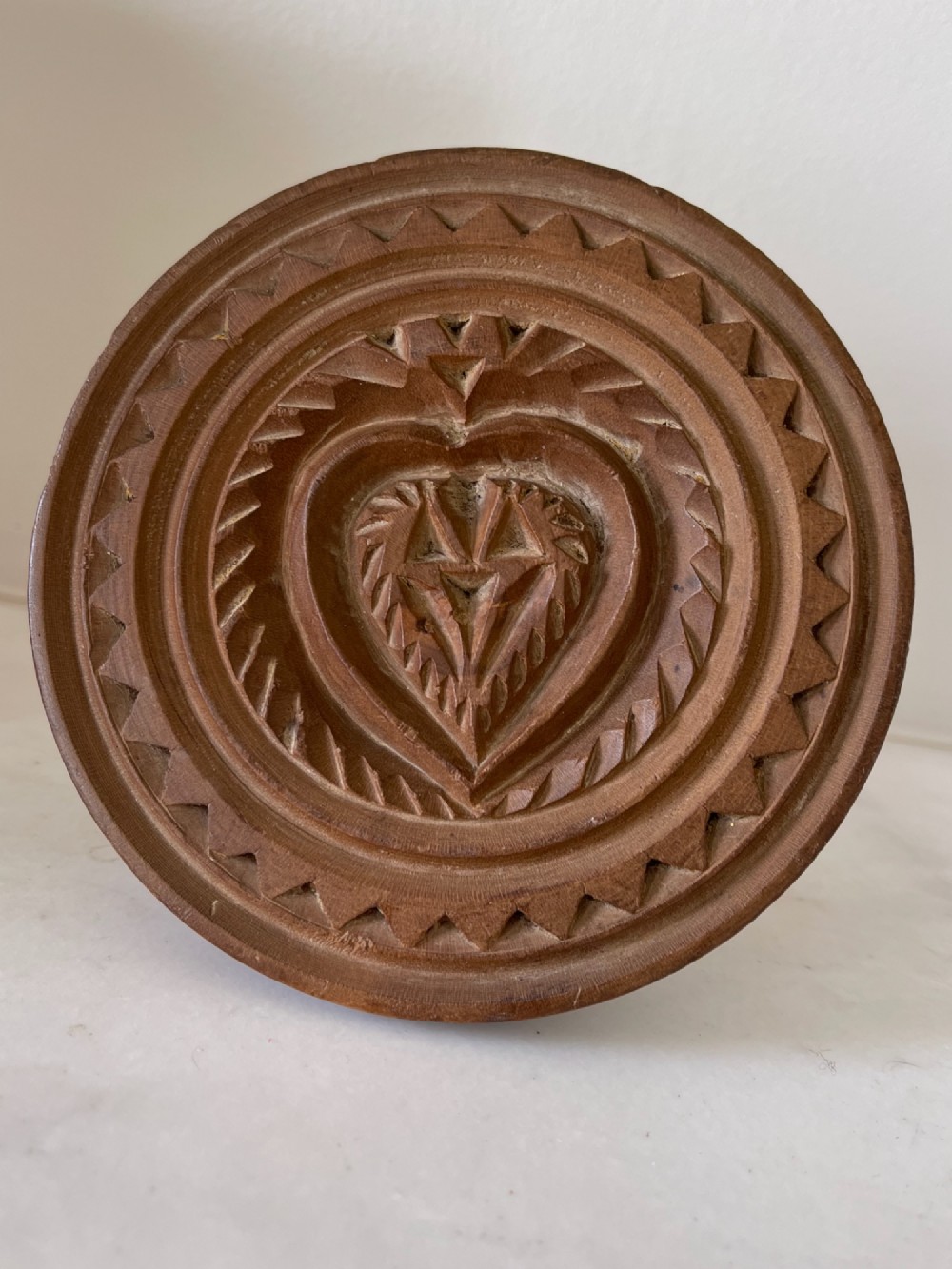
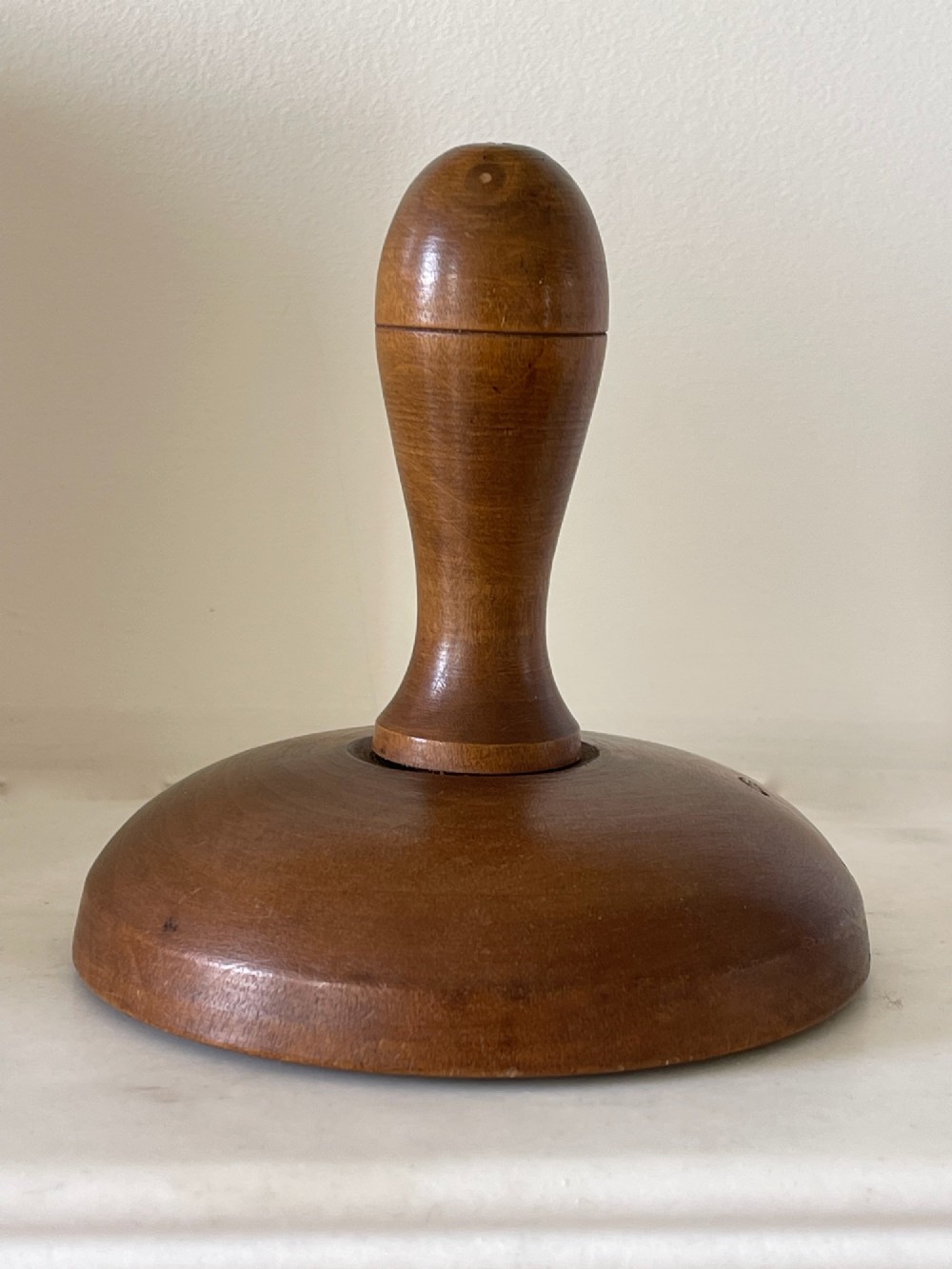
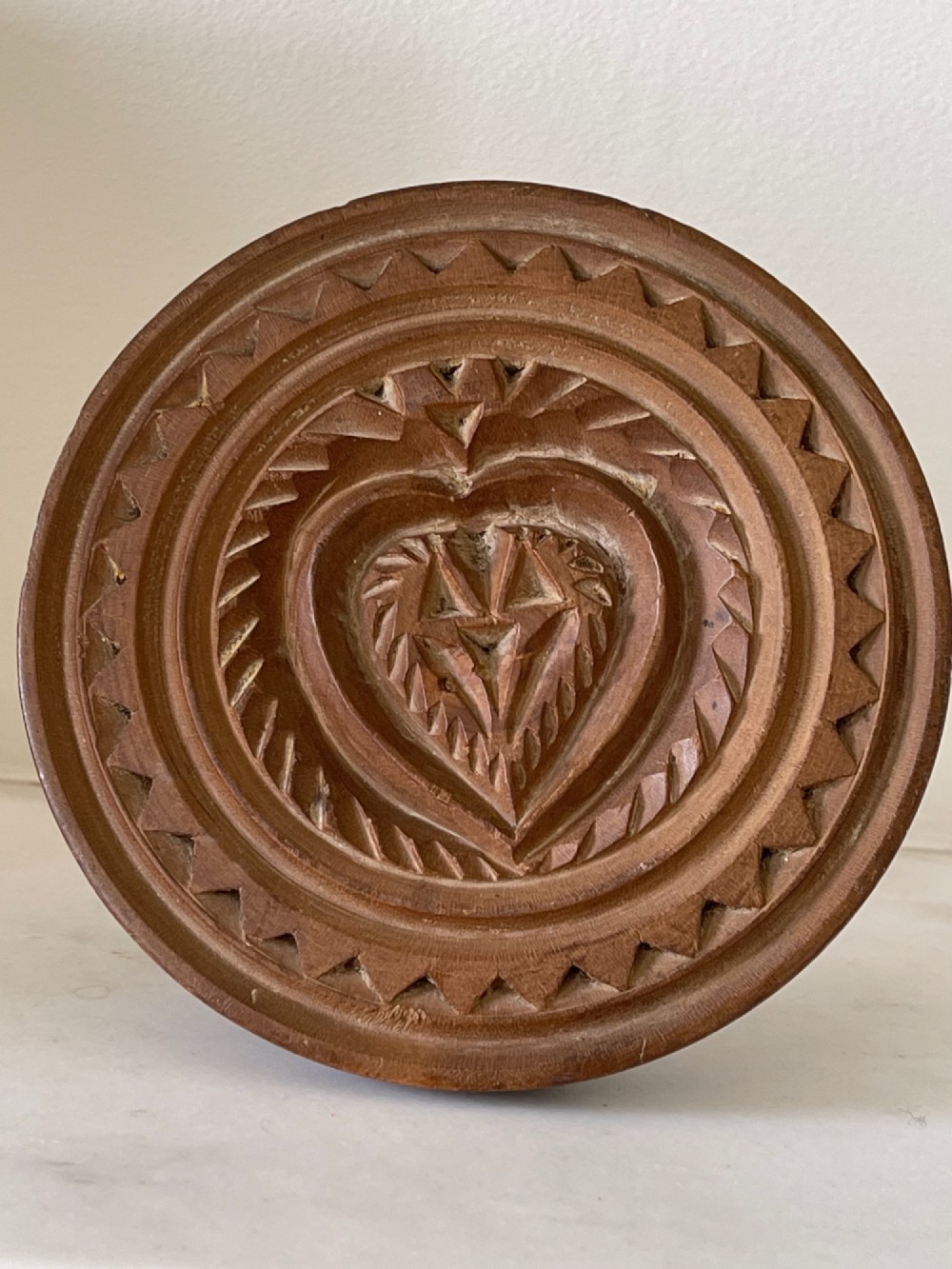
Opus Antiques has dated this piece to the 19th Century.
It measures approx 12cm w x 12cm h.
Arval bread was a type of bread provided at funerals, particularly in the North of England. No doubt it was different from region to region, as it has been described as a ‘particular kind of loaf’, ‘a thin, light and sweet cake’, a ‘funeral loaf spiced with spiced with cinnamon, nutmeg, sugar, and raisins, and ‘a coarse cake, composed of flour, water, yeast, currants, and some kind of spice; in form round, about eight inches in diameter, and the upper surface scored. It was provided not just as sustenance at the wake, but mourners were given it to take home, and it was also distributed to the poor. It was, probably, related to or derived from the earlier practice of "sin-eating", whereby the sins of the deceased were transferred to a person who, for a fee, consumed food & drink handed to him over the coffin.
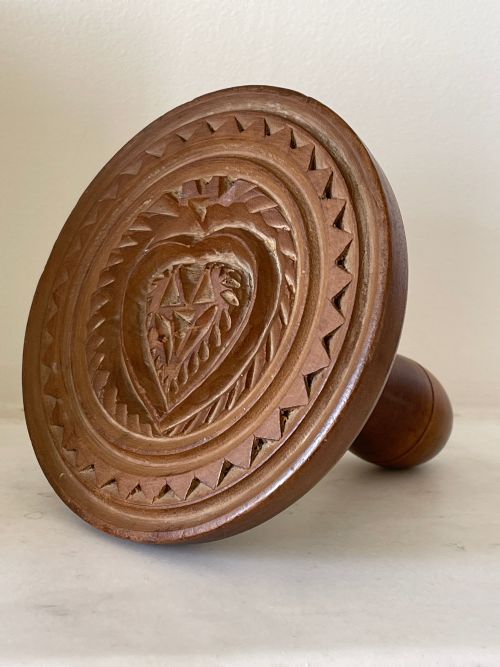
A wrapper found from 1823 contained biscuits eaten at a funeral in Yorkshire. Specially prepared biscuits, wrapped in paper with a black seal and or the deceased’s favourite verse or hymn. These were shortcake like biscuits, flavoured with caraway seeds. The biscuits were traditionally decorated with a heart symbol to represent the soul of the deceased.
There is also reference to the son of George Browne of England in 1702 who made a fine funeral feast, the most expensive item was the Arval bread at a cost of 16 shillings for ‘16 dozen at 14 to the dozen whole loaves.’
Postage in the UK £6
Postage outside of the UK £20
Opus Antiques has dated this piece to the 19th Century.
Antique treen, boxes & decorative georgian items
You can view the stock and full dealer information on the Opus Antiques Profile Page
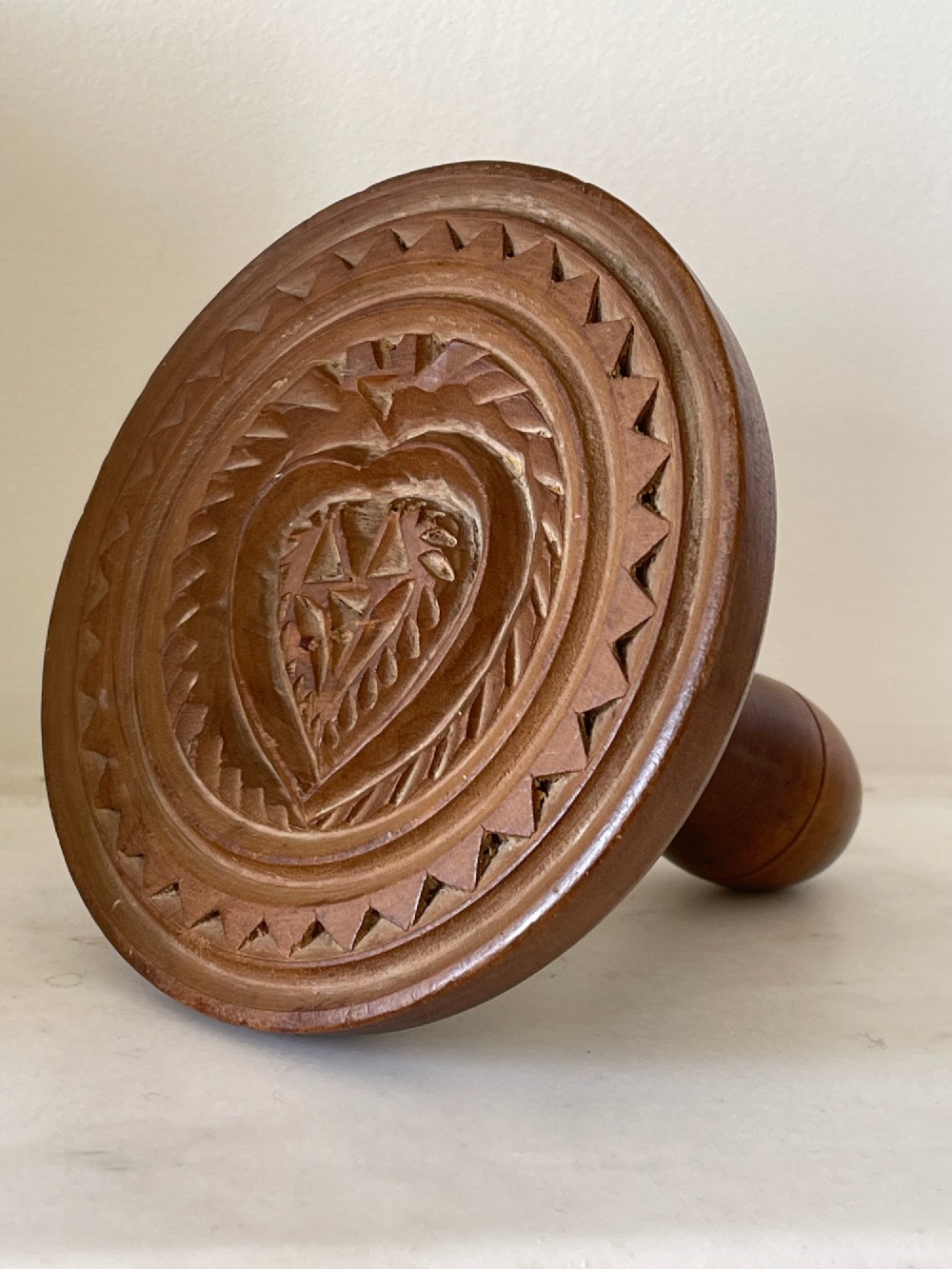
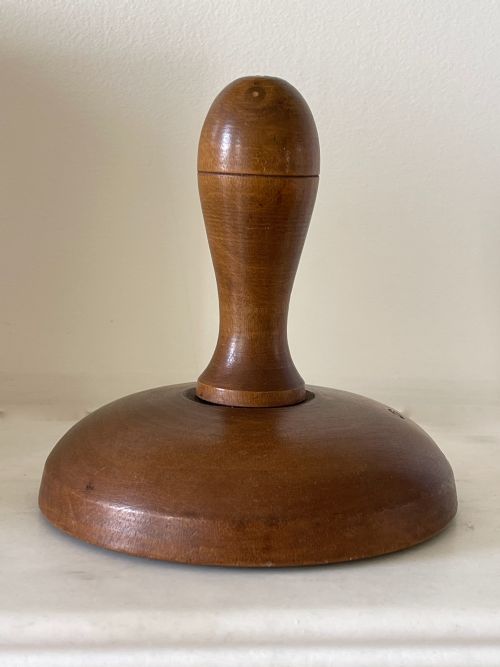
An Unusual Antique Treen Funeral Biscuit Stamp