It was listed by Jason Clarke Antiques. Sold pieces stay on Sellingantiques as a record of what has passed through, and the next one is rarely far away.
Jason Clarke Antiques has dated this piece to the 1850s.
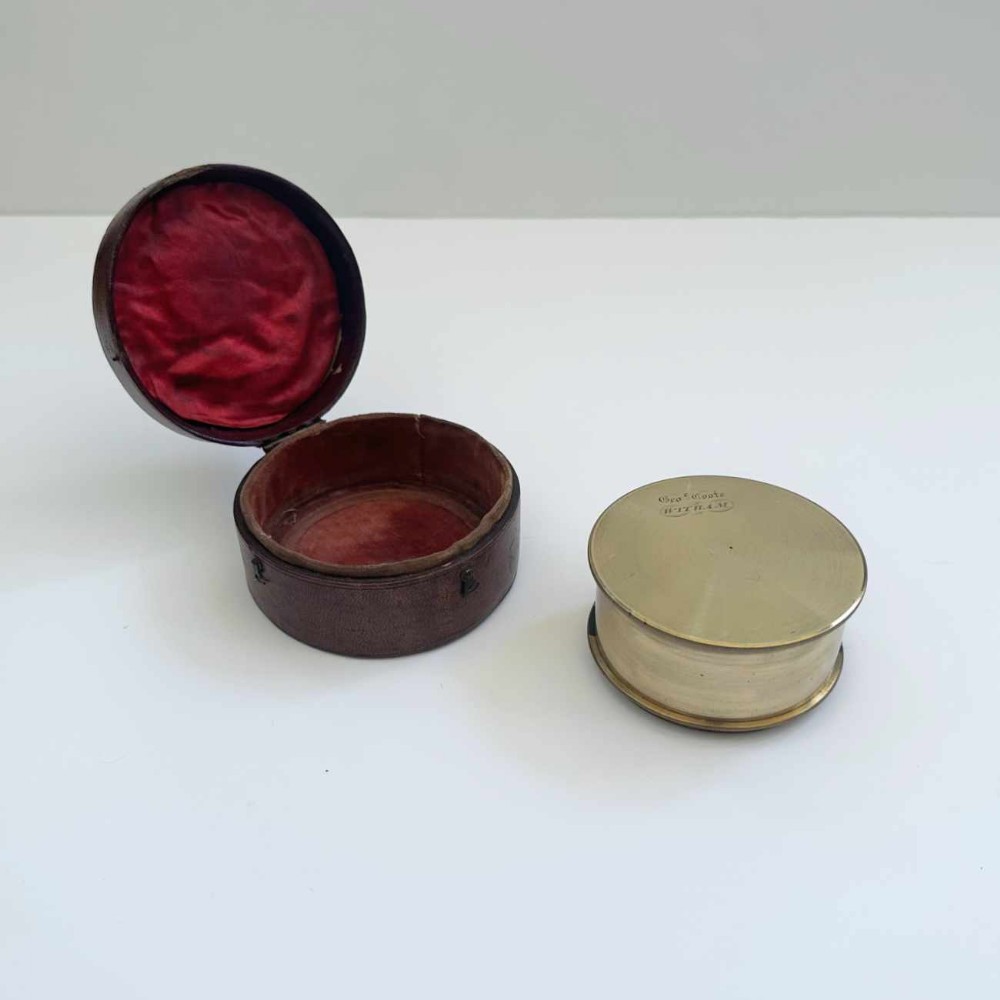
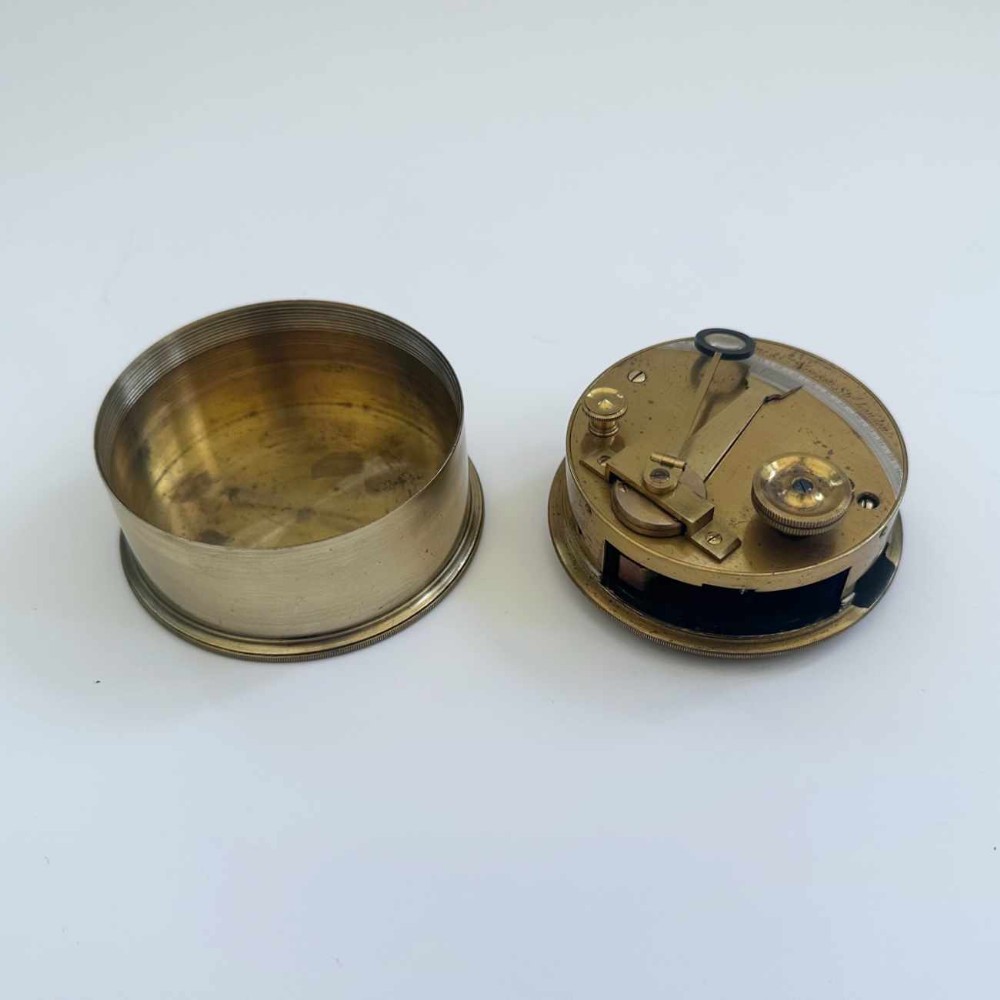
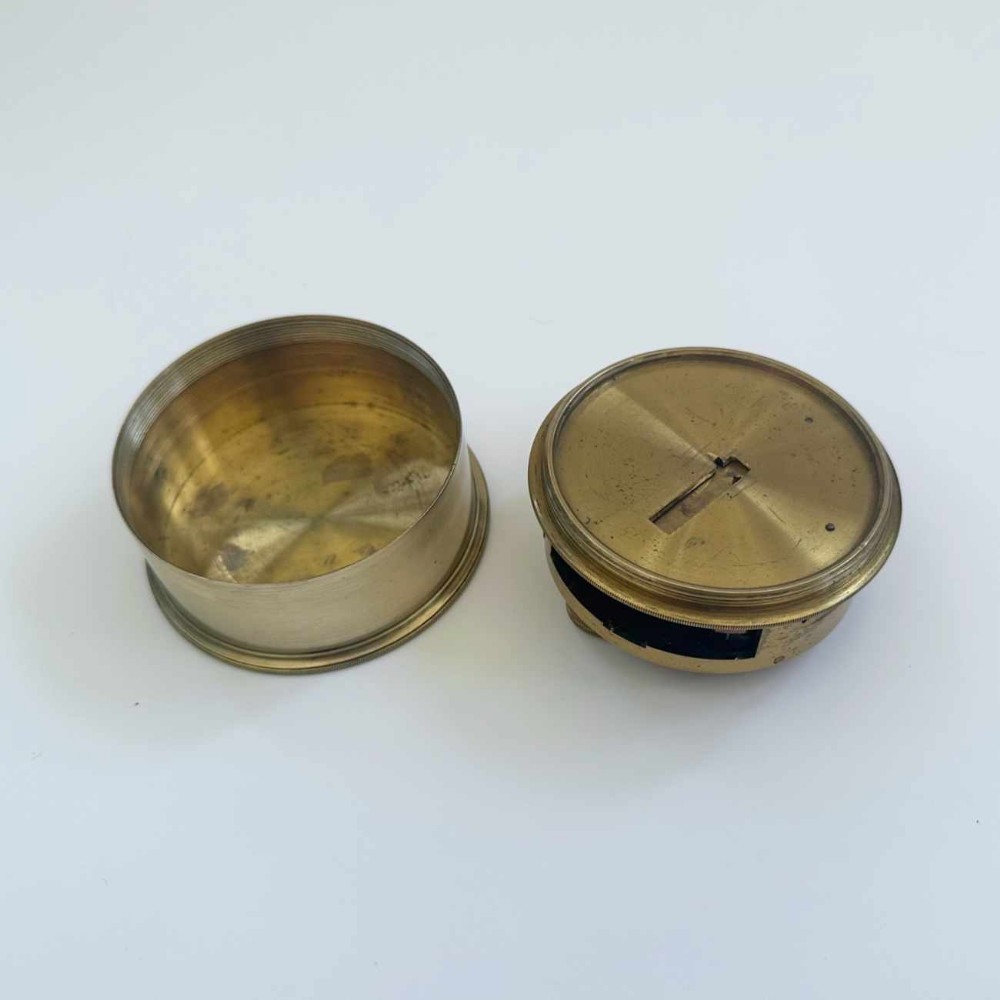
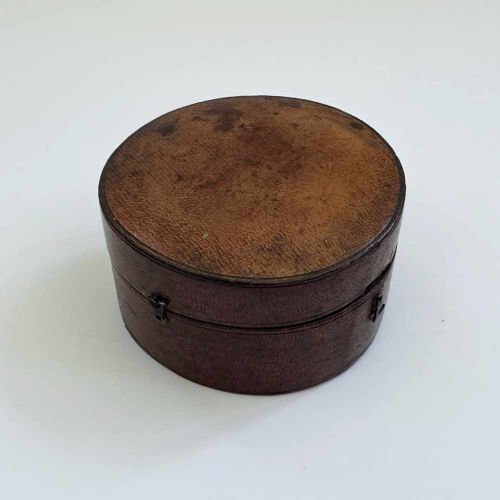
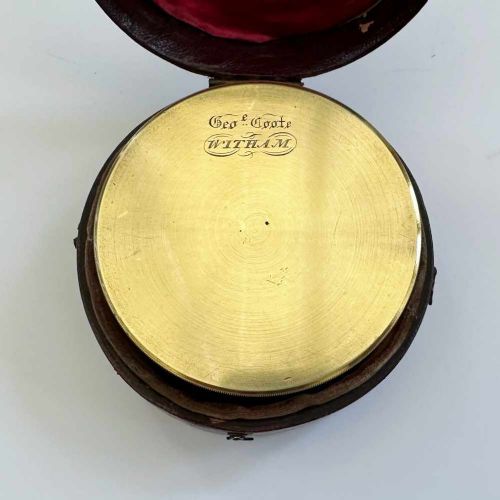
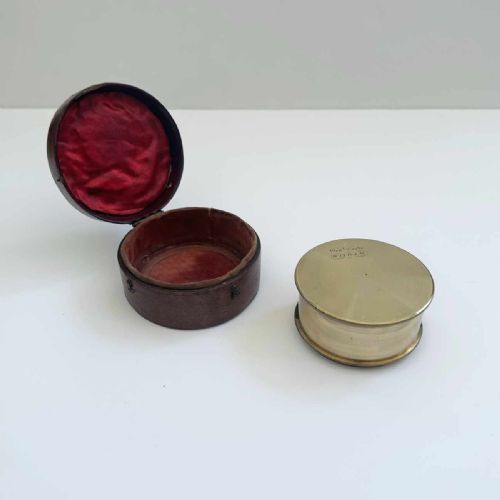
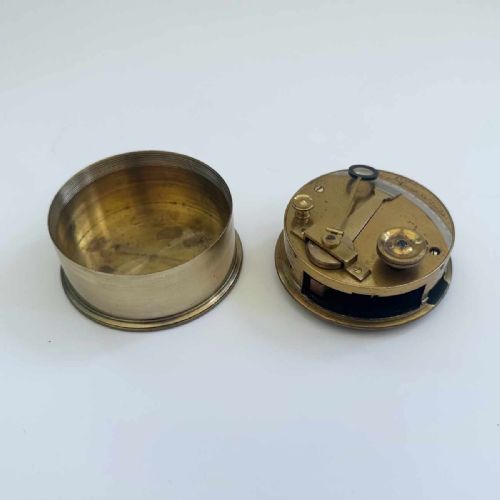
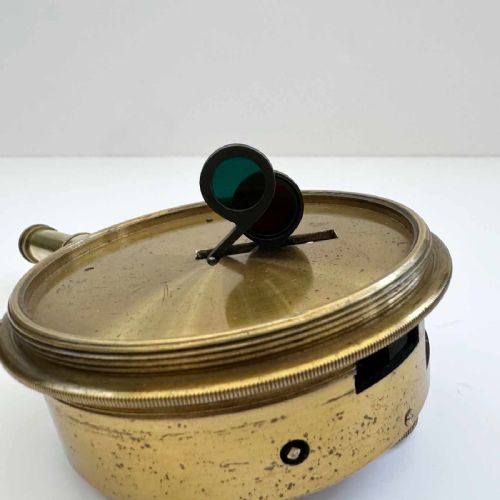
Once removed the lid is inverted and then screwed to a corresponding thread at the other side of the sextant thus forming a base and also a thicker gripping section for the observer’s left hand when using the instrument. The lid is further engraved to the original owner, a George Coote, Witham (in the Count of Essex).
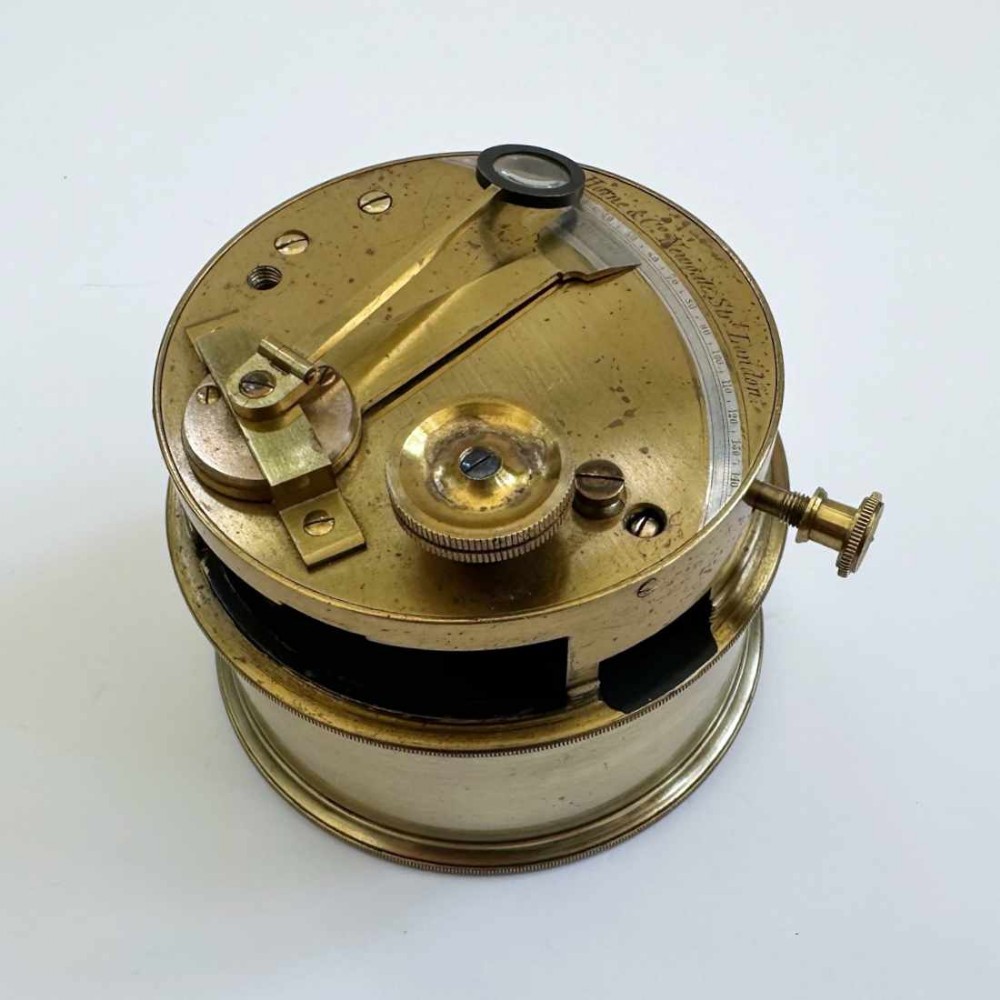
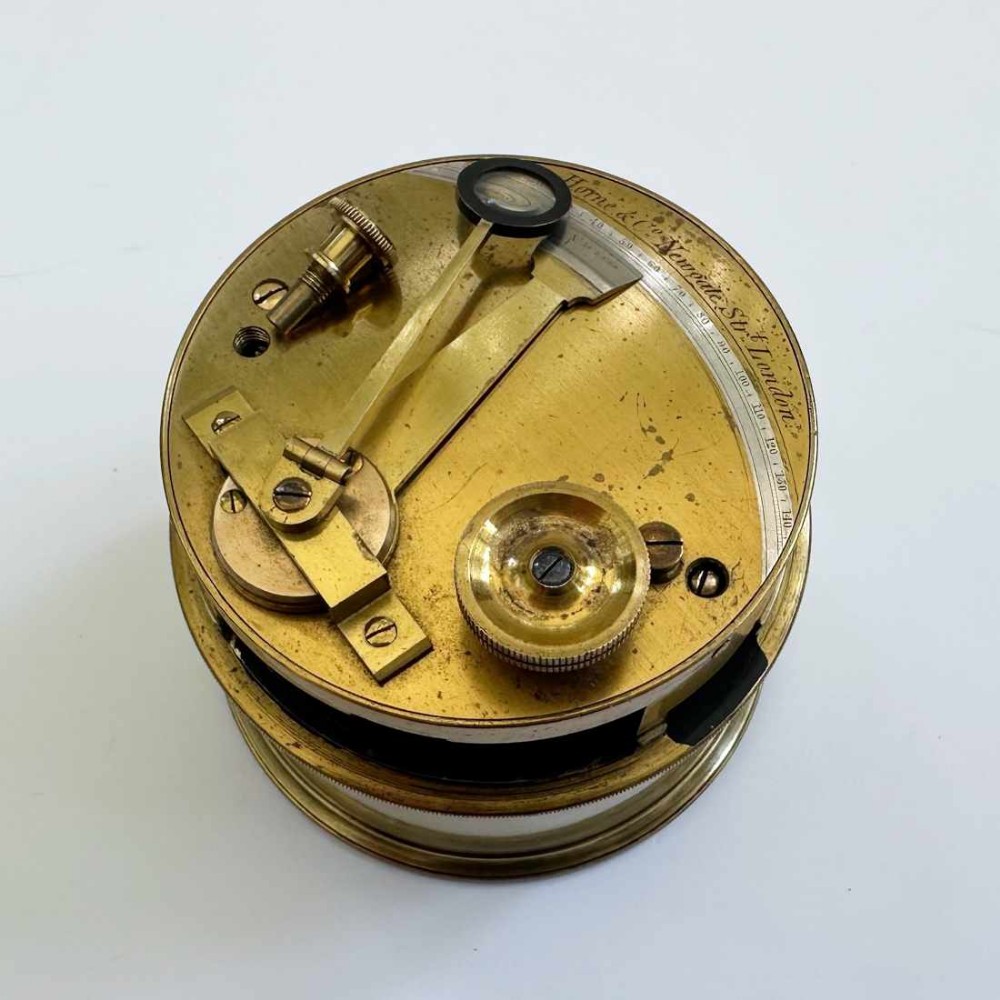
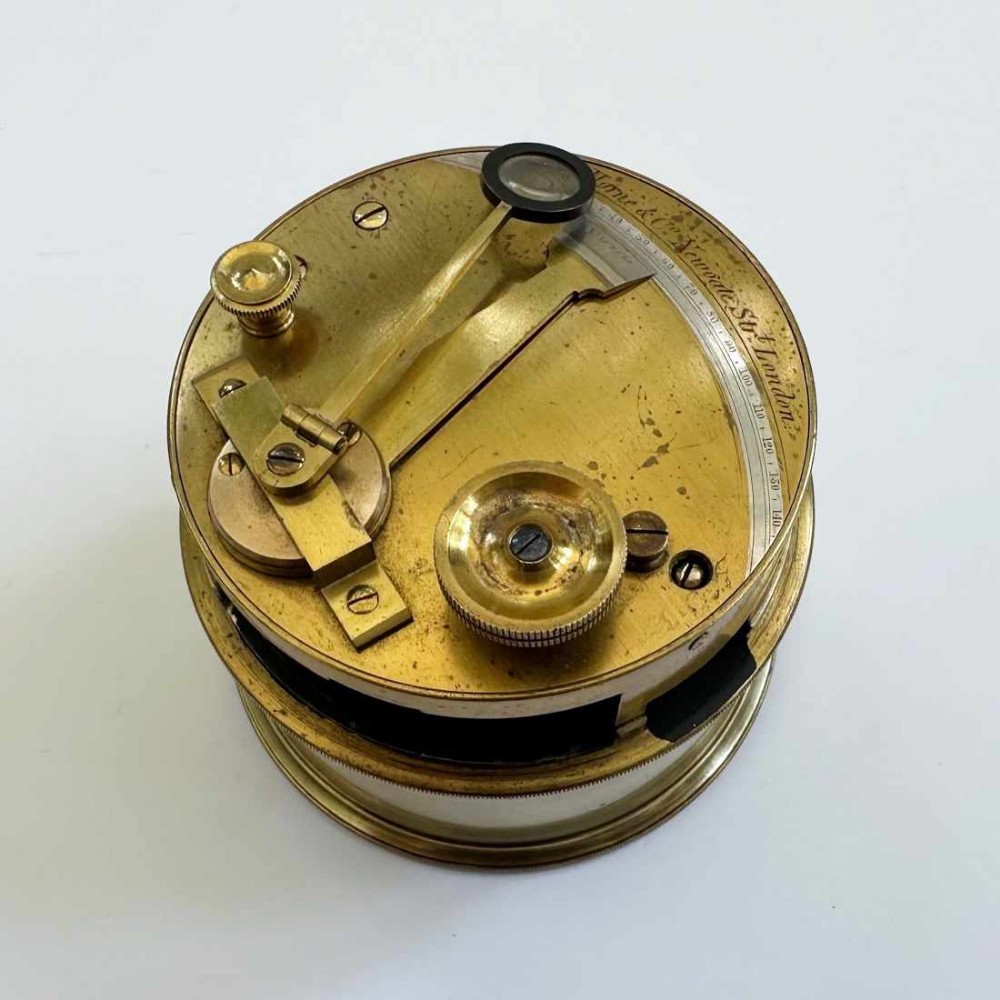
The instrument is in super condition, the face measures 3” in diameter with a large knurled brass screw which operates both a horizontal mirror plate within the sextant and also operates the vernier arm which traverses across the top of the drum against its corresponding silver engraved scale which also has an adjustable magnifier for accuracy of reading. A smaller brass knob is fitted to the top of the drum which may be unscrewed and fitted to the side of the instrument, to assist fine adjustment.
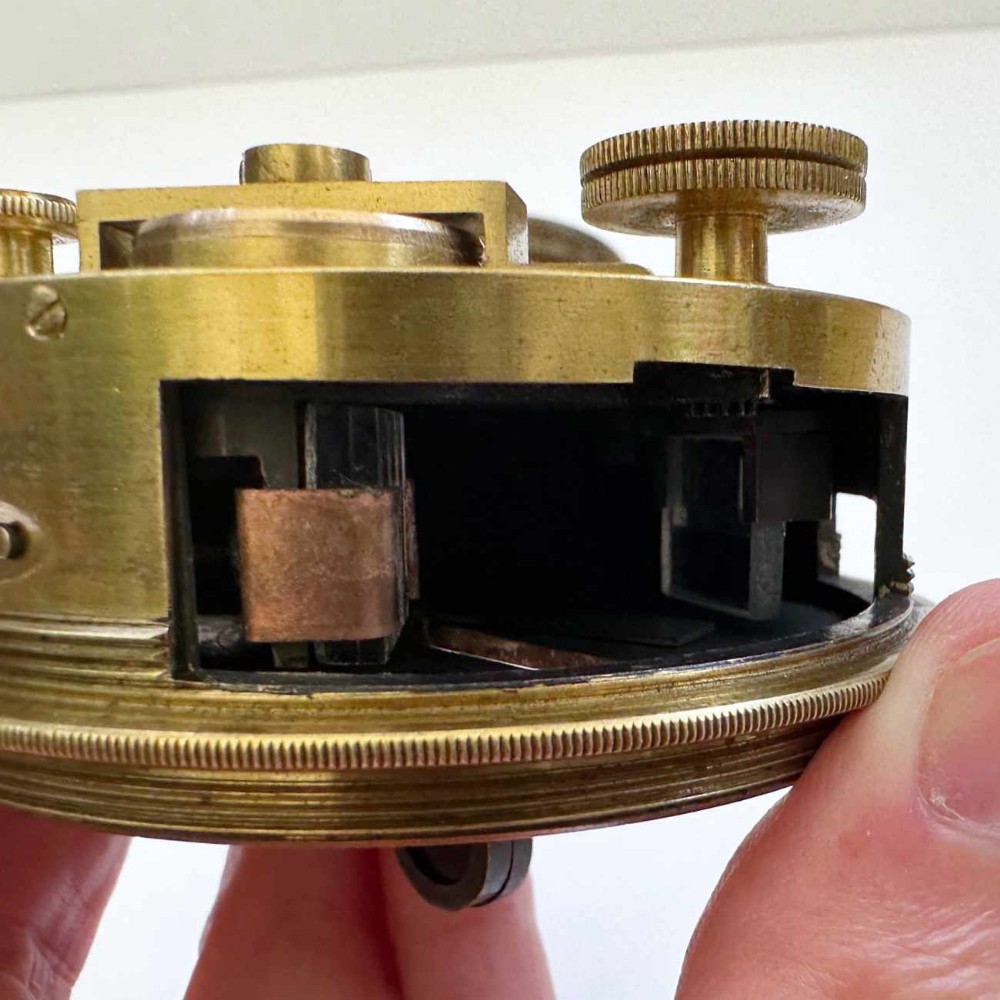
The side of the drum provides two options for observation, namely a small two draw telescope which fits neatly into the drum when not in use but may be pulled out at will. The telescope may be fully removed to allow a slide to be pulled across the remaining hole which has a pinhole to the centre for unmagnified observation. The instrument is also fitted with a red and a green sun filter which may be hinged into position in front of the observation mirror inside. When not required, they may be extended through a slit in the base of the instrument to make space whilst in use.
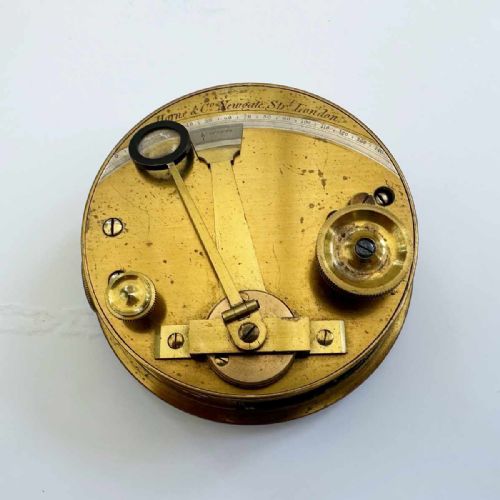
A marvellous example which corresponds very well with William Jones (of W&S Jones) original 1797 design, albeit with numerous improvements
The retailer of this fine instrument, Horne & Co relates to the photographer and partner in the firm of Horne, Thornwaite & Wood, Fallon Horne. Horne’s early career saw him train as a chemist and both he and his future business partner, Edward George Wood (EG Wood) supplied the chemist and instrument maker, Edward Palmer of Newgate Street from 1837. The third and final partner, William Craven Thornthwaite was employed by Edward Palmer and upon Palmer’s retirement from the industry in 1844, the trio formed their famous organisation.
“Messrs Horne, Thornwaite & Wood have acceded to the business of Edward Palmer, having been assistants and manufacturers to him since his first establishment in Newgate Street in 1837”.
It is probably worth discussing the use of Horne & Co on this instrument before proceeding. Numerous possibilities have been suggested for this rare attribution, namely that the use was a simple abbreviation of the long-winded partnership, or that for those instruments that were devised by Horne, he insisted that he retained rights but retailed through the partnership. Without any extant records for Horne & Co other than those that appear on instruments of the period, it seems likely that these are instruments, or designs of instruments that were sold to Palmer prior to the partnership for which Horne agreed to retain some preferential rights. All of the above is speculation however, what is certain is that Horne & Co marked goods were being retailed during the early stages of the partnership. In fact, the Horne & Co electro galvanic therapy machine was exhibited at the Great Exhibition, six years after its formation. They were awarded a prize medal for their photographic equipment at the event and later gained to a Royal patronage from Queen Victoria.
That there was some autonomy amongst the partners seems not to be in doubt as EG Wood left this very successful partnership in 1854 to establish himself on his own account. Following Wood’s departure, the remaining partnership of Horne & Thornthwaite went on to exhibit at the Paris Expo
Jason Clarke Antiques has dated this piece to the 1850s.
You can view the stock and full dealer information on the Jason Clarke Antiques Profile Page
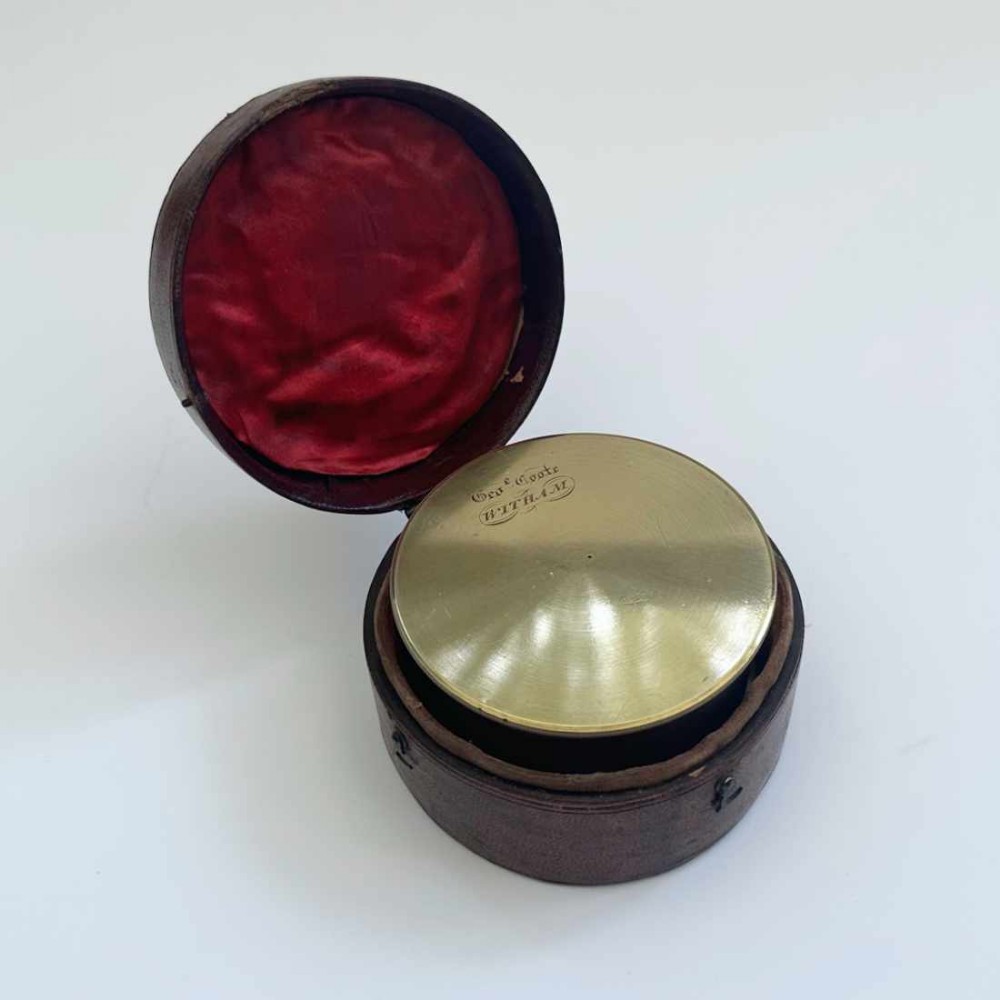
Early Victorian Pocket Sextant by Horne & Co of Newgate Street London