
There are no results to show on this page for that combination of filters:
Art Deco Trestle Tables
A 2026 Guide by Sellingantiques
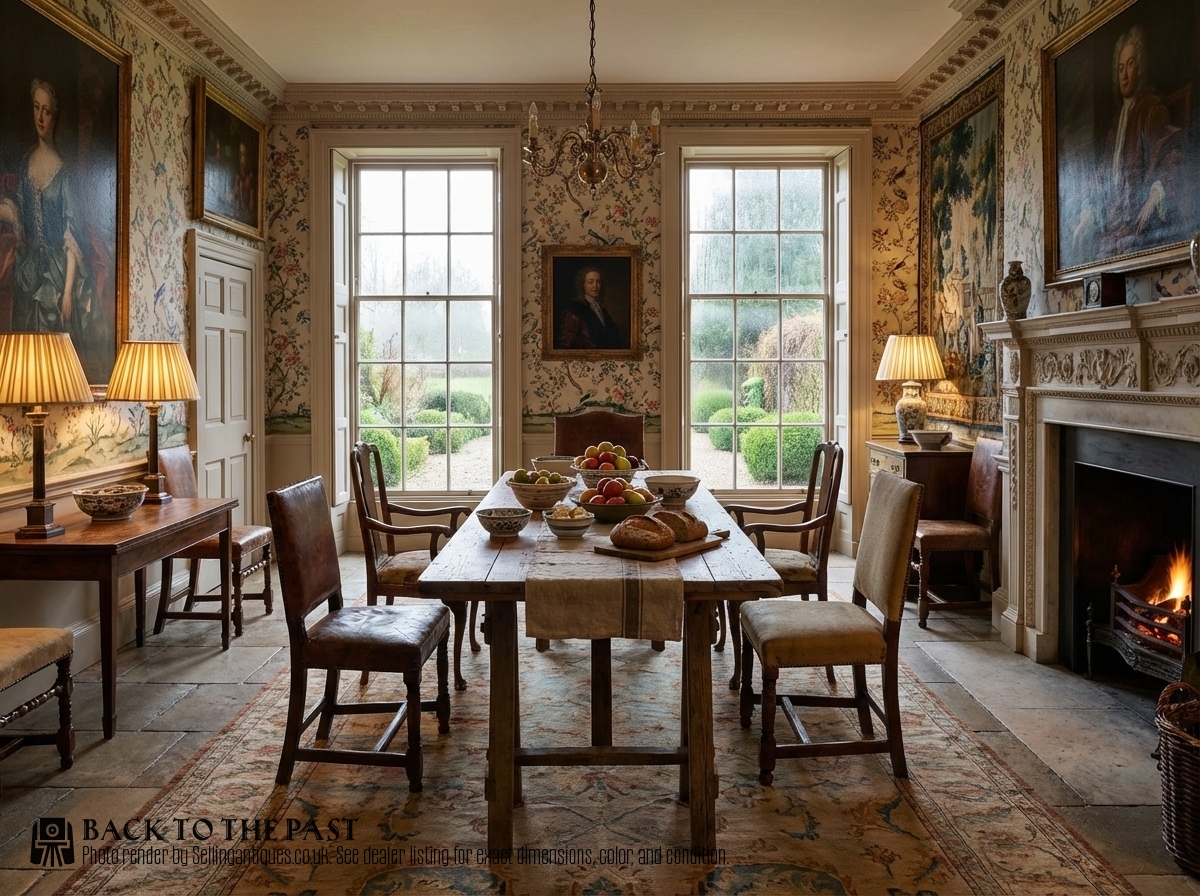
8ft Elm Harvest Table from South West France, Christmas Dinner Picnic Barbecue, 19th Century
Priced at £1,250 from Elmgarden
Look back to the Middle Ages. Halls served multiple purposes, so furniture had to pack flat.
Fixed dining tables only became common during later periods as room layouts changed. The early trestle forms solved a practical space problem for households that needed adaptable floor areas.
Monasteries used them constantly. Long rows of monks needed vast tables that could be cleared away for daily scrubbing.
Regional variations matter. Some European areas kept the collapsible design for centuries, while others started pegging the joints tight.
Most early antique trestle tables have no documented maker, being built by anonymous regional carpenters.
The Arts and Crafts movement revived the form. Workshops like Heal and Son produced solid oak versions around the turn of the century.
Gordon Russell also designed them. His Cotswold firm scaled the heavy traditional base down to suit modern dining rooms.
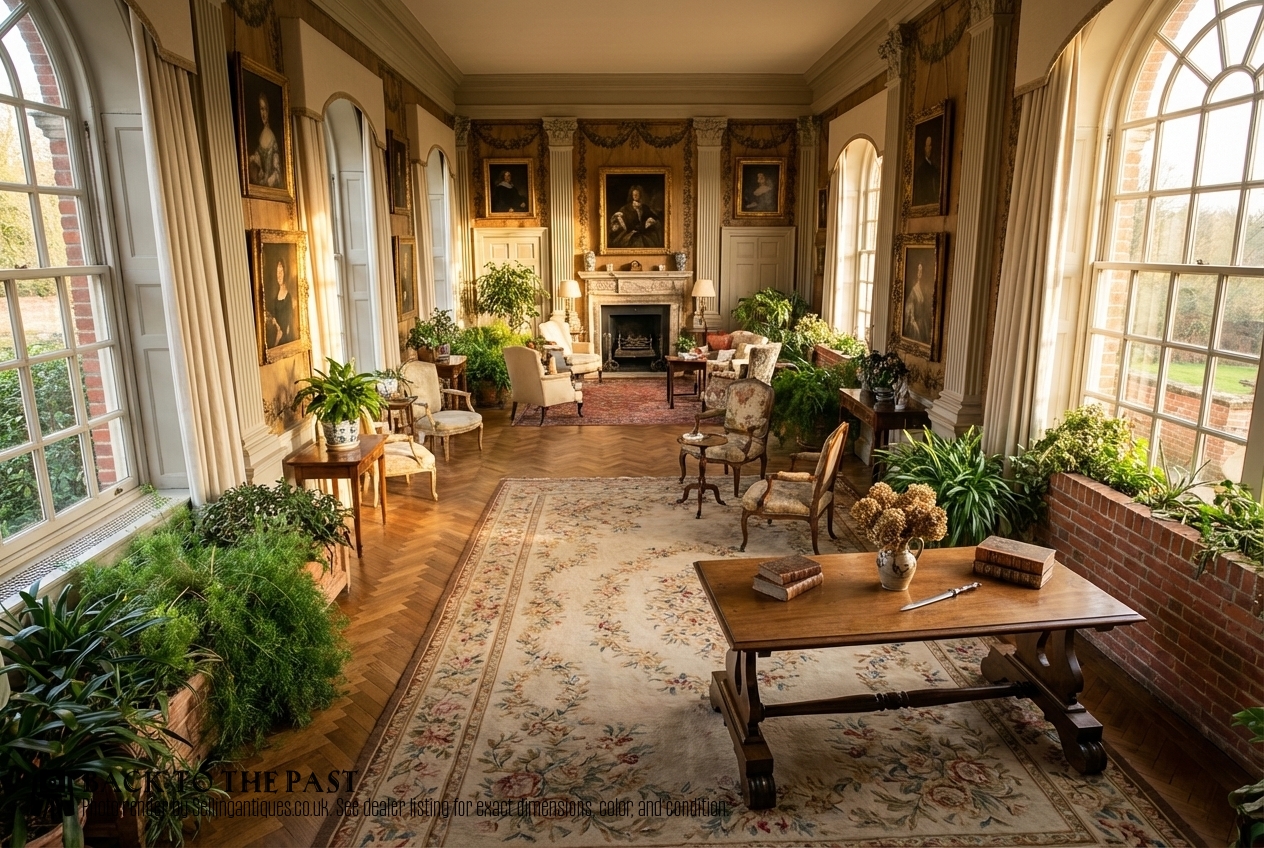
Fine Quality Walnut Coffee Table, 1920
Priced at £570 from Elmgarden
The 2026 retail price guide for Antique Trestle Tables is drawn from a proprietary archive of over 1.1 million retail prices indexed by Sellingantiques since 2003. This guide relies exclusively on their own internal data; no external sources or auction records are used.
Analysing nearly 25 years of UK antique market history alongside current retail values, the data indicates that typical UK retail prices for Antique Trestle Tables range between £800 and £4,000. Entry-level prices generally fall under £800 and premium examples upwards of £4,000.
The central stretcher runs the length of the base to stop the upright supports splaying outwards.
Notice the thick plank top. Multiple boards are usually joined edge-to-edge.
Removable pegs often secure the stretcher to the uprights. You can pull them out to take the base apart entirely when moving house.
Early joints relied heavily on dry pegs. Craftsmen bored holes and hammered in wooden dowels instead of using glue.
Wedged tenons allowed for seasonal timber movement. The wedges could be knocked tight if the wood shrank.
Look closely at the saw marks on the underside. Pit saws leave straight lines while later circular saws leave distinct arcs.
"Diners sat on one side only. They faced the centre of the room to watch the entertainment."
"Wide overhangs at the ends. They provided clear legroom for the master of the house who sat at the head."
"Massive tops acted as acoustic dampeners. An oak board absorbs the clatter of plates, keeping the noise down when a large household ate together."
Based on almost 25 years of Sellingantiques UK antique market data, Antique Trestle Tables appeared 1713 times (out of 1,100,000 antiques) which gives it a rarity score of 71/100.
This score measures scarcity within the Sellingantiques archive only and is not a survey of the entire antiques market, so these statistics may not be indicative of the general availability of Antique Trestle Tables elsewhere.
Many early ones do. The tusk tenons hold wooden wedges that you can gently knock out with a mallet.
Once the wedges are out, the stretcher pulls free from the uprights. The top usually lifts straight off the base.
A trestle design handles uneven floors better than a standard frame. The weight rests on two broad central feet rather than four separate corners.
You might need a small wedge under one end if the floor dips sharply. The sheer weight of the oak usually settles the piece firmly enough for daily use.
Most antique trestle tables are narrow, built for diners sitting along one side.
Expect them to measure under thirty inches across.
Historic wax offers little protection against heat. A hot pan melts the wax quickly and leaves a deep white ring in the surface.
Chopping directly on the boards cuts through the accumulated patina. You need to use proper cutting boards and thick trivets to protect the timber.
Many people place a custom sheet of toughened glass over the top for kitchen work. It guards the wood while keeping the grain visible.
Please note: This Antique Trestle Tables guide and its associated pricing data are provided for general informational purposes only. It does not constitute formal financial, investment, or appraisal advice and should not be relied upon as the sole basis for any commercial activity, purchasing, or sales decisions. Sellingantiques.co.uk accepts no liability for any actions taken in reliance on this information. Always consult with a qualified professional or independent appraiser.
