



A 2026 Guide by Sellingantiques

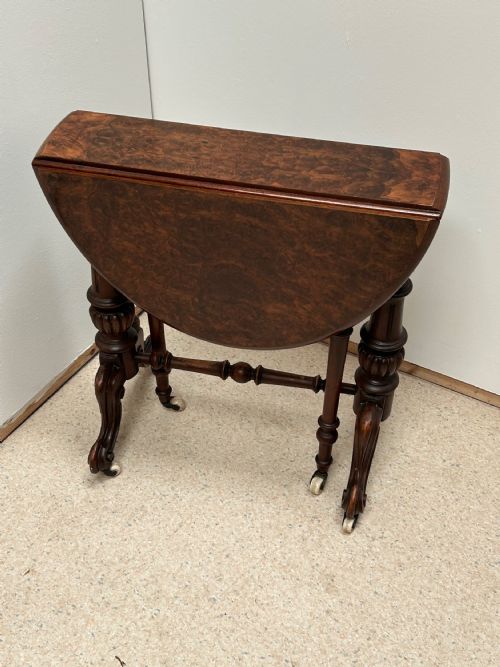
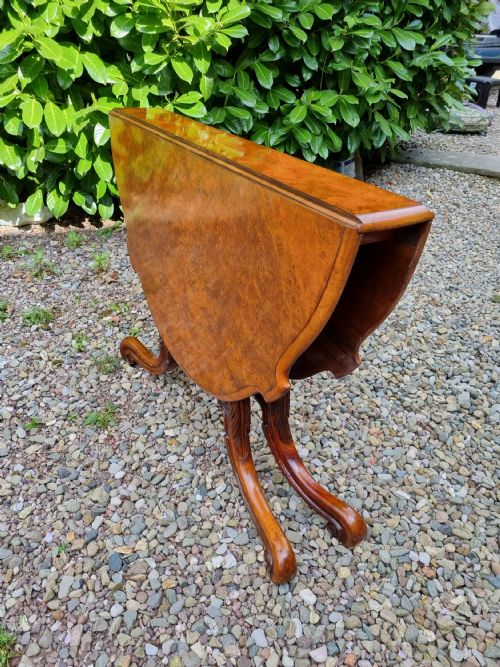
Edwardian Solid Mahogany Small Drop Leaf Sutherland Occasional Table C1890, Edwardian
Priced at £265 from Lincoln Restorations
Named after Harriet Howard, the Victorian Duchess of Sutherland. She was a close friend to Queen Victoria and a trendsetter in society drawing rooms.
Look at the rise of afternoon tea. These folding frames solved the problem of serving guests in cluttered mid-nineteenth century parlours.
Most date from between 1850 and 1910. Production peaked when middle-class households sought adaptable drawing room furniture.
Antique Sutherland tables turn up constantly in Britain. Provincial workshops and large urban factories made them in large numbers.
Holland & Sons supplied pieces matching this description to aristocratic households. Their stamped marks sometimes appear on the central rail.
Gillows produced high-quality variations. Their work often features tighter turnings and better timber selection than standard trade models.
Keep in mind that thousands don't carry any maker mark. The vast majority of antique Sutherland tables came from anonymous cabinet workshops.
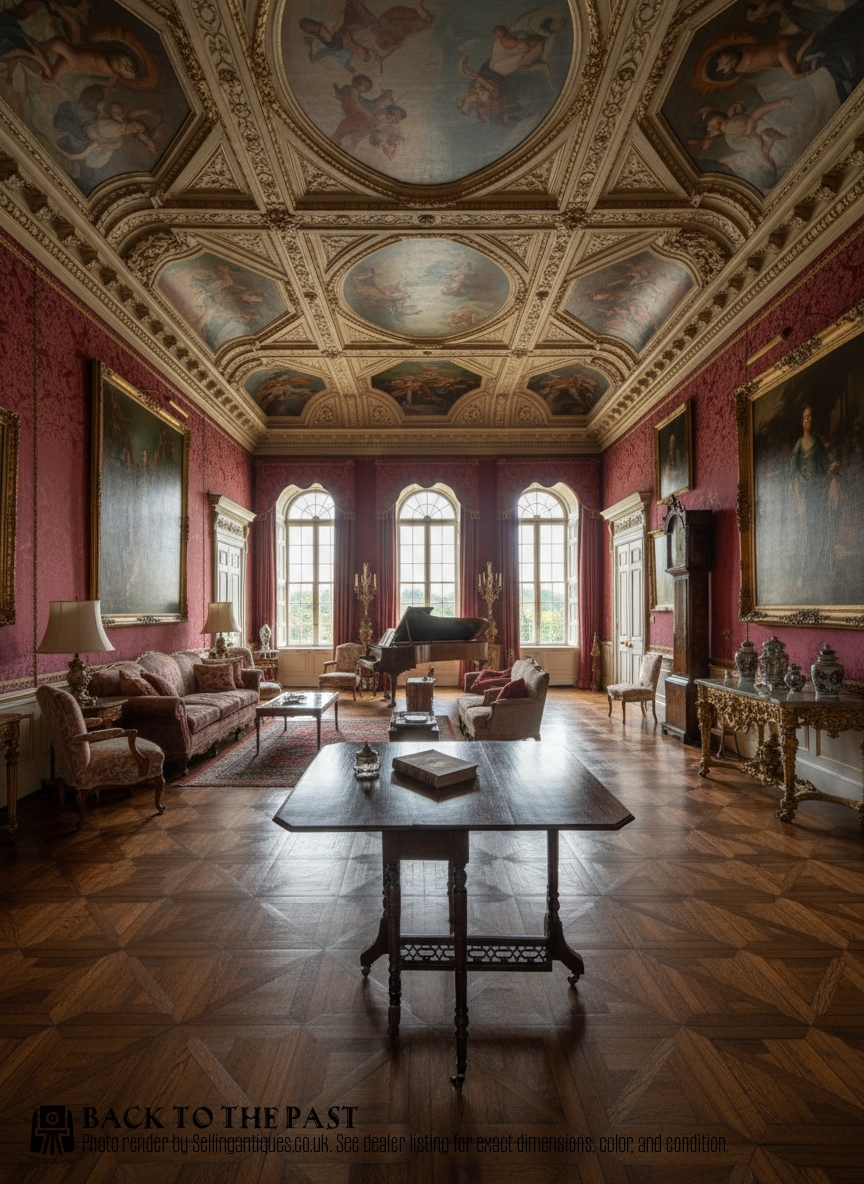
Antique Victorian Quality Solid Walnut Sutherland Table, 1880
Priced at £885 from London City Antiques
The 2026 retail price guide for Antique Sutherland Tables is drawn from a proprietary archive of over 1.1 million retail prices indexed by Sellingantiques since 2003. This guide relies exclusively on their own internal data; no external sources or auction records are used.
Analysing nearly 25 years of UK antique market history alongside current retail values, the data indicates that typical UK retail prices for Antique Sutherland Tables range between £300 and £1,300. Entry-level prices generally fall under £300 and premium examples upwards of £1,300.
The central fixed top is narrow. Some measure barely six inches across when folded flat.
Drop leaves reach almost to the floor. When you open them out, the table surface multiplies in size.
Swing-out gatelegs support the deep flaps. They usually pivot from the main frame and rest on small castors.

Elegant Antique Edwardian Satinwood Sutherland Tea Table by Maple & Co, 1900
Priced at £695 from Unique Antiques by Emma Jade
Early forms relied on heavy turned uprights. These stout pillars often featured deep reeding or faceted octagonal profiles cut by hand.
Notice the move towards fretwork. Later Edwardian examples often have pierced side panels instead of solid turned columns to reduce weight.
Bobbin turning became popular for the legs and stretchers. Lathe workers shaped continuous rounded profiles along the timber.
"Some examples conceal a small drawer hidden in the narrow central frieze. This space acts as a handy compartment for playing cards or napkins."
"They slide effortlessly into tight alcoves. The slim folded profile makes them one of the most adaptable folding designs of the nineteenth century."
"Miniaturised versions exist. These tiny antique Sutherland tables stand much lower to the ground and suit modern rooms as lamp stands."
Based on almost 25 years of Sellingantiques UK antique market data, Antique Sutherland Tables appeared 1221 times (out of 1,100,000 antiques) which gives it a rarity score of 78/100.
This score measures scarcity within the Sellingantiques archive only and is not a survey of the entire antiques market, so these statistics may not be indicative of the general availability of Antique Sutherland Tables elsewhere.
Those are castors. Victorian makers fitted them to furniture so servants could move heavy items around a drawing room without lifting them.
Early ones have small brass wheels. By the middle of the nineteenth century, cabinet makers switched to white or brown ceramic wheels on a brass mechanism.
The defining feature is the proportion of the top. A standard gateleg table has a broad centre section and moderate leaves.
Antique Sutherland tables show a stark contrast. The fixed centre measures just a few inches wide, while the drop leaves reach close to the floor.
They also rely on a lighter frame. The legs swing out from a narrow trestle rather than forming a wide box structure.
Most are too low and unstable for dining. The makers designed them for taking tea from low parlour chairs.
The narrow base means they tip easily if leaned upon.
You are looking at a rule joint. Cabinet makers routed a convex curve on the fixed top and a matching concave curve on the leaf.
This stops an ugly square gap appearing when the leaf hangs down. The metal hinges sit recessed underneath the wood, keeping the moving parts hidden.
Please note: This Antique Sutherland Tables guide and its associated pricing data are provided for general informational purposes only. It does not constitute formal financial, investment, or appraisal advice and should not be relied upon as the sole basis for any commercial activity, purchasing, or sales decisions. Sellingantiques.co.uk accepts no liability for any actions taken in reliance on this information. Always consult with a qualified professional or independent appraiser.
