
There are no results to show on this page for that combination of filters:
Arts & Crafts Serving Tables
A 2026 Guide by Sellingantiques
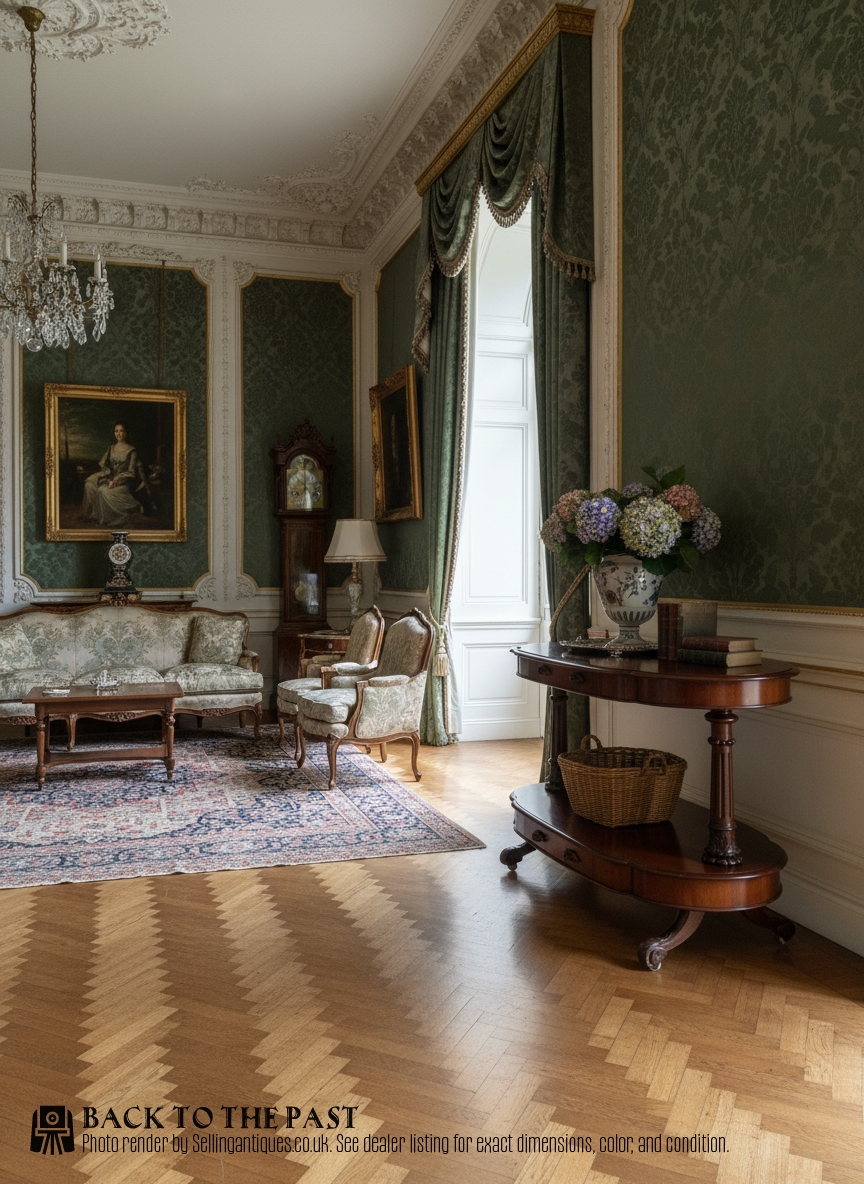
Large Antique Mahogany Oval Shaped Freestanding Serving/console Table, 1860
Priced at £1,885 from London City Antiques
Antique serving tables emerged when dining rooms became dedicated spaces. Previously, servants brought food in on trays and set them on folding stands.
They sit flat against the wall. The back edge is often plain because nobody was meant to see it.
By the late Georgian period, these tables held the hot plates and wine coolers. Staff stood behind them to dish out the meal.
Look at the height. They're taller than a standard dining table, so servants could carve meat without bending over too far.
Thomas Chippendale supplied serving tables for grand houses. His firm's ledgers record large mahogany examples with fluted legs.
Gillows of Lancaster stamped some of their pieces. You'll often find their marks on the top edge of a drawer front.
Most provincial production lacks a signature. Local cabinetmakers copied pattern books and adapted the scale to fit townhouses.
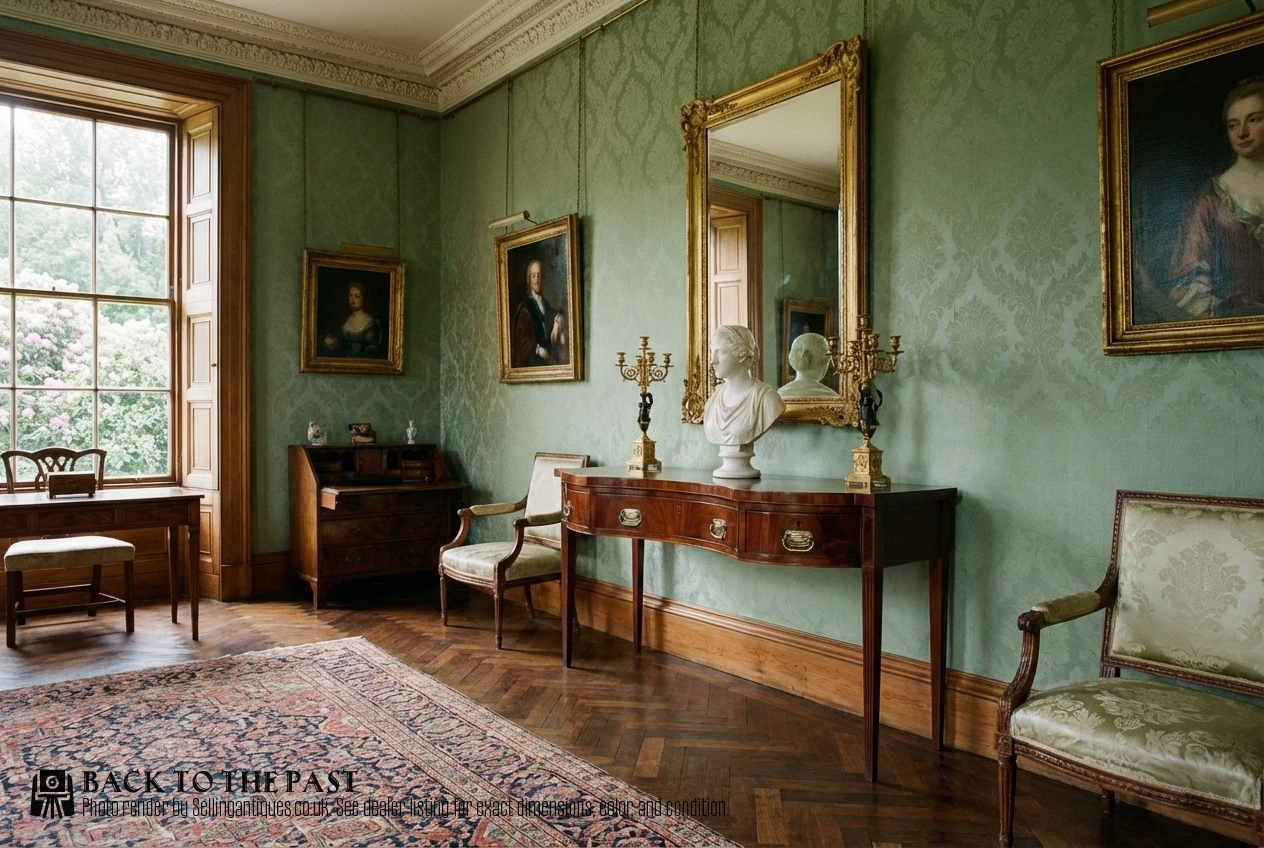
18th C Gillow Mahogany Serpentine Sideboard / Serving Table, 1800
Priced at £2,600 from Walton House Antiques
The 2026 retail price guide for Antique Serving Tables is drawn from a proprietary archive of over 1.1 million retail prices indexed by Sellingantiques since 2003. This guide relies exclusively on their own internal data; no external sources or auction records are used.
Analysing nearly 25 years of UK antique market history alongside current retail values, the data indicates that typical UK retail prices for Antique Serving Tables range between £600 and £4,300. Entry-level prices generally fall under £600 and premium examples upwards of £4,300.
Shallow drawers run along the frieze. They'll hold cutlery and napkins close at hand during service.
A brass gallery sometimes runs along the back edge. This stopped plates from getting pushed off against the dining room wallpaper.
Some have lead-lined cellaret drawers. Heavy bottles sat right inside the table structure to save floor space.
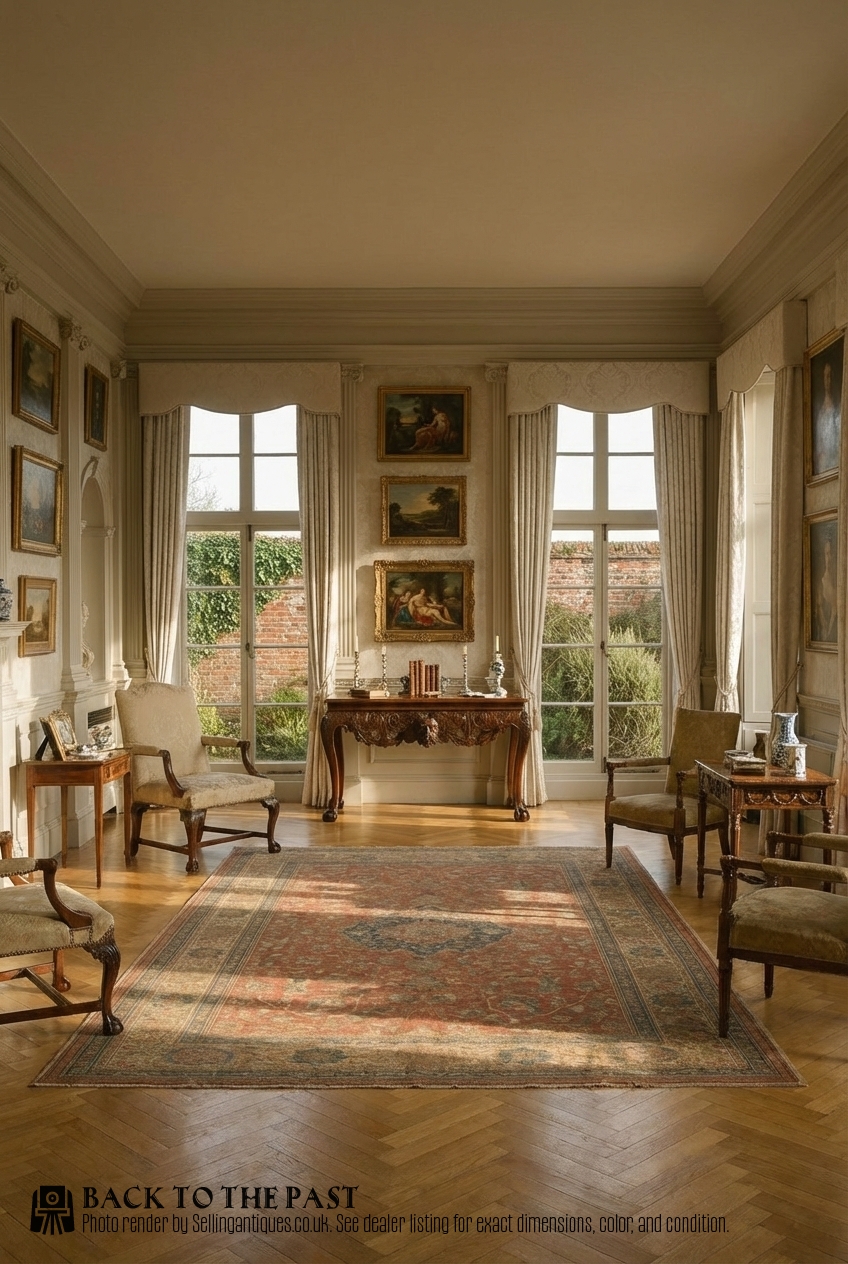
Fine Antique Irish Mahogany George II Style Serving Table, Circa 1900, 1910
Priced at £2,100 from Antiques Decorative (Sussex)
Early examples rely on pegged mortise and tenon joints for the main frame. Solid and heavy.
Turn the drawers over. Hand-cut dovetails hold the sides to the fronts, getting finer as you move into the nineteenth century.
Veneer work became common later. Cabinetmakers laid thin sheets of highly figured wood over cheaper solid carcases to save money.
"Some function as expanding tables. Clever internal slides pull out from the sides to double the surface area when guests arrive."
"The back legs are often flush with the top edge. This allowed the table to sit tight against the skirting board."
"Certain designs include concealed warming compartments. Iron plates sat under the timber to keep food warm during long meals."
Based on almost 25 years of Sellingantiques UK antique market data, Antique Serving Tables appeared 3507 times (out of 1,100,000 antiques) which gives it a rarity score of 50/100.
This score measures scarcity within the Sellingantiques archive only and is not a survey of the entire antiques market, so these statistics may not be indicative of the general availability of Antique Serving Tables elsewhere.
They stand taller than a normal dining table. Most sit around thirty-four to thirty-six inches high from the floor.
This height meant servants could carve meat or pour wine without bending over. It keeps the food at an easy working level.
Cutlery usually goes there. Many original serving tables have baize-lined sections inside the central drawer specifically for knives and forks.
They're shallow because you don't need much depth for silver.
A serving table often works well in a hallway. They share the same long, narrow footprint as a console table. Because they were built to sit flat against a dining room wall, the back is flush.
The main difference is the height. Serving tables are quite tall, so you might find you need a larger mirror or painting above it to balance the proportions on a hallway wall.
Those threaded finials are a practical feature for cleaning. Brass galleries tarnish quickly in a room with coal fires and food steam.
Servants unscrewed the finials to remove the entire brass rail in one piece. They could then polish the metal away from the table without getting abrasive cleaning paste on the mahogany surface.
Please note: This Antique Serving Tables guide and its associated pricing data are provided for general informational purposes only. It does not constitute formal financial, investment, or appraisal advice and should not be relied upon as the sole basis for any commercial activity, purchasing, or sales decisions. Sellingantiques.co.uk accepts no liability for any actions taken in reliance on this information. Always consult with a qualified professional or independent appraiser.
