
There are no results to show on this page for that combination of filters:
Aesthetic Chess Tables
A 2026 Guide by Sellingantiques
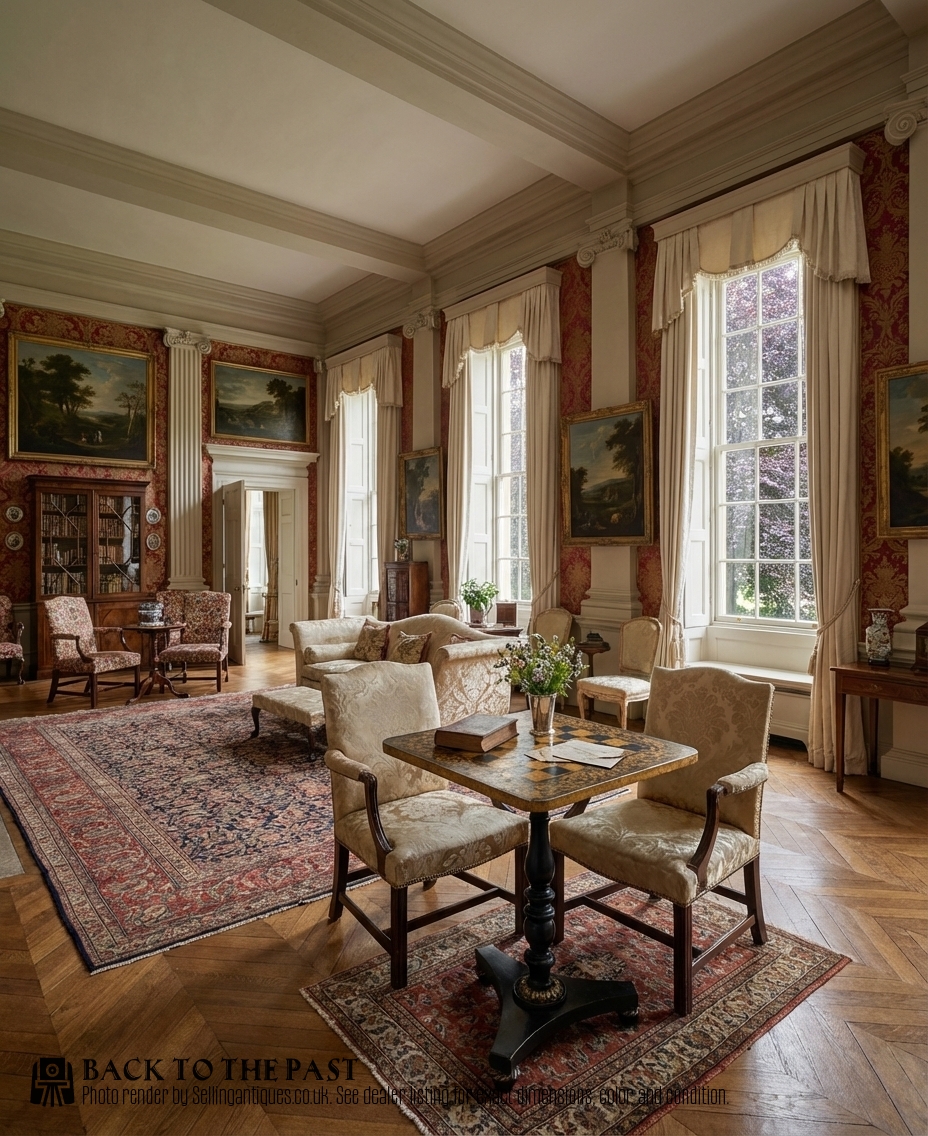
Fine Chess Table, Regency Penwork & Ebonised Chess / Games Table Attributed to George Merrifield, Regency
Priced at £2,275 from A Brookes
Dedicated games tables became standard fixtures in wealthy households during the eighteenth century.
The demand for specific antique chess tables grew alongside the game's rising popularity in Victorian parlours.
Earlier examples often folded away when they weren't in use to save space in crowded rooms.
Look for multi-purpose tables from the nineteenth century that incorporate backgammon boards and writing surfaces.
Gillows of Lancaster produced fine games tables with distinctive reeded legs during the Regency period.
Expect heavy mahogany forms with carved lion paw feet from William Trotter of Edinburgh.
Victorian makers like Edwards and Roberts occasionally stamped their names on the top edge of a drawer front.
The 2026 retail price guide for Antique Chess Tables is drawn from a proprietary archive of over 1.1 million retail prices indexed by Sellingantiques since 2003. This guide relies exclusively on their own internal data; no external sources or auction records are used.
Analysing nearly 25 years of UK antique market history alongside current retail values, the data indicates that typical UK retail prices for Antique Chess Tables range between £500 and £2,800. Entry-level prices generally fall under £500 and premium examples upwards of £2,800.
A central inset chequerboard top remains the primary defining characteristic of these specific tables.
Shallow frieze drawers sit just below the playing surface to hold the small wooden pieces.
Look for tripod bases on smaller occasional tables built specifically for two seated players.
Early cabinetmakers relied on thick sawn veneers glued hot over a stable pine core.
Shaping central pedestals on pedal-powered lathes allowed turners to create intricate baluster profiles.
Later Victorian pieces often show signs of early mechanisation through identical machine-cut edge mouldings.
"Some designs hide a leather-lined backgammon well directly beneath a sliding chessboard top."
"Check the central column for hidden compartments built to secure wagers."
"A few rare tables included specially designed pivoting candle slides to illuminate the board during winter evenings."
Based on almost 25 years of Sellingantiques UK antique market data, Antique Chess Tables appeared 557 times (out of 1,100,000 antiques) which gives it a rarity score of 89/100.
This score measures scarcity within the Sellingantiques archive only and is not a survey of the entire antiques market, so these statistics may not be indicative of the general availability of Antique Chess Tables elsewhere.
Most standard playing surfaces feature squares measuring between one and a half to two inches across. This provides enough room for typical nineteenth-century playing pieces to sit comfortably without crowding the board.
Tournament sizes are larger, but domestic tables weren't built for professional matches.
Painted chequerboards turn up on provincial pieces. Rural makers sometimes painted the squares directly onto a solid pine or elm top when they lacked the tools for intricate veneer work.
These surfaces often wear away in the centre from decades of sliding pieces. While marquetry is more common on formal town furniture, a painted board remains a legitimate historic technique.
Hardly ever. Sets get separated from their tables over the decades.
You'll usually have to source pieces separately. Just check the base diameter fits within the squares.
That void typically held a fabric workbag or small gaming accessories. Many Victorian tables served a dual purpose, functioning as a sewing table during the day and a games table in the evening.
The sliding top allowed quick access to the storage well. Faded paper or silk linings are standard findings in these compartments, originally meant to protect delicate threads or expensive carved sets.
Please note: This Antique Chess Tables guide and its associated pricing data are provided for general informational purposes only. It does not constitute formal financial, investment, or appraisal advice and should not be relied upon as the sole basis for any commercial activity, purchasing, or sales decisions. Sellingantiques.co.uk accepts no liability for any actions taken in reliance on this information. Always consult with a qualified professional or independent appraiser.
