



Antique Card Tables
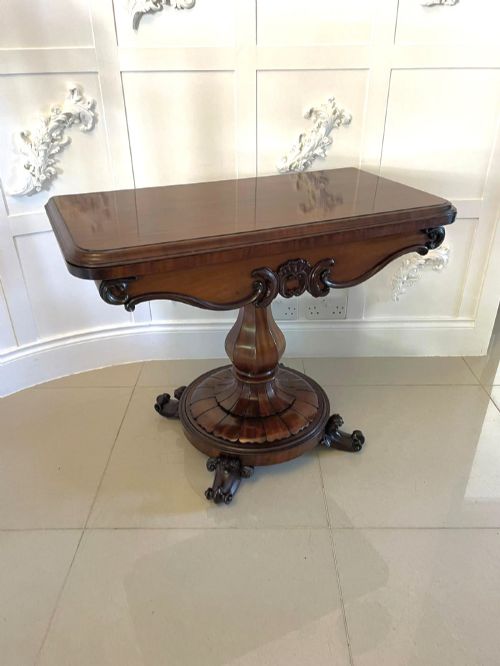
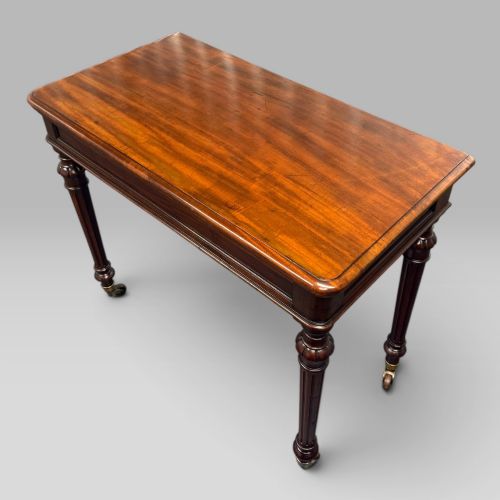
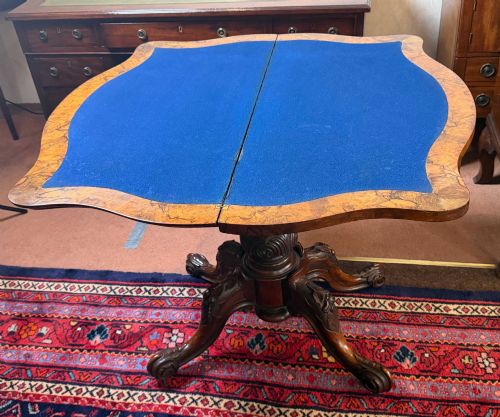
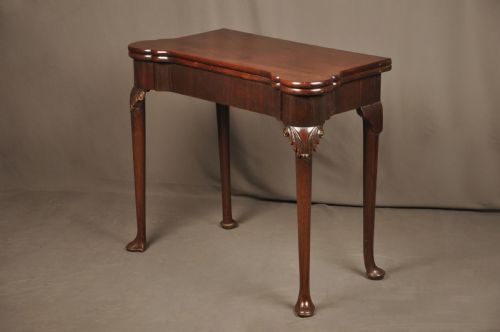
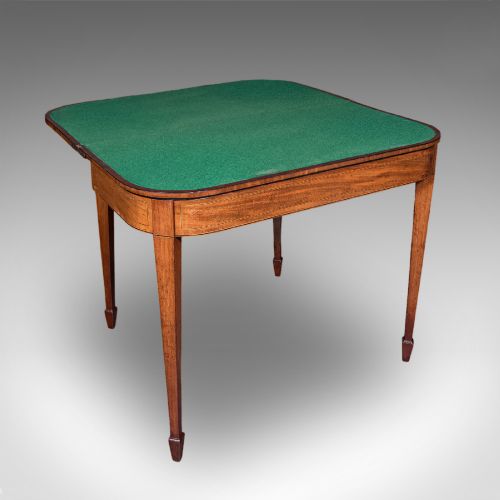
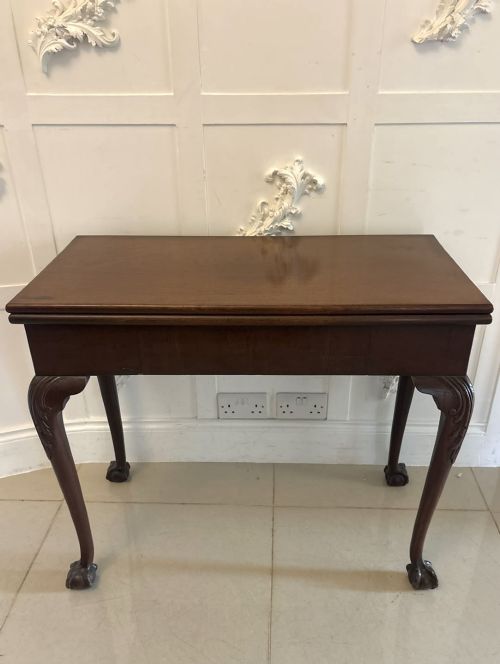
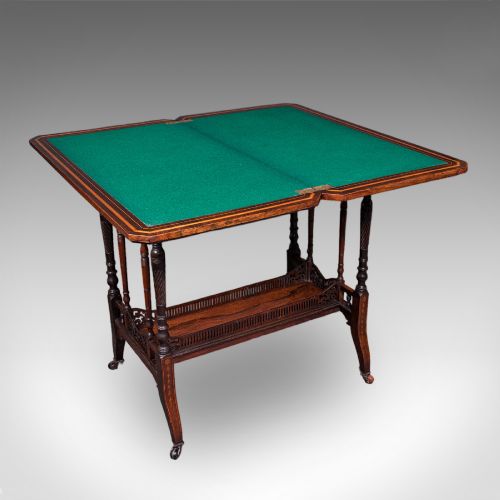
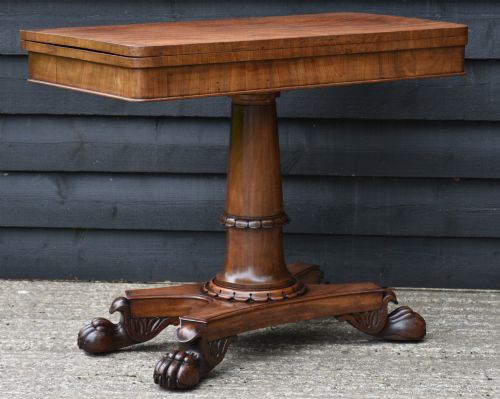
A card table is a folding-top table made for card play, opening out on a swivelled or swung-out frame and closing back against the wall as a side table.
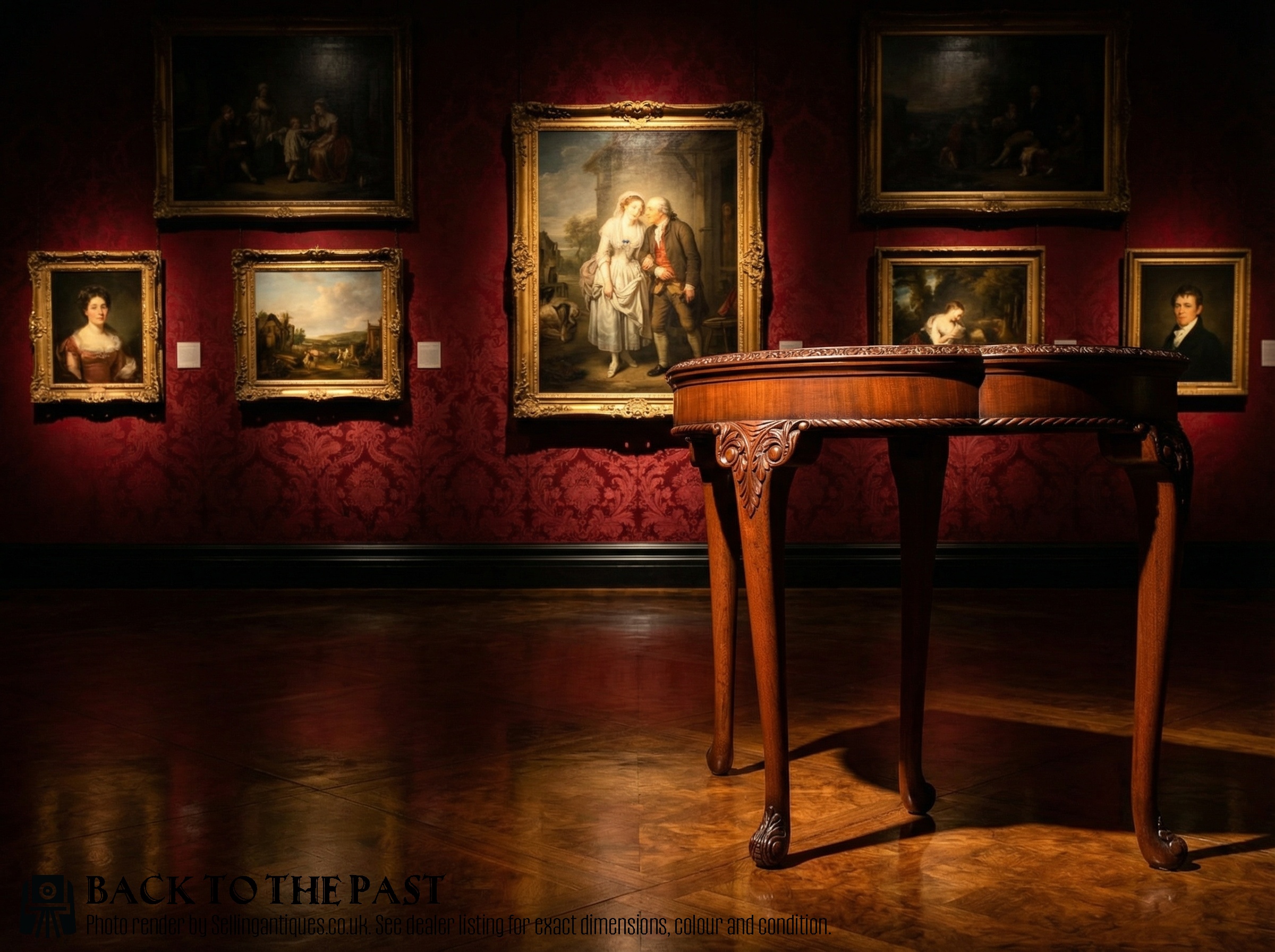
Antique Card Tables
The form began in England in the late 17th and early 18th centuries, as card games settled into polite entertaining. The top folds back when play is over, so the table stands against a wall and does other work. That double life is why so many are listed dually, as card and games, card and side, card and console or card and tea tables.
What you'll meet on Sellingantiques is an English fold-over table in a figured hardwood, dated somewhere between George III and Edwardian. Mahogany carries over a third of all titles, with walnut and burr walnut next and rosewood behind that. Some form of the word fold appears in over three hundred titles.
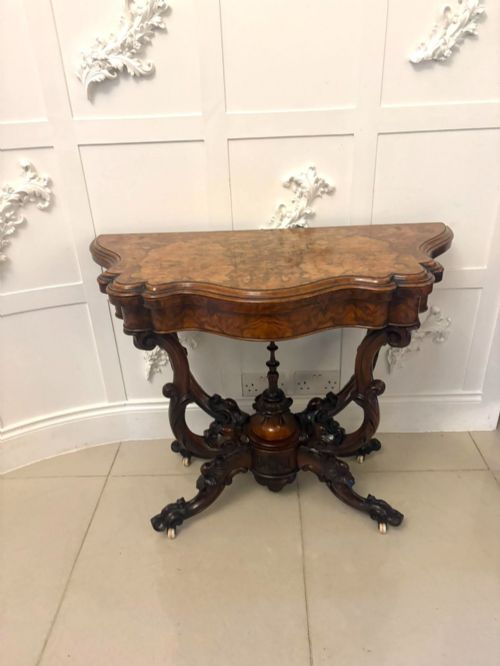
Three groups account for most of it. Georgian and Regency demi-lune and D-shaped fold-overs in mahogany and satinwood make up roughly a third; Victorian burr walnut and rosewood swivel-top tables, often serpentine, about the same again; Edwardian and revival envelope and inlaid tables roughly a sixth. Continental and further-flung examples, French, Dutch marquetry, Swedish birch, Italian, Chinese, Indian, sit under a tenth.
Dating is worth reading carefully. Only a minority of listings carry a clean year, and the rest sit under period words, with 19th Century the largest bucket, then 18th Century, Victorian, Regency and Georgian. Those are broad containers, and the filed period sometimes disagrees with the title. Where the title gives its own date, that's the better guide.

Where The Range Splits
Timber and figure do most of the sorting. A plain mahogany card table sits low; burr walnut, satinwood, amboyna, coromandel, kingwood, birdseye maple, burr elm and pollard oak cluster at the other end. Decorative work pushes the same way, and inlay is the commonest kind of it, with marquetry, brass line inlay in Regency rosewood, carving and ormolu mounts all concentrating above the middle.
Period pulls hard. Eighteenth-century and Georgian titles occupy the upper reaches; Edwardian and 1920s revival pieces, including the Queen Anne style and revival burr walnut, sit at the bottom. The mechanism tracks it. Concertina-action frames, triple tops and turn-over-leaf constructions all appear well above the middle, and every concertina table in the archive is 18th-century. A simple fold-over envelope top sits low.
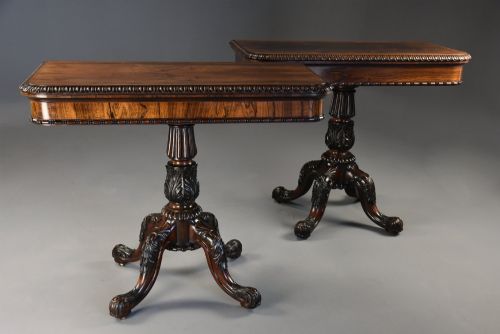
Then there's number. Pairs are a small share of titles, about one in twenty-five, and they cluster at the very top; the highest-placed pieces in the sample are matched pairs of George III demi-lune tables. Named authorship lifts a table too, though only a handful of names recur at all.
Antique Card Tables Retail Price Guide 2026
Typical UK retail prices for card tables, calculated from the Sellingantiques database of over a million retail prices indexed since 2003. This retail price guide relies exclusively on Sellingantiques data; no external sources or auction records are used, so the figures do not describe the wider market.
19th Century is the period label used most for card tables on Sellingantiques, with 18th Century next and Victorian third.
Gillows of Lancaster·Maple & Co
The Antique Card Tables Glossary
- Fold over
- The hinged top that opens out onto a swivelled or swung-out leg or frame. Some form of the word carries over three hundred titles, written fold, folding or foldover.
- Demi lune
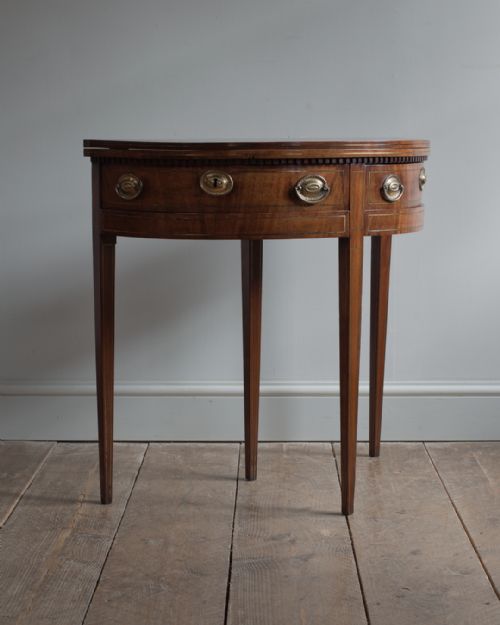
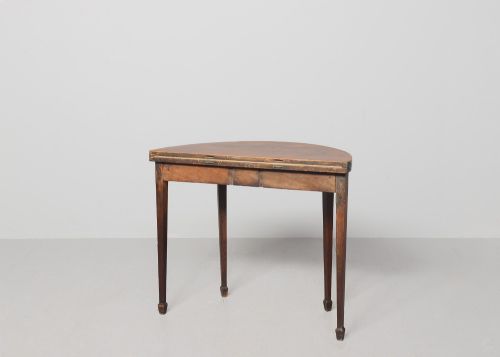
- Half-round outline, and the commonest named shape in the category. Also written demilune or half moon, with the squarer D-shaped or D-end version common on Georgian and Regency tables.
- Envelope
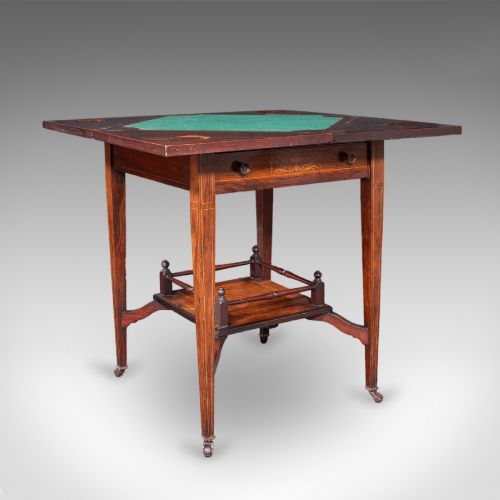
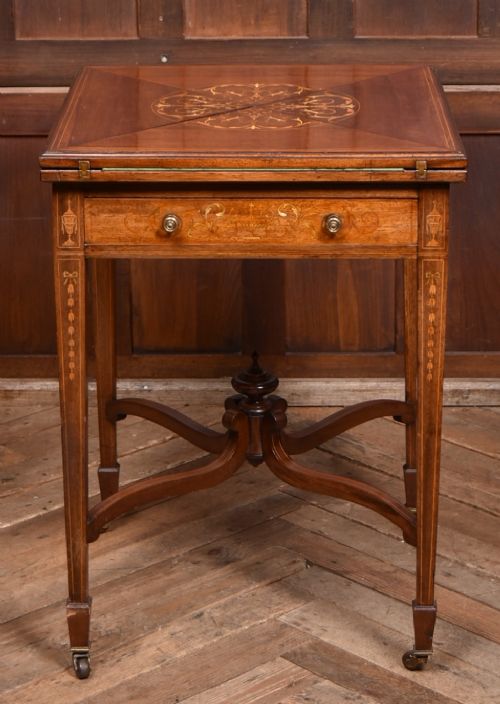
- A square top with four triangular hinged flaps that open outward. Around eighty titles, mostly Edwardian.
- Burr walnut
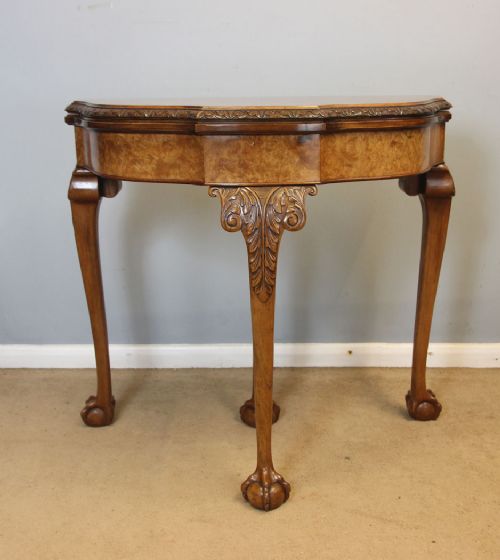
- Figured walnut cut from a burr, and the signature Victorian card-table veneer on this site. Crossbanding, a contrasting veneer border round the top, often goes with it.
- Concertina action
- An underframe that folds out like a bellows to support the whole opened top, rather than a leg swinging round. It turns up in only a handful of titles, all 18th-century.
- Guinea well
- Small sunken recesses in the playing surface for coins or counters. A stock feature of the form, though named in only three titles across the sample.
Antique Card Tables: Frequently Asked Questions
What wood are card tables usually made from?
Mahogany leads by a wide margin, taking over a third of all titles. That makes card tables one of the more single-mindedly mahogany forms on Sellingantiques.
Walnut and burr walnut come next, then rosewood. Satinwood shows up mainly on Georgian and Regency work, and the scarcer timbers, amboyna, coromandel, kingwood, birdseye maple, sit toward the top of the range.
How does an envelope card table work?
The top is square, with four triangular flaps hinged along its edges. They open outward to give a larger playing surface, then close back into the square.
Around eighty titles use the word, and they're mostly Edwardian. Envelope tables sit at the lower end of the range.
Why are card tables described as games or side tables?
Because that's how they're used when shut. The top folds back and the table stands flat against a wall, so it works as a side or console table between games.
Dealers reflect that in the wording, listing them as card/games, card/side, card/console or card/tea tables.
Are pairs of card tables common?
No. Pairs run to about one title in twenty-five, so they're a distinct but minority proposition.
They cluster at the very top of the range. The highest-placed pieces in the sample are matched pairs of George III demi-lune tables, and the archive also holds a suite of two card tables with a sofa table.
What does concertina action mean on a card table?
It describes the underframe. Instead of a leg swinging out to carry the open top, the whole frame folds out like a bellows and supports it across its width.
It appears in only a handful of titles, and every one of those is 18th-century. Concertina tables sit well above the middle of the range.
Which periods do these tables come from?
The dealer-entered dates run from 1740 to 1960, though under a third of listings carry a clean year. The rest are filed under period words.
19th Century is the largest of those buckets, followed by 18th Century, Victorian, Regency, Georgian and Edwardian. Where a title states its own date, that's the more reliable reading.