


A 2026 Guide by Sellingantiques
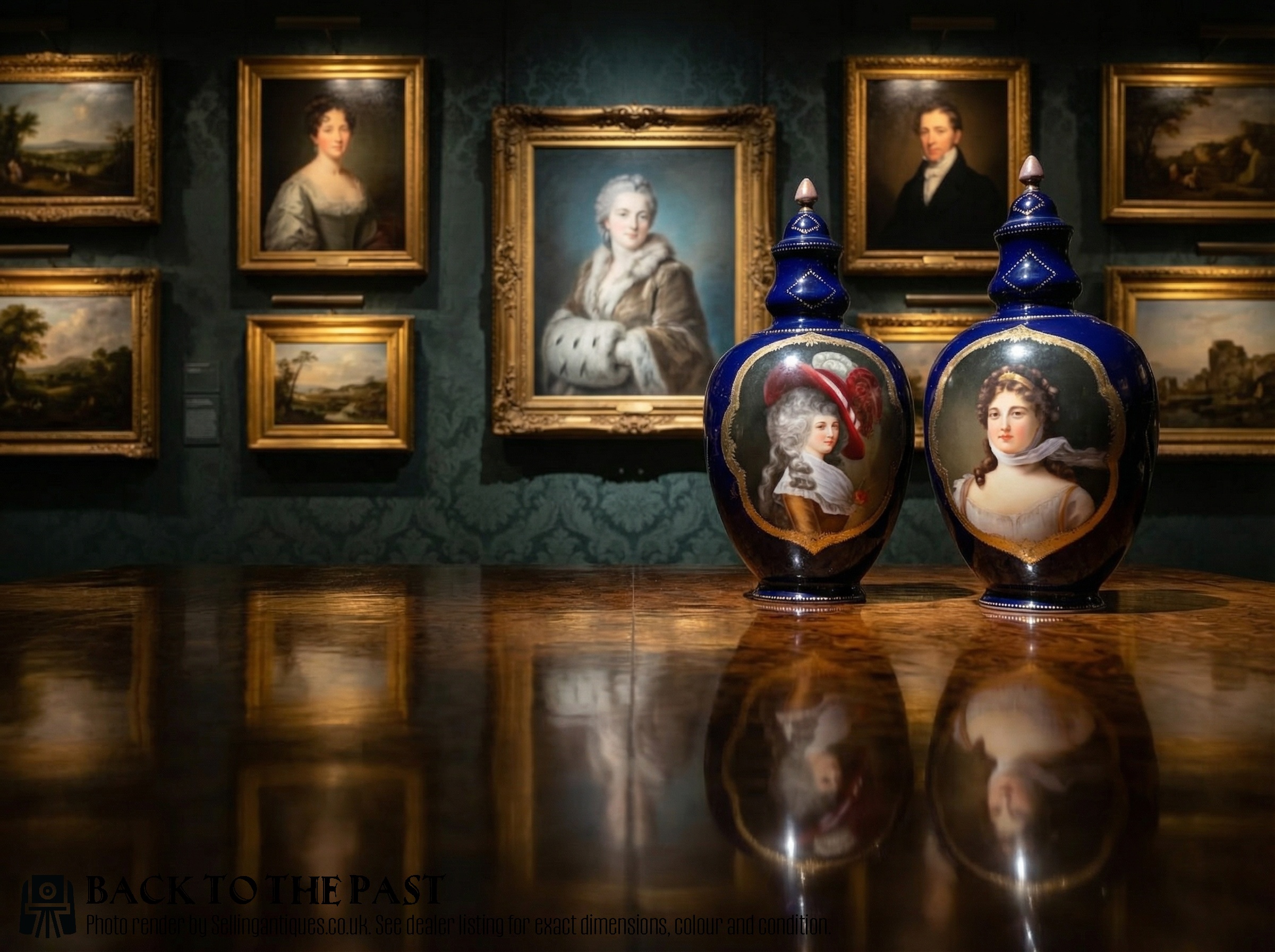
Pair of Quality Antique Victorian Porcelain Hand Painted Lidded Vases, 1860
Priced at £795 from Unique Antiques by Emma Jade
Early antique vases often mirrored classical Roman and Greek shapes. Artisans adapted these ancient storage vessels for domestic interiors across Europe.
Production shifted during the eighteenth century when European factories began mastering hard-paste porcelain.
Mantels in Victorian homes required pairs of matching vases. This drove factories to standardise their output for a growing middle-class market.
Look at the changing silhouettes. Fluid shapes emerged later on to break away from rigid classical urns.
Sèvres dominated French porcelain production in the eighteenth century, setting the standard for ground colours and gilding.
The Wedgwood factory in Staffordshire produced unglazed stoneware vases, famously pioneering their blue jasperware bodies.
Emile Gallé created layered and acid-etched glass examples in Nancy during the late nineteenth century.
Unusual Pair of Antique Victorian Hand Painted Vases, 1880
Priced at £365 from Unique Antiques by Emma Jade
The 2026 retail price guide for Antique Vases is drawn from a proprietary archive of over 1.1 million retail prices indexed by Sellingantiques since 2003. This guide relies exclusively on their own internal data; no external sources or auction records are used.
Analysing nearly 25 years of UK antique market history alongside current retail values, the data indicates that typical UK retail prices for Antique Vases range between £300 and £2,900. Entry-level prices generally fall under £300 and premium examples upwards of £2,900.
Twin handles are a frequent feature on classical urn shapes, sometimes cast as masks or coiled snakes.
Note the painted reserves. Framed panels of landscapes or floral sprays often sit against a solid ground colour.
Pierced covers appear on potpourri vases. These allowed scented air to escape into the room.
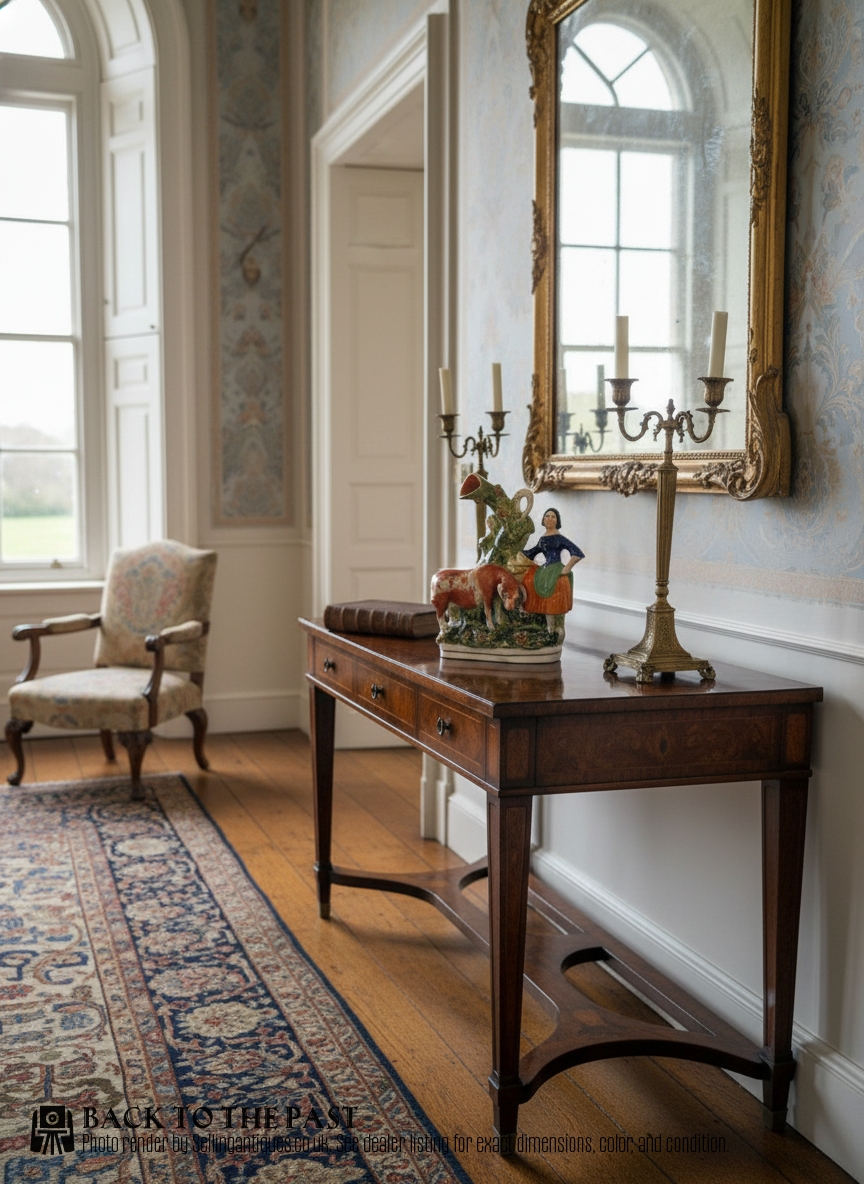
Antique Victorian Staffordshire Flatback Figure, 1860
Priced at £245 from London City Antiques
Hand-painted enamels required multiple firings. Decorators applied colours in sequence based on the temperature each pigment needed to fuse.
Acid etching allowed glassmakers to remove layers chemically. This largely replaced labour-intensive wheel engraving for mass production.
Observe the gilding methods. Early gold leaf gave way to mercuric gilding and later liquid gold, changing the surface texture.
"Some pairs were actually made as garnitures in sets of three or five to line the centre of a mantelpiece."
"Vases often held purely decorative status. Many highly painted examples were never intended to hold water or fresh flowers."
"Certain glass forms were specifically designed to force spring bulbs, keeping the bulb dry while the roots reached the water."
Based on almost 25 years of Sellingantiques UK antique market data, Antique Vases appeared 19607 times (out of 1,100,000 antiques) which gives it a rarity score of 2/100.
This score measures scarcity within the Sellingantiques archive only and is not a survey of the entire antiques market, so these statistics may not be indicative of the general availability of Antique Vases elsewhere.
Spill vases held tightly rolled paper or thin wood splints called spills. People used these to transfer fire from the hearth to light candles or pipes.
You'll usually find them on mantelpieces where they were kept close to the fire. They tend to be smaller than flower vases and often lack a flared rim.
Start with a soft bristle brush. Dusting dry is always safer than introducing moisture to antique mounts. Gently brush the crevices of the metal handles and base while holding a vacuum nozzle a few inches away to catch the loose dust.
Avoid liquid metal polishes. These can seep between the metal and the porcelain body, leaving a white residue that is nearly impossible to remove.
That cloudiness is usually limescale from standing water. Soak the inside with a mixture of white vinegar and warm water.
Swirling a handful of dry rice with the liquid acts as a mild abrasive.
A hole in the base usually means the vase was converted into a lamp during the twentieth century. Electricians drilled through the bottom to run the power cable up to the bulb fitting.
Some vases were drilled to be used as plant pots, allowing water to drain. If the hole looks rough and chips the glaze, it was done long after the piece left the factory.
Please note: This Antique Vases guide and its associated pricing data are provided for general informational purposes only. It does not constitute formal financial, investment, or appraisal advice and should not be relied upon as the sole basis for any commercial activity, purchasing, or sales decisions. Sellingantiques.co.uk accepts no liability for any actions taken in reliance on this information. Always consult with a qualified professional or independent appraiser.
