
There are no results to show on this page for that combination of filters:
Antique Tiles in North West
A 2026 Guide by Sellingantiques
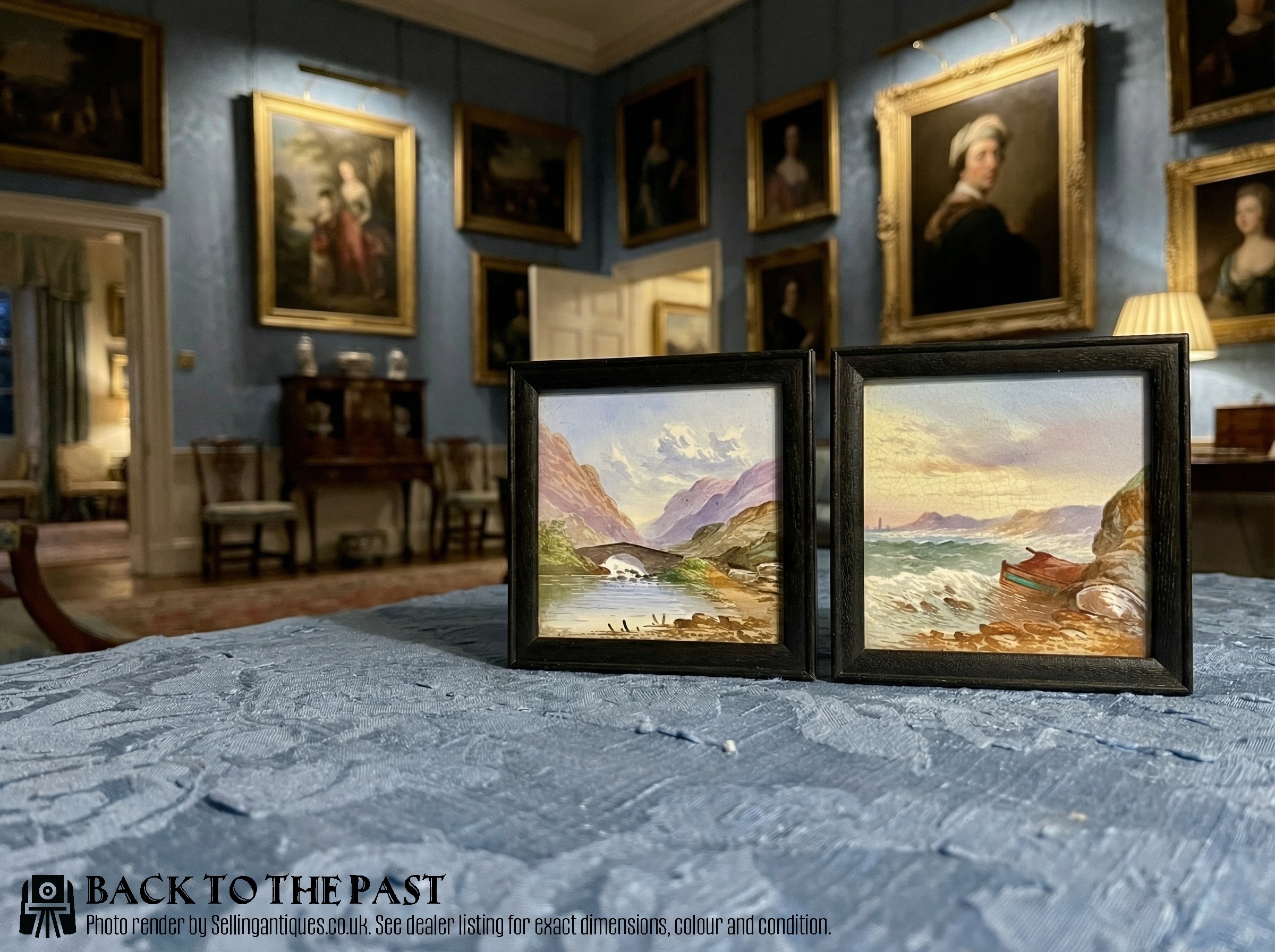
Pair of Victorian Hand Painted Tiles, Victorian
Priced at £120 from In A Nutshell Antiques and Interiors
Demand for decorative ceramics surged during the Victorian housing boom.
Look for early Delft examples from the seventeenth century. They often lined dairies and fireplaces.
Gothic Revival architects pushed heavily for patterned floors in churches and civic buildings.
Mass production changed the trade entirely by the 1850s. Workshops shifted from hand-pressing clay to dust-pressing techniques.
Minton dominated the encaustic floor trade throughout the middle of the nineteenth century.
William De Morgan produced heavily decorated lustreware. His late Victorian output remains well documented.
Check the reverse for Maw & Co. They supplied vast quantities of geometric schemes across Britain.
The 2026 retail price guide for Antique Tiles is drawn from a proprietary archive of over 1.1 million retail prices indexed by Sellingantiques since 2003. This guide relies exclusively on their own internal data; no external sources or auction records are used.
Analysing nearly 25 years of UK antique market history alongside current retail values, the data indicates that typical UK retail prices for Antique Tiles range between £100 and £1,400. Entry-level prices generally fall under £100 and premium examples upwards of £1,400.
Transfer-printed designs frequently appear on nineteenth-century domestic fireplace panels and washstands.
Raised lines physically separate the different coloured glazes in tube-lined examples.
Encaustic types have the pattern inlaid using contrasting clay rather than painted on the surface.
Early makers shaped wet clay in wooden frames by hand.
The introduction of the fly press allowed factories to stamp out thousands of identical blank squares a day.
Block printing sped up surface decoration. Workers applied colours using carved wooden stamps instead of painting freehand.
"Many plain white examples hide elaborate maker marks on the back."
"Some Victorian washstands used the exact same transfer prints as the matching bedroom jugs."
"Finding intact original cast iron frames makes mounting them on a modern wall much simpler."
Based on almost 25 years of Sellingantiques UK antique market data, Antique Tiles appeared 1457 times (out of 1,100,000 antiques) which gives it a rarity score of 75/100.
This score measures scarcity within the Sellingantiques archive only and is not a survey of the entire antiques market, so these statistics may not be indicative of the general availability of Antique Tiles elsewhere.
Start with warm water and a soft cloth. Heavy soot usually lifts with a standard non-abrasive household cream cleaner.
Never use wire wool or stiff brushes on the glazed face. The grit will scratch the surface and leave permanent cloudy marks.
Getting modern Portland cement off a fired clay body is difficult. The cement often bonds harder than the antique tile itself.
Some restorers soak them in weak brick acid to soften the mortar. You have to be cautious as acid can dull the front glaze if it seeps over the edge. Mechanical removal with a grinder isn't always safe and risks snapping the biscuit.
Most British factories standardised their square production at six inches. This size dominated the domestic trade.
You'll also find half-tiles measuring six inches by three. Fitters used these for narrow gaps.
Old unglazed edges absorb a lot of moisture. If you apply modern wet adhesive directly, the porous clay will suck the water out too quickly and the grip will fail.
Your builder should seal the backs and edges with a primer first. This stops the adhesive drying out prematurely. Keep in mind that antique tiles rarely have uniform thickness, so the wall needs a thicker bed of adhesive to get a flush finish.
Please note: This Antique Tiles guide and its associated pricing data are provided for general informational purposes only. It does not constitute formal financial, investment, or appraisal advice and should not be relied upon as the sole basis for any commercial activity, purchasing, or sales decisions. Sellingantiques.co.uk accepts no liability for any actions taken in reliance on this information. Always consult with a qualified professional or independent appraiser.
