


A 2026 Guide by Sellingantiques
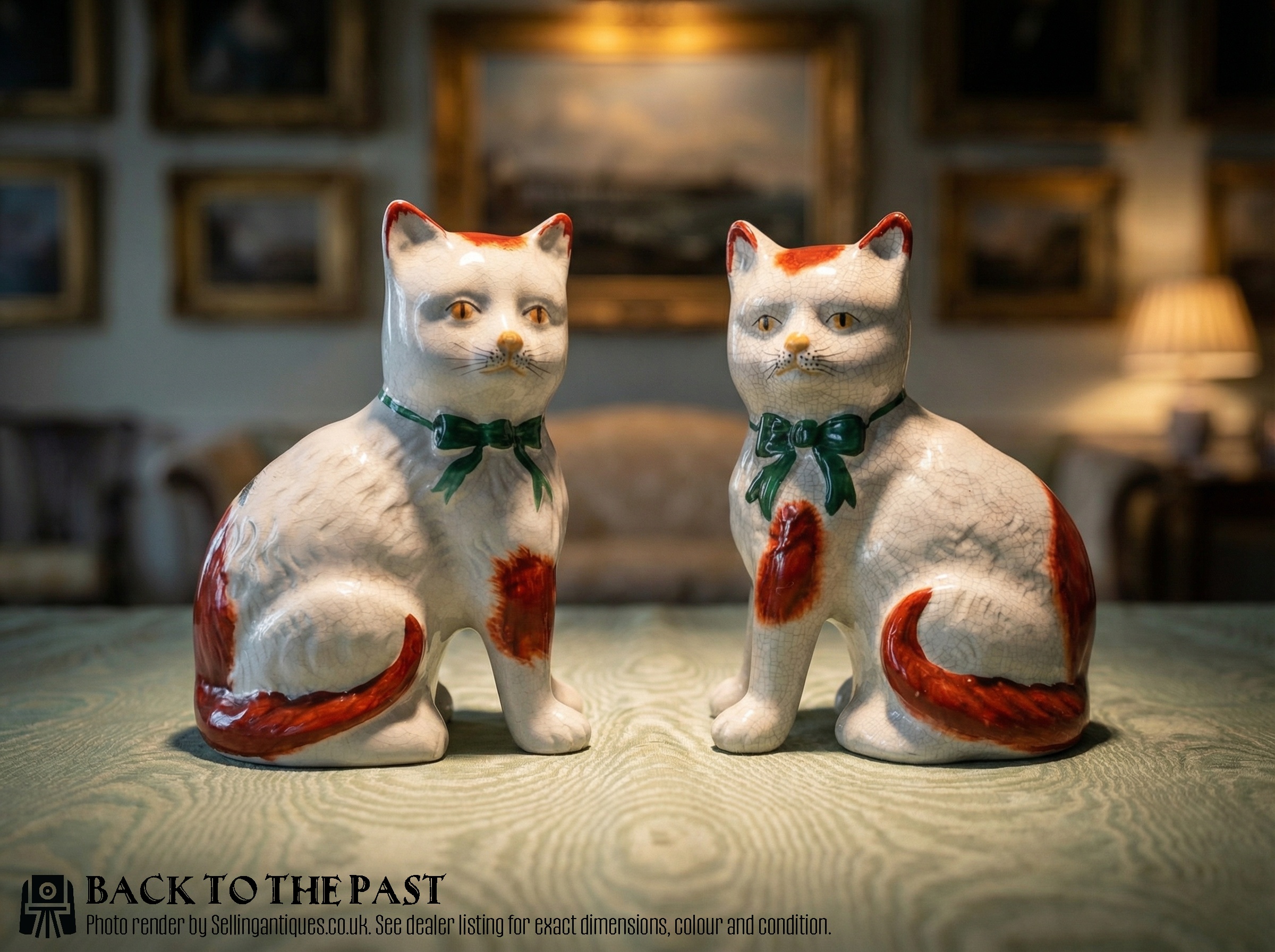
A Pair of 19th Century Staffordshire Cats, Victorian
Priced at £125 from John Hubbard Antiques
Six towns merged to form Stoke-on-Trent. This area dominated the English pottery trade from the eighteenth century onwards due to local clay and coal.
Canals changed everything. Barges brought in flint from the coast and shipped finished Antique Staffordshire across the world.
Early pieces served the table. By the Victorian era, the potbanks churned out millions of cheap figures for mantelpieces.
Look at the subject matter. They modelled politicians, boxers, and murderers alongside the usual farm animals.
John Walton worked in Burslem in the early nineteenth century. His name sometimes appears on a scroll at the back of his bocage figures.
Sampson Smith of Longton made countless flatback figures from the 1850s onwards. Much of his output remains unmarked.
Thomas Whieldon pioneered mottled tortoiseshell glazes. He operated in Fenton during the mid-eighteenth century.
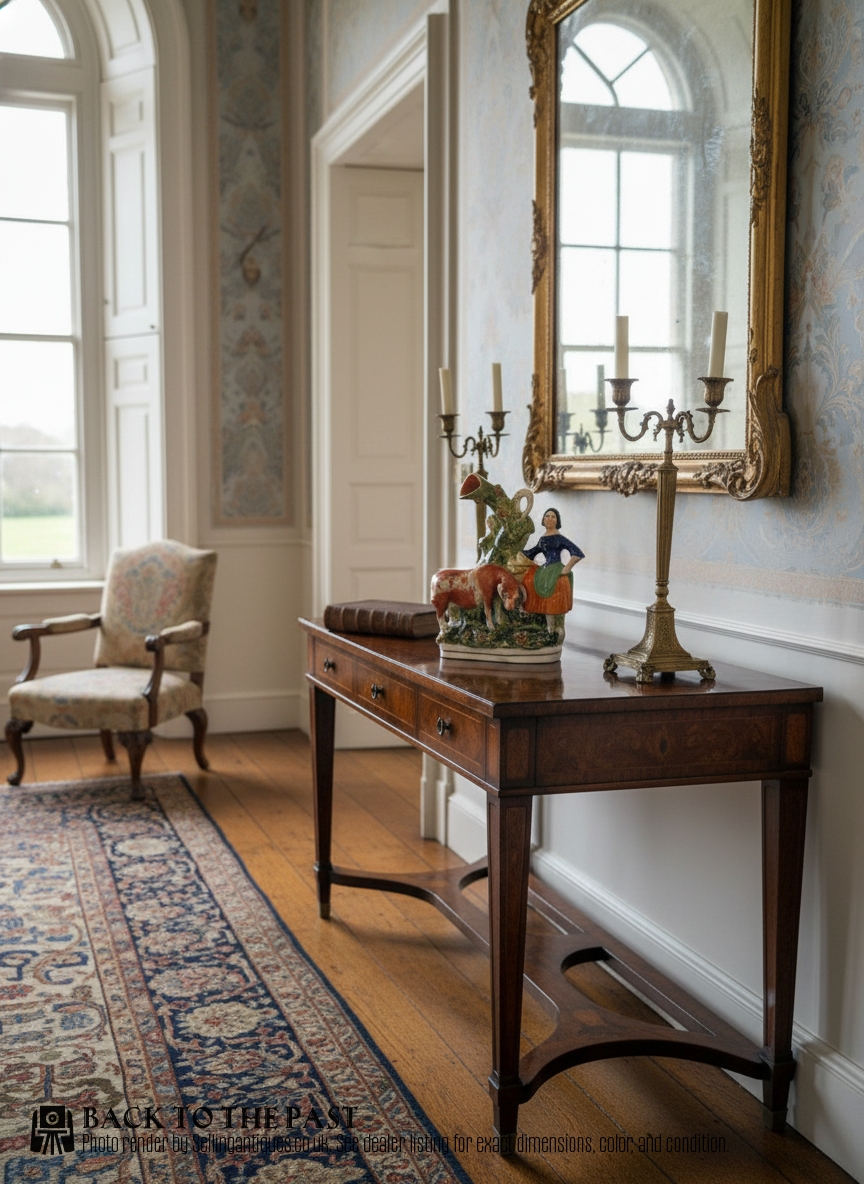
Antique Victorian Staffordshire Flatback Figure, 1860
Priced at £245 from London City Antiques
The 2026 retail price guide for Antique Staffordshire is drawn from a proprietary archive of over 1.1 million retail prices indexed by Sellingantiques since 2003. This guide relies exclusively on their own internal data; no external sources or auction records are used.
Analysing nearly 25 years of UK antique market history alongside current retail values, the data indicates that typical UK retail prices for Antique Staffordshire range between £200 and £600. Entry-level prices generally fall under £200 and premium examples upwards of £600.
Turn a Victorian flatback figure around. The reverse is usually plain white and unmodelled to save time on the painting line.
Vent holes hide in the base or back. Hot air needed an escape route during firing so the hollow body would not explode.
Transfer-printed wares feature intricate repeated patterns. Tissue paper carried copper-plate engravings onto the raw clay.
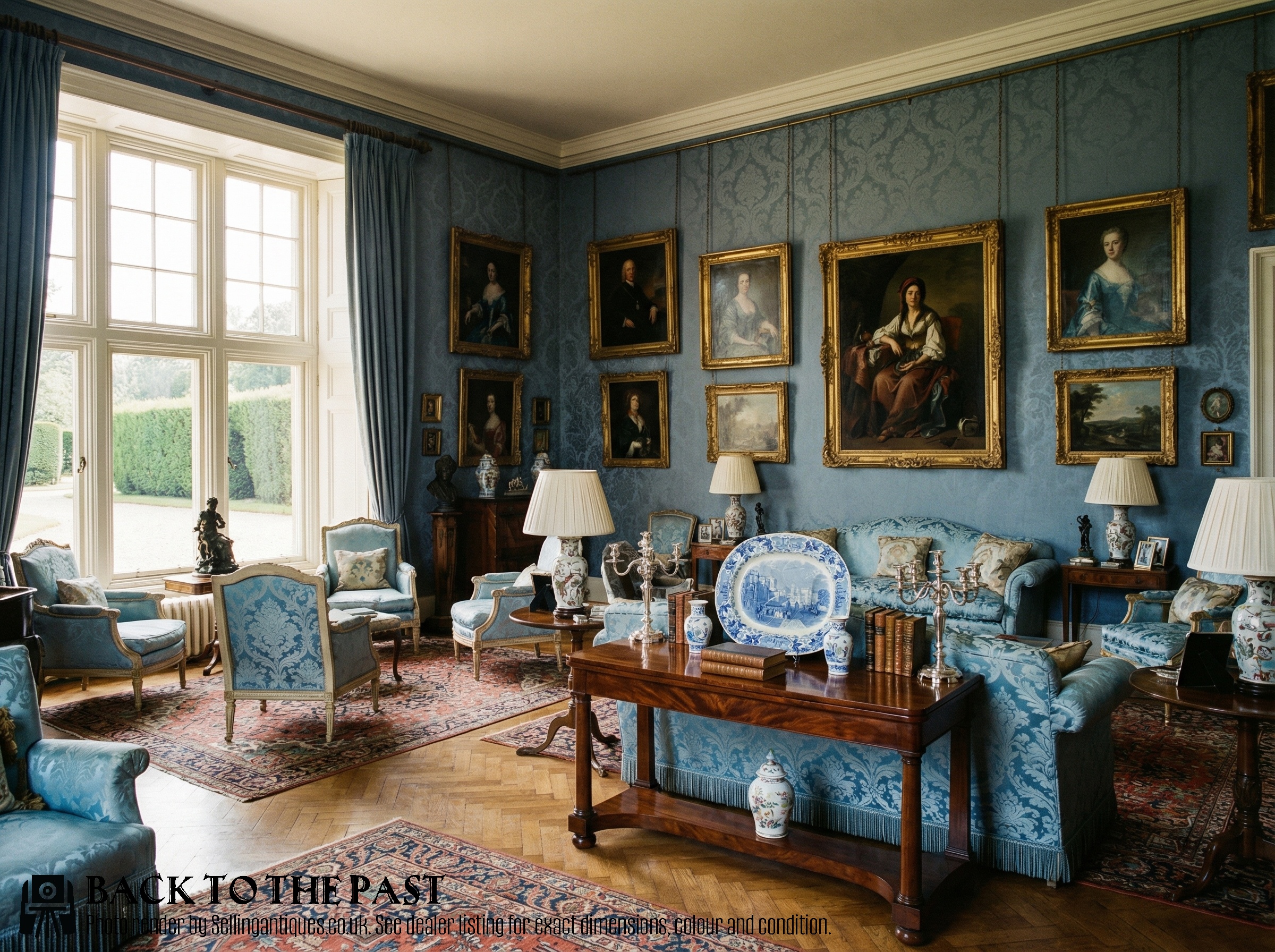
Staffordshire Meat Platter Windsor Castle, C. 1830., Georgian
Priced at £390 from Philip Carrol Antiques
Eighteenth-century workers shaped figures by hand. They rolled thin clay for stems and pressed small flowers individually.
Press moulding took over. Clay was pushed into plaster moulds in two halves and joined with liquid slip.
Painting was piecework. Women and children applied fast strokes of colour to hundreds of identical Antique Staffordshire pieces a day.
"Potters often reused the same moulds for different people. A quick change of painted title turned a general into a prince."
"Some spaniel figures served as window stops. They kept the sash open in summer."
"The blue willow pattern was a local invention. It combined various imported motifs into one standard design."
Based on almost 25 years of Sellingantiques UK antique market data, Antique Staffordshire appeared 4258 times (out of 1,100,000 antiques) which gives it a rarity score of 43/100.
This score measures scarcity within the Sellingantiques archive only and is not a survey of the entire antiques market, so these statistics may not be indicative of the general availability of Antique Staffordshire elsewhere.
It held rolled paper or wood splints. You used them to transfer fire from the hearth to a candle or pipe.
The vase part is usually a hollow tree trunk standing next to a figure or animal. It keeps the spills dry and close to hand.
Antique Staffordshire spaniels were made in pairs from separate press moulds. One faced left and the other faced right.
Moulds wear out and need replacing over time. A factory might pair a dog from a fresh mould with one from an older, slightly shrunken mould.
Leave it alone. Soaking earthenware drives water into the porous body under the glaze.
This stains the clay and causes further damage.
That blurring is called flow blue. Potters added volatile chemicals to the kiln during firing to make the cobalt oxide spread into the glaze.
It was a deliberate choice rather than a mistake. The softer look hid minor printing errors and proved very popular in the export market.
Please note: This Antique Staffordshire guide and its associated pricing data are provided for general informational purposes only. It does not constitute formal financial, investment, or appraisal advice and should not be relied upon as the sole basis for any commercial activity, purchasing, or sales decisions. Sellingantiques.co.uk accepts no liability for any actions taken in reliance on this information. Always consult with a qualified professional or independent appraiser.
