

A 2026 Guide by Sellingantiques
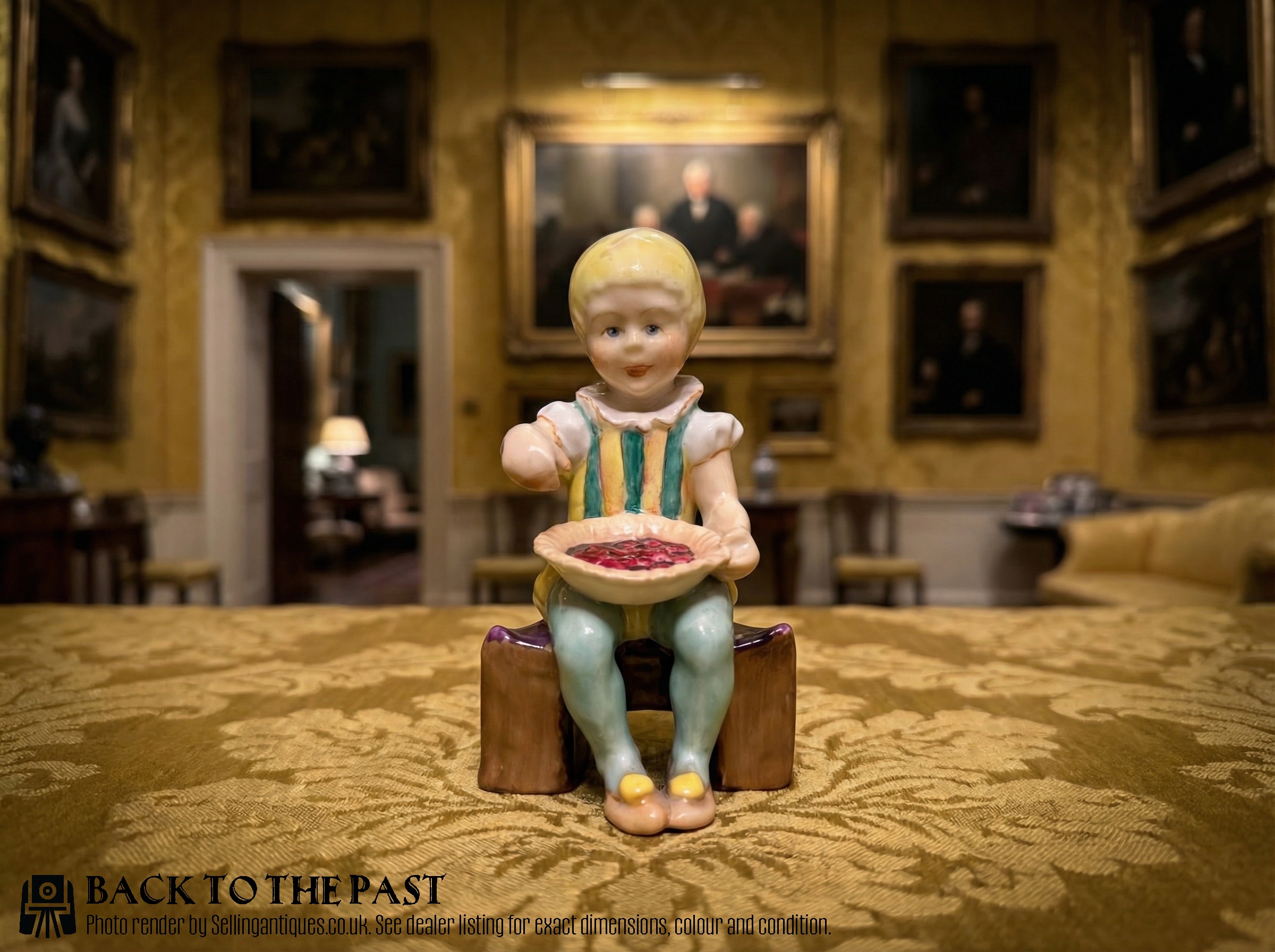
Royal Worcester Figurine "Little Jack Horner" (Shape No: 3305) - Date Stamped 1952, 1950
Priced at £225 from Quiet Street Antiques of Bath
Formed in 1751 by Dr John Wall and William Davis. They acquired a soaprock patent to rival earlier factories.
Production moved through distinct phases. The Dr Wall period gives way to the Flight, Barr & Barr eras.
A joint stock company took over in 1862. This began the modern Antique Royal Worcester era most collectors know.
Focus shifted from useful wares to display items. Vases and cabinet plates dominated the late nineteenth century.
Operations survived multiple economic crashes. Many rival potteries closed while Worcester adapted their output.
Thomas Baxter worked at Worcester between 1814 and 1816. He painted botanical specimens and shell patterns.
Charles Baldwyn specialised in painting swans in flight. His birds usually appear against a pale blue ground.
George Owen pierced porcelain by hand. His reticulated vases from the late nineteenth century required hundreds of tiny incisions.
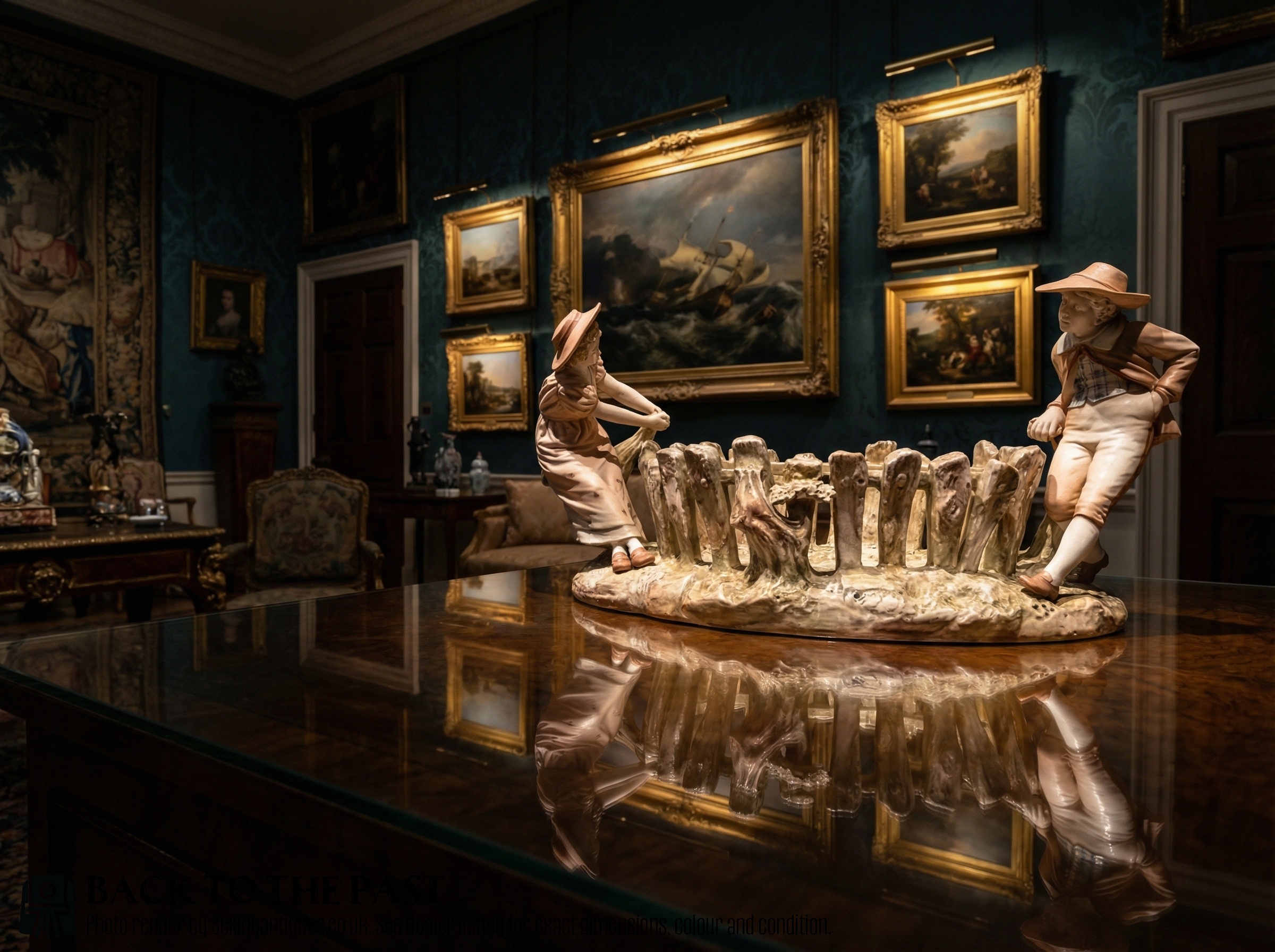
Fabulous Antique Royal Worcester Blush Ivory Hadley Centre Piece., 1890
Priced at £1,650 from David Wolfenden Antiques
The 2026 retail price guide for Antique Royal Worcester is drawn from a proprietary archive of over 1.1 million retail prices indexed by Sellingantiques since 2003. This guide relies exclusively on their own internal data; no external sources or auction records are used.
Analysing nearly 25 years of UK antique market history alongside current retail values, the data indicates that typical UK retail prices for Antique Royal Worcester range between £300 and £3,400. Entry-level prices generally fall under £300 and premium examples upwards of £3,400.
Marks usually sit on the base. Printed factory stamps feature a circle enclosing four Ws and a crescent.
Look for date ciphers under the main stamp. A system of dots and symbols tracks the year of firing.
Hand-painted fruit and highland cattle are typical motifs. These scenes wrap around vases or fill the centres of plates.
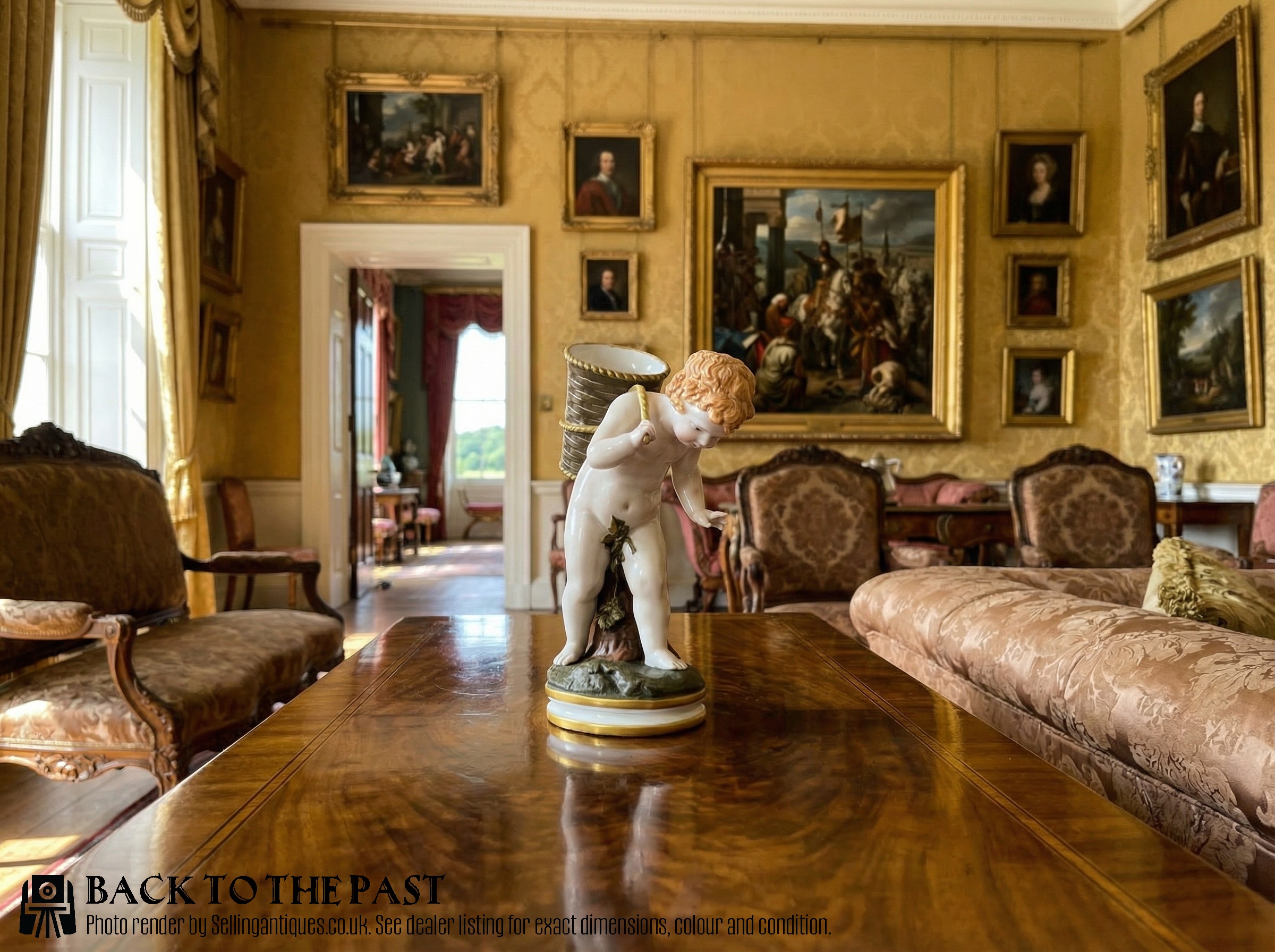
Royal Worcester Porcelain Figure – Cherub with Basket, 19th Century
Priced at £3,295 from Shackladys Antiques
Slip casting formed the complex vase shapes. Liquid clay poured into plaster moulds creates uniform walls.
Gilders applied gold mixed with mercury. Firing drove off the mercury to leave a dull gold layer requiring hand burnishing.
Multiple firings build the surface decoration. Each enamel colour melts at a different temperature.
"The factory supplied plain white porcelain to outside decorators. Independent studios added their own painting and gilding."
"Transfer printing was an early success. Engraved copper plates allowed complex scenes to be applied quickly to teawares."
"Japanese aesthetics influenced the 1870s output. Designers studied imported metalwork and textiles to create new shapes."
Based on almost 25 years of Sellingantiques UK antique market data, Antique Royal Worcester appeared 3142 times (out of 1,100,000 antiques) which gives it a rarity score of 53/100.
This score measures scarcity within the Sellingantiques archive only and is not a survey of the entire antiques market, so these statistics may not be indicative of the general availability of Antique Royal Worcester elsewhere.
The factory used a sequence of letters and dots. A letter designates a year block, while surrounding dots pinpoint the exact year.
From 1891, a dot was added each year around the factory mark. Once a circle of dots was complete, they started adding stars or other symbols.
Painting a large service was a team effort. The factory employed many decorators who specialised in the same fruit subjects to keep up with demand.
You often find several different signatures across a single set. One artist might paint the plates while another handled the tureens. They all worked to the same house style.
It refers to a specific matte glaze introduced in the 1890s. The finish mimics carved tusks and often features floral sprays.
A dry foot rim is standard for most plates. The unglazed ring prevents the piece from sticking to the kiln shelf during firing.
Smooth bases often mean the plate was fired on firing spurs. These leave three tiny unglazed pin-marks instead of a whole dry ring. Both methods are typical for factory production.
Please note: This Antique Royal Worcester guide and its associated pricing data are provided for general informational purposes only. It does not constitute formal financial, investment, or appraisal advice and should not be relied upon as the sole basis for any commercial activity, purchasing, or sales decisions. Sellingantiques.co.uk accepts no liability for any actions taken in reliance on this information. Always consult with a qualified professional or independent appraiser.
