
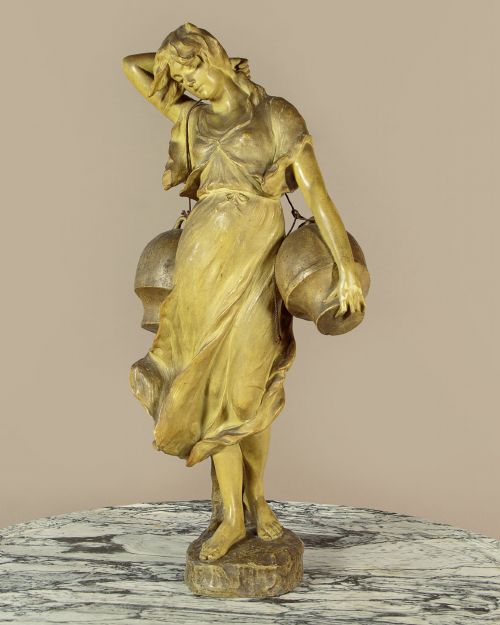



A 2026 Guide by Sellingantiques
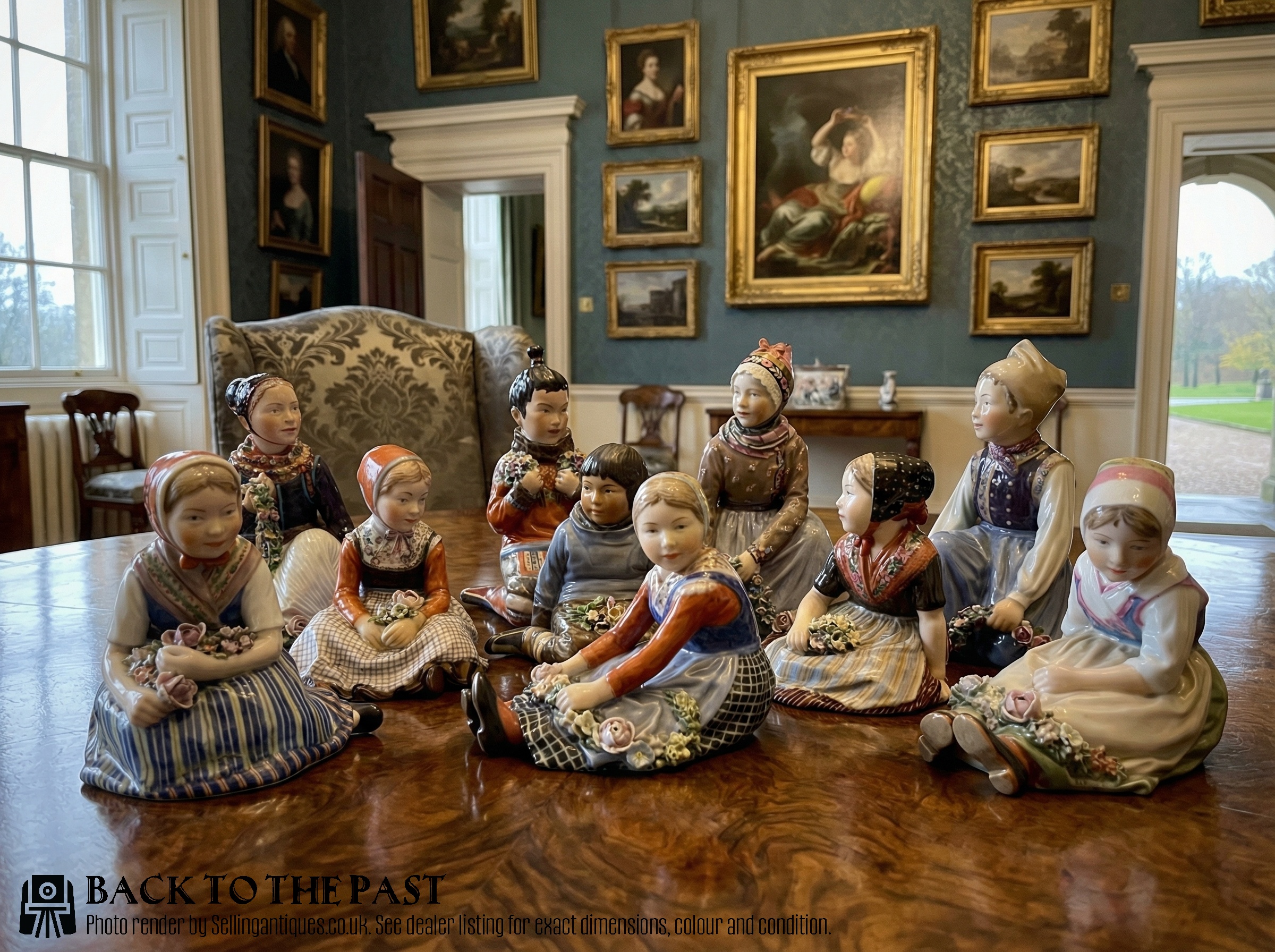
Ten Royal Copenhagen Porcelain Figures, 1930
Priced at £3,750 from Quiet Street Antiques of Bath
European porcelain factories began replacing fragile sugar table sculptures with hard paste models during the eighteenth century.
Staffordshire potters aimed their earthenware antique figures at a broader market. They didn't cater to the aristocracy.
Bronze casting, for instance. Foundries across France produced classical subjects for grand domestic interiors.
Wooden examples often served religious or folk purposes before finding their way onto secular shelves.
Meissen dominated the early porcelain market under Johann Joachim Kändler.
The Derby factory produced biscuit porcelain groups imitating classical marble.
Pierre-Jules Mêne ran his own bronze foundry casting detailed animalier figures.
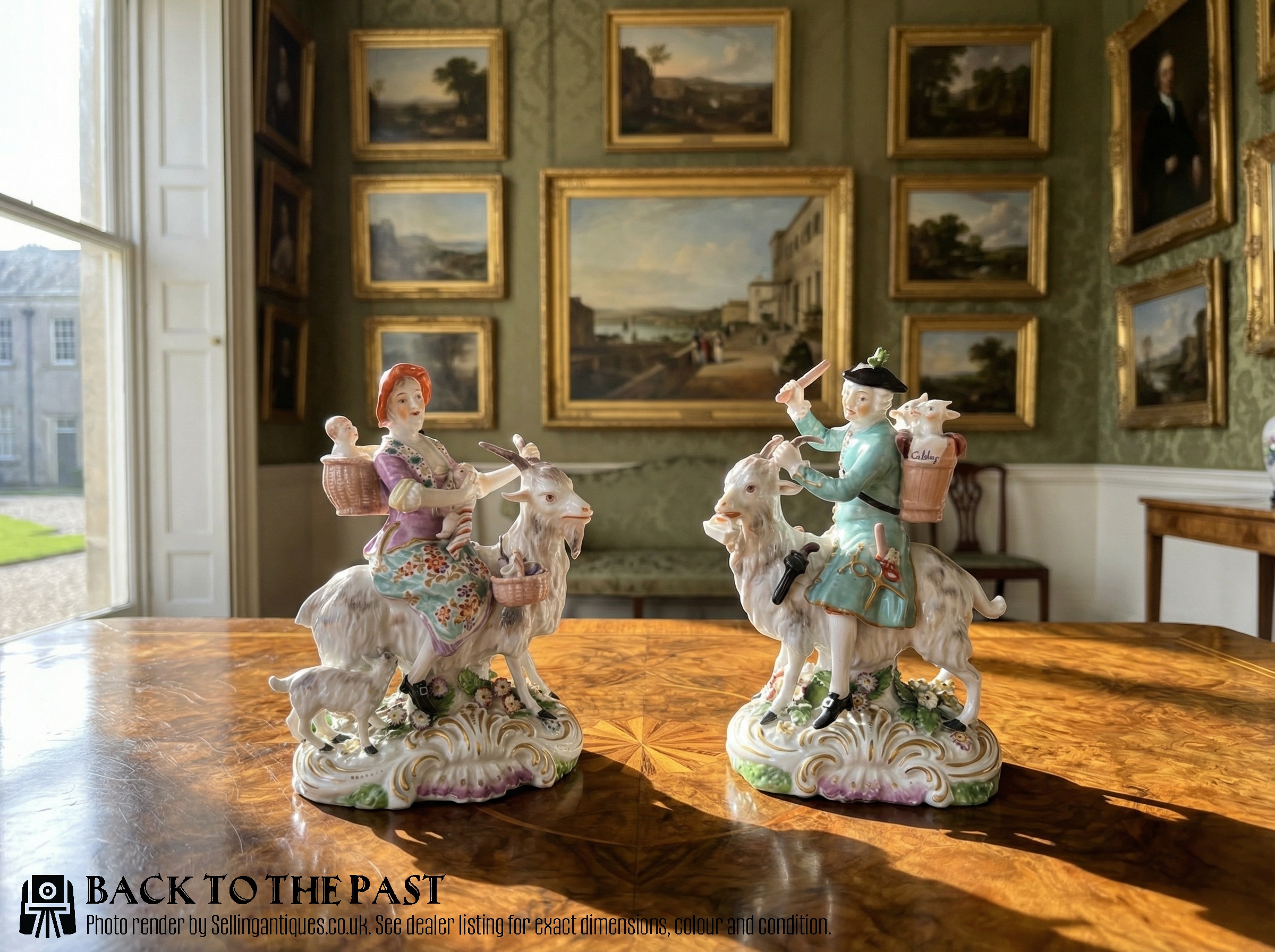
Pair of Derby Figures ' Welch Tailor and His Wife on Goats' Circa 1800, 1800
Priced at £1,000 from Treaders Collectables
The 2026 retail price guide for Antique Figures is drawn from a proprietary archive of over 1.1 million retail prices indexed by Sellingantiques since 2003. This guide relies exclusively on their own internal data; no external sources or auction records are used.
Analysing nearly 25 years of UK antique market history alongside current retail values, the data indicates that typical UK retail prices for Antique Figures range between £400 and £3,800. Entry-level prices generally fall under £400 and premium examples upwards of £3,800.
Small vent holes exist on the undersides of most hollow-cast metal antique figures.
Porcelain models often sit on elaborate scrollwork bases picked out in gold.
Look for flat backs on Staffordshire pottery. Makers left the reverse unmodelled so they'd sit flush against a wall.
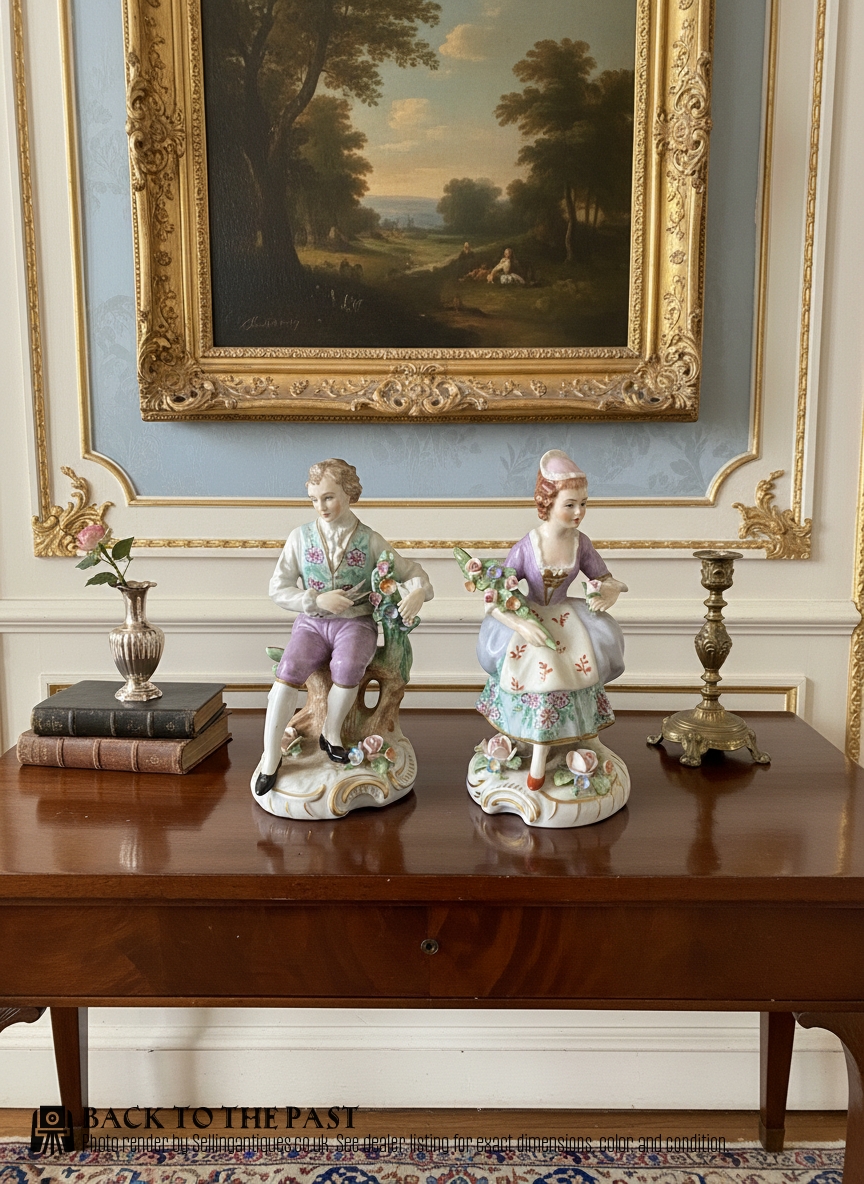
Pair of Original Antique Victorian Sitzendorf Figures
, 1880
Priced at £585 from London City Antiques
Modellers cut original sculptures into several pieces to create individual plaster moulds.
Assemblers, known as repairers, joined these cast sections together using liquid clay slip.
Cold painting involves applying unfired pigments over a glaze or metal surface.
"Many flat-backed earthenware models doubled as practical spill vases for holding fire-lighting splints."
"Early porcelain factories hired theatrical set designers to help pose the subjects dynamically."
"Foundries sometimes scaled bronze casts down using a clever pantograph machine called a reductive compass."
Based on almost 25 years of Sellingantiques UK antique market data, Antique Figures appeared 24037 times (out of 1,100,000 antiques) which gives it a rarity score of 1/100.
This score measures scarcity within the Sellingantiques archive only and is not a survey of the entire antiques market, so these statistics may not be indicative of the general availability of Antique Figures elsewhere.
Dust it with a soft brush first. Glazed porcelain can take a damp cloth, but biscuit absorbs moisture and holds onto grime.
Some restorers use dry conservation sponges to lift surface dirt. You shouldn't soak an unglazed piece.
Hollow casting saves expensive metal and reduces weight.
Foundries poured molten bronze around a sand core, removing it after cooling.
Those holes held spills or tapers. People kept tightly rolled paper or wood shavings in them to transfer a flame from the hearth to a candle.
Mantelpieces were the obvious place to keep them dry. The figures disguised a practical household object as decoration.
You likely have a spelter figure. Spelter is a zinc alloy often used in the late nineteenth century.
It casts well and takes a surface stain to imitate patinated bronze.
Bronze feels cold and dense. Spelter feels lighter and warmer to the touch.
Please note: This Antique Figures guide and its associated pricing data are provided for general informational purposes only. It does not constitute formal financial, investment, or appraisal advice and should not be relied upon as the sole basis for any commercial activity, purchasing, or sales decisions. Sellingantiques.co.uk accepts no liability for any actions taken in reliance on this information. Always consult with a qualified professional or independent appraiser.
