
A 2026 Guide by Sellingantiques
Byzantine metalworkers first developed the technique before it travelled east to China.
Look at Ming dynasty examples to see how Chinese artisans adapted early methods for important imperial commissions and altar vessels.
Late arrivals to the trade. Japanese studios only started serious antique cloisonne production during the nineteenth century.
Western demand during the Meiji period sparked a massive export market for shapes matching European tastes.
Namikawa Yasuyuki worked in Kyoto during the Meiji era, noted for transparent black enamels and incredibly fine wirework.
Turn over late nineteenth-century pieces to check for the Ando Cloisonne Company mark.
Russian workshops like Fabergé combined the technique with silver-gilt for luxury objects before the revolution.
The 2026 retail price guide for Antique Cloisonne is drawn from a proprietary archive of over 1.1 million retail prices indexed by Sellingantiques since 2003. This guide relies exclusively on their own internal data; no external sources or auction records are used.
Analysing nearly 25 years of UK antique market history alongside current retail values, the data indicates that typical UK retail prices for Antique Cloisonne range between £300 and £4,500. Entry-level prices generally fall under £300 and premium examples upwards of £4,500.
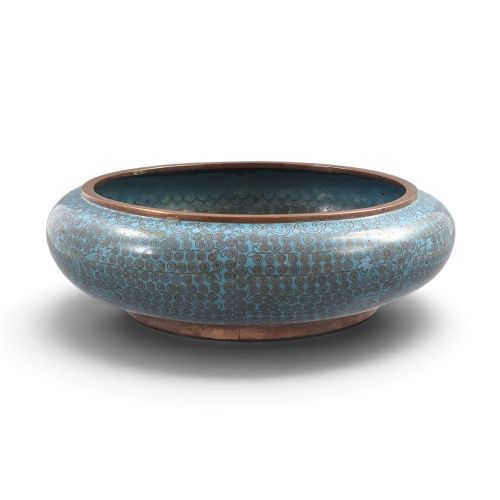
Distinct metal outlines separate every single block of colour on the surface.
Backgrounds often feature intricate wire spirals or cloud patterns filling the negative space.
Feel the surface. A finished piece is polished smooth so the wires lie flush with the hardened enamel.
Artisans shaped thin metal ribbons with tweezers and glued them to the copper body.
Applying the paste required multiple stages. Each layer shrank during firing and needed topping up.
Final polishing took weeks using increasingly fine pumice stones to grind down the glass and wire.
"Japanese craftsmen eventually figured out how to remove the wires entirely before the final firing."
"Some Chinese imperial workshops used solid gold wire instead of brass for the cells."
"The grinding process at the end required vast amounts of water to keep the stones from scratching the glass."
Based on almost 25 years of Sellingantiques UK antique market data, Antique Cloisonne appeared 1209 times (out of 1,100,000 antiques) which gives it a rarity score of 79/100.
This score measures scarcity within the Sellingantiques archive only and is not a survey of the entire antiques market, so these statistics may not be indicative of the general availability of Antique Cloisonne elsewhere.
Dust it with a soft dry brush. The glass surface does not need modern chemical cleaners or metal polish.
If dirt sits deep in the wire crevices, use a lightly damp cloth. Dry the surface straight away to protect any exposed metal from moisture.
That exposed wire is an intentional decorative technique. Makers often left complex wire patterns bare against the background enamel to create texture.
It happens frequently on Japanese pieces from the late nineteenth century. The artisan wanted the metal itself to catch the light rather than covering it up with another layer of colour.
That is a technique known as ginbari. Makers applied silver foil over the base before adding transparent enamels.
The foil reflects light back through the glass to create a glowing effect.
Those small dips are known as pitting. They happen during the firing process when air bubbles form in the glass paste and burst on the surface.
Pitting is a natural part of early antique cloisonne production rather than later damage. Early workshops struggled to control kiln temperatures, meaning the glass rarely fired completely flat.
Please note: This Antique Cloisonne guide and its associated pricing data are provided for general informational purposes only. It does not constitute formal financial, investment, or appraisal advice and should not be relied upon as the sole basis for any commercial activity, purchasing, or sales decisions. Sellingantiques.co.uk accepts no liability for any actions taken in reliance on this information. Always consult with a qualified professional or independent appraiser.
