It was listed by Regent Antiques. Sold pieces stay on Sellingantiques as a record of what has passed through, and the next one is rarely far away.
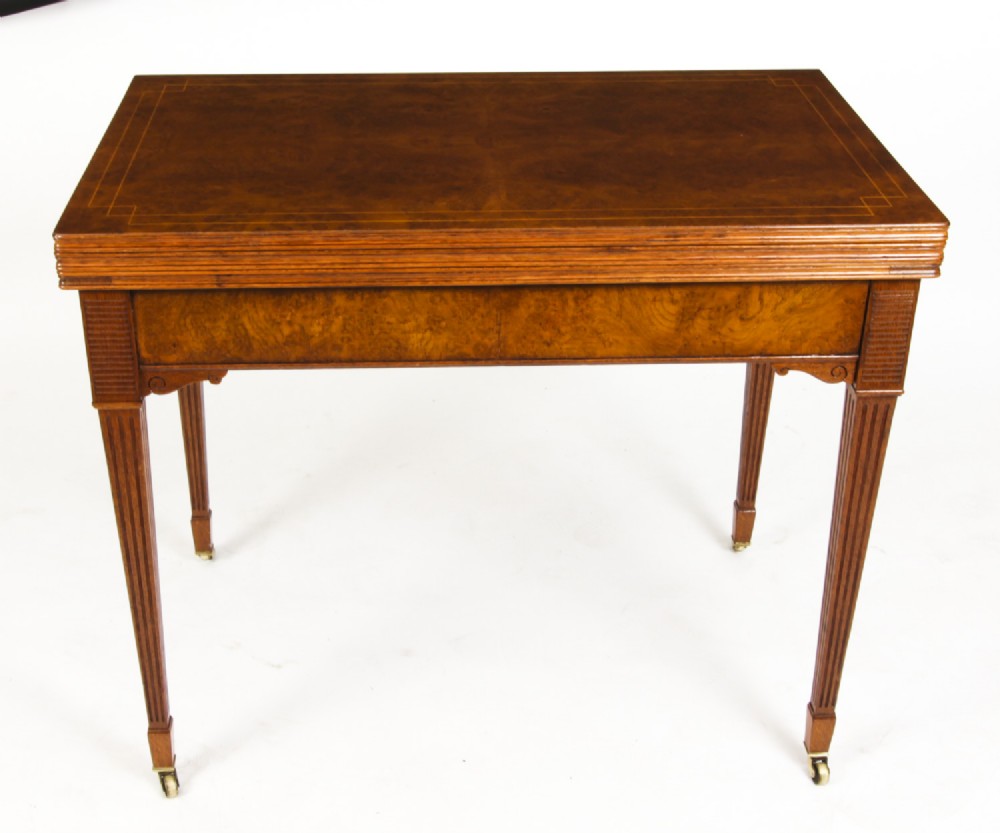
Regent Antiques has dated this piece to the 19th Century.
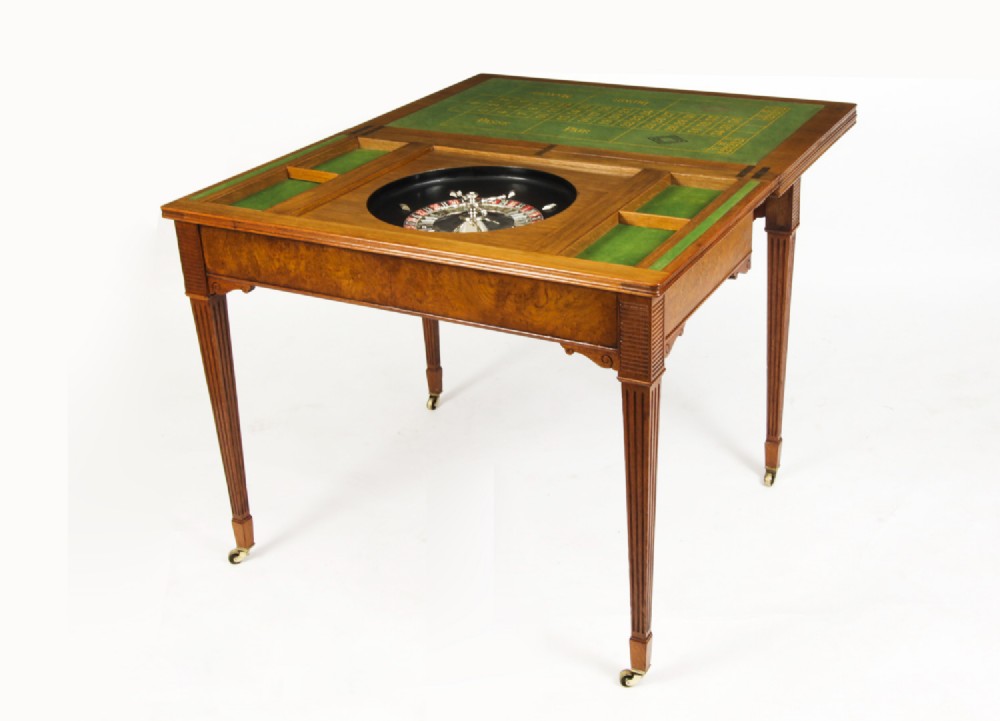
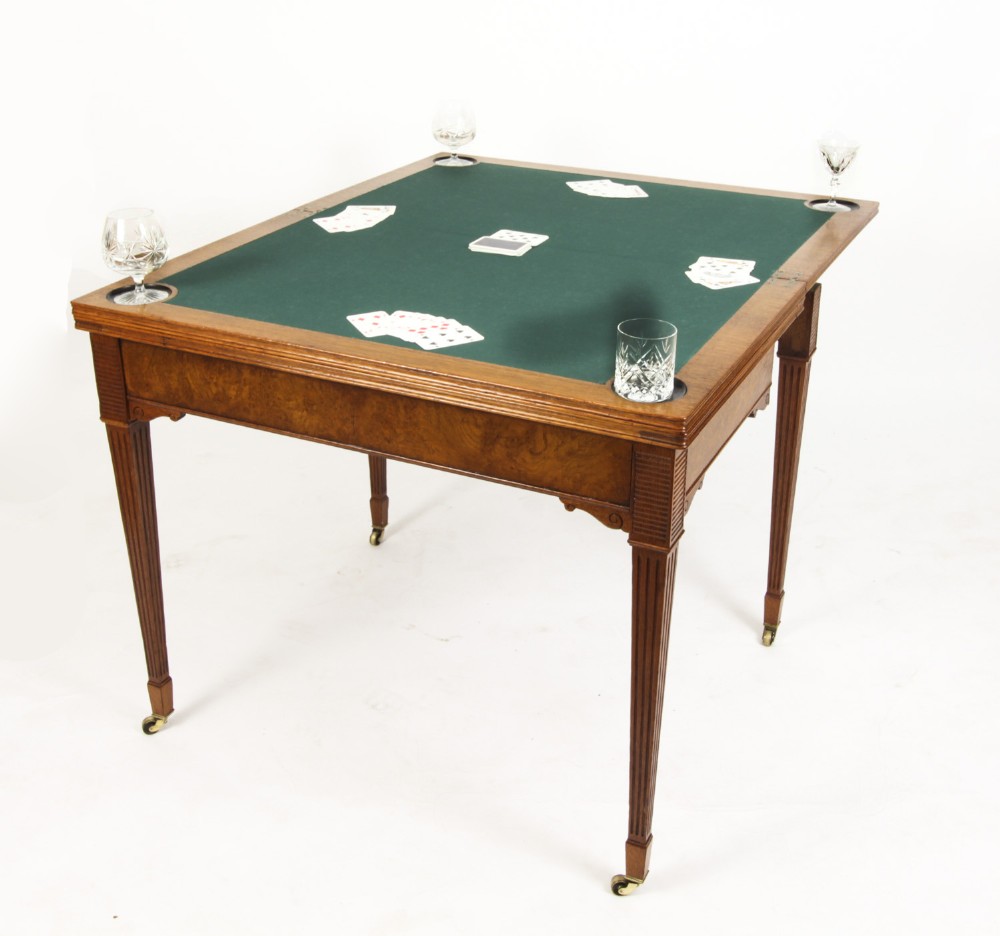
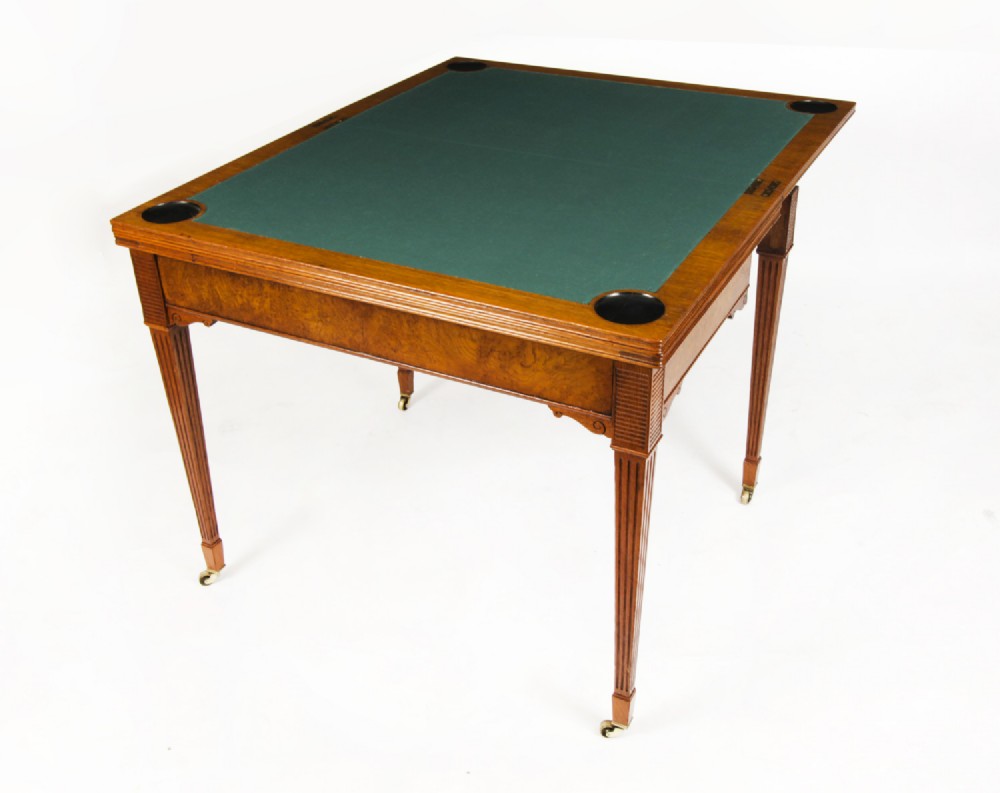
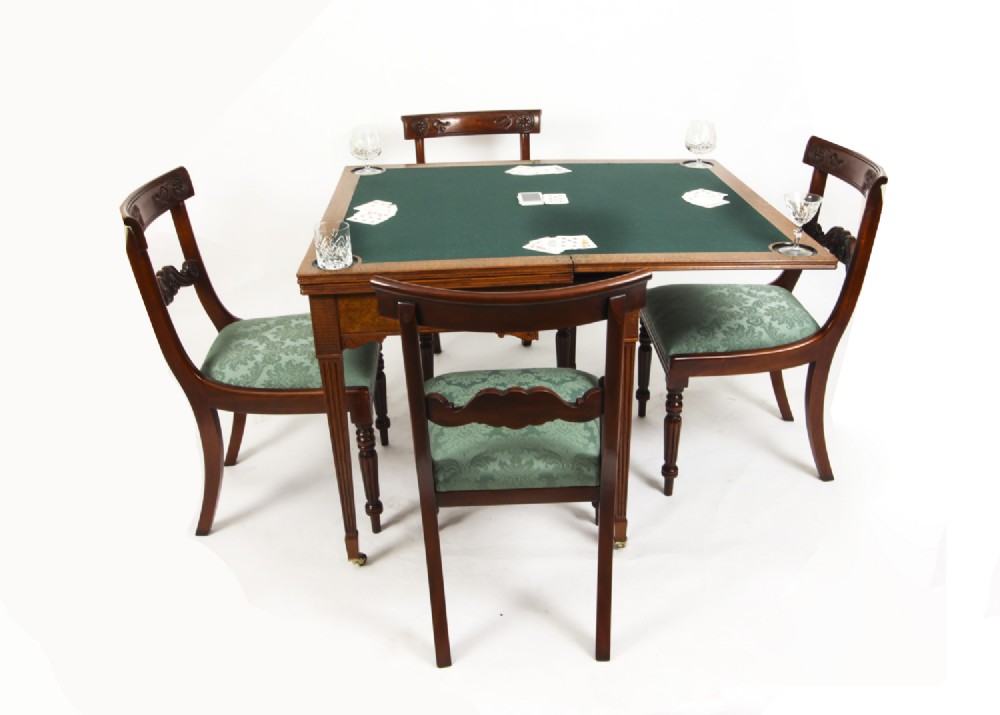
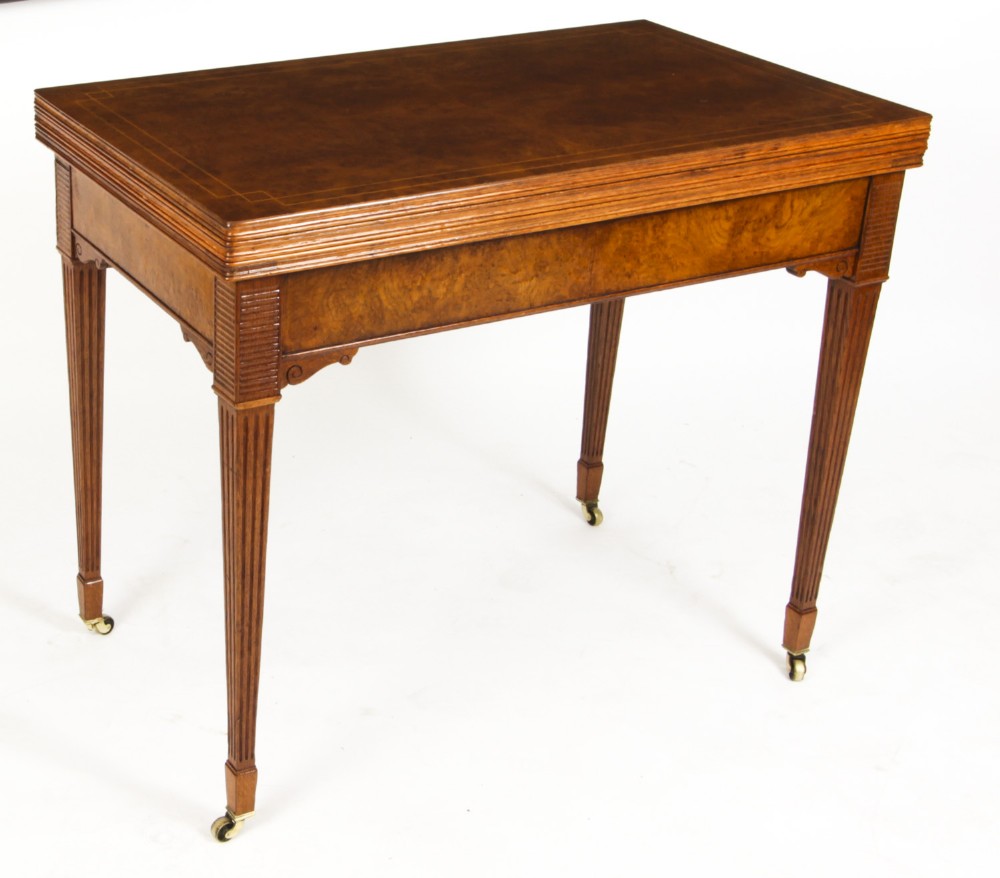
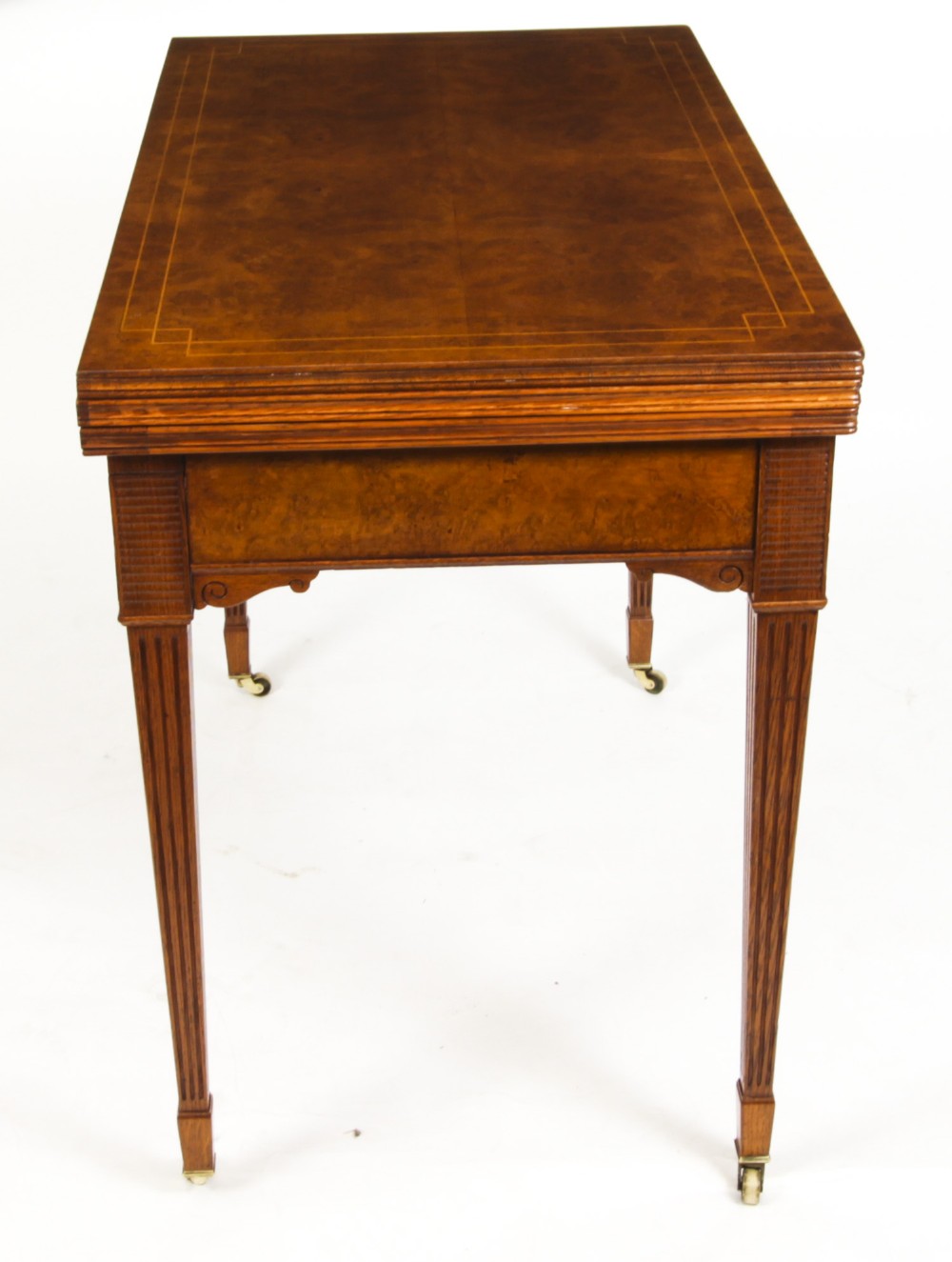
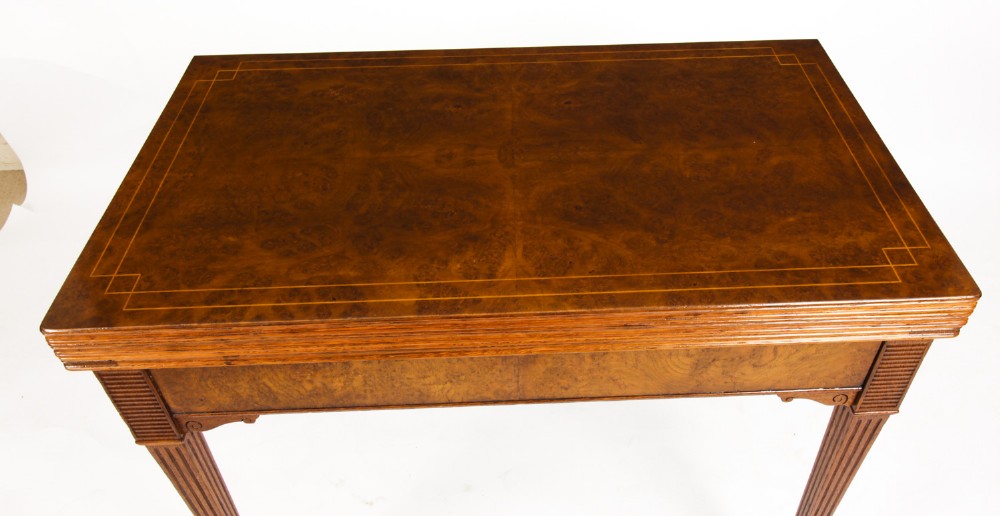
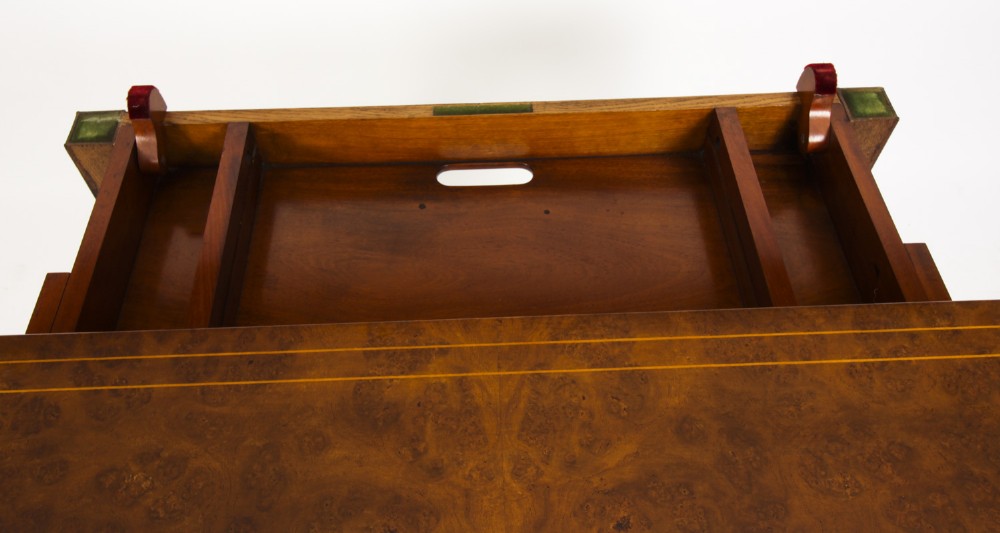
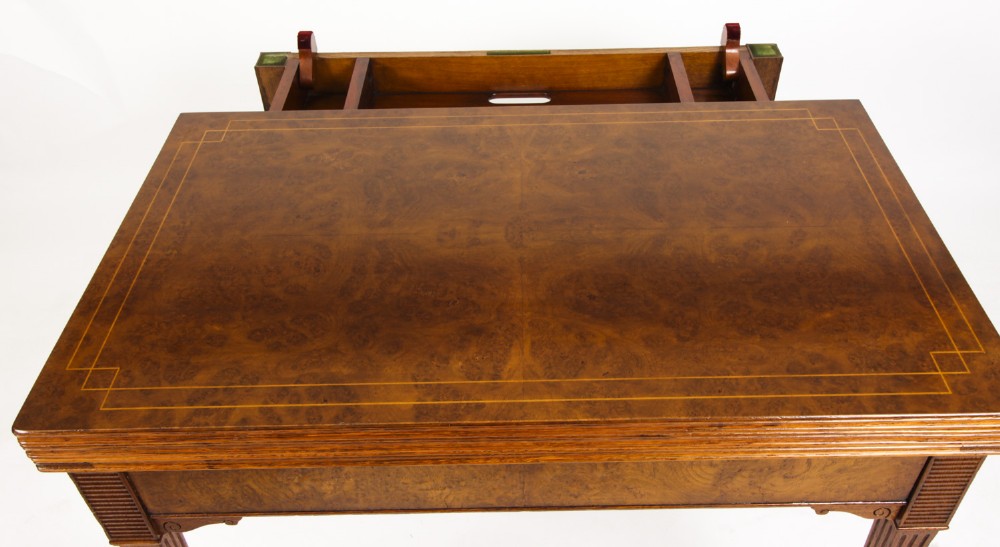
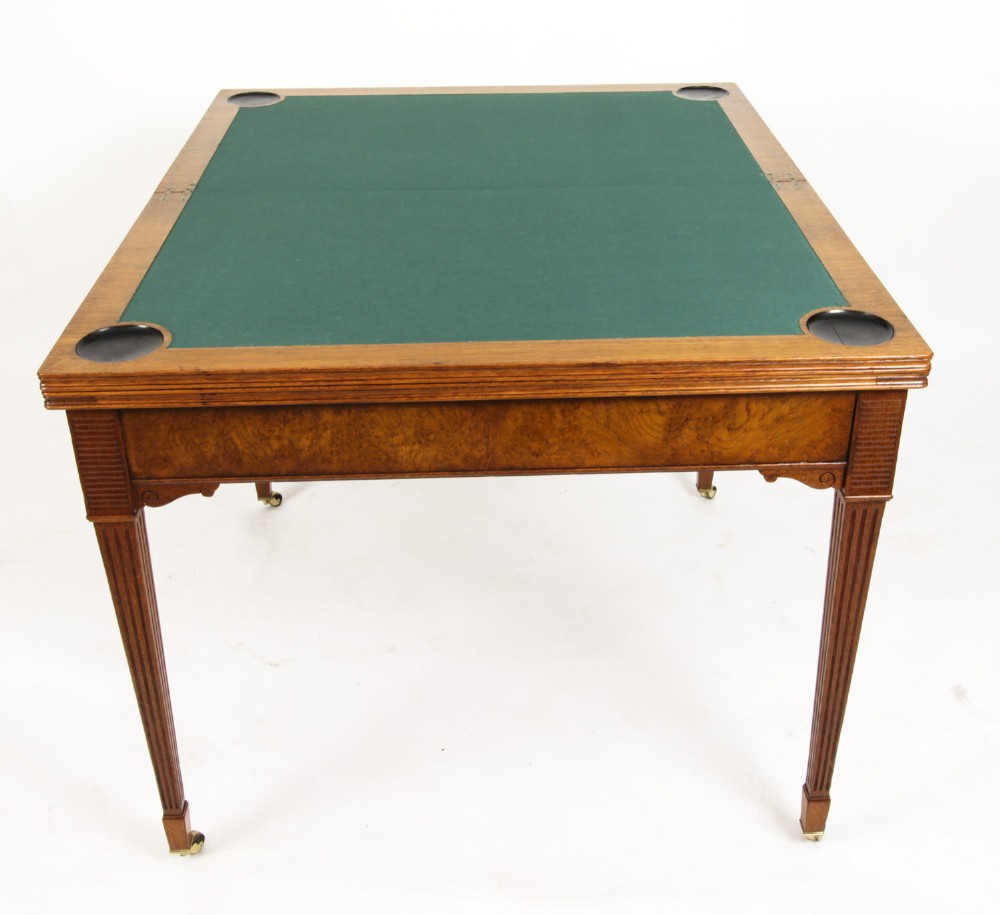
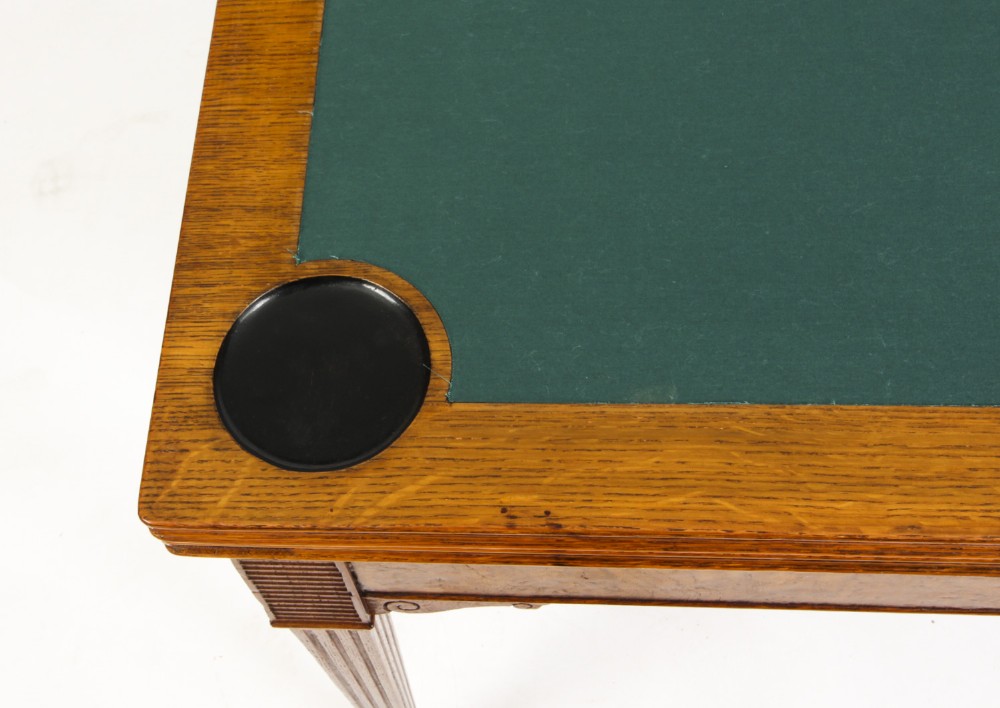
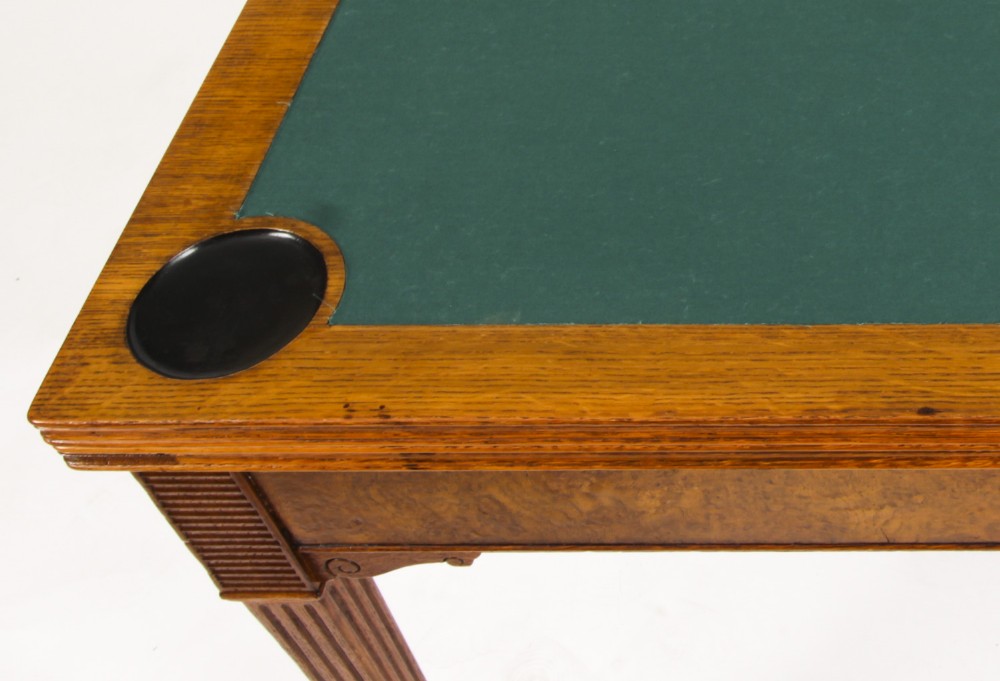
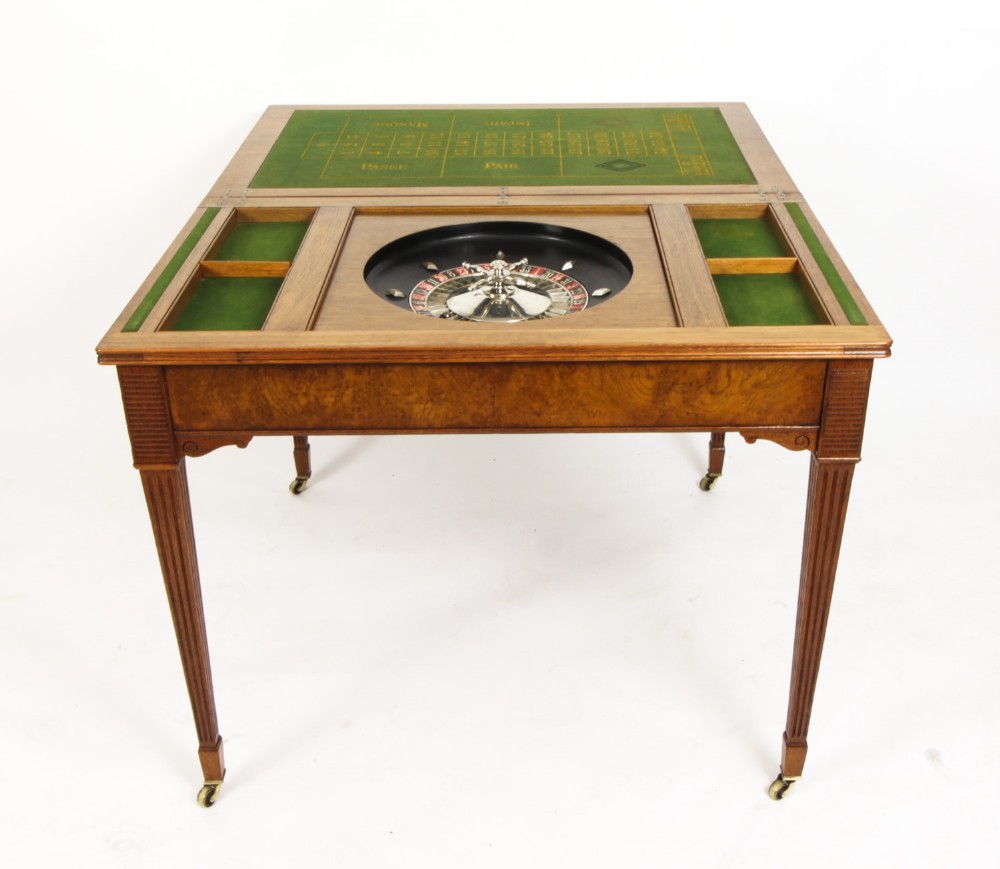
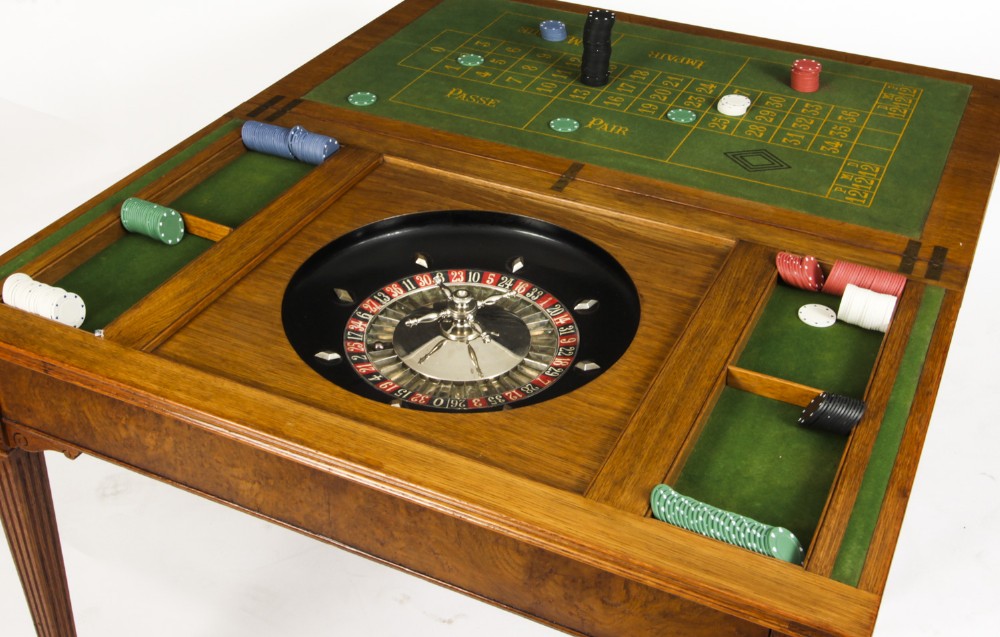
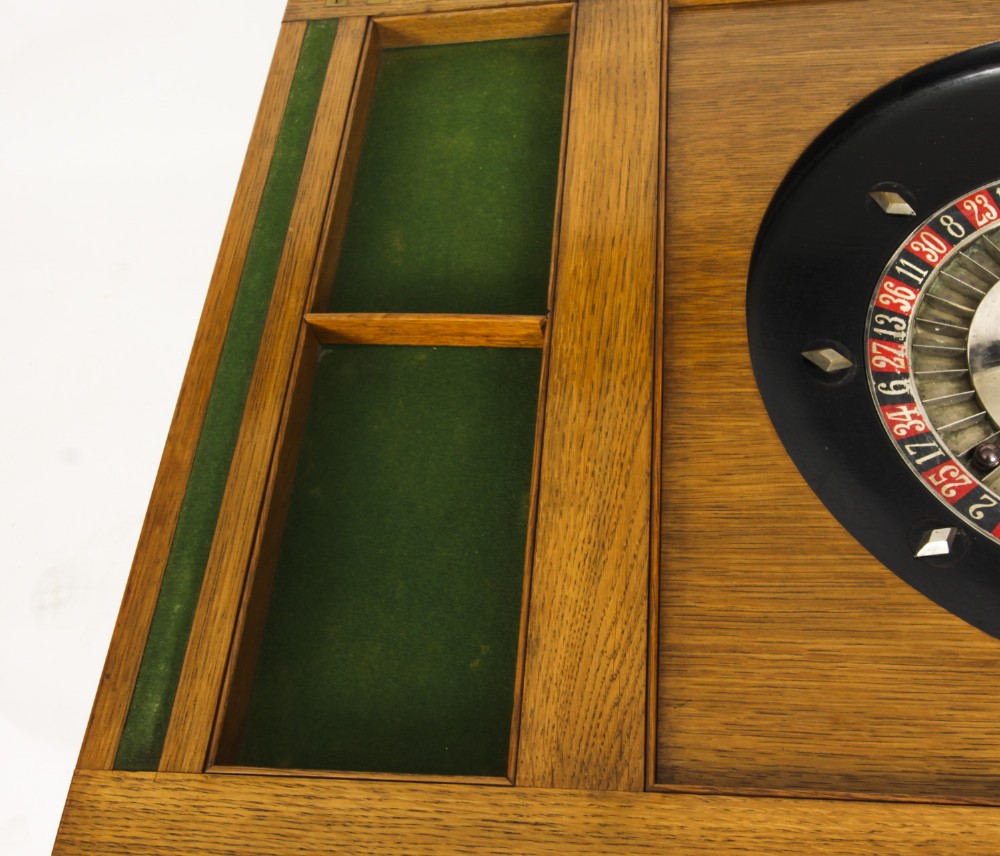
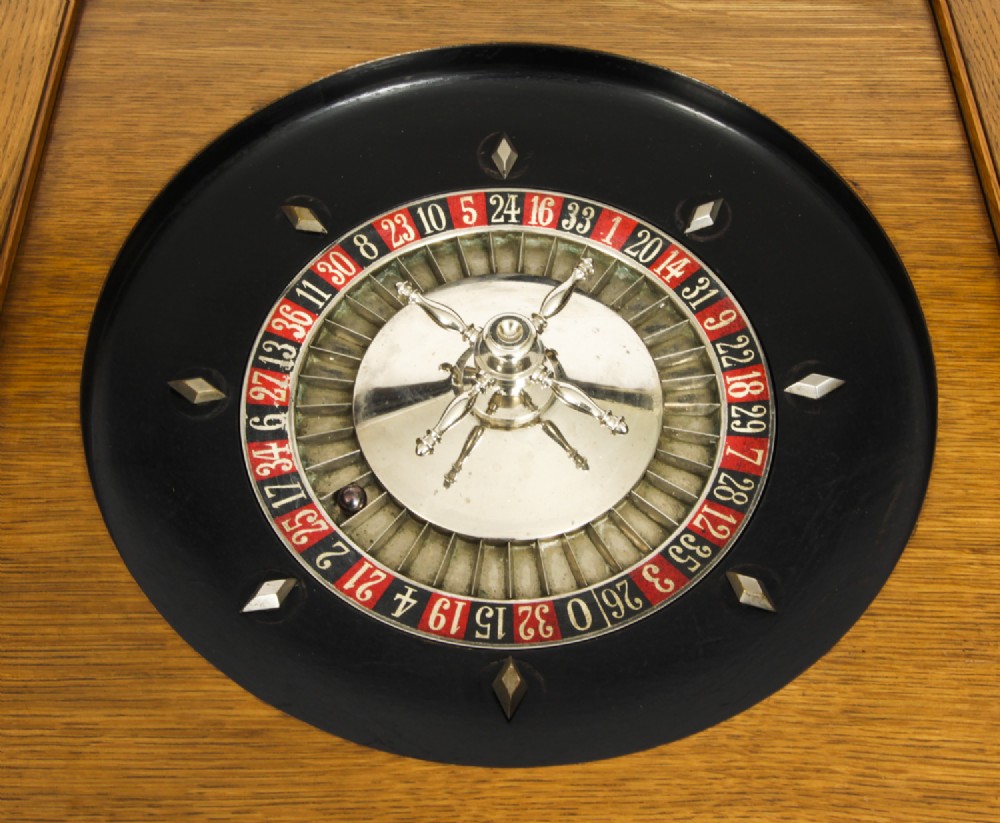
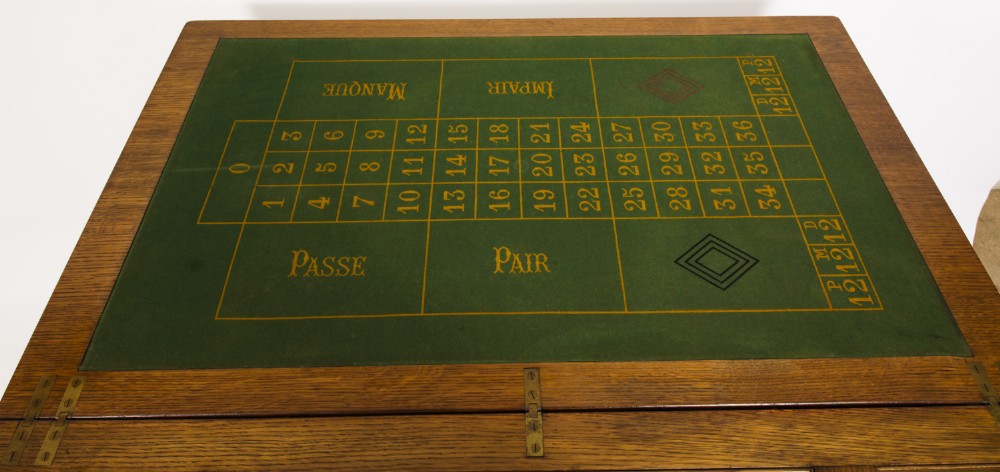
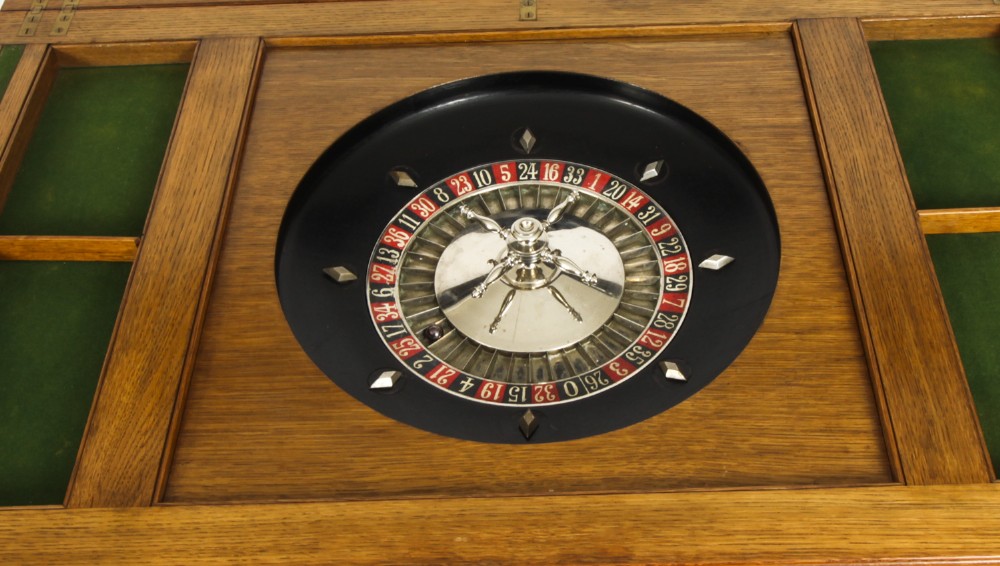
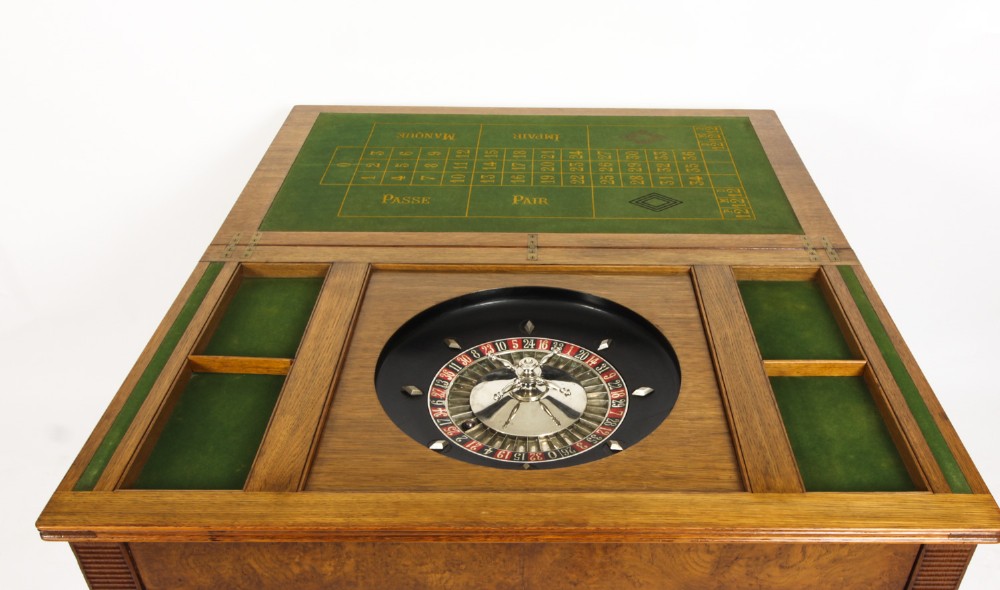
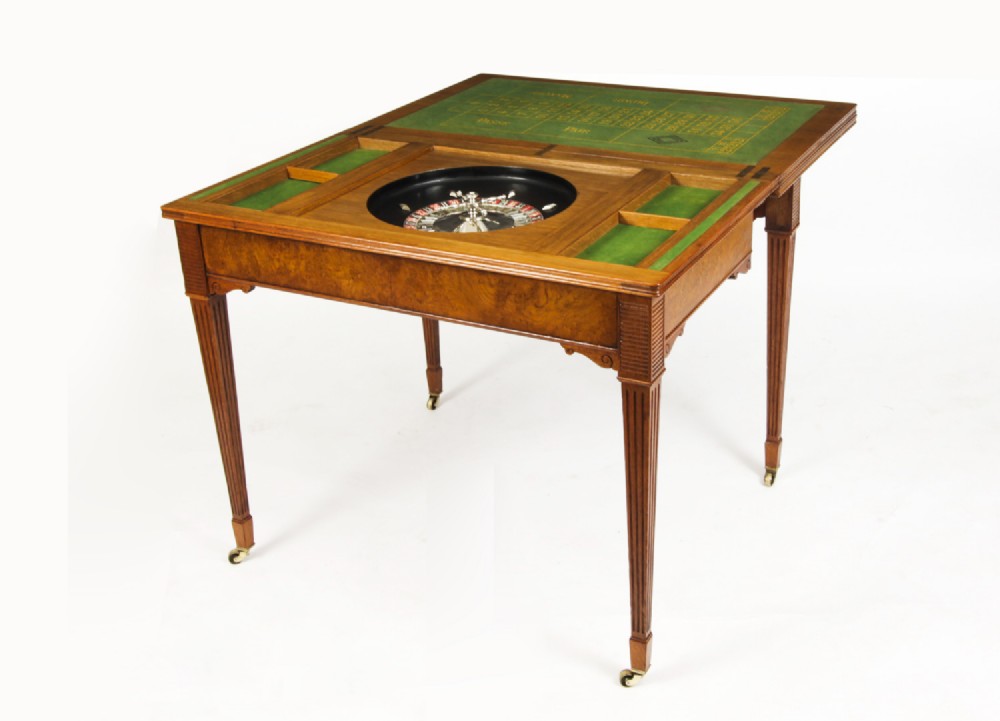
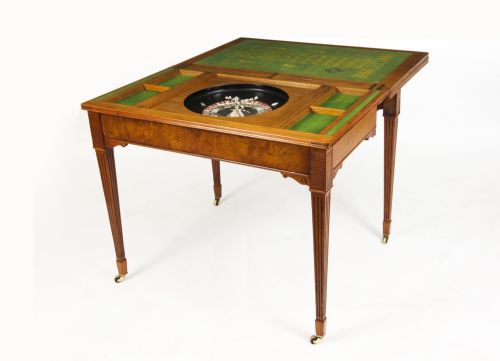
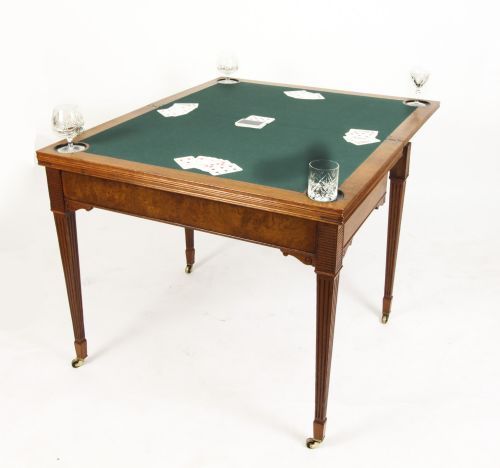
The hinged triple top opens to reveal the green baize lined gaming interior for playing cards with counter recesses, and opens again to reveal a further panel with roulette wheel, counter wells with counters and a green roulette baize marked scoring panel.
It is an elegant piece which will enhance a special room in your home.
Condition:
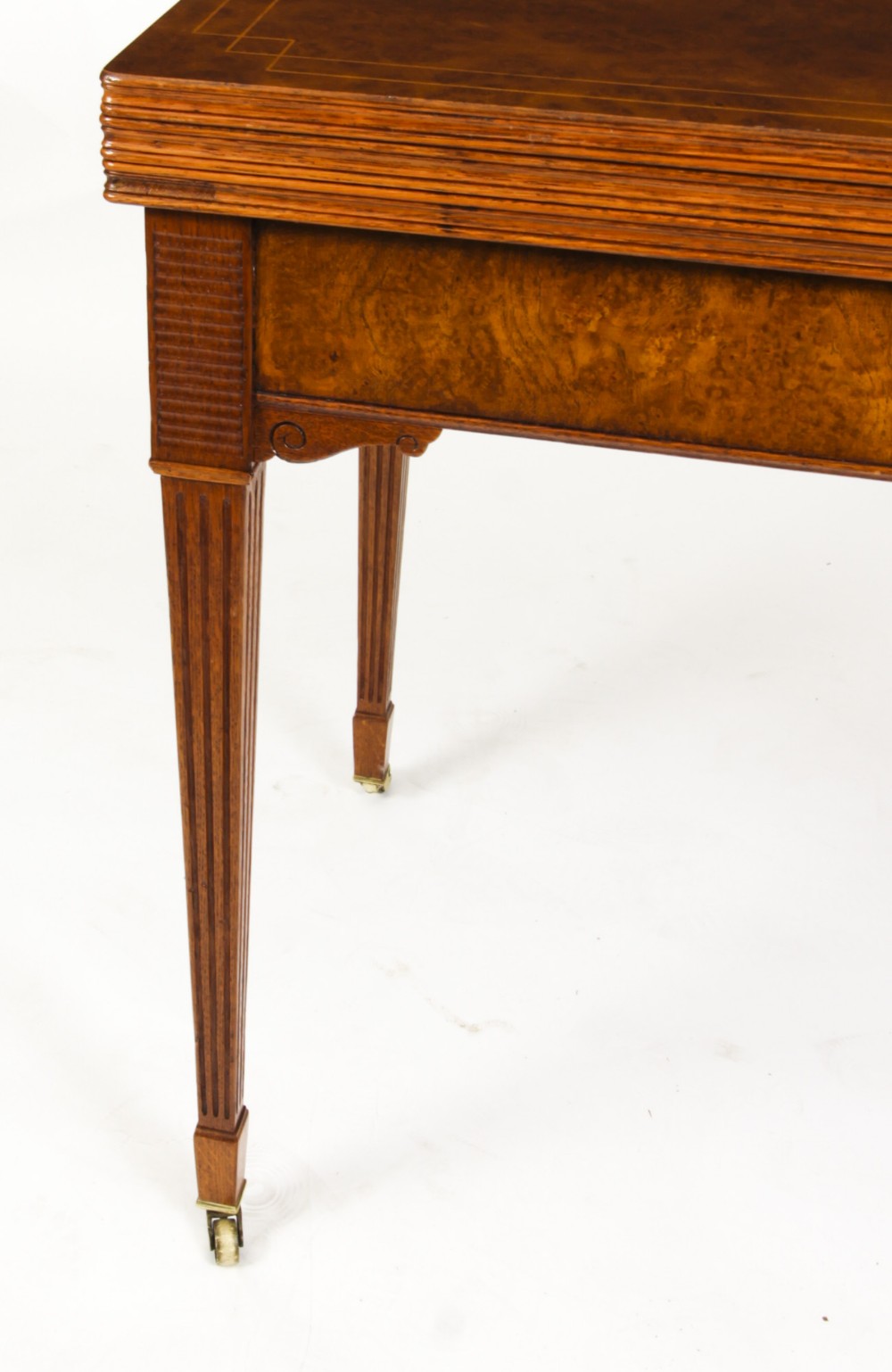
In excellent condition having been beautifully cleaned, polished and waxed in our workshops, the Roulette baize is original, please see photos for confirmation.
Dimensions in cm:
Height 80 x Width 94 x Depth 56 - Closed
Height 78 x Width 112 x Depth 112 - open
Dimensions in inches:
Height 2 foot, 7 inches x Width 3 feet, 1 inch x Depth 1 foot, 10 inches - Closed
Height 2 foot, 7 inches x Width 3 foot, 8 inches x Depth 3 foot, 8 inches - open
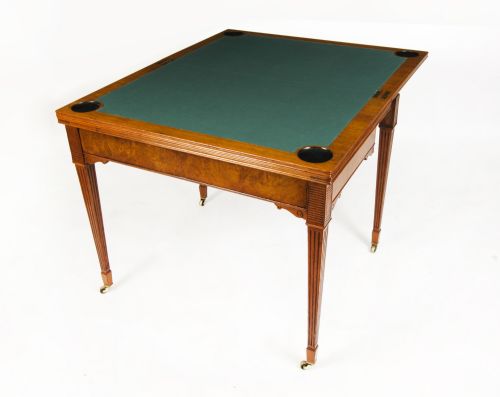
Roulette is a casino game named after the French word meaning little wheel. In the game, players may choose to place bets on either a single number or a range of numbers, the colors red or black, or whether the number is odd or even.
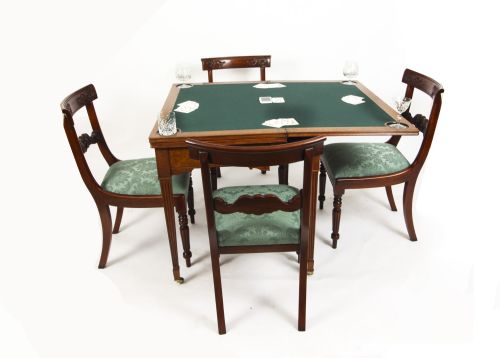
The game has been played in its present form since as early as 1796 in Paris. An early description of the roulette game in its current form is found in a French novel La Roulette, ou le Jour by Jaques Lablee, which describes a roulette wheel in the Palais Royal in Paris in 1796. The description included the house pockets, "There are exactly two slots reserved for the bank, whence it derives its sole mathematical advantage." It then goes on to describe the layout with, "...two betting spaces containing the bank's two numbers, zero and double zero". The book was published in 1801. An even earlier reference to a game of this name was published in regulations for New France (Québec) in 1758, which banned the games of "dice, hoca, faro, and roulette".
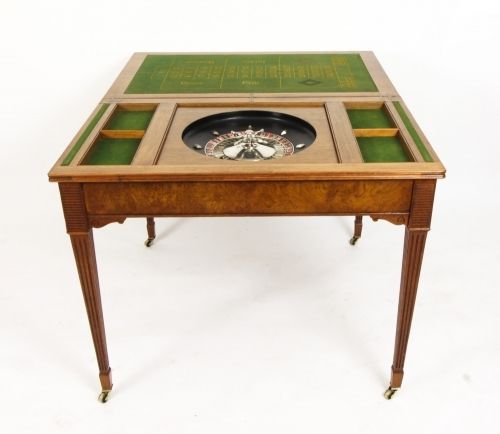
The roulette wheels used in the casinos of Paris in the late 1790s had red for the single zero and black for the double zero. To avoid confusion, the color green was selected for the zeros in roulette wheels starting in the 1800s.
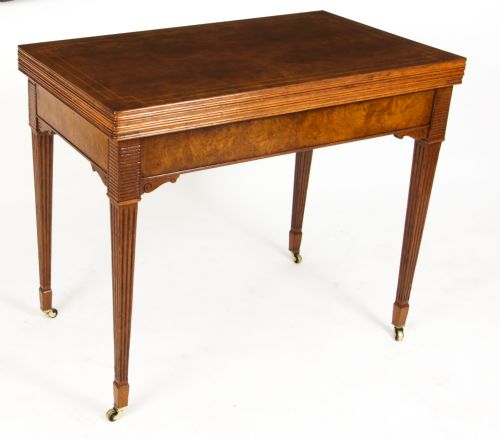
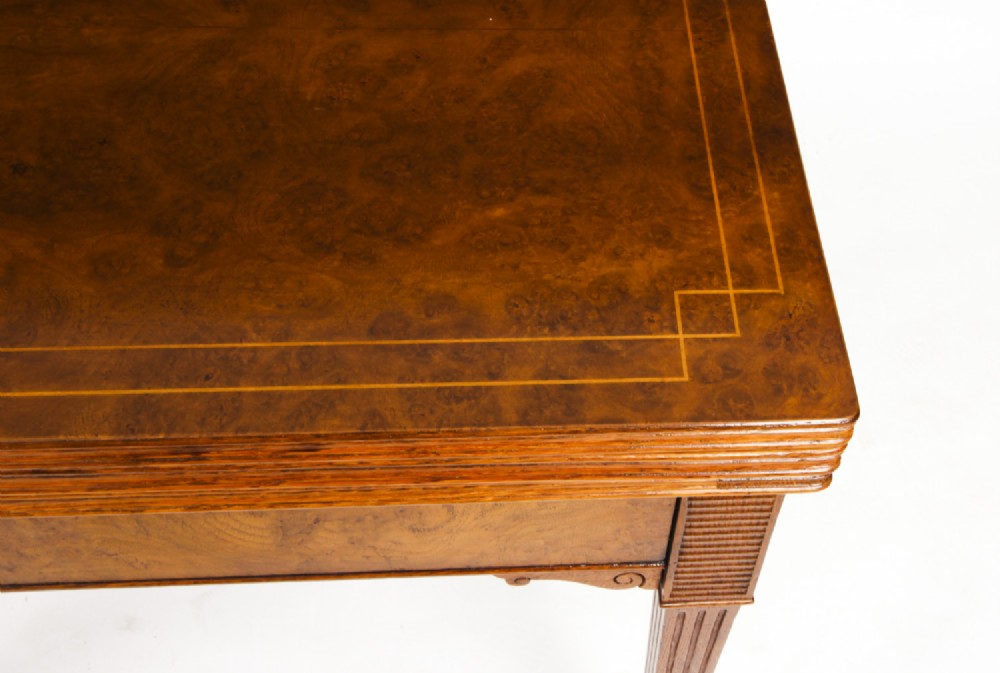
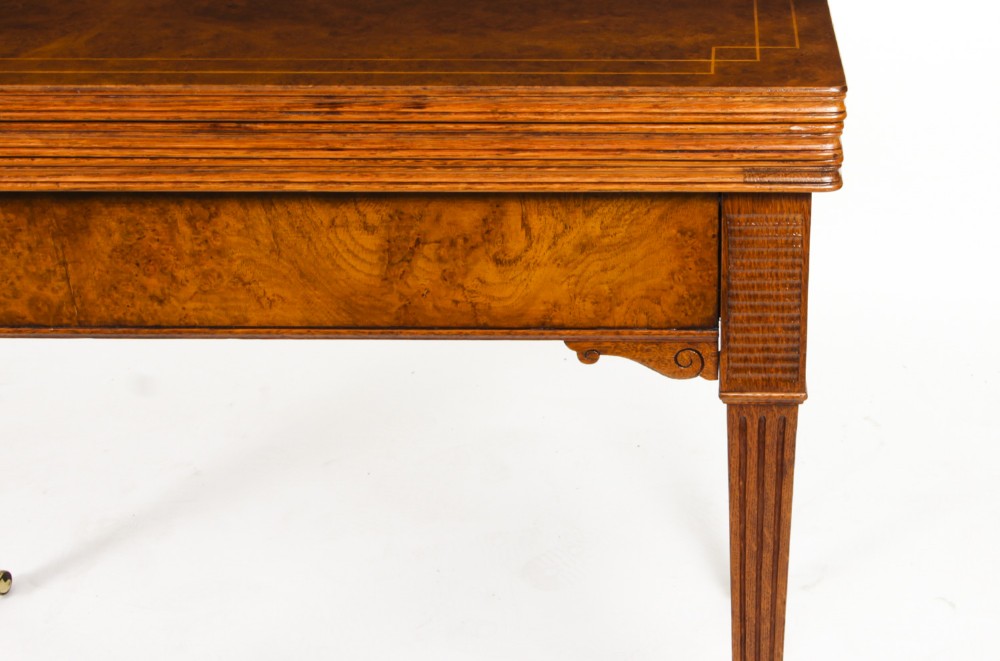
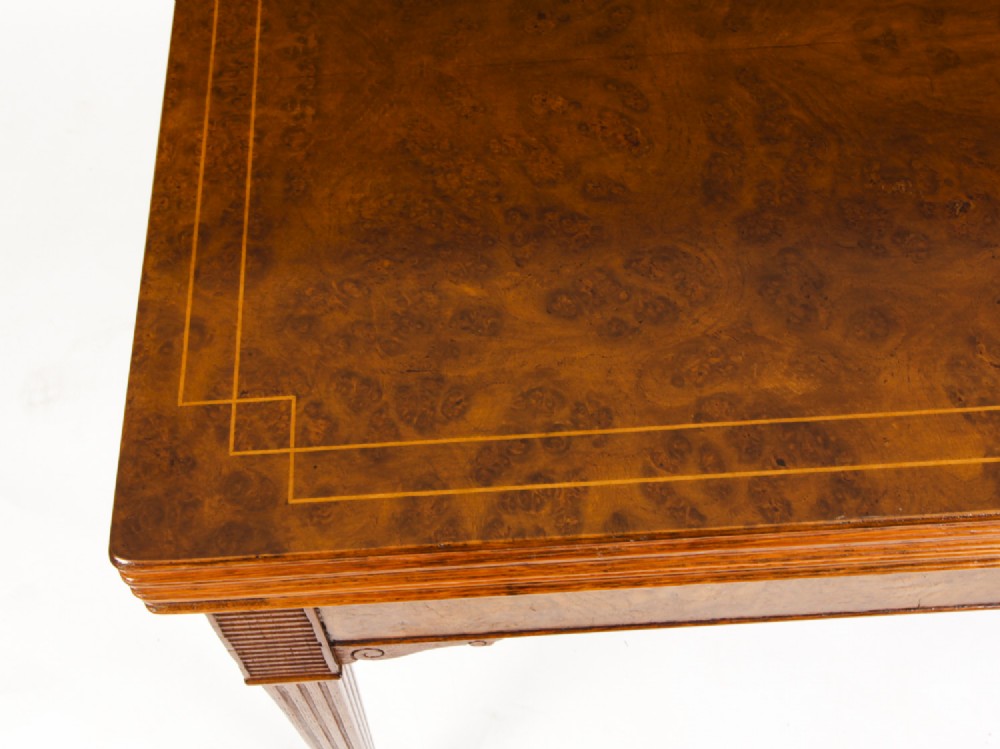
Pollard Oak
Pollarding is a pruning system in which the upper branches of a tree are removed, promoting a dense head of foliage and branches. It has been common in Europe since medieval times and is practised today in urban areas worldwide, primarily to maintain trees at a predetermined height. The bole of the tree, constantly cut back over a period of years, will eventually form a lump, or ‘burr’, which when sawn for veneer, gives a lovely grained, swirling figure.
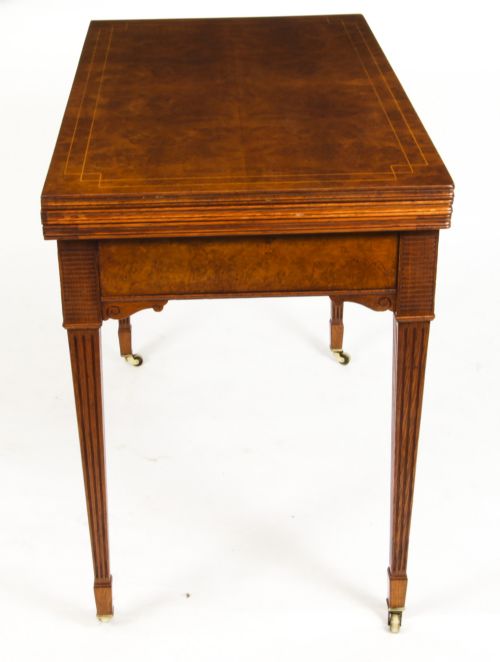
The effect is similar to that of burr walnut with its distinctive speckled grain. Burrs, or ‘burls’, are growths which appear on the side of tree trunks, resulting from a tree undergoing some form of stress. They may be caused by an injury, virus or fungus.
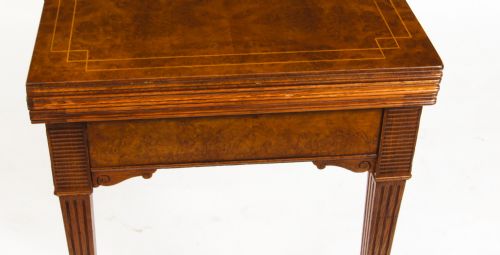
During the 19th century great strides were made in the mechanisation of cabinet making. Marc Isambard Brunel [ Isambard Kingdom’s father] built the first steam driven saw mill, and invented a circular saw that could be used to cut veneers thinly and evenly for the first time. He also developed the first hydraulic veneer press. The figured wood cut from burrs and pollards is notoriously difficult to cut and lay: the wild grain which makes it so attractive results in a very delicate, brittle veneer. The new machines enabled the Victorian craftsmen to make the most of these beautiful timbers.
Our reference: A2676
Regent Antiques has dated this piece to the 19th Century.
We specialise in english and continental furniture, silver, porcelain and decorative items.
You can view the stock and full dealer information on the Regent Antiques Profile Page
Regent Antiques is a registered member of LAPADA CINOA
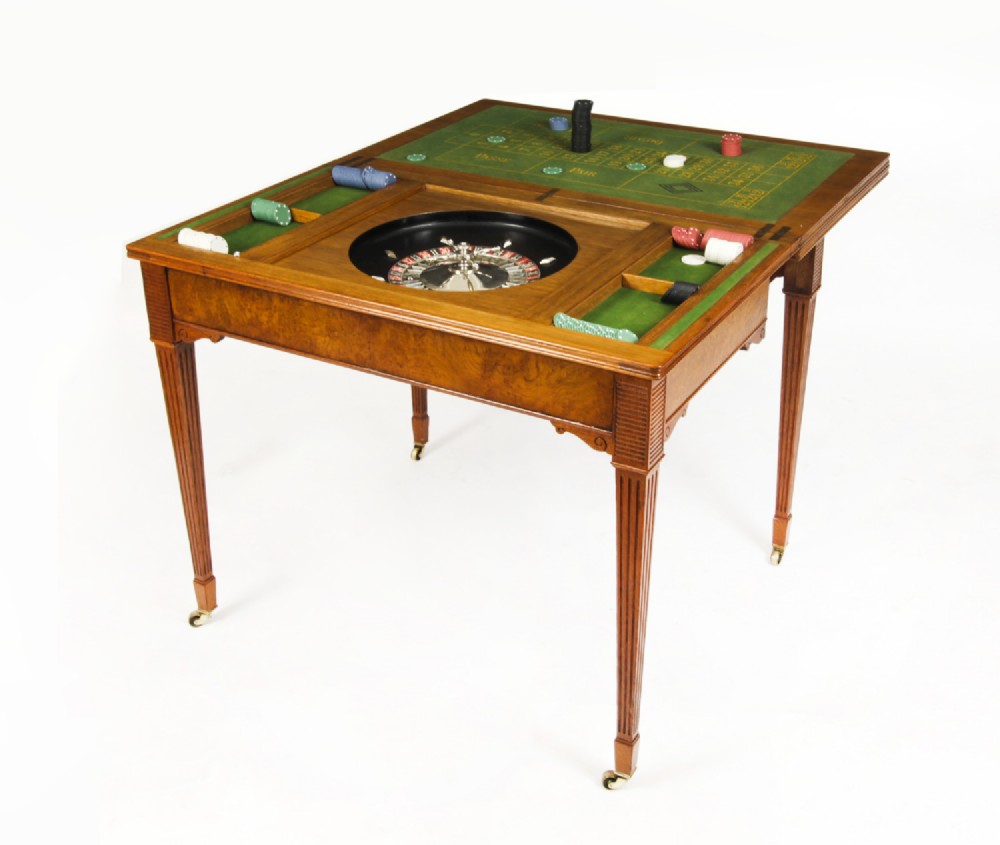
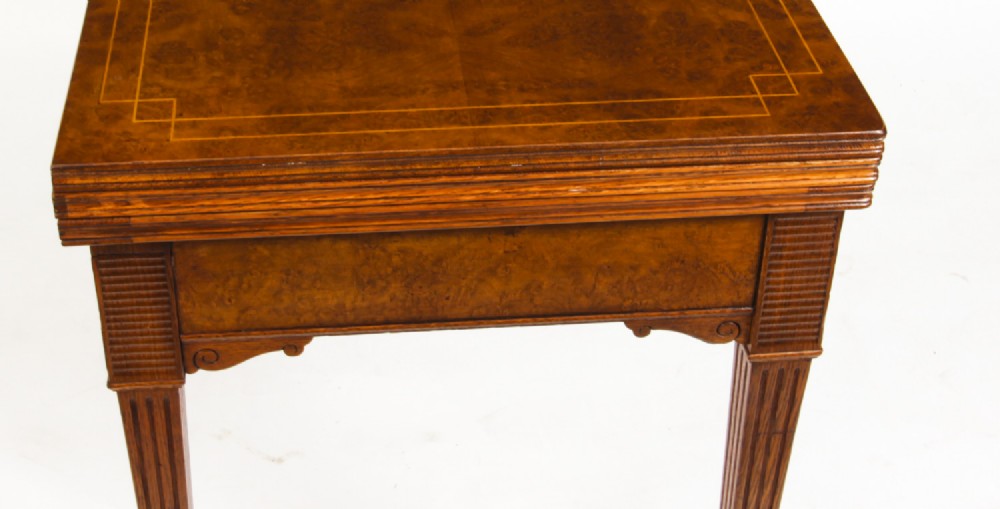
Antique Victorian Pollard Oak Games Card Roulette Table 19th C