It was listed by Regent Antiques. Sold pieces stay on Sellingantiques as a record of what has passed through, and the next one is rarely far away.
Regent Antiques has dated this piece to the 19th Century.
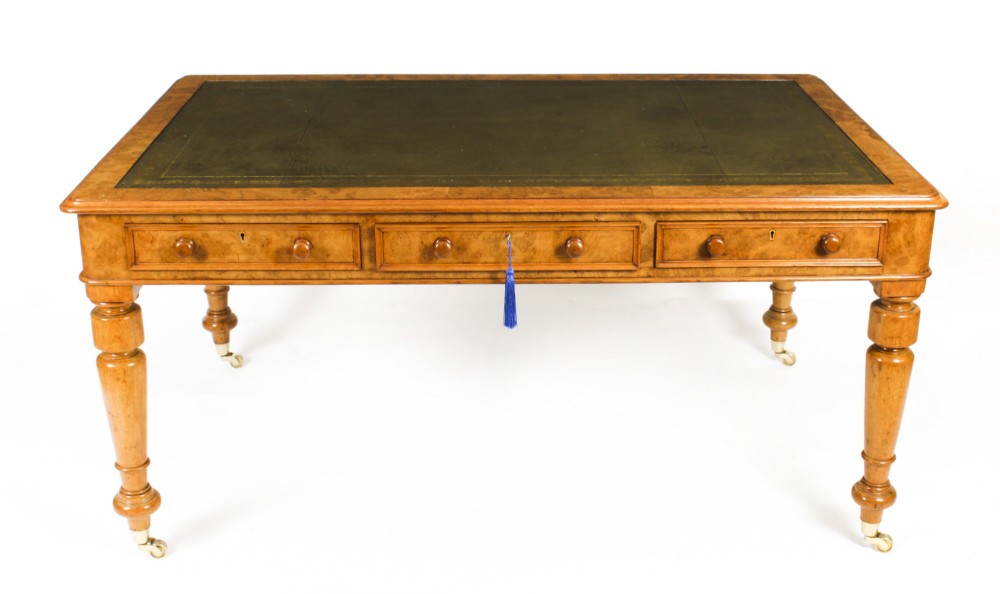
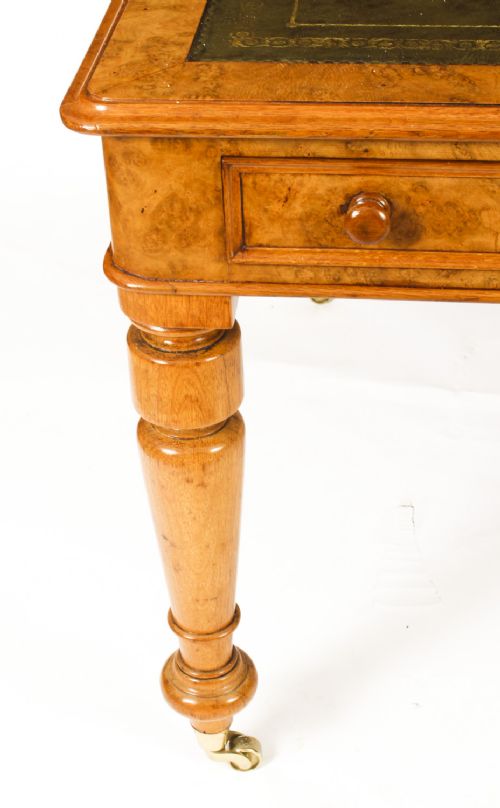
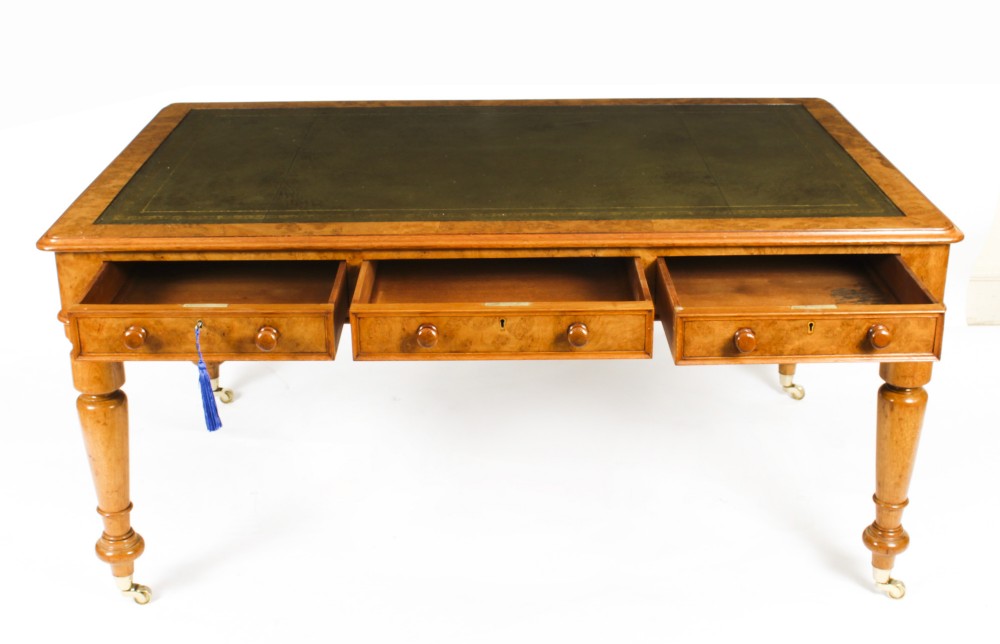
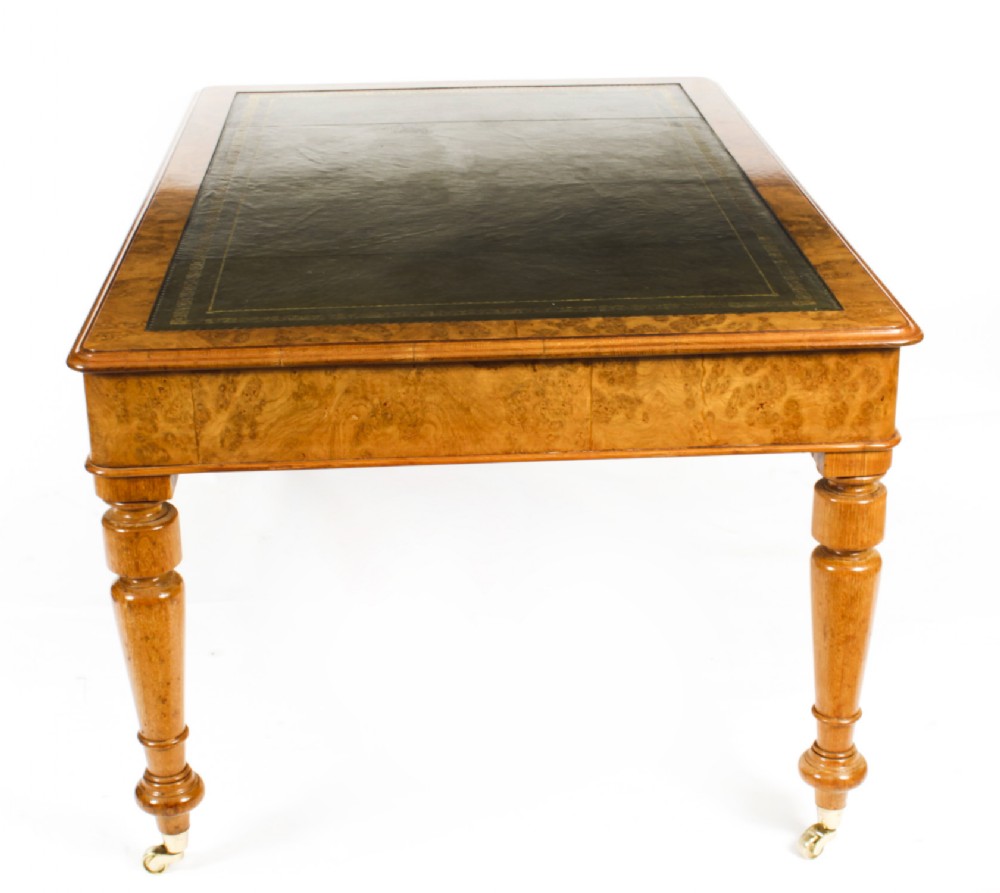
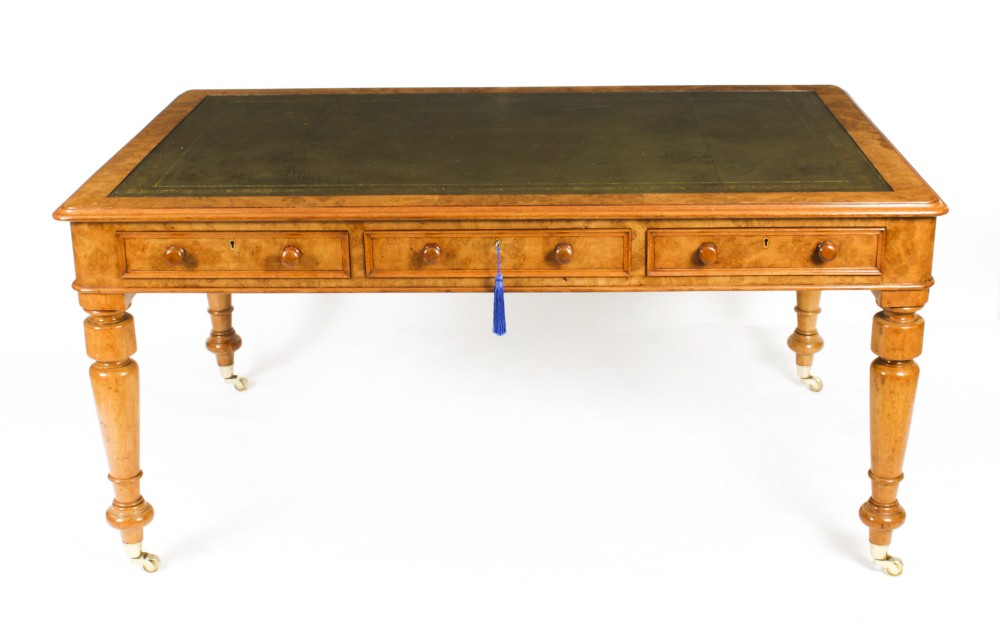
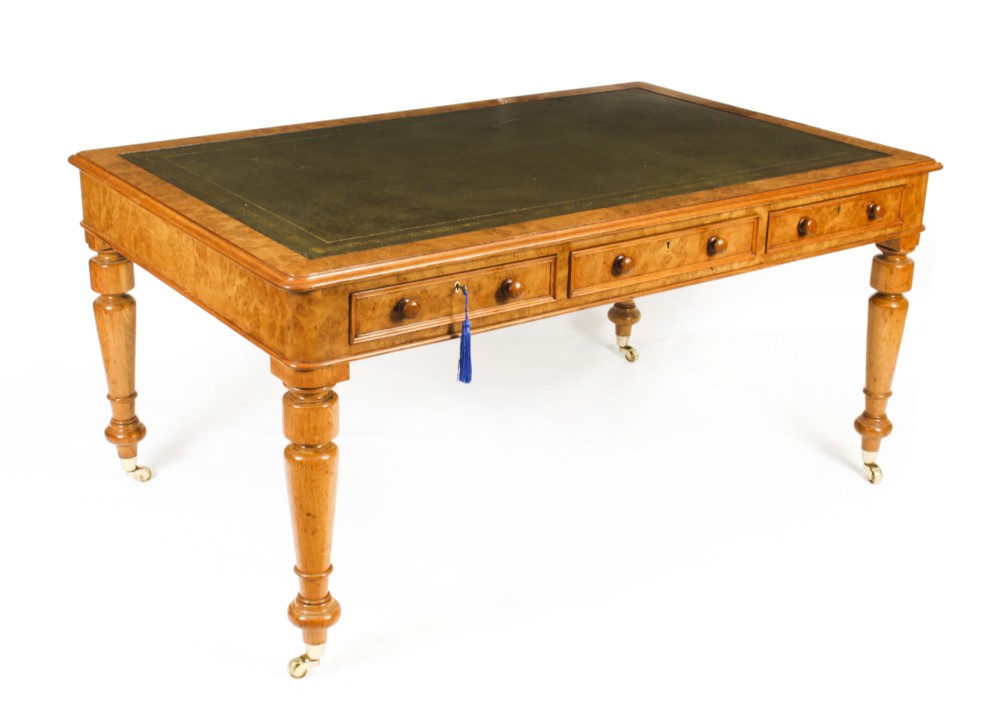
It is raised on four turned tapering legs that terminate in the original brass cap castors.
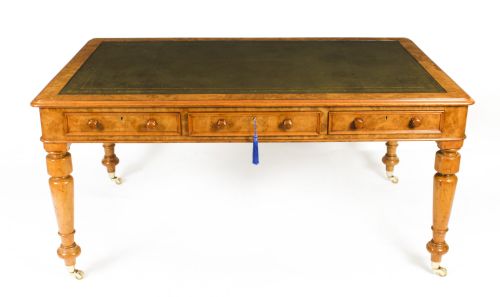
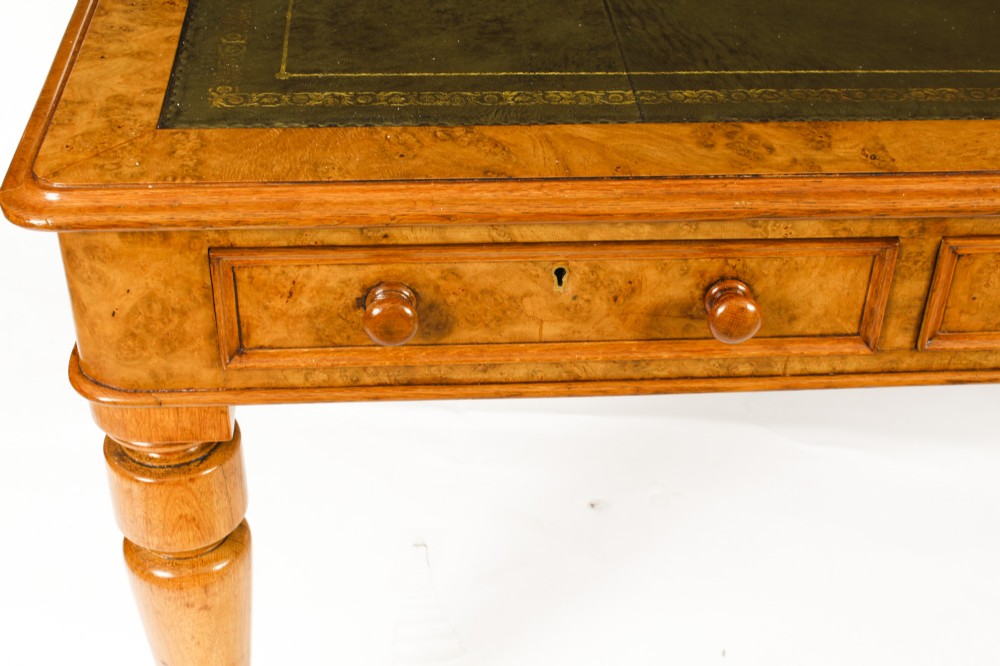
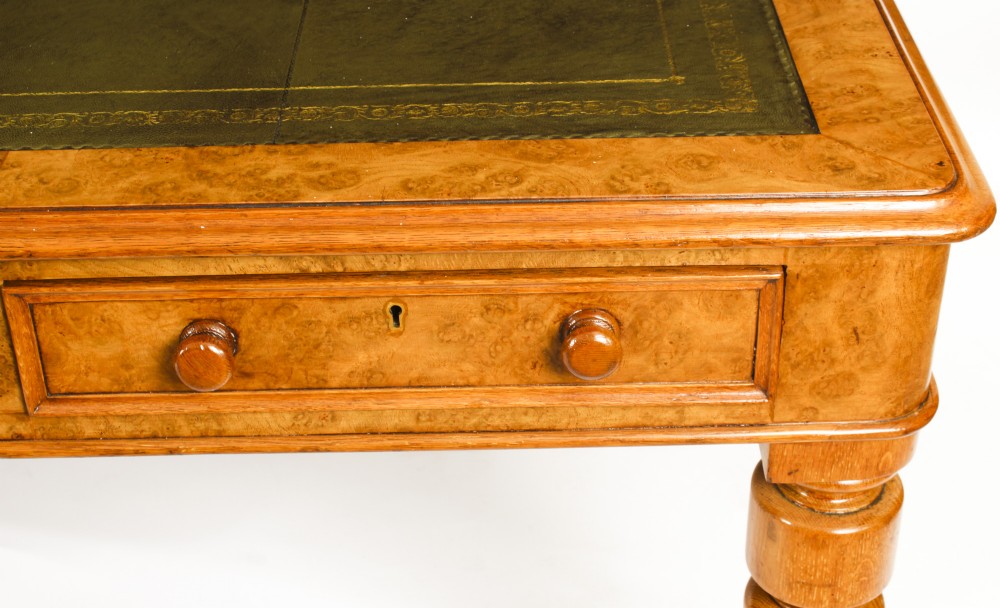
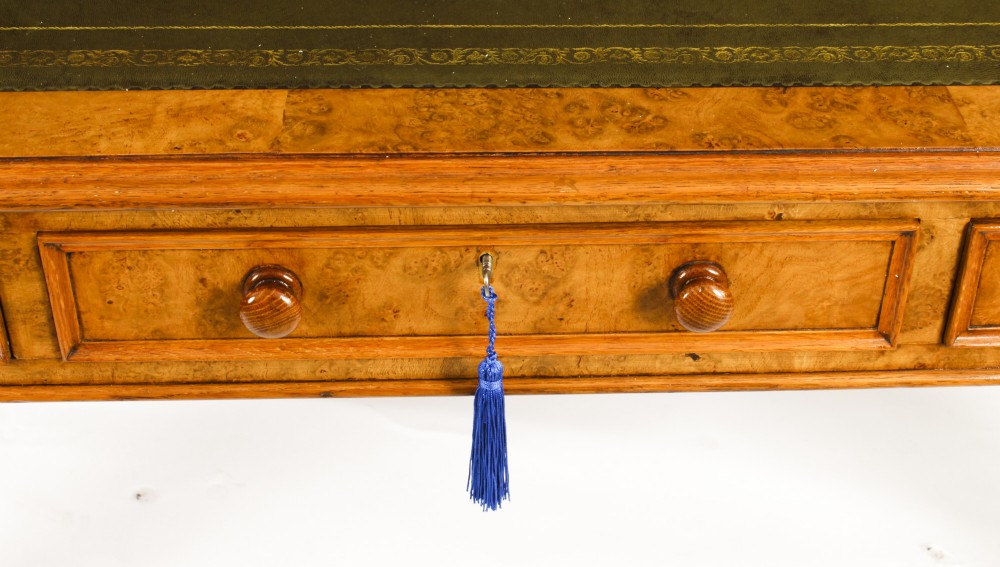
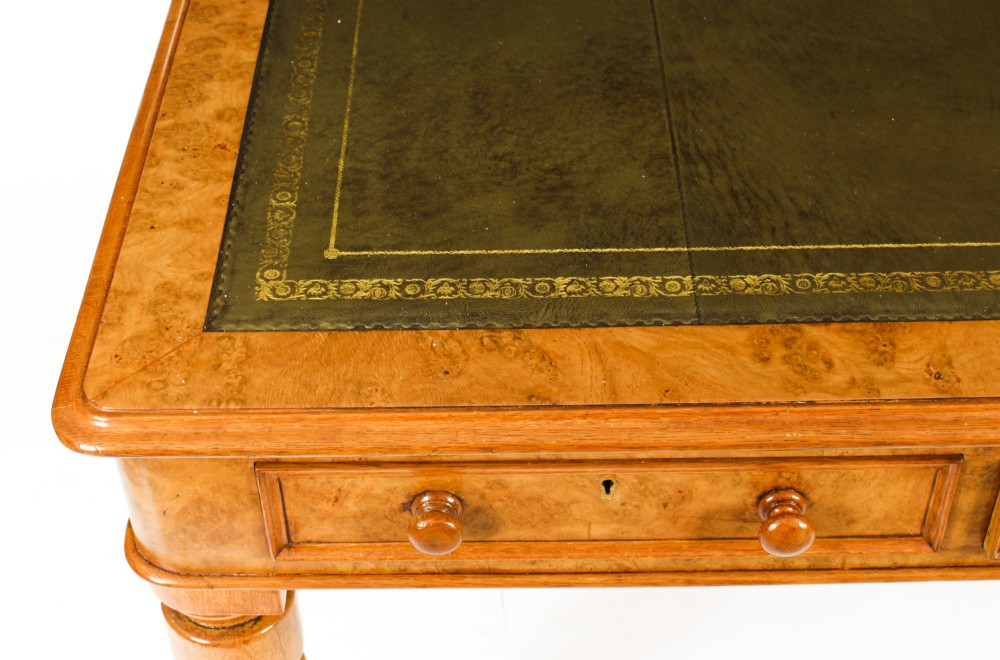
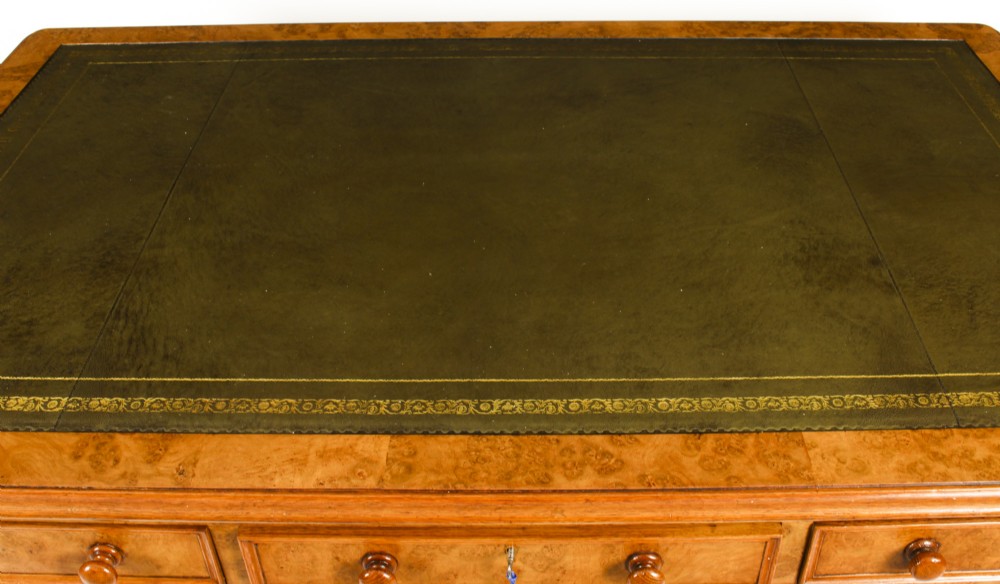
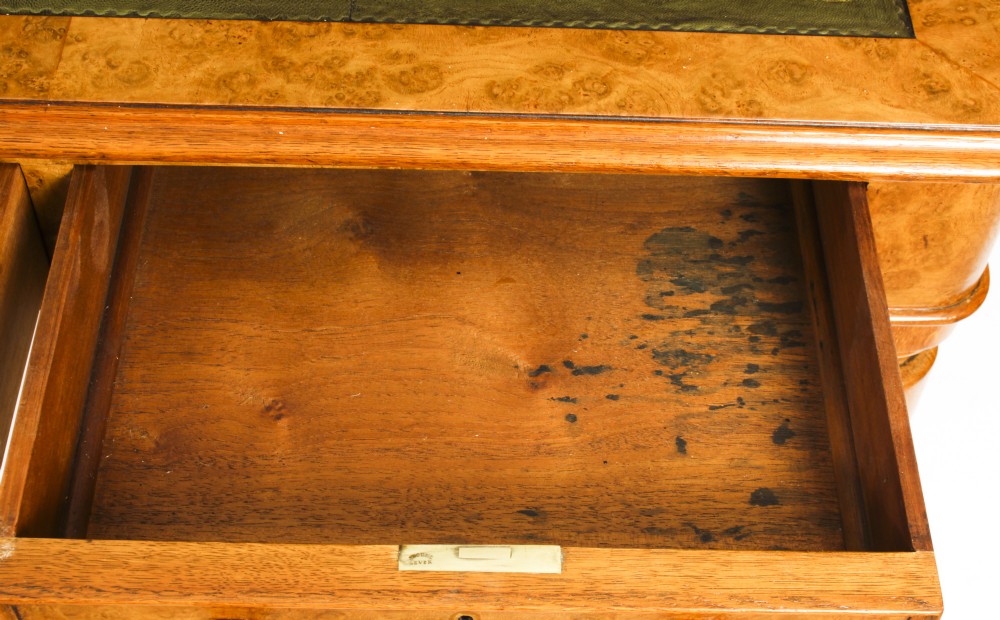
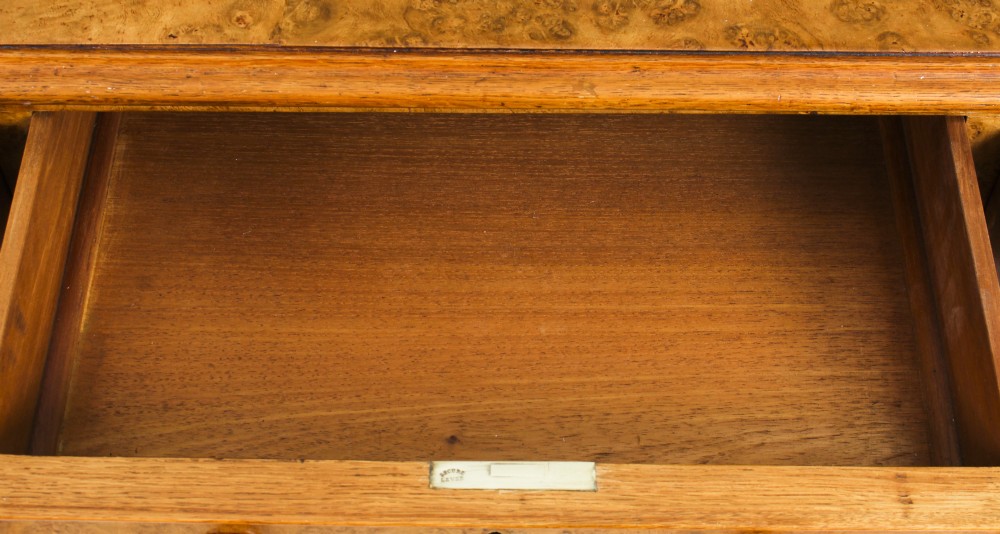
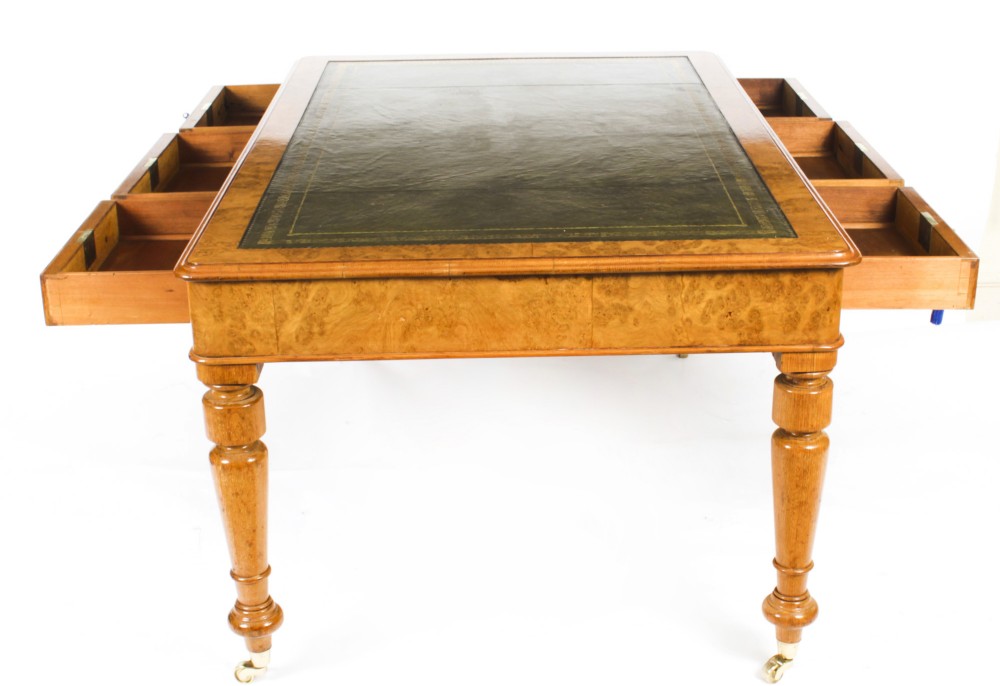
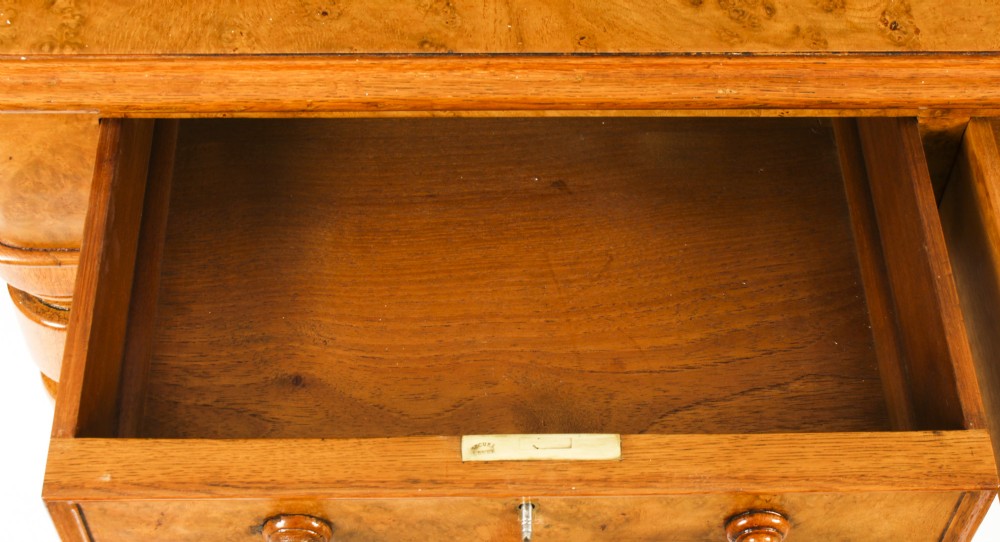
It is a Partners desk and as such has six drawers, three on each side. They are oak lined, have hand cut dovetails and are perfectly sized for all the stationary you could possibly need, making this desk not just a symbol of refinement but a practical furnishing as well.
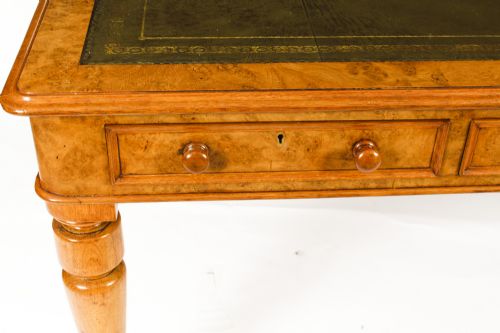
Complete with working locks and keys.
It is finished on all sides so that it can stand freely in the middle of a room, making it extremely suitable for a large home.
Condition:
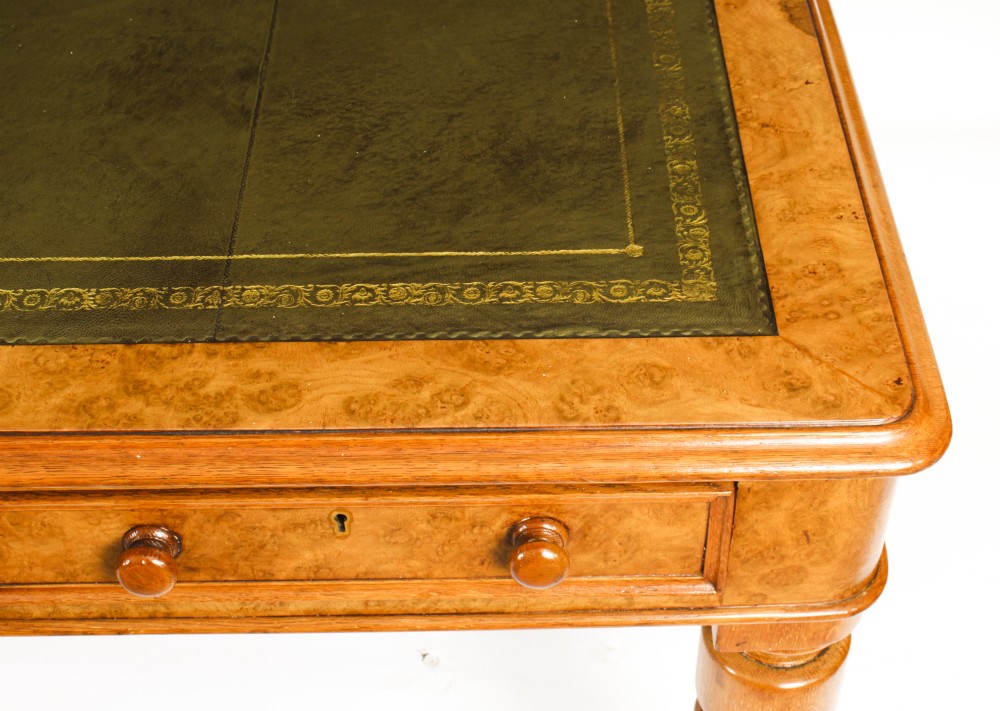
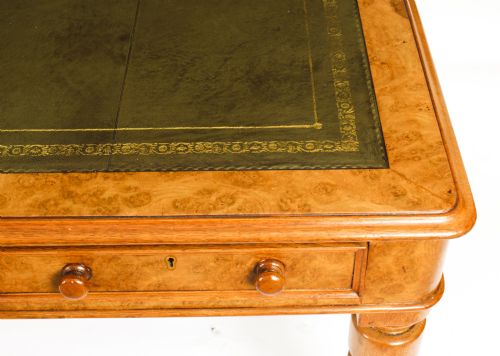
In excellent condition having been beautifully cleaned, polished, waxed and releathered in our workshops. Please see photos for confirmation.
Dimensions in cm:
Height 75 x Width 152 x Depth 97
Height 59 - Knee height
Dimensions in inches:
Height 2 foot, 5 inches x Width 5 feet x Depth 3 foot, 2 inches
Height 1 foot, 11 inches - Knee height
Pollard Oak
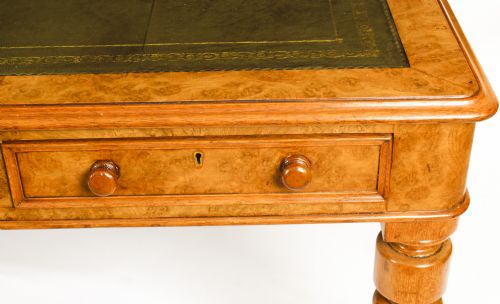
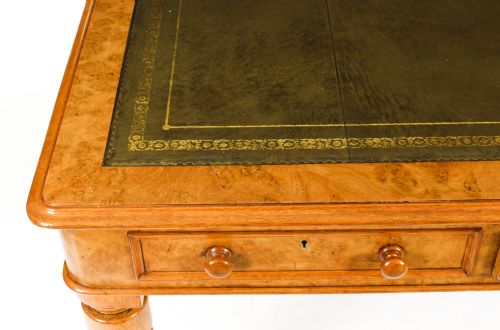
Pollarding is a pruning system in which the upper branches of a tree are removed, promoting a dense head of foliage and branches. It has been common in Europe since medieval times and is practised today in urban areas worldwide, primarily to maintain trees at a predetermined height. The bole of the tree, constantly cut back over a period of years, will eventually form a lump, or ‘burr’, which when sawn for veneer, gives a lovely grained, swirling figure.
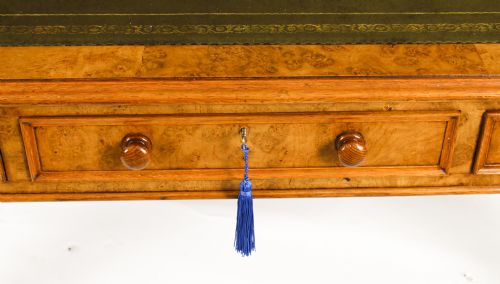
The effect is similar to that of burr walnut with its distinctive speckled grain. Burrs, or ‘burls’, are growths which appear on the side of tree trunks, resulting from a tree undergoing some form of stress. They may be caused by an injury, virus or fungus.
During the 19th century great strides were made in the mechanisation of cabinet making. Marc Isambard Brunel [ Isambard Kingdom’s father] built the first steam driven saw mill, and invented a circular saw that could be used to cut veneers thinly and evenly for the first time. He also developed the first hydraulic veneer press. The figured wood cut from burrs and pollards is notoriously difficult to cut and lay: the wild grain which makes it so attractive results in a very delicate, brittle veneer. The new machines enabled the Victorian craftsmen to make the most of these beautiful timbers.
Our reference: A2102
Regent Antiques has dated this piece to the 19th Century.
We specialise in english and continental furniture, silver, porcelain and decorative items.
You can view the stock and full dealer information on the Regent Antiques Profile Page
Regent Antiques is a registered member of LAPADA CINOA
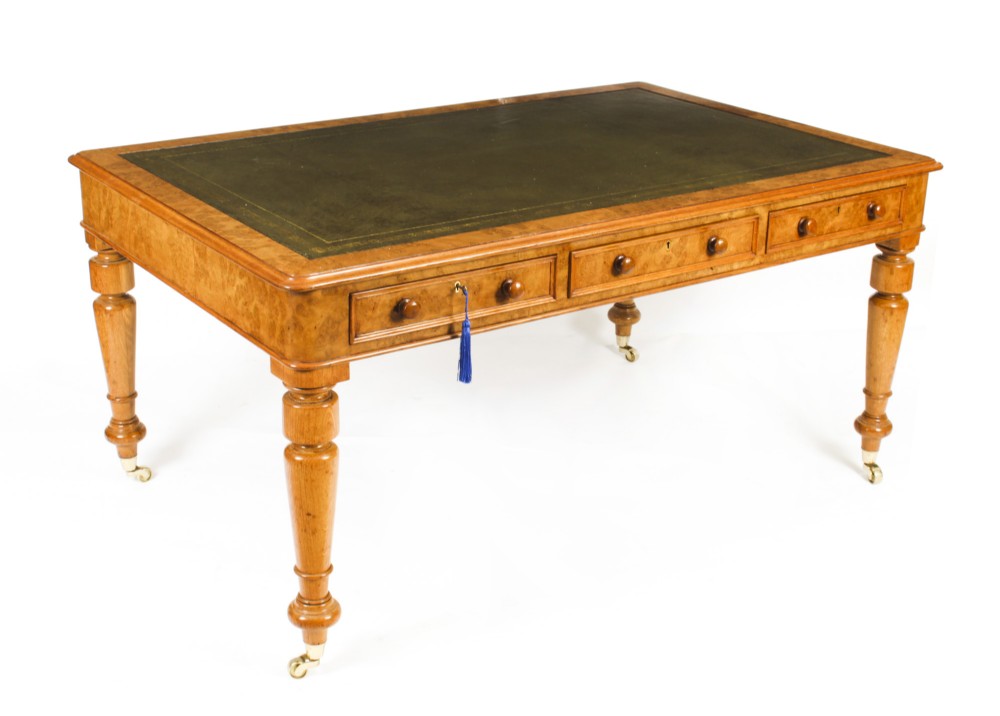
Antique Victorian 6 Drawer Pollard Oak Partners Writing Table 19th C