It was listed by Regent Antiques. Sold pieces stay on Sellingantiques as a record of what has passed through, and the next one is rarely far away.
Regent Antiques has dated this piece to the 19th Century.
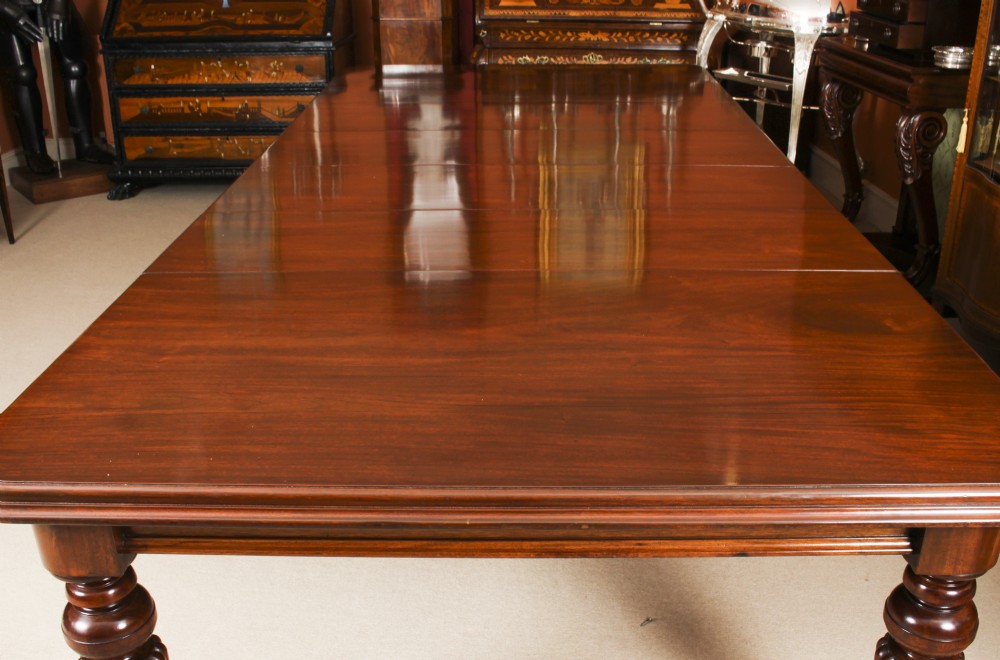
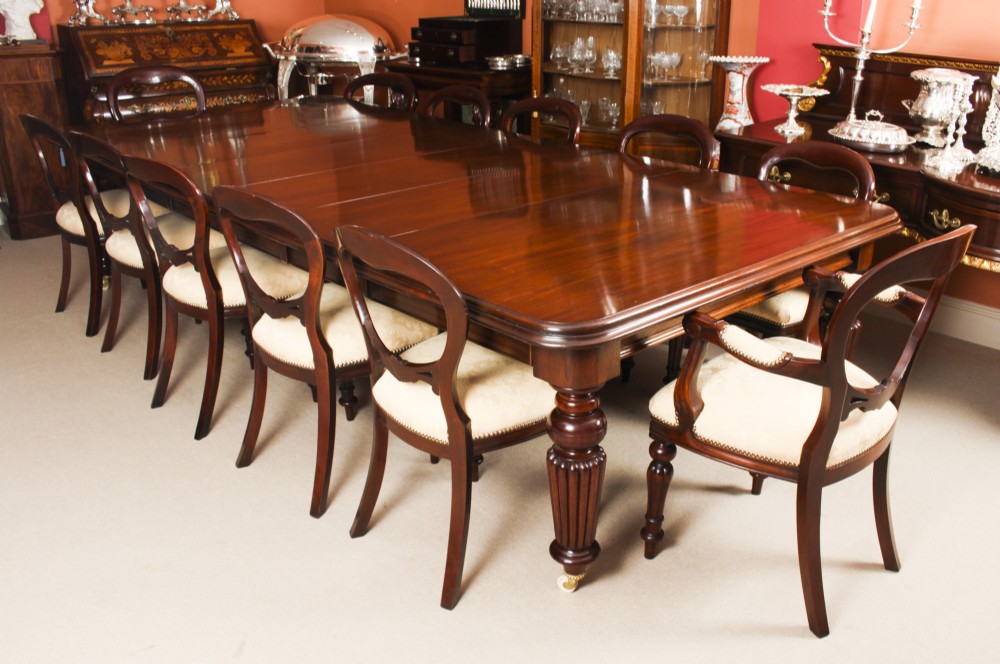
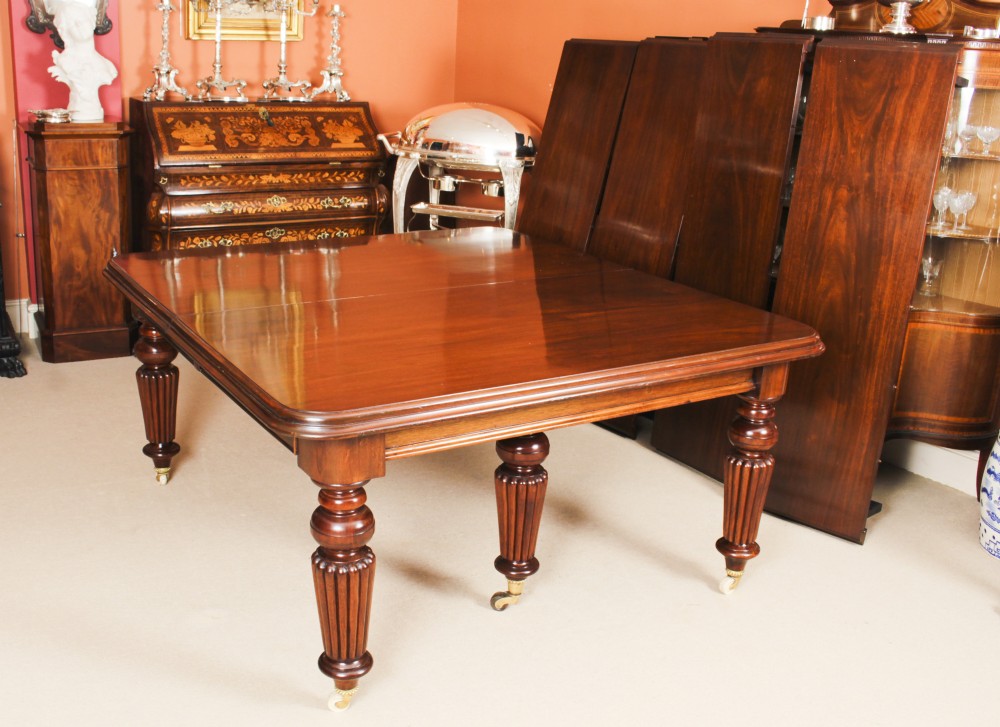
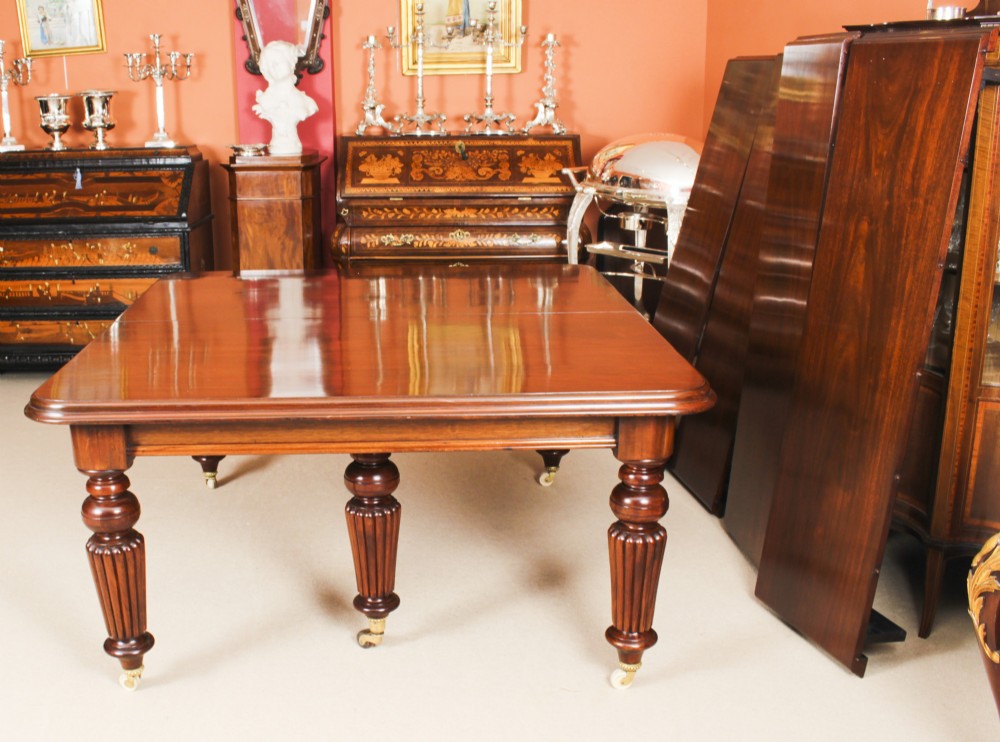
The leaves can be easily removed and stored away when not required.
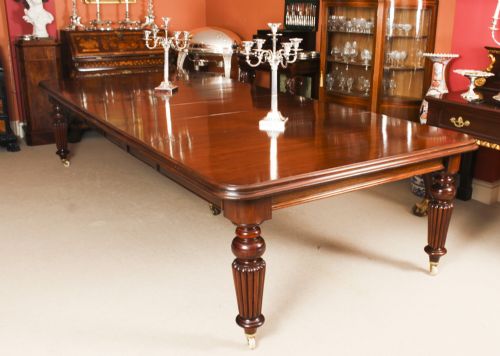
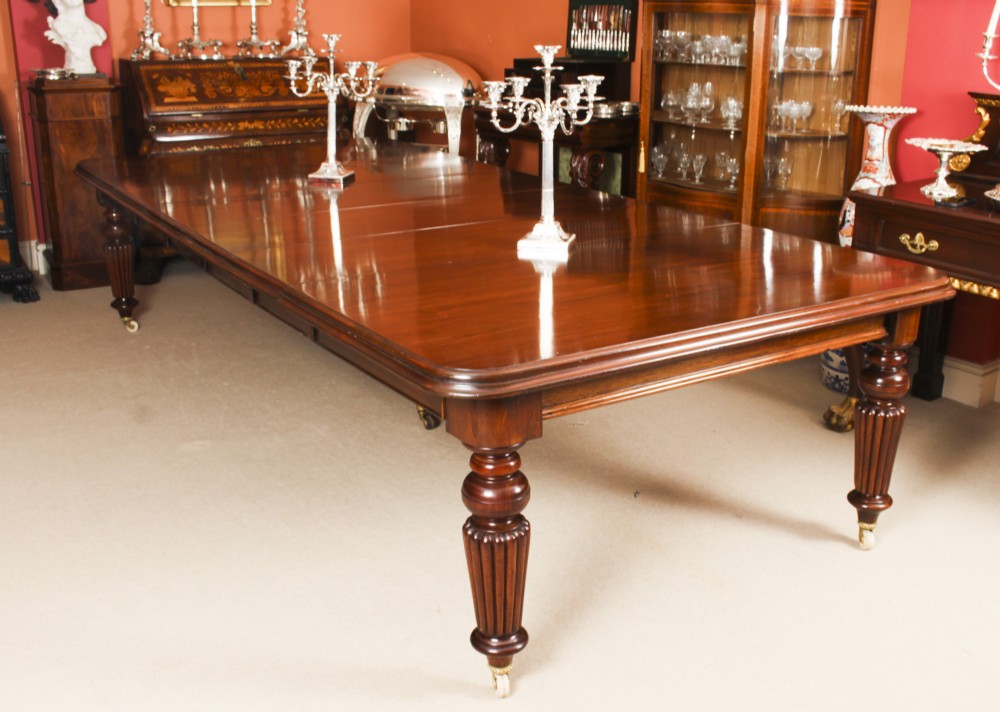
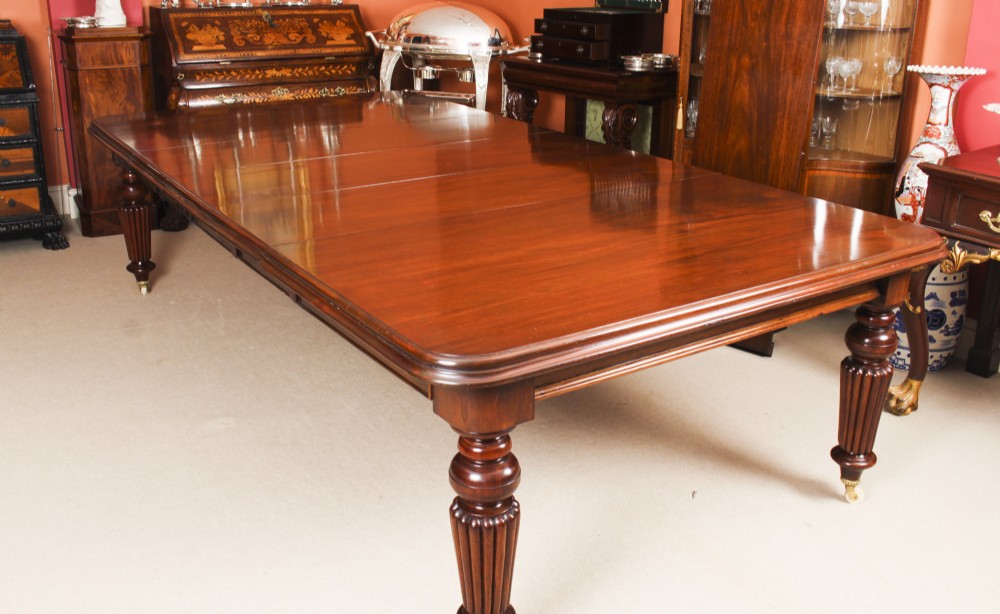
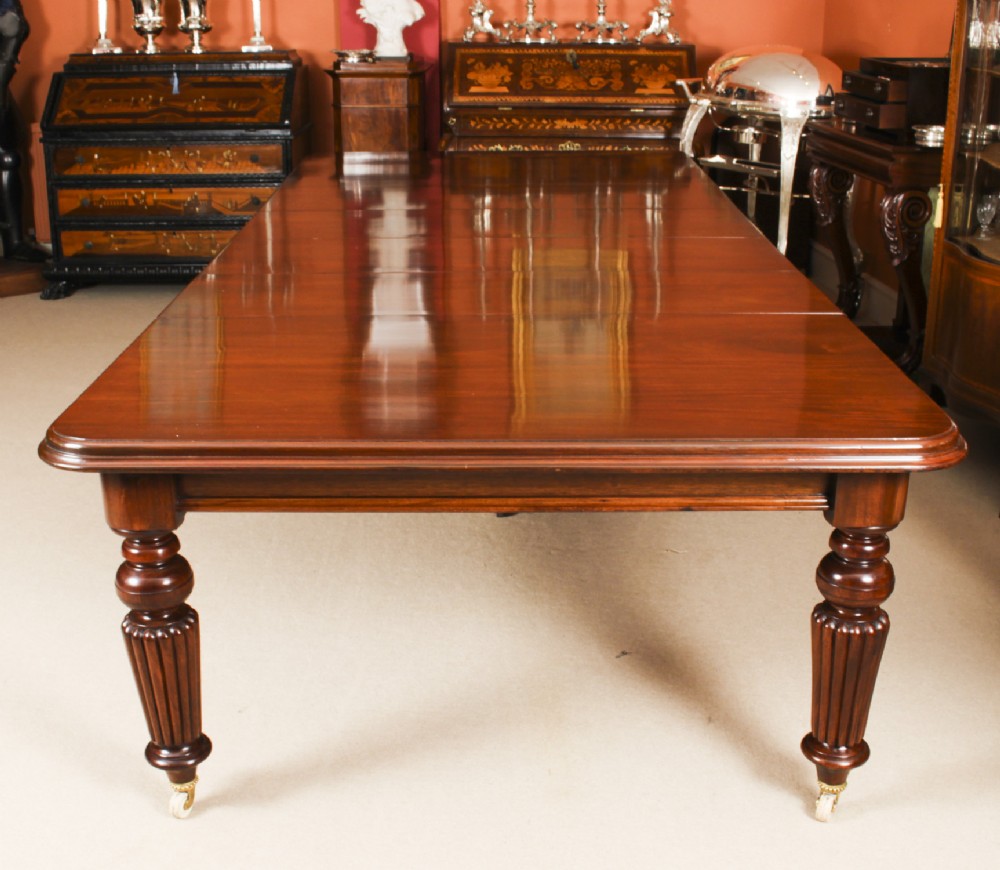
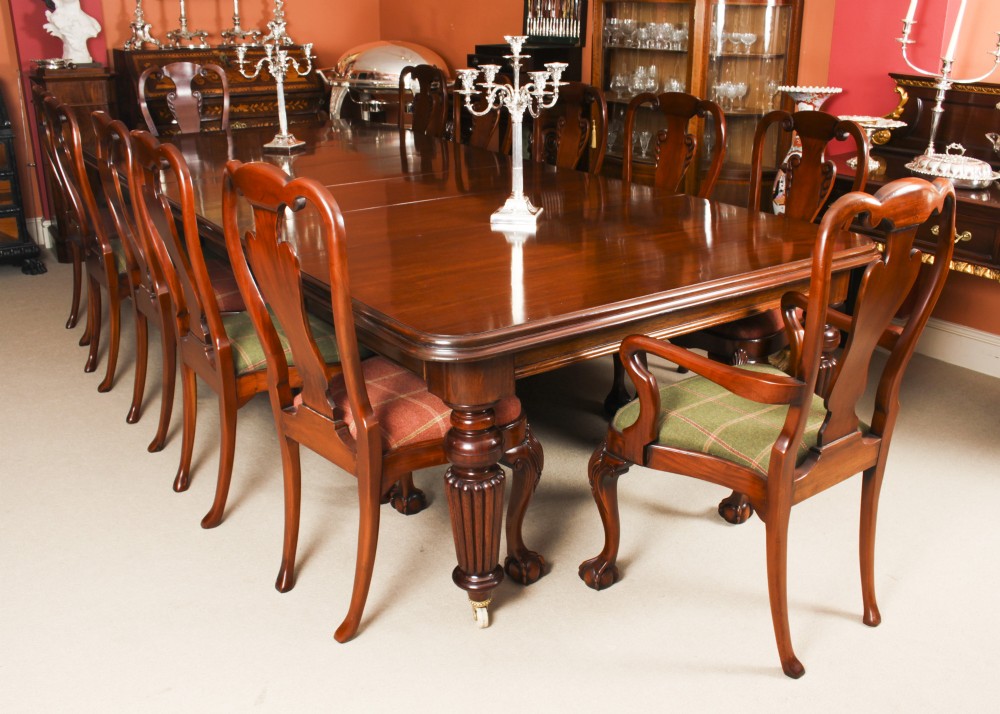
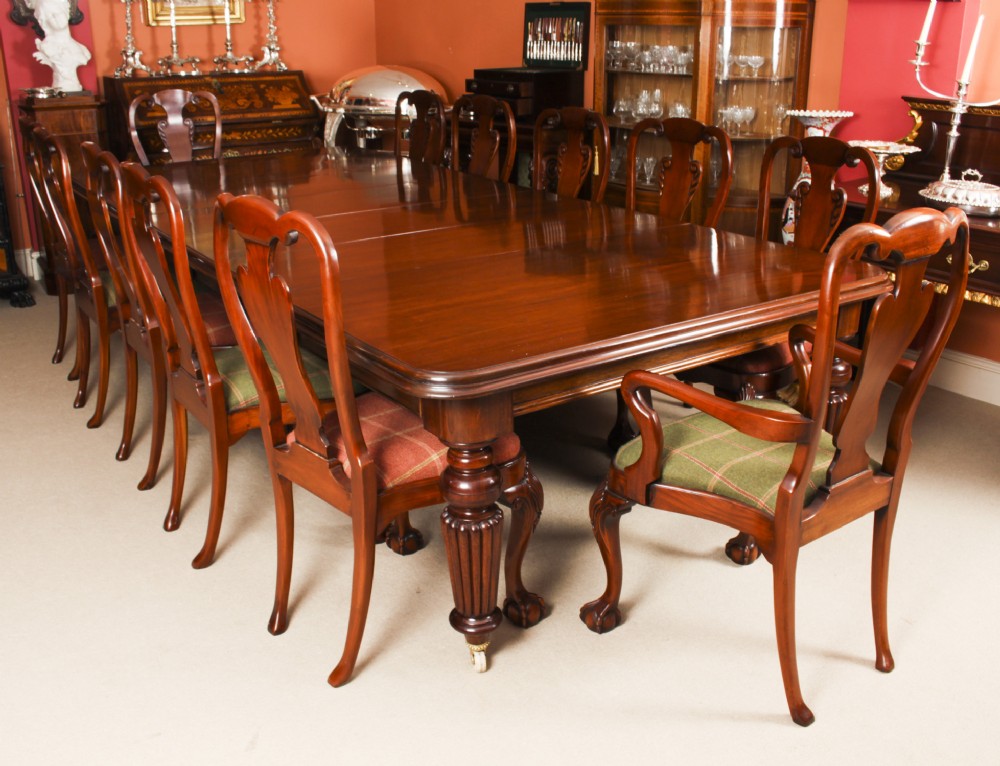
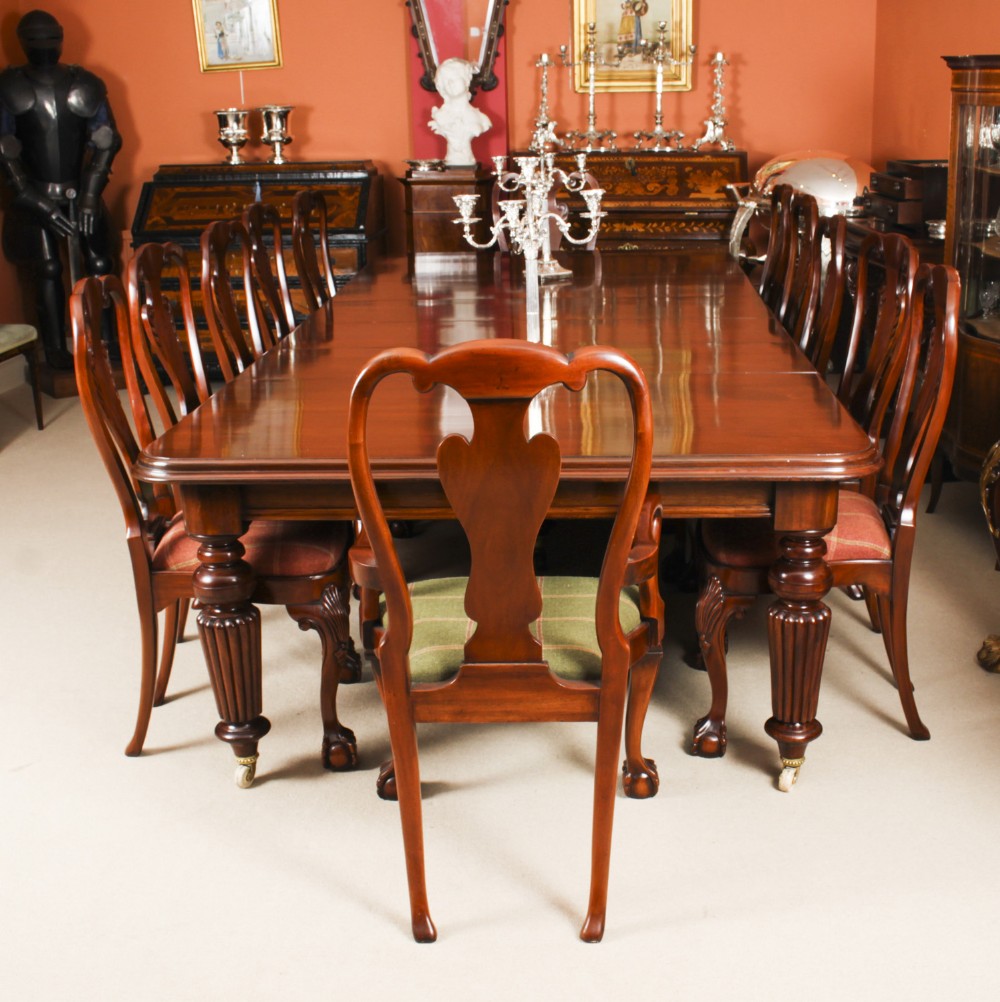
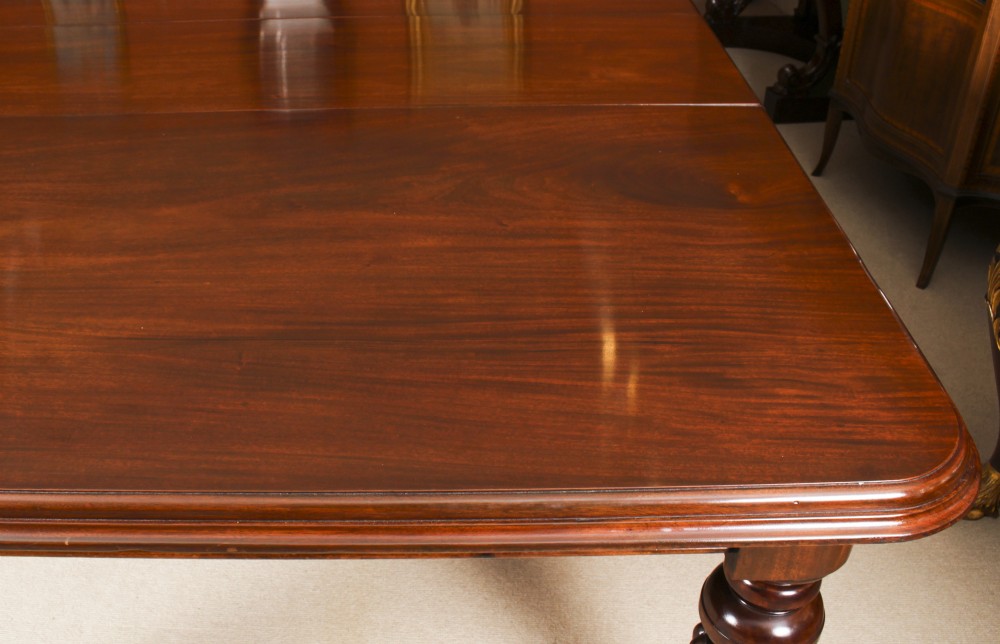
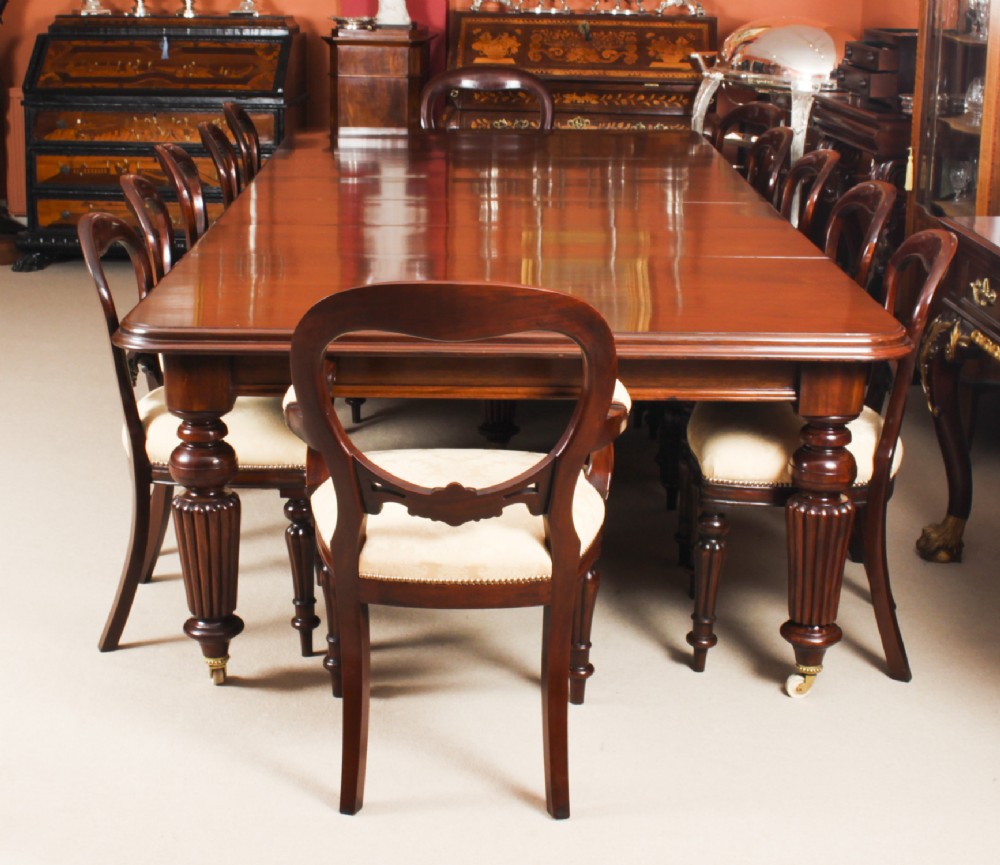
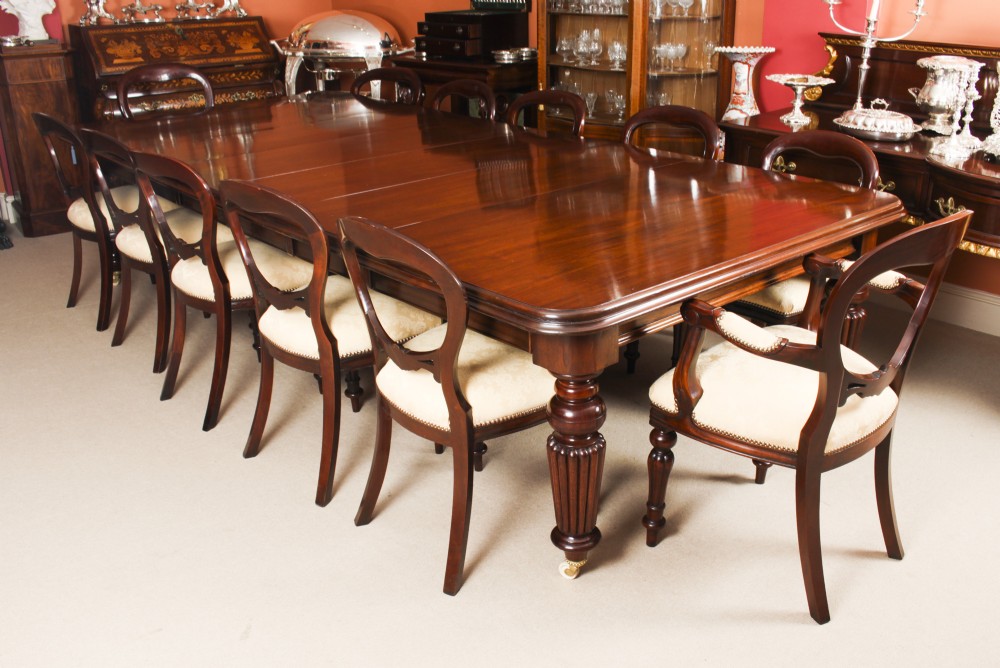
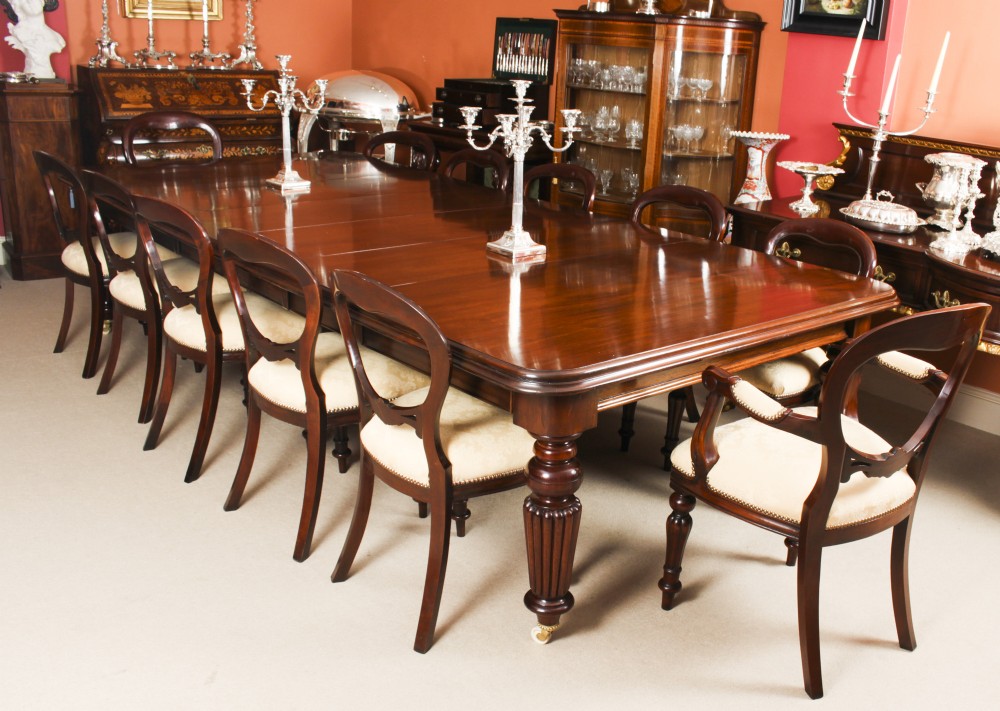
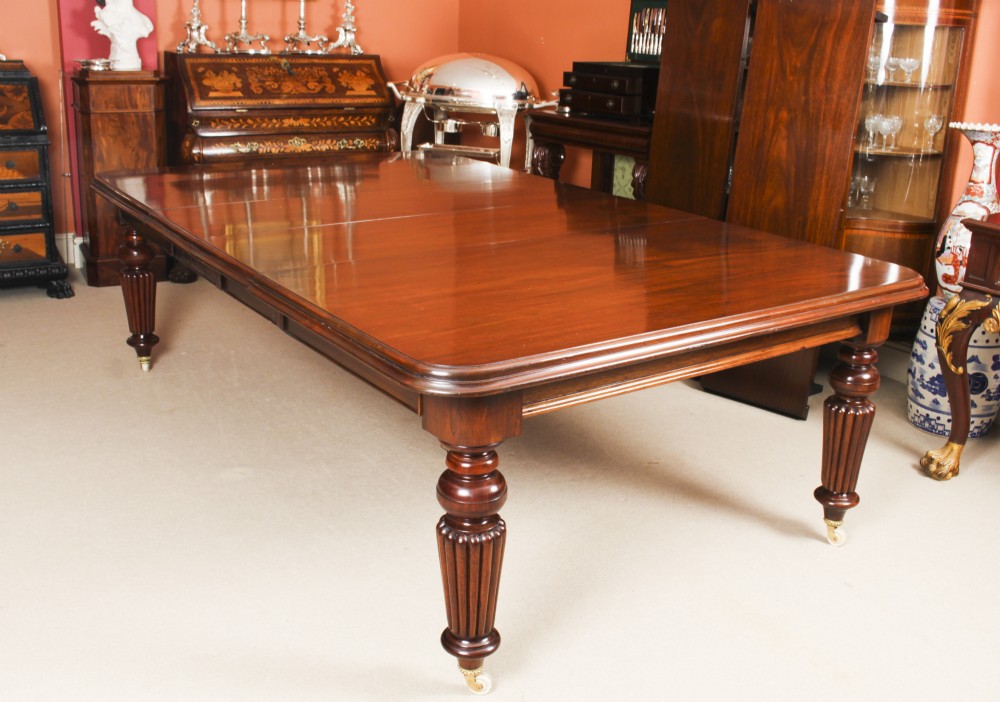
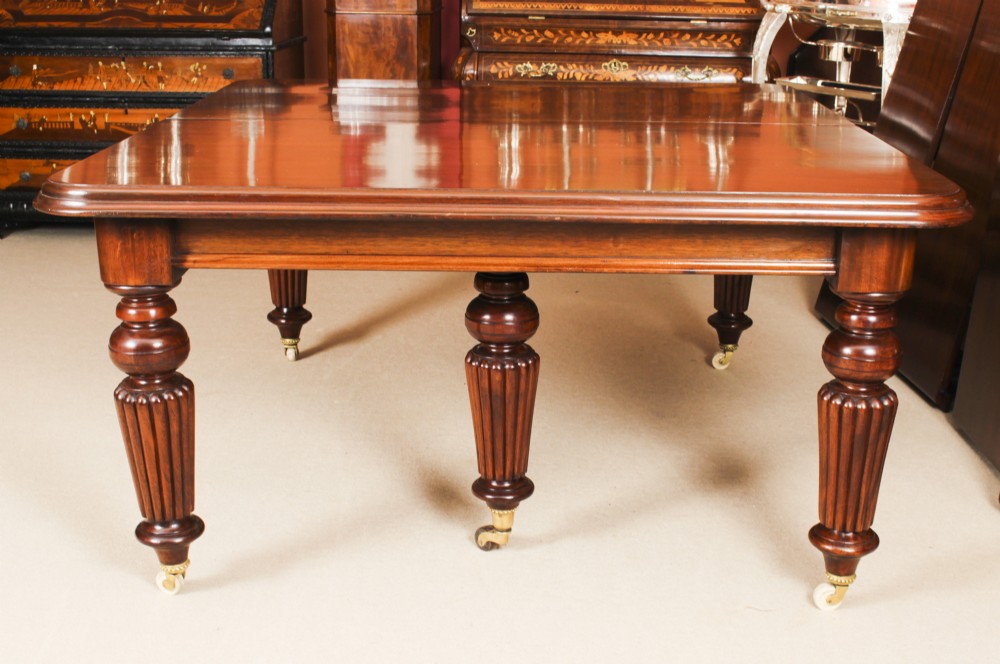
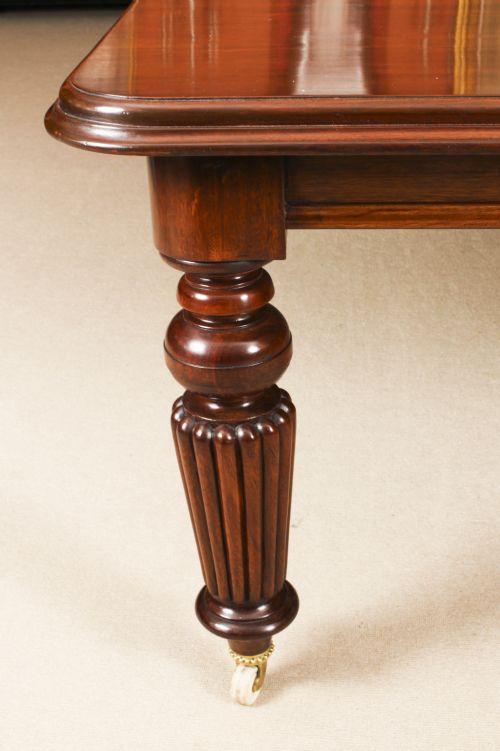
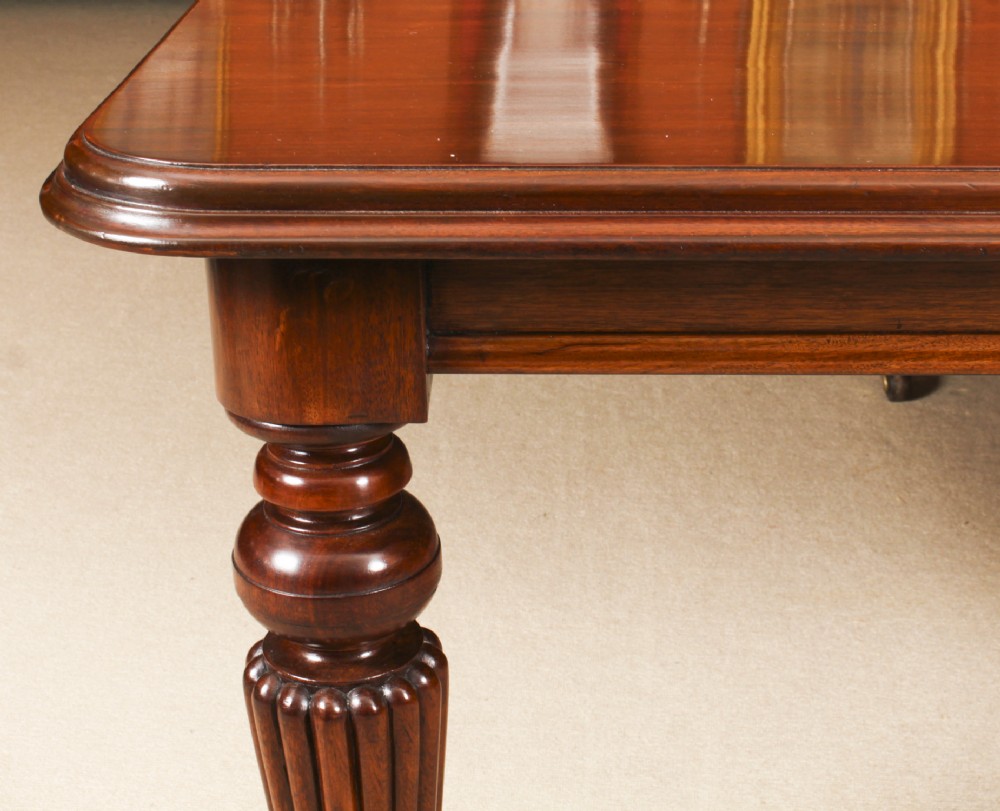
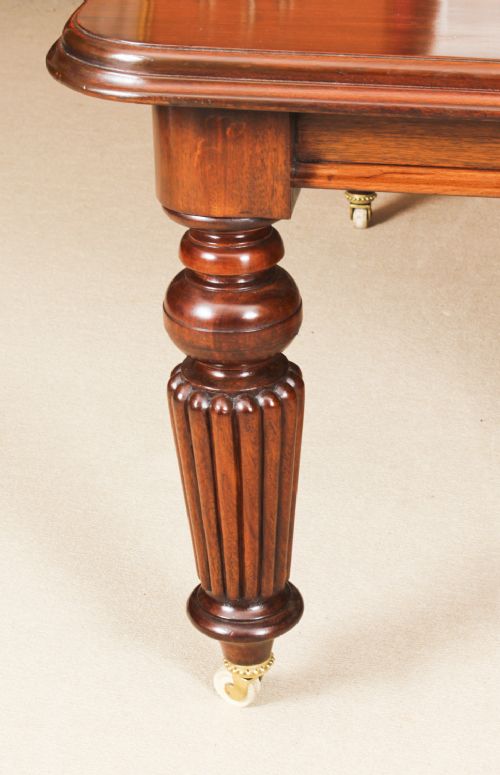
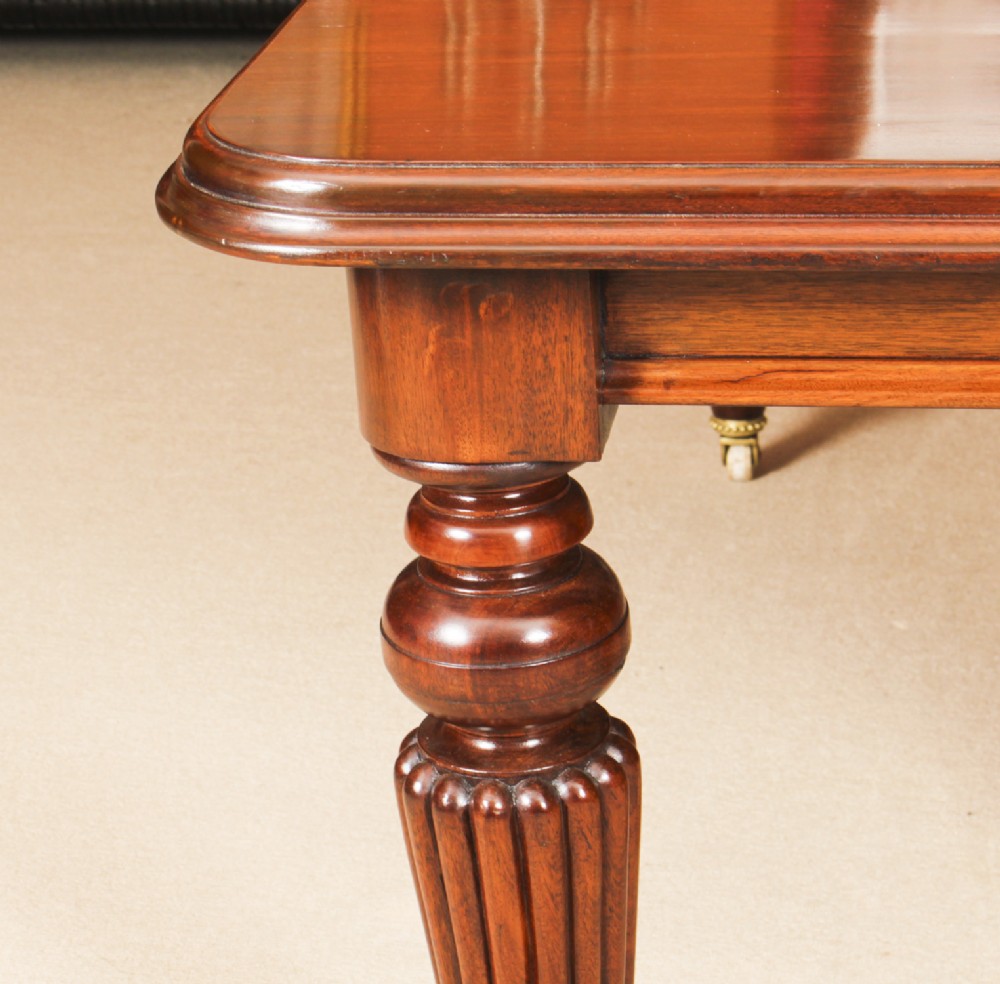
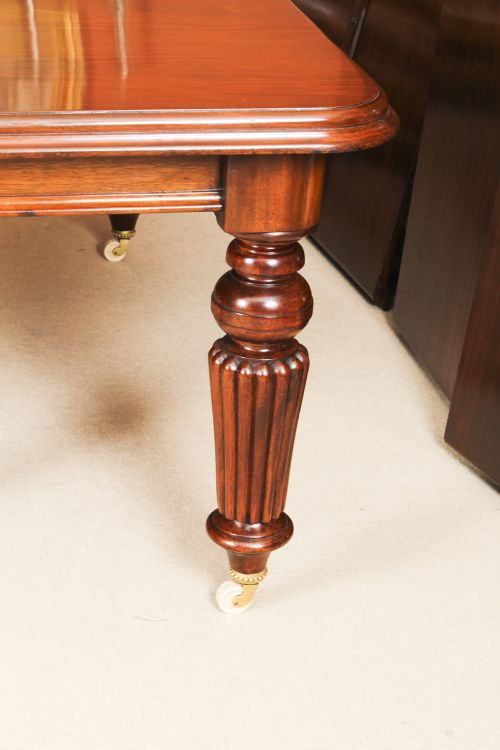
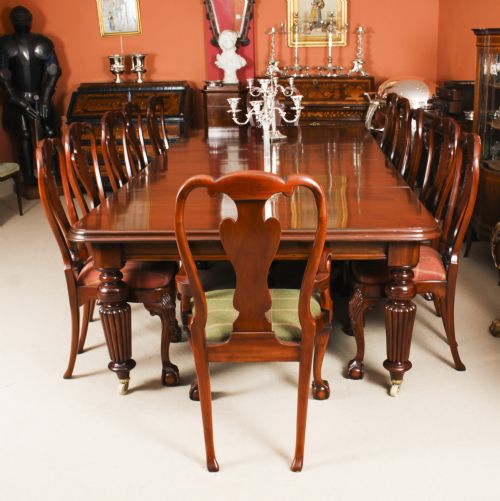
It stands on five elegantly carved and fluted legs that terminate in elegant brass cap castors The central leg is for added stability when it is fully extended.
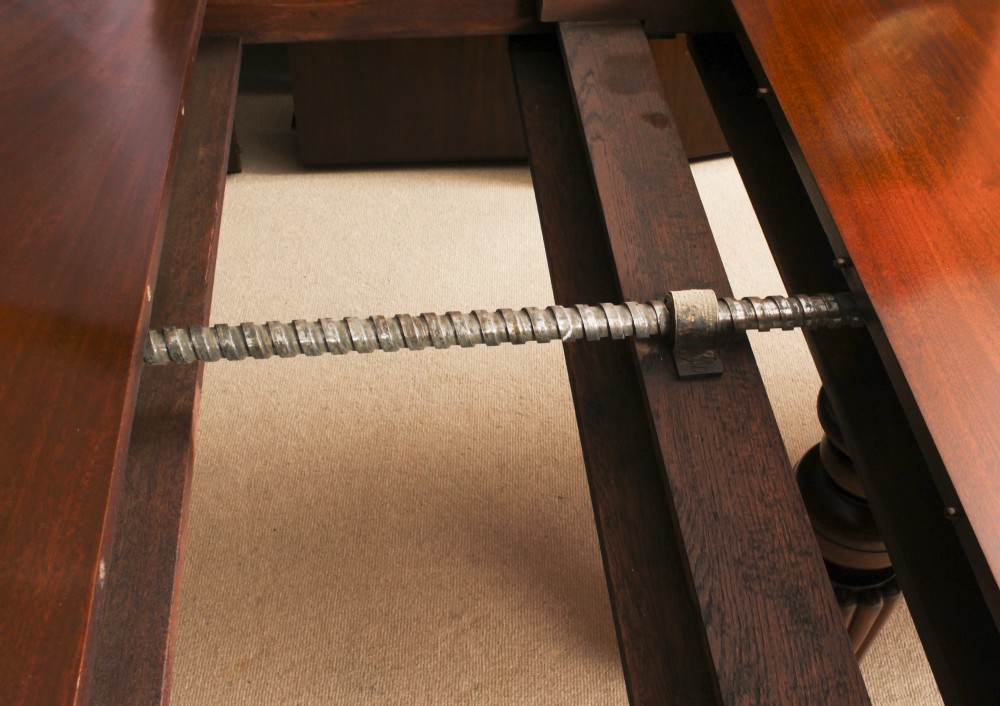
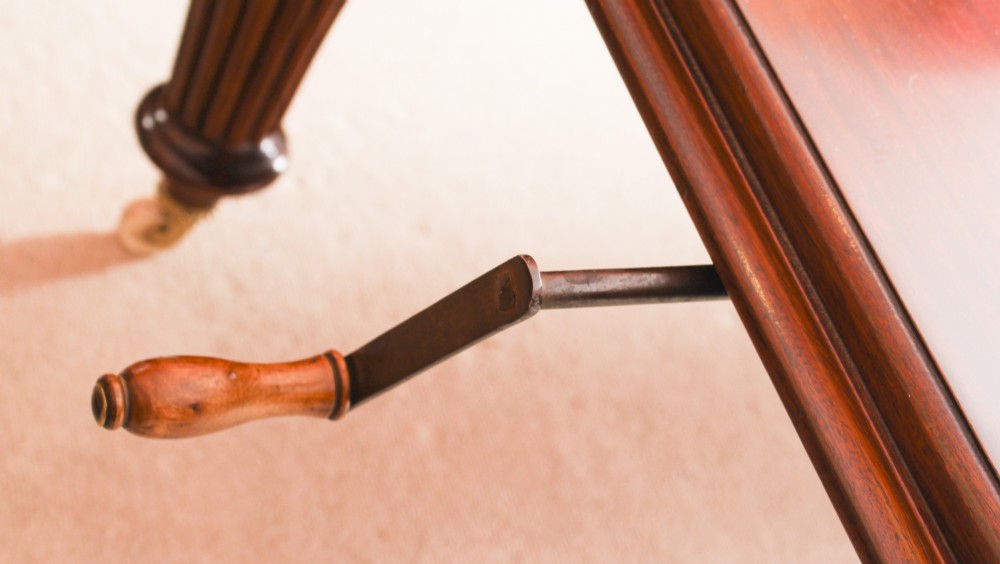
This table was made from solid mahogany by a master craftsman, and should last for generations more. Take a look at the amazing and brilliant system of runners that pull out as you extend the table to support the leaves.
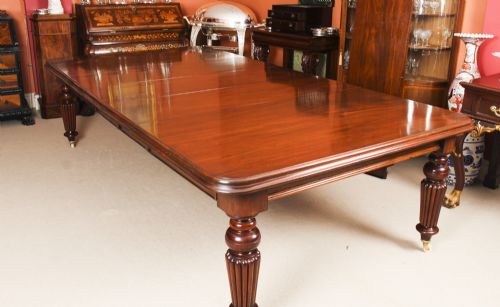
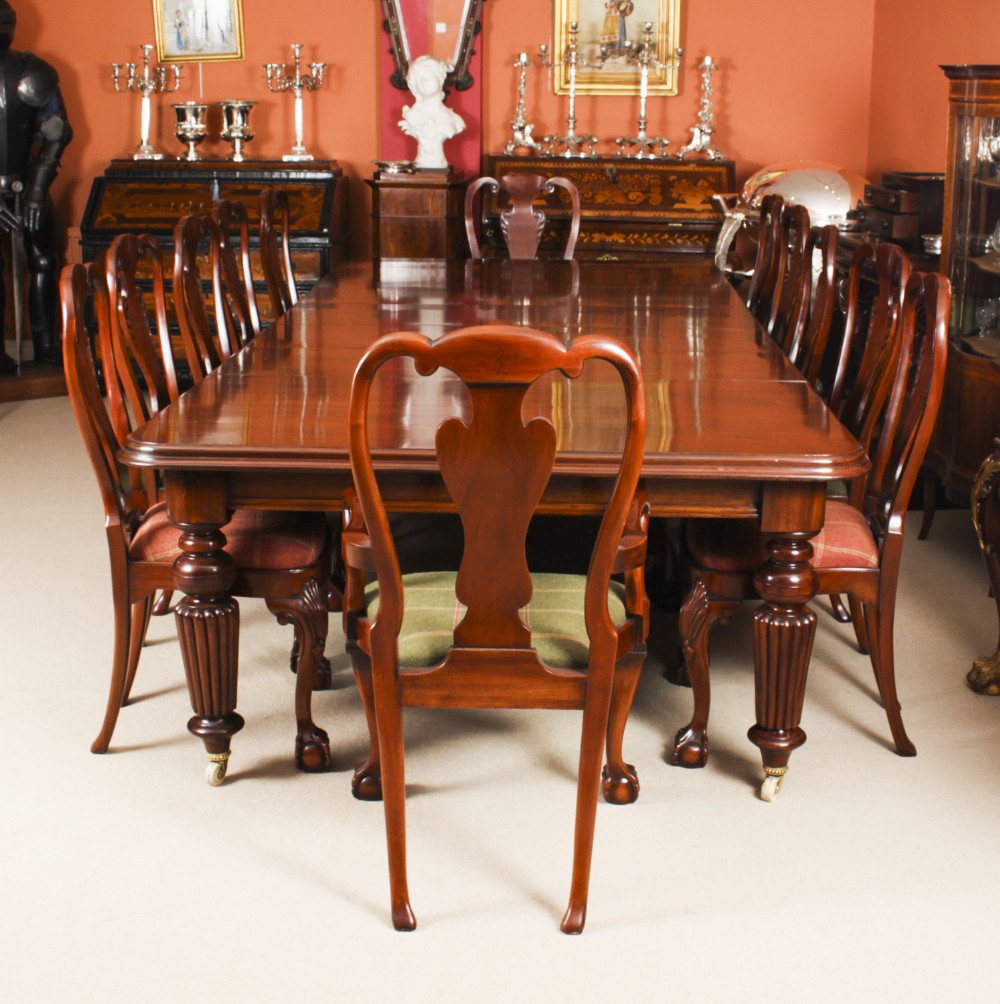
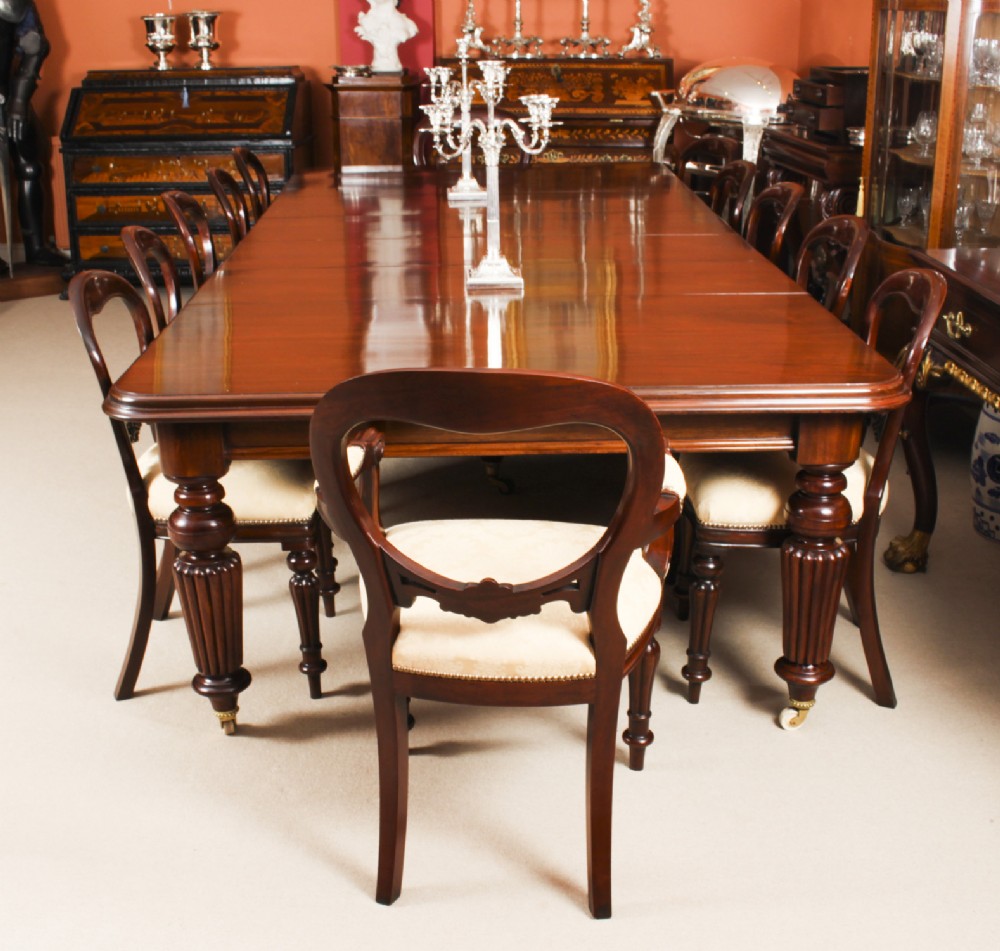
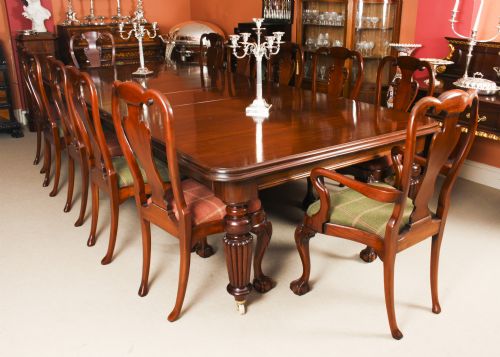
The sets of chairs shown in the photographs are not included but are available if required.
Condition:
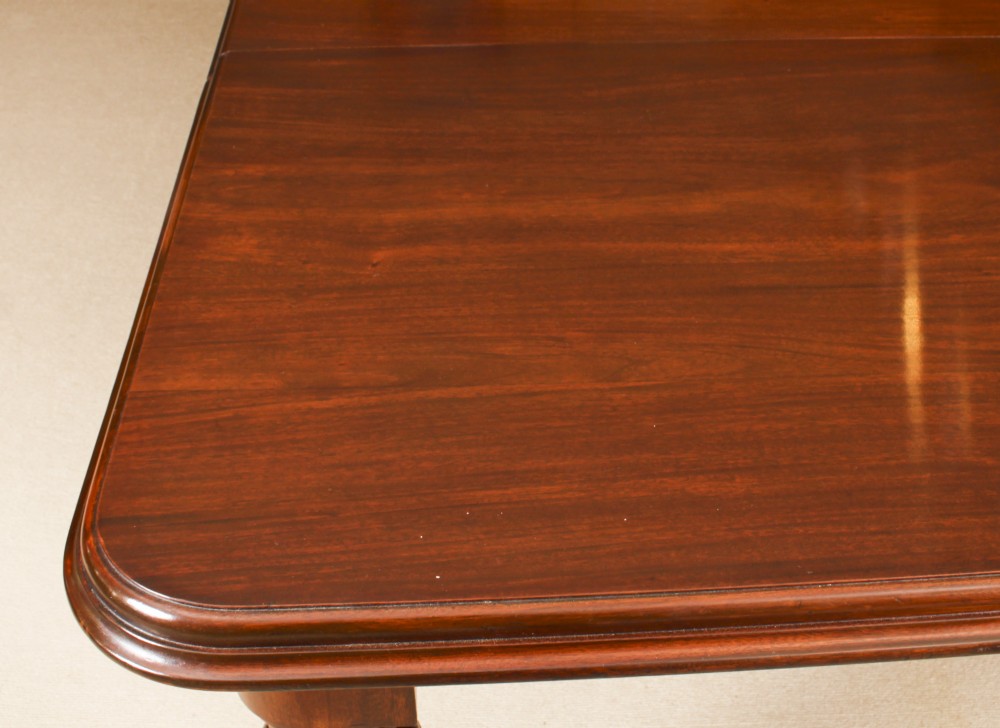
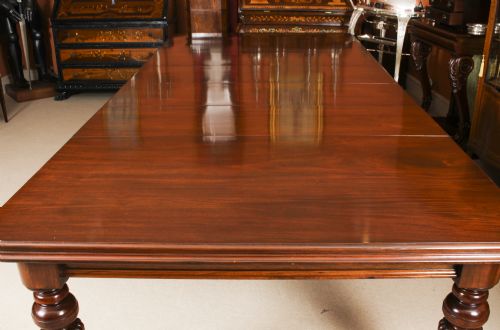
In excellent condition having been beautifully cleaned, French polished and waxed in our workshops, please see photos for confirmation.
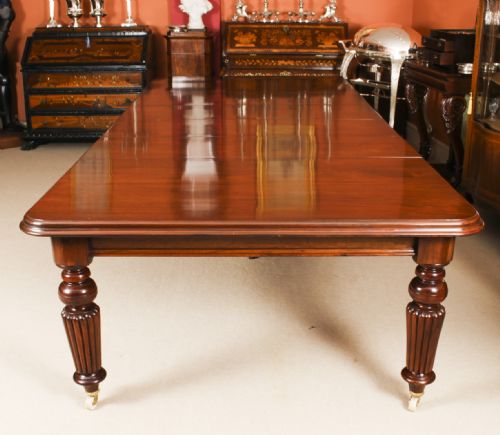
Dimensions in cm:
Height 78 x Width 165 x Depth 151 - When closed
Height 78 x Width 334 x Depth 151 - When fully extended
Dimensions in inches:
Height 2 foot, 7 inches x Width 5 foot, 5 inches x Depth 4 foot, 11 inches - When closed
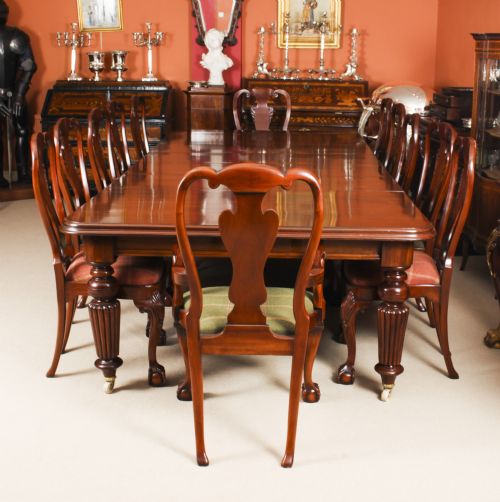
Height 2 foot, 7 inches x Width 10 foot, 11 inches x Depth 4 foot, 11 inches - When fully extended
Mahogany
is probably one of the largest ‘families’ of hardwood, having many different varieties within its own species.
Mahogany has been used for centuries in ship building, house building, furniture making etc and is the core structure of just about every 19th century vanity box, dressing case or jewellery box. It became more of a Victorian trend to dress Mahogany with these decorative veneers, such as Rosewood, Kingwood, Burr Walnut and Coromandel, so that the actual Mahogany was almost hidden from view.
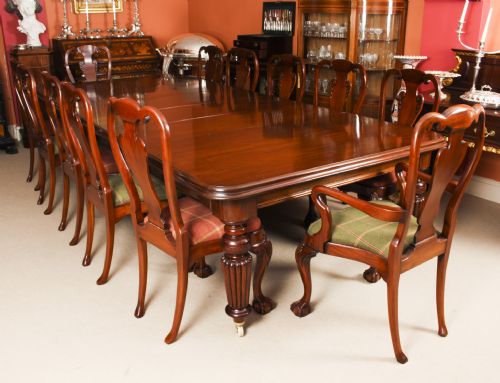
Mahogany itself is a rich reddish brown wood that can range from being plain in appearance to something that is so vibrant, figured and almost three dimensional in effect.
Although Mahogany was most often used in its solid form, it also provided some beautifully figured varieties of veneer like ‘Flame’ Mahogany and ‘Fiddleback’ Mahogany (named after its preferred use in the manufacture of fine musical instruments).
Cuban Mahogany was so sought after, that by the late 1850's, this particular variety became all but extinct.
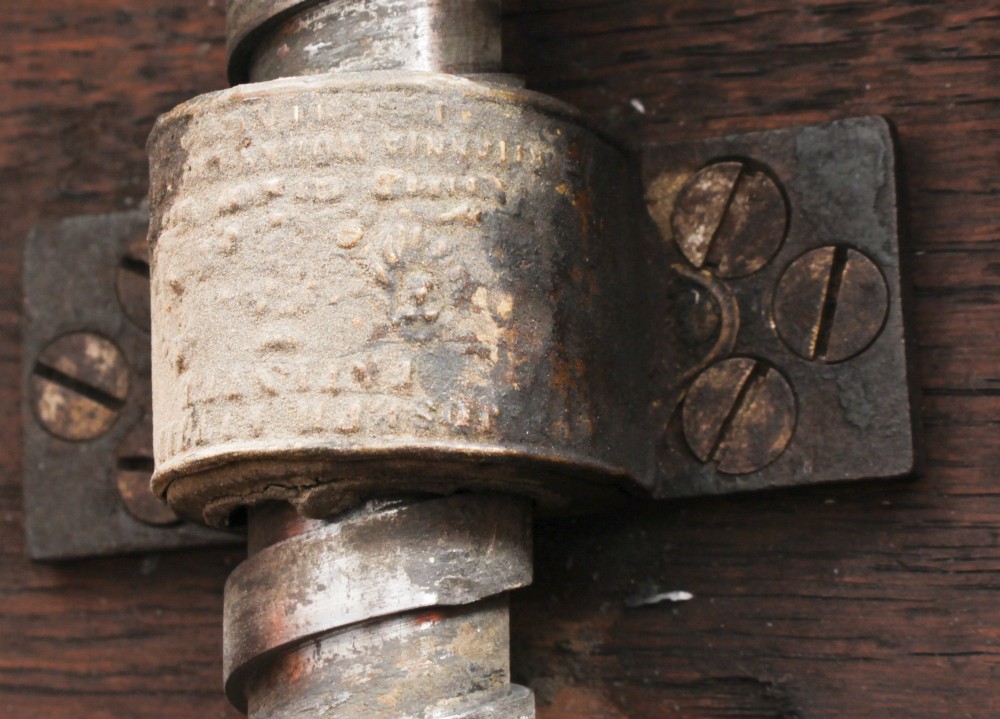
Winding Mechanism for extending tables
A man by the name of Samuel Hawkins applied for a patent on a screw expander on June 6th, 1861. Presumably, Mr. Hawkins either died or retired because his business was taken over by a young machinist named Joseph Fitter in 1864.
Joseph Fitter operated a machinist shop where he produced winding mechanisms for extending tables as well as screw expanders for piano stools and other applications at 210 Cheapside, Birmingham England by the name of Britannia Works.
Our reference: A1784
Regent Antiques has dated this piece to the 19th Century.
We specialise in english and continental furniture, silver, porcelain and decorative items.
You can view the stock and full dealer information on the Regent Antiques Profile Page
Regent Antiques is a registered member of LAPADA CINOA
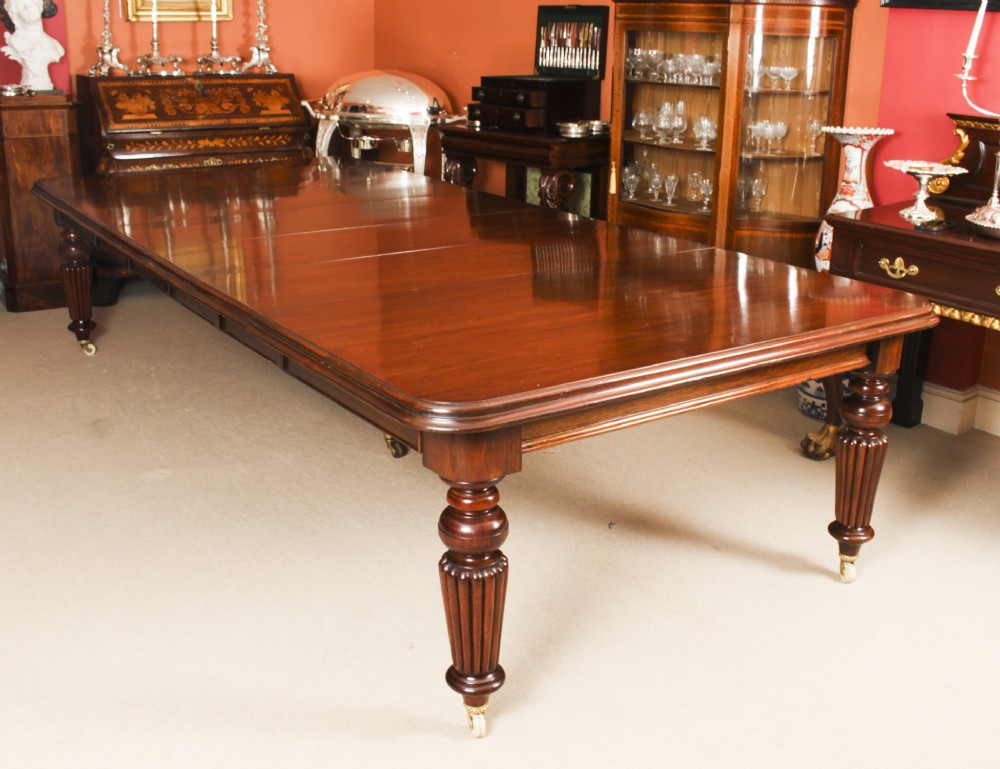
Antique 11ft Victorian Mahogany Dining Conference Table C.1850 19th C