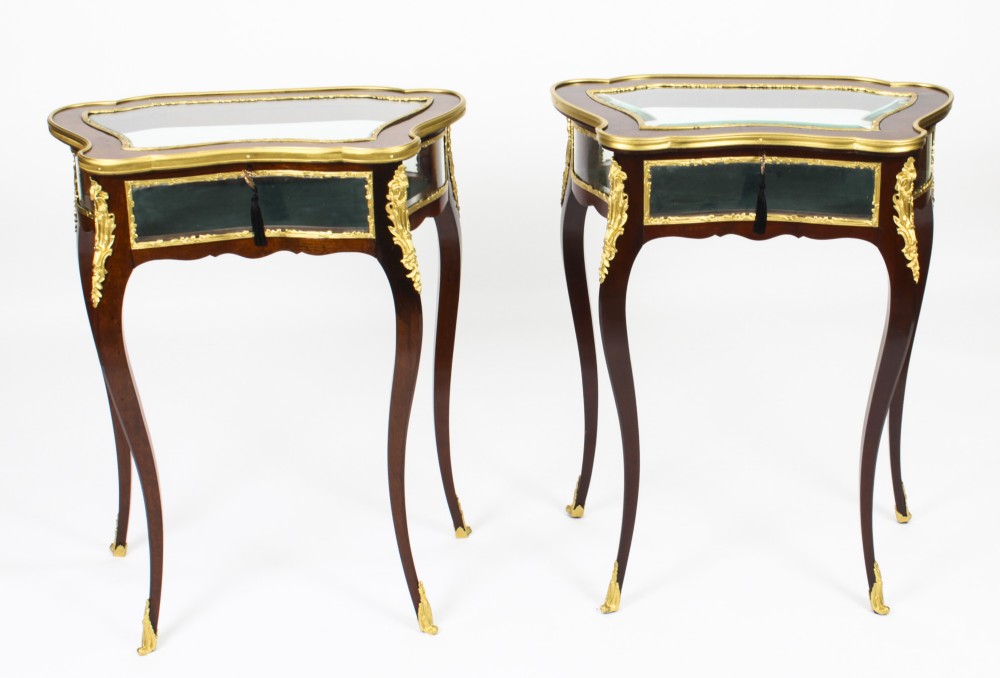
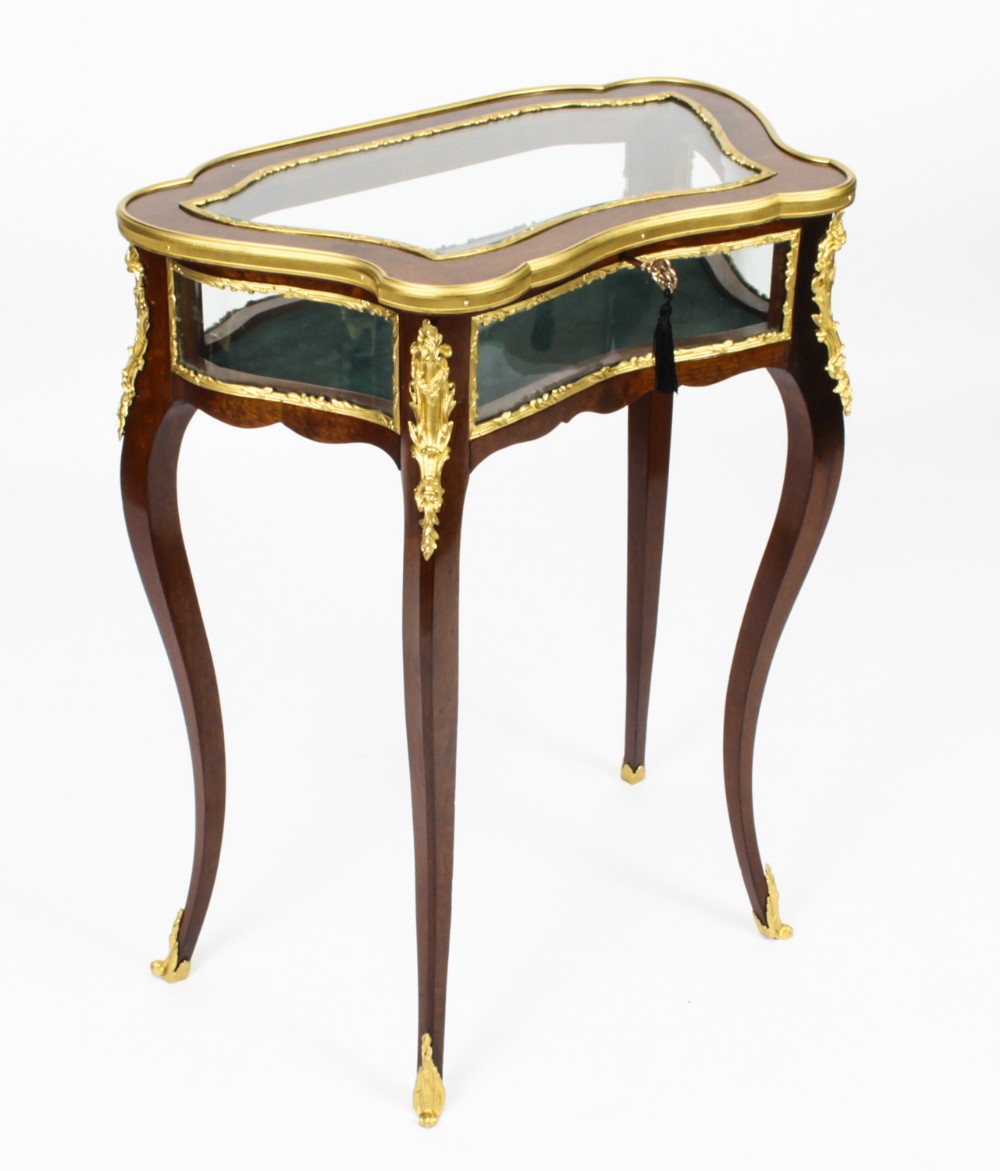
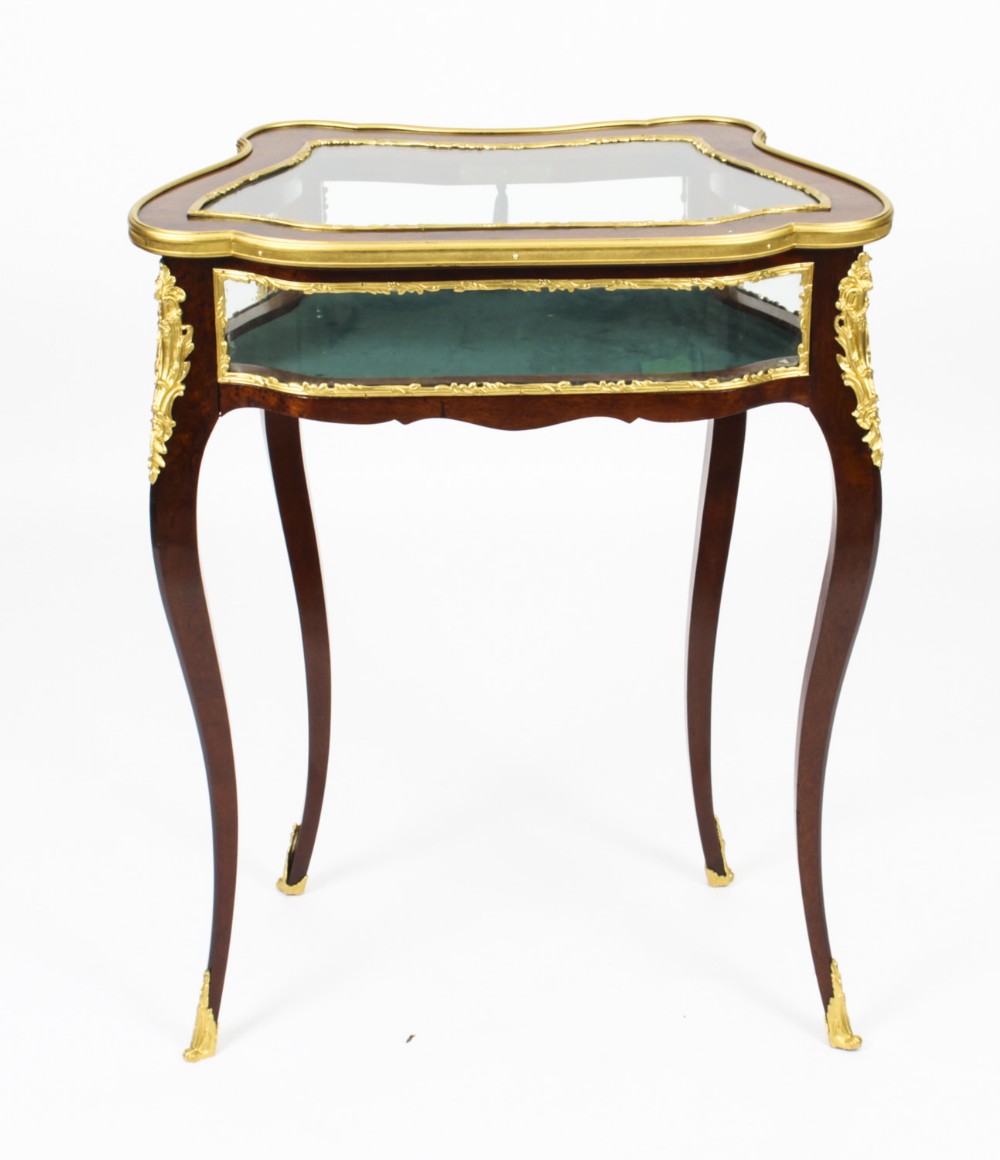
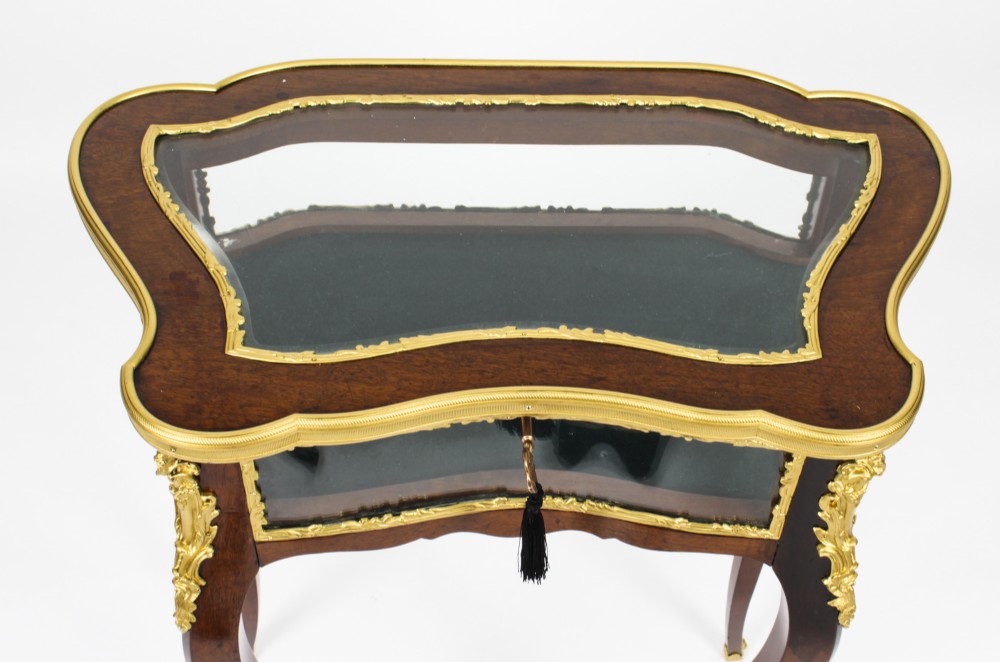
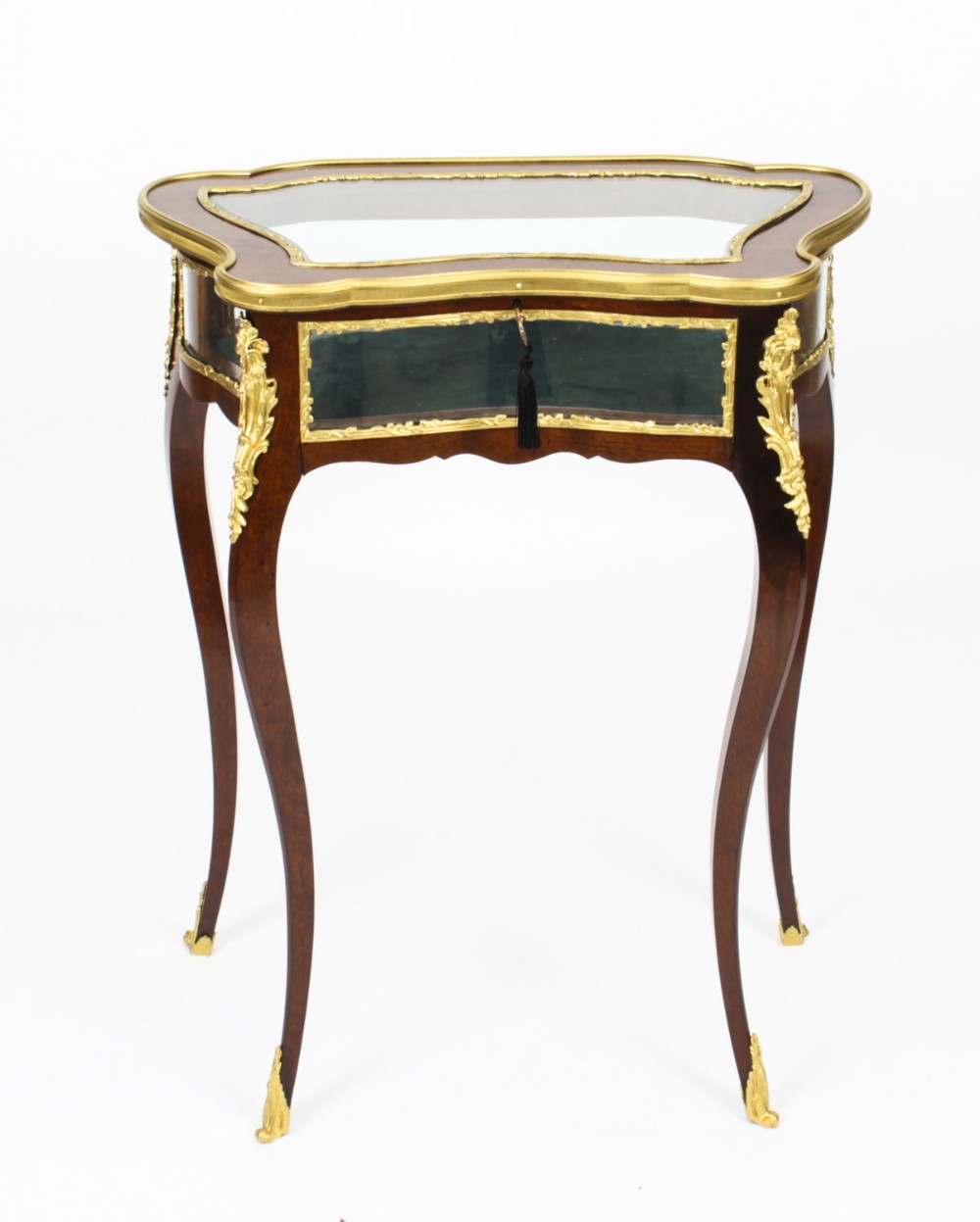
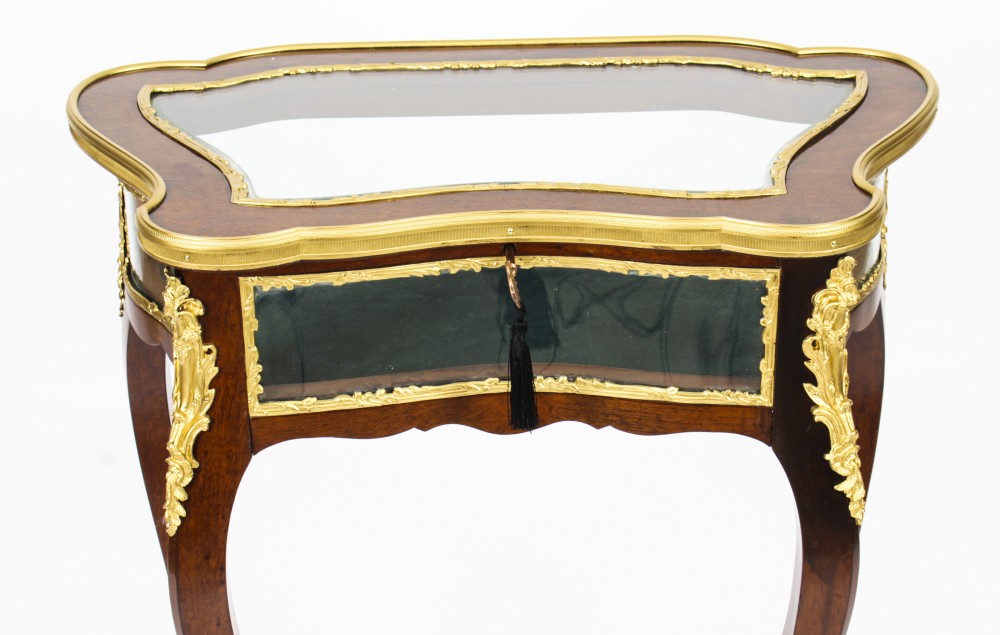
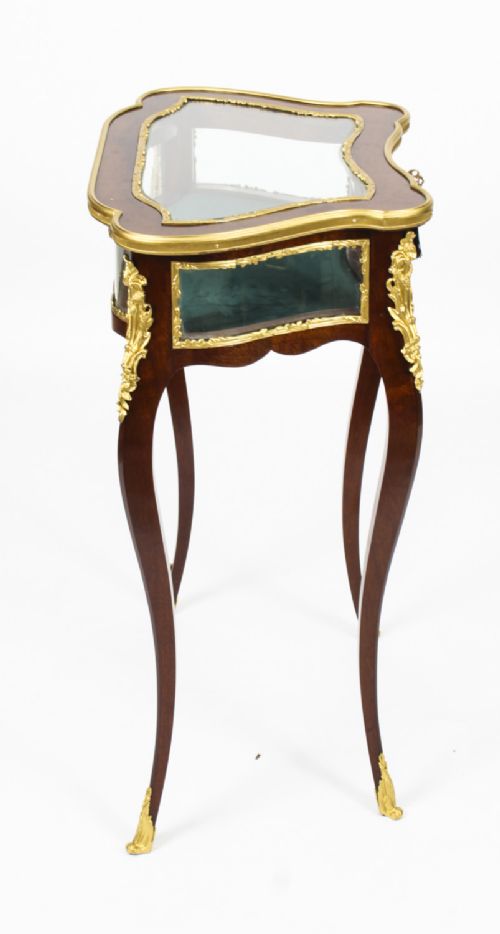
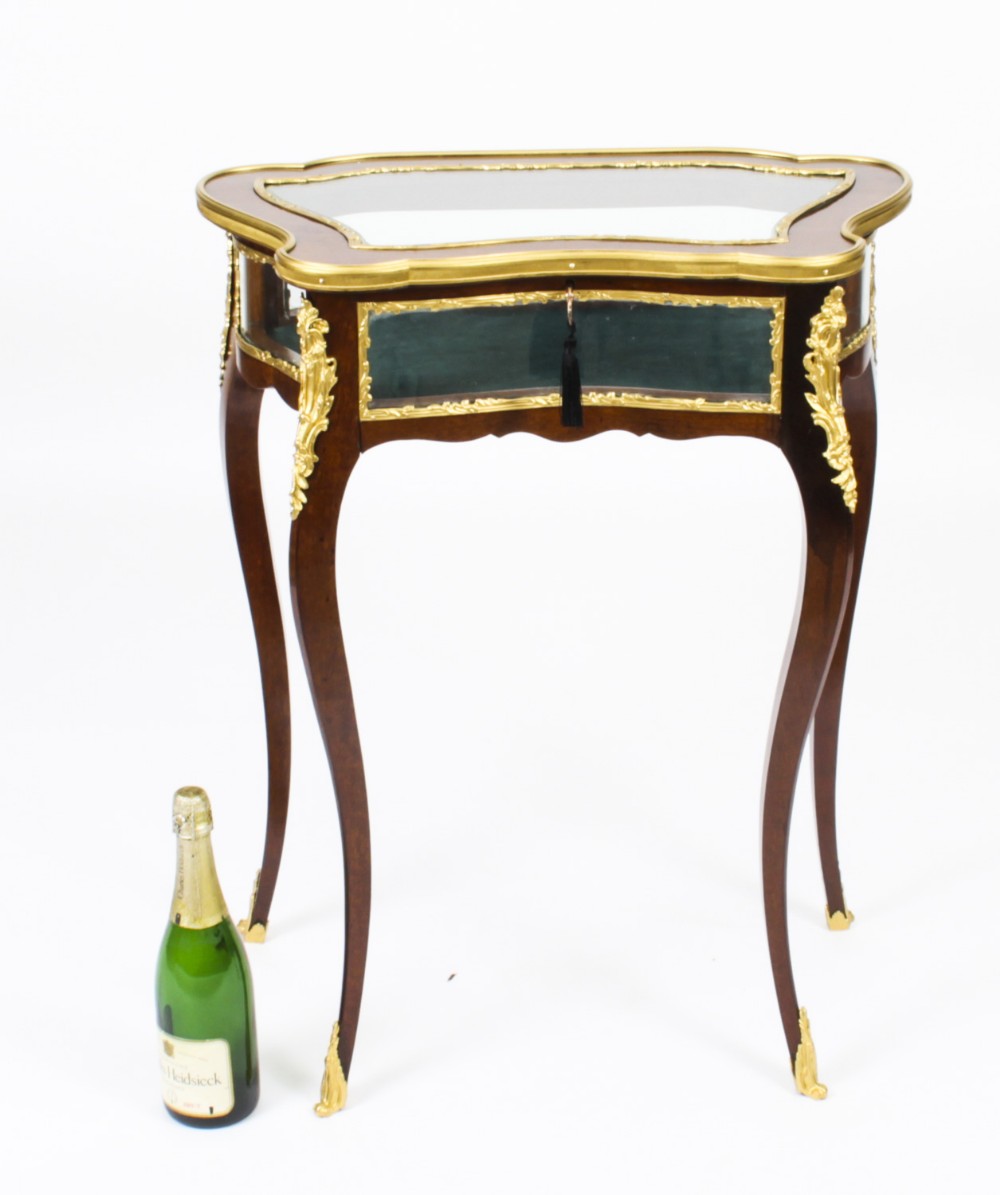
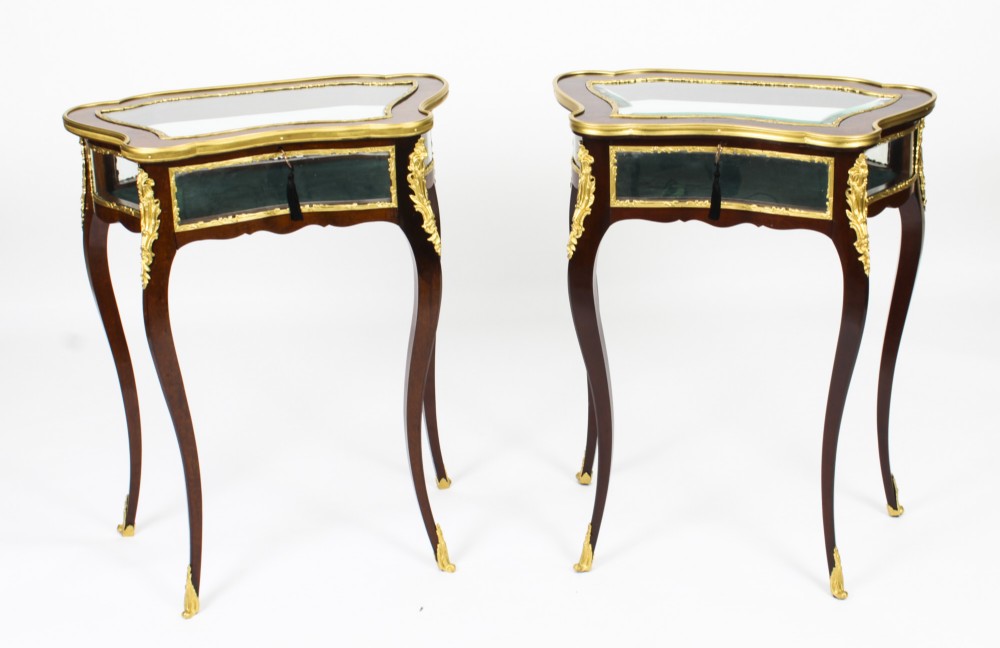
This is a beautiful pair of antique French Mahogany and ormolu mounted Louis Revival bijouterie display tables, circa 1860 in date.
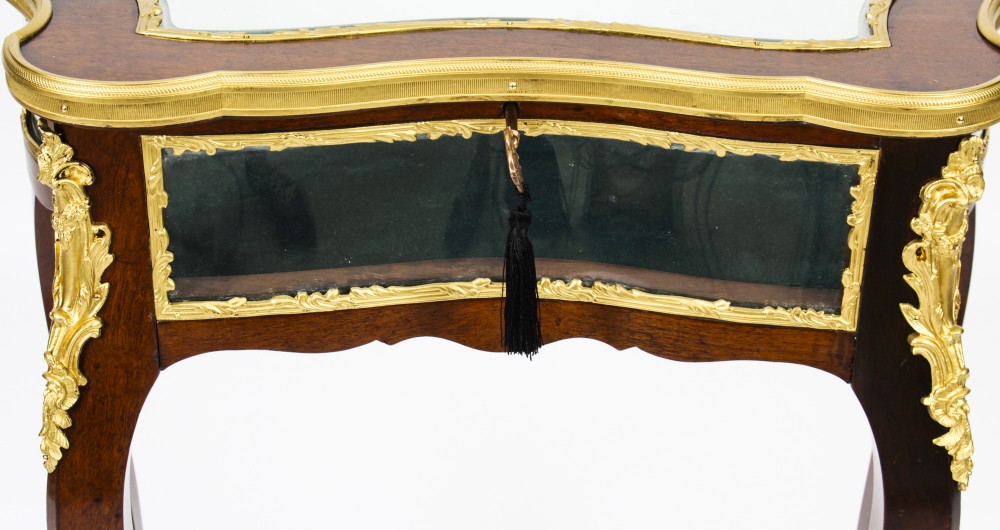
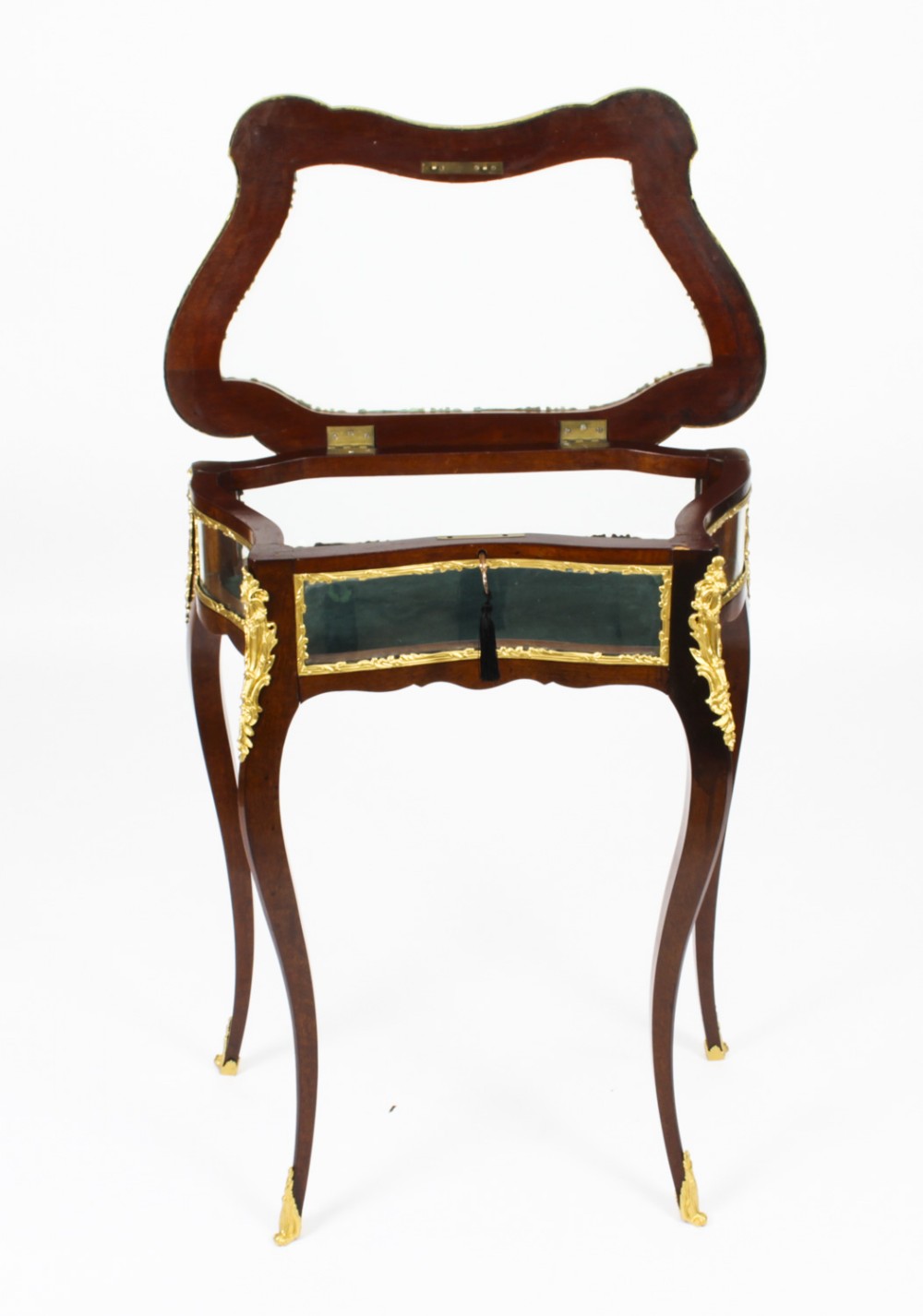
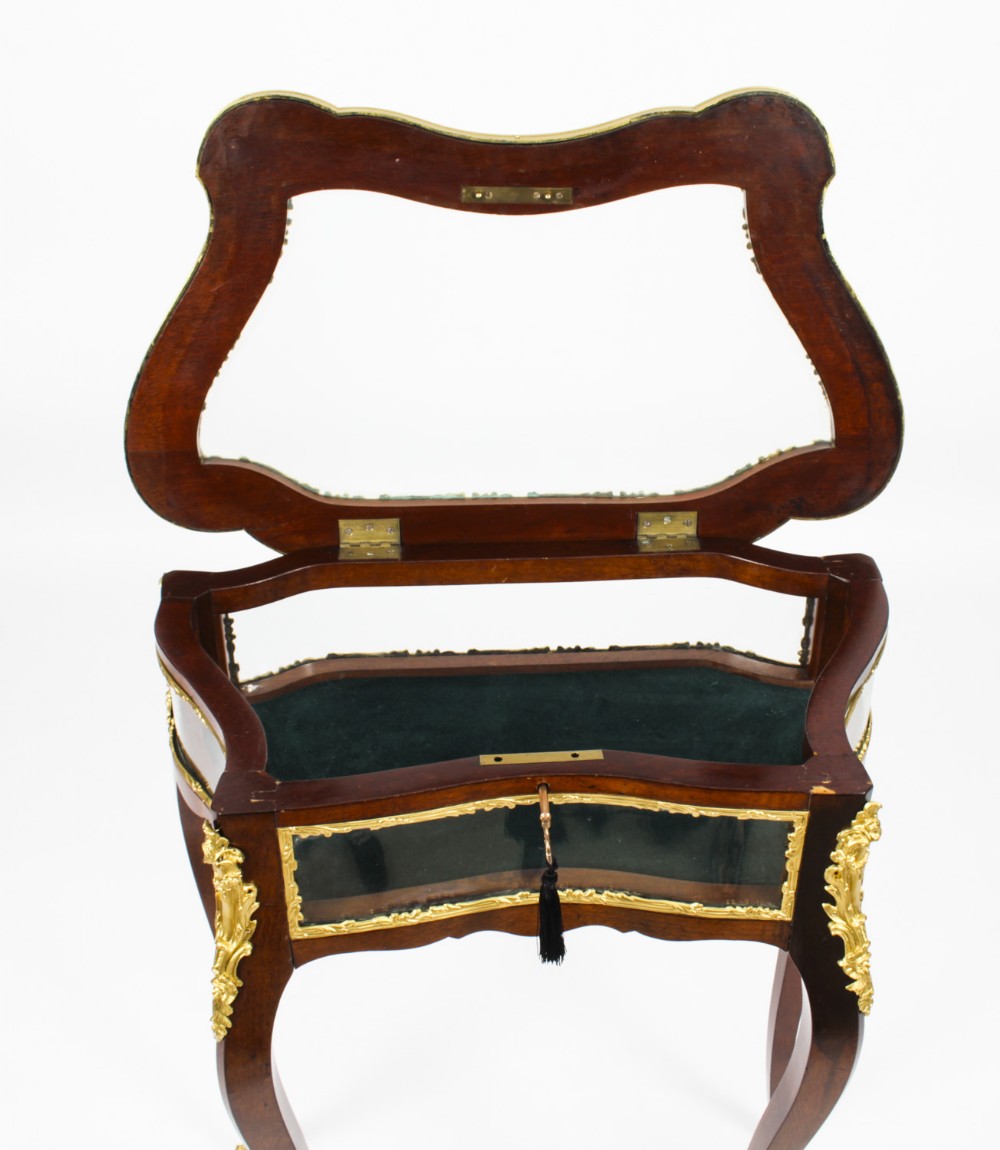
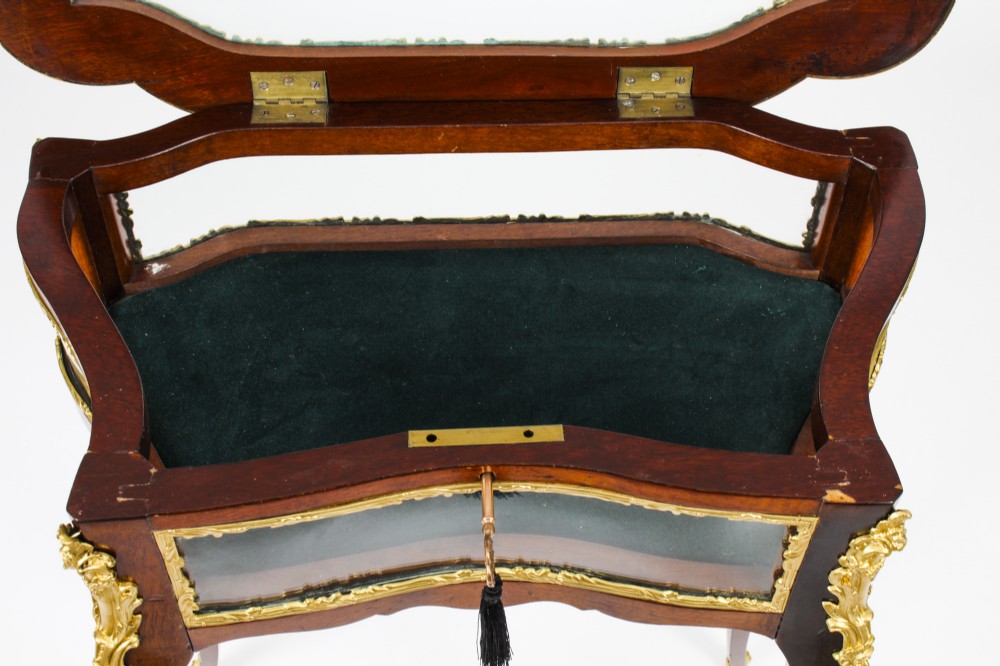
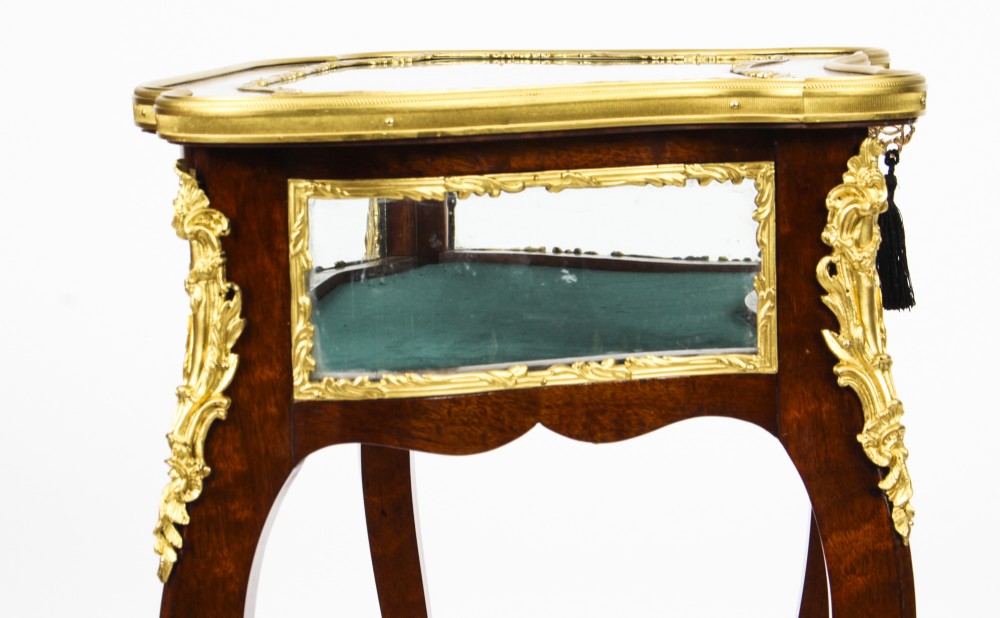
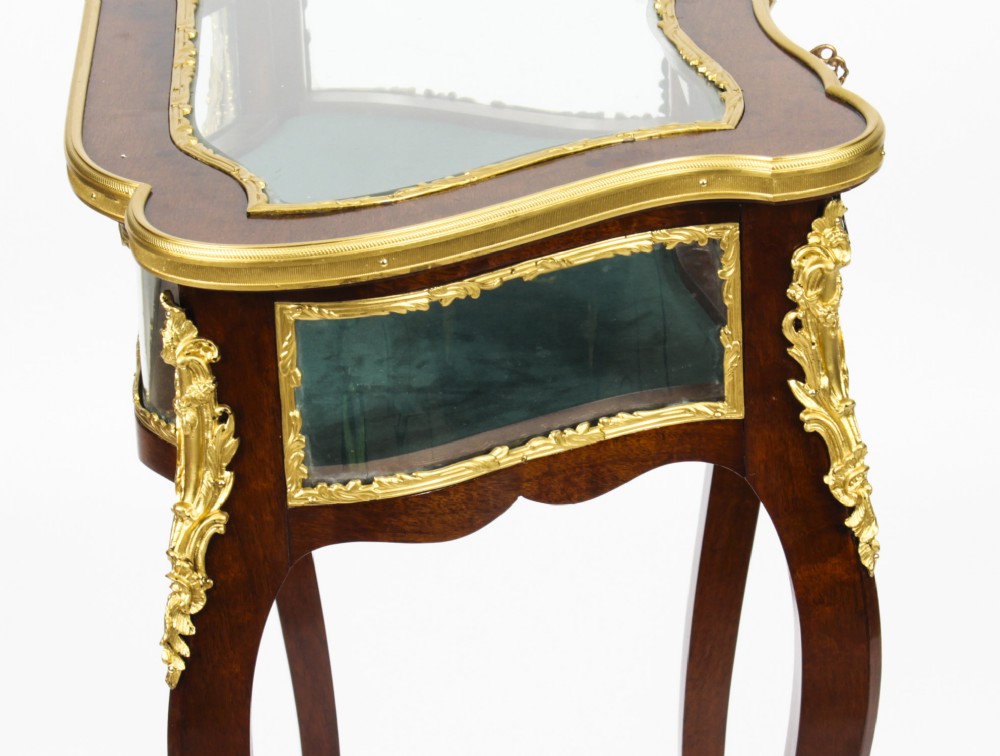
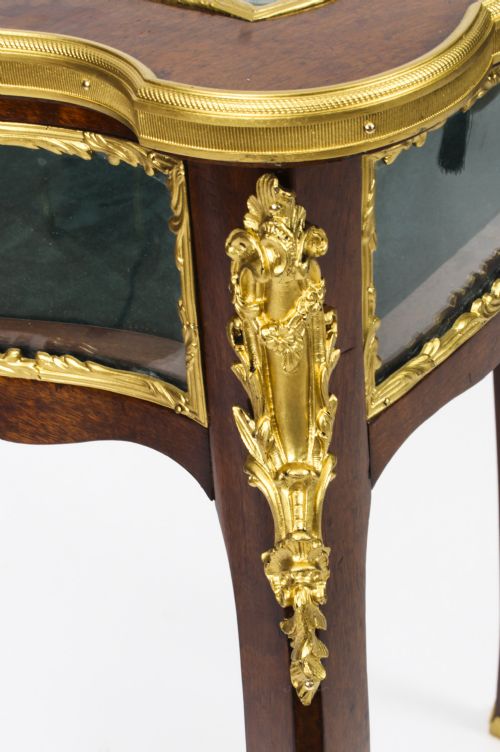
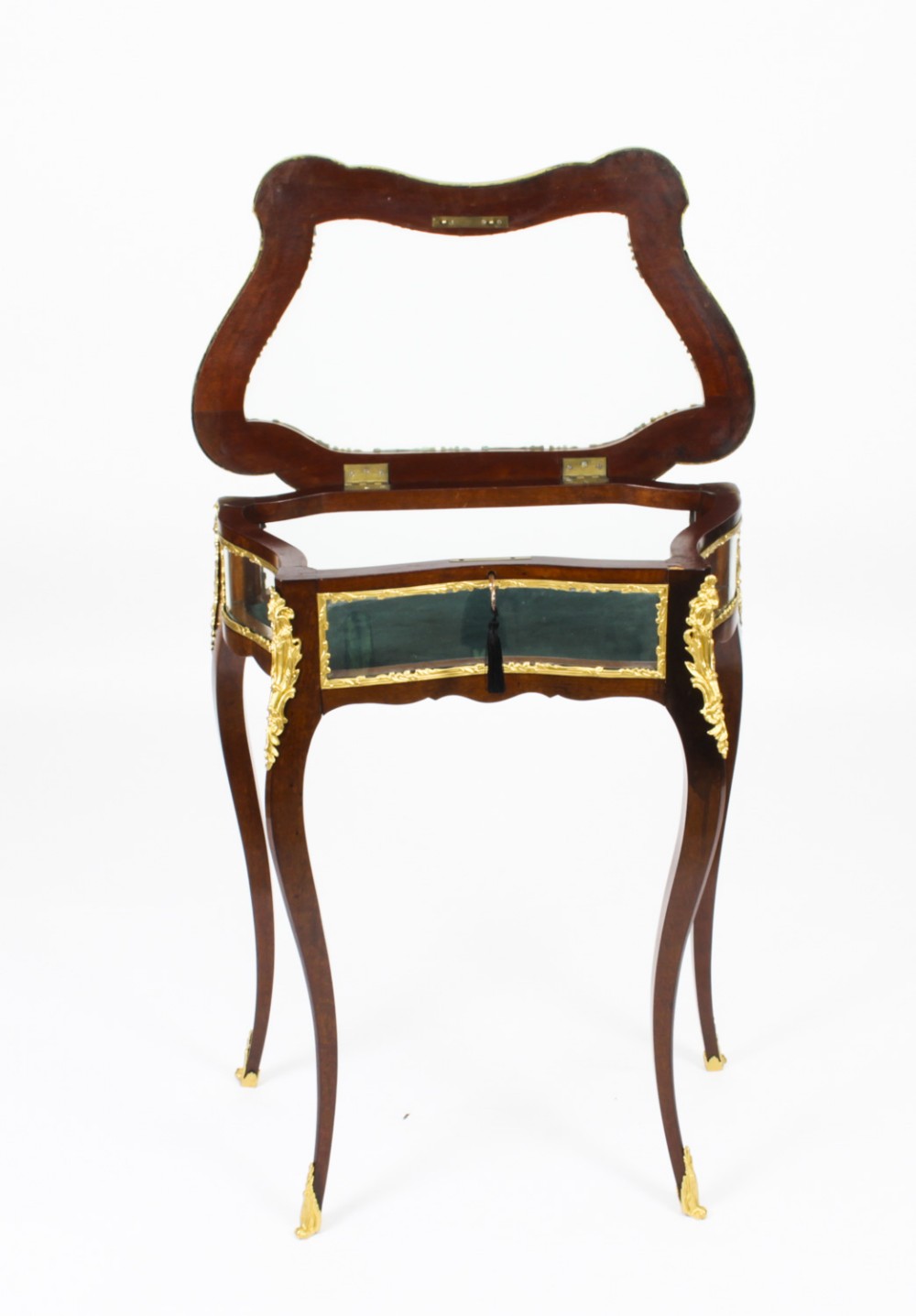
The shaped display tables each feature a bevelled glass top, serpentine glass sides and dark blue velvet lining.
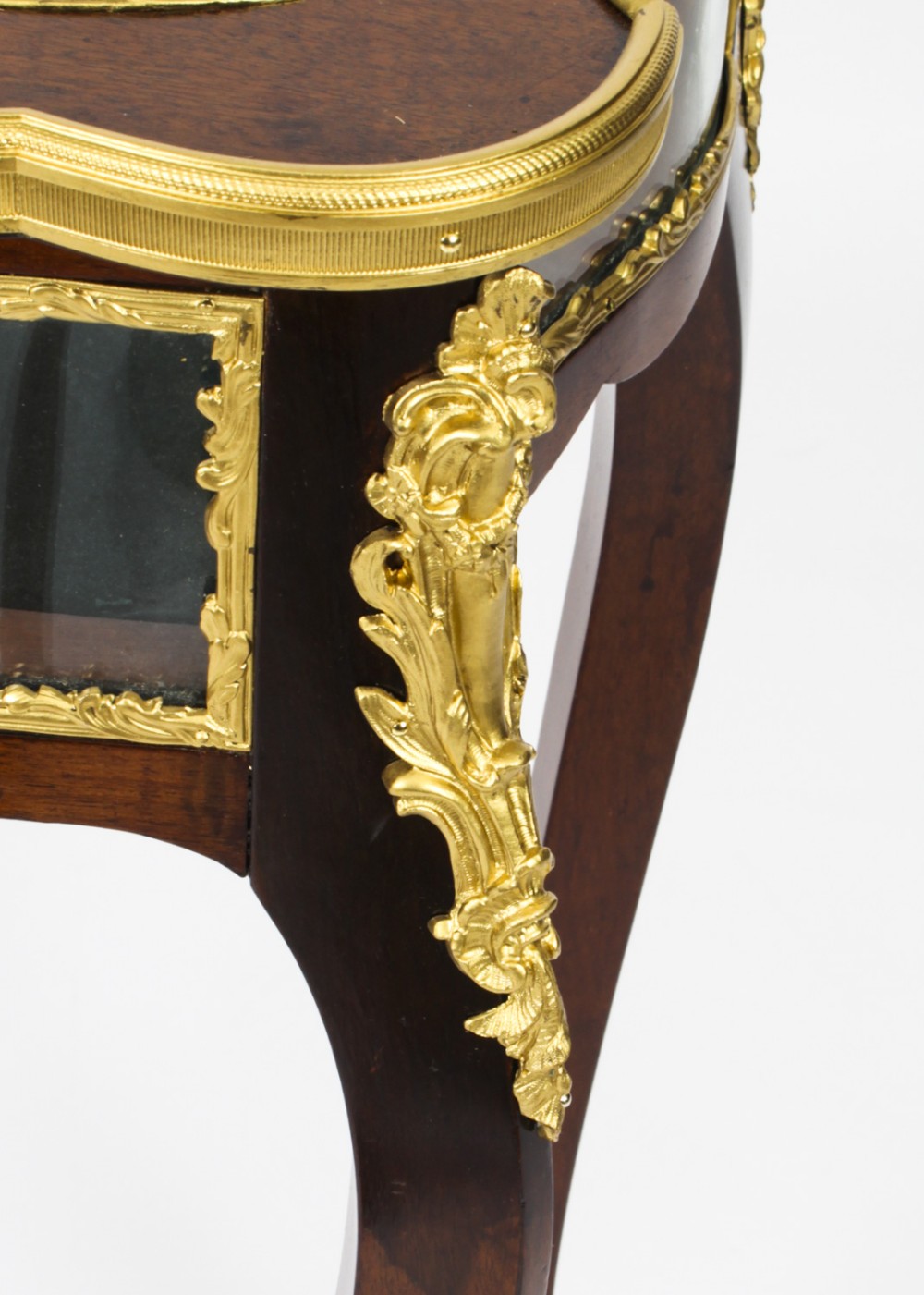
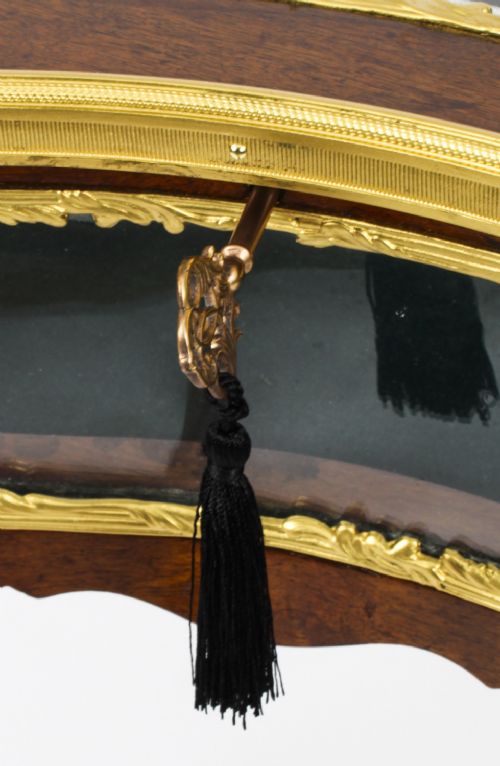
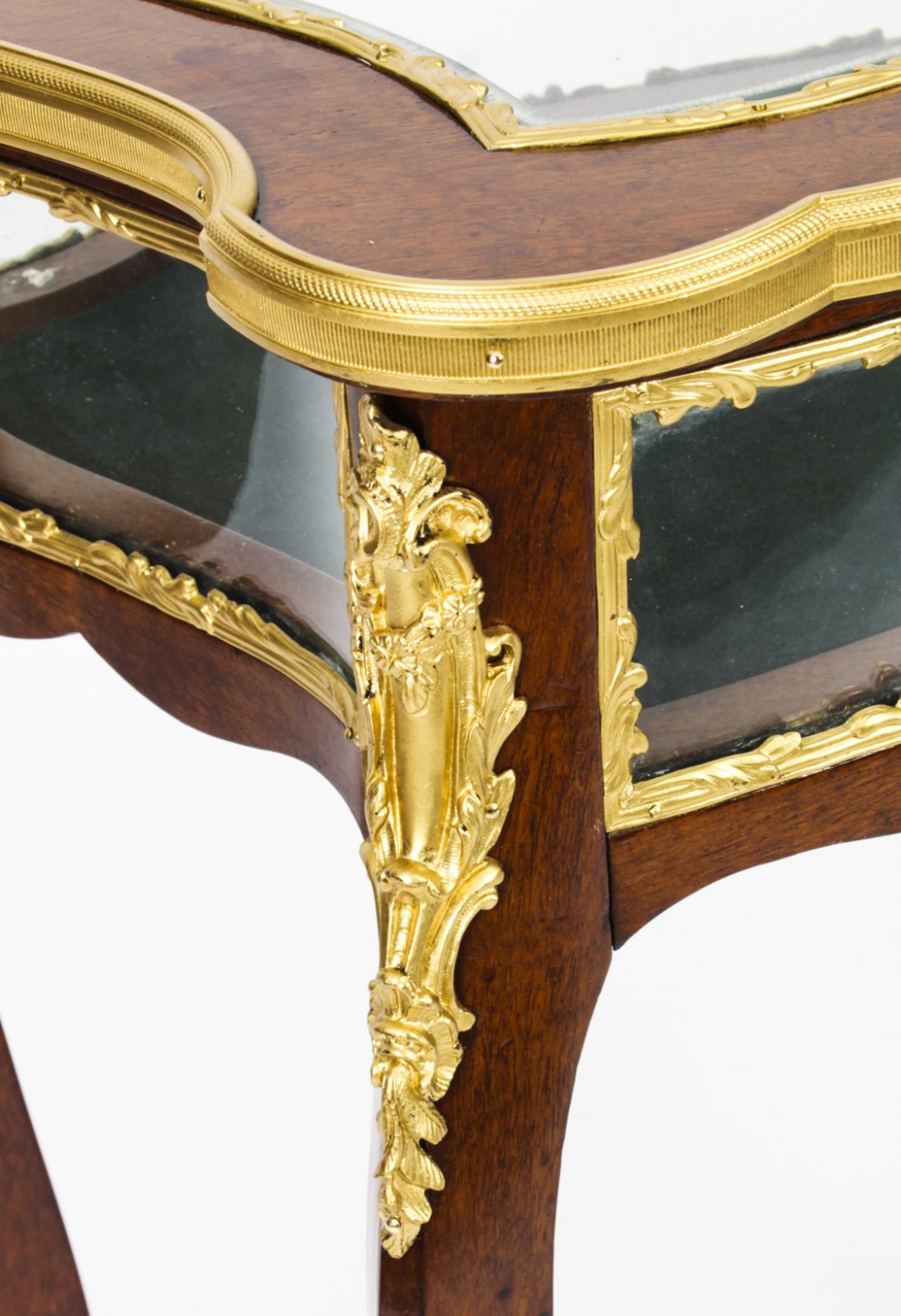
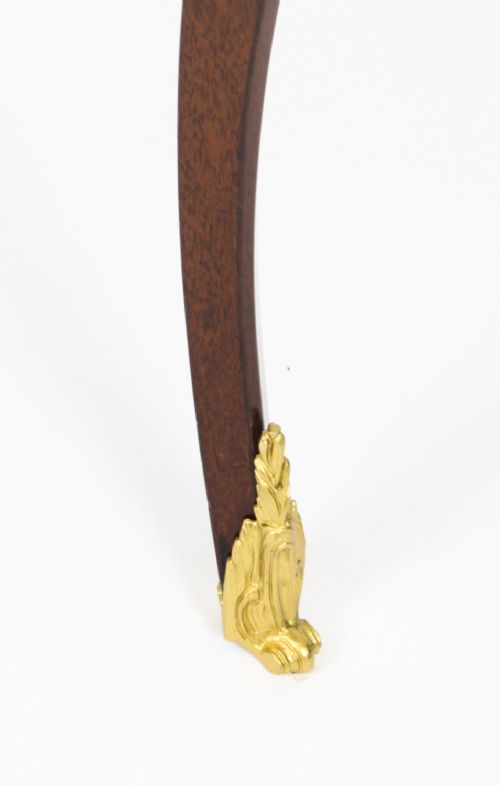
The brass hinges, the working locks, complete with original keys, are of the highest quality. The inset bevelled glass is framed with rococco style ormolu mounts in the form of acanthus leaves and they stand on elegant tapering cabriole legs with ormolu mounts and sabot feet.
Bijouterie tables were designed to store and display a collection of small valuable items, they are also called table vitrines, and display tables.
Condition:
In excellent condition having been beautifully cleaned and polished in our workshops, please see photos for confirmation.
Dimensions in cm:
Height 78 x Width 63 x Depth 38
Dimensions in inches:
Height 2 foot, 7 inches x Width 2 feet, 1 inch x Depth 1 foot, 3 inches
Ormolu - (from French 'or moulu', signifying ground or pounded gold) is an 18th-century English term for applying finely ground, high-carat gold in a mercury amalgam to an object of bronze.The mercury is driven off in a kiln leaving behind a gold-coloured veneer known as 'gilt bronze'.
The manufacture of true ormolu employs a process known as mercury-gilding or fire-gilding, in which a solution of nitrate of mercury is applied to a piece of copper, brass, or bronze, followed by the application of an amalgam of gold and mercury. The item was then exposed to extreme heat until the mercury burned off and the gold remained, adhered to the metal object.
No true ormolu was produced in France after around 1830 because legislation had outlawed the use of mercury. Therefore, other techniques were used instead but nothing surpasses the original mercury-firing ormolu method for sheer beauty and richness of colour. Electroplating is the most common modern technique. Ormolu techniques are essentially the same as those used on silver, to produce silver-gilt (also known as vermeil).
Our reference: A1948