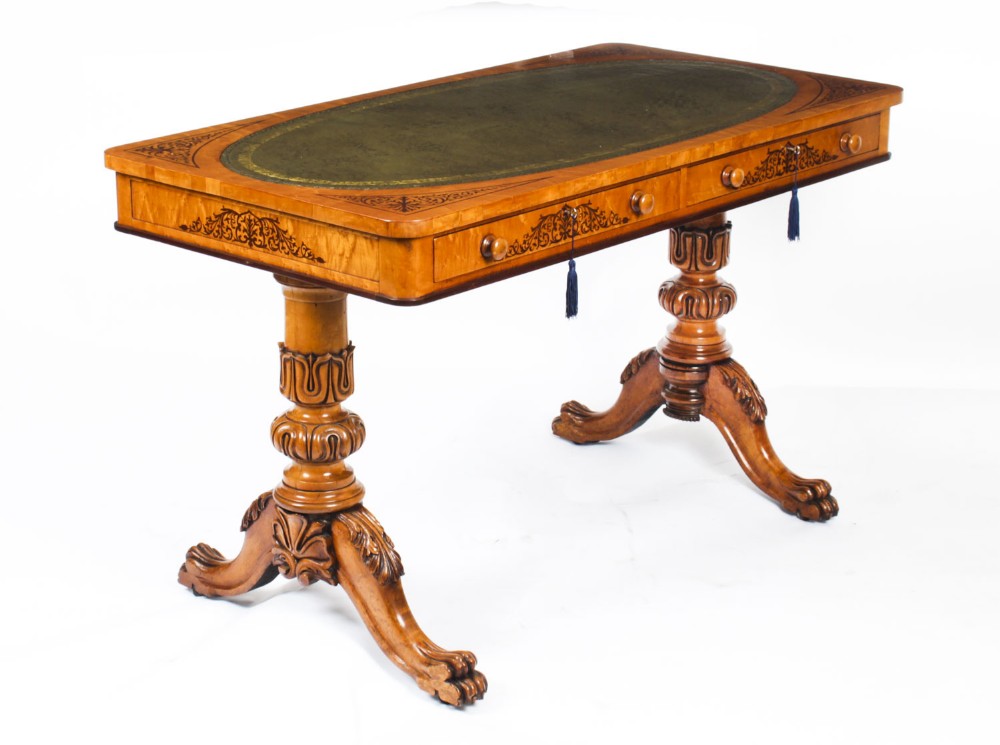
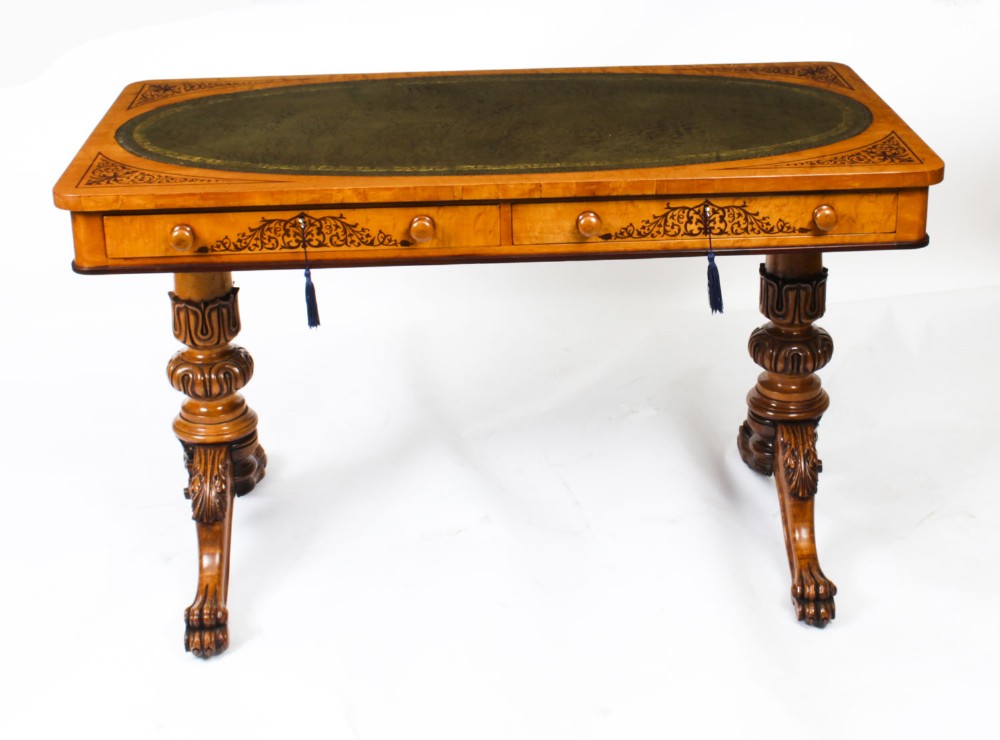
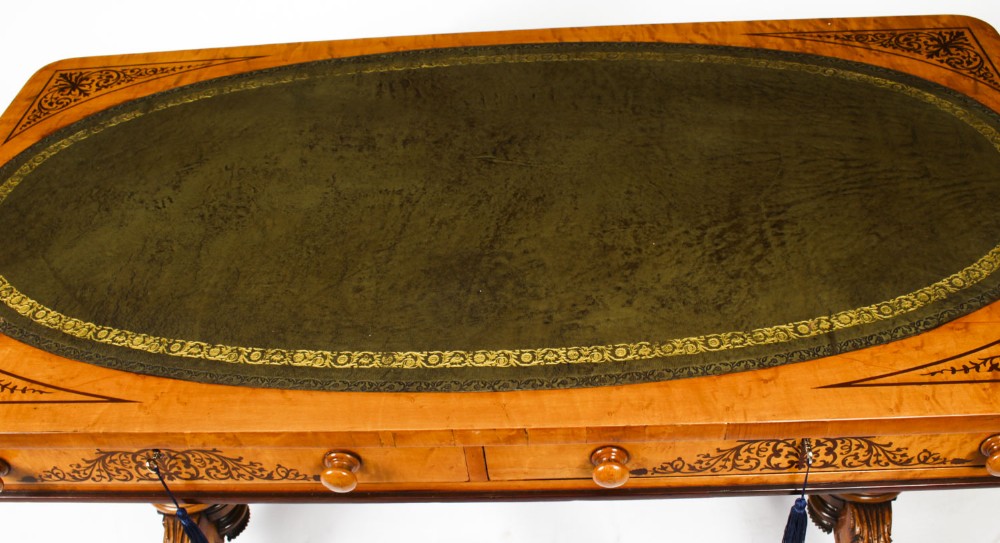
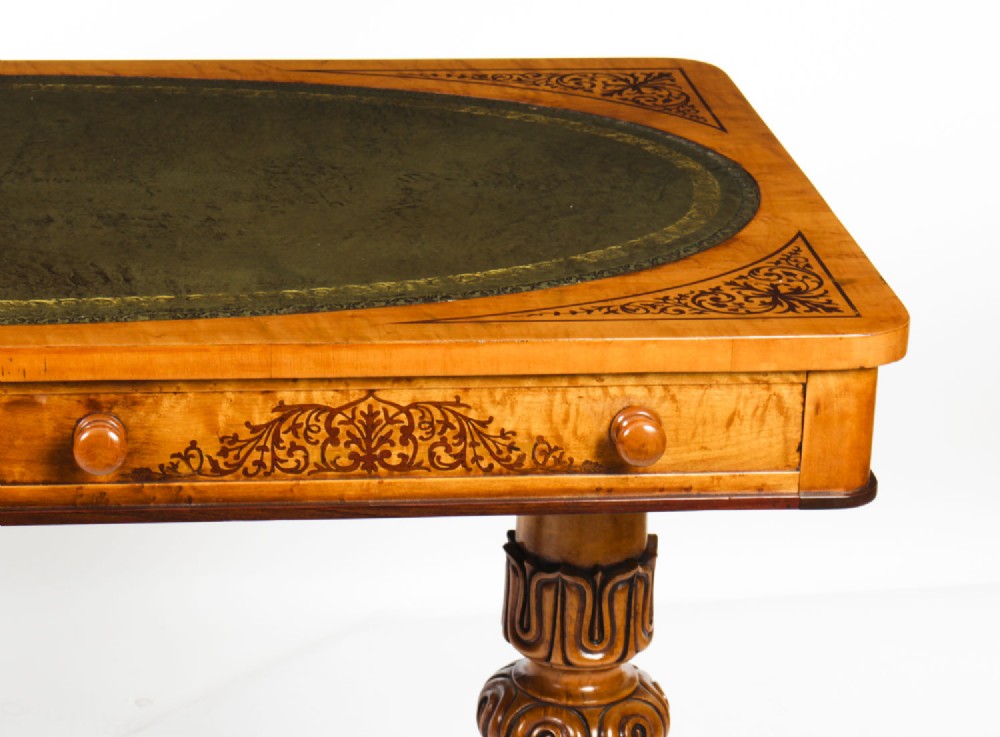
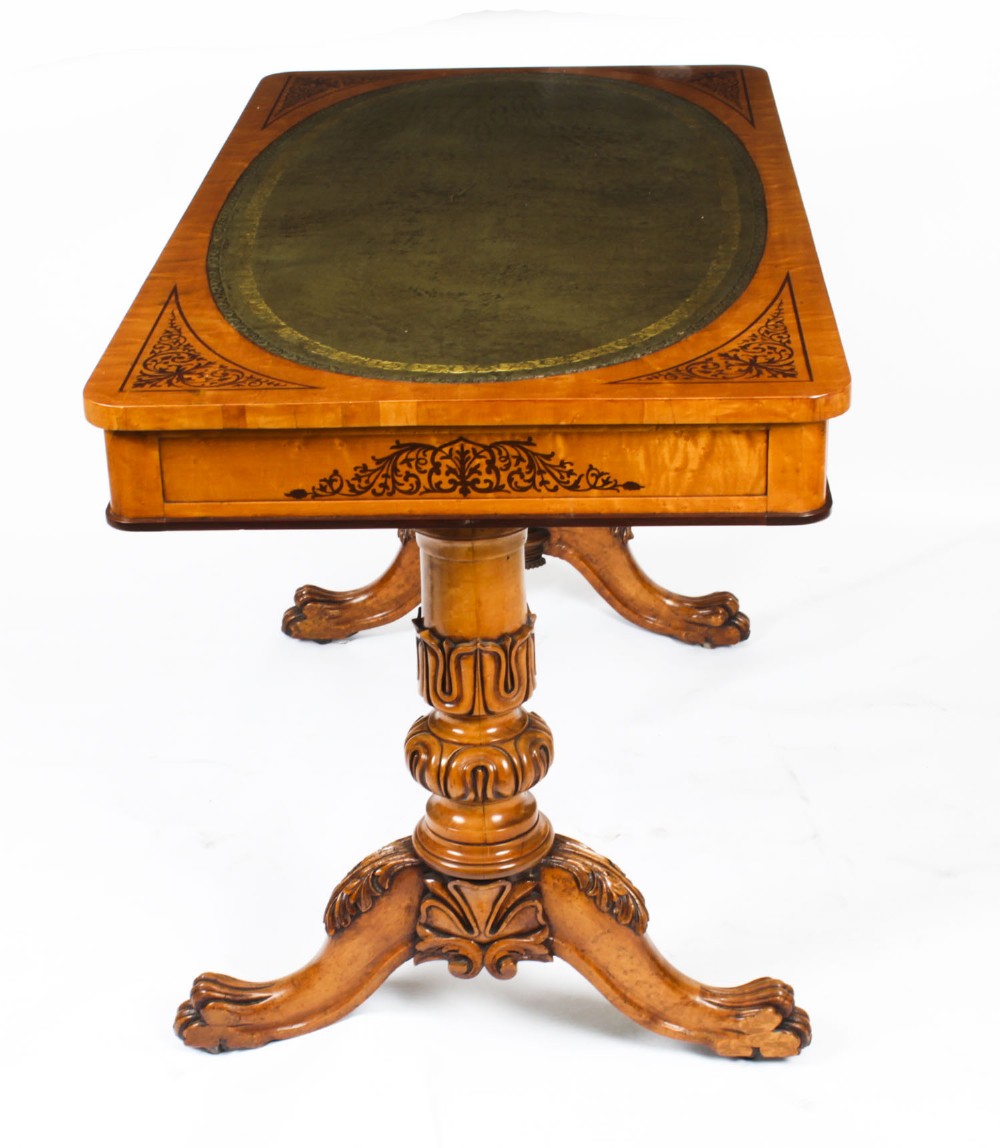
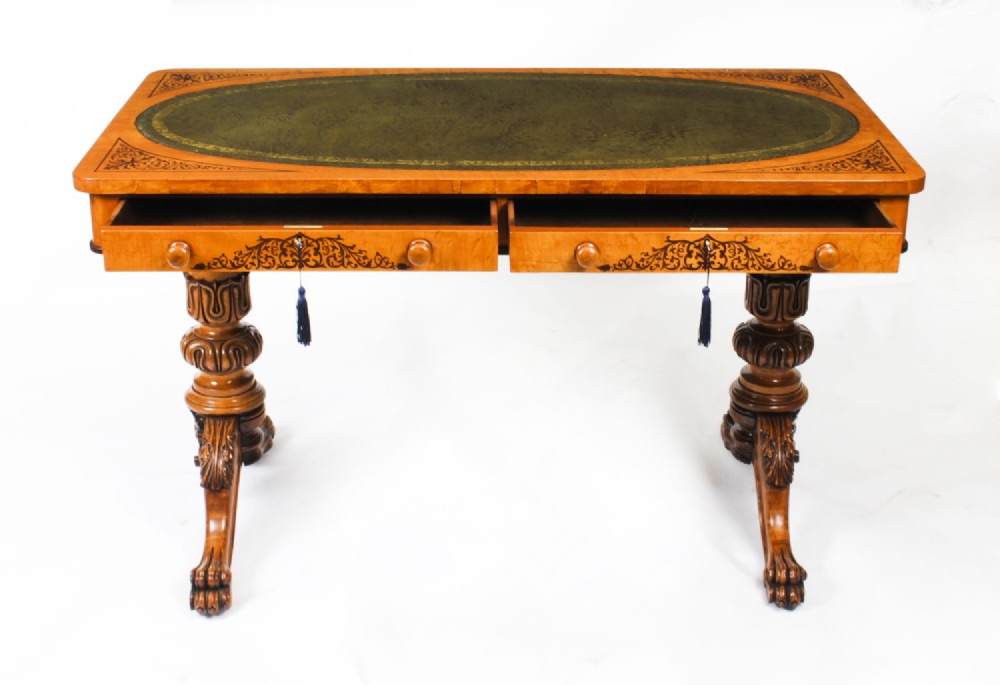
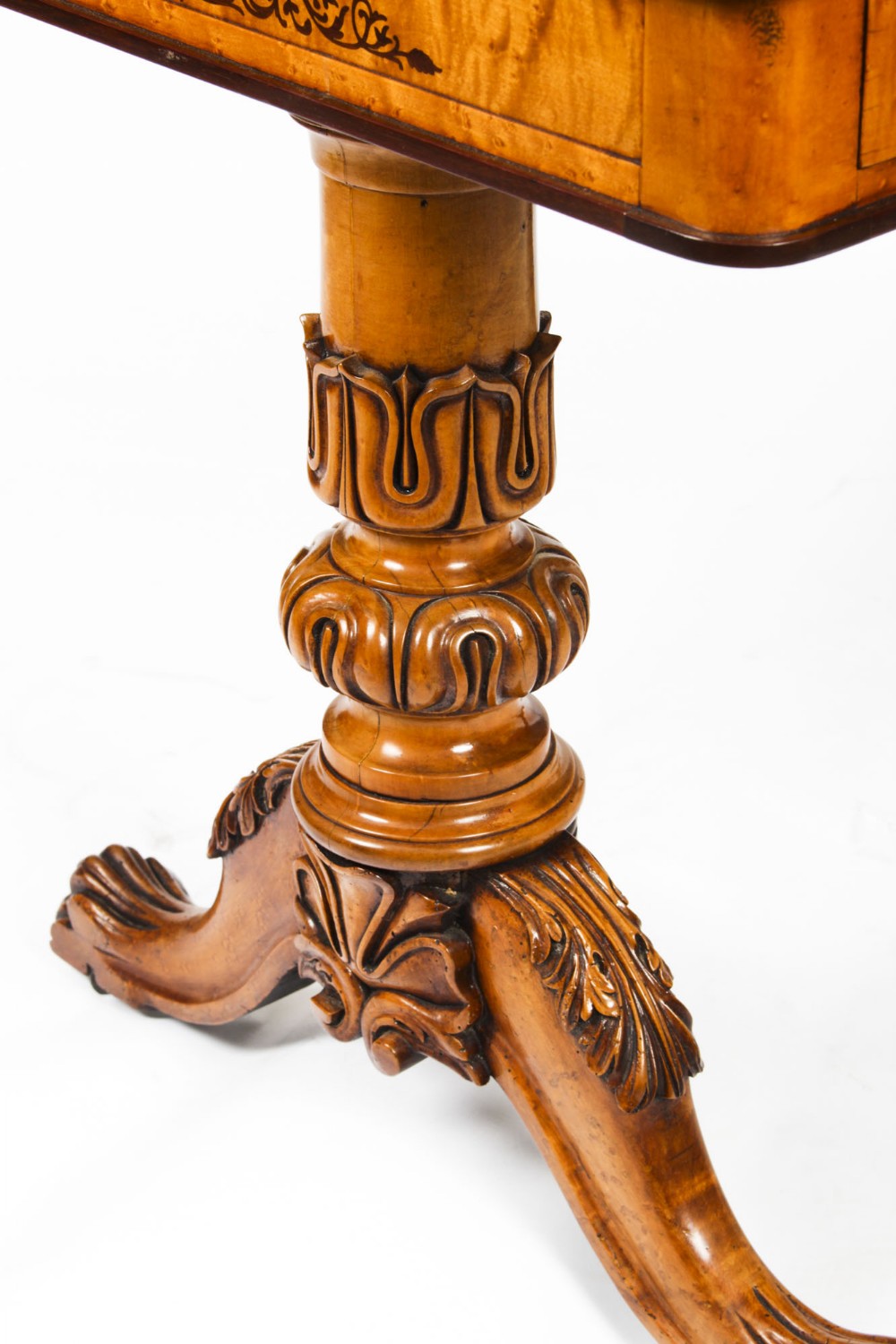
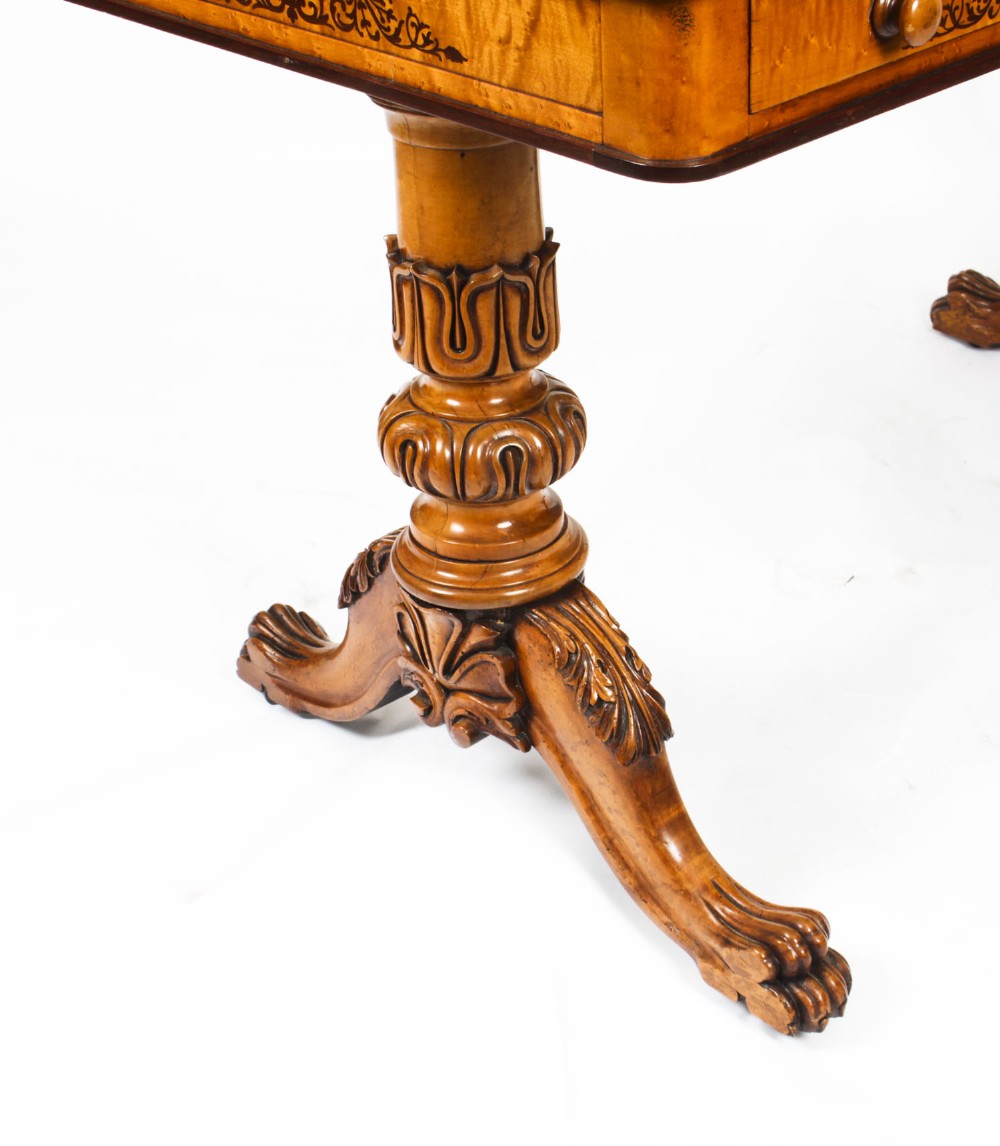
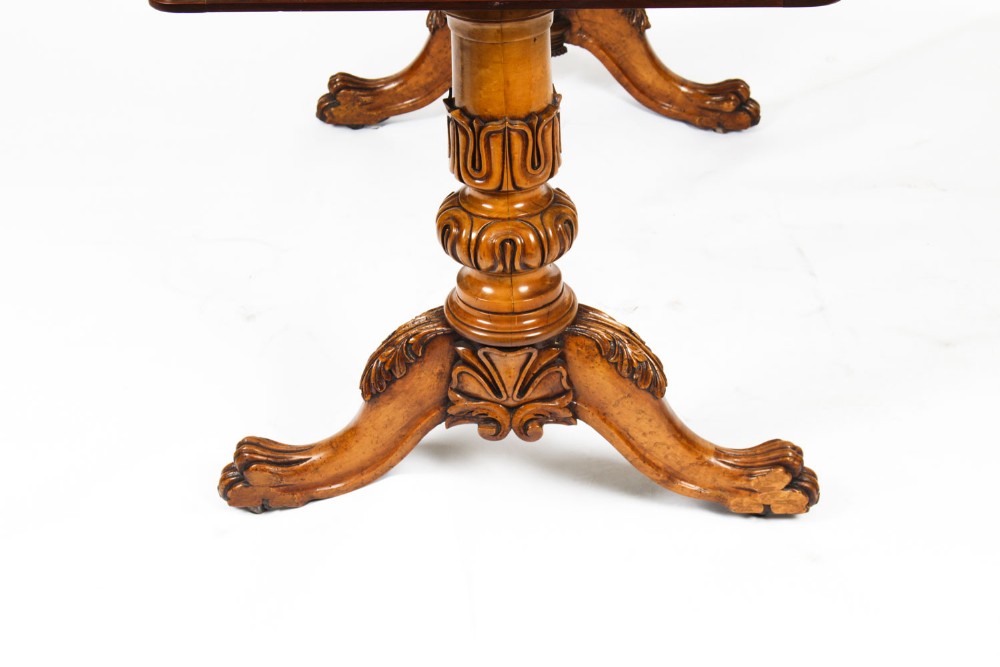
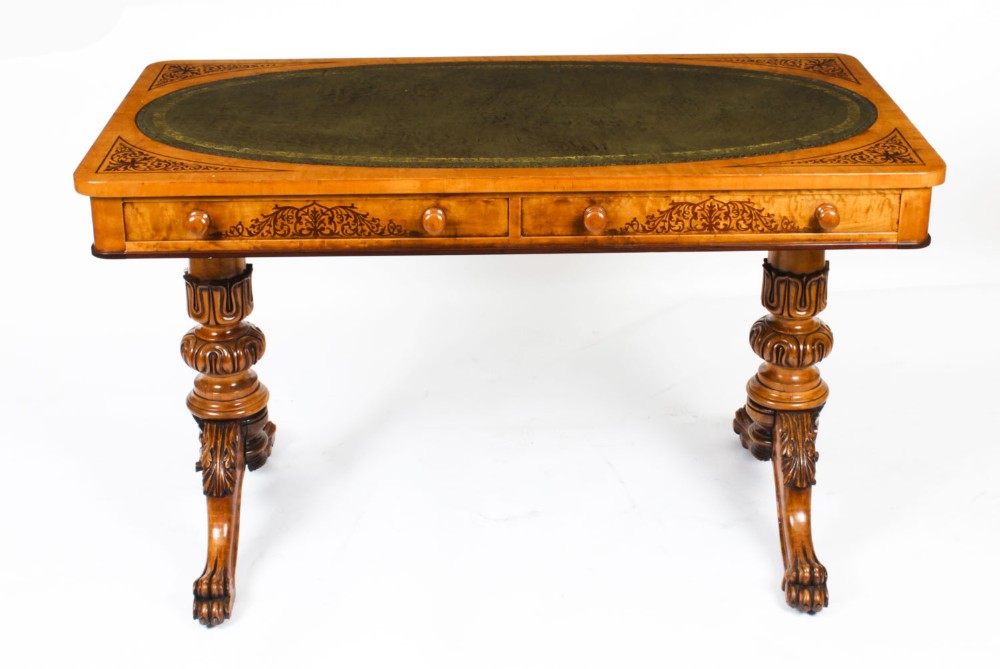
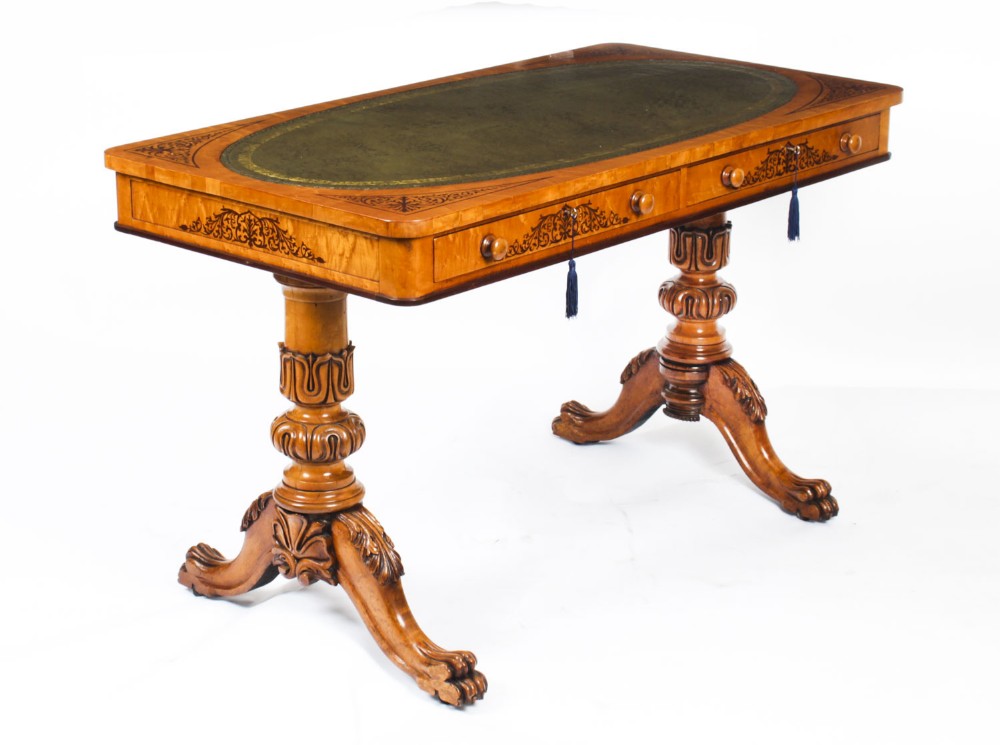
This is a fine antique early Victorian satinwood Marquetry writing table in the manner of Gillows and circa 1840 in date.
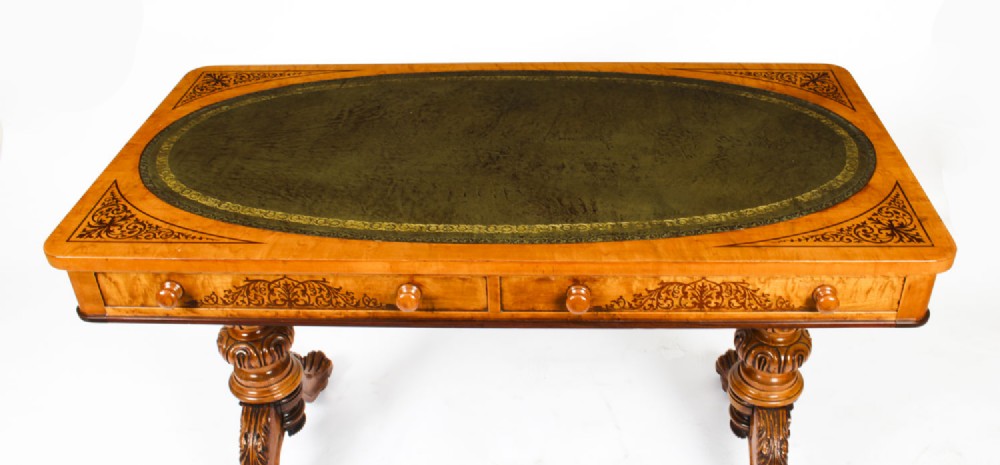
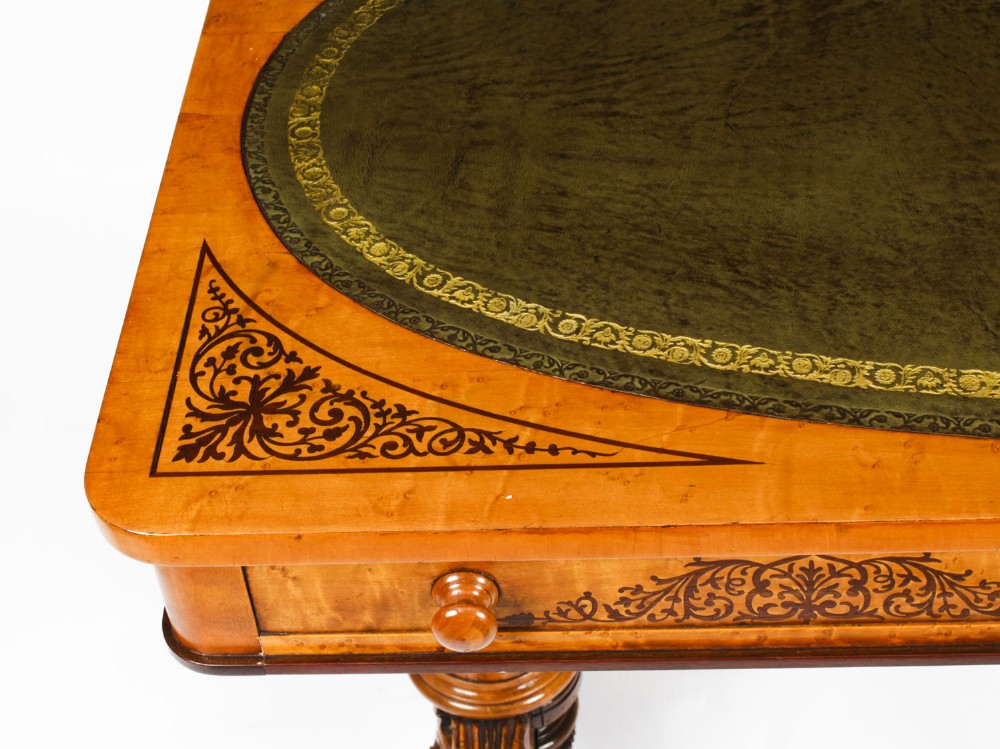
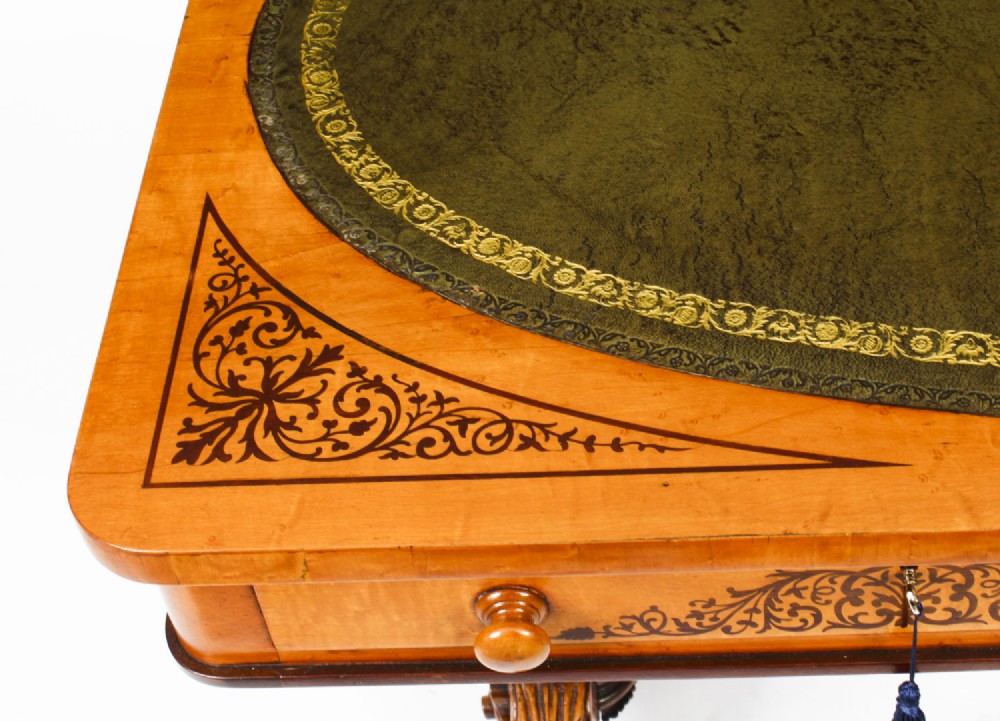
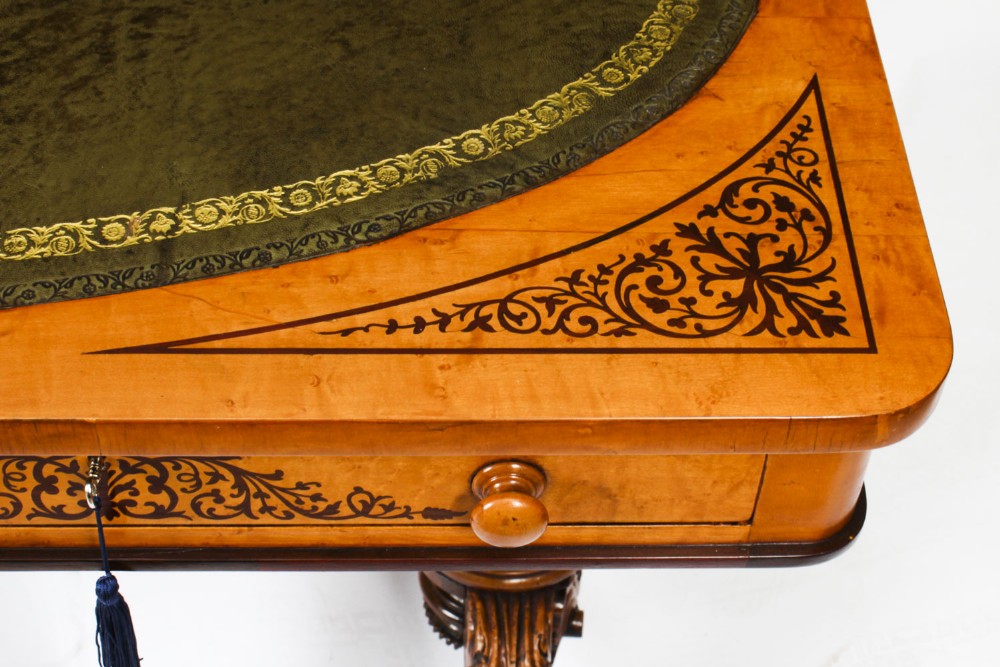
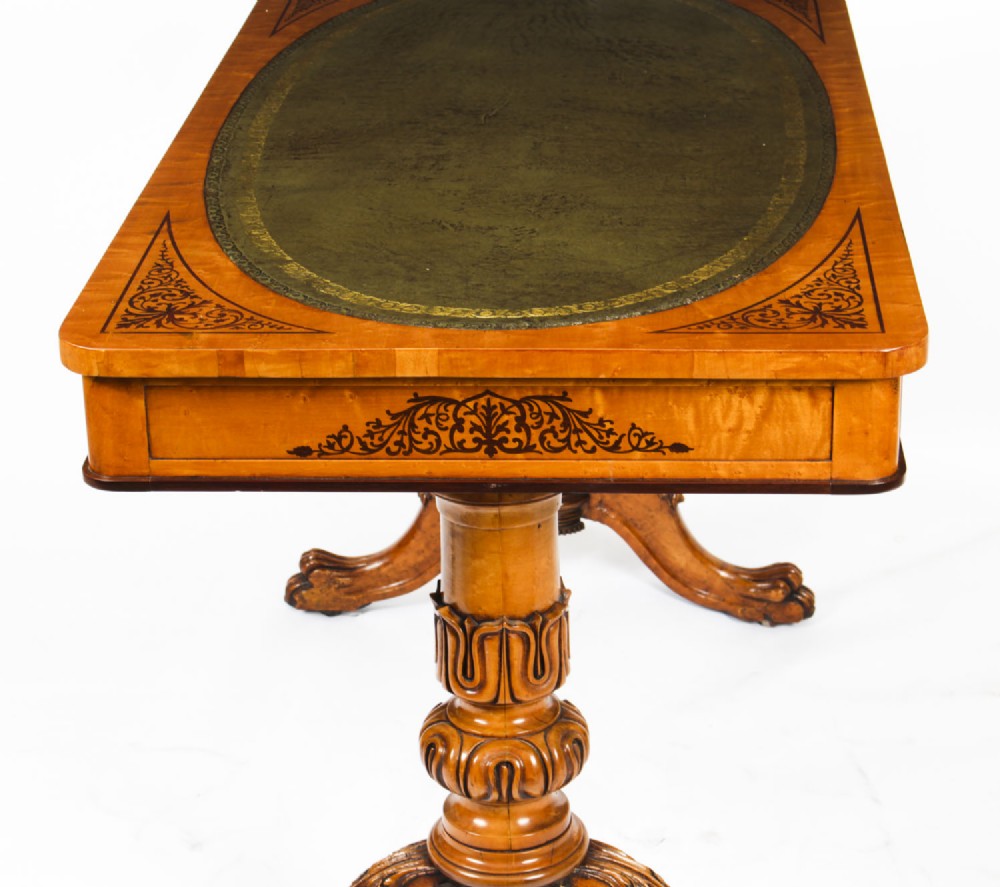
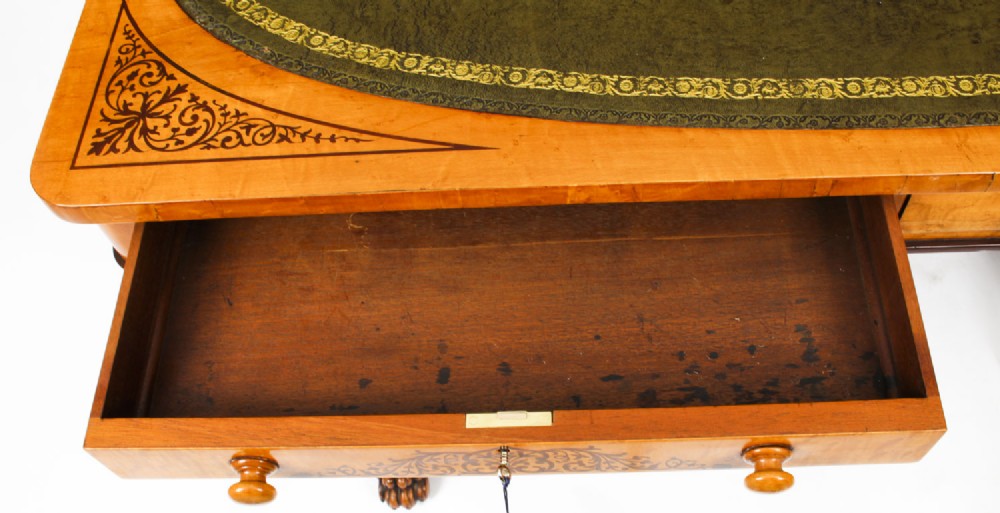
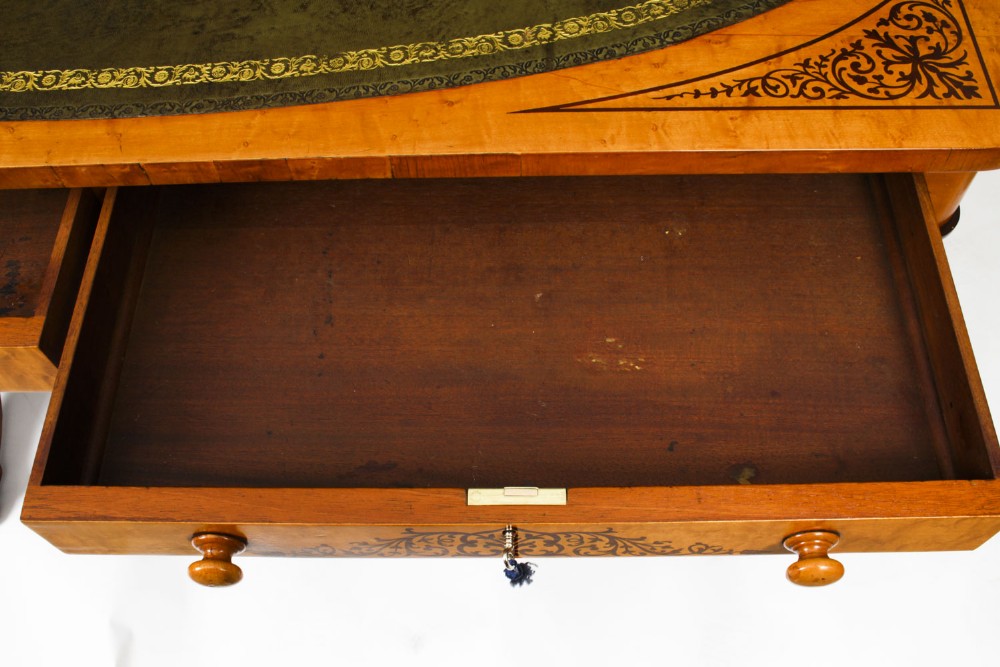
The rectangular shaped top features a central inset oval tooled olive green leather writing surface with decorative marquetry foliate decoration to each corner.
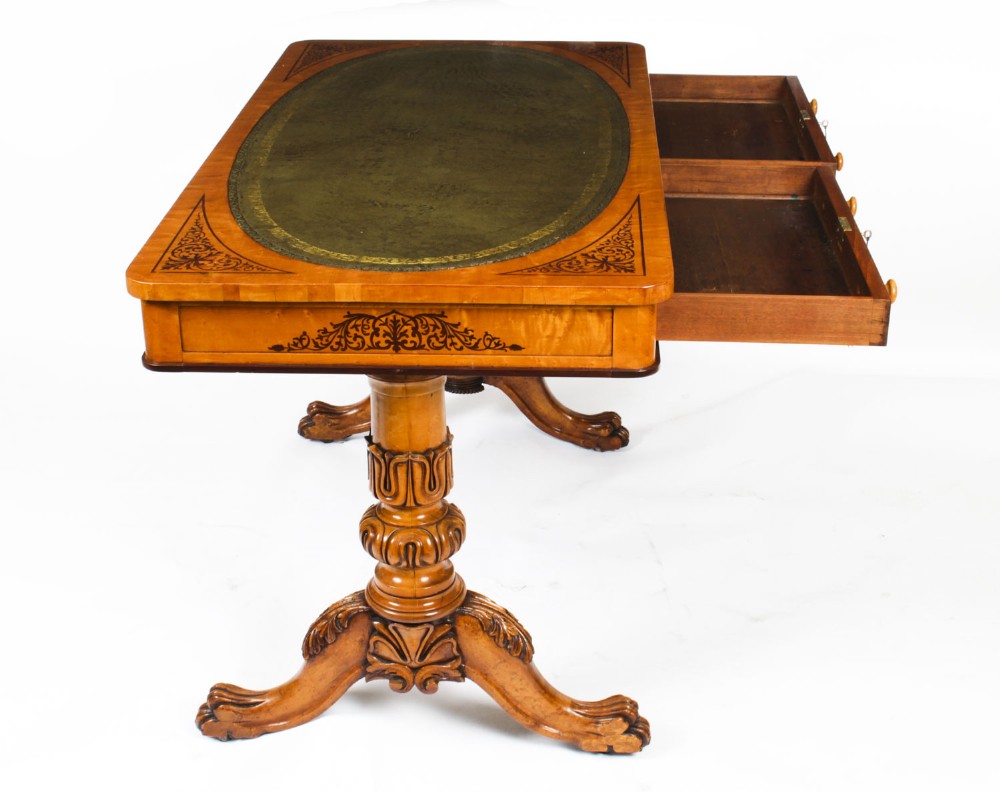
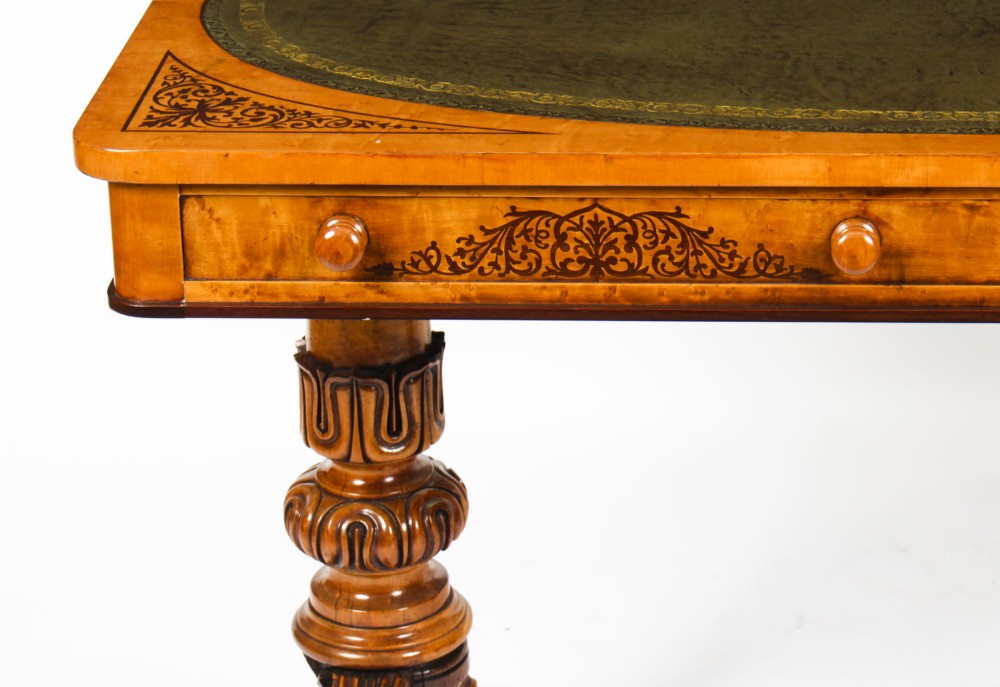
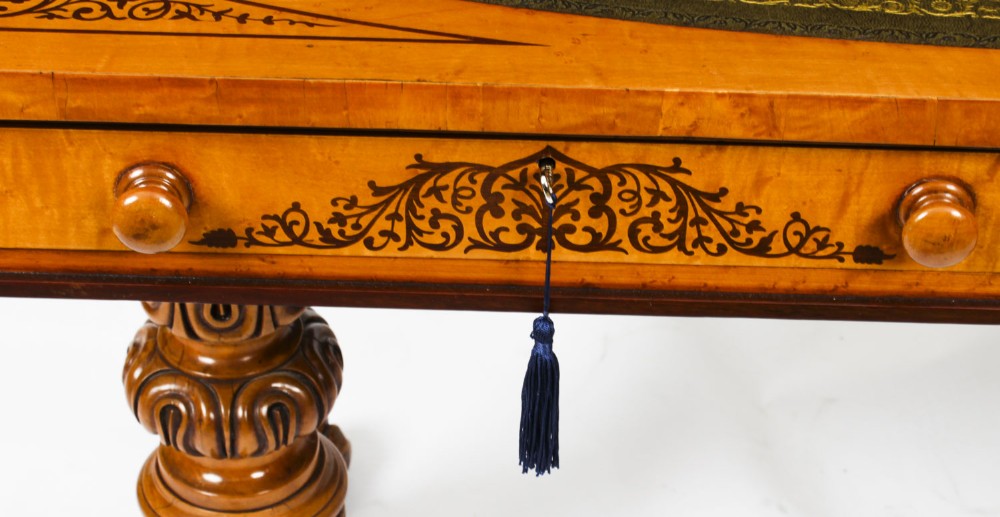
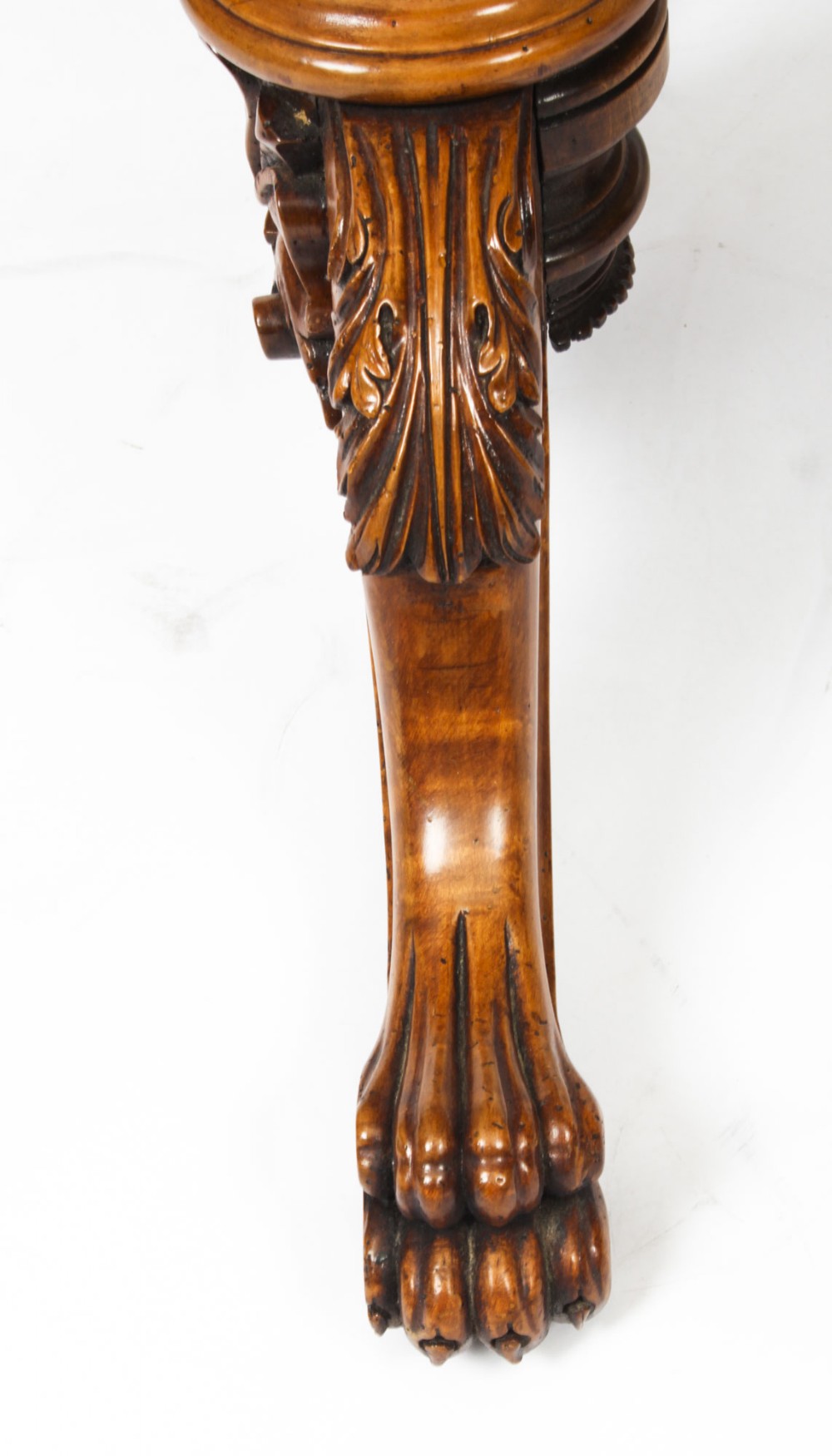
There are two drawers to the front with faux drawers to the other side, all with further inlaid decoration and the original knob handles. It is raised on carved bulbous supports terminating in splayed legs having acanthus leaves and terminating in paw feet.
This writing table is a beautiful example of a free standing piece of furniture, in the manner of Gillows, which is certain to make a statement wherever it is placed.
Condition:
In excellent condition having been beautifully cleaned polished and releathered in our workshops, please see photos for confirmation.
Dimensions in cm:
Height 74 x Width 121 x Depth 63
Dimensions in inches:
Height 2 foot, 5 inches x Width 4 feet x Depth 2 feet, 1 inch
Satinwood
is a hard and durable wood with a satinlike sheen, much used in cabinetmaking, especially in marquetry. It comes from two tropical trees of the family Rutaceae (rue family). East Indian or Ceylon satinwood is the yellowish or dark-brown heartwood of Chloroxylon swietenia.
The lustrous, fine-grained, usually figured wood is used for furniture, cabinetwork, veneers, and backs of brushes. West Indian satinwood, sometimes called yellow wood, is considered superior. It is the golden yellow, lustrous, even-grained wood found in the Florida Keys and the West Indies.
It has long been valued for furniture. It is also used for musical instruments, veneers, and other purposes. Satinwood is classified in the division Magnoliophyta, class Magnoliopsida, order Sapindales, family Rutaceae.
Gillow & Co.
was originally founded in Lancaster in 1730. Gillow’s of Lancaster was a household name in Victorian Britain, and the firm exported furniture throughout the Empire. Key to the company’s success was the dynamic father and son team at its core.
The London branch was opened in 1775. Among Gillow’s most successful pieces during this period were those made in the Neoclassical style from original drawings by Robert Adam. In the period 1813-1820 the Gillow family gradually withdrew from personal involvement with the business.
In 1897 Gillow & Co. merged with a Liverpool firm and they henceforth traded as Waring & Gillow.
Our reference: A1734