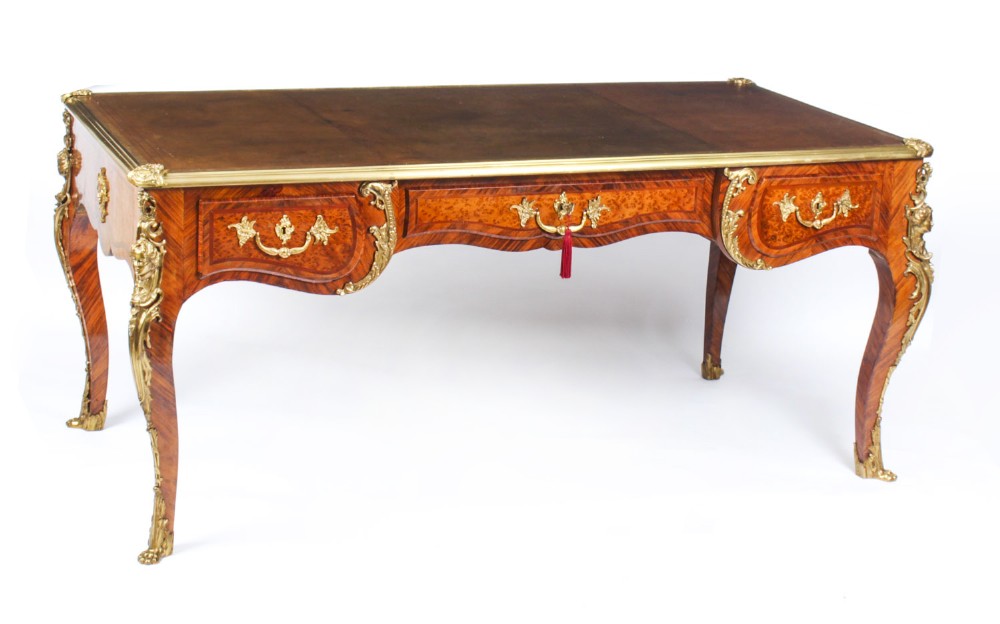
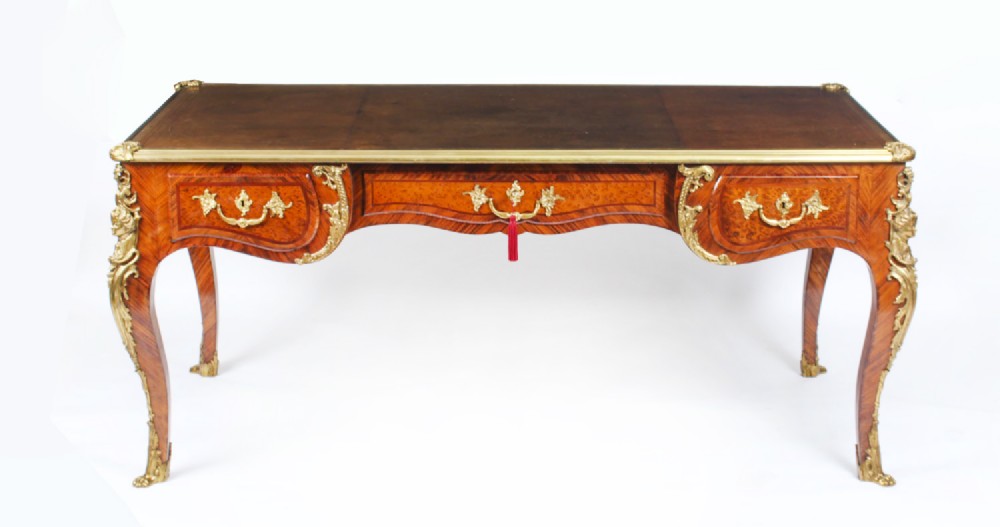
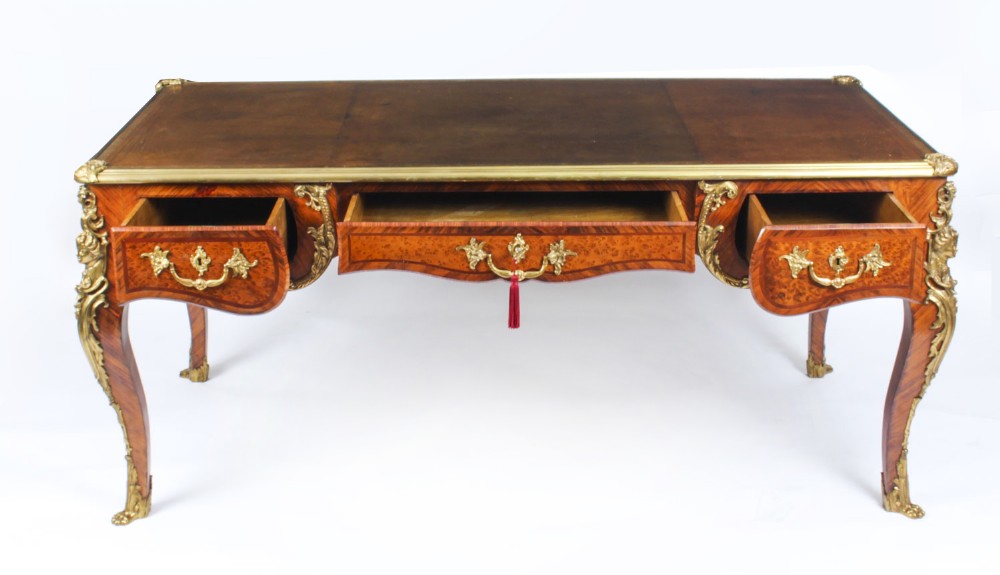
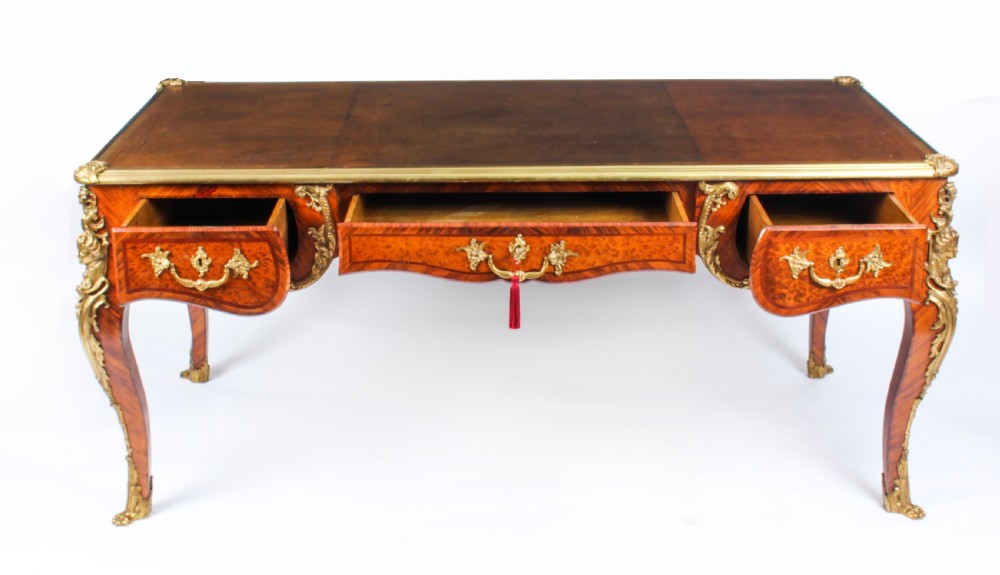
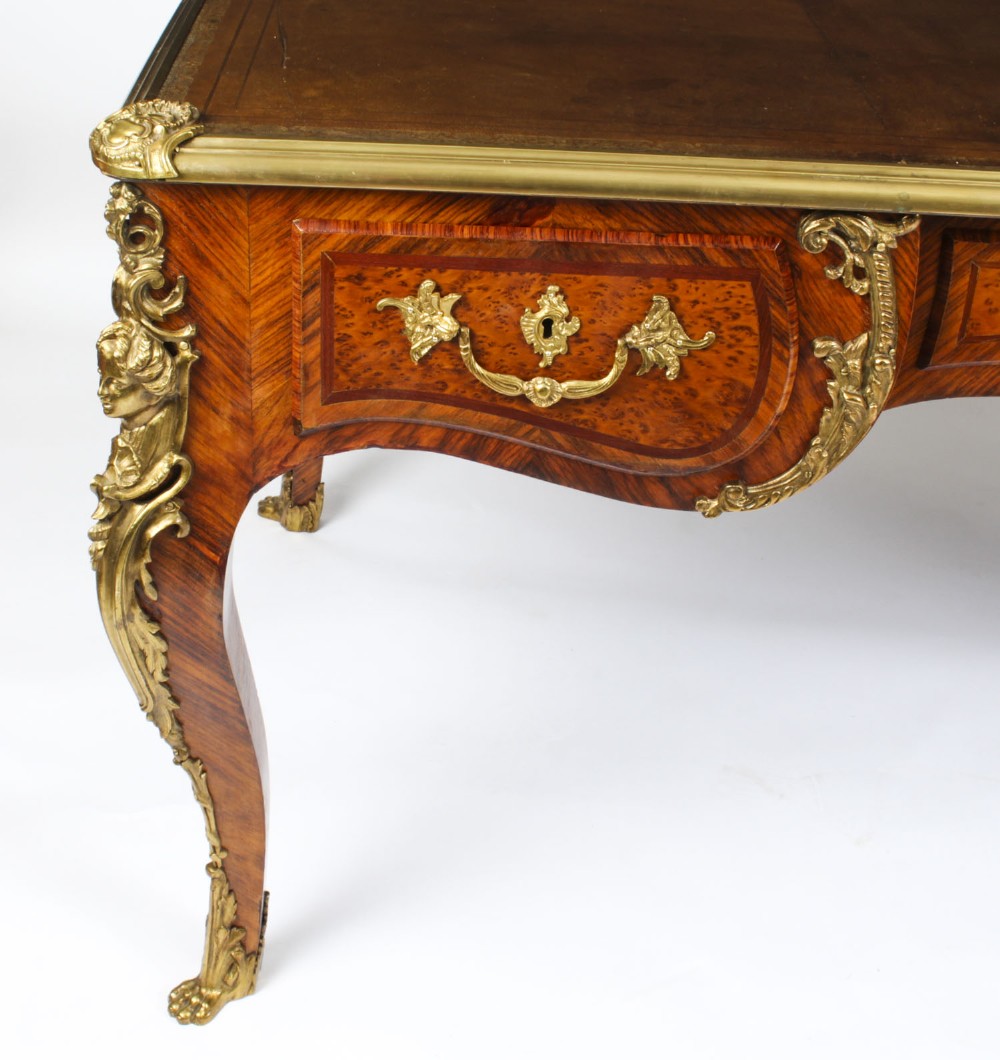
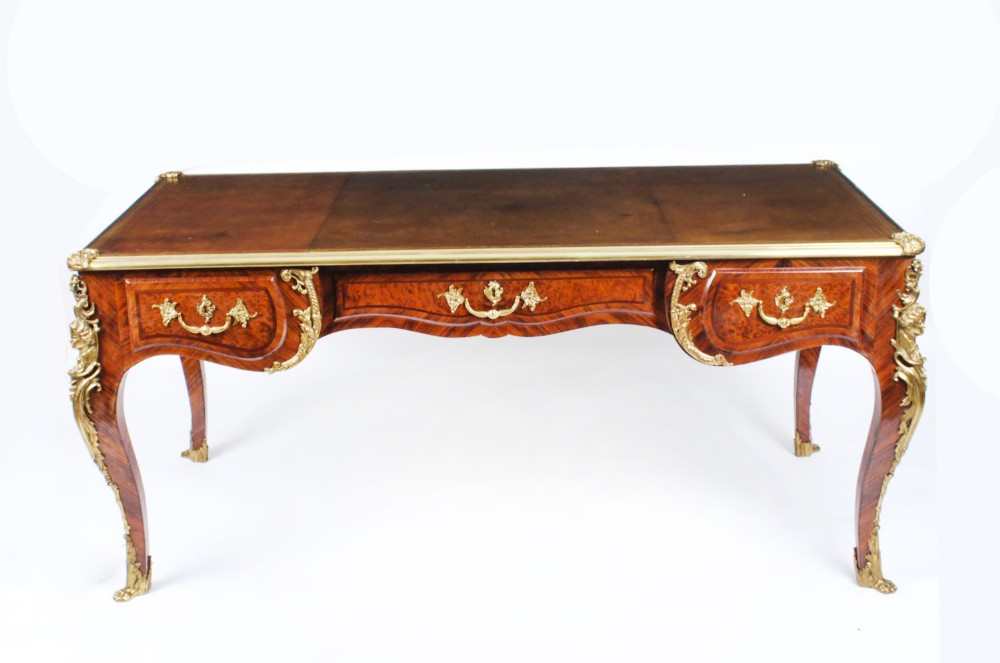
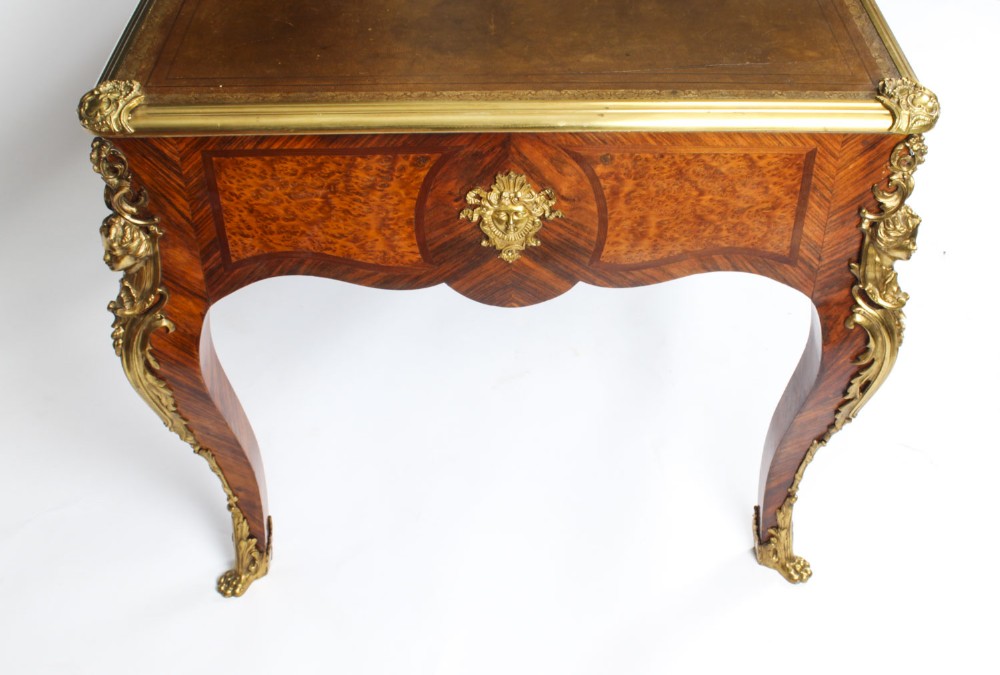
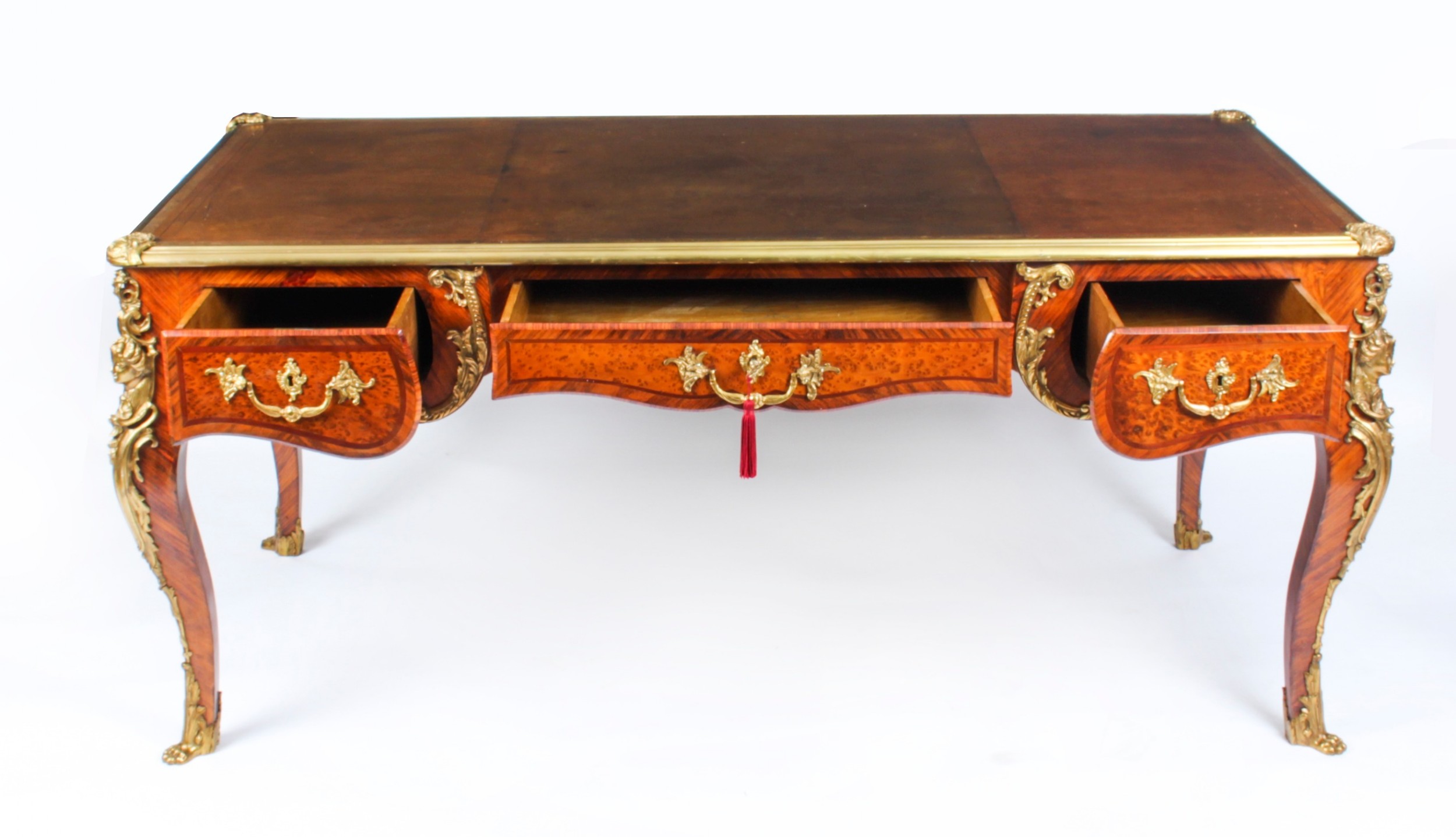
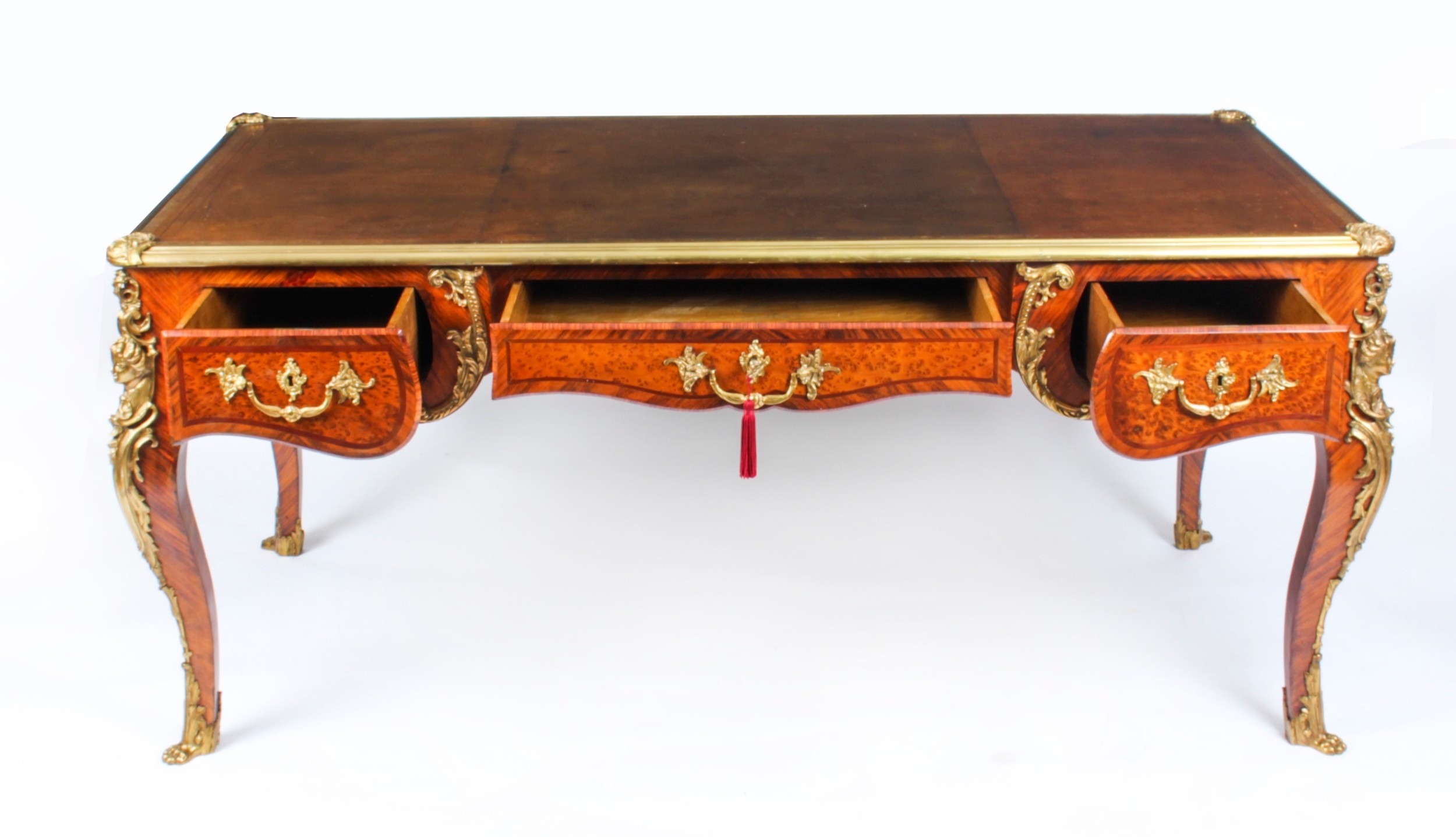
This is a fine and rare antique ormolu mounted French mahogany, amboyna and kingwood bureau plat in the manner of Charles Cressent, Circa 1860 in date.
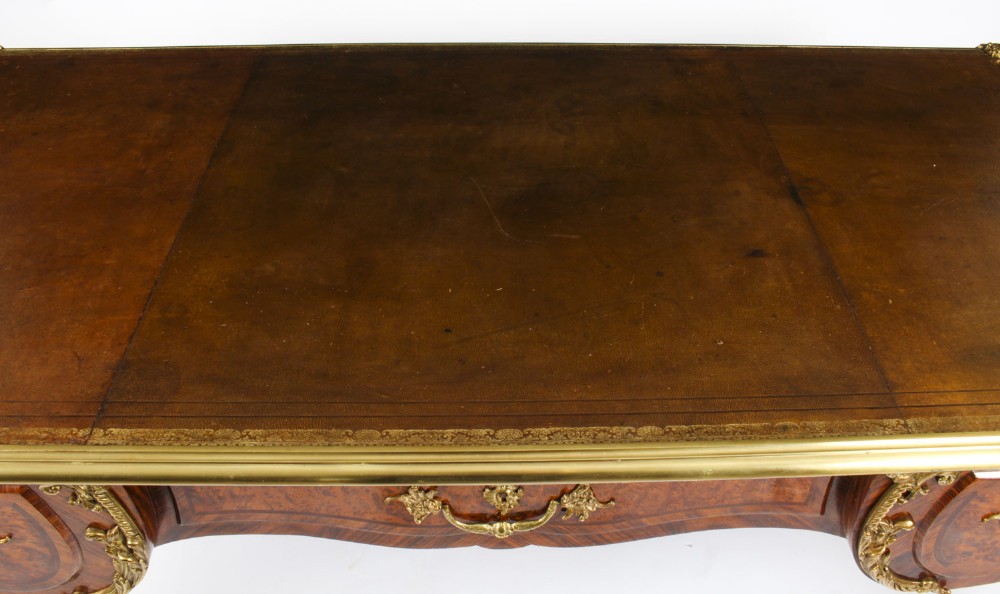
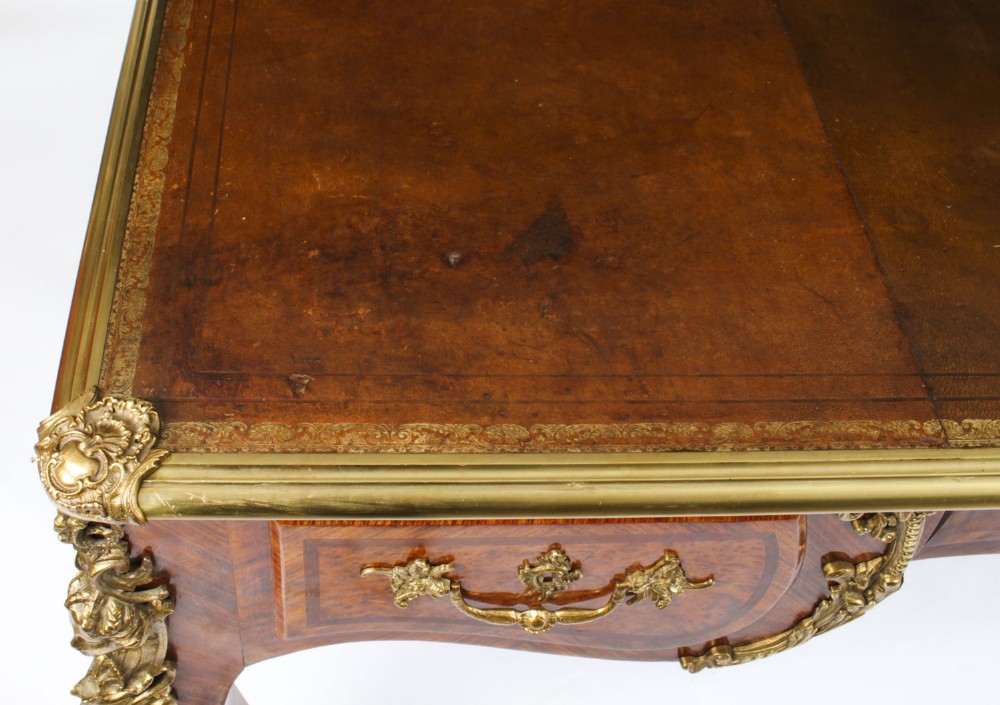
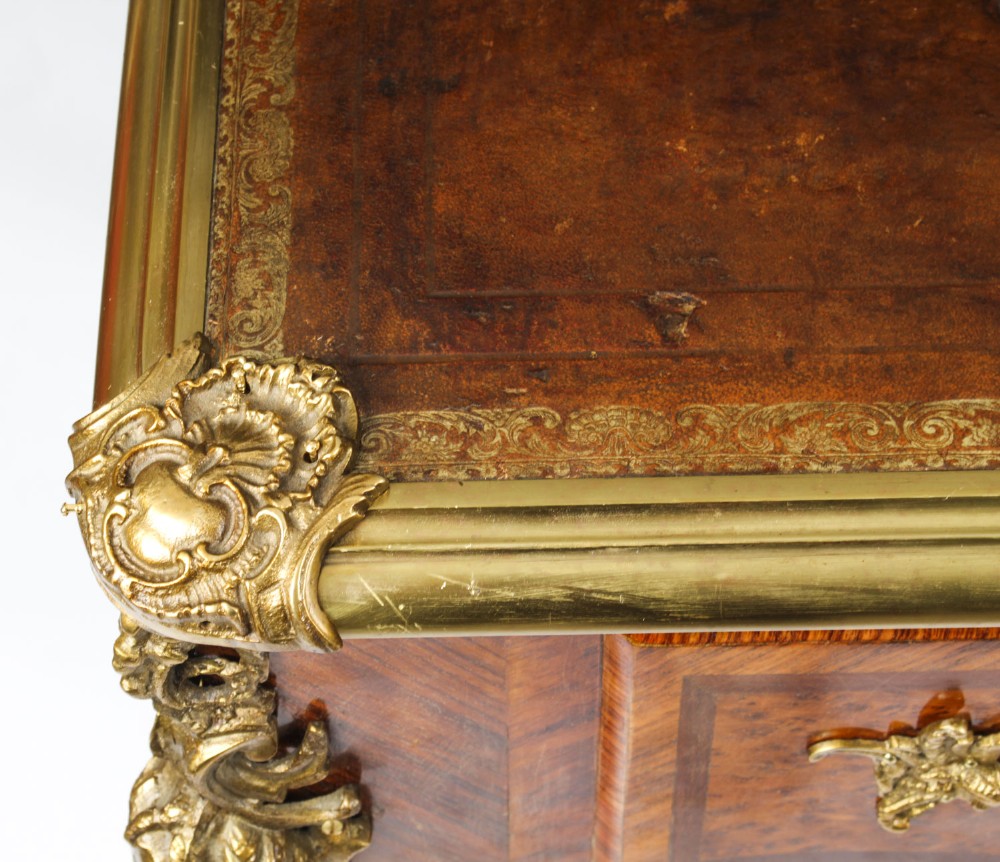
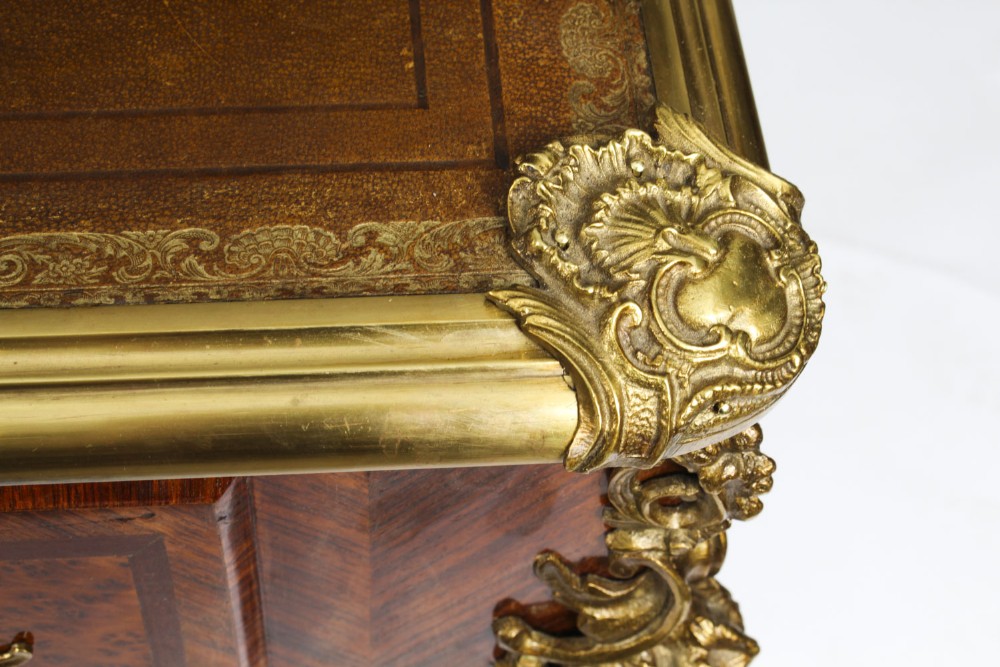
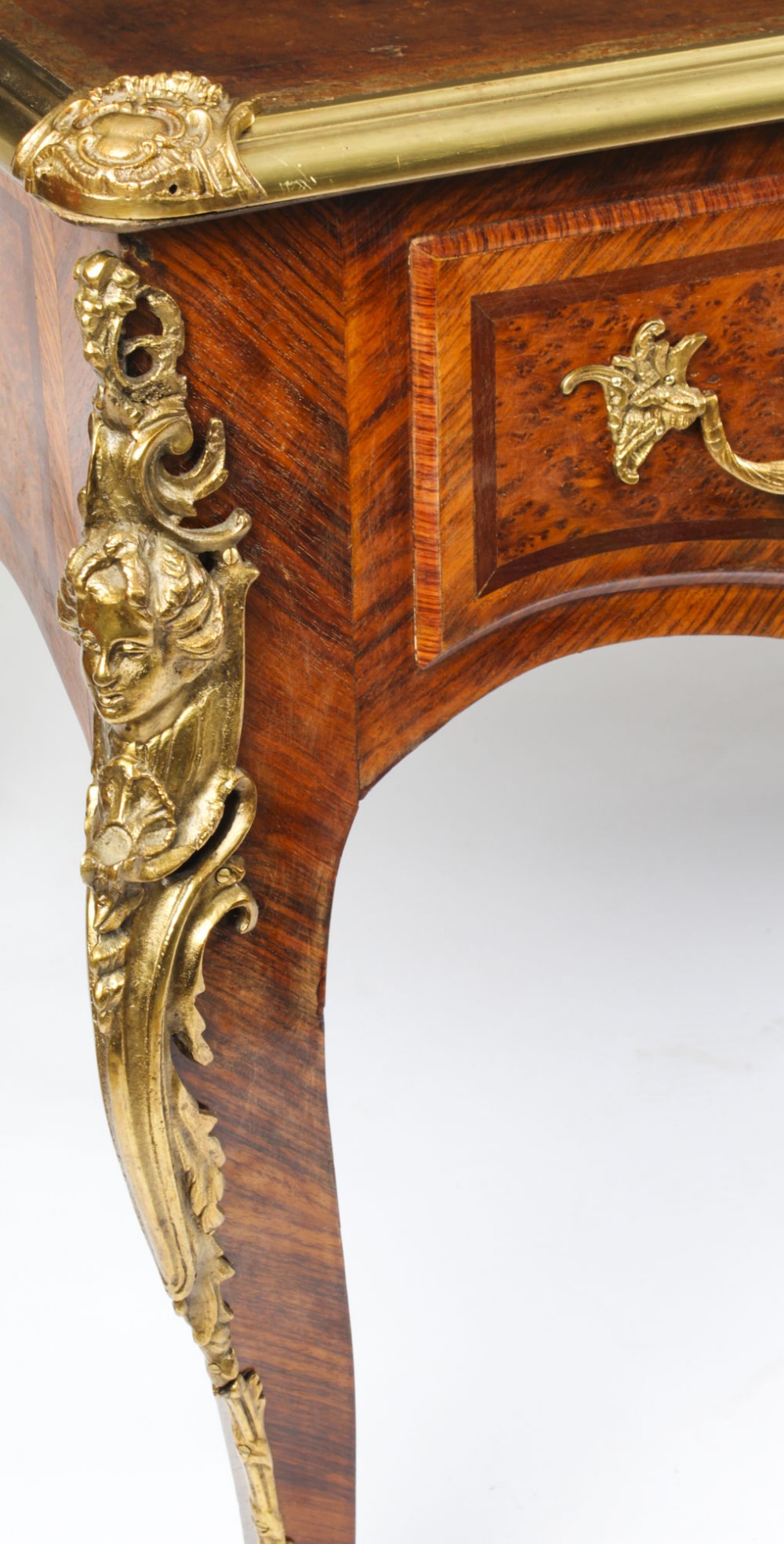
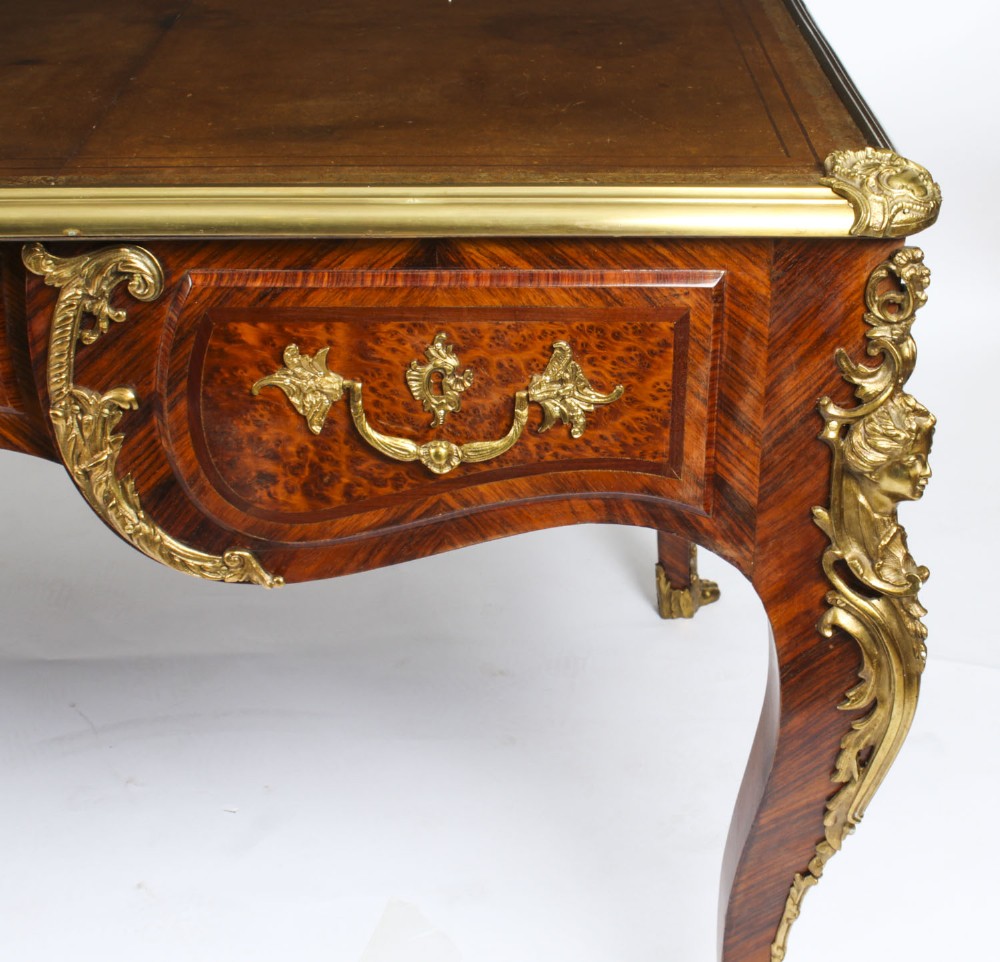
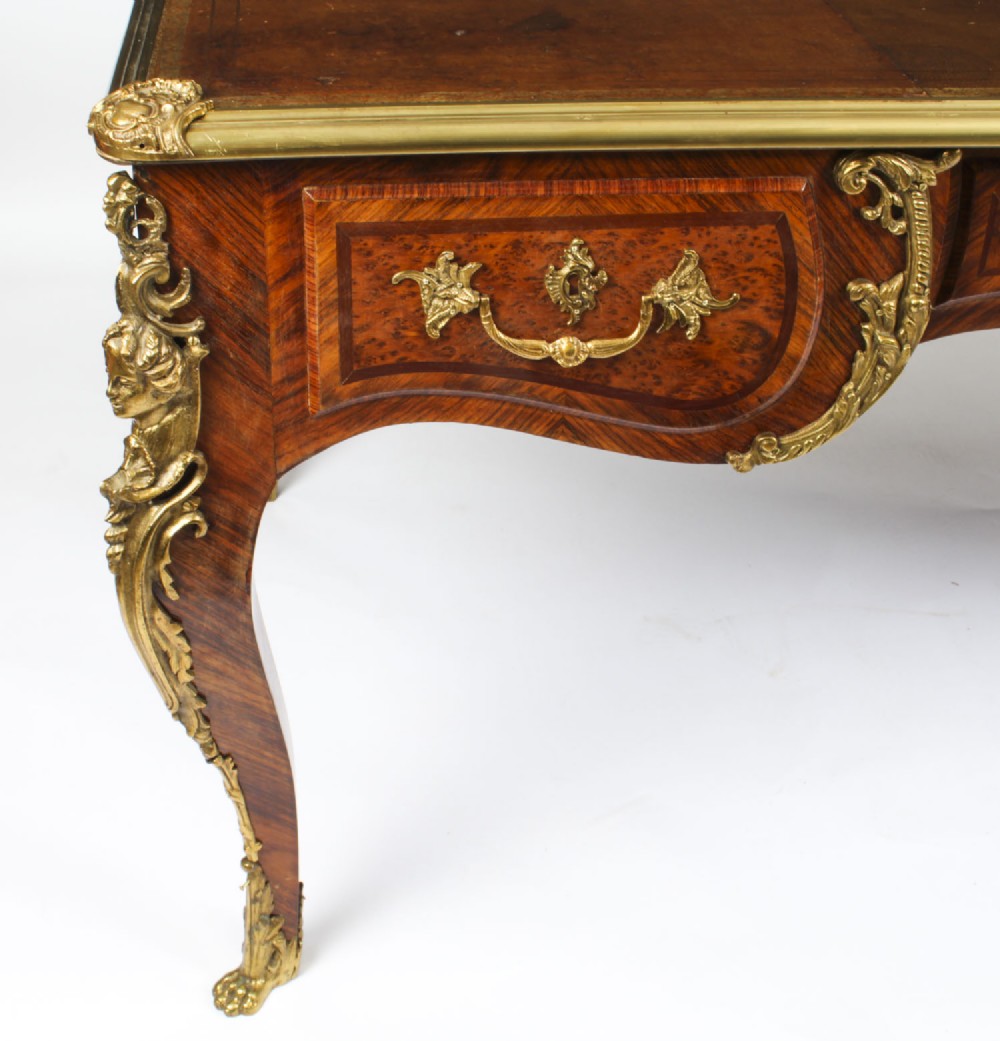
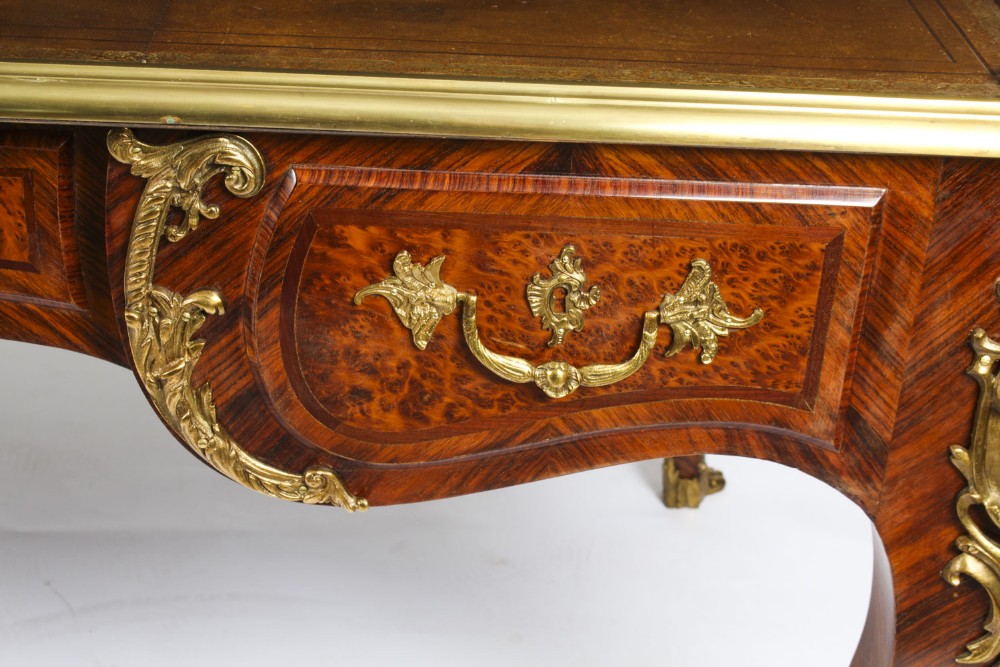
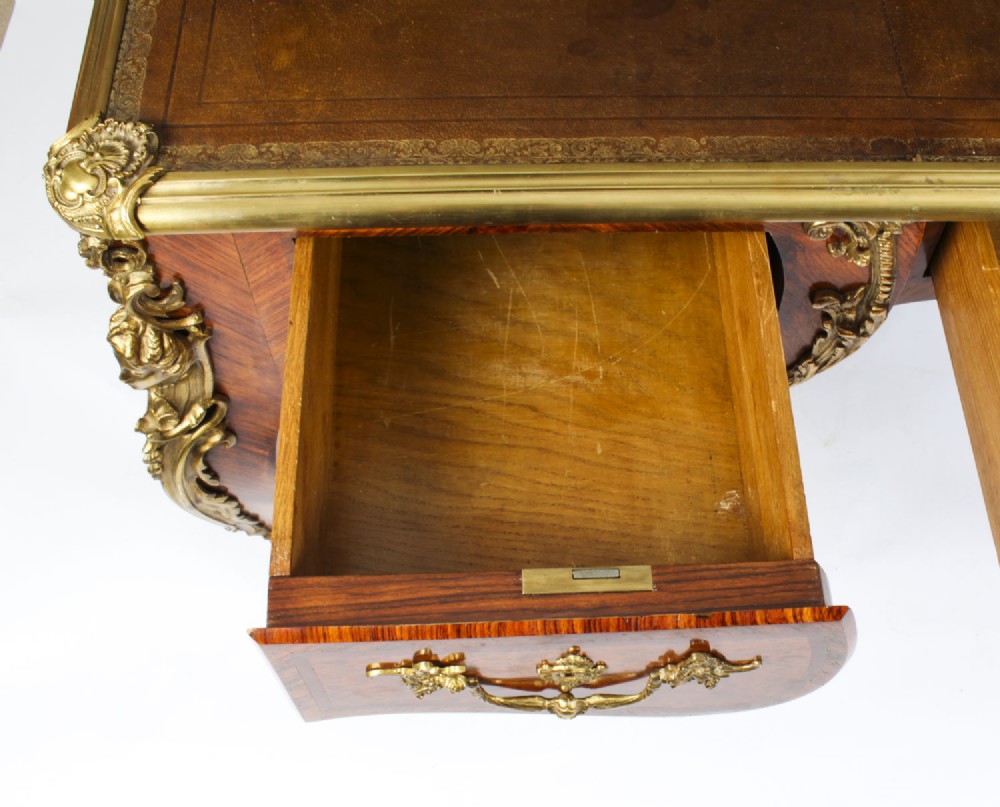
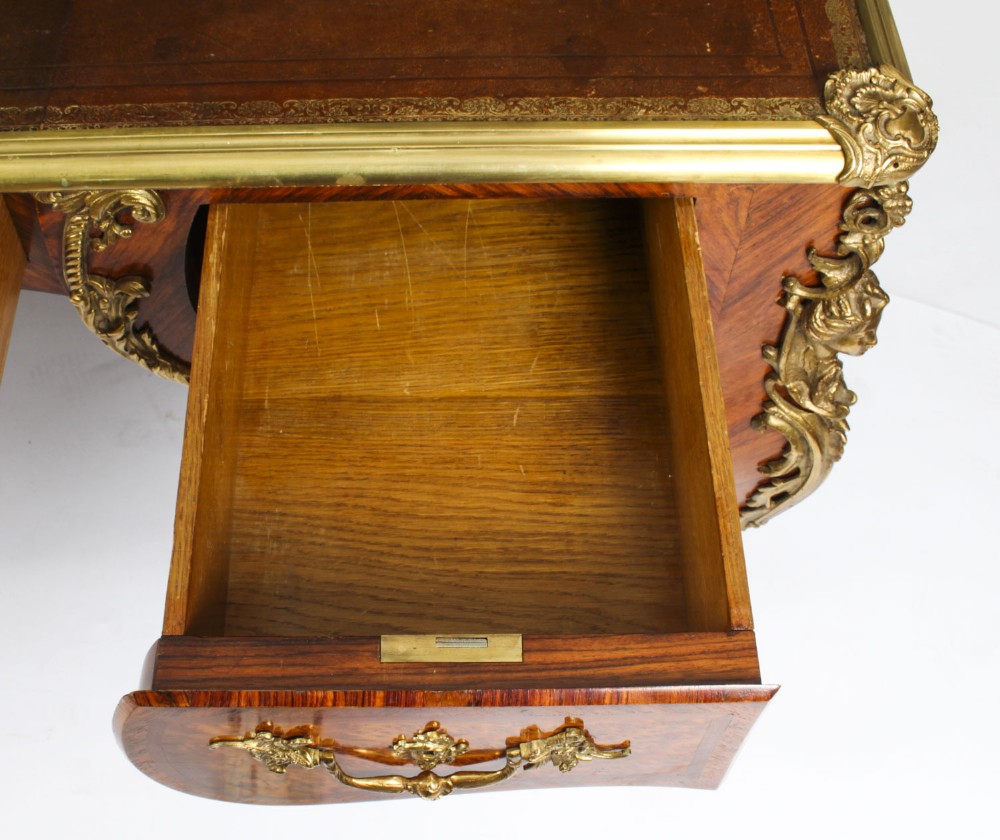
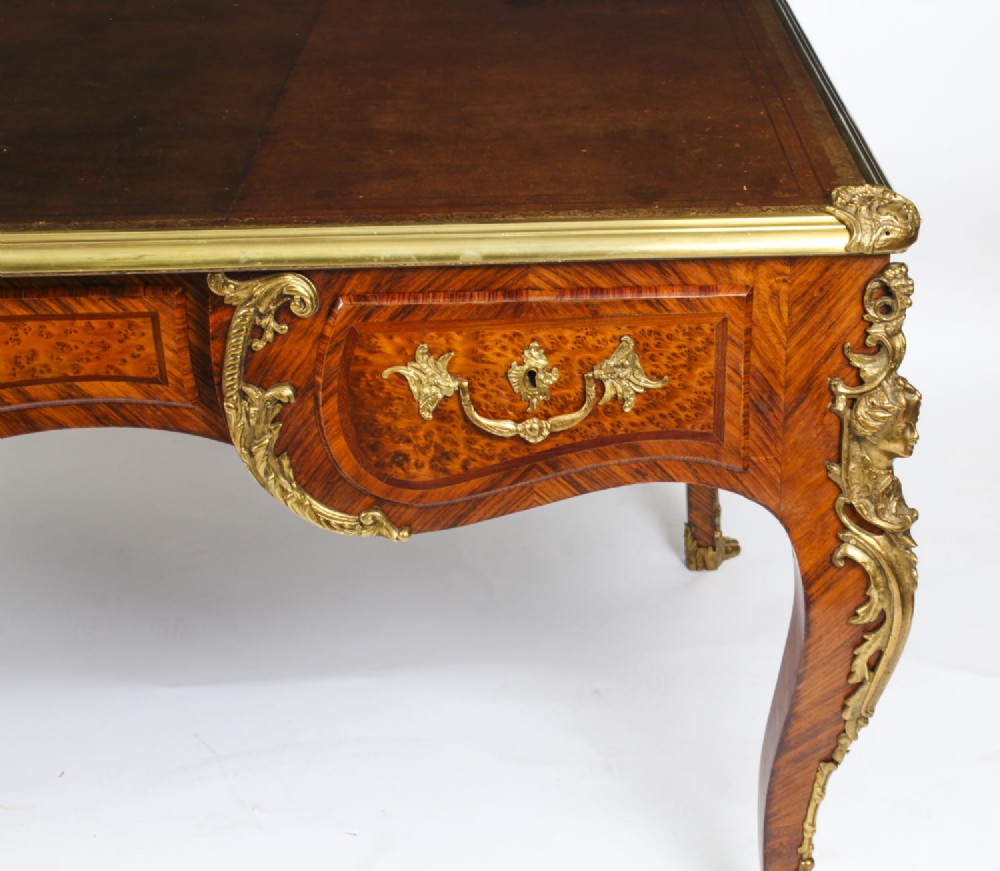
The shaped rectangular top has a decorative ormolu border and is inset with the original gilt-tooled tan leather writing surface.
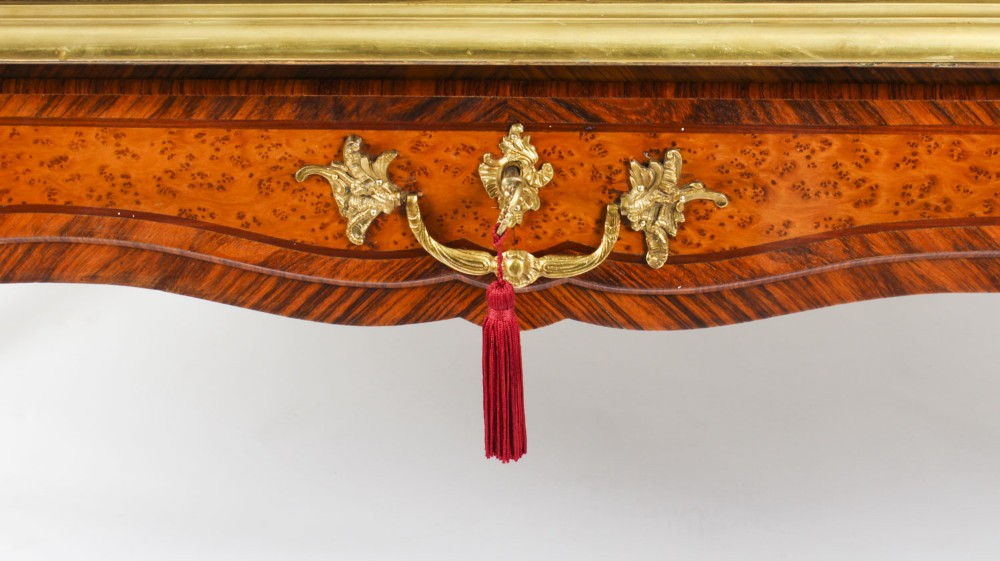
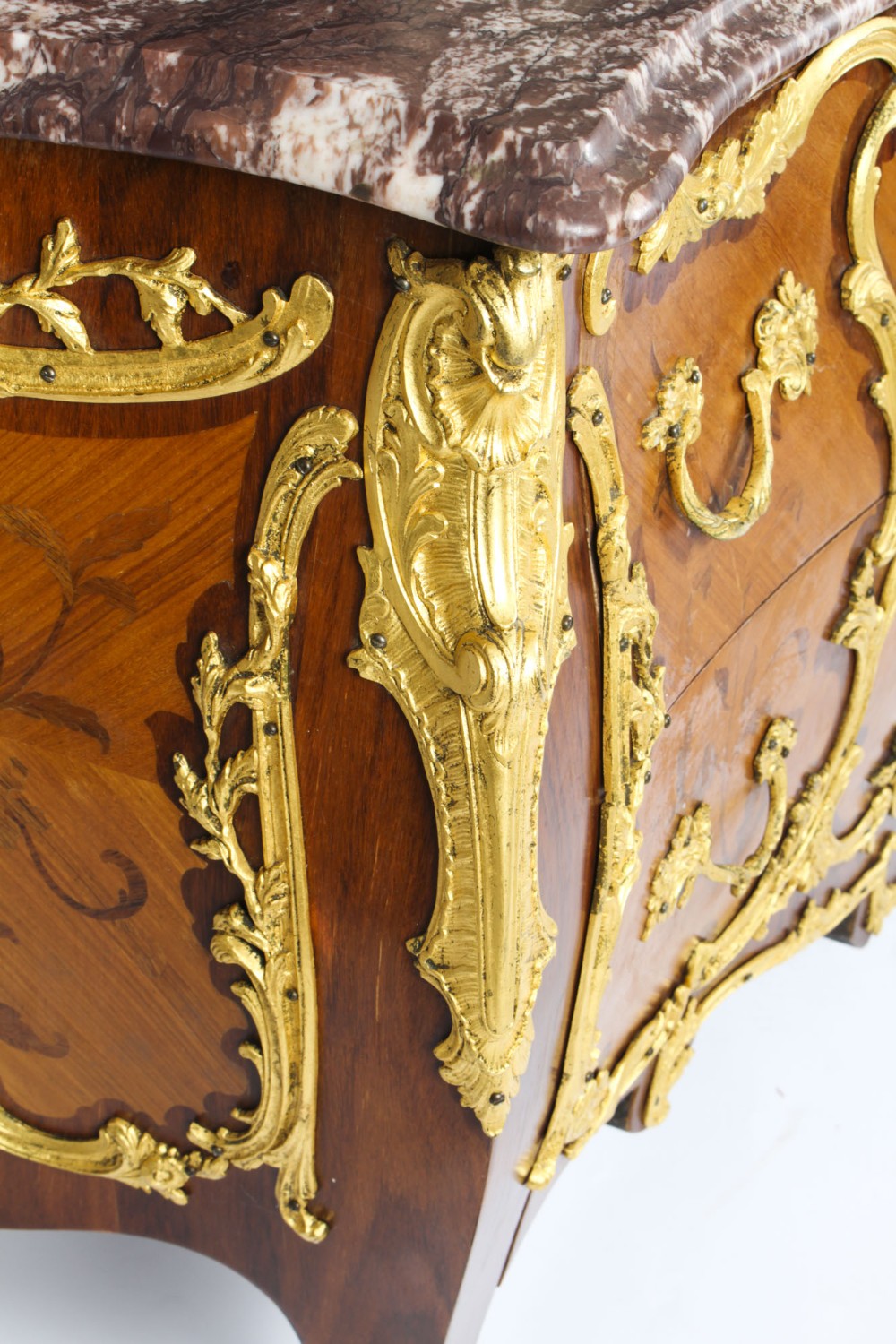
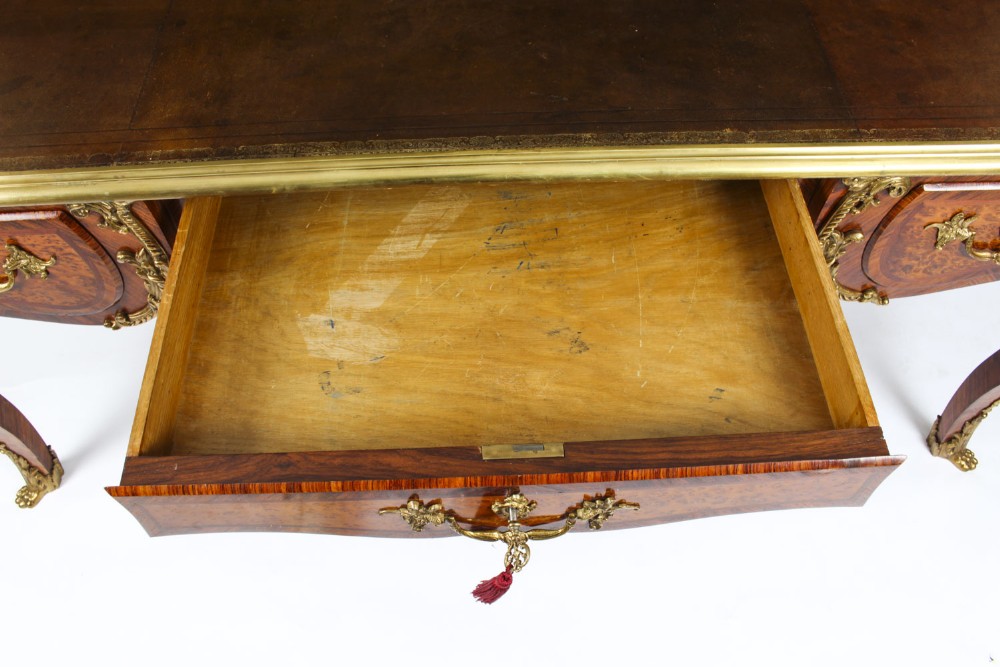
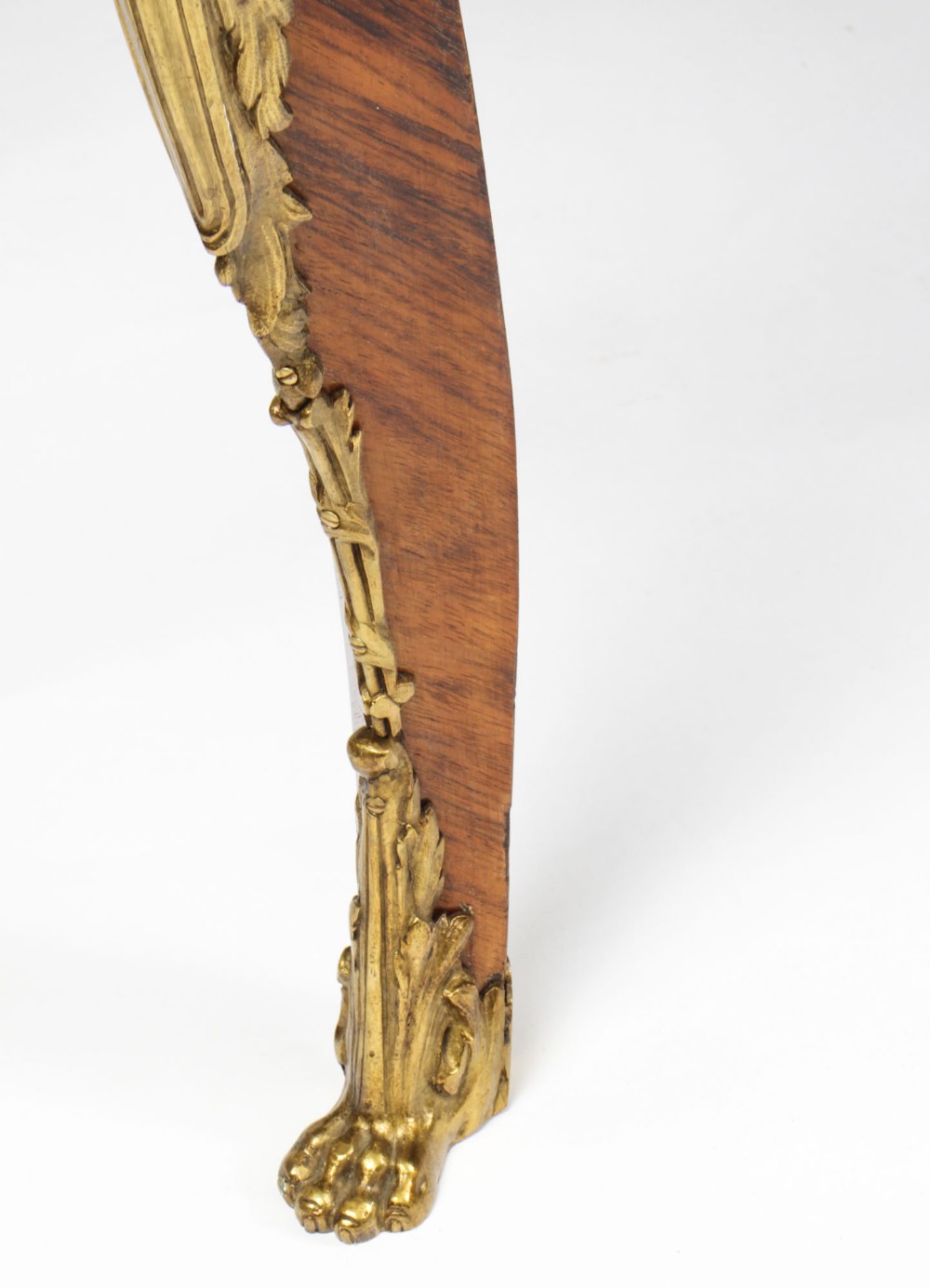
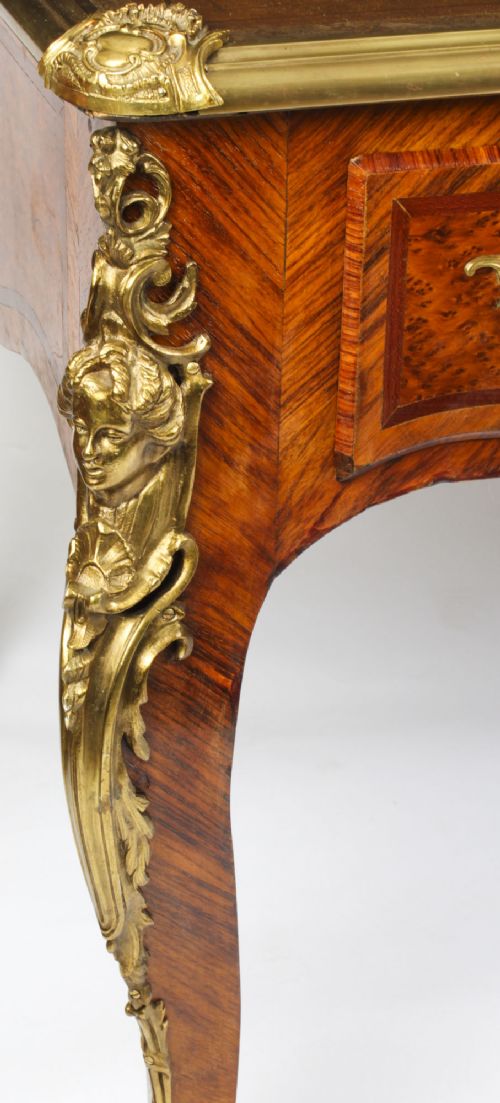
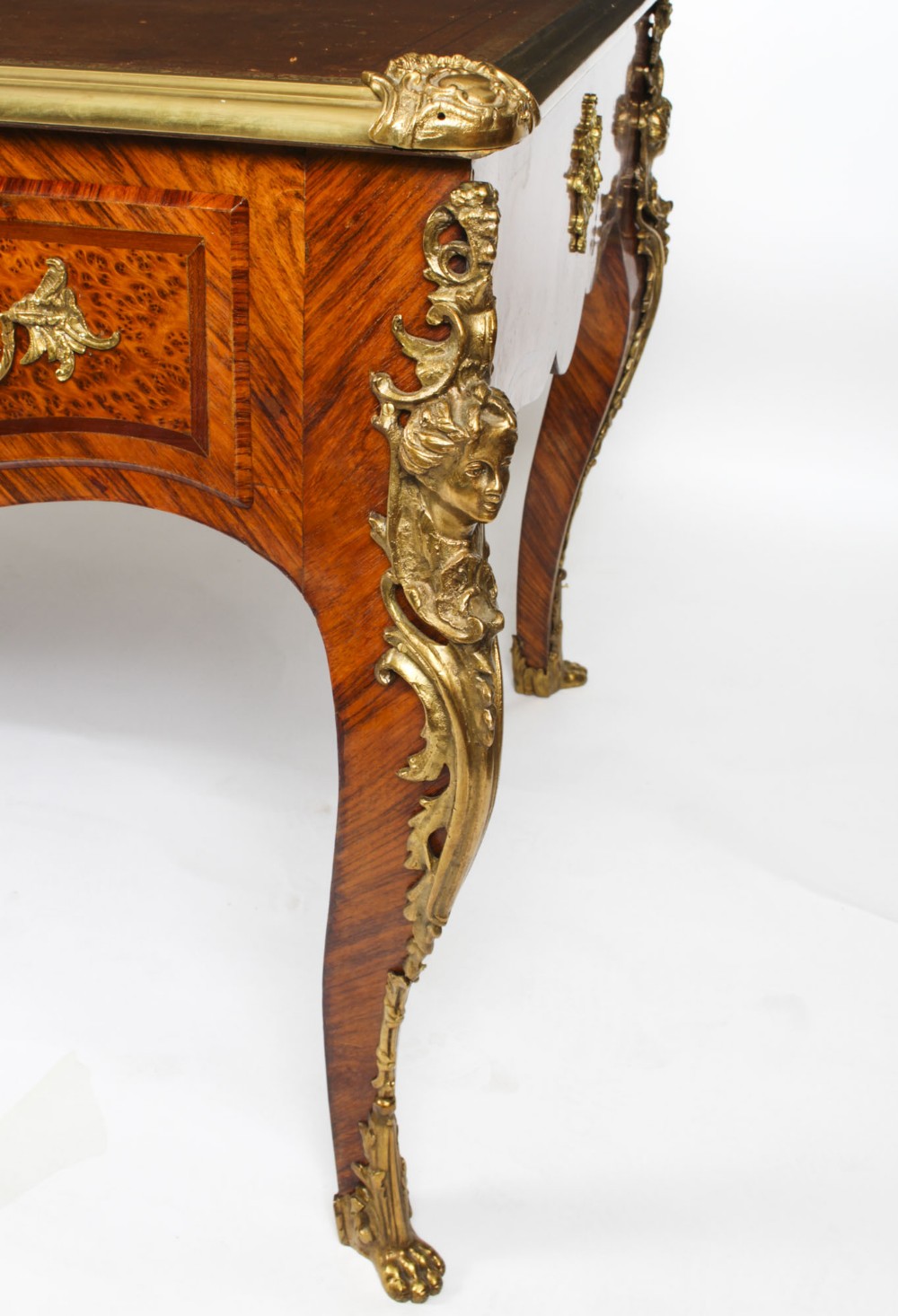
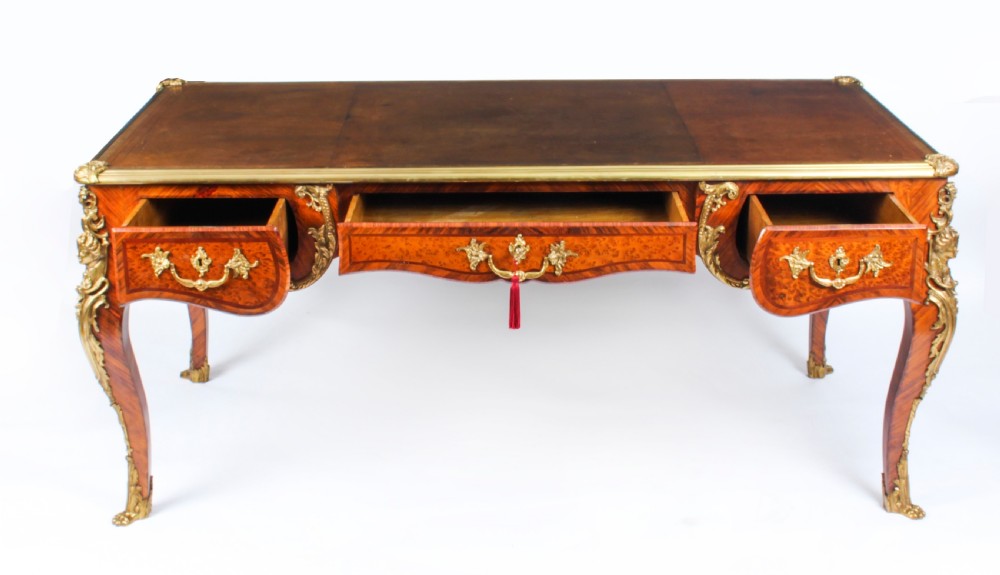
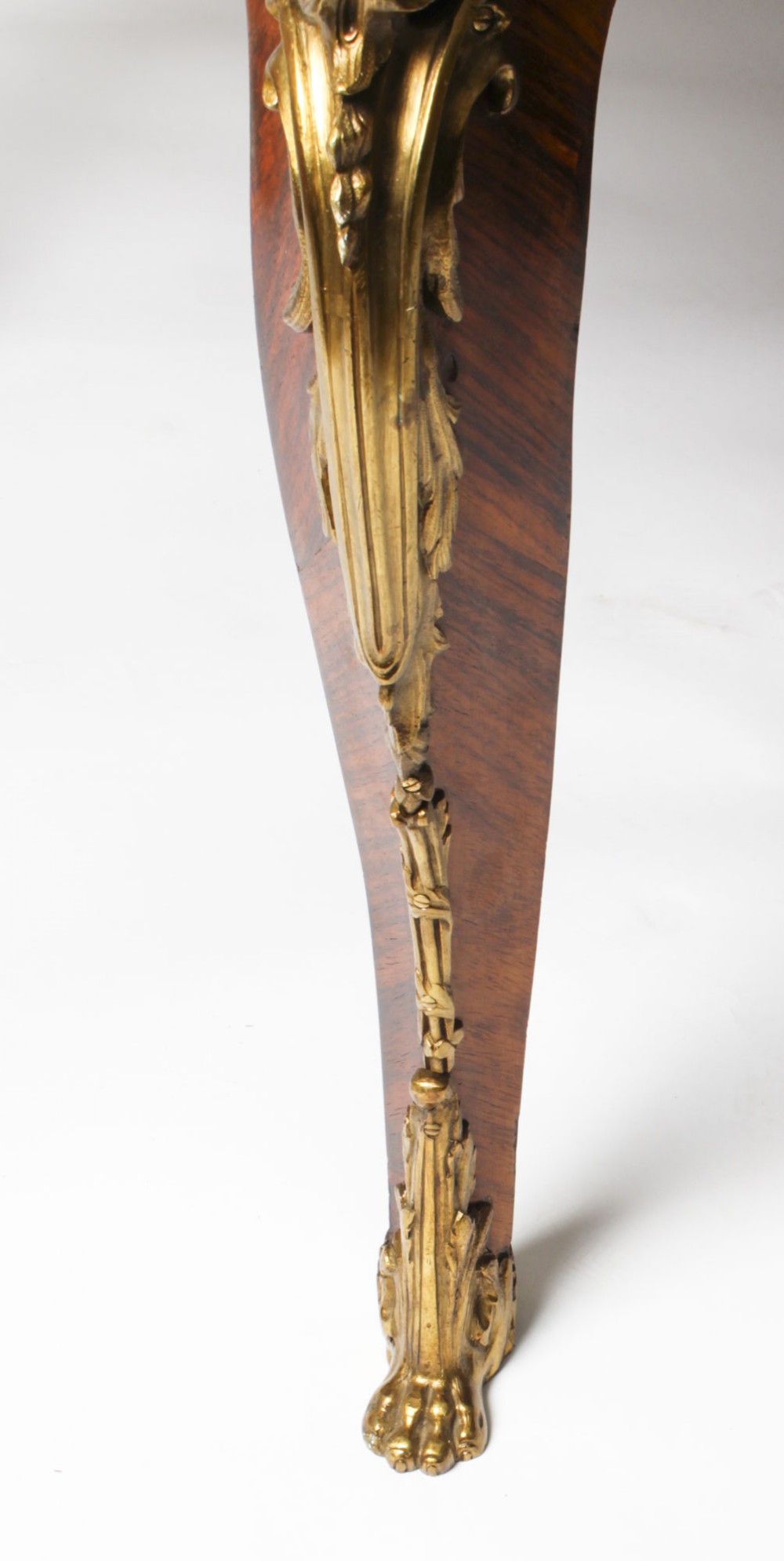
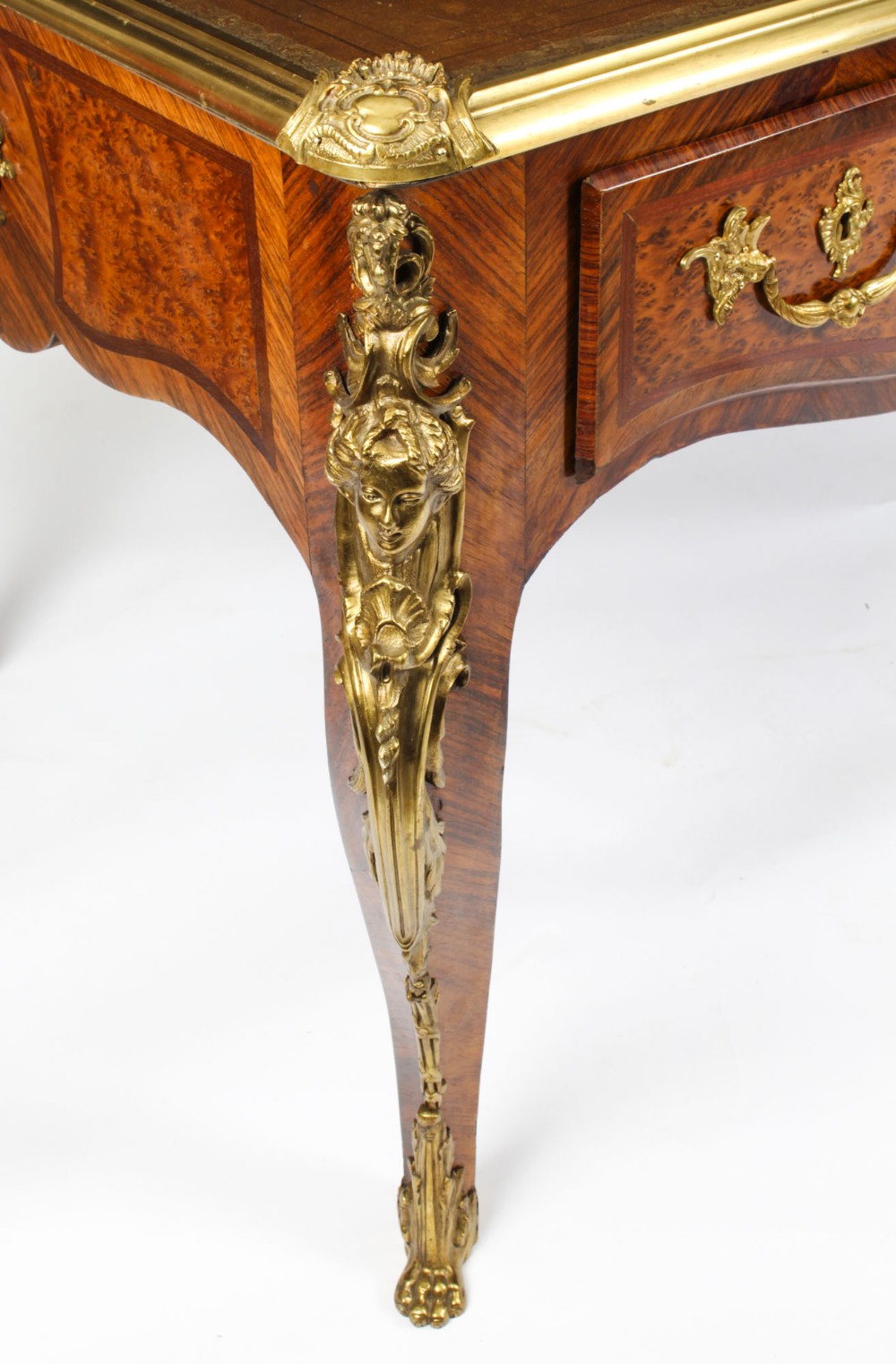
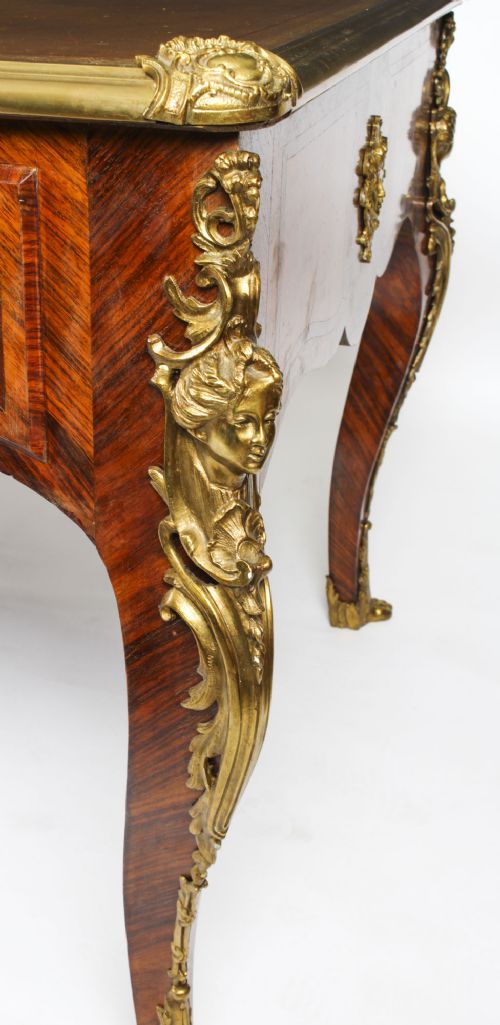
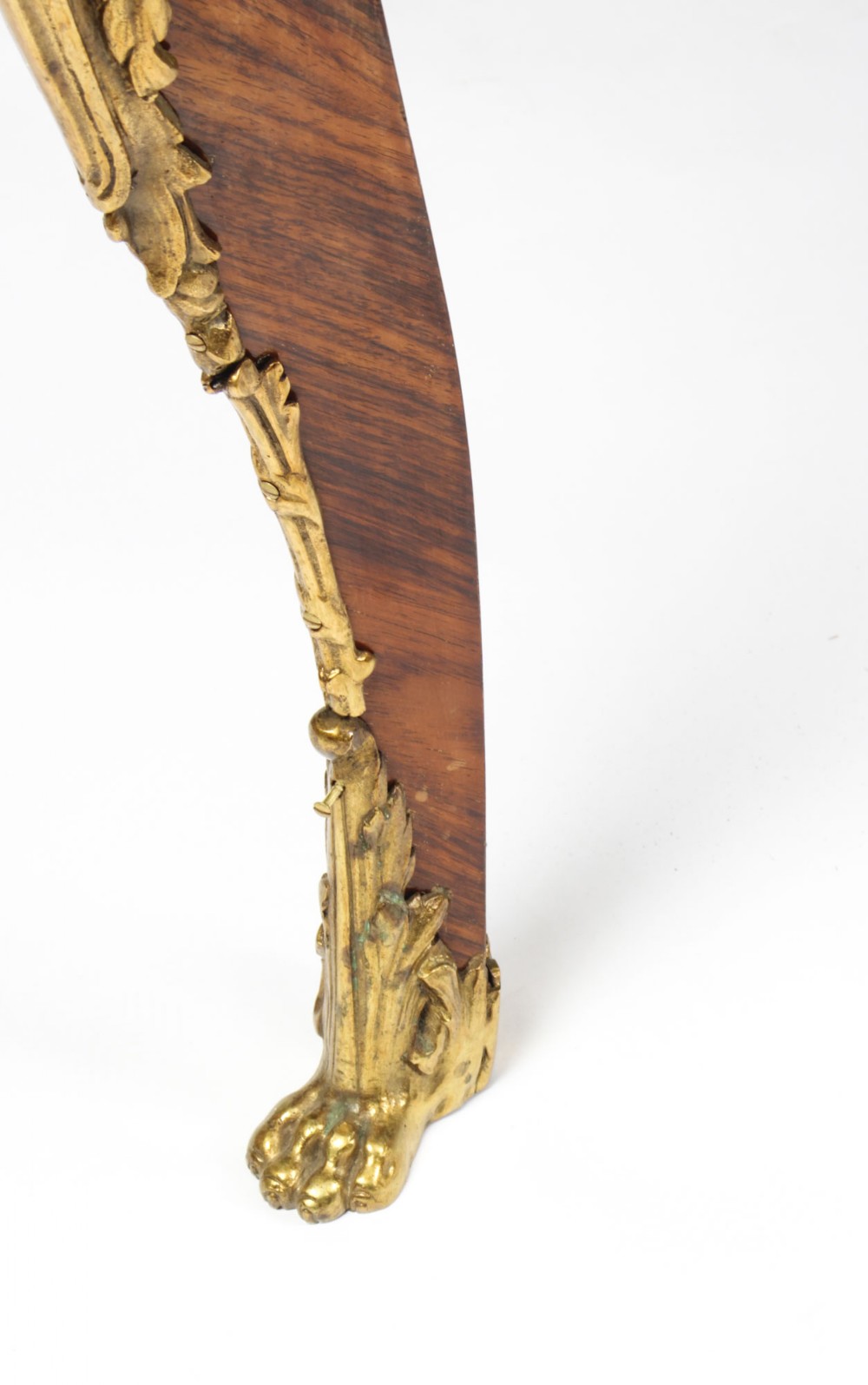
The shaped frieze is set with three drawers on one side and dummy drawers on the other. The desk is superbly raised on squared cabriole legs headed by stunning scrolled foliate and shell cast Venus mask espagnolettes and terminating in ormolu lion's paw sabots.
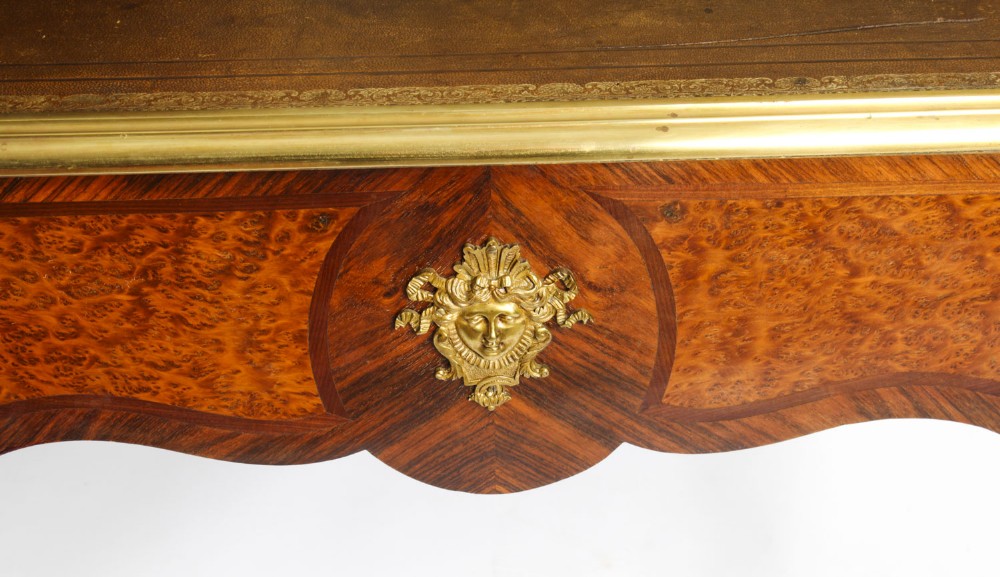
Each side of the desk is mounted with an acanthus, scroll and lambrequin adorned ormolu Diana Mask.
It is freestanding and finished on all sides so that it can stand freely in the centre of a room.
This example follows the celebrated Charles Cressent model, one of which forms part of the renowned collection at the John Paul Getty Museum in Los Angeles.
Complete with working locks and key.
This is a truly lovely piece which will display beautifully in any interior.
Condition:
In excellent condition having been beautifully cleaned and waxed in our workshops, please see photos for confirmation.
Dimensions in cm:
Height 76 x Width 170 x Depth 86
Dimensions in inches:
Height 2 foot, 6 inches x Width 5 foot, 7 inches x Depth 2 foot, 10 inches
Ormolu - Gilt Bronze (from French 'or moulu', signifying ground or pounded gold) is an 18th-century English term for applying finely ground, high-carat gold in a mercury amalgam to an object of bronze.The mercury is driven off in a kiln leaving behind a gold-coloured veneer known as 'gilt bronze'.
The manufacture of true ormolu employs a process known as mercury-gilding or fire-gilding, in which a solution of nitrate of mercury is applied to a piece of copper, brass, or bronze, followed by the application of an amalgam of gold and mercury. The item was then exposed to extreme heat until the mercury burned off and the gold remained, adhered to the metal object.
After around 1830 because legislation had outlawed the use of mercury other techniques were used instead. Electroplating is the most common modern technique. Ormolu techniques are essentially the same as those used on silver, to produce silver-gilt.
Charles Cressent (1685–1768)
was a French furniture-maker, sculptor and fondeur-ciseleur of the régence style. As the second son of François Cressent, sculpteur du roi, and grandson of Charles Cressent, a furniture-maker of Amiens, who also became a sculptor, he inherited the tastes and aptitudes which were likely to make a finished designer and craftsman. Even more important perhaps was the fact that he was a pupil of André Charles Boulle. Trained in such surroundings, it is not surprising that he should have reached a degree of achievement which has to a great extent justified the claim that he was the best decorative artist of the 18th century. Cressent's distinction is closely connected with the regency, but his earlier work had affinities with the school of Boulle, while his later pieces were full of originality.
Our reference: A1724