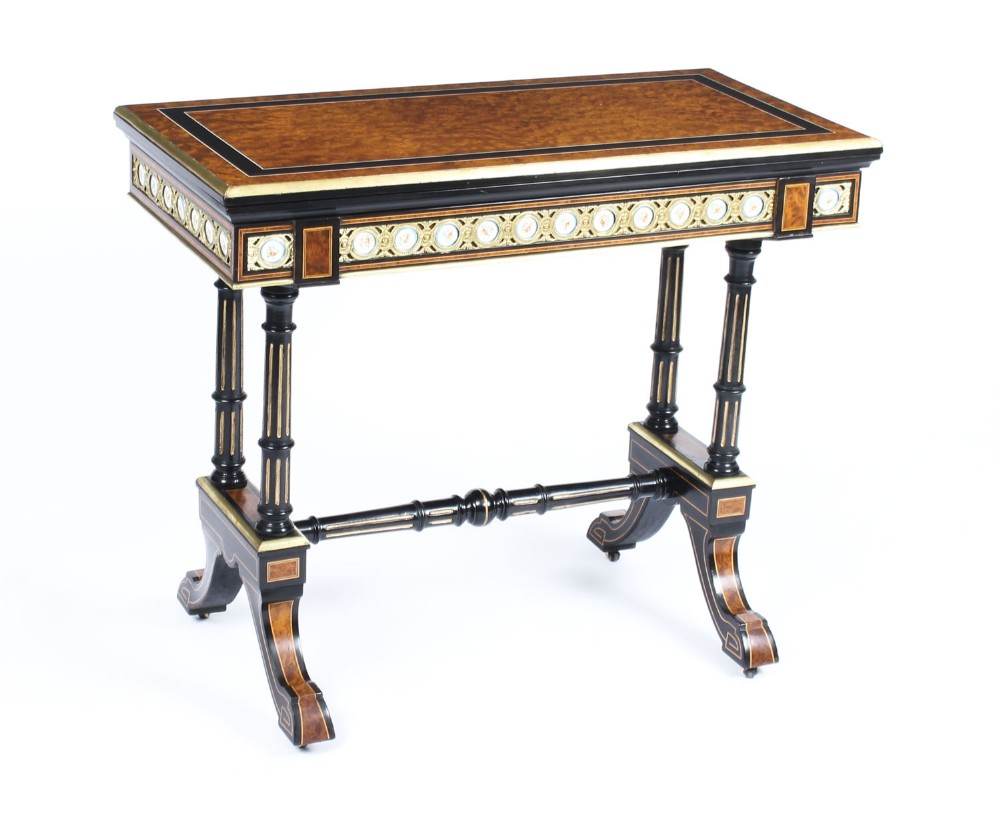
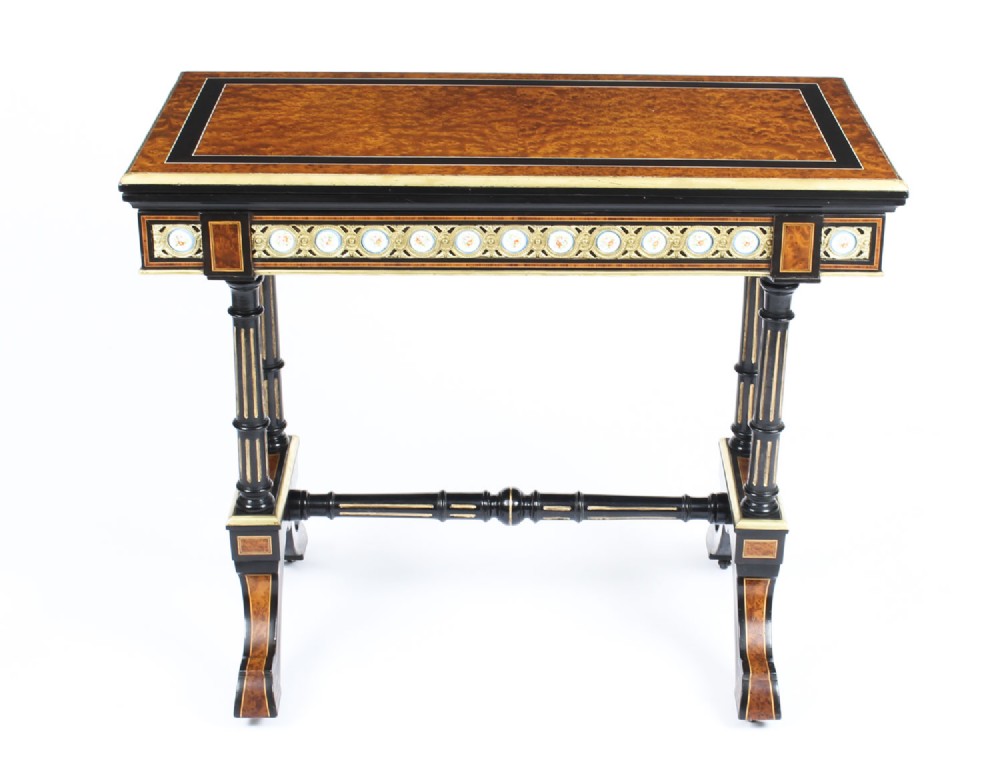
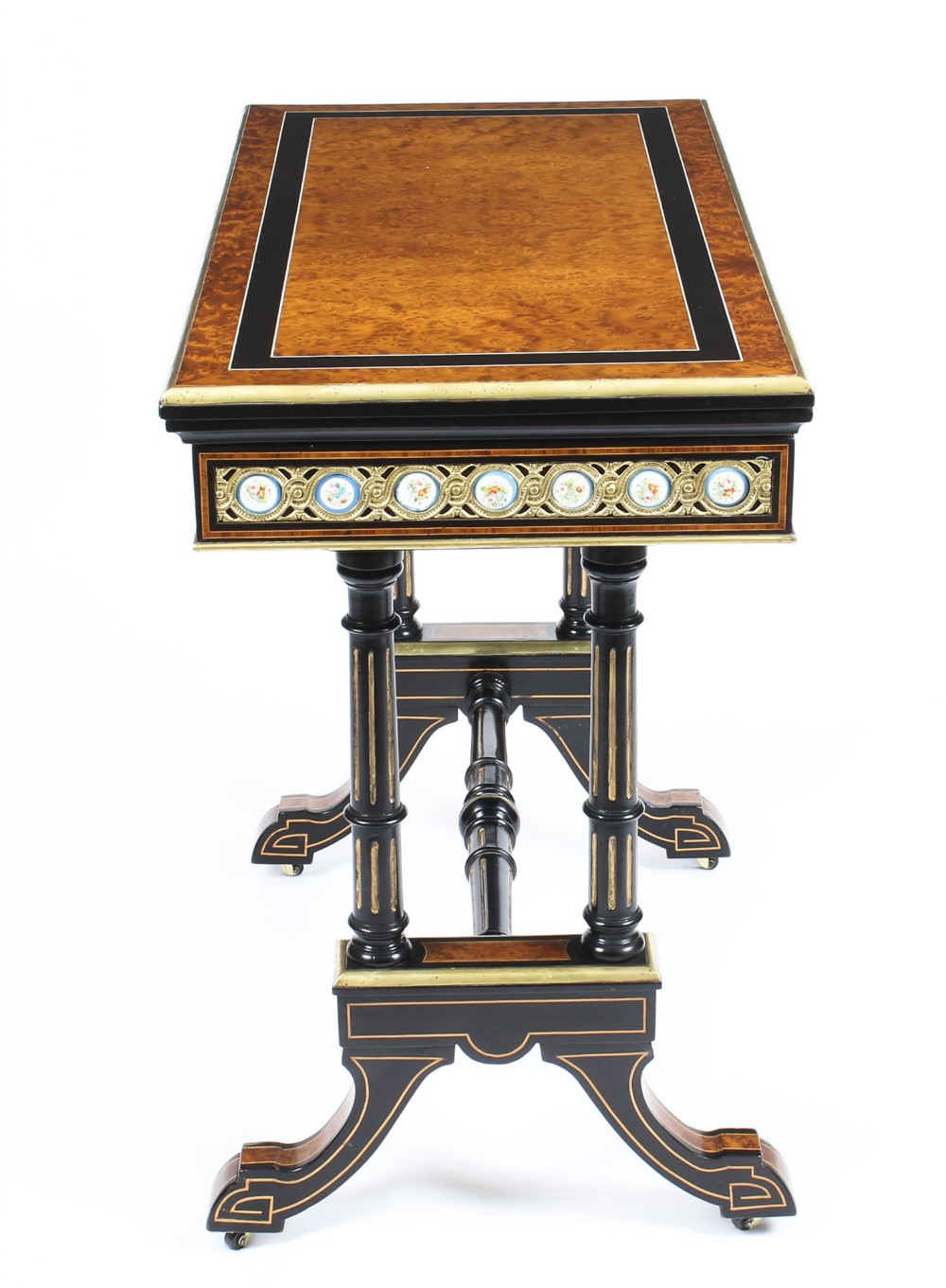
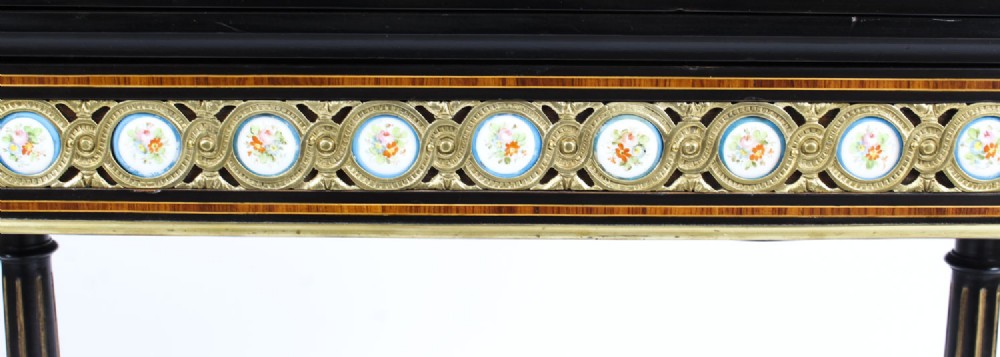
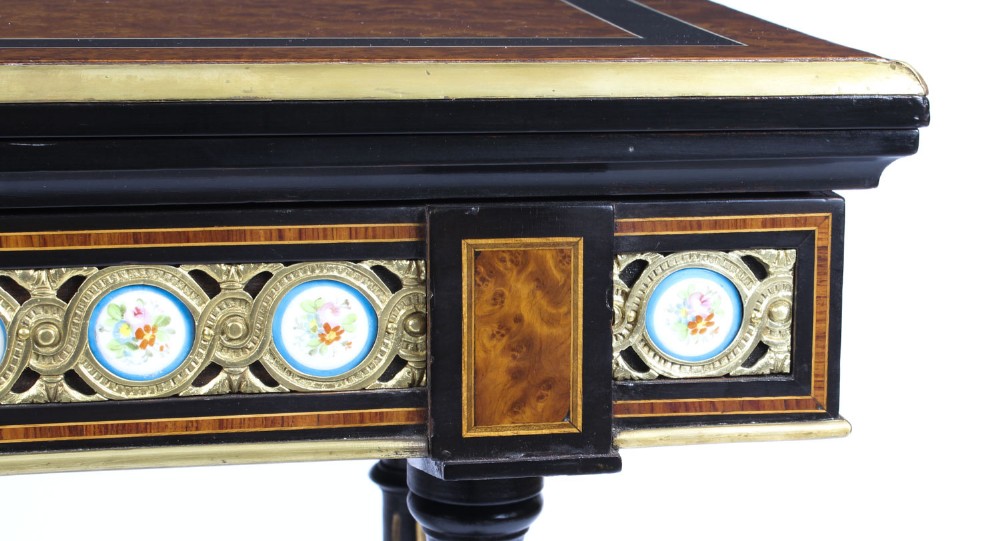
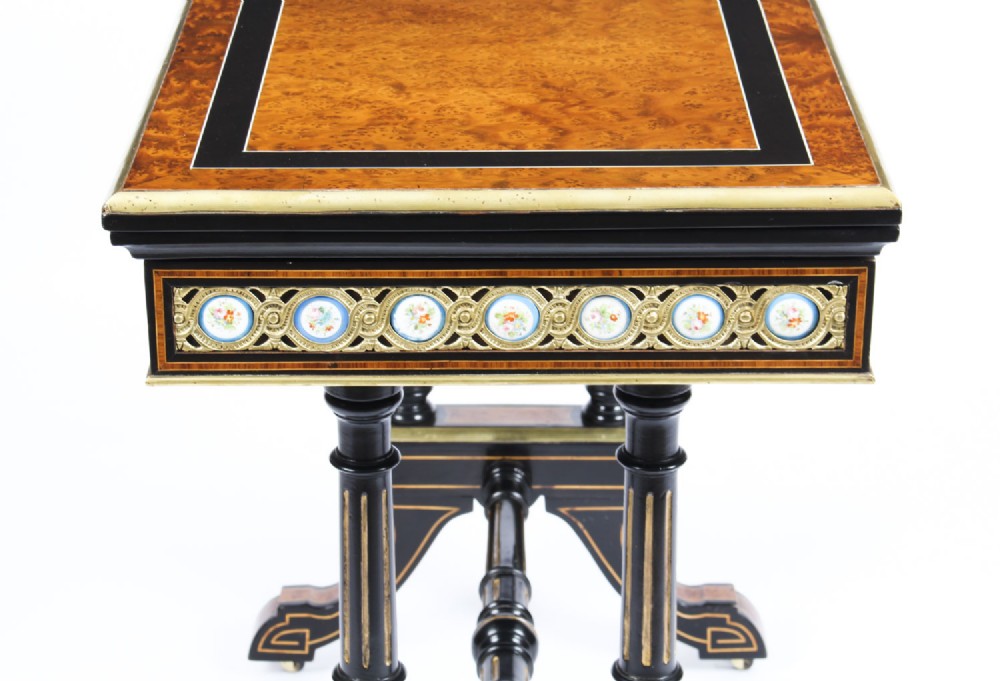
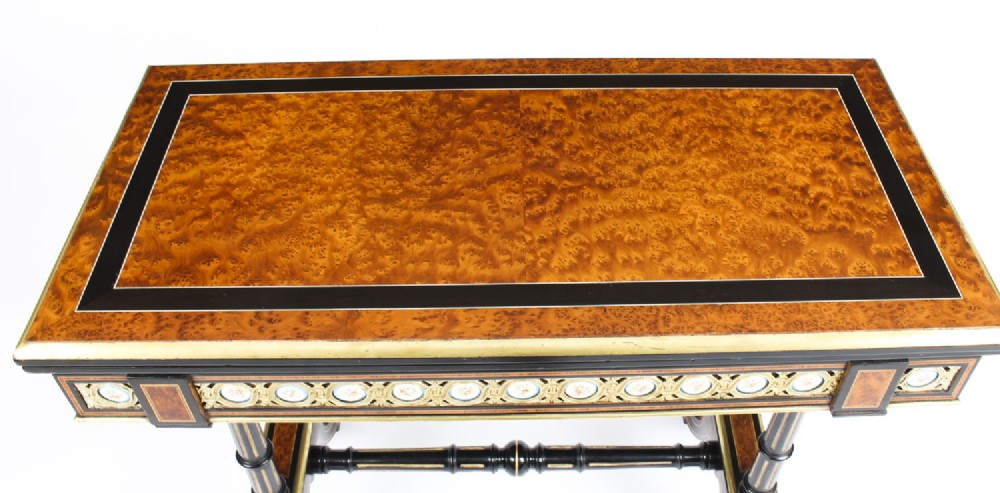
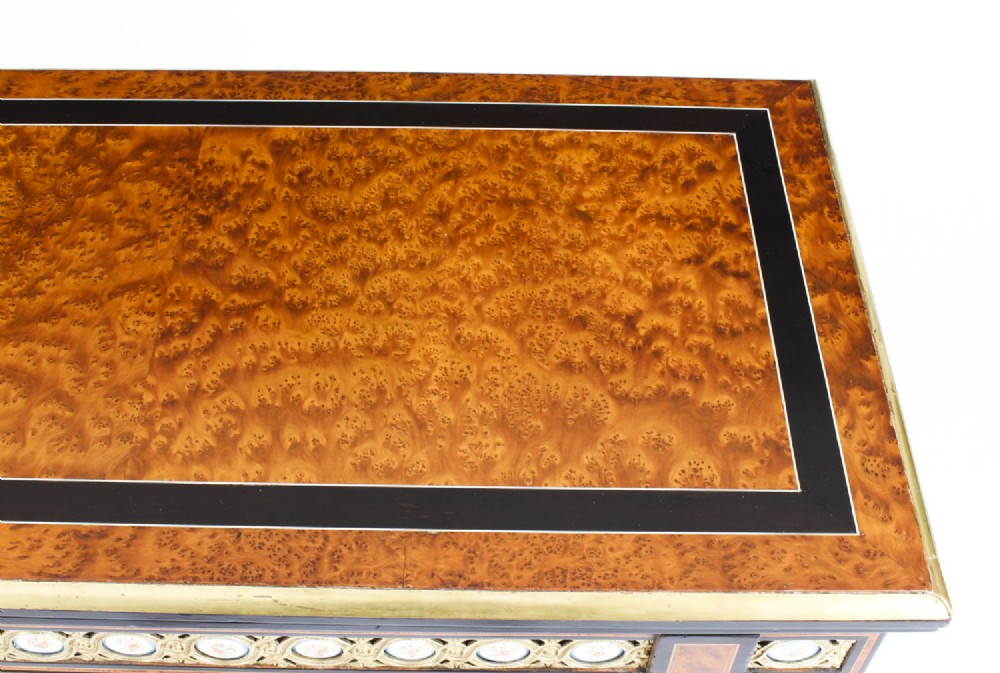
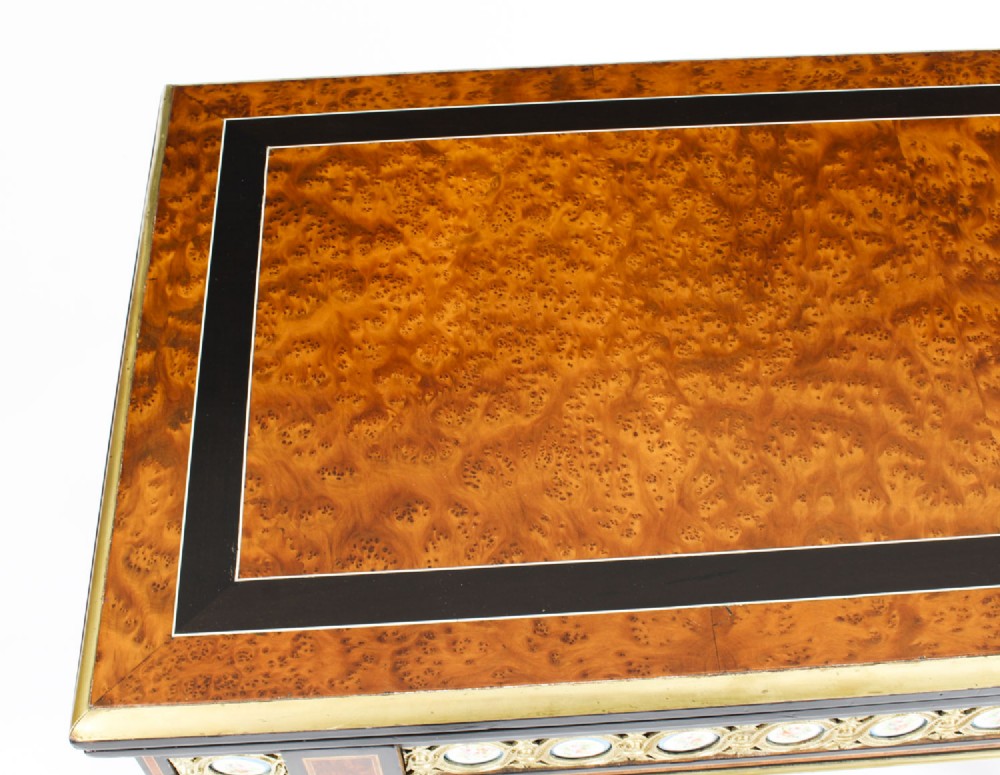
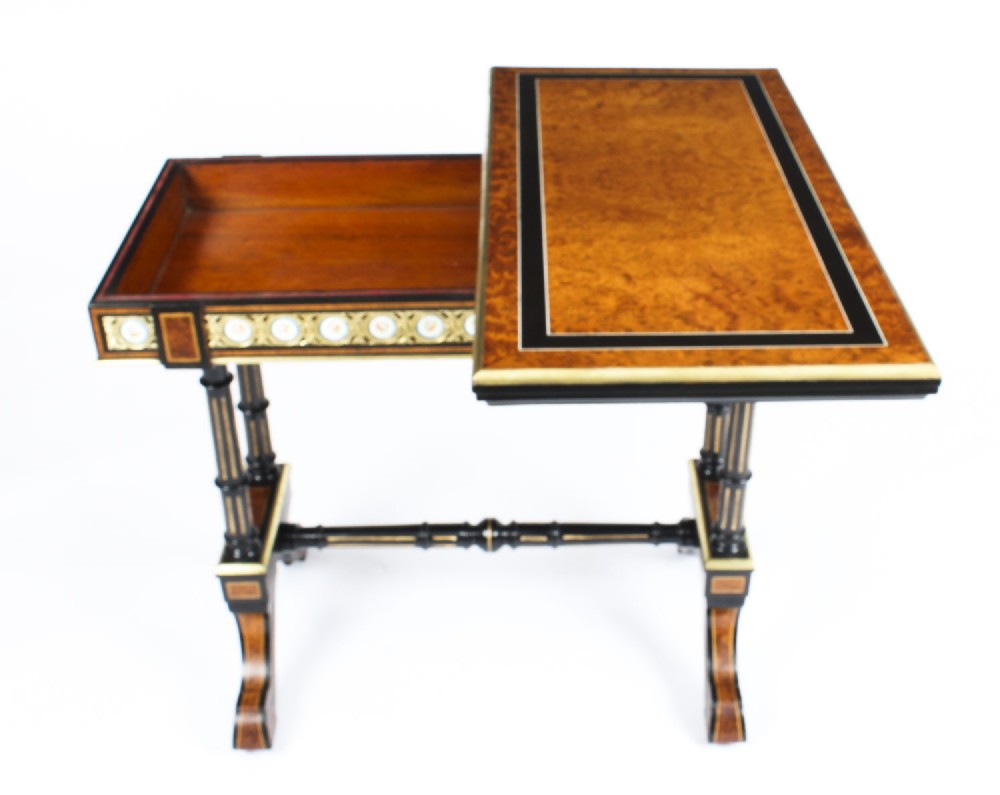
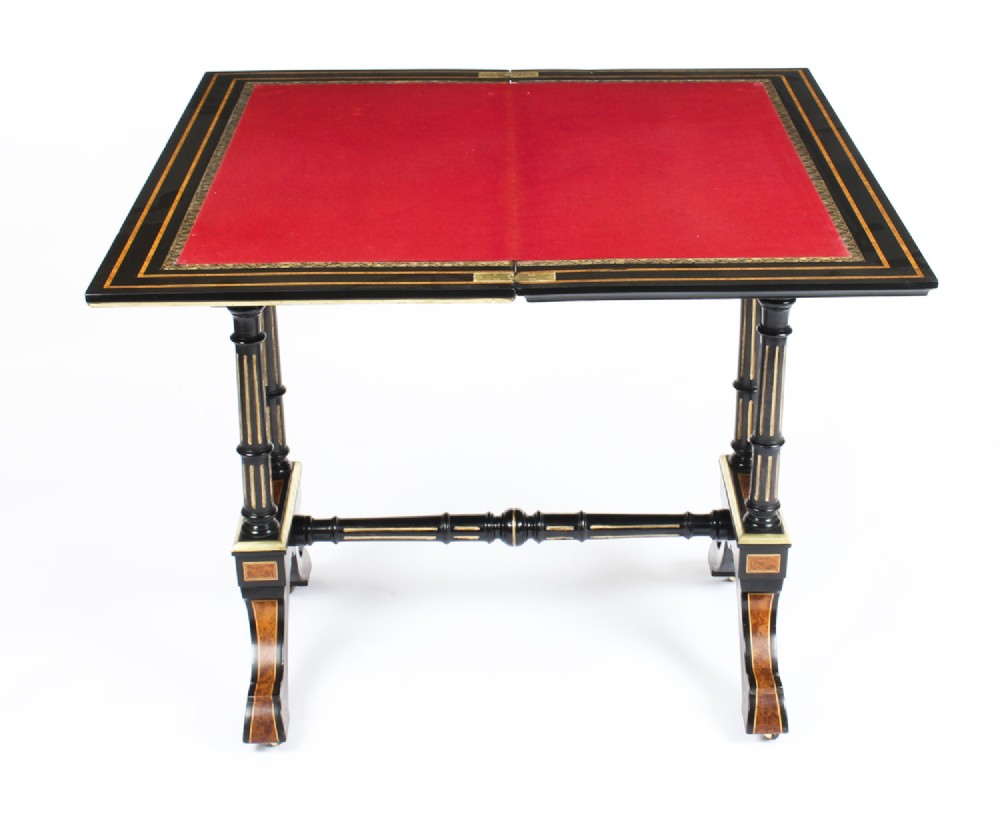
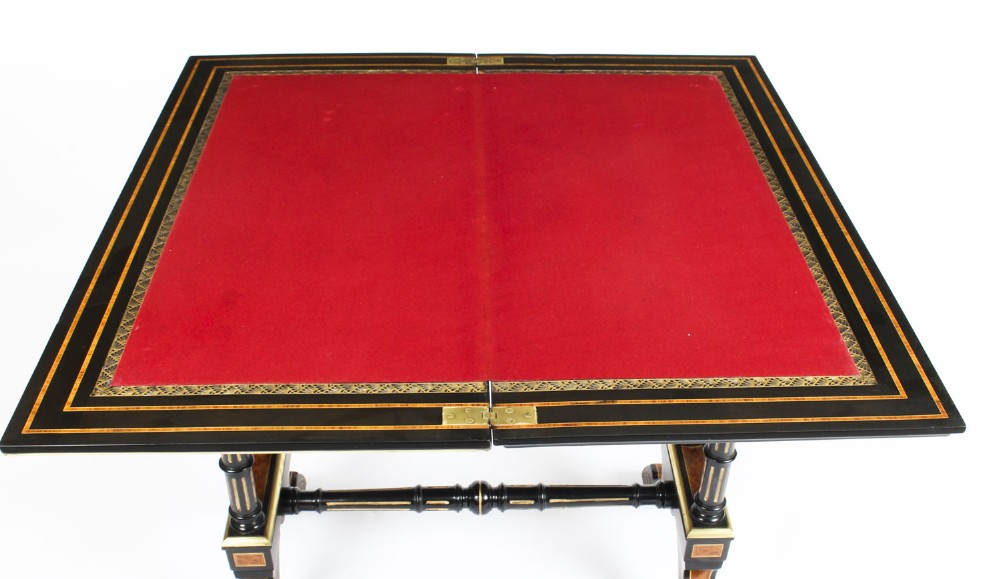
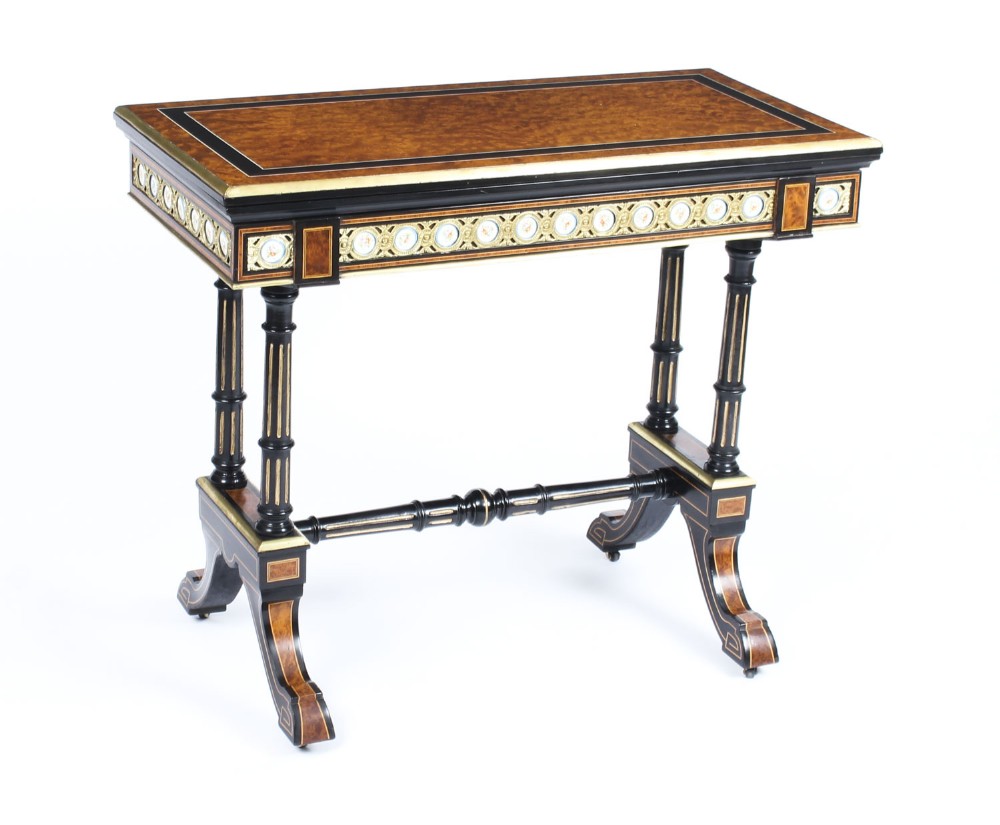
This is a stunning antique French amboyna and ebonised card table fabulous Sevres style porcelain plaques set in decorative ormolu mounts, circa 1860 in date.
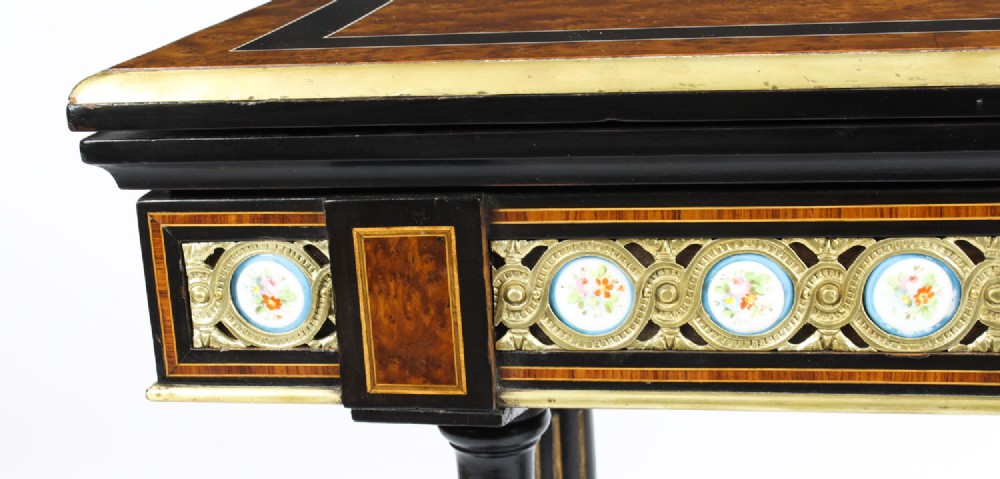
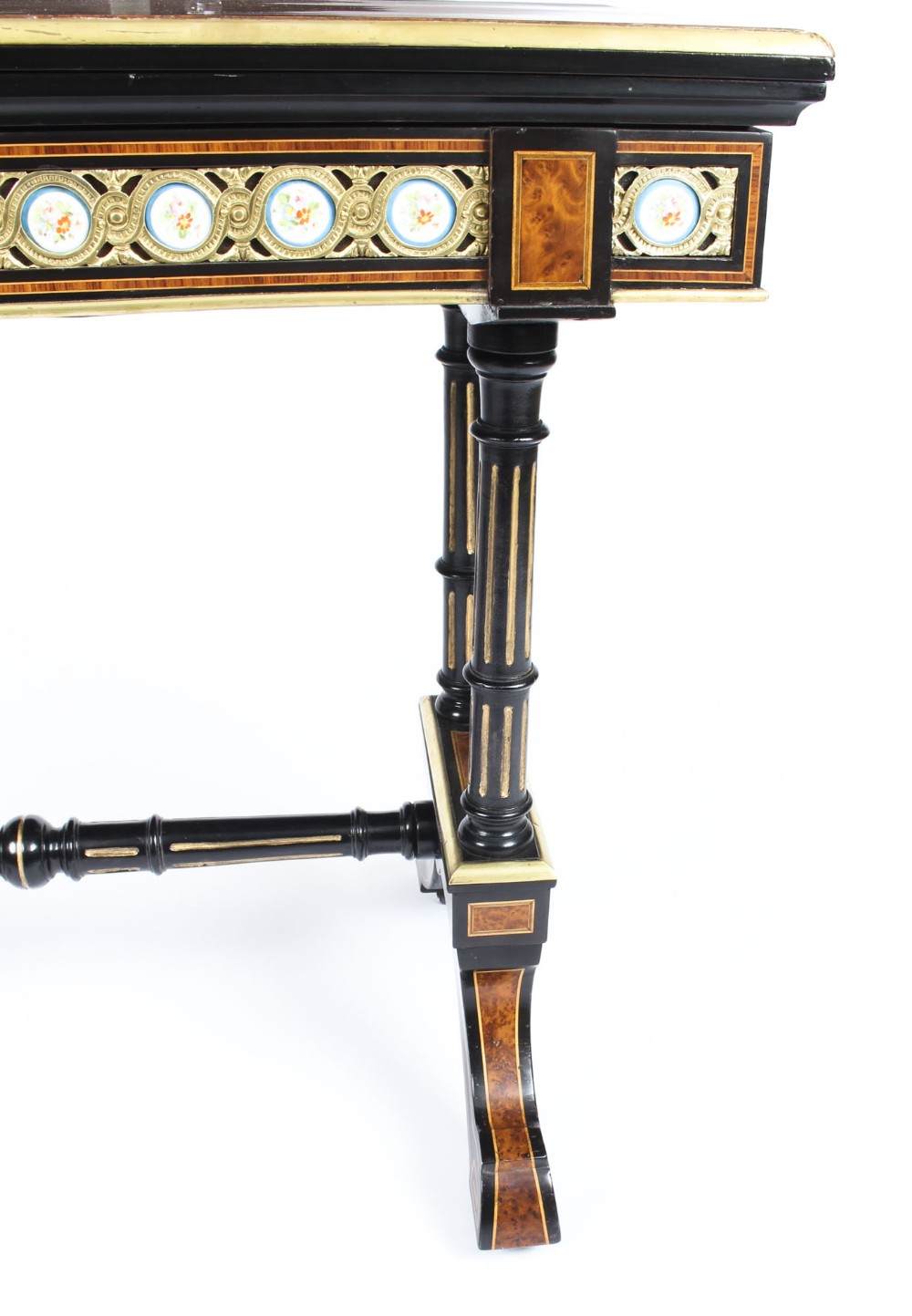
The table is made from striking and rare amboyna, and then beautifully decorated with forty Sevres porcelain plaques which feature hand painted floral motifs and are set in elegant ormolu mounts.
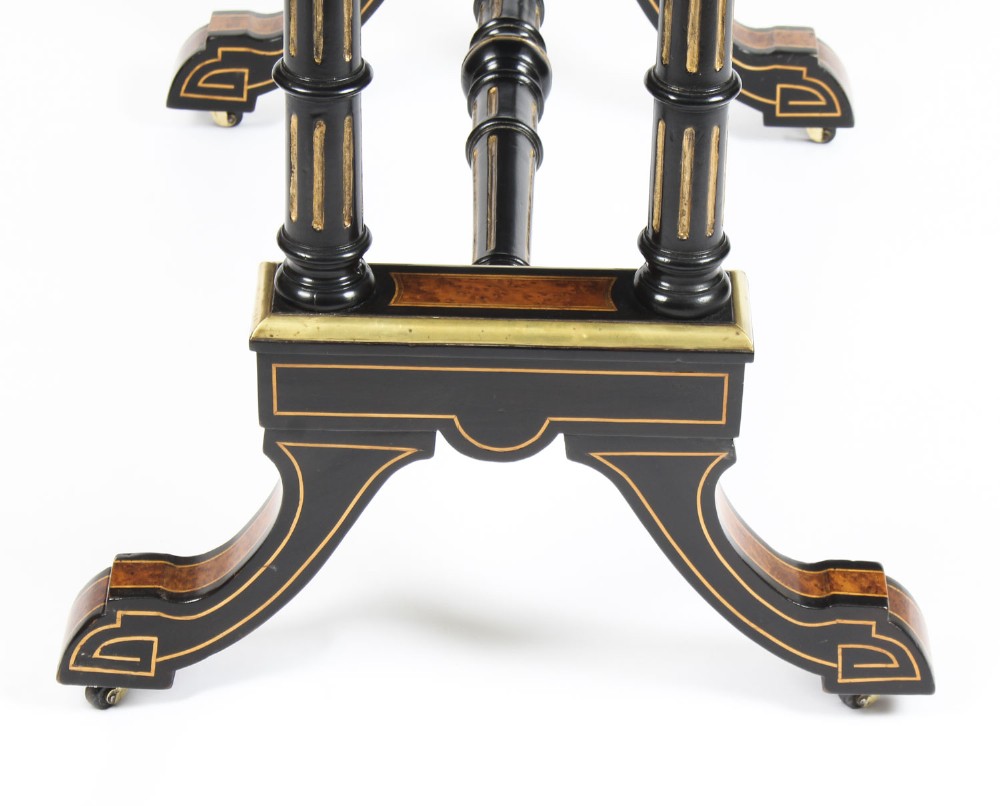
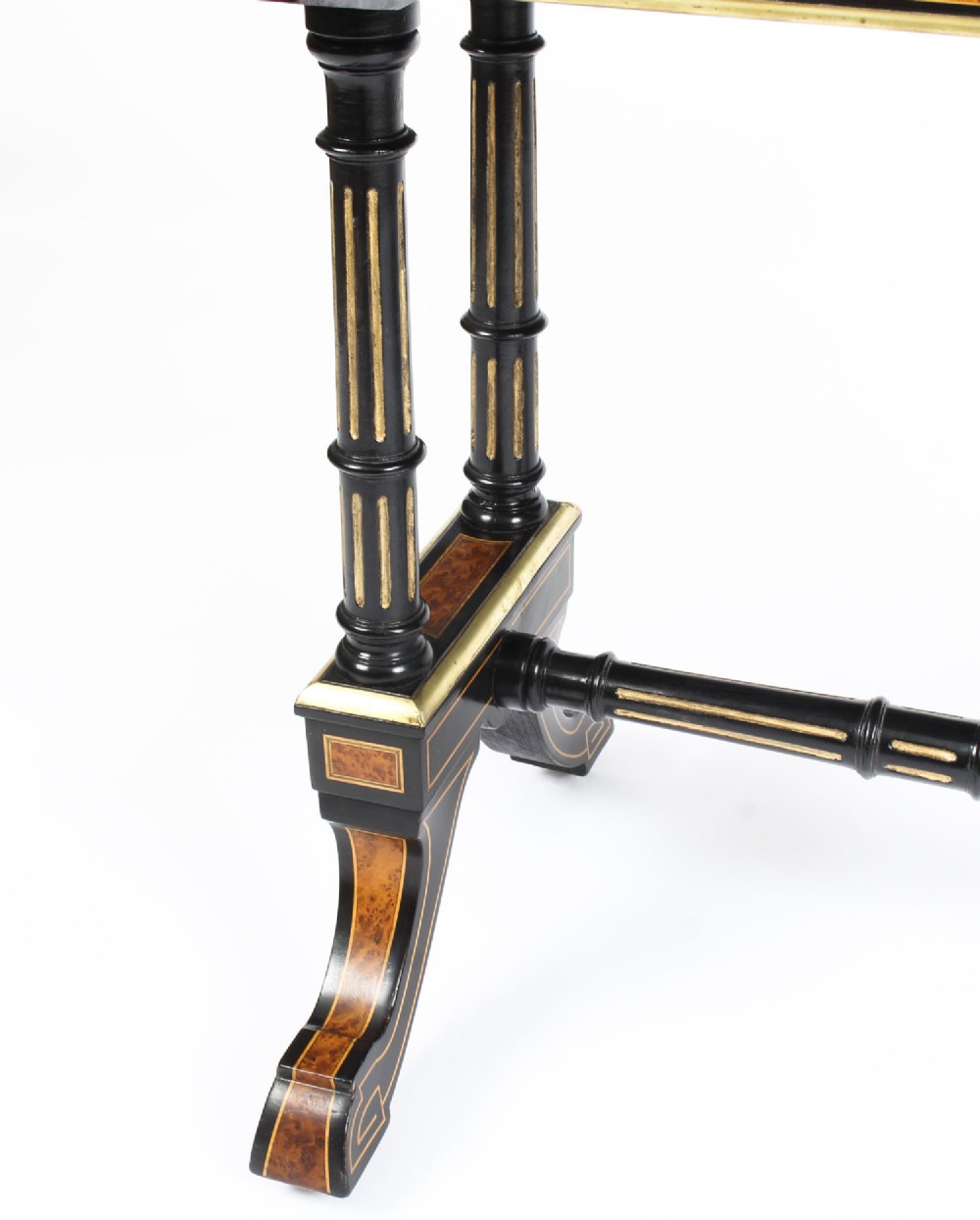
It stands on elegant turned and fluted twin column supports joined by stretcher and raised on outswept legs that terminate in the original brass and porcelain castors.
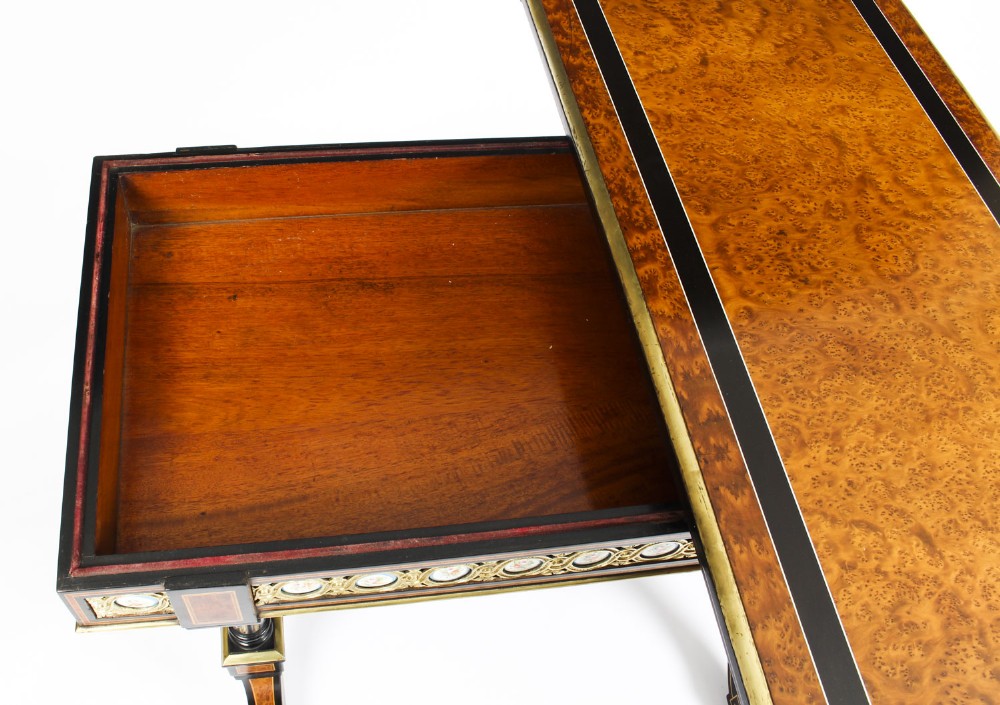
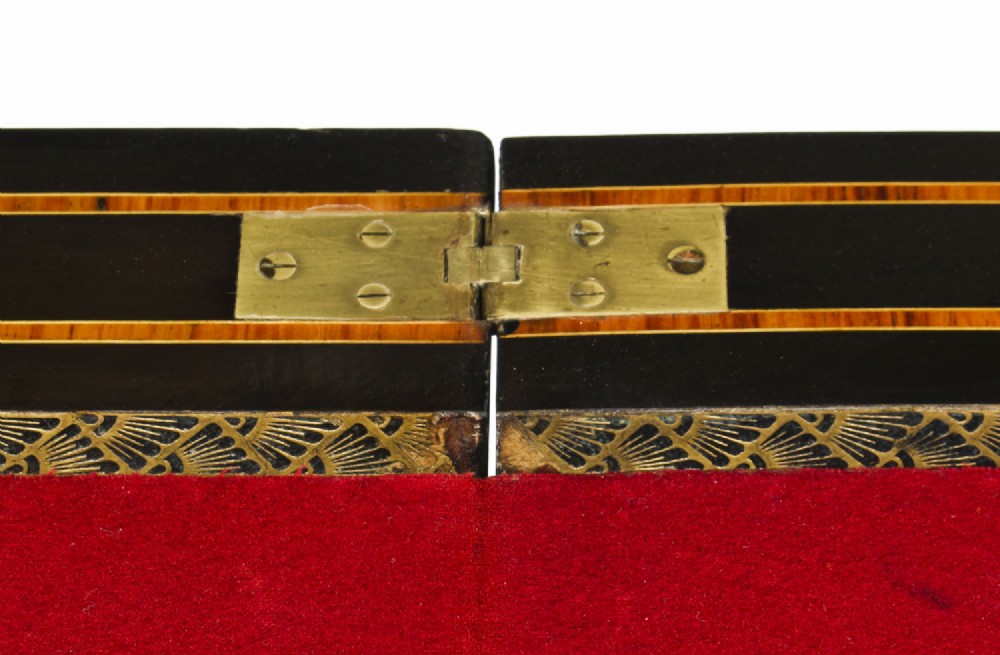
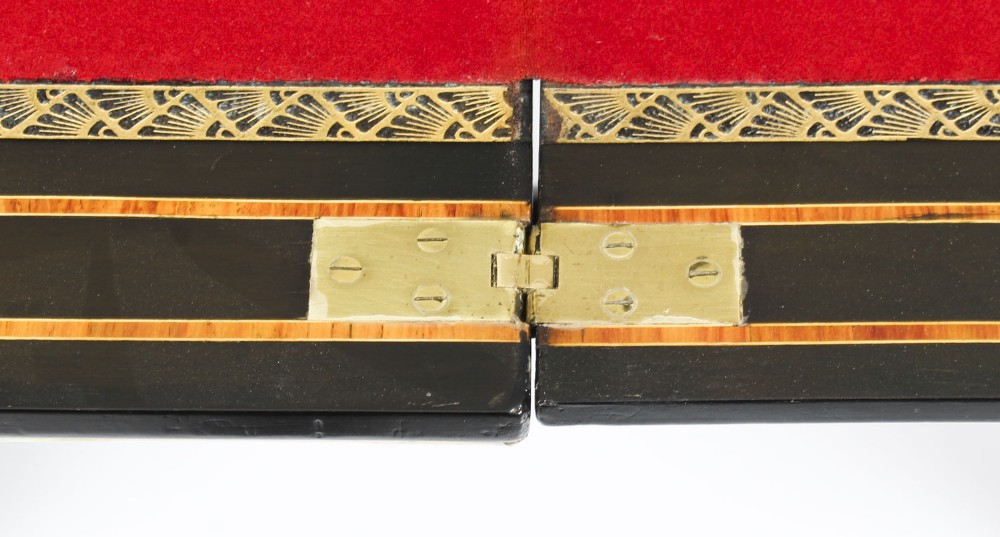
The hinged top opens to reveal the original claret baize lined interior for playing cards. As you swivel the top into position a compartment for storing your cards, pens and paper is revealed.
It is a superb piece which is sure to get lots of attention wherever it is placed.
Condition:
In excellent condition having been beautifully cleaned and polished and the baize relined in our workshops, please see photos for confirmation.
Dimensions in cm:
Height 77 x Width 91 x Depth 45 - closed
Height 76 x Width 91 x Depth 90 - open
Dimensions in inches:
Height 30.3 x Width 35.8 x Depth 17.7 - closed
Height 29.9 x Width 35.8 x Depth 35.4 - open
Amboyna
is a type of wood which has its origins in Indonesia (the preferred veneer comes particularly from the Andaman Islands). The grain texture is one of the rarest and most exclusive on earth.
The burls are often very small, which is why the sheets of veneer come in small dimensions. The colours range from deep yellowish-orange to dark red.
After finishing the surface, the grain texture of amboyna wood has a depth and richness unmatched in other textured woods.
Sevres Porcelain
traces its roots in France to early craftsmen who had small manufacturing operations in such places as Lille, Rouen. St. Cloud, and most notably Chantilly. It is from Chantilly that a cadre of workers migrated to the Chateau de Vincennes near Paris to form a larger porcelain manufactory in 1738.
French King Louis XV, perhaps inspired by his rumoured relationship with mistress Madame de Pompadour, took an intense interest in porcelain and moved the operation in 1756 to even larger quarters in the Paris suburb of Sevres. Sevres was also conveniently near the home of Madame de Pompadour and the King's own Palace at Versailles.
From the outset the king's clear aim was to produce Sevres Porcelain that surpassed the established Saxony works of Meissen and Dresden. Though the French lacked an ample supply of kaolin, a required ingredient for hard-paste porcelain (pate dure), their soft-paste porcelain (pate tendre) was fired at a lower temperature and was thus compatible with a wider variety of colours and glazes that in many cases were also richer and more vivid. Unglazed white Sevres Porcelain "biscuit" figurines were also a great success. However, soft-paste Sevres Porcelain was more easily broken. Therefore, early pieces of Sevres Porcelain that remain intact have become rare indeed.
The Sevres Porcelain manufactory always seemed to be in dire financial straits despite the incredibly fine works it produced. In fact, the king's insistence that only the finest items be created may have contributed to the difficulties. Only a limited number of European nobility could afford the extravagant prices demanded for such works. King Louis XV and eventually his heir, the ill-fated Louis XVI, were obliged to invest heavily in the enterprise. Ultimately, the Sevres Porcelain Factory produced items under the name of "Royal" and thus the well-known Sevres mark was born. King Louis XV even mandated laws that severely restricted other porcelain production in France so as to retain a near monopoly for his Sevres Porcelain. The king even willingly became chief salesman for the finest of his products, hosting an annual New Year's Day showing for French nobilit