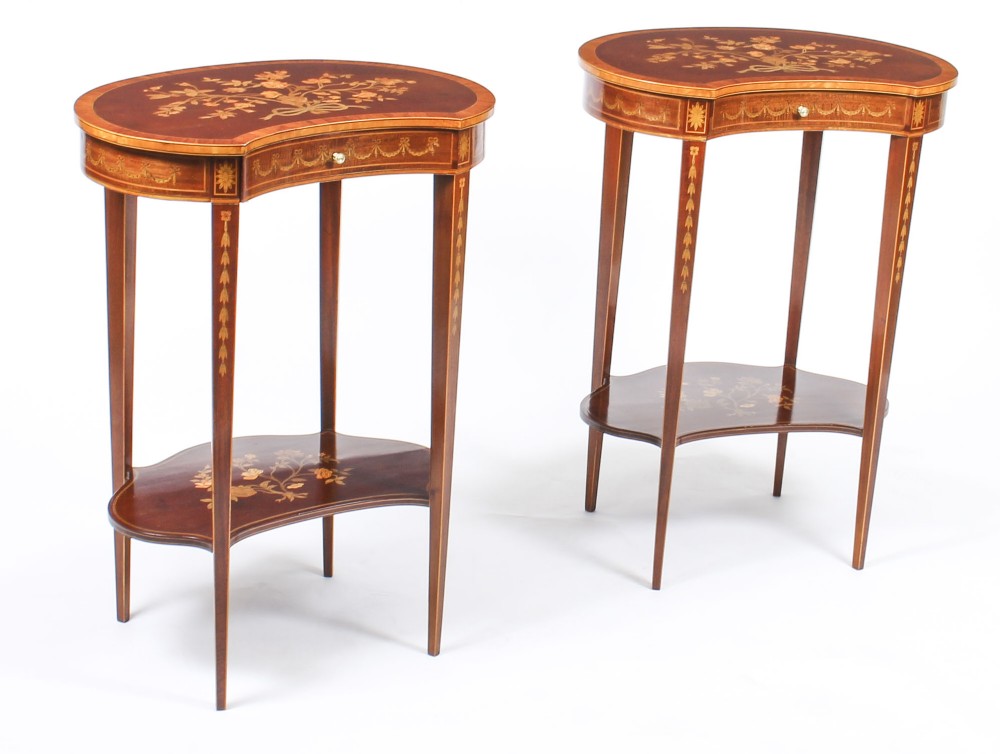
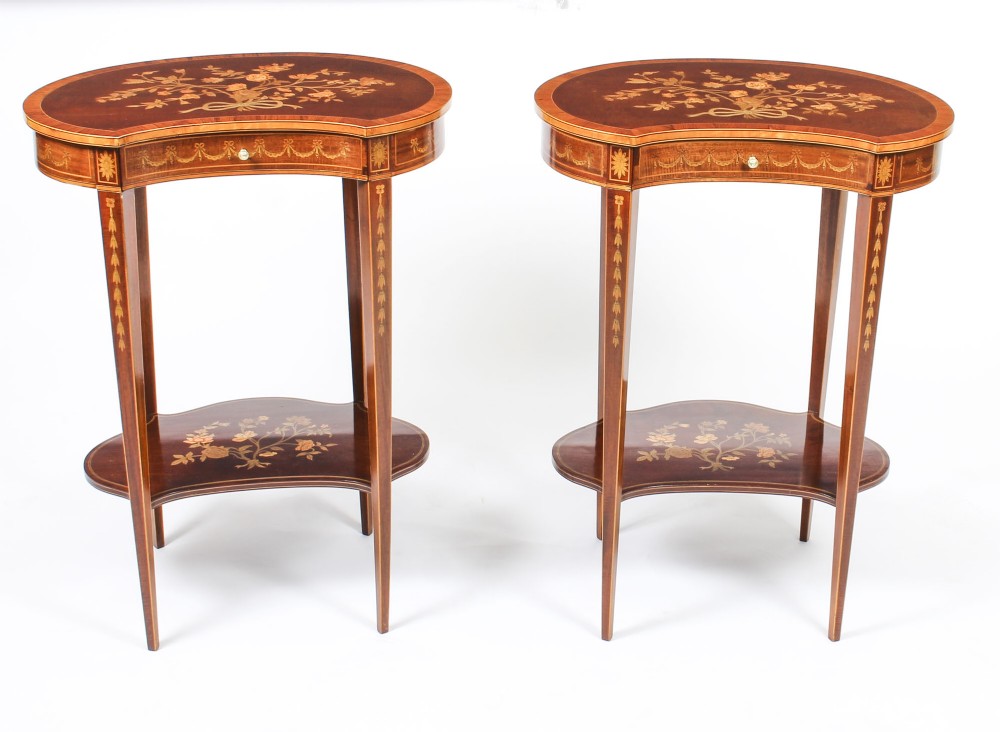
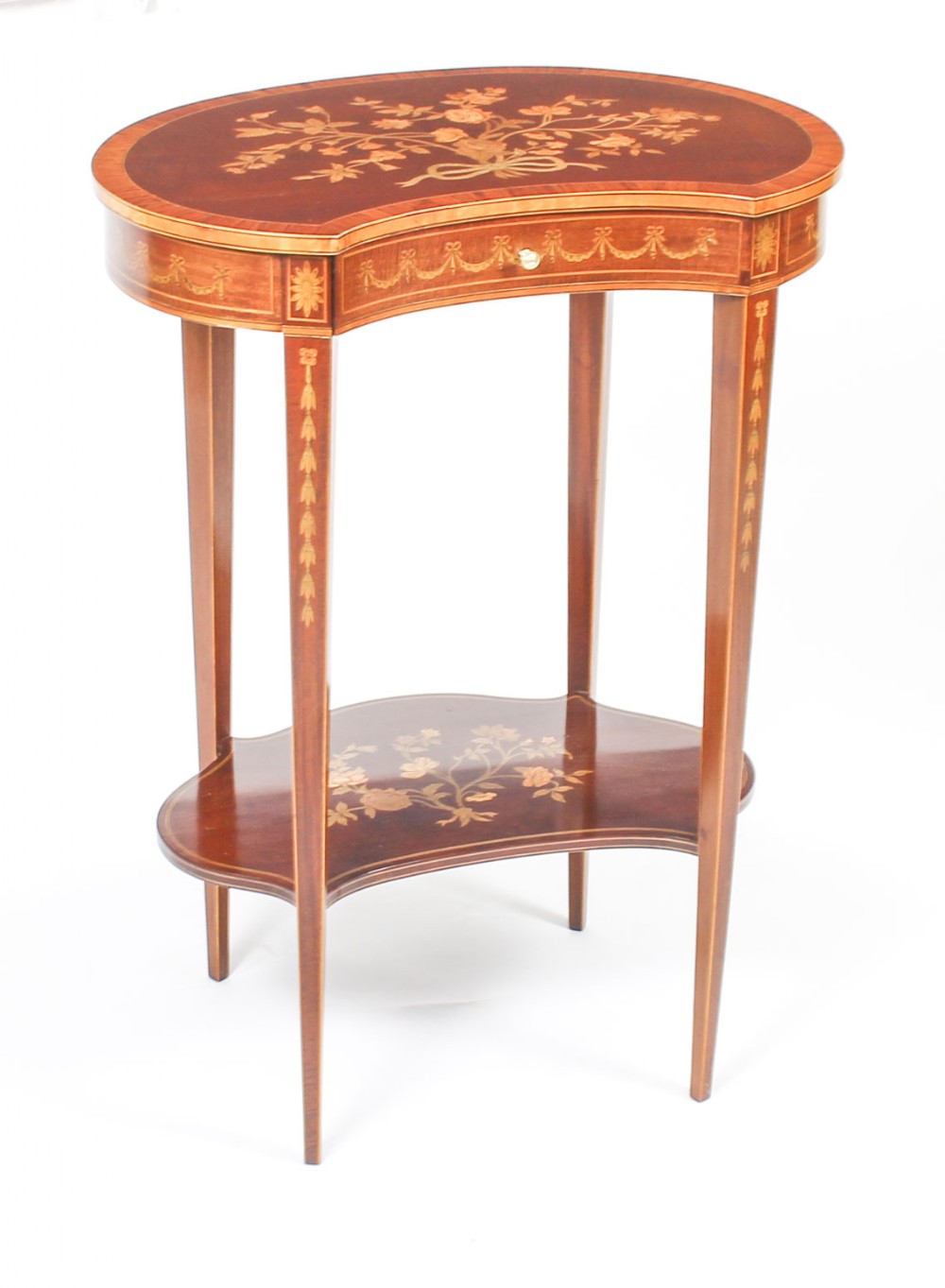
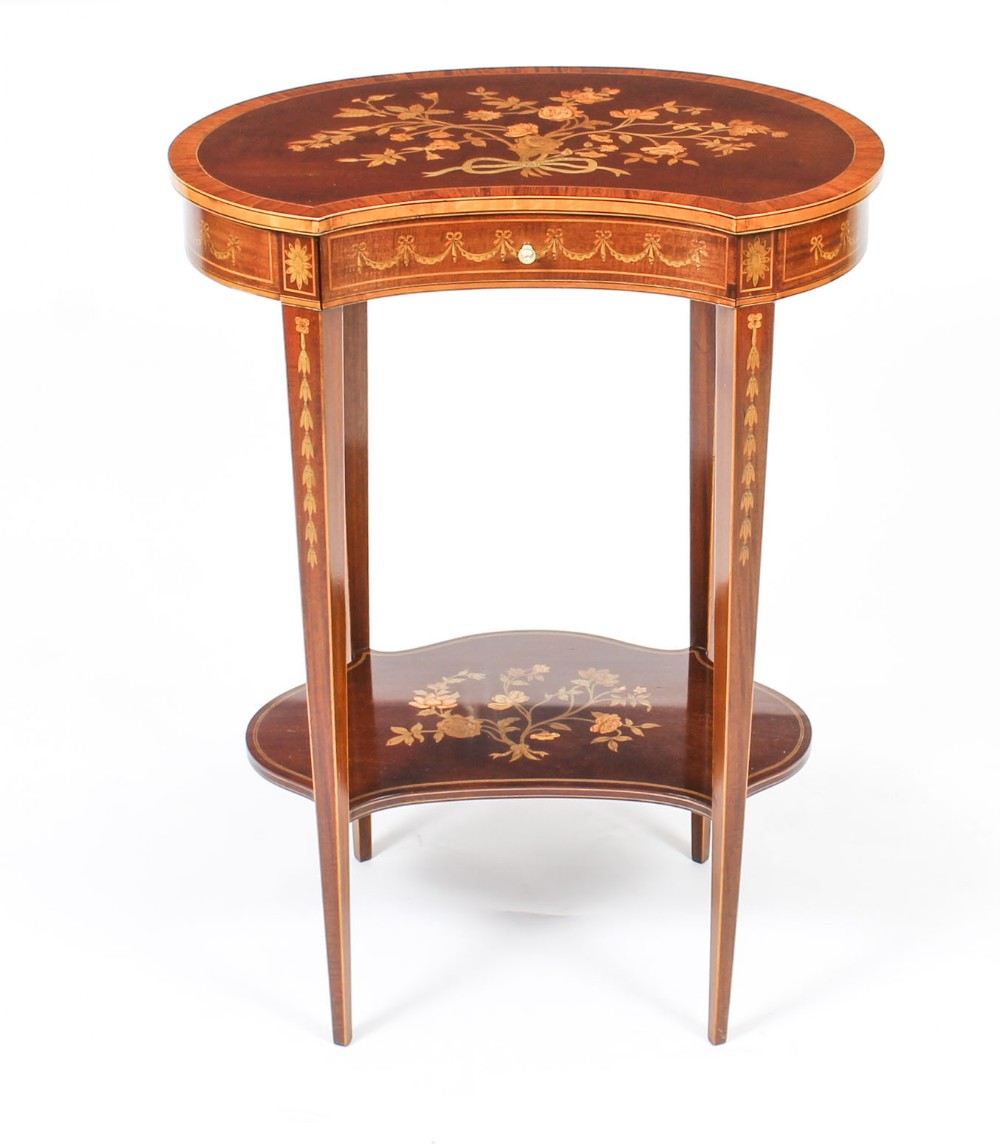
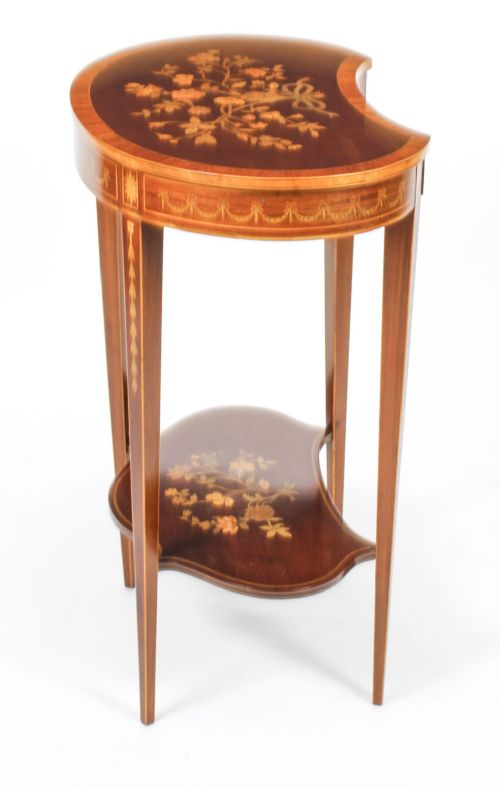
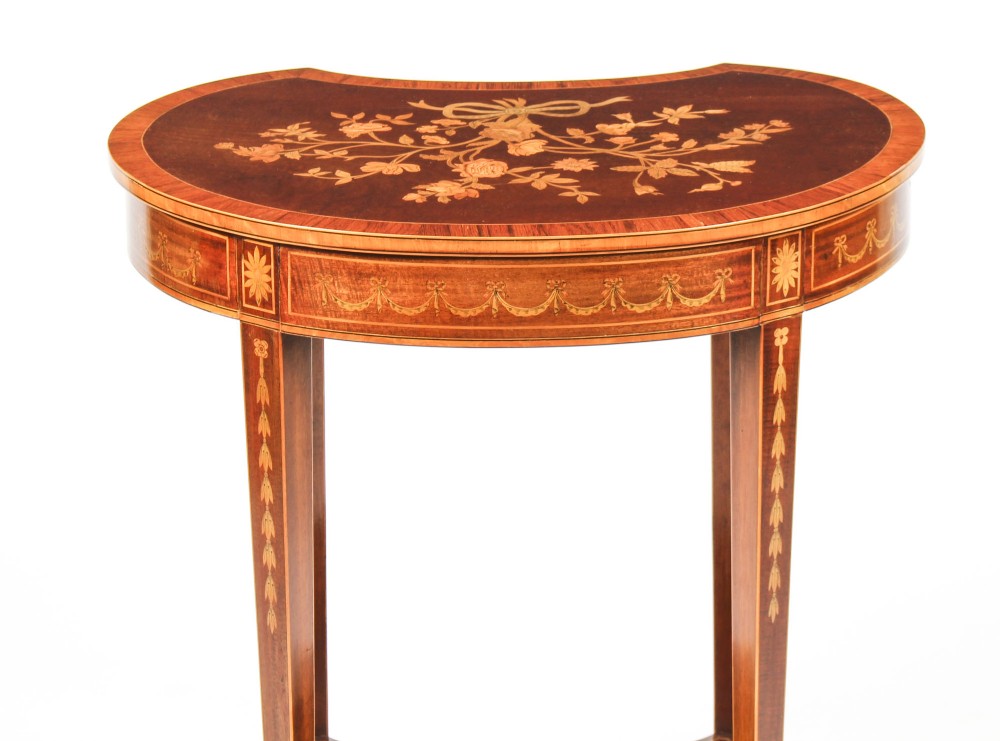
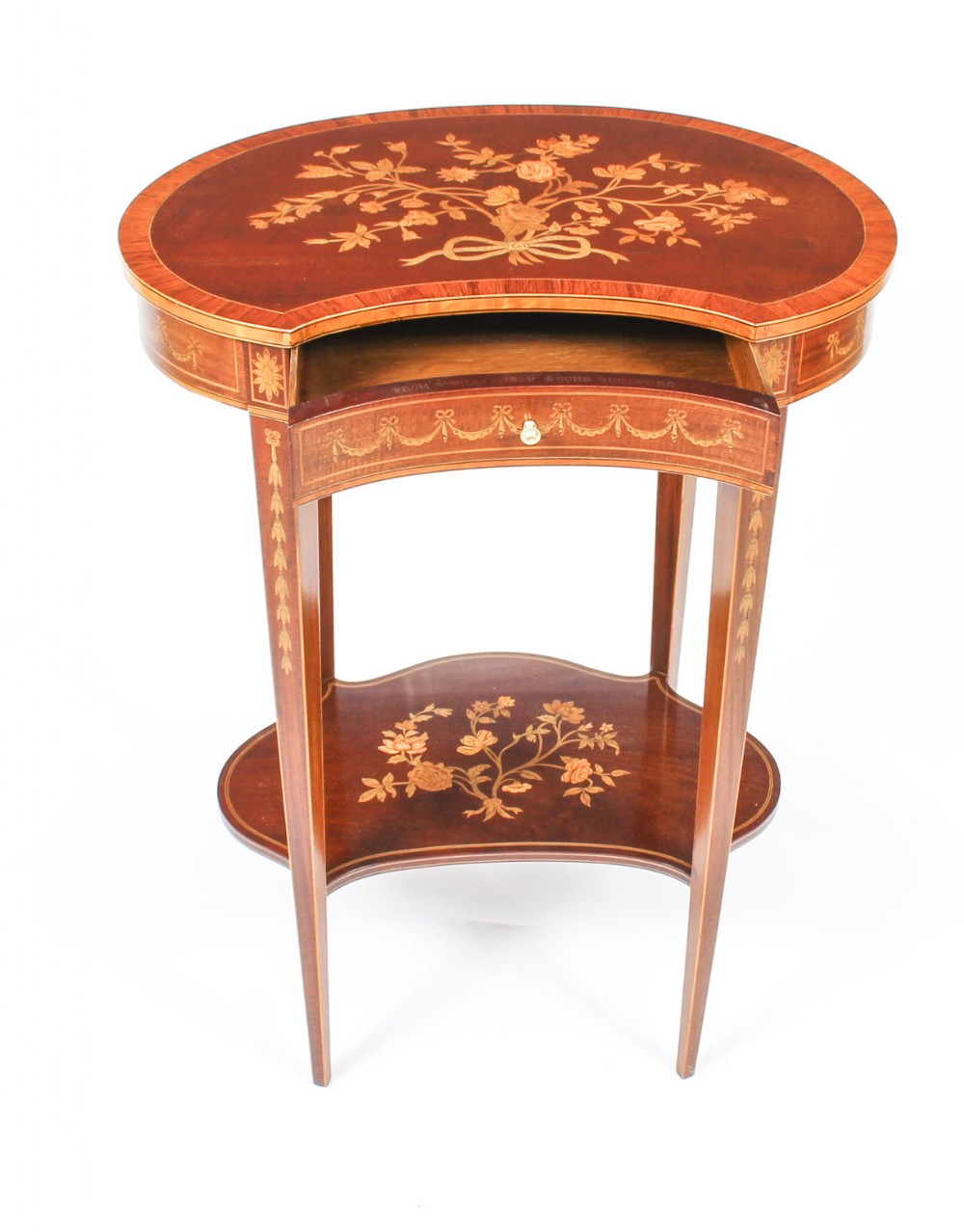
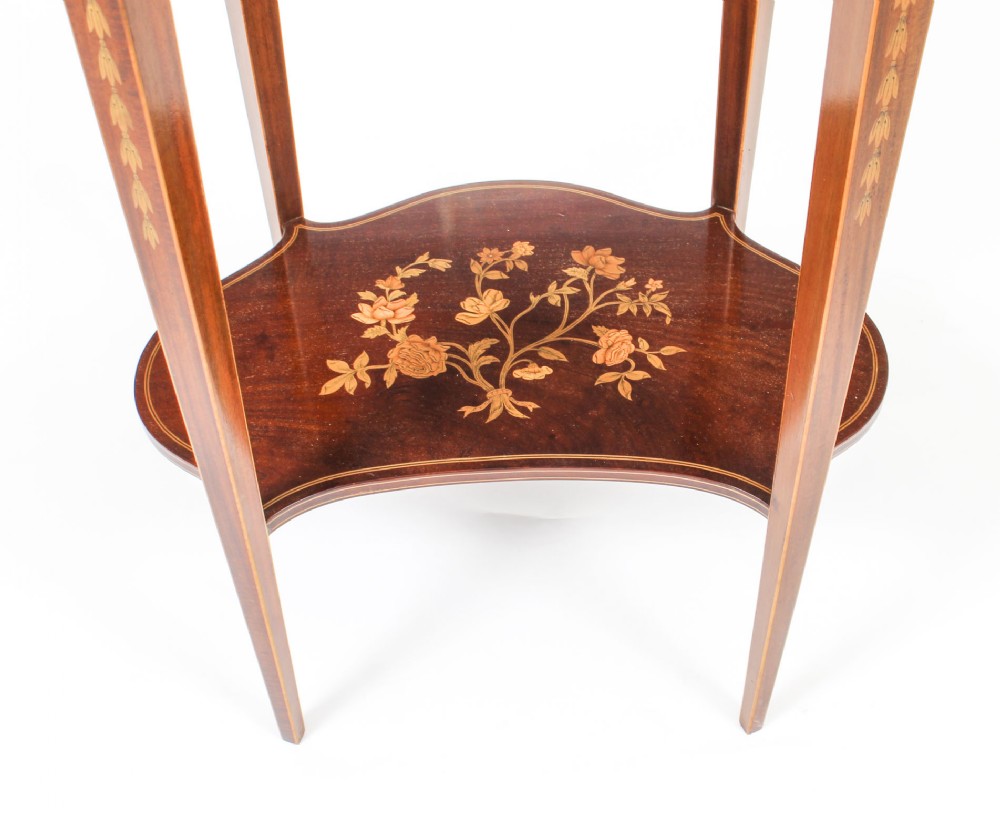
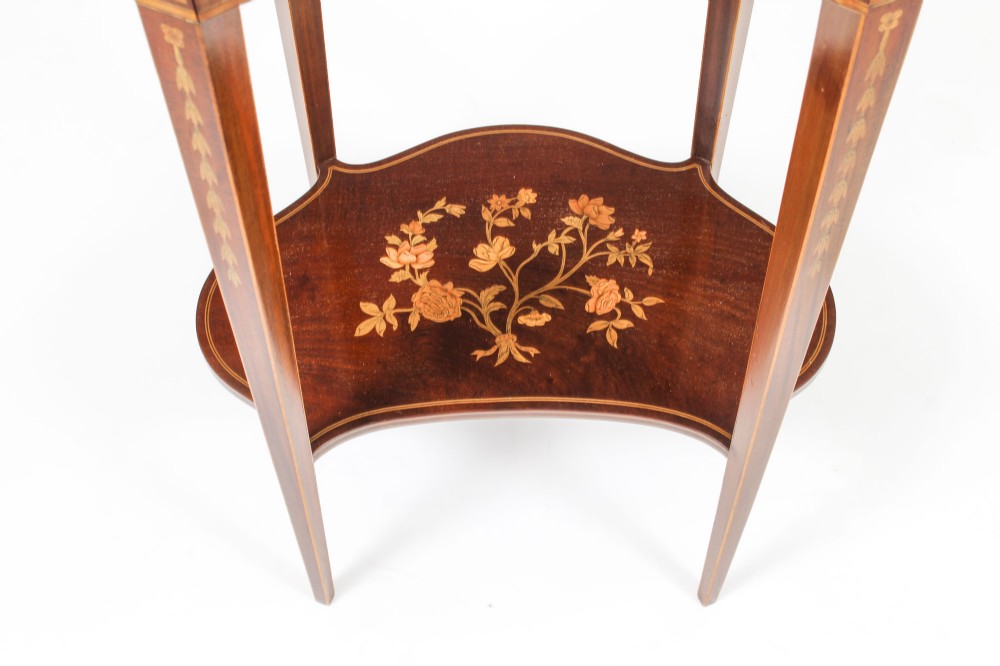
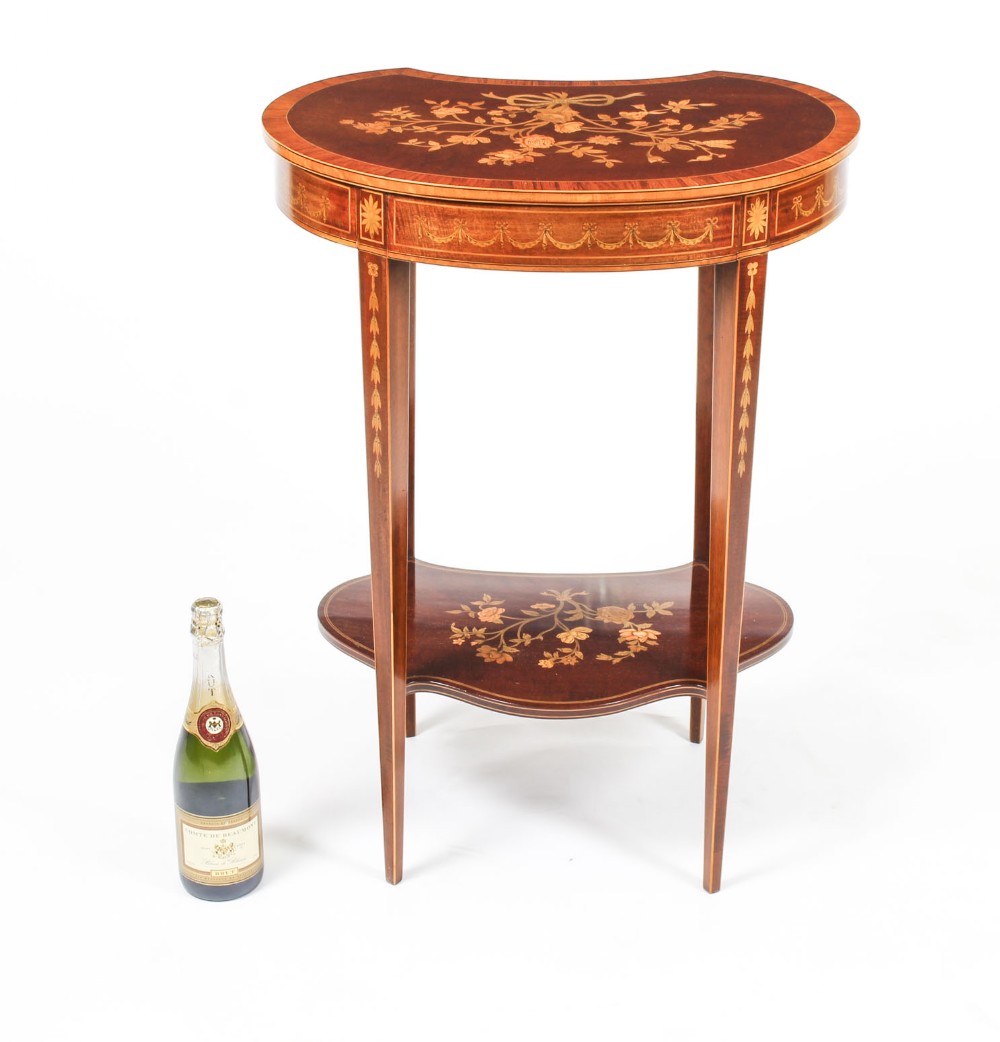
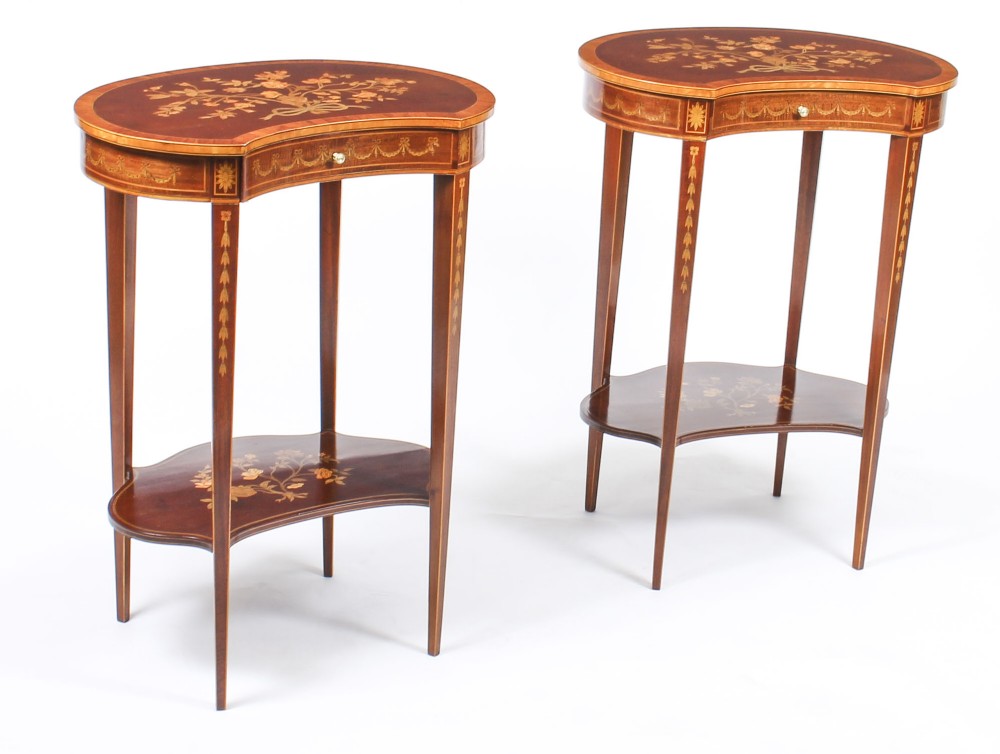
This is a beautiful pair of antique English kidney shaped mahogany marquetry inlaid occasional tables, Circa 1880 in date.
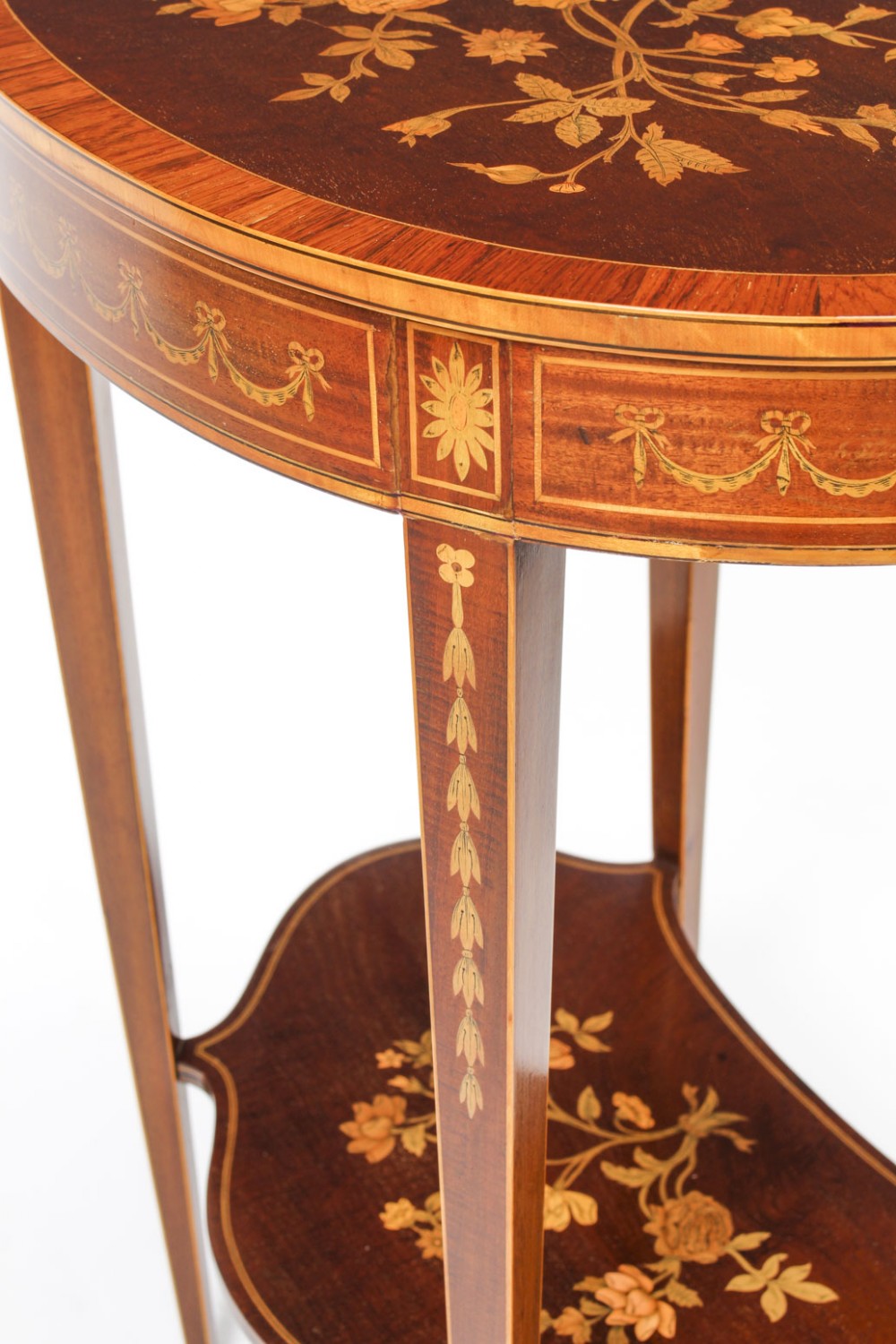
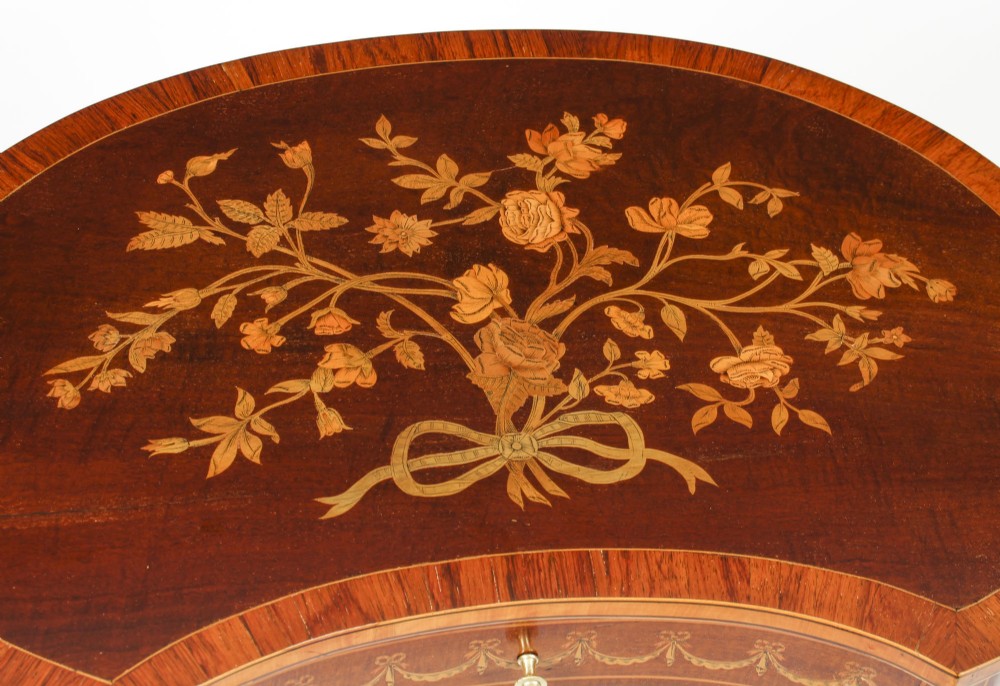
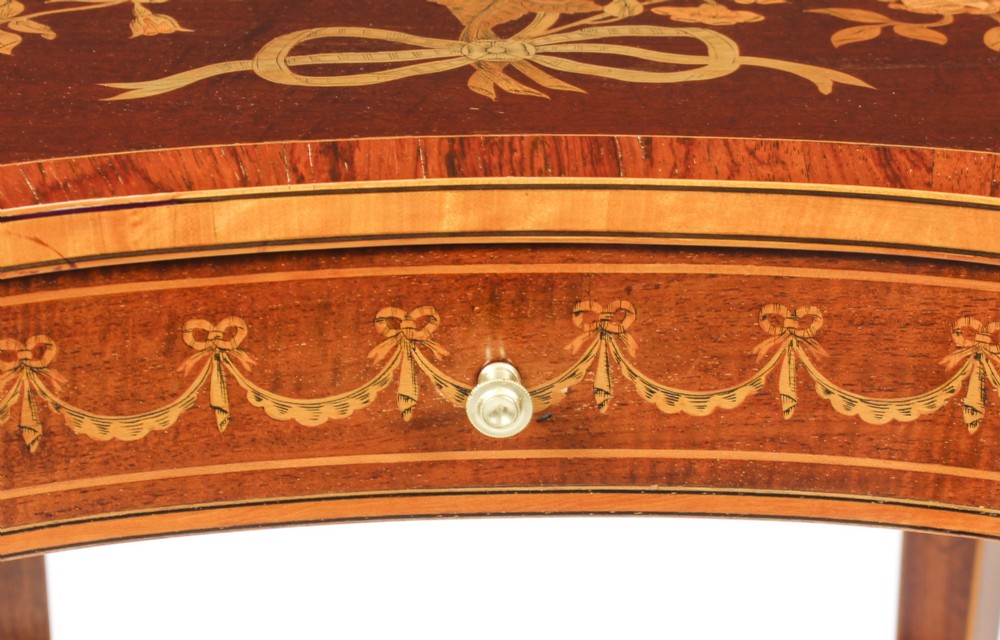
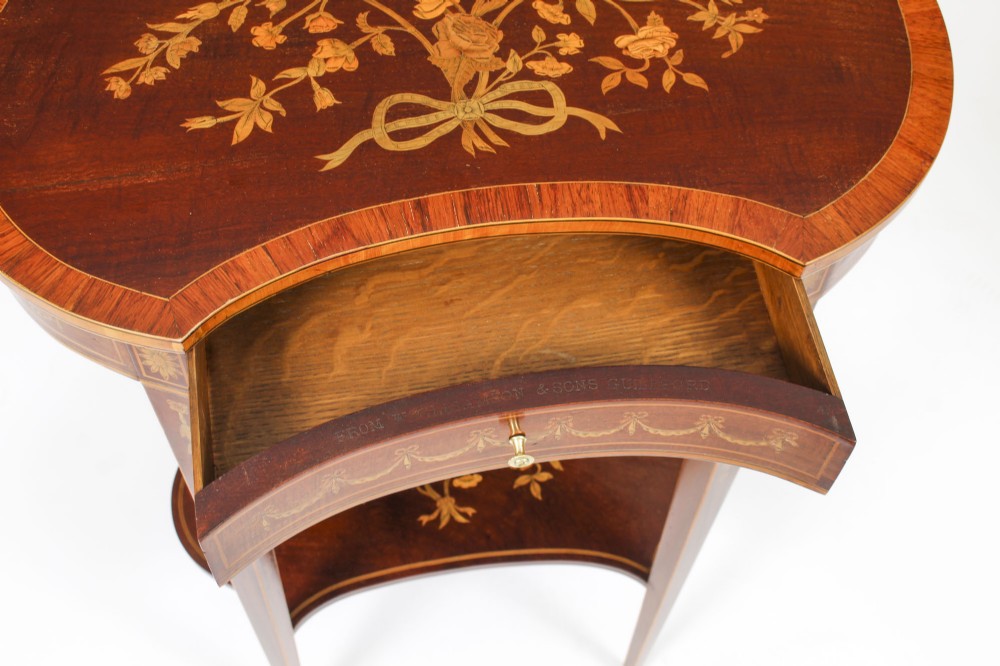
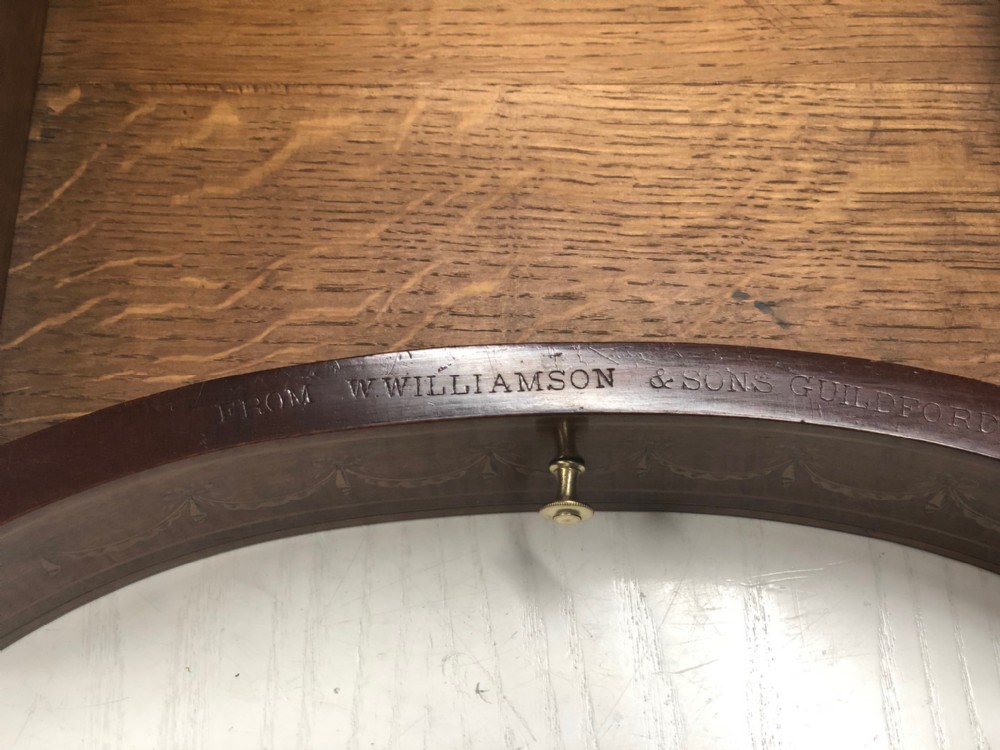
The tables each have crossbanded tops beautifully inlaidwith ribbons tied flowers, the friezes with inlaid swags and with drawers each stamped with the name of the renowned cabinets makers and retailers "FROM W. WILLIAMSON & SONS GUILDFORD"
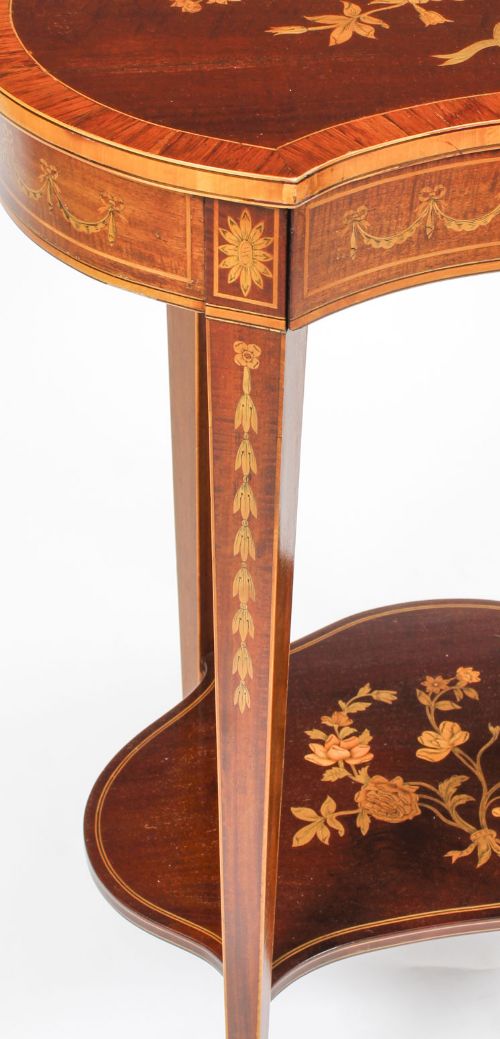
They are raised on on square tapering legs, decorated by swags and bellflowers and united by conforming undertiers.
Add an elegant touch to your home with these lovely versatile tables which can be used as end tables or bedside tables.
Condition:
In really excellent condition having been beautifully celaned and waxed in our workshops, please see photos for confirmation.
Dimensions in cm:
Height 75 x Width 56 x Depth 40
Dimensions in inches:
Height 29.5 x Width 22.0 x Depth 15.7
Marquetry
is decorative artistry where pieces of material (such as wood, mother of pearl, pewter, brass silver or shell) of different colours are inserted into surface wood veneer to form intricate patterns such as scrolls or flowers.
The technique of veneered marquetry had its inspiration in 16th century Florence. Marquetry elaborated upon Florentine techniques of inlaying solid marble slabs with designs formed of fitted marbles, jaspers and semi-precious stones. This work, called opere di commessi, has medieval parallels in Central Italian "Cosmati"-work of inlaid marble floors, altars and columns. The technique is known in English as pietra dura, for the "hardstones" used: onyx, jasper, cornelian, lapis lazuli and coloured marbles. In Florence, the Chapel of the Medici at San Lorenzo is completely covered in a coloured marble facing using this demanding jig-sawn technique.
Techniques of wood marquetry were developed in Antwerp and other Flemish centres of luxury cabinet-making during the early 16th century. The craft was imported full-blown to France after the mid-seventeenth century, to create furniture of unprecedented luxury being made at the royal manufactory of the Gobelins, charged with providing furnishings to decorate Versailles and the other royal residences of Louis XIV. Early masters of French marquetry were the Fleming Pierre Golle and his son-in-law, André-Charles Boulle, who founded a dynasty of royal and Parisian cabinet-makers (ébénistes) and gave his name to a technique of marquetry employing shell and brass with pewter in arabesque or intricately foliate designs.
Our reference: 09538