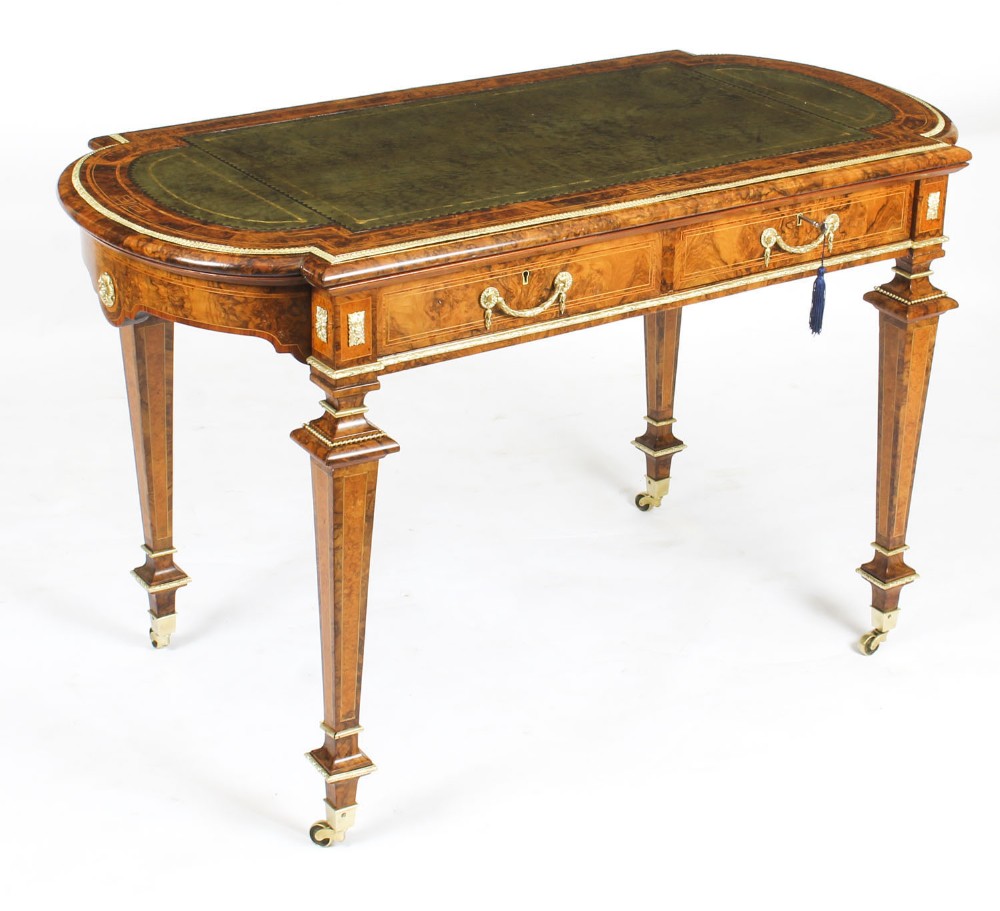
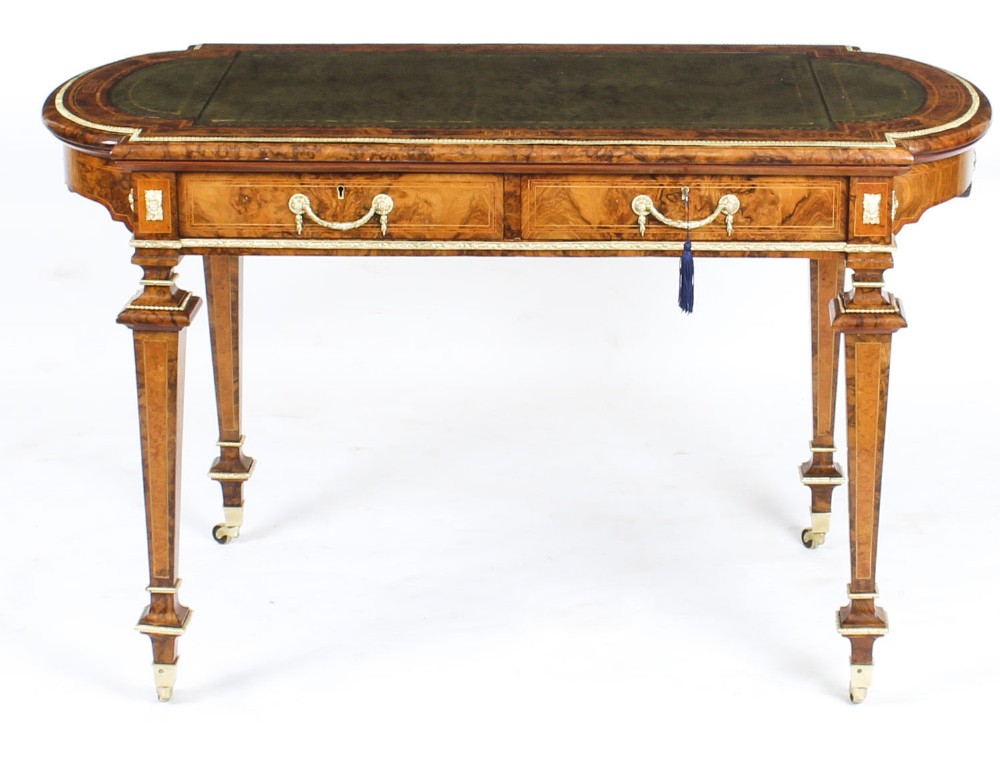
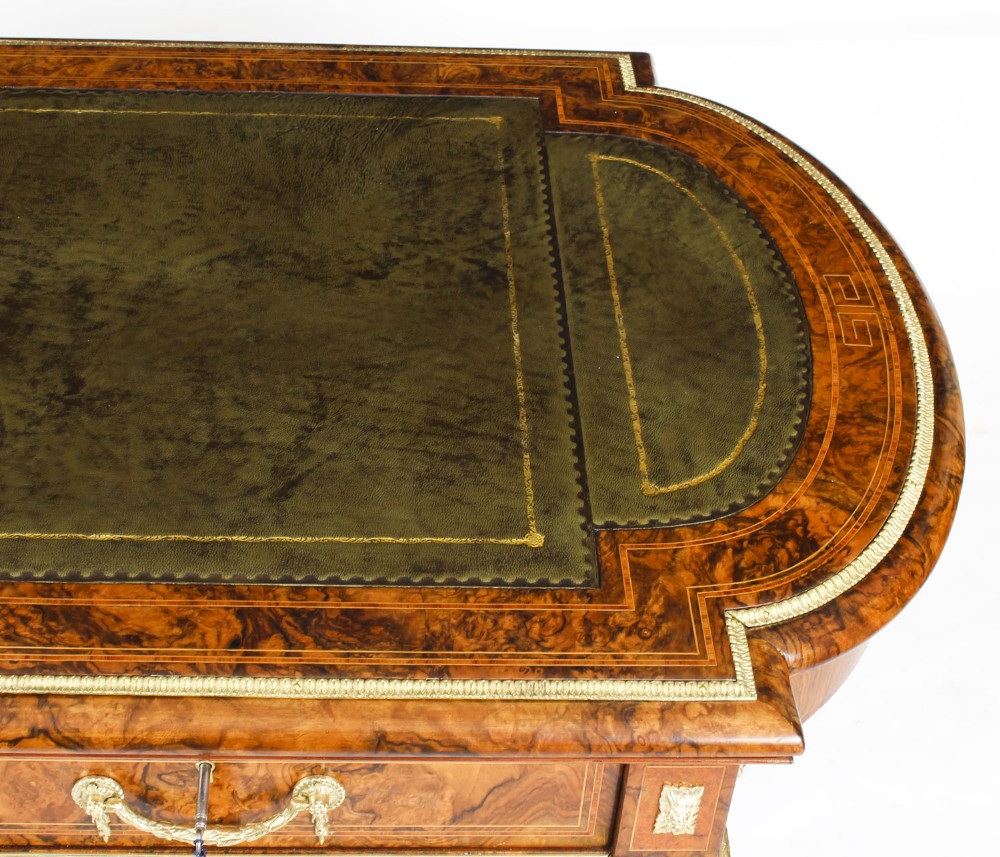
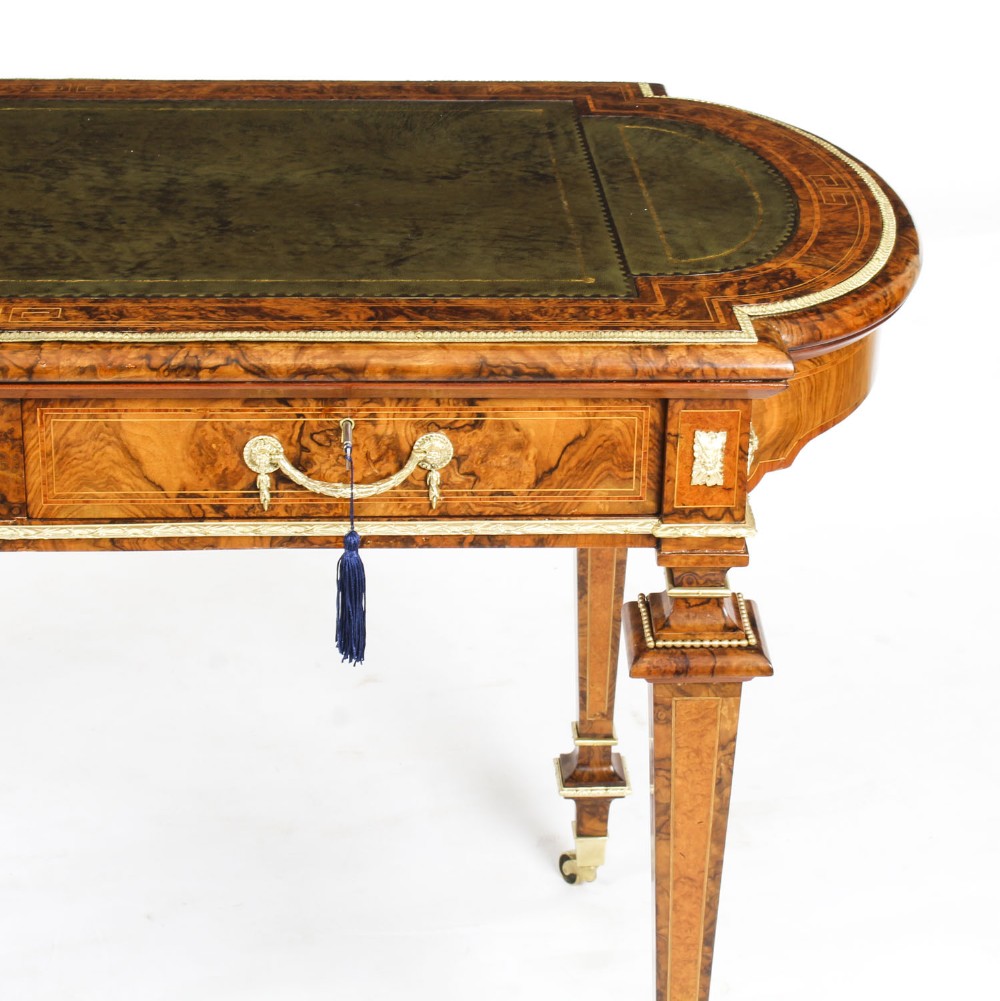
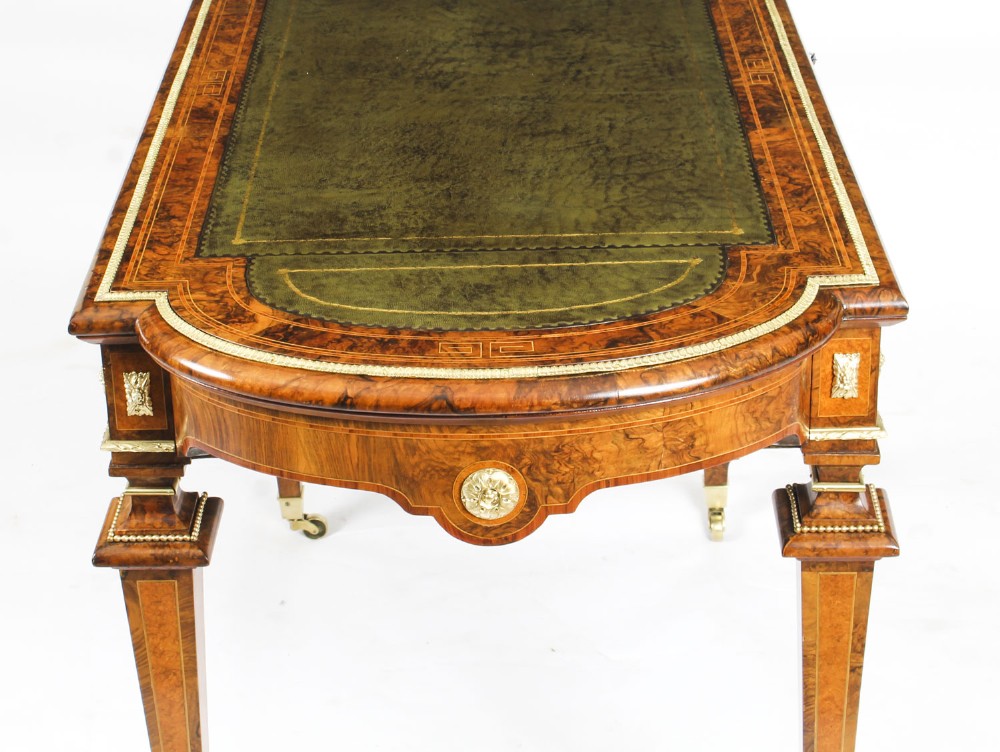
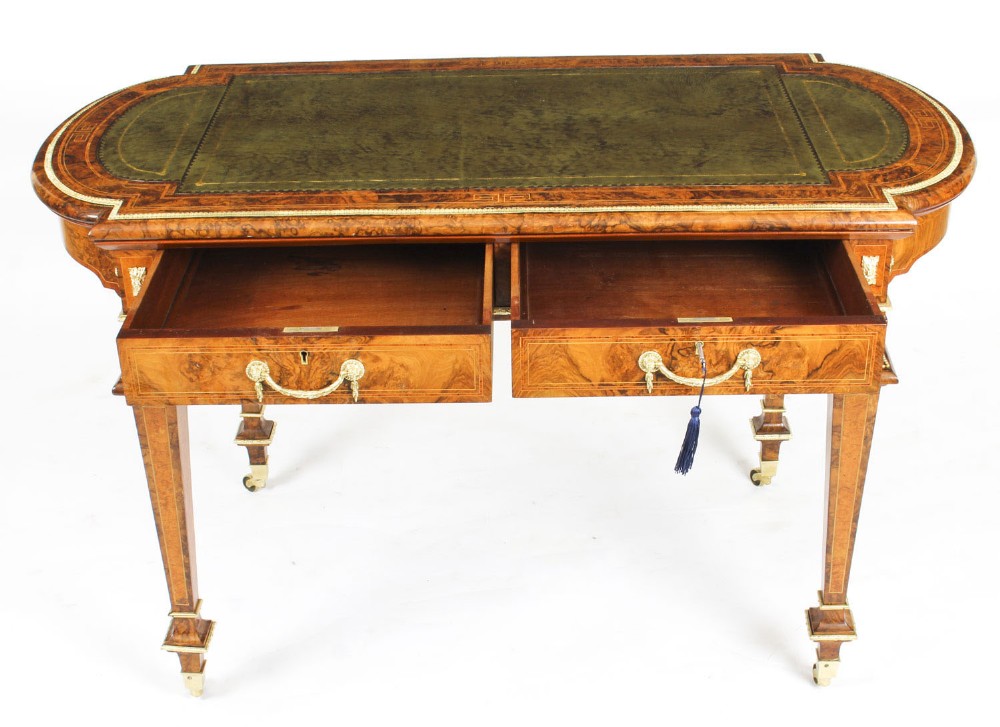
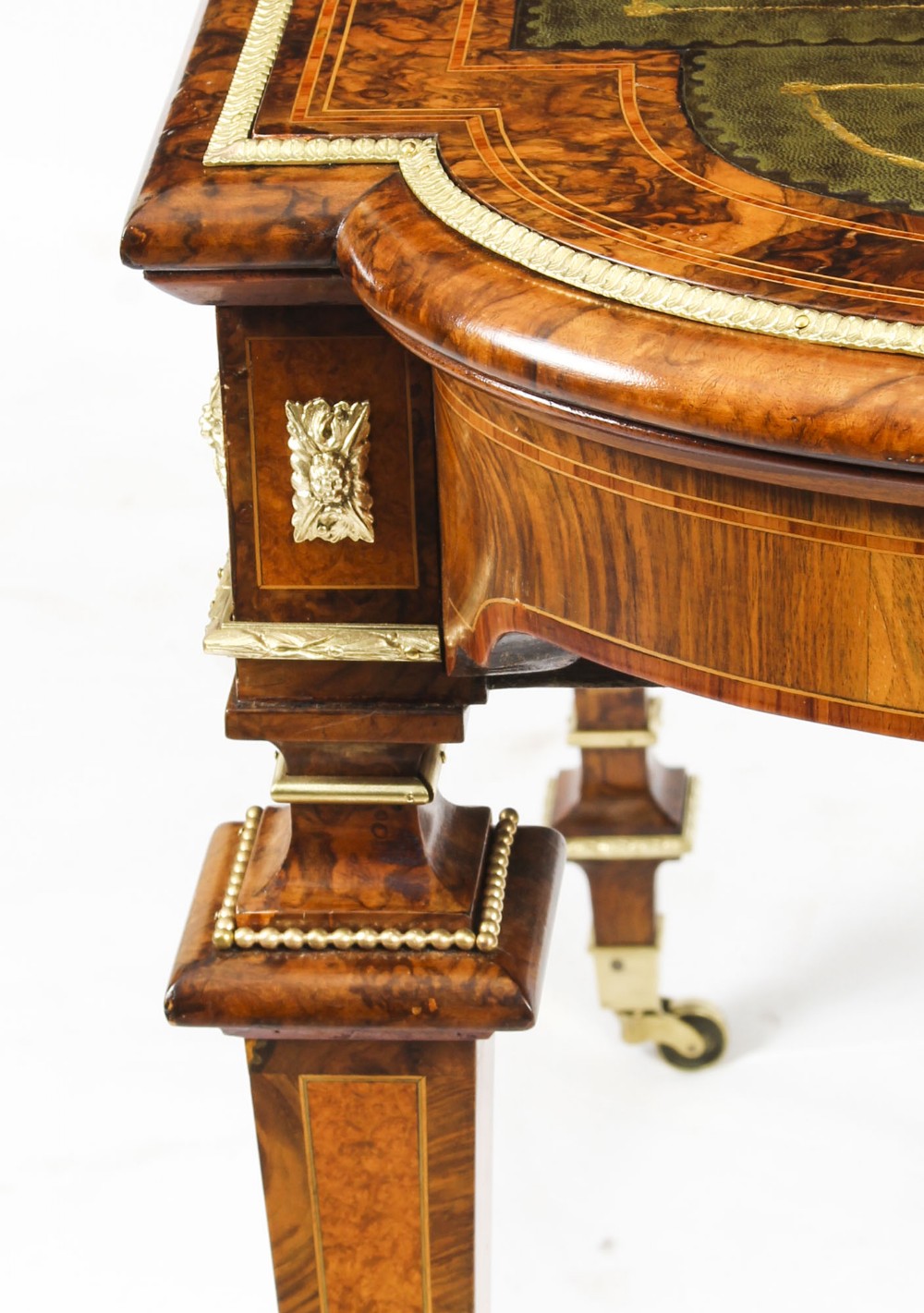
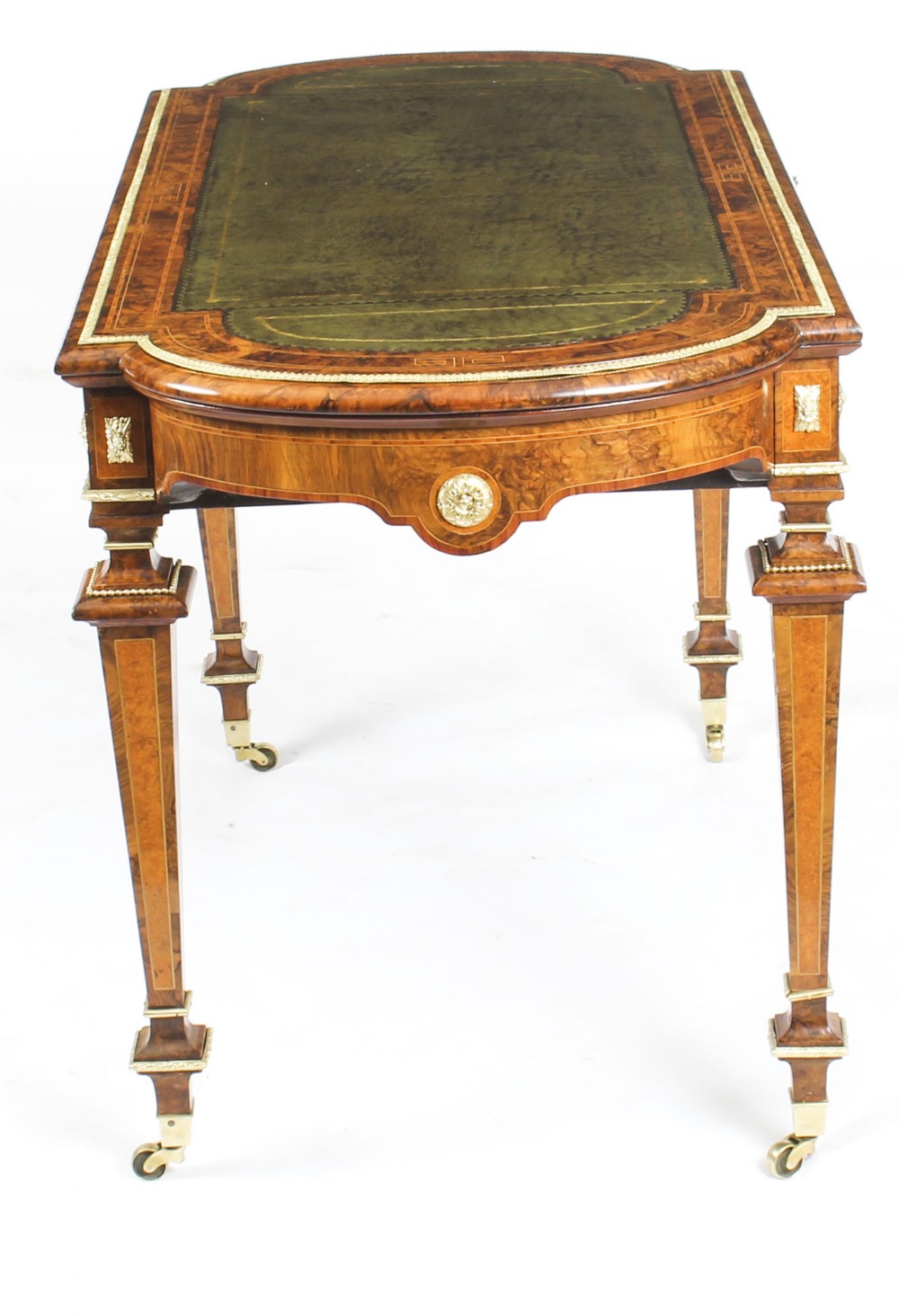
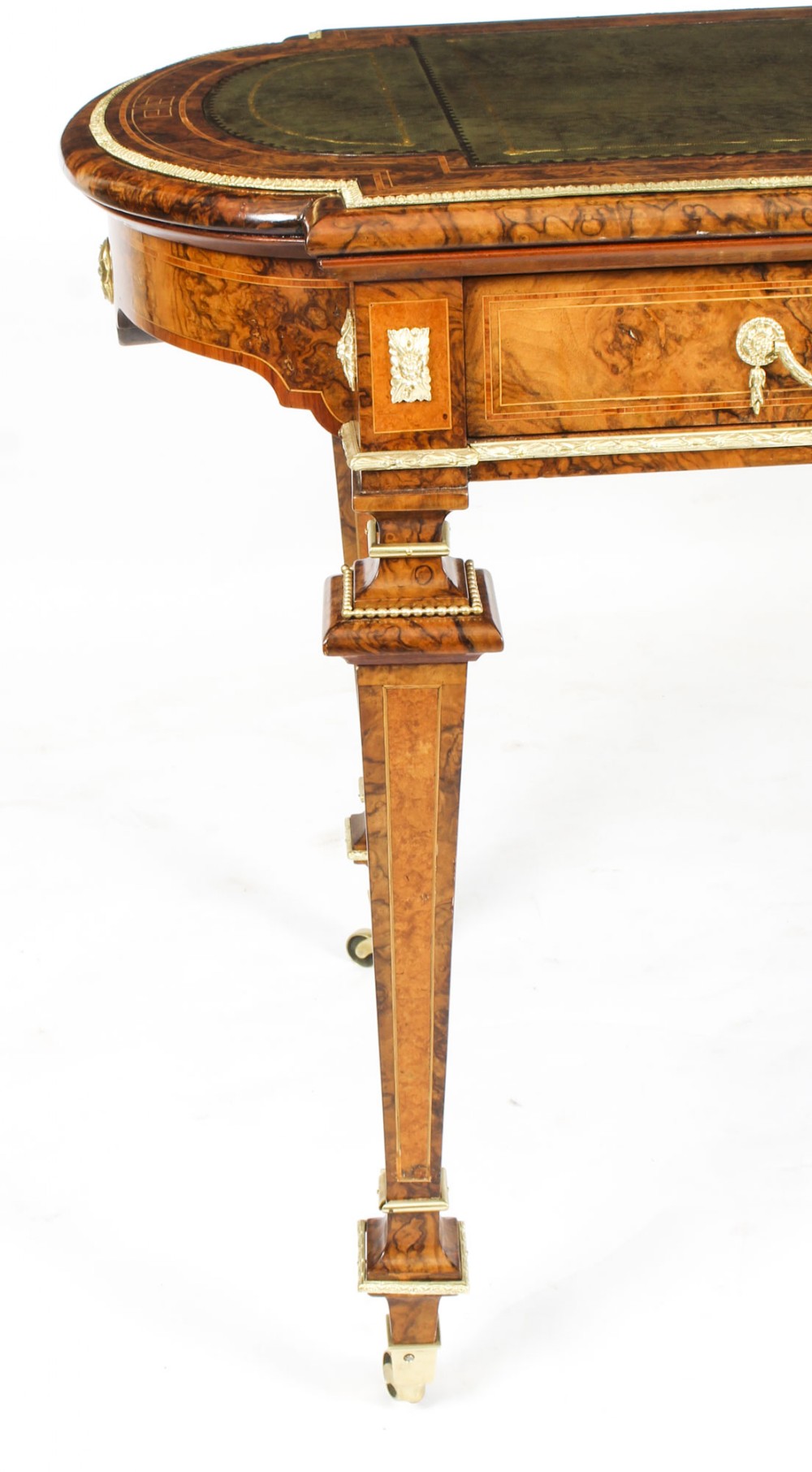
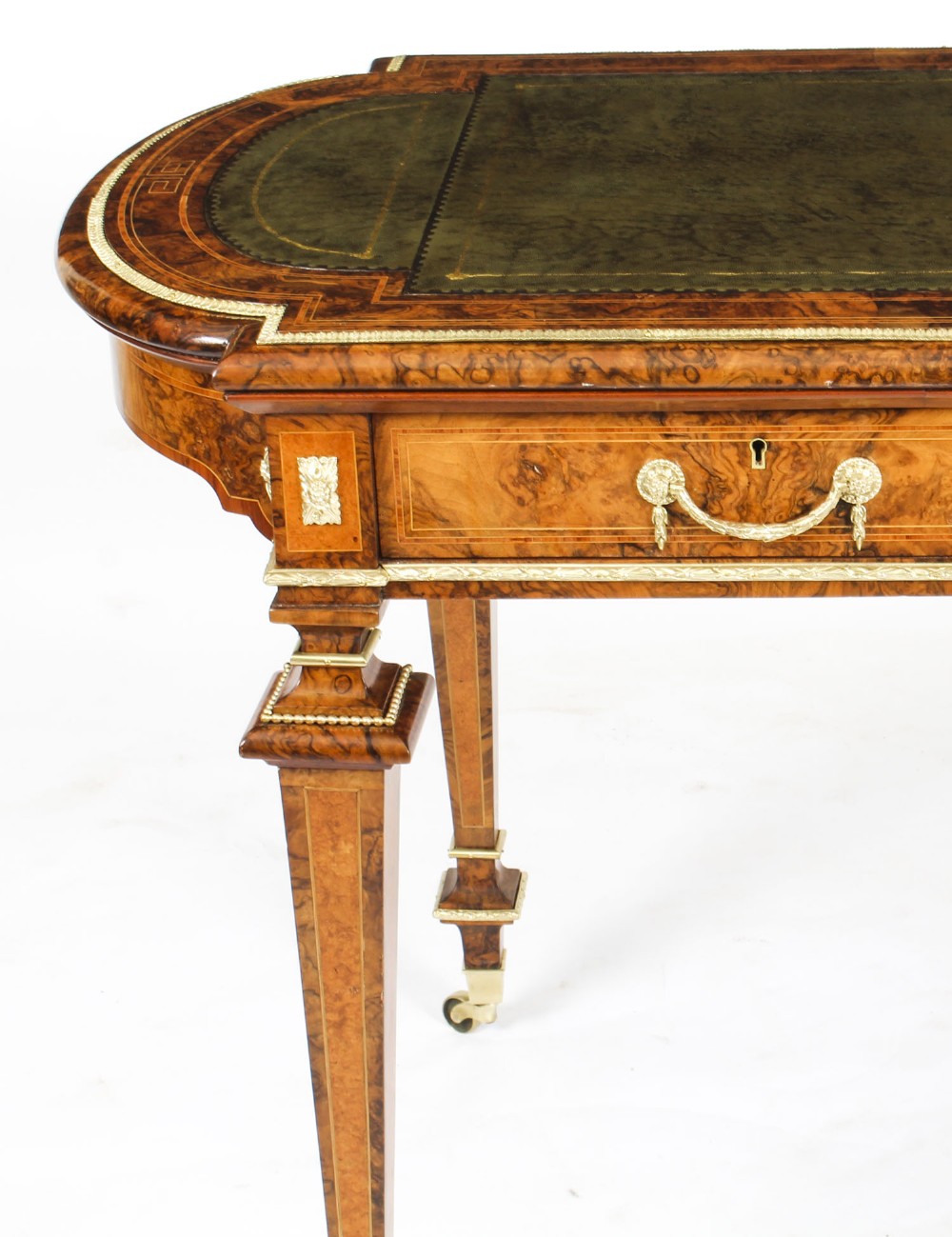
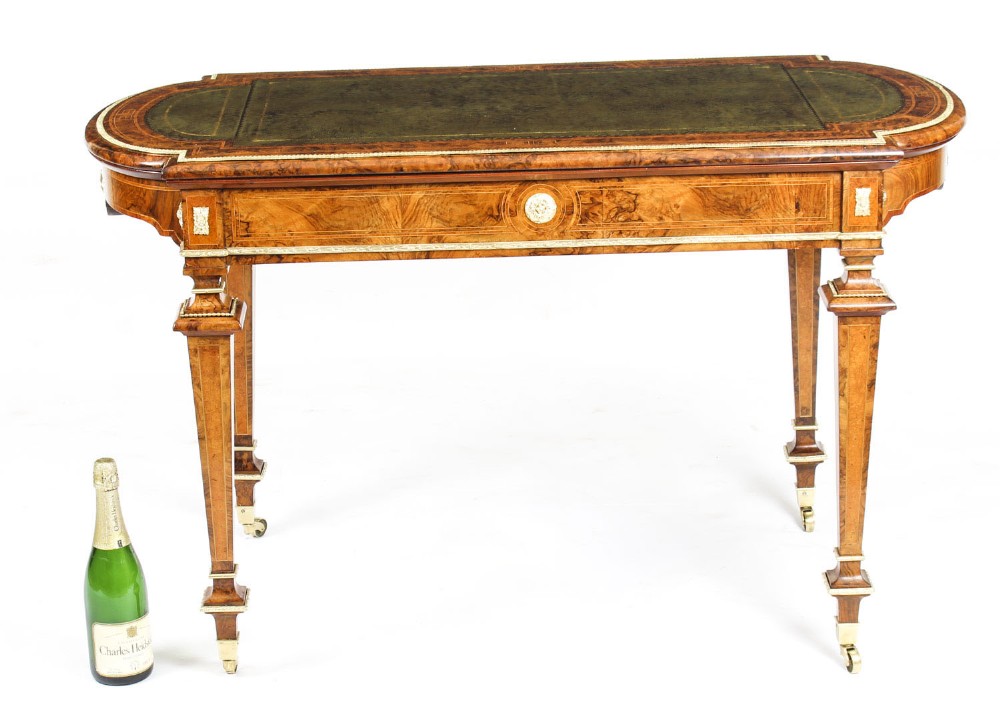
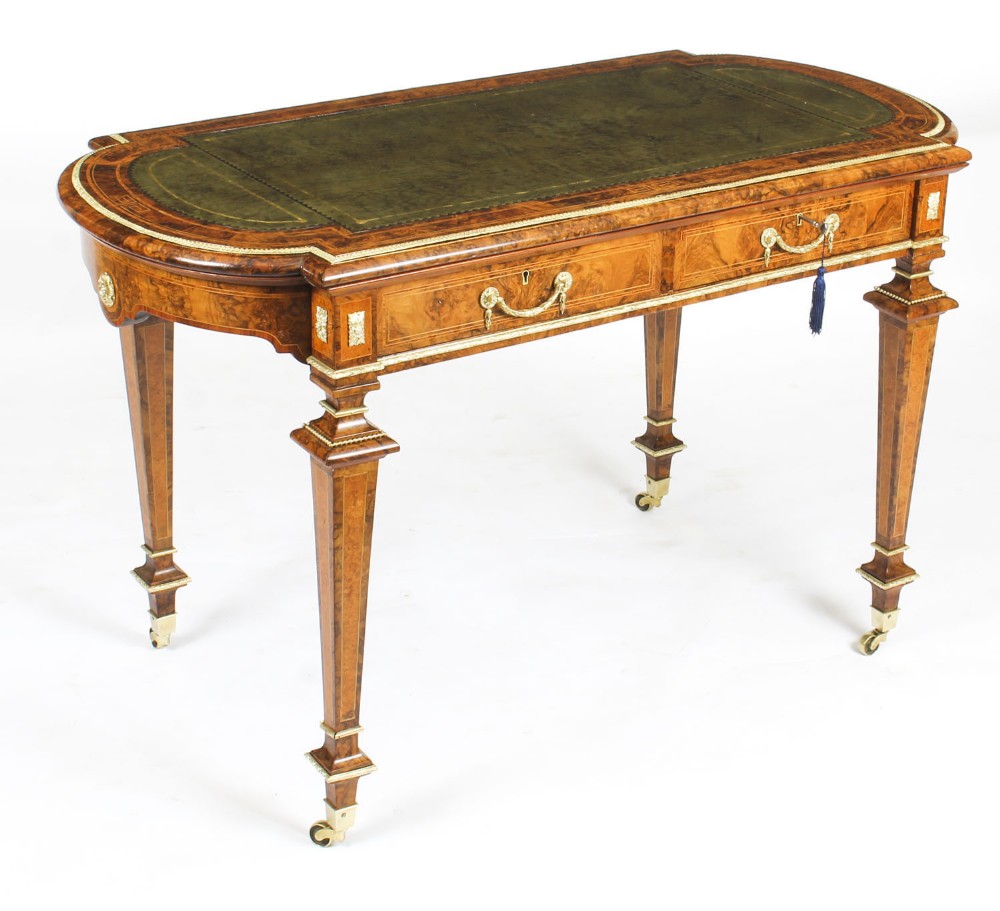
This is an elegant antique Victorian ormolu mounted burr walnut writing table attributed to the renowned cabinet makers Holland & Sons, Circa 1870 in date.
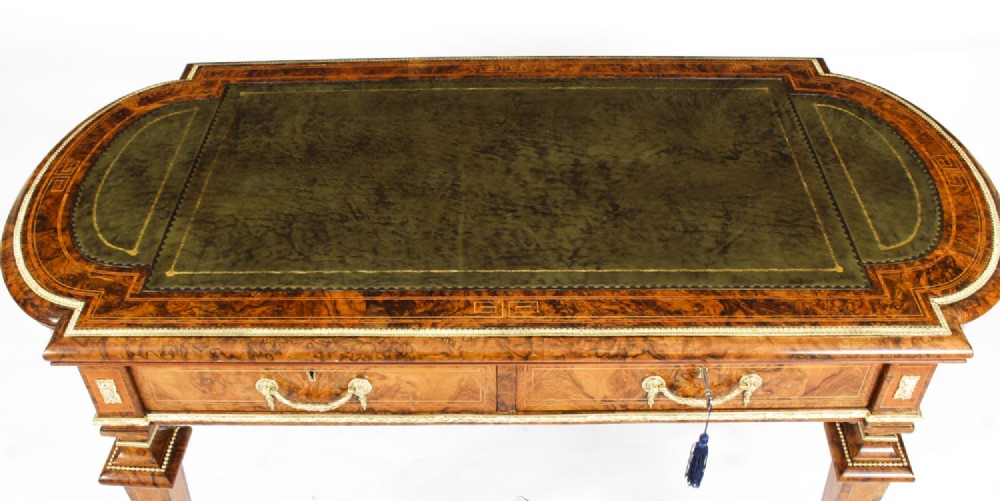
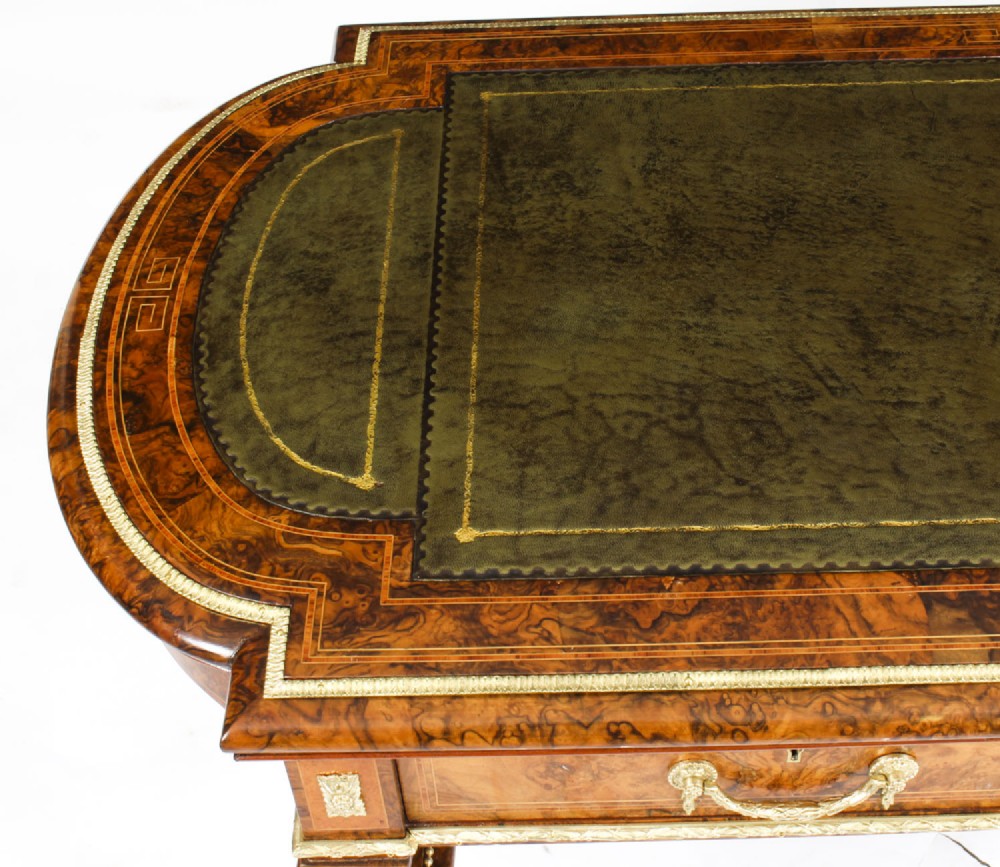
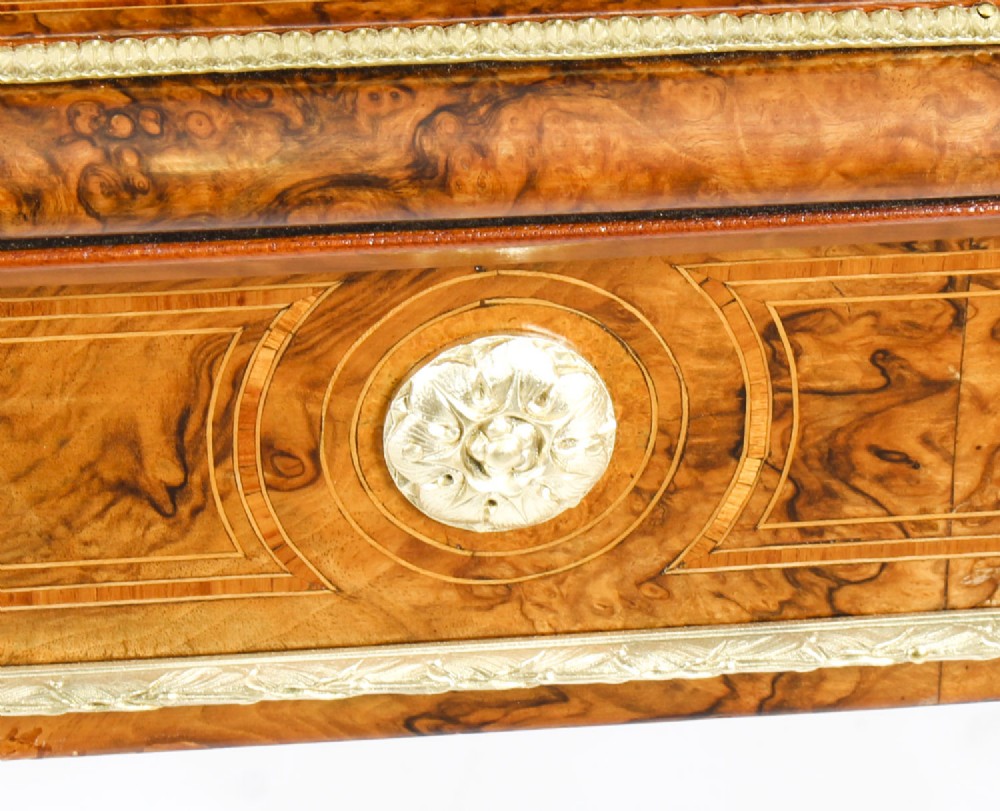
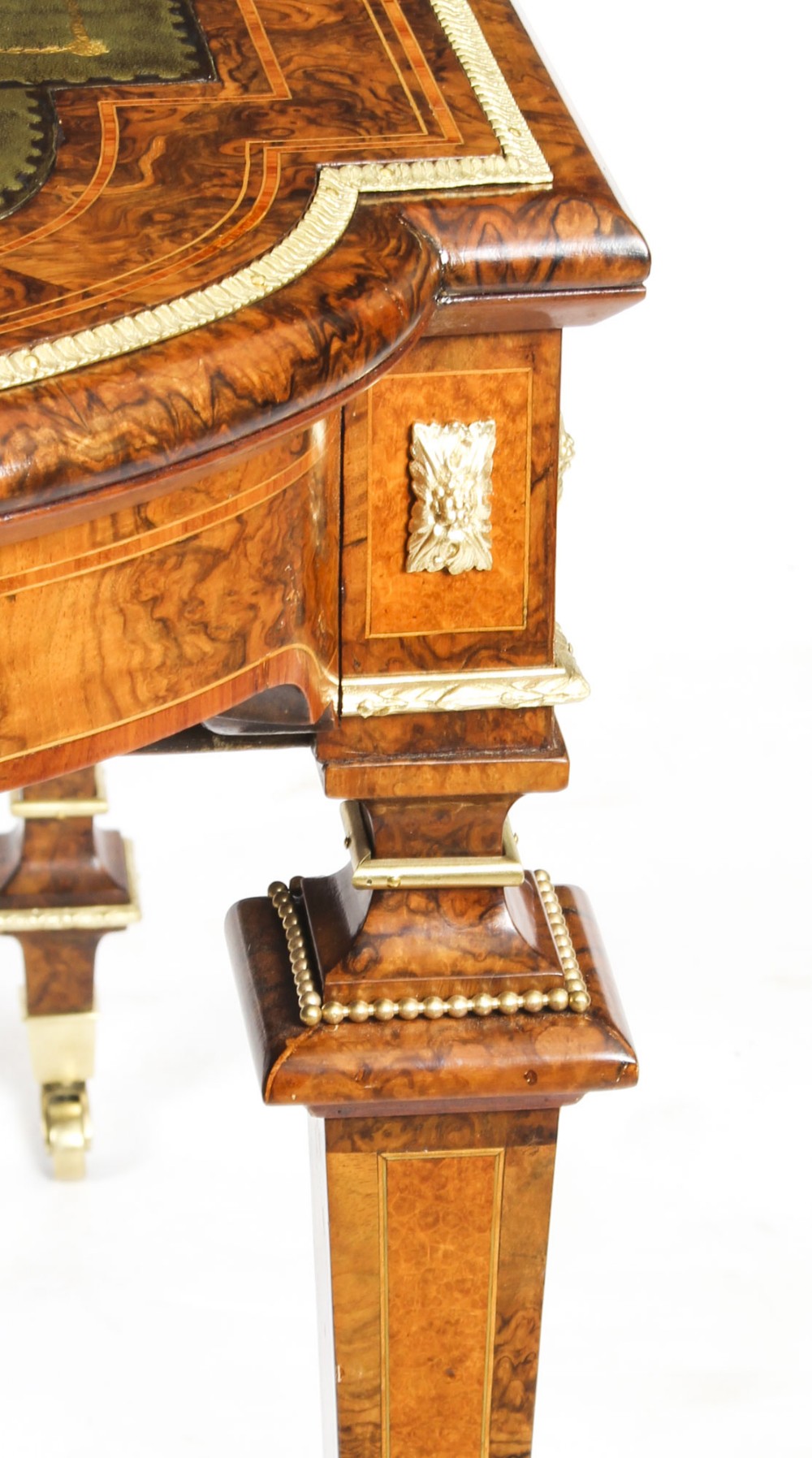
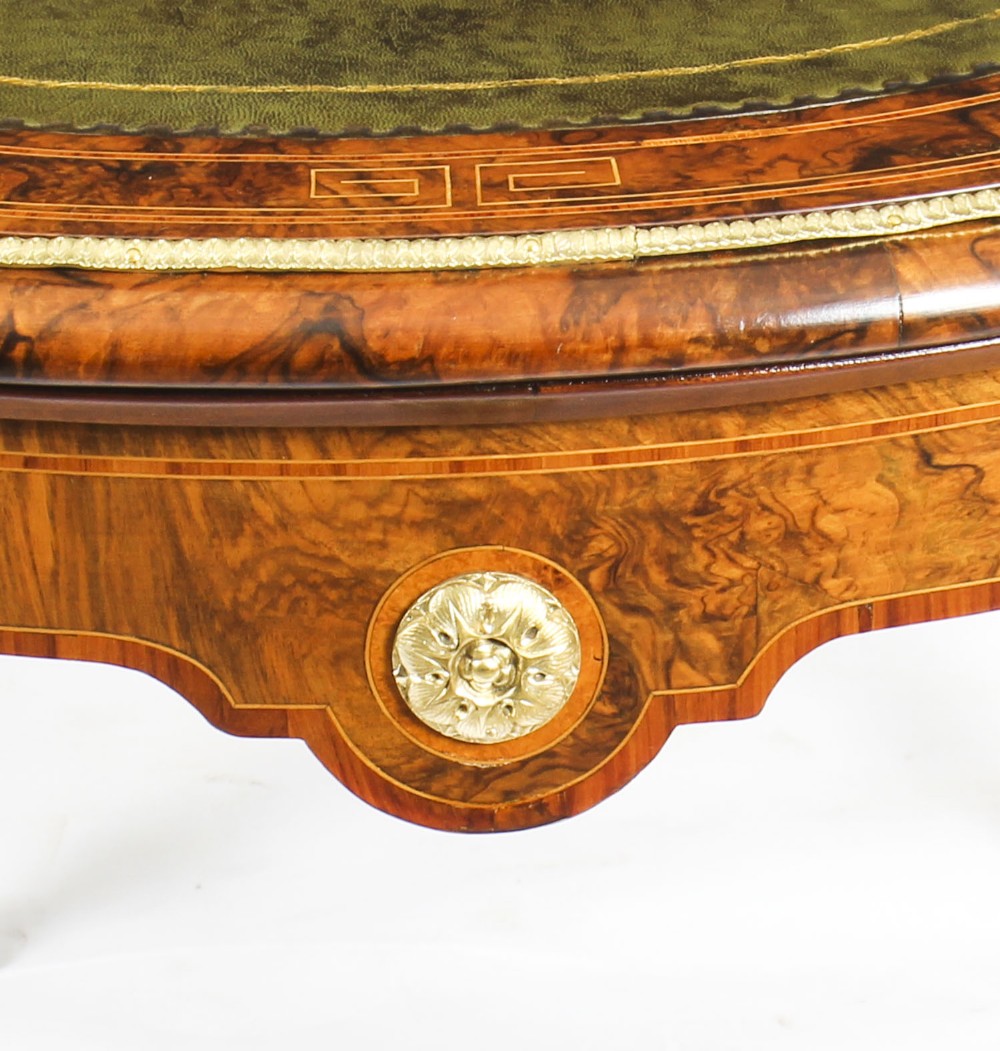
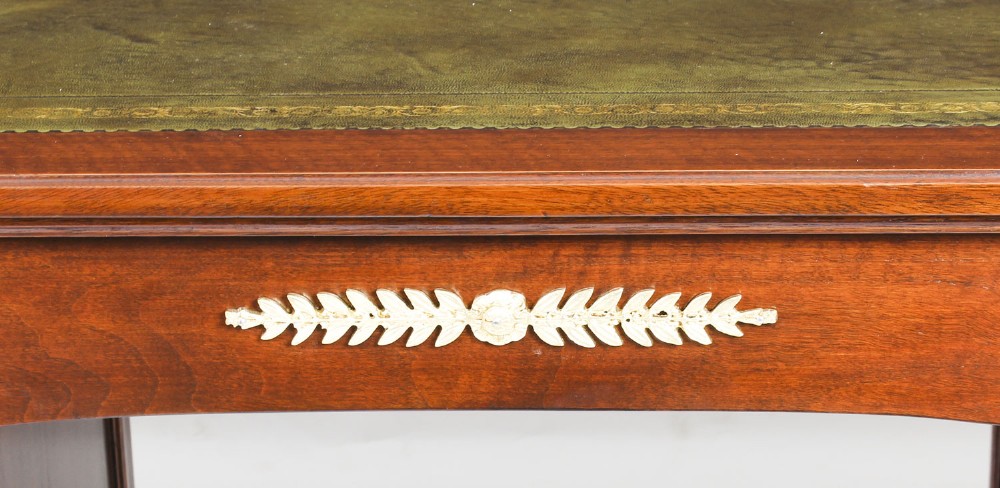
This gorgeous desk is crafted from the most beautiful burr walnut inlaid with stringing and amboyna panels and features striking ormolu mounts.
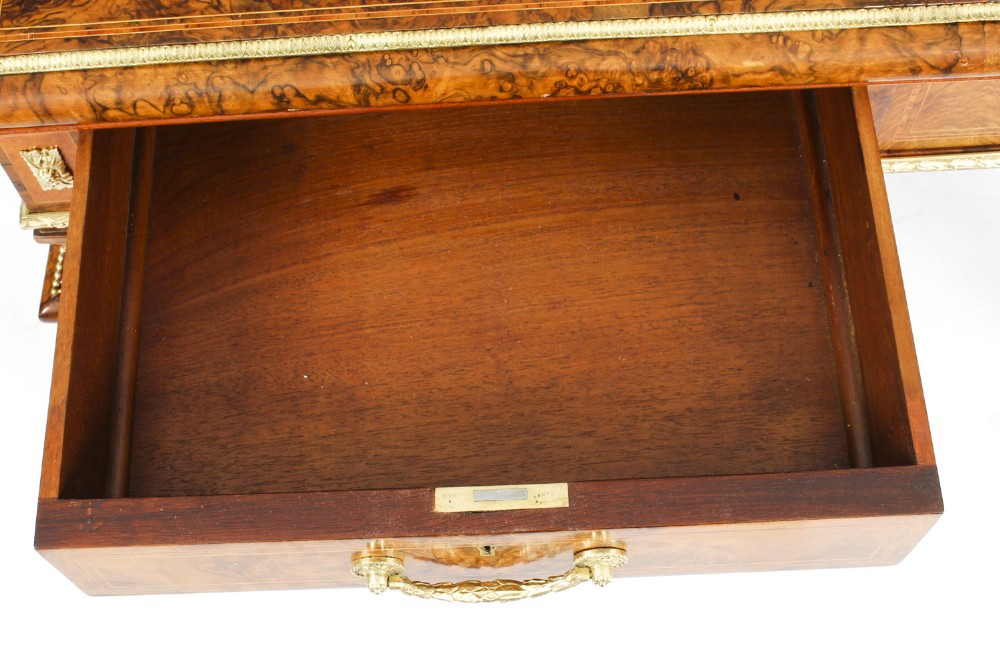
The top is inset with a later gold tooled green leather writing surface above two frieze drawers, one stamped '07086', and it is raised on square tapering legs that terminate in the original brass castors. brass castors.
It is finished on all sides so that it can stand freely in the centre of a room.
Condition:
In excellent condition having been beautifully cleaned polished and reupholstered in our workshops, please see photos for confirmation.
Dimensions in cm:
Height 74 x Width 122 x Depth 61
Dimensions in inches:
Height 29.1 x Width 48.0 x Depth 24.0
Holland & Sons
The firm of Holland & Sons (1803–1942) became from 1843 one of the largest and most successful cabinet makers, and a rival to Gillows of Lancaster and London.
The company's labelled Day books are now housed in the Victoria and Albert Museum Archive of Art and Design where they present a virtual 'who's who' of nineteenth century society.[
Established in 1803 by Stephen Taprell and William Holland, a relation of the architect Henry Holland. Always on the leading edge of fashion, Holland & Sons employed some of England's foremost designers and participated in all of the International Exhibitions of 1851, 1855, 1862, 1867, 1872 and 1878. Holland and Sons also participated in many of the leading international exhibitions including London in 1862, Vienna in 1873 and Paris in 1867 and 1872.
Burr Walnut refers to the swirling figure present in nearly all walnut when cut and polished, and especially in the wood taken from the base of the tree where it joins the roots. However the true burr is a rare growth on the tree where hundreds of tiny branches have started to grow. Burr walnut produces some of the most complex and beautiful figuring you can find.
Amboyna
is a type of wood which has its origins in Indonesia (the preferred veneer comes particularly from the Andaman Islands). The grain texture is one of the most seldom and exclusive on earth.
The burls are often very small, which is why the sheets of veneer come in small dimensions. The colours range from deep yellowish-orange to dark red.
After finishing the surface, the grain texture of amboyna wood has a depth and richness unmatched in other textured woods.
Our reference: A1356