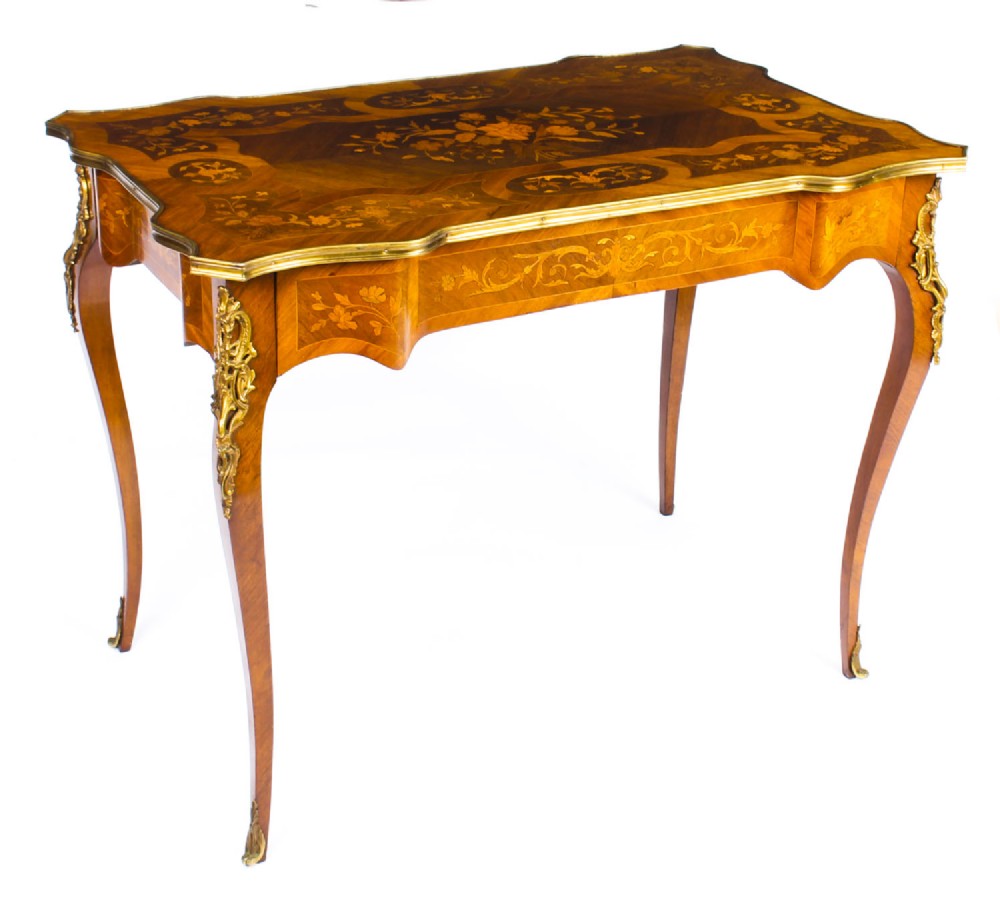
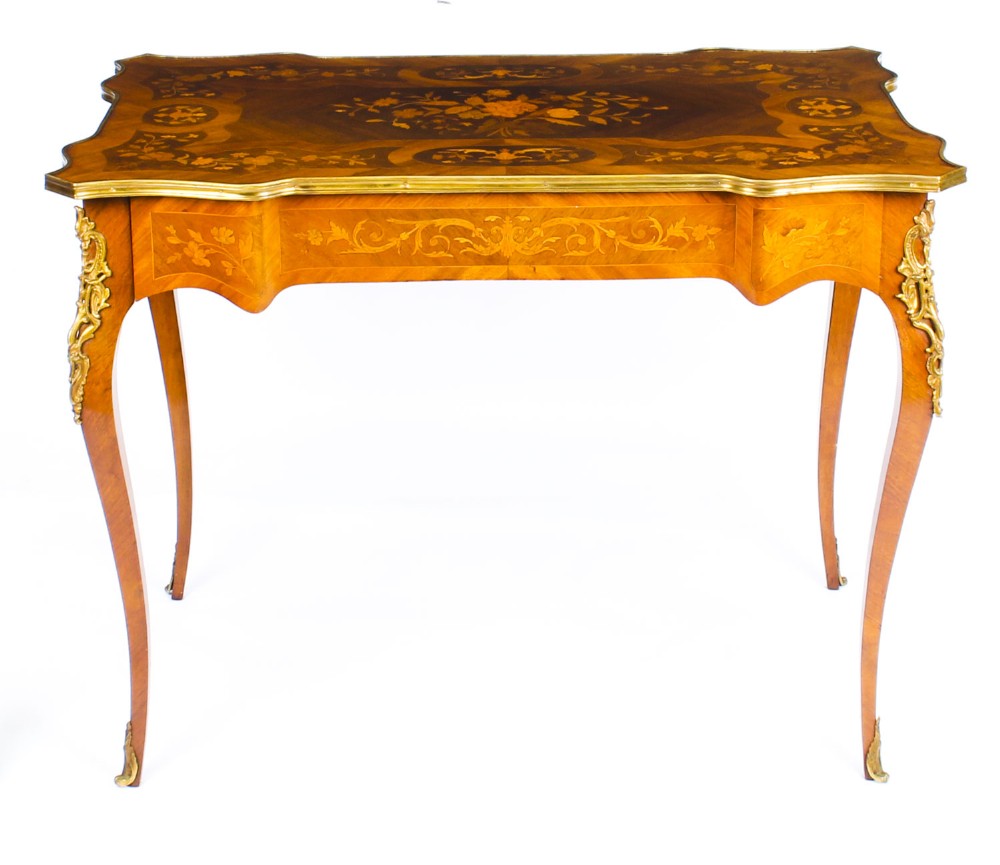
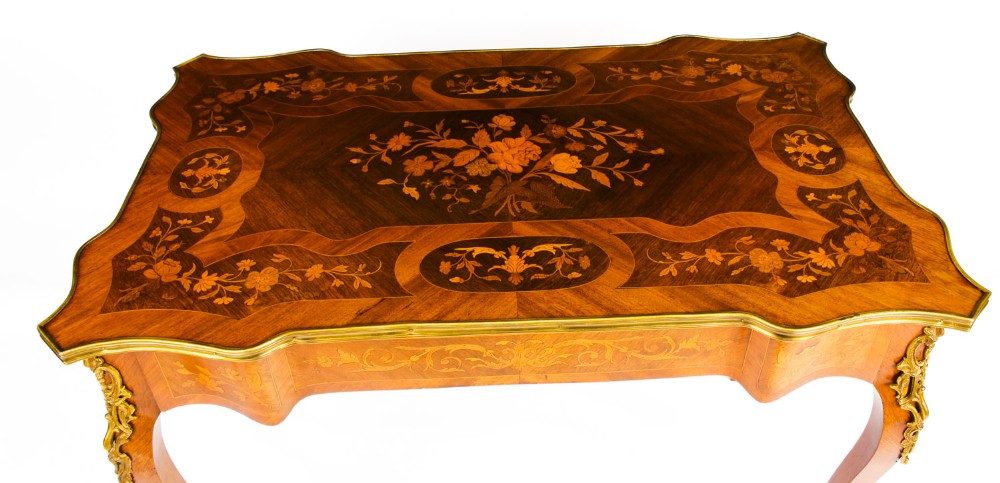
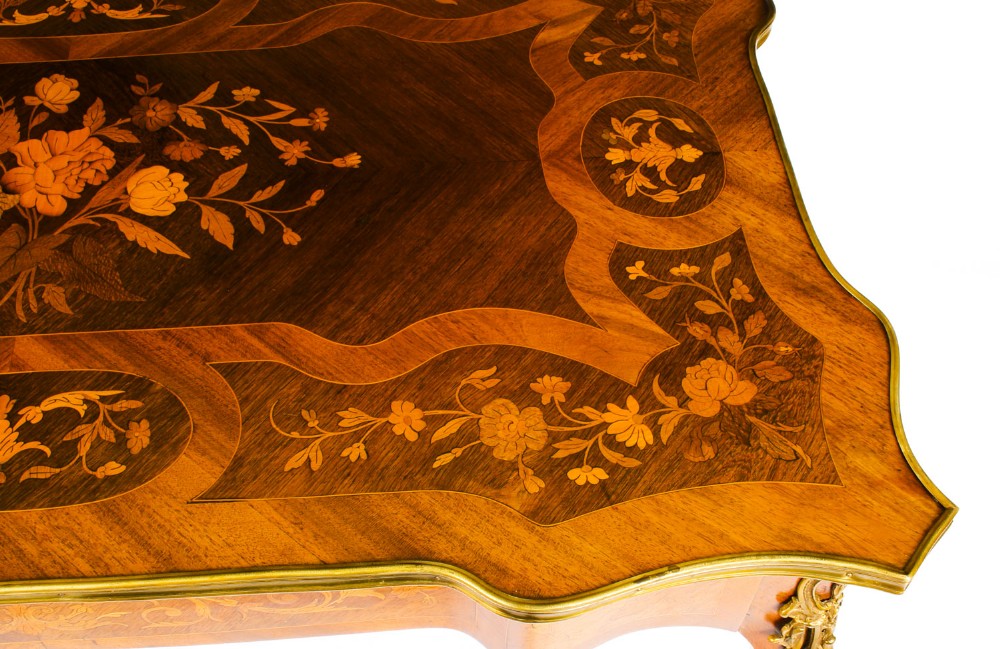
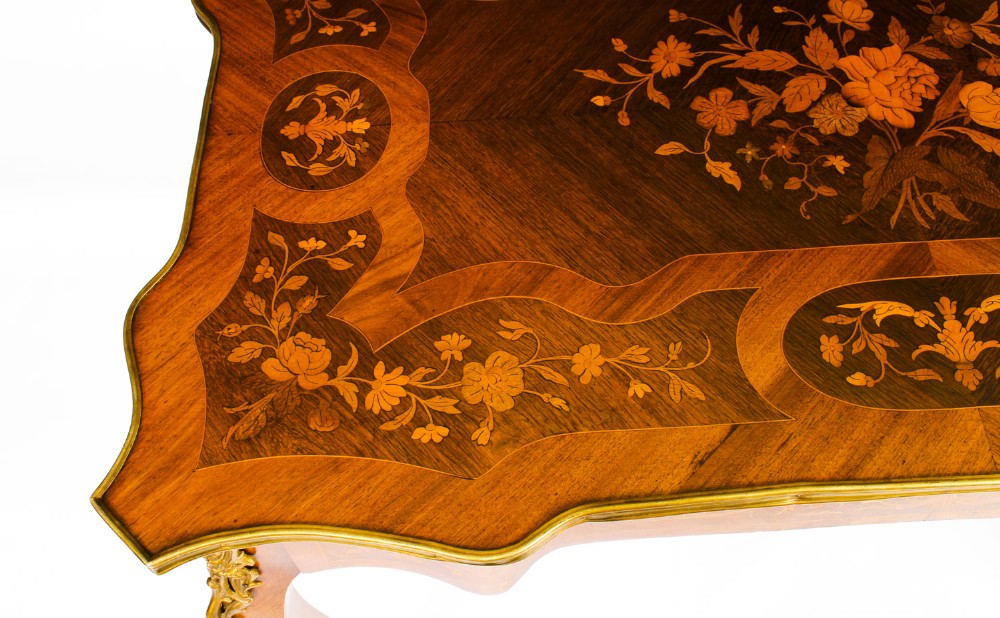
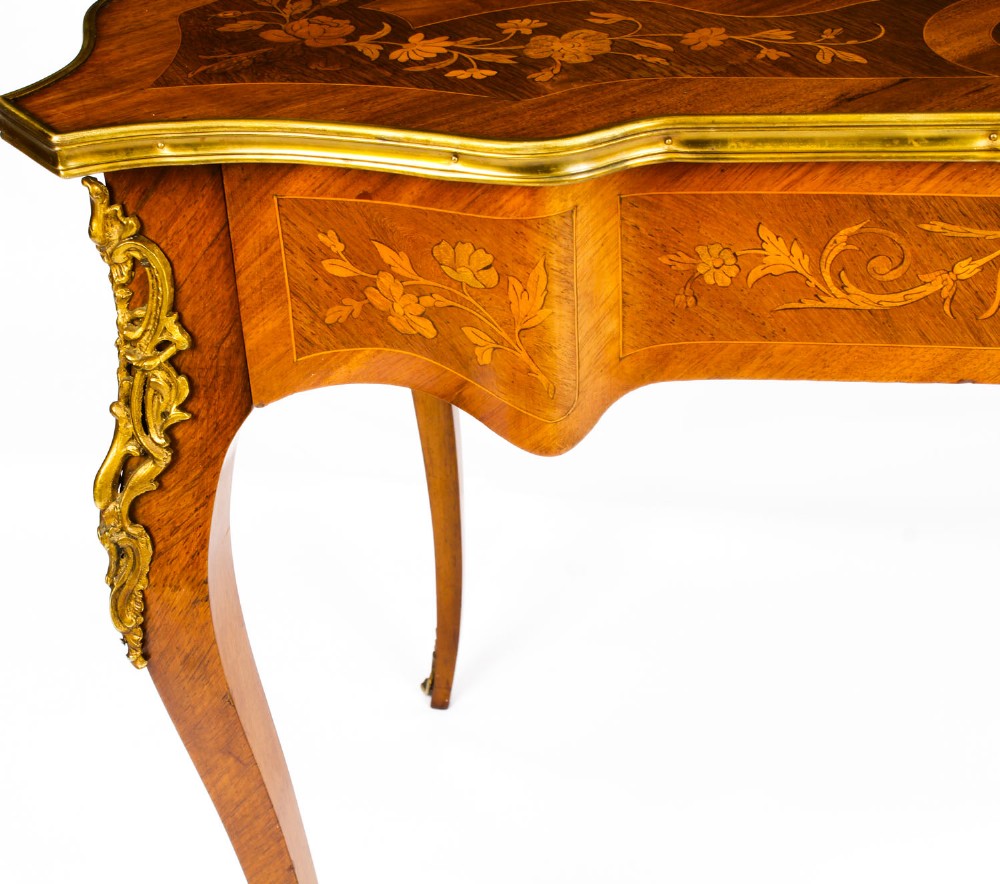
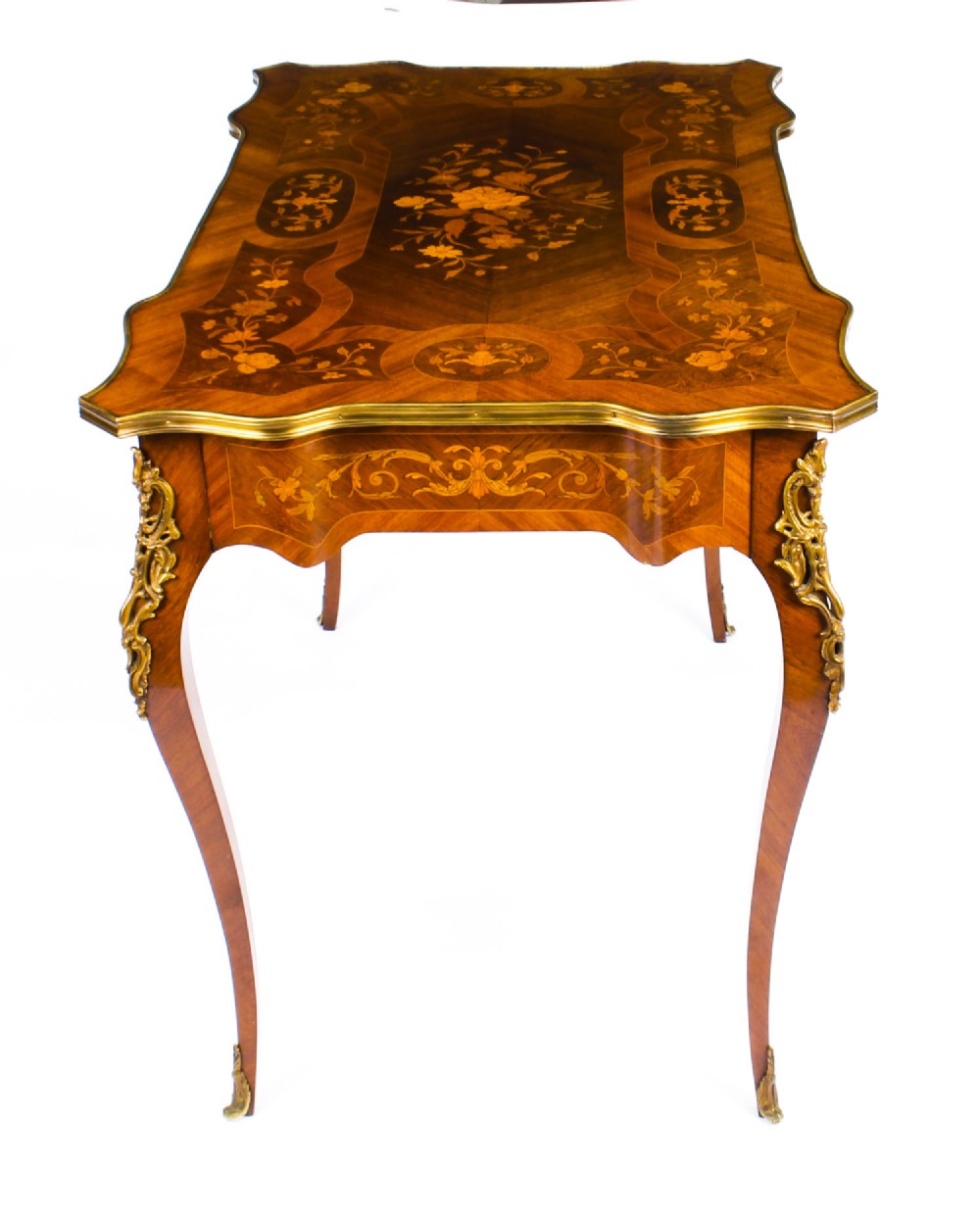
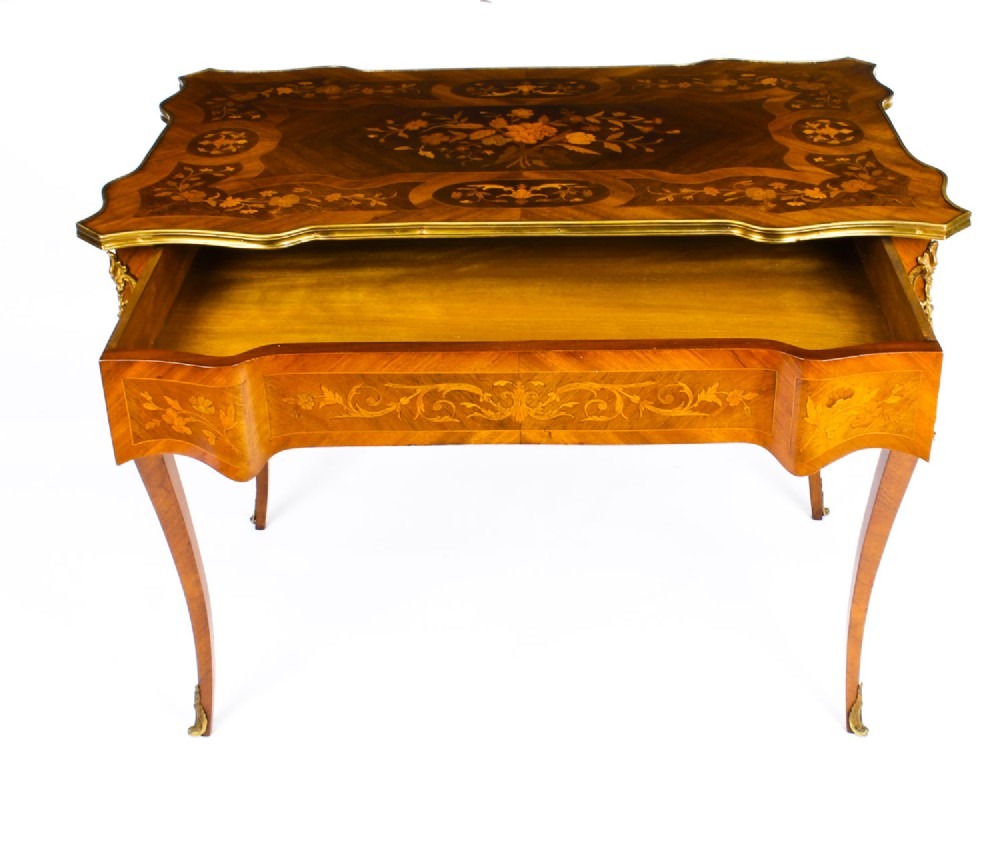
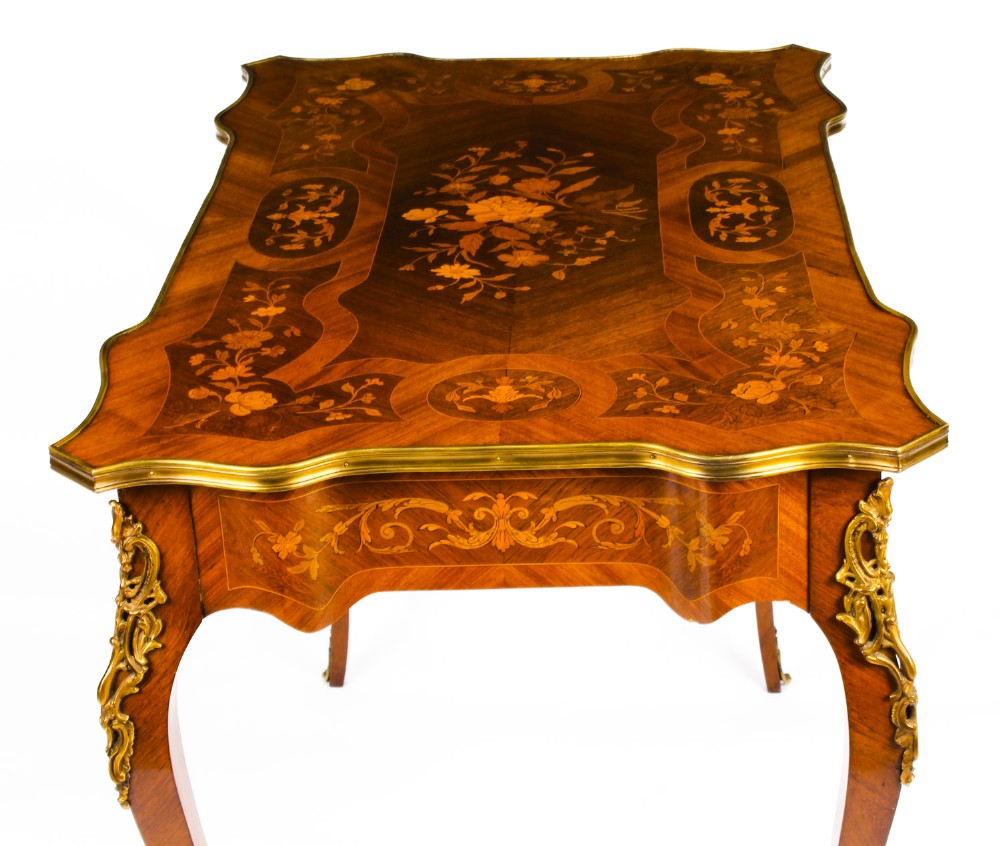
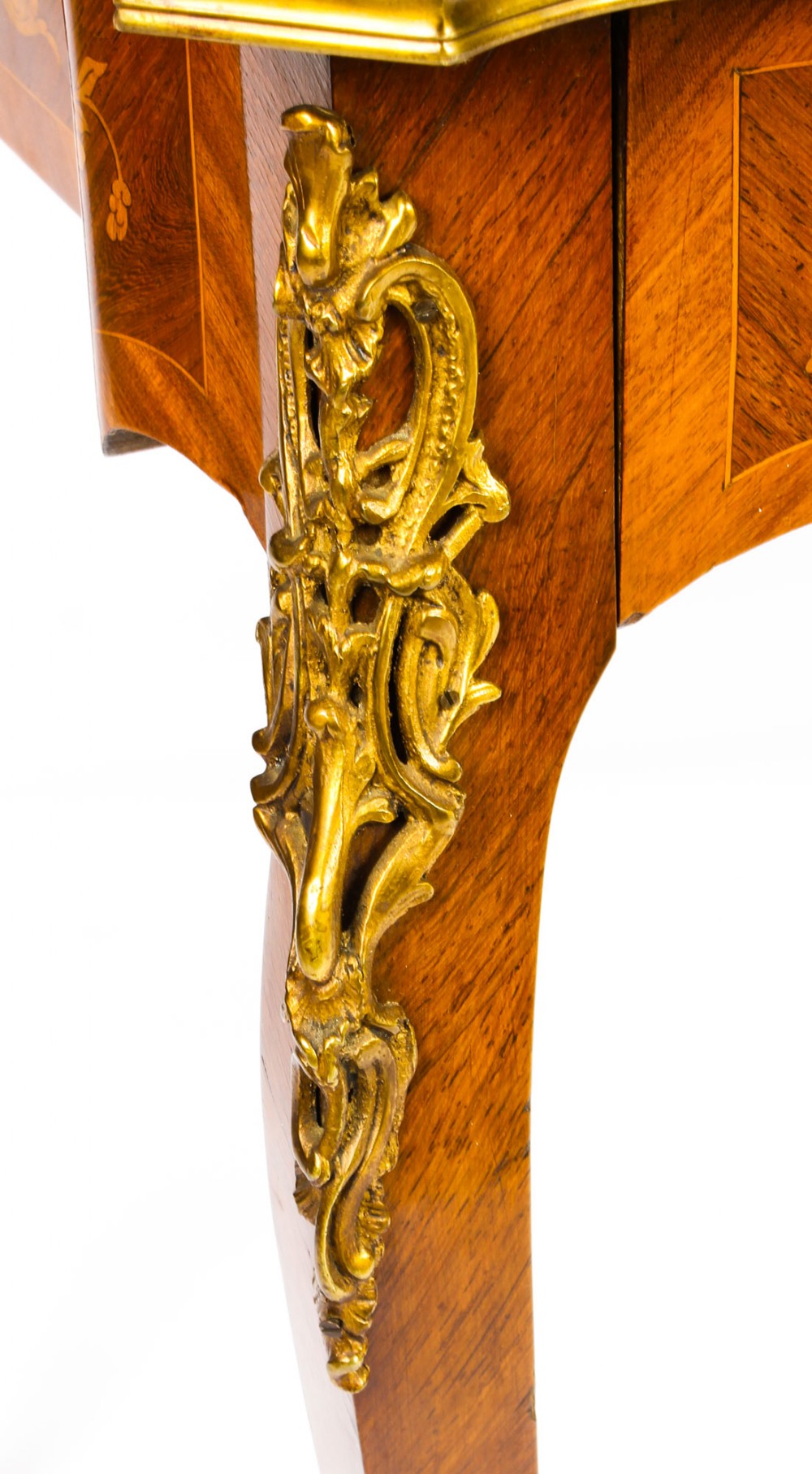
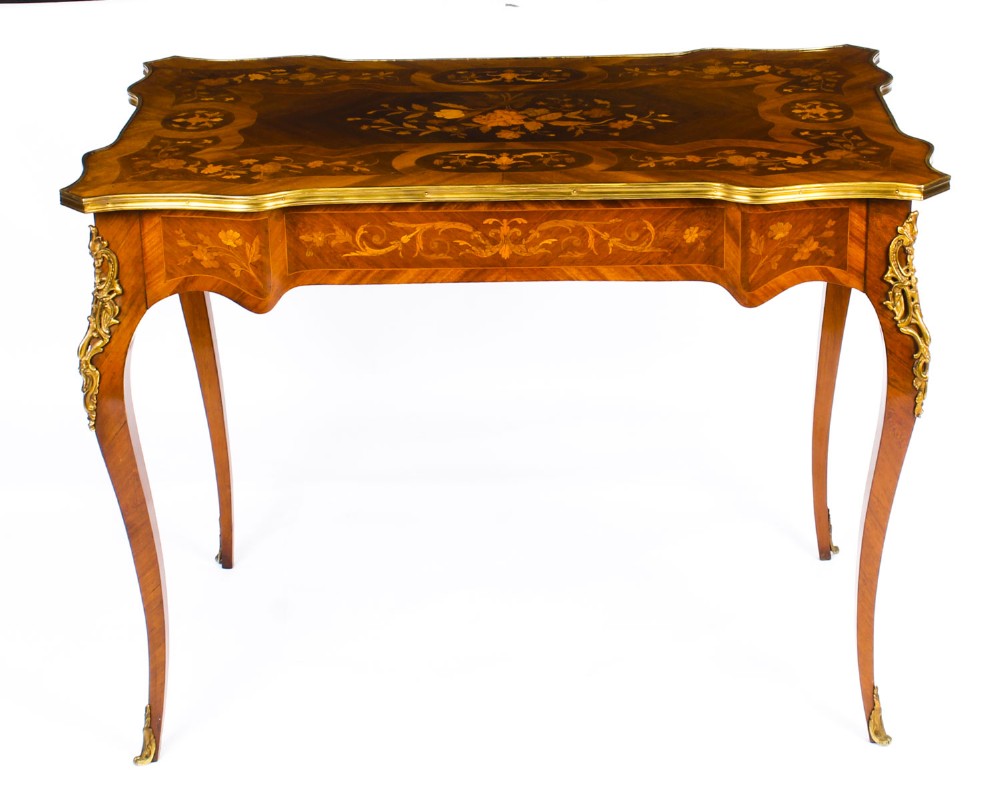
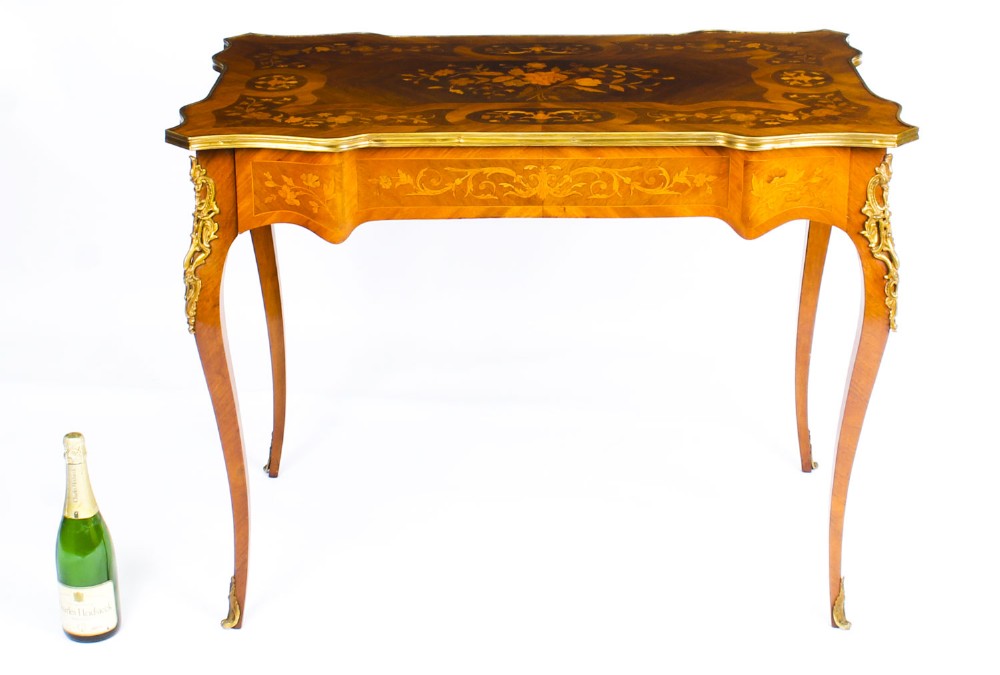
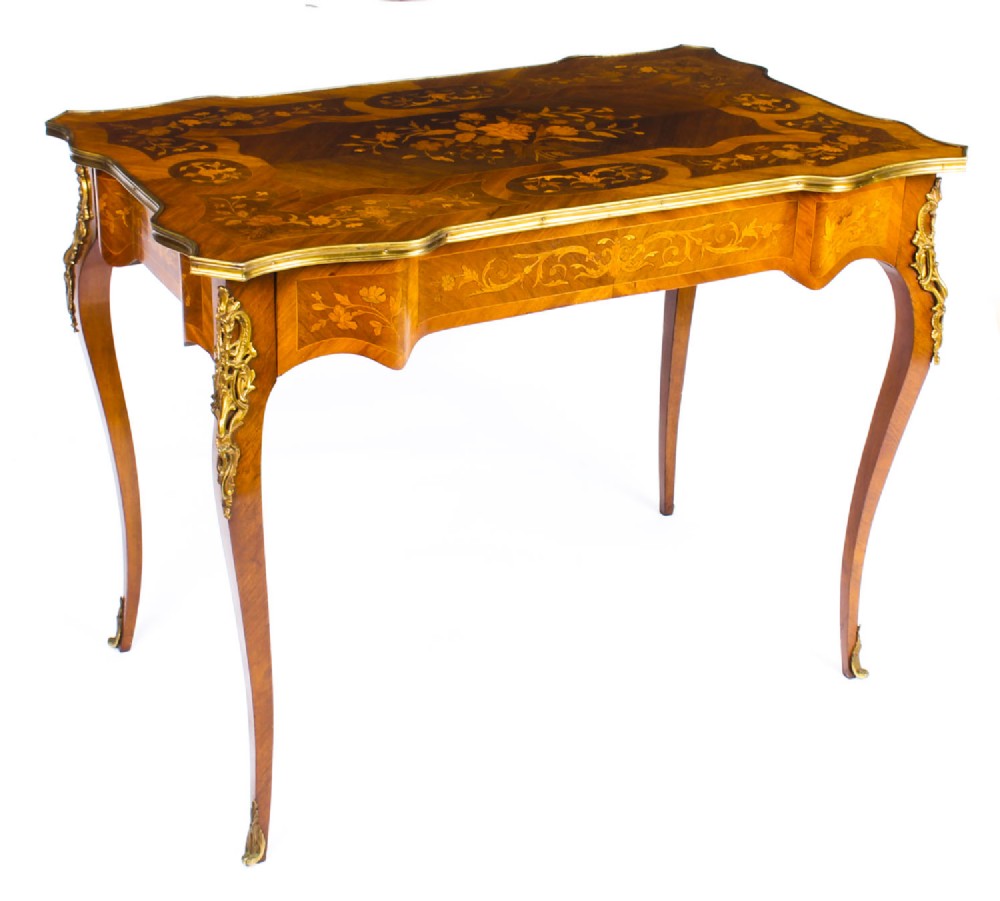
This is an absolutely beautiful Louis revival walnut, specimen marquetry, and ormolu mounted bureau plat circa 1880 in date.
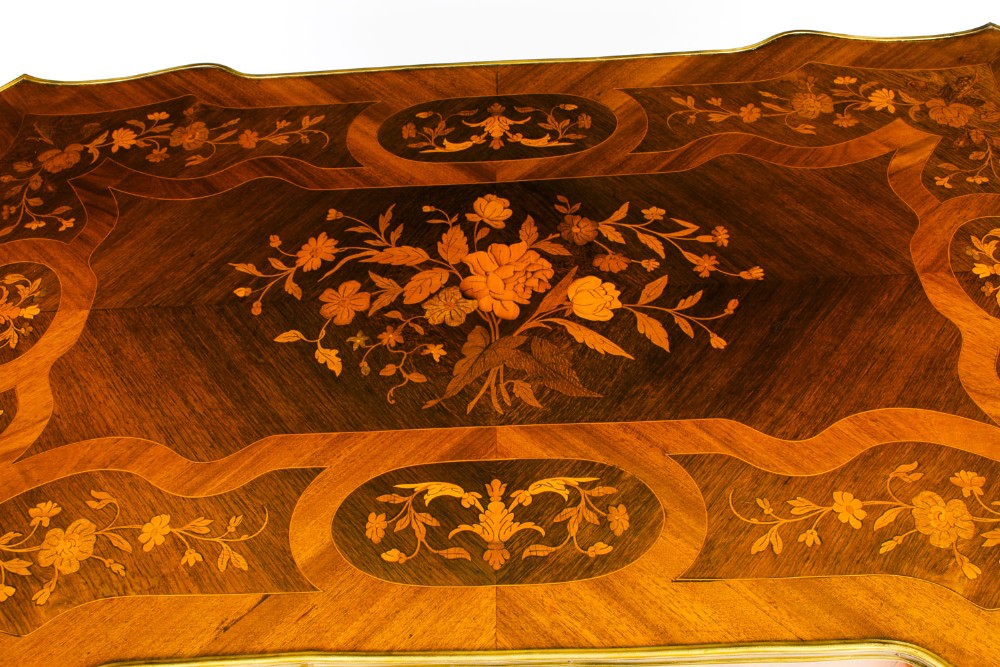
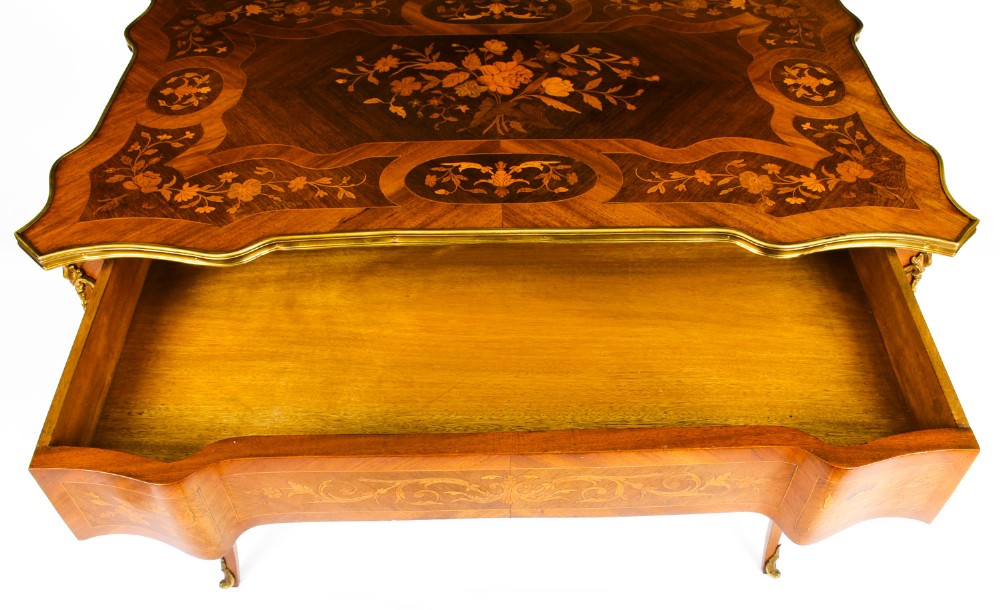
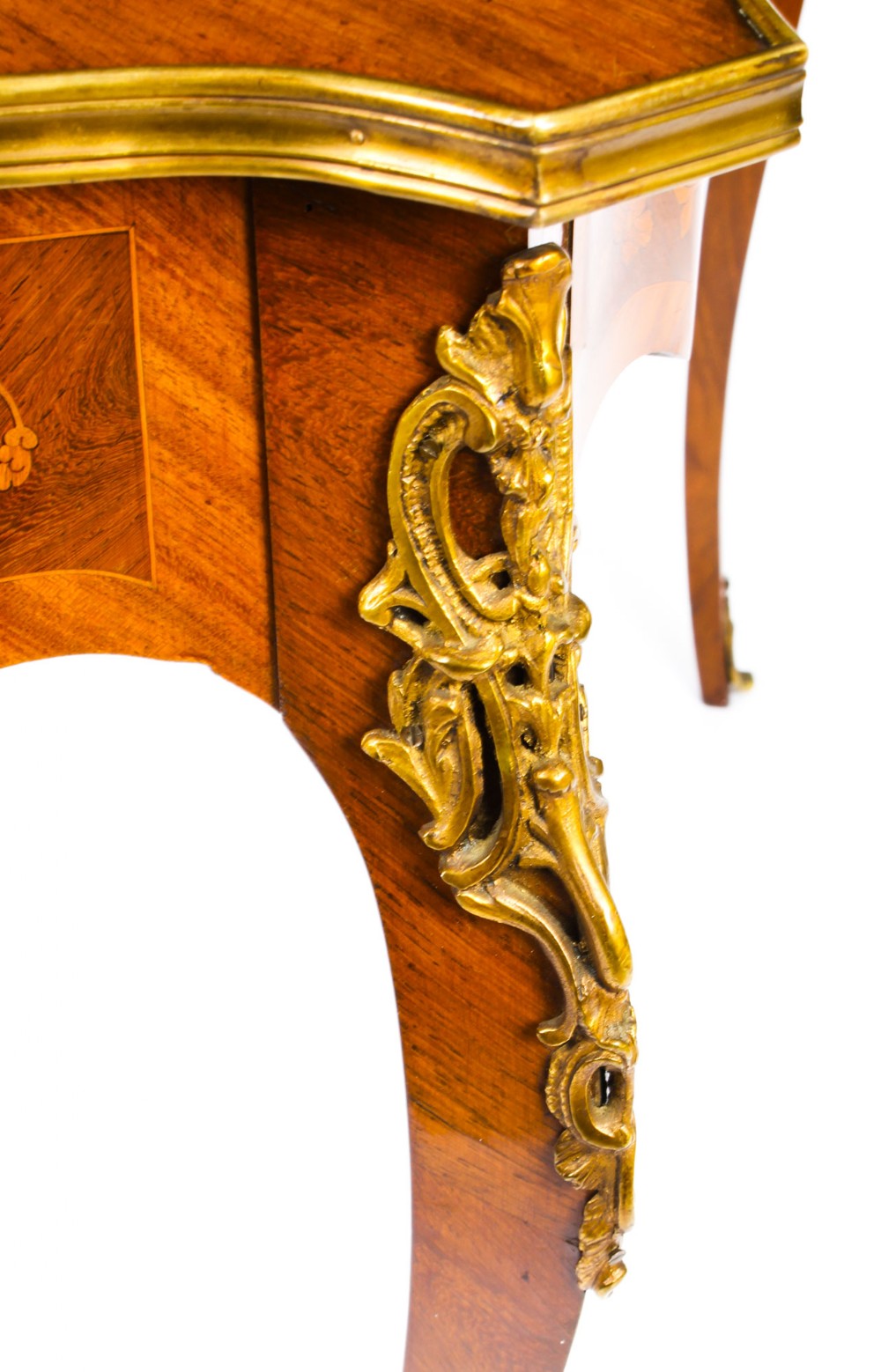
This fantastic bureau plat features a shaped top with ornate foliate and floral marquetry decoration and finished with a stylish ormolu boarder.
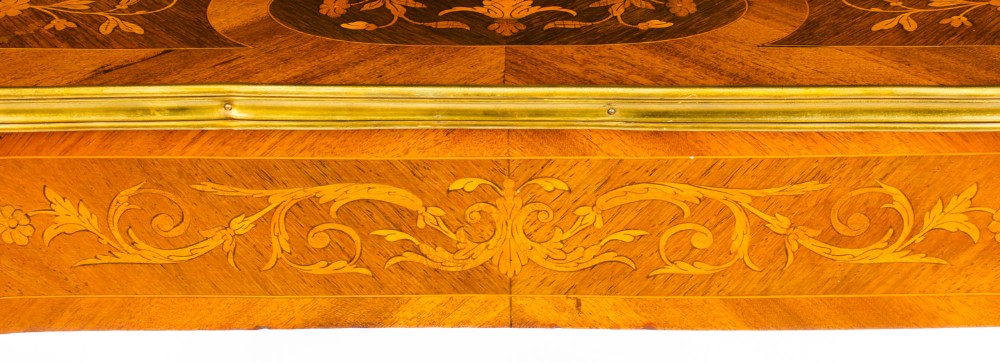
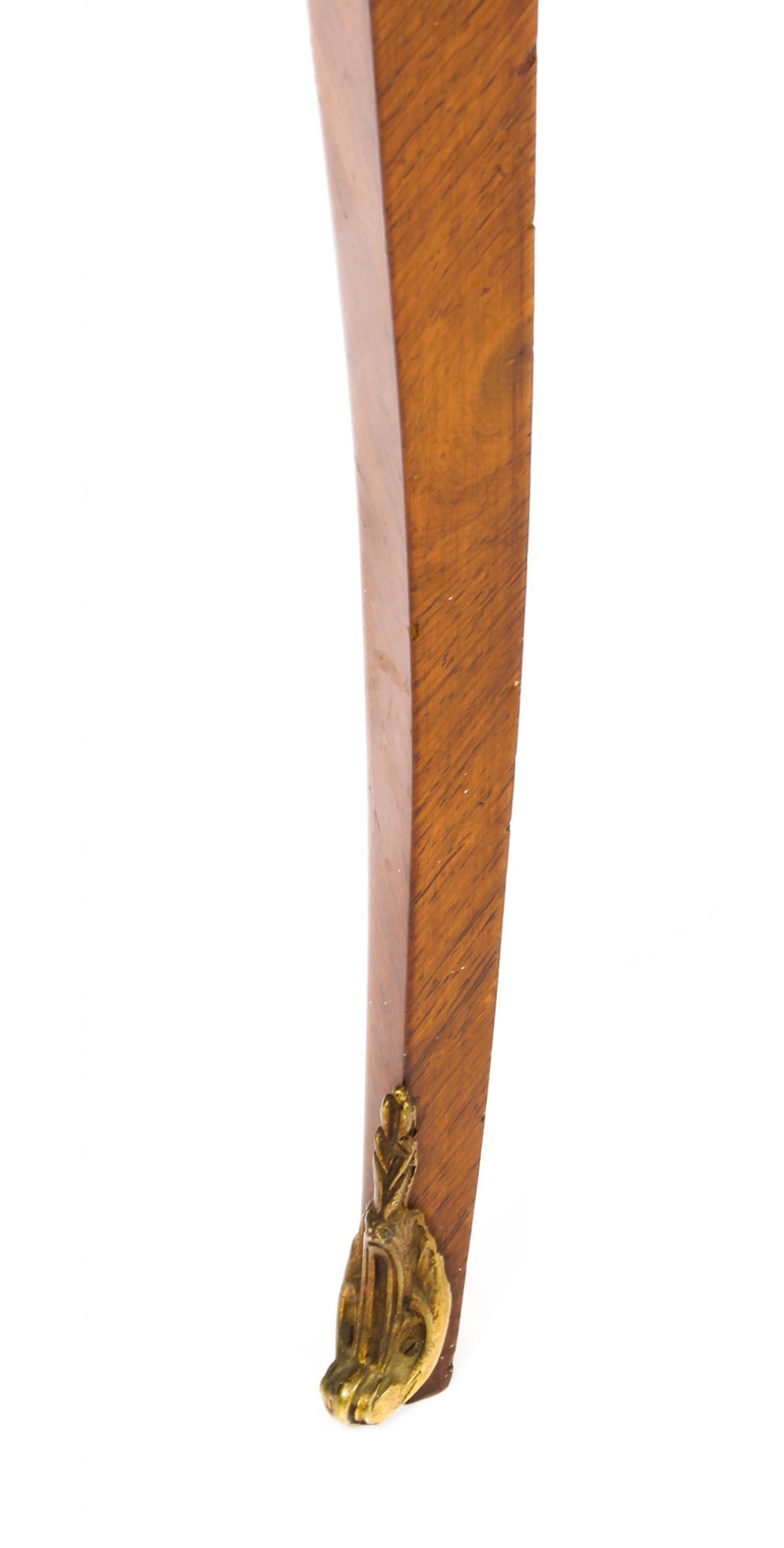
The shaped frieze features a useful drawer and and it is raised on elegant tapering cabriole legs terminating in ormolu sabots.
Add a touch of unparalleled panache and style to your office or drawing room with this truly impressive bureau plat.
Condition:
In excellent condition, having been cleaned and waxed in our workshops, please see photos for confirmation of condition.
Dimensions in cm:
Height 76 x Width 100 x Depth 63
Dimensions in inches:
Height 29.9 x Width 39.4 x Depth 24.8
Marquetry
is decorative artistry where pieces of material (such as wood, mother of pearl, pewter, brass silver or shell) of different colours are inserted into surface wood veneer to form intricate patterns such as scrolls or flowers.
The technique of veneered marquetry had its inspiration in 16th century Florence. Marquetry elaborated upon Florentine techniques of inlaying solid marble slabs with designs formed of fitted marbles, jaspers and semi-precious stones. This work, called opere di commessi, has medieval parallels in Central Italian "Cosmati"-work of inlaid marble floors, altars and columns. The technique is known in English as pietra dura, for the "hardstones" used: onyx, jasper, cornelian, lapis lazuli and colored marbles. In Florence, the Chapel of the Medici at San Lorenzo is completely covered in a colored marble facing using this demanding jig-sawn technique.
Techniques of wood marquetry were developed in Antwerp and other Flemish centers of luxury cabinet-making during the early 16th century. The craft was imported full-blown to France after the mid-seventeenth century, to create furniture of unprecedented luxury being made at the royal manufactory of the Gobelins, charged with providing furnishings to decorate Versailles and the other royal residences of Louis XIV. Early masters of French marquetry were the Fleming Pierre Golle and his son-in-law, André-Charles Boulle, who founded a dynasty of royal and Parisian cabinet-makers (ébénistes) and gave his name to a technique of marquetry employing shell and brass with pewter in arabesque or intricately foliate designs.
Our reference: A1555