It was listed by Loveday Antiques. Sold pieces stay on Sellingantiques as a record of what has passed through, and the next one is rarely far away.
Loveday Antiques has dated this piece to the 19th Century.
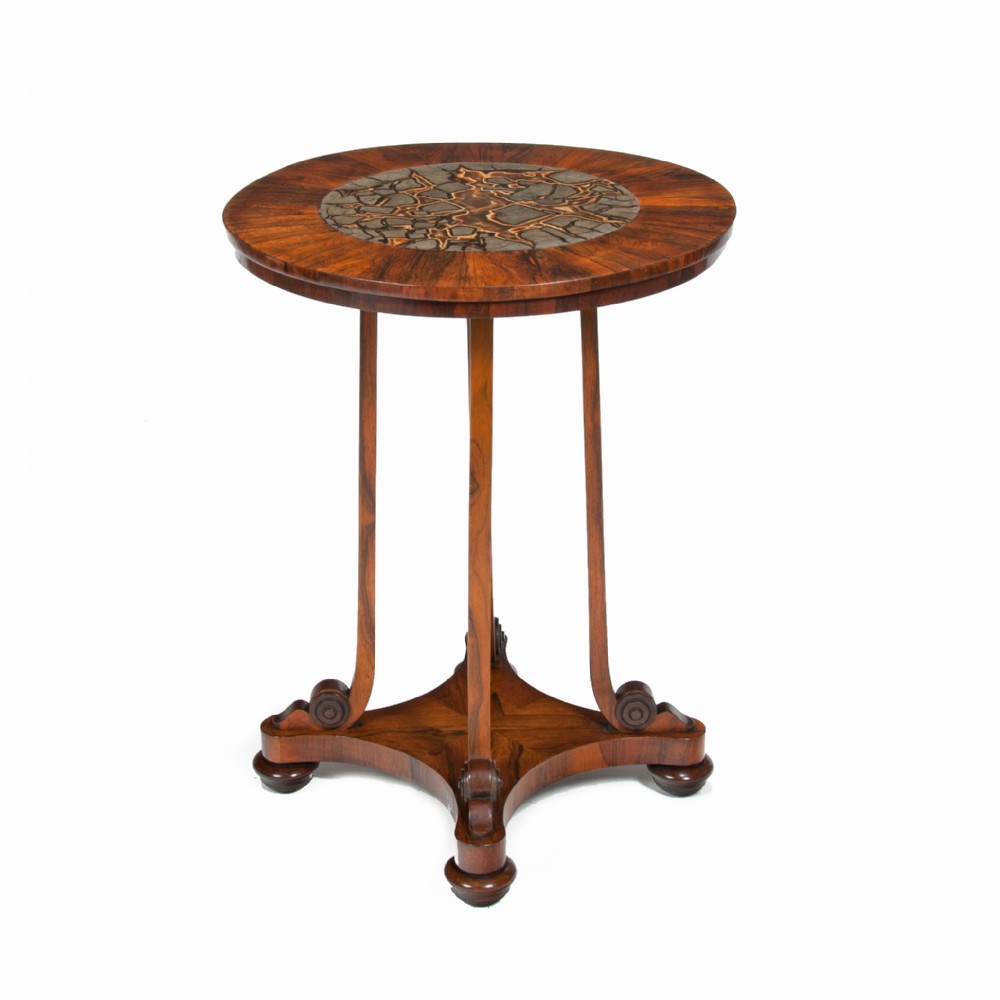
English circa 1835.
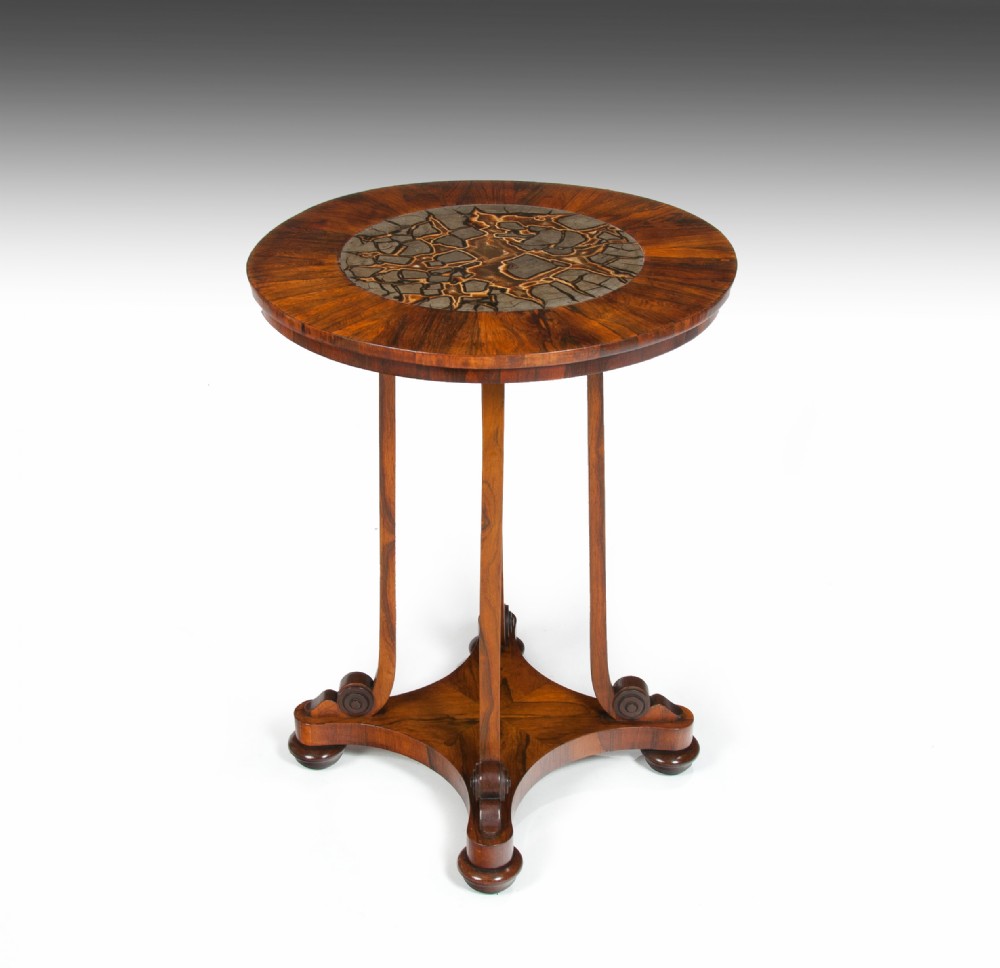
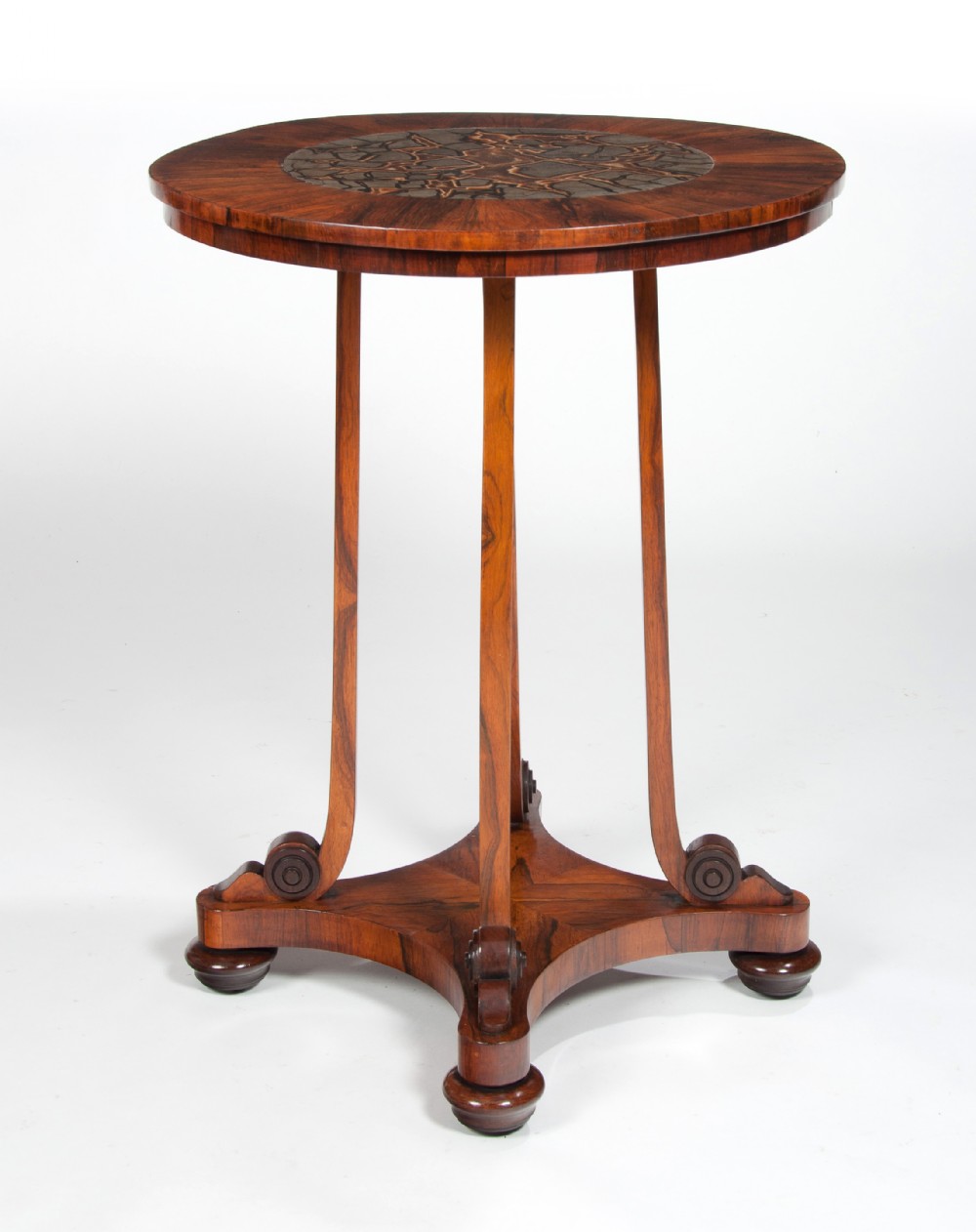
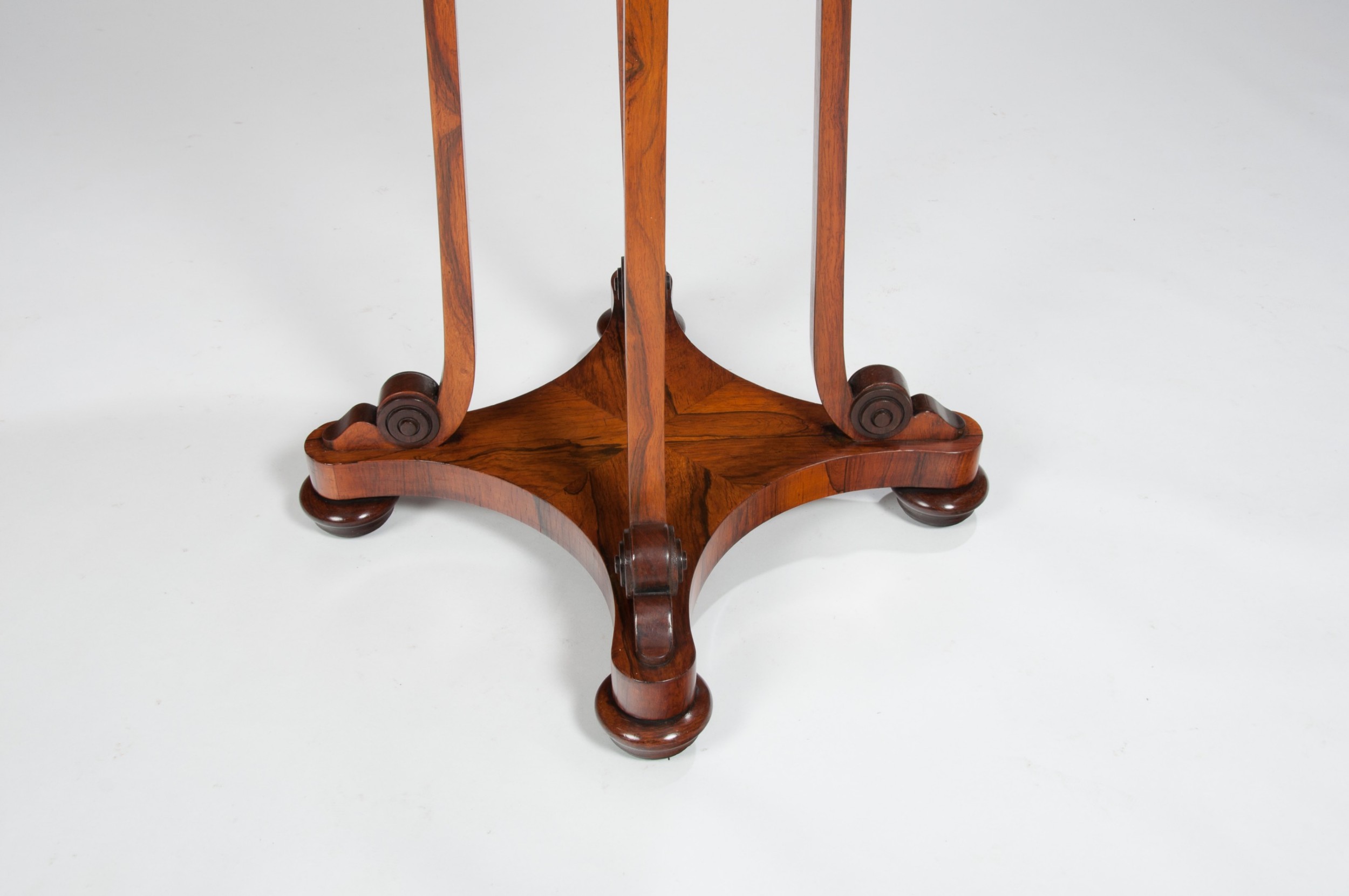
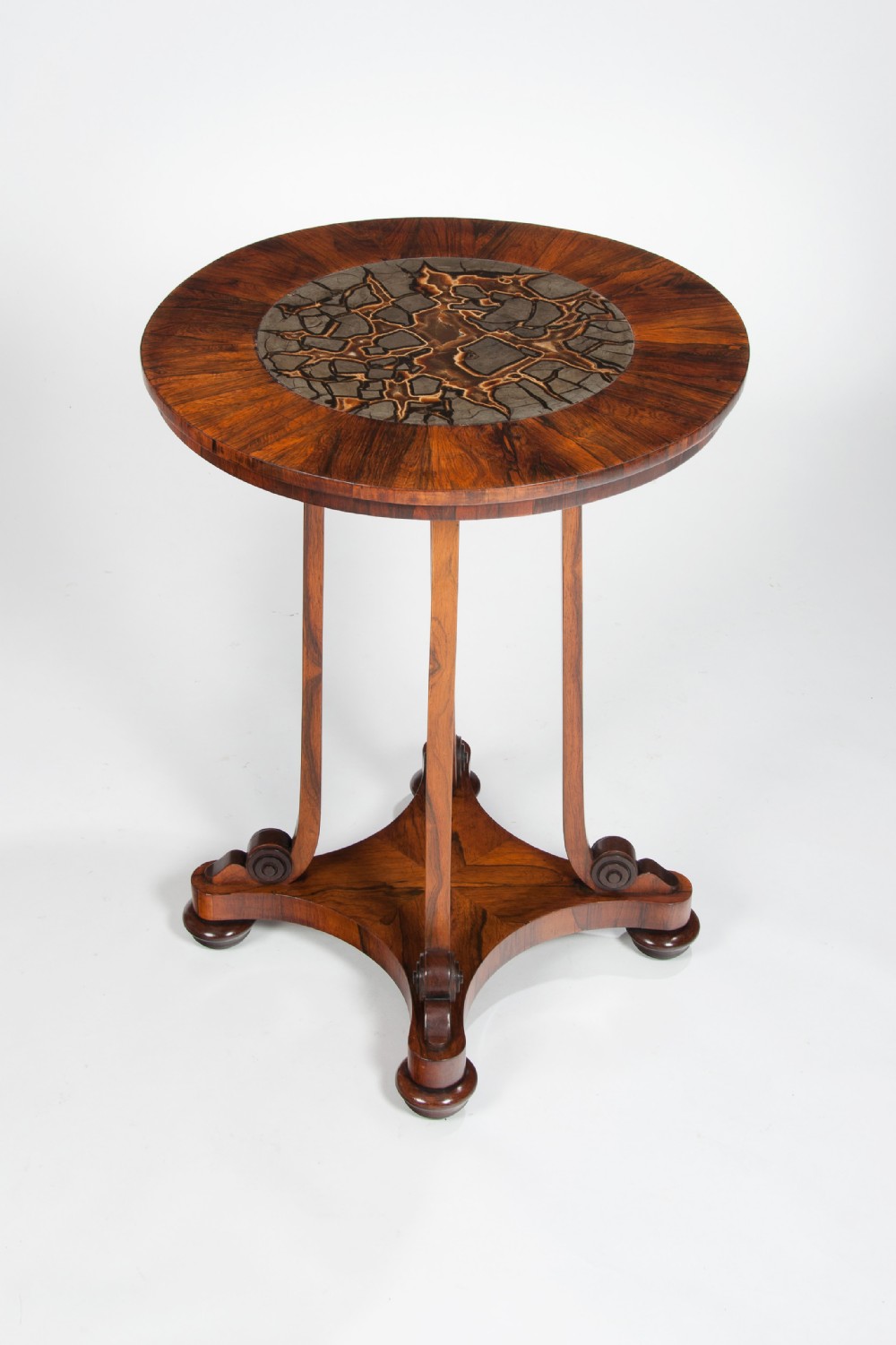
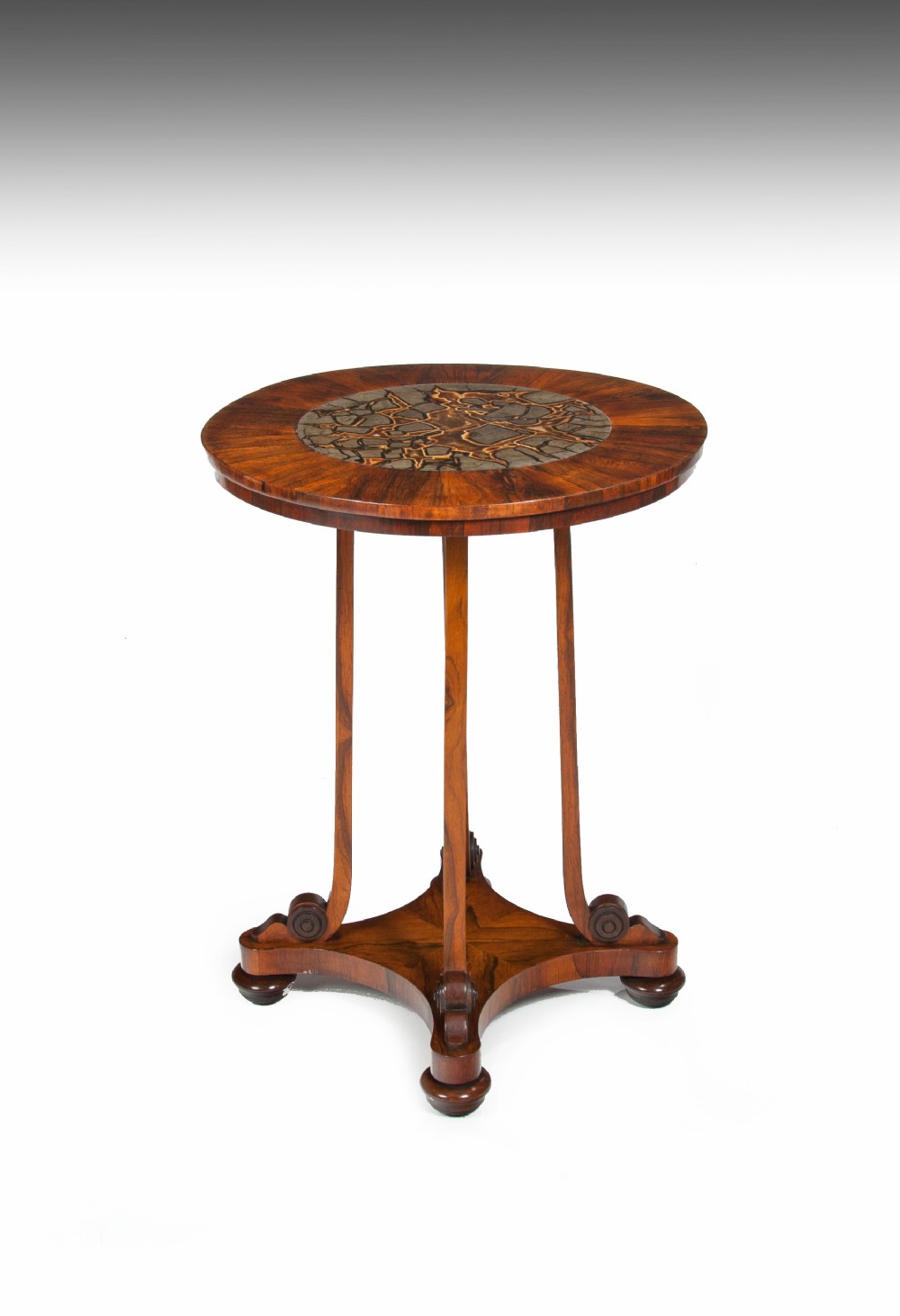
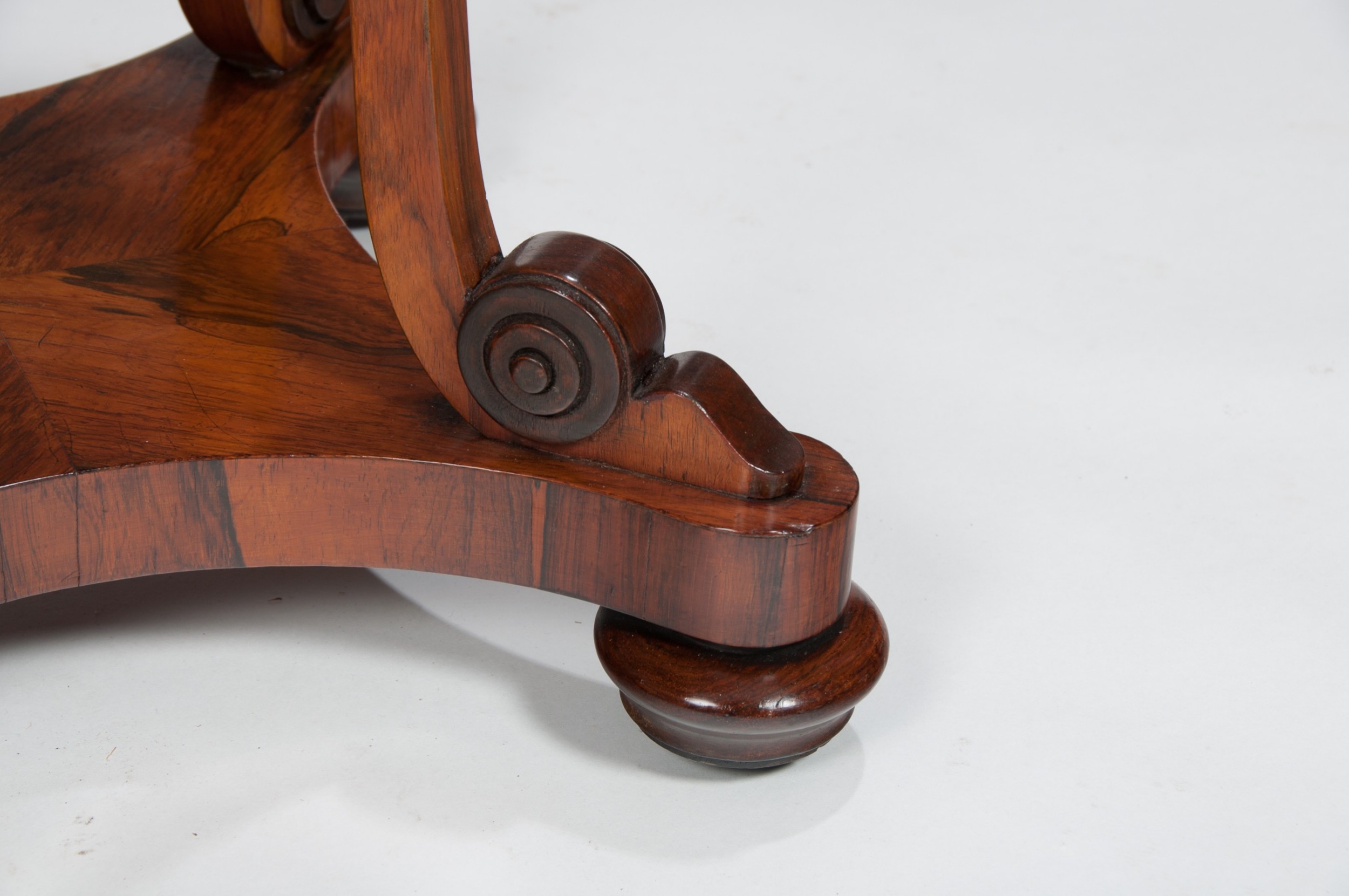
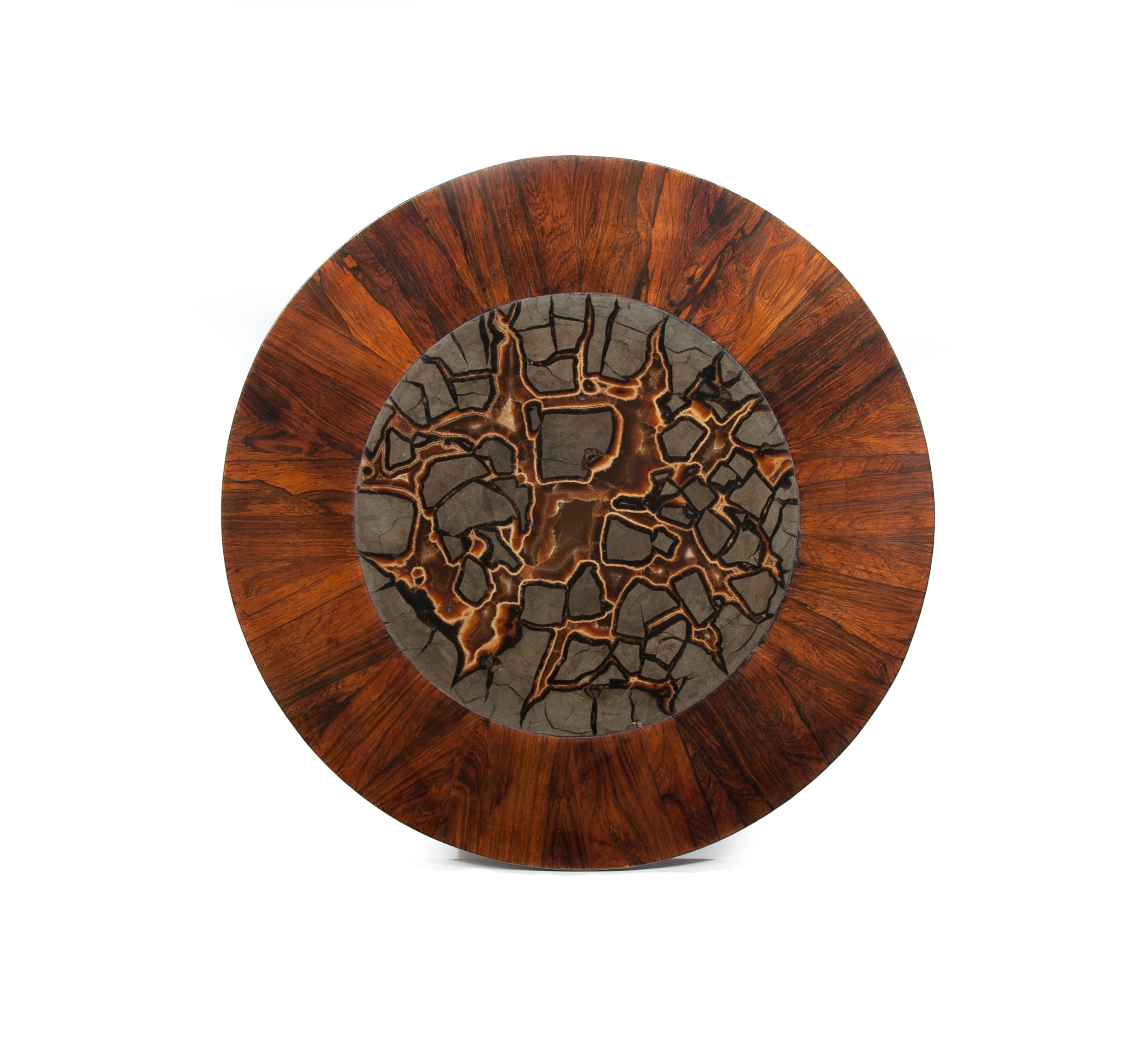
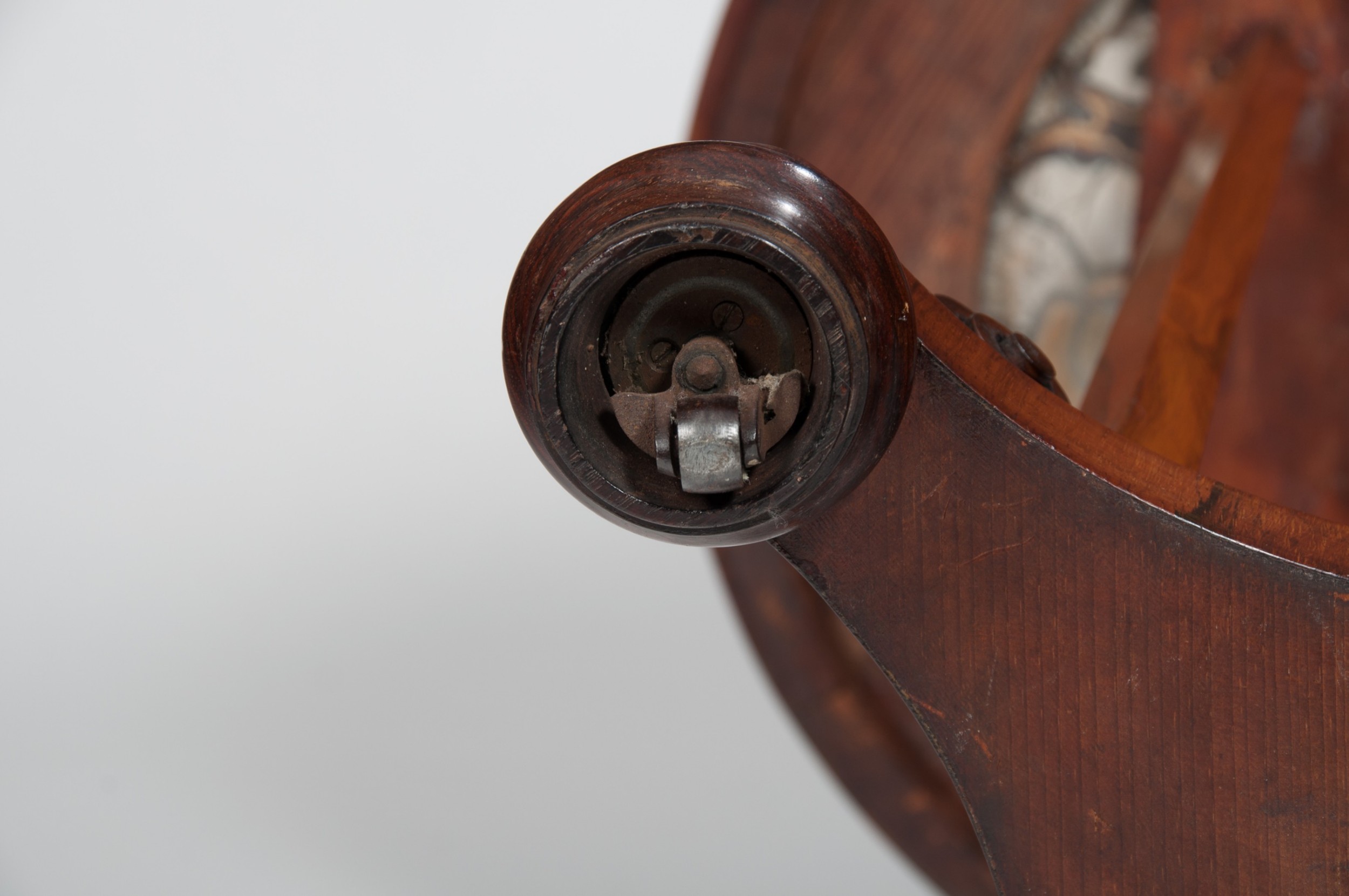
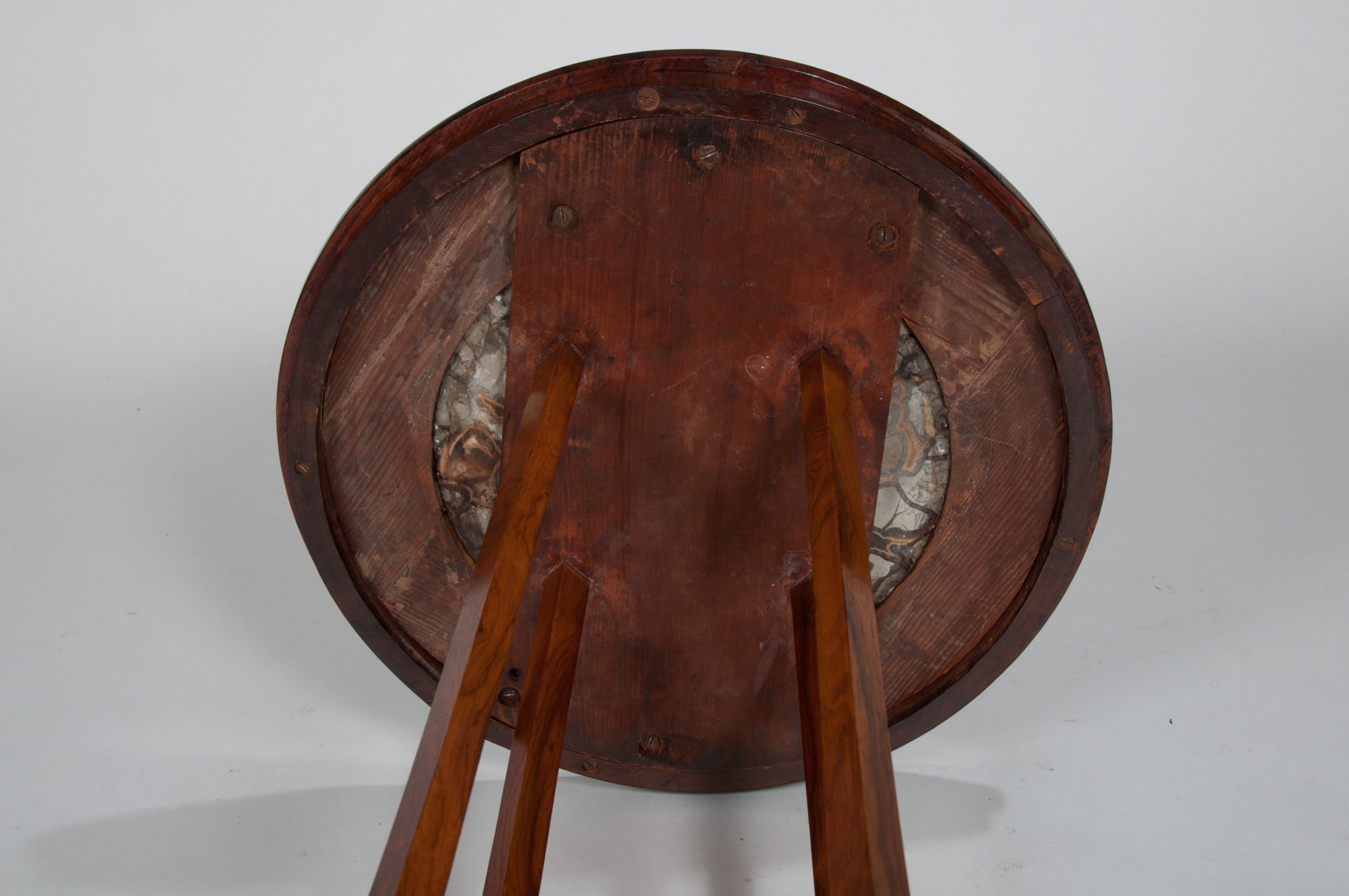
The circular top having a rosewood veneered border inset with a large turtle stone marble specimen held by four very slender supports, finishing on a concave sided platform base raised on turned bun feet retaining the original recessed squat castors.
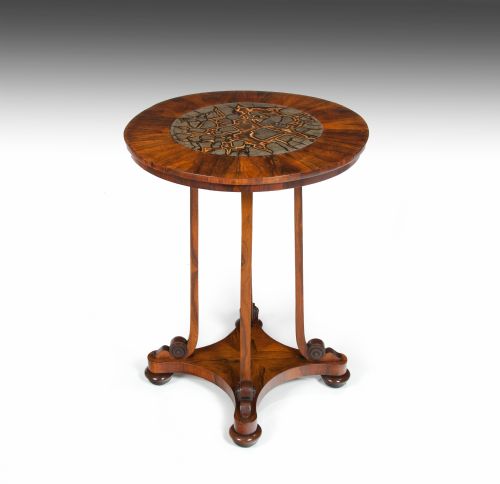
Known as turtle stone for its characteristic pattern of radiating cracks is also referred to as Septarian nodule or volcanic rock.
Septarian nodules are a remarkable geological formation created during the Jurassic period 150 million years ago when pores in a mass of sedimentary rock often filled with fossils are filled with mineral deposits which harden in a spherical form. The cracks (septaria) formed are something of a mystery but they produce a beautifully striking and unusual effect.
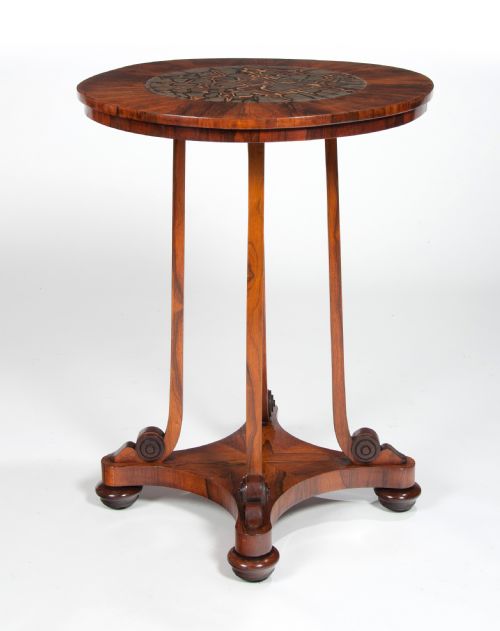
Found in the English Oxfordshire clay during a mining process in the early 19th Century, this wonderful discovery found the spheres could be cut and polished to be incorporated into items of furniture and ornaments. The Septarian nodules found in England were only ever small, so it is very rare to have a large circumference top as the one we have in stock presently.
Dimensions
Height 29 inches - 73.5cm
Diameter 22 inches - 56cm
Loveday Antiques has dated this piece to the 19th Century.
Specialist furniture dealers 18th-20th century
You can view the stock and full dealer information on the Loveday Antiques Profile Page
Loveday Antiques is a registered member of LAPADA BADA CINOA
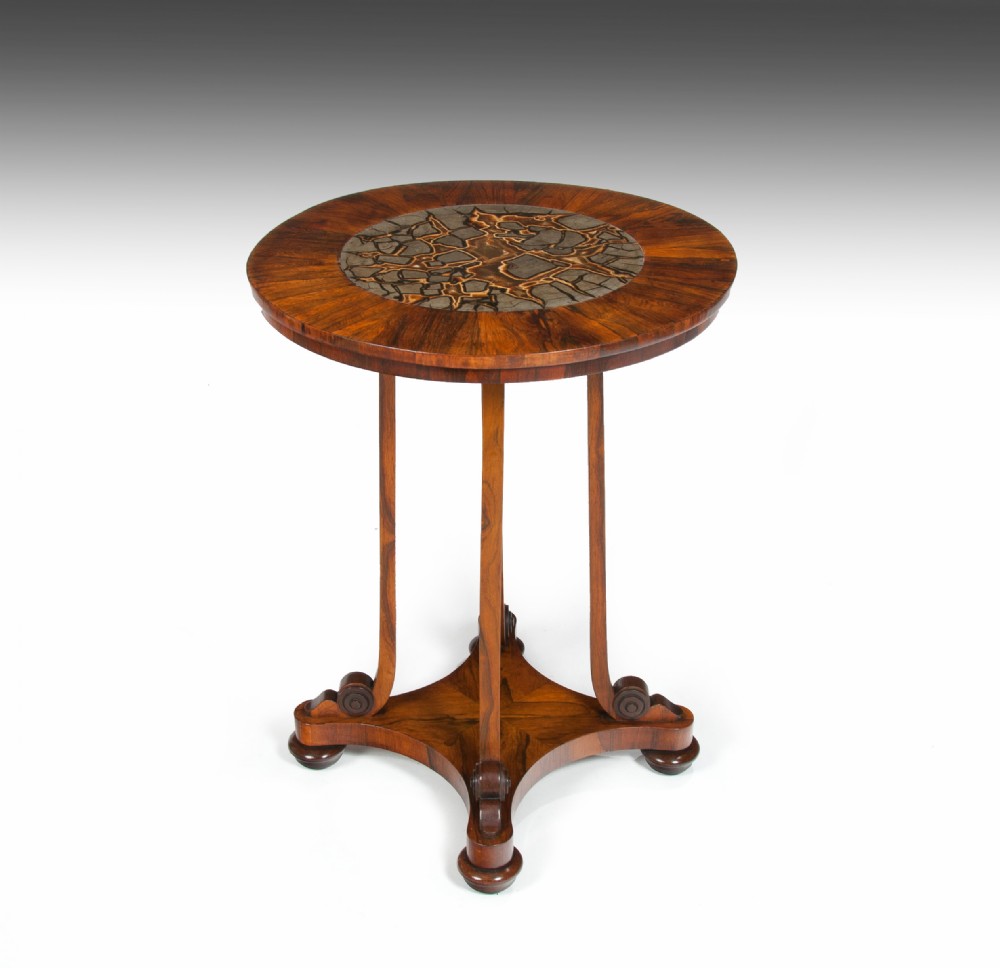
Rare 19th Century William IV Turtle Stone Marble Top Specimen Table