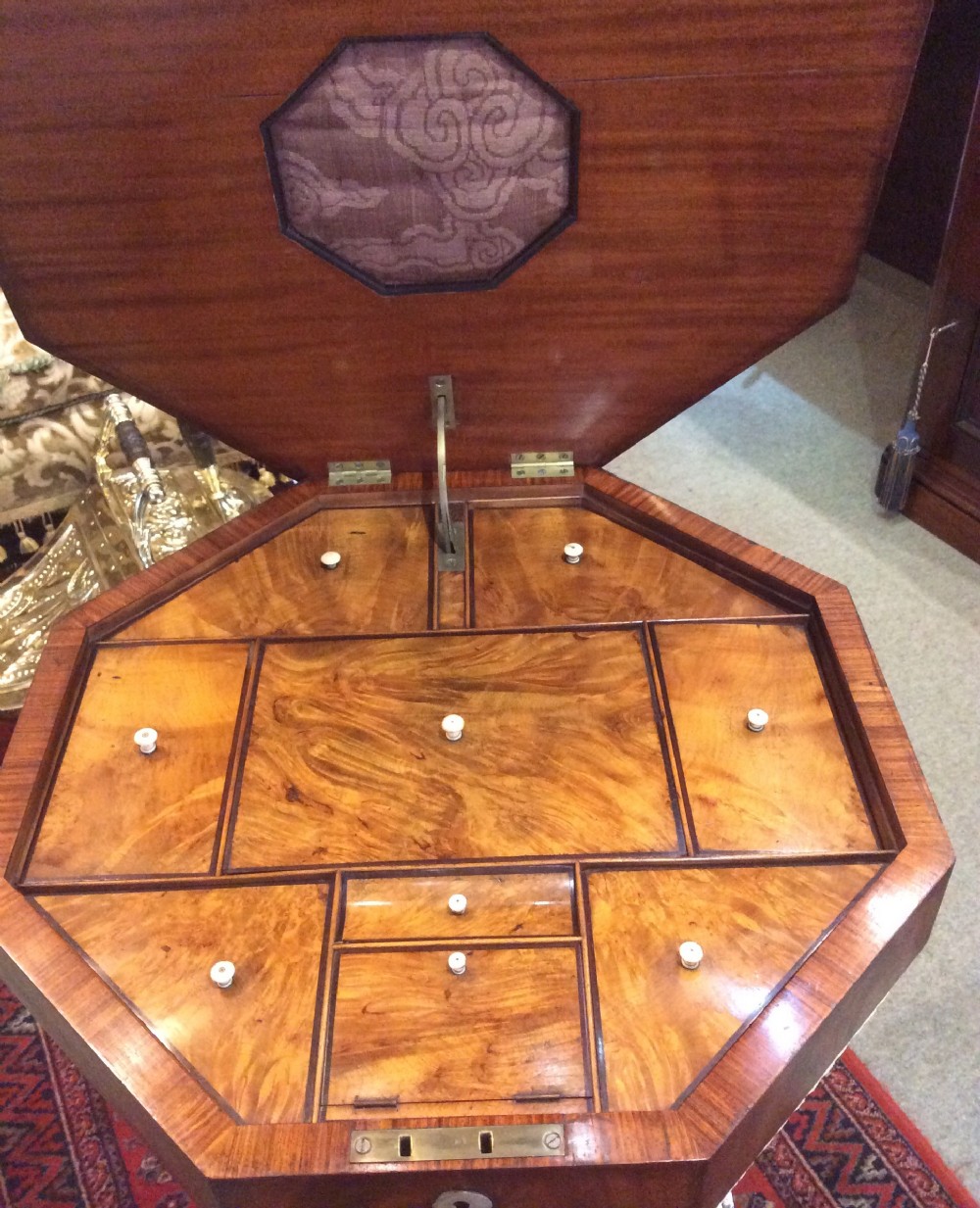
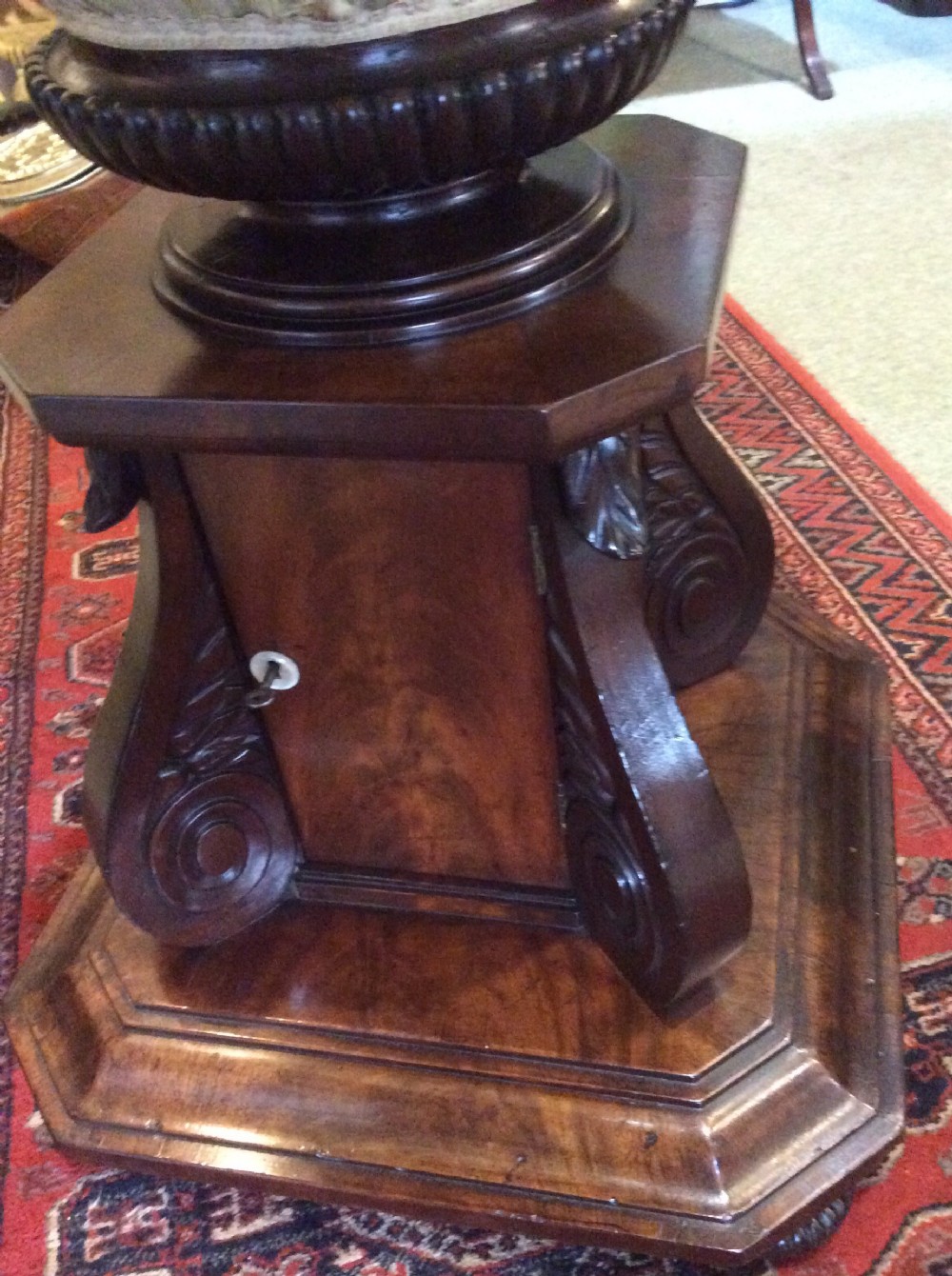
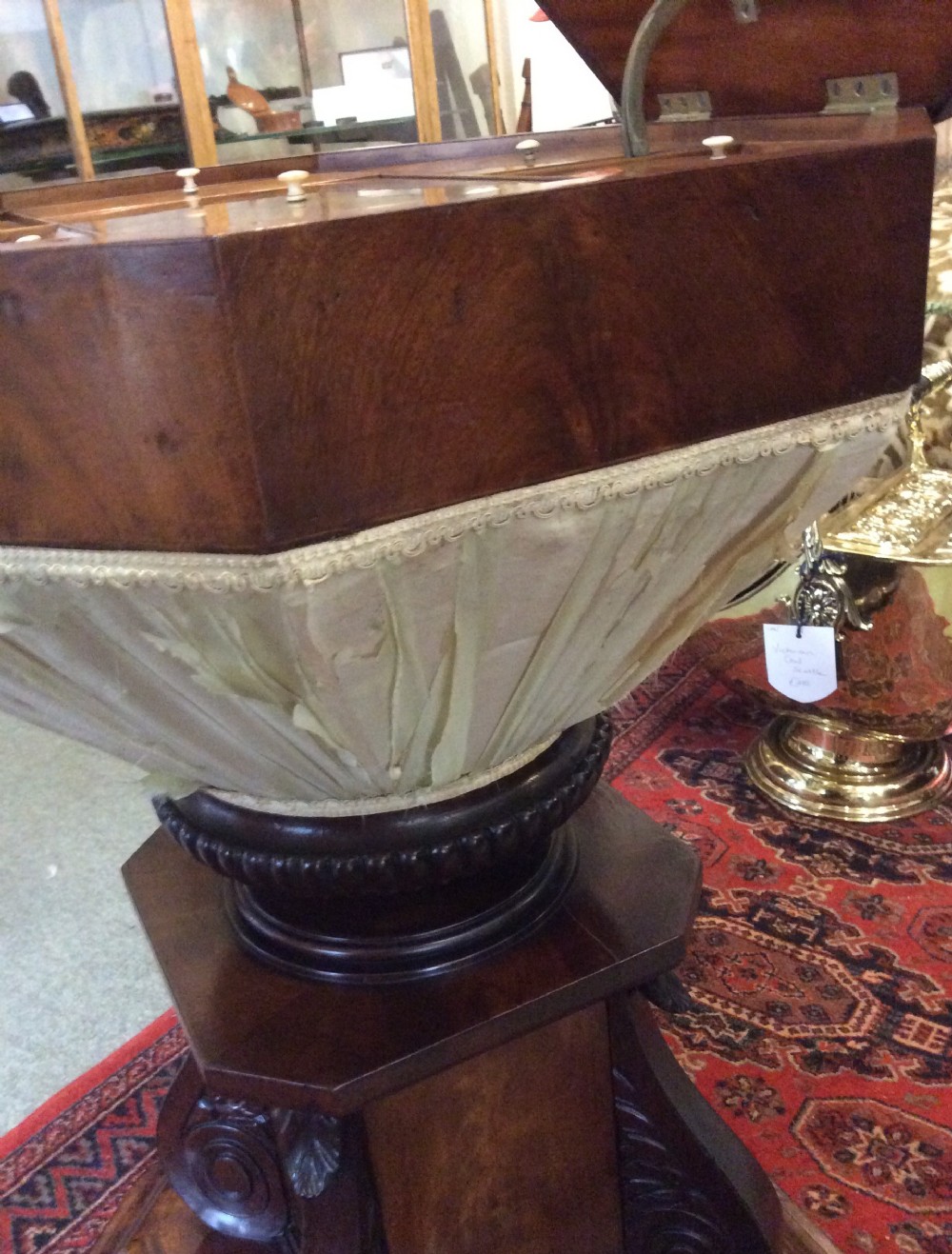
Colin Brand Antiques has dated this piece to the 1890s.
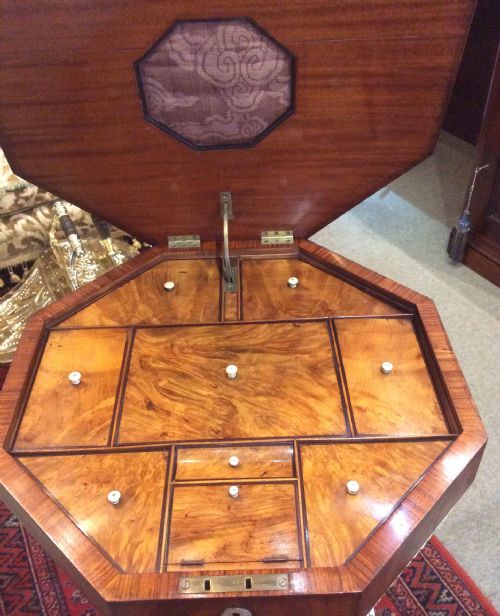
Width 52cm
Height 78cm
Depth 52 cm
Biedermeier
Popular at the same time as the French Empire style, the Beidermeier design was based on utilitarian principles, and has been described as French Empire style without the flamboyance.
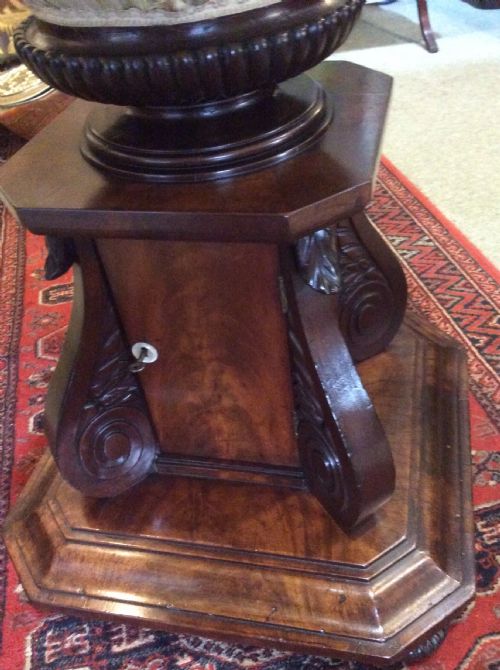
Beidermeier furniture typically has straight or gently curved lines without elaborate carvings and often used classical motifs such as columns, gables, egg and dart and bead and reel. Ornamentations in brass and sometimes inlay were added to enhance the straight lines. Columns or bases, and keyhole escutcheons were sometimes ebonised to contrast with the light-coloured timbers used in construction. Burr veneers were also popular because of their variations in colour and attractive markings.
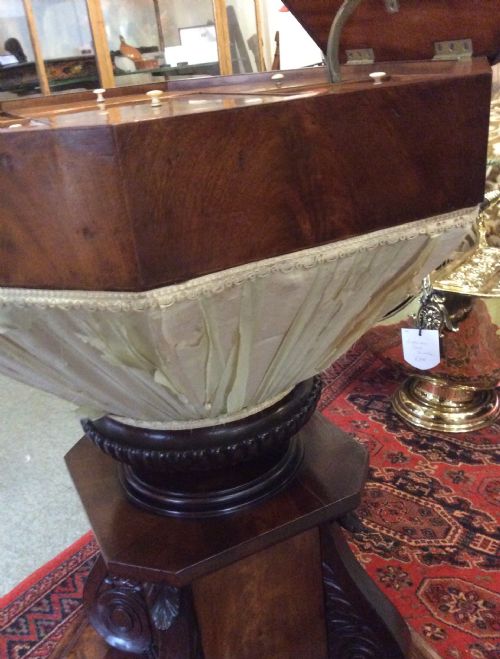
Biedermeier furniture used timbers that were locally available in Germany and Scandinavia such as walnut, cherry, birch, ash and oak, rather than the more expensive imported timbers such as mahogany. Whilst this timber was available, the taxes applied at import and between states made it too expensive for the Biedermeier market. Beidermeier is neither named after a region, a designer or maker, but is a word coined in Germany in the mid 1800's (after the peak manufacturing period of this furniture had passed) to satirise the tastes of the times. It was drawn from a fictional character, Weiland Gottlieb Biedermaier, whose humdrum exploits featured in an 1850s Munich satirical magazine. Bieder' is a German word meaning upright or conventional, while 'Meier' is a common German surname and so in the 1850s the term 'Biedermeier' came to symbolise the middle class, decent, reliable and with lots of common sense.
After the mid-1800s the style declined in popularity, but it underwent a revival in the early 20th century, and again in the 1980s and 1990s.
Colin Brand Antiques has dated this piece to the 1890s.
Antiques with a story to tell and where history finds a home
You can view the stock and full dealer information on the Colin Brand Antiques Profile Page
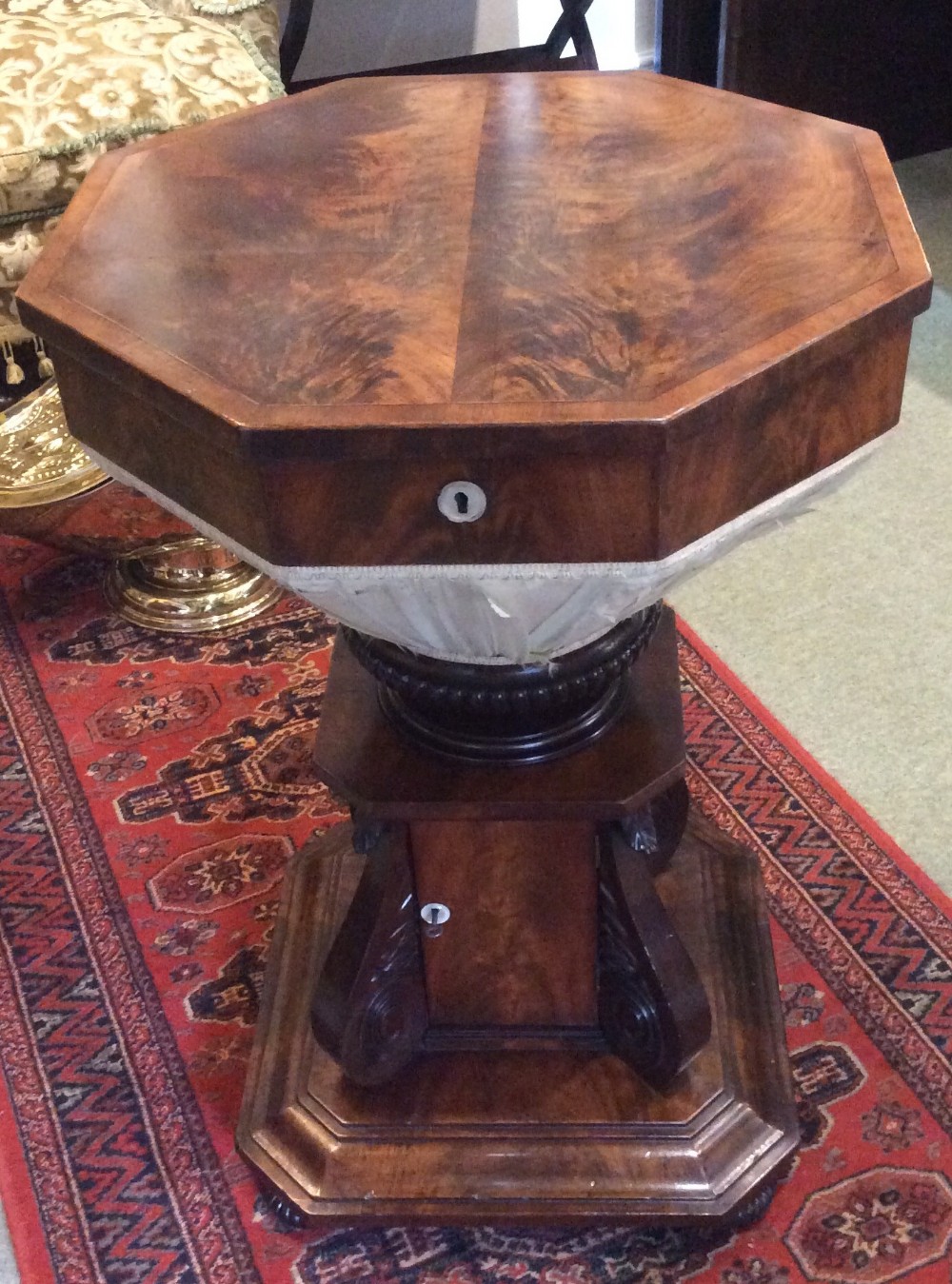
Biedermeier Work Table