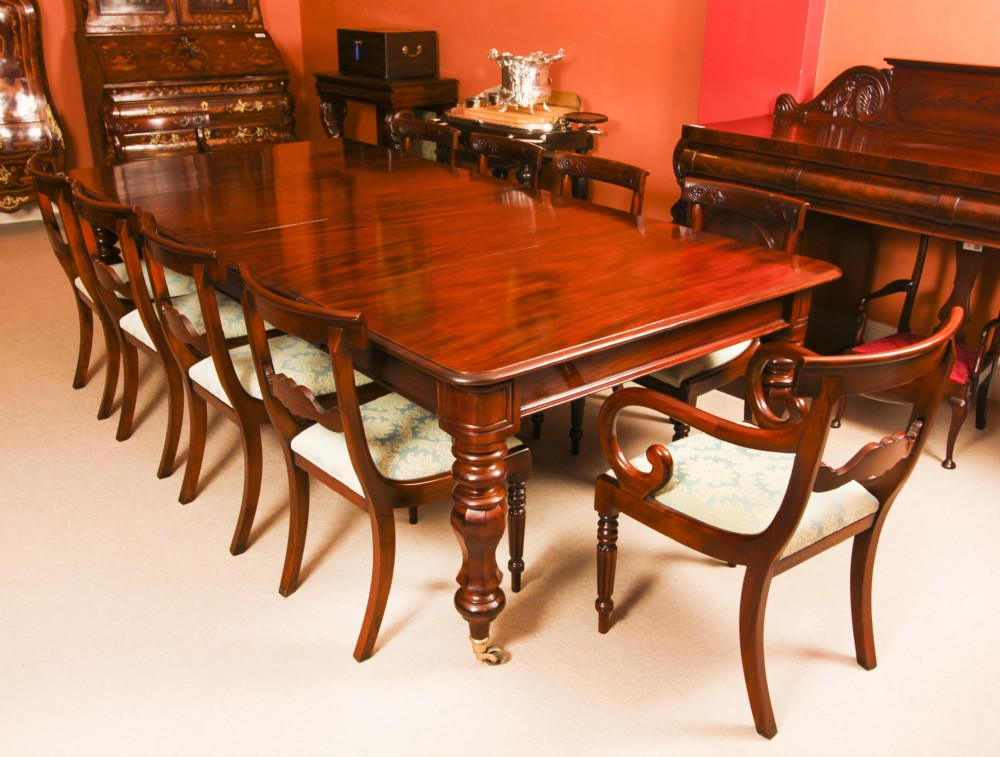
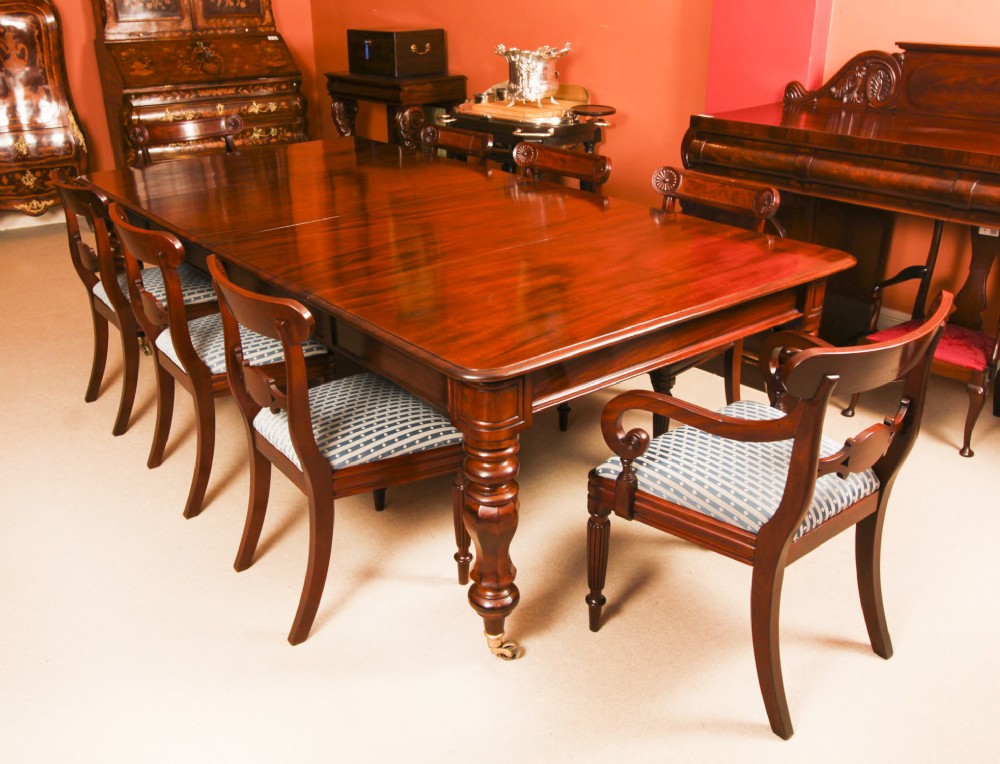
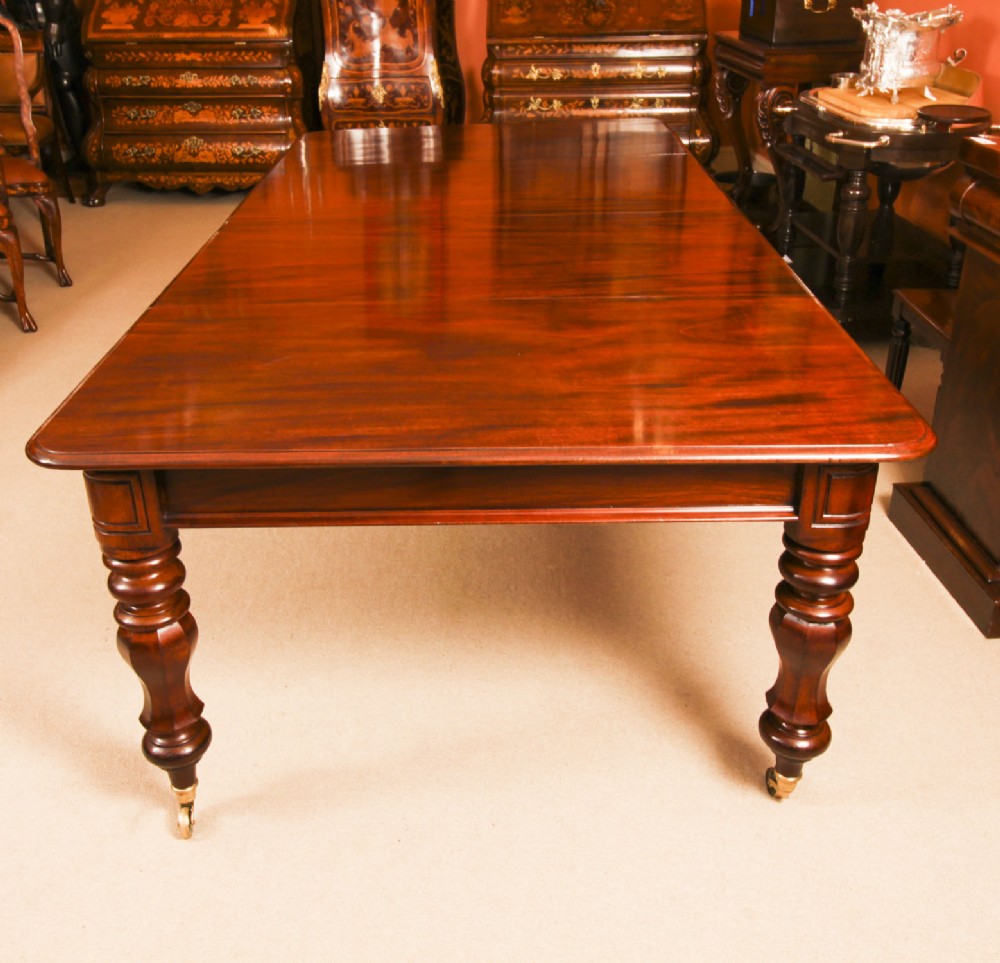
Regent Antiques has dated this piece to the 19th Century.
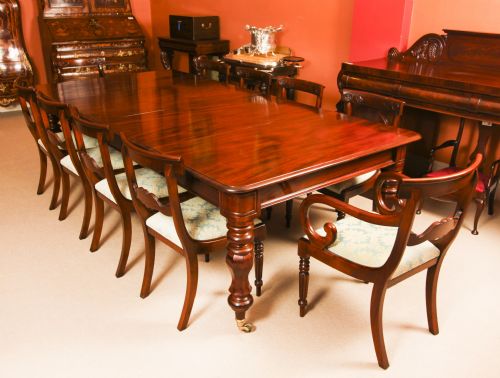
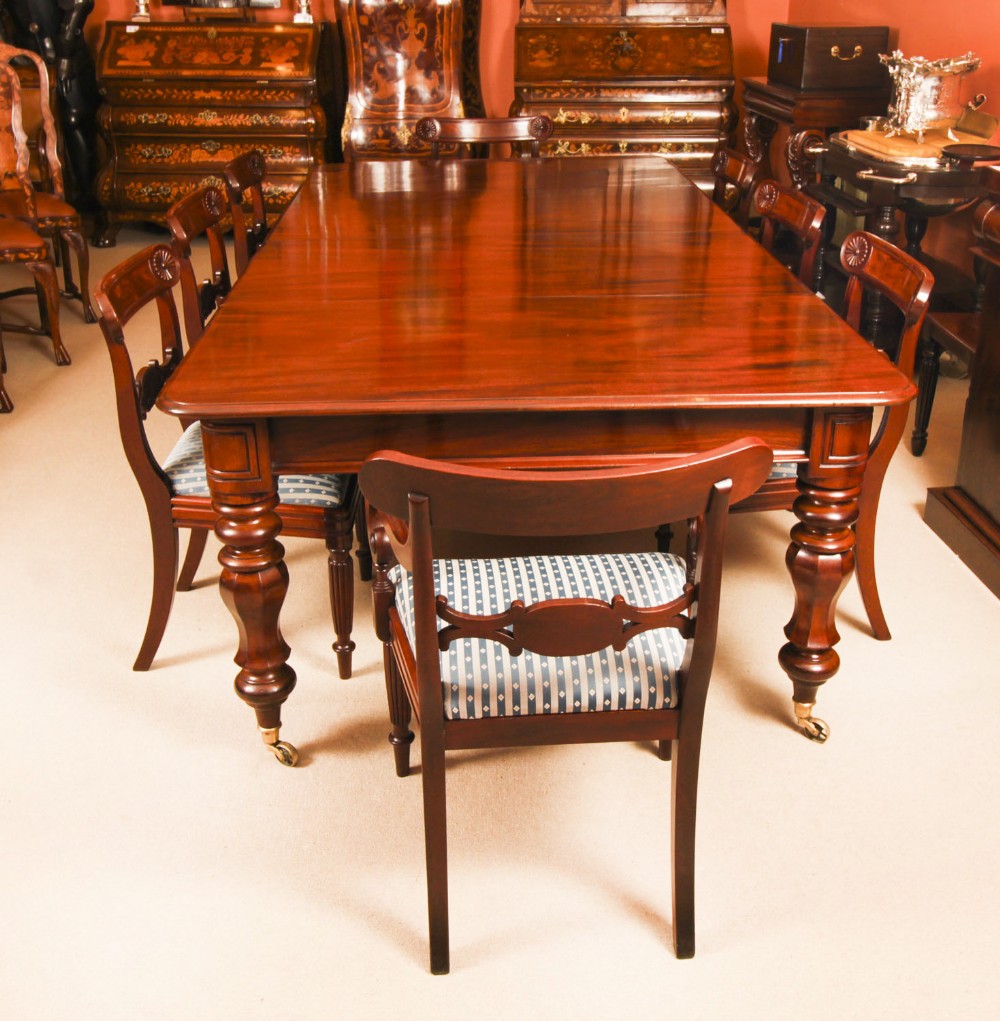
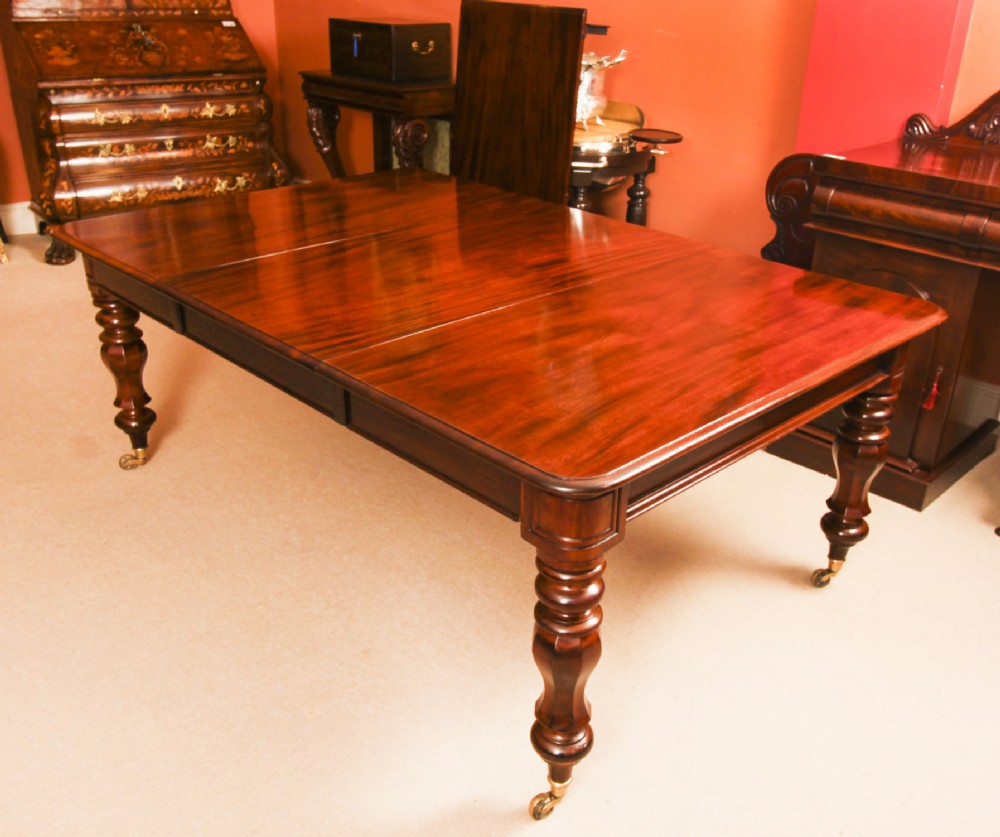
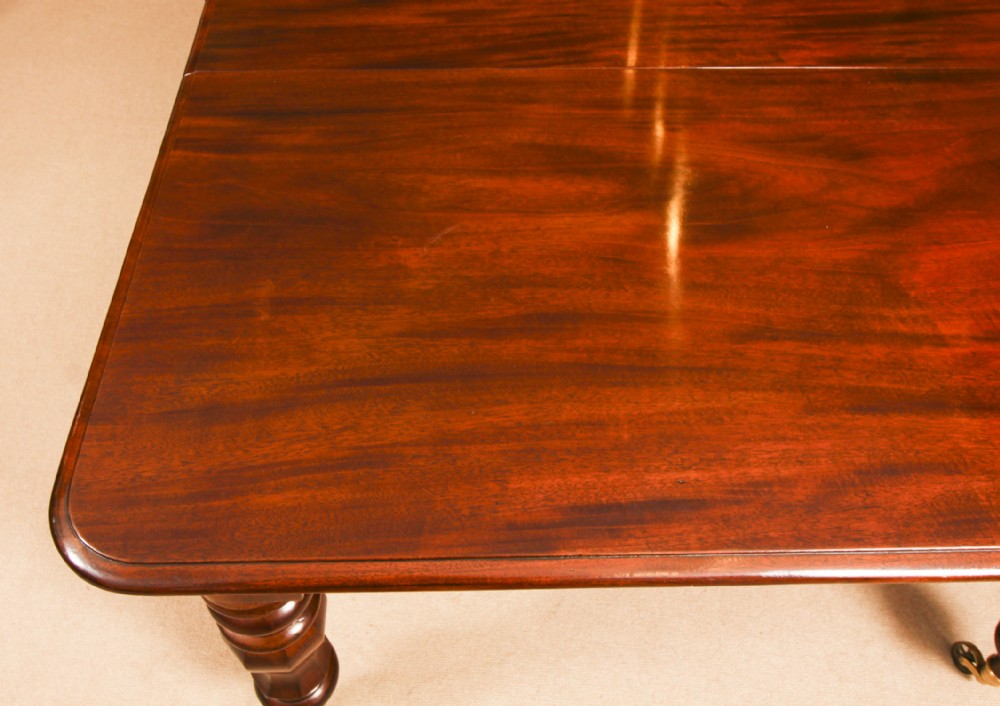
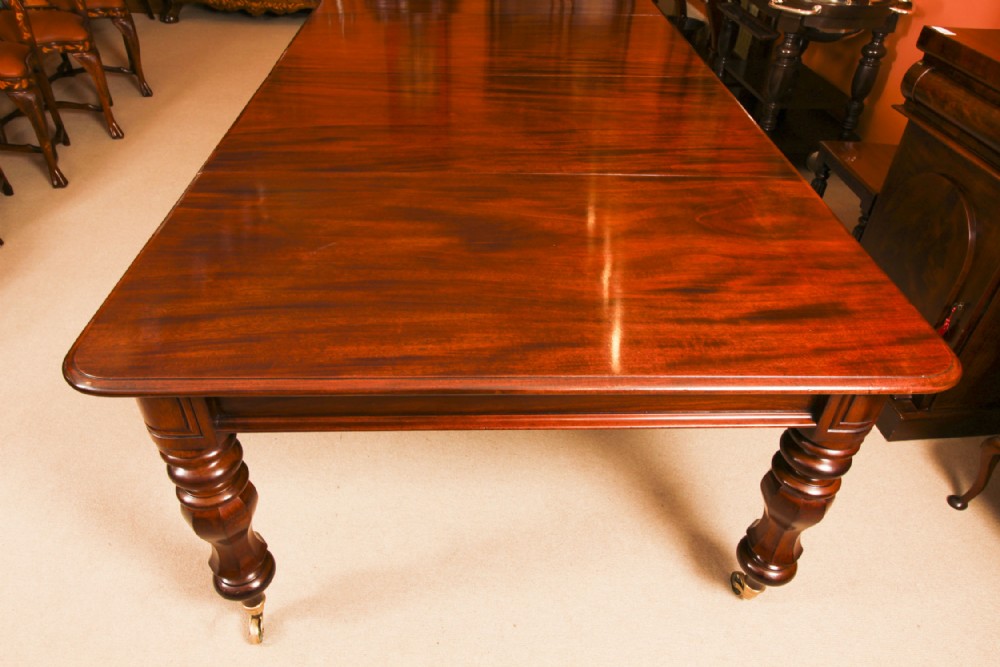
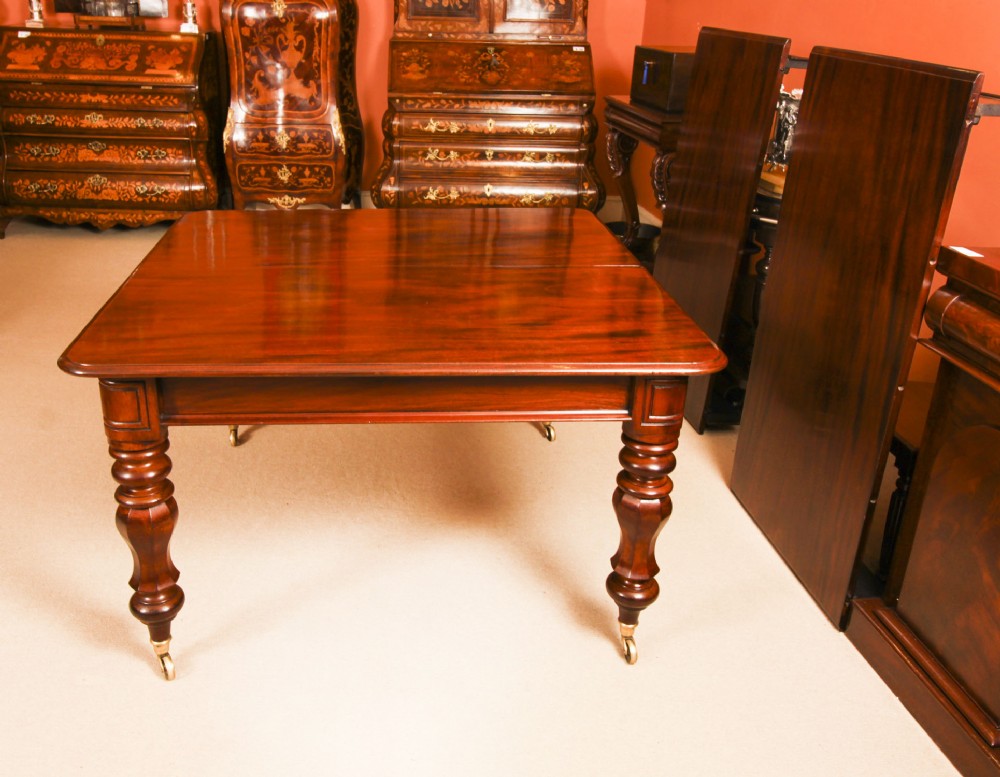
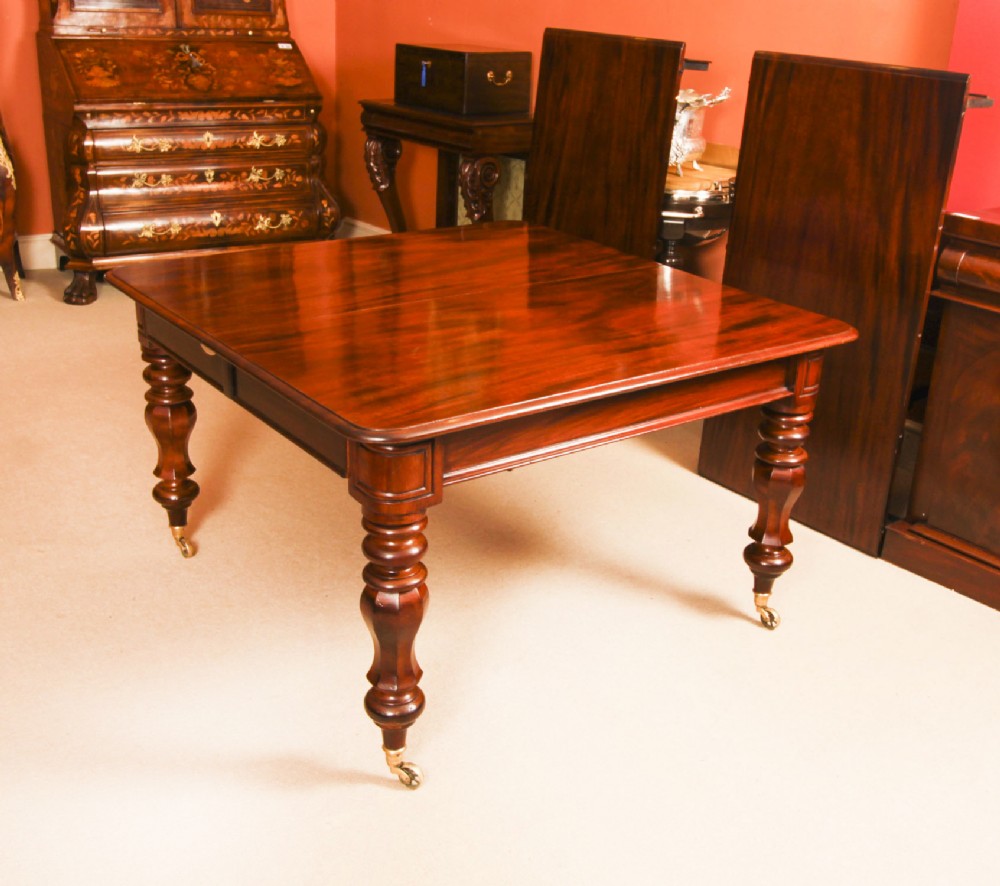
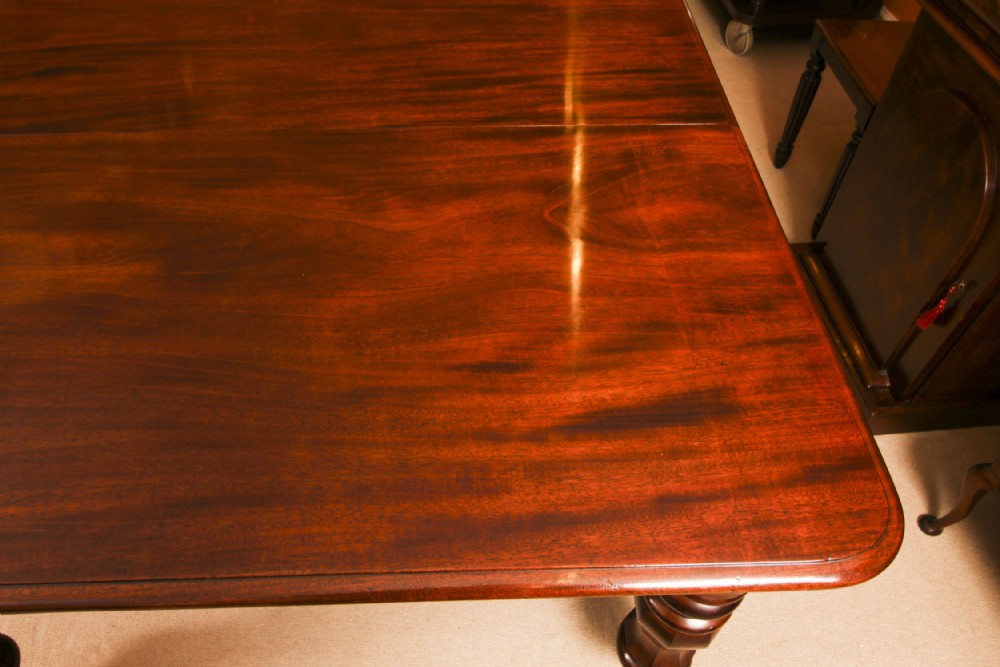
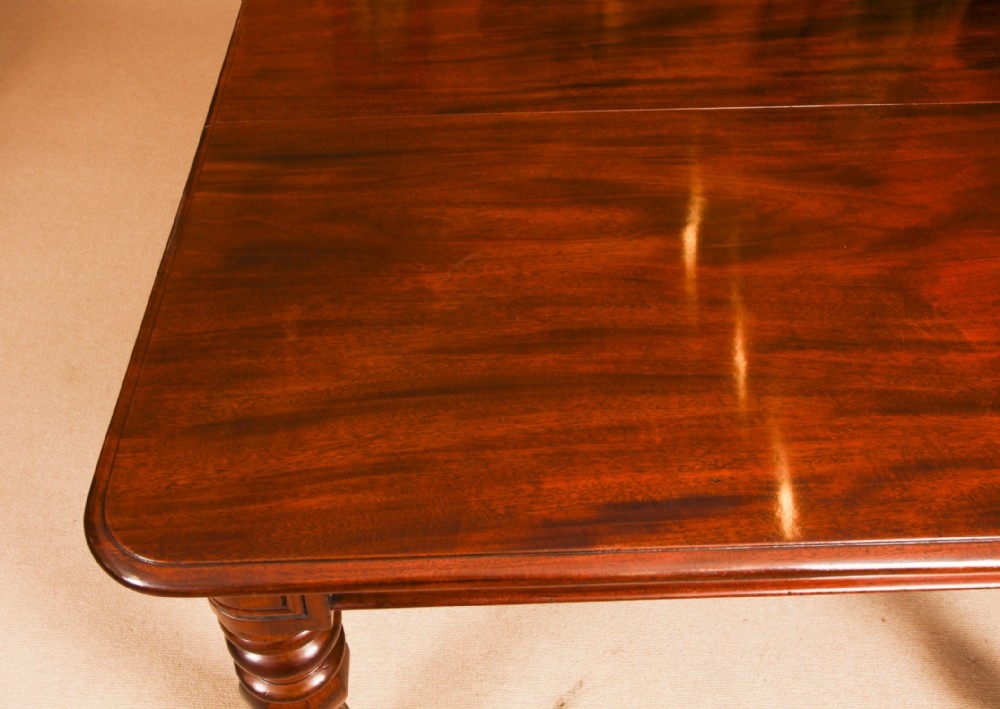
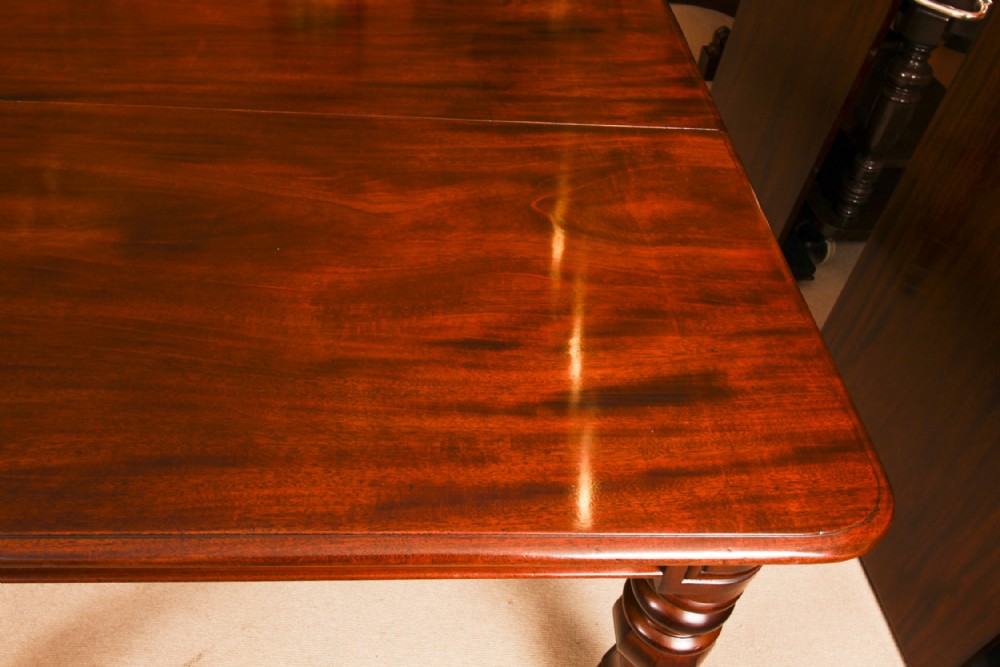
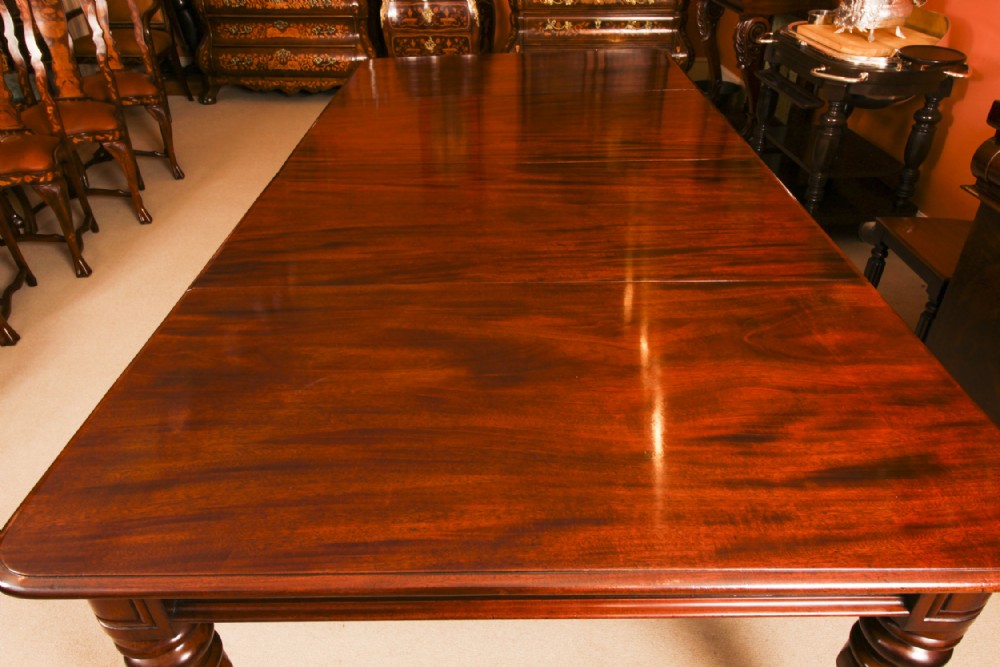
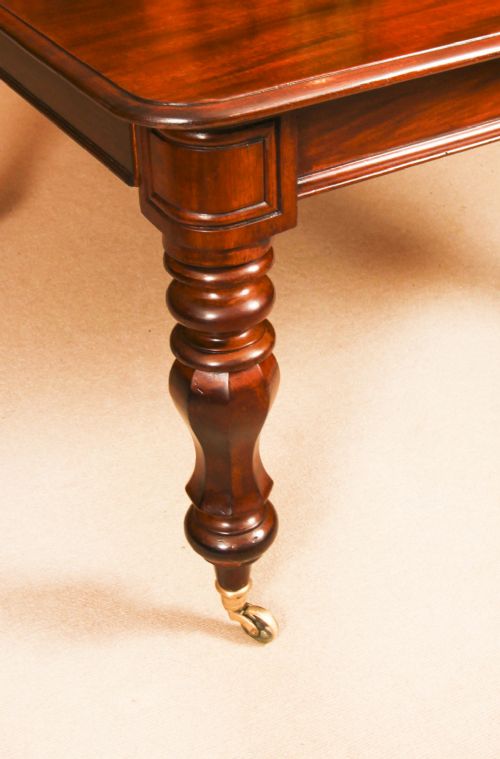
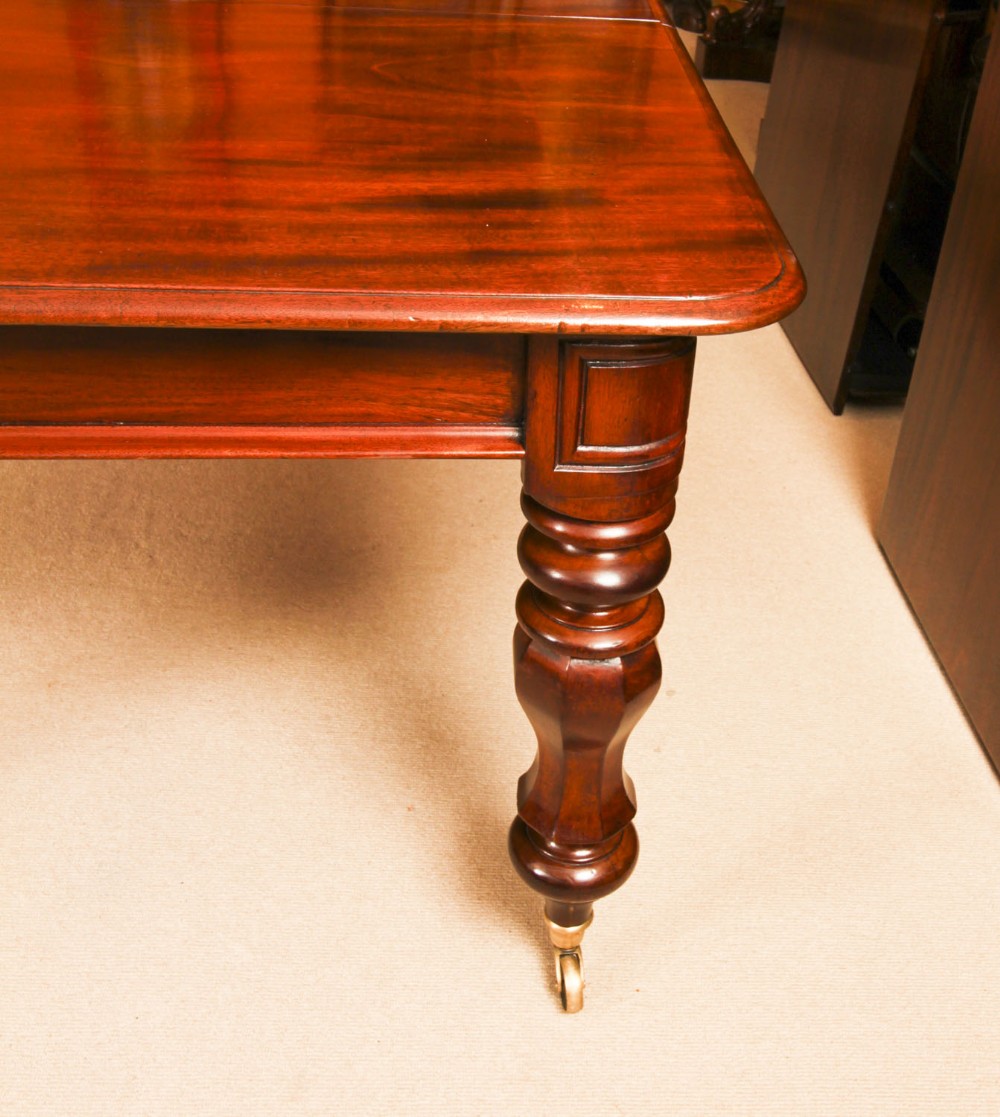
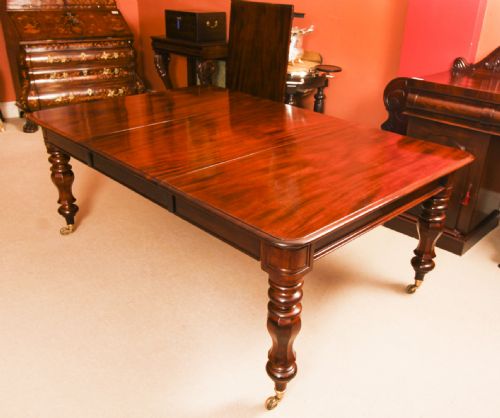
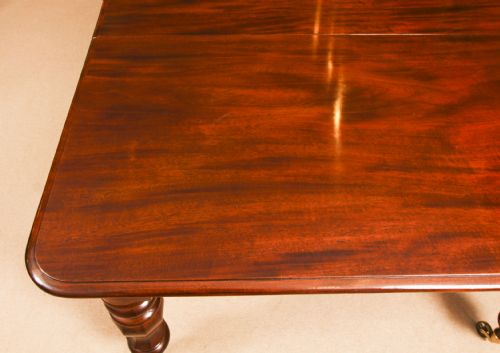
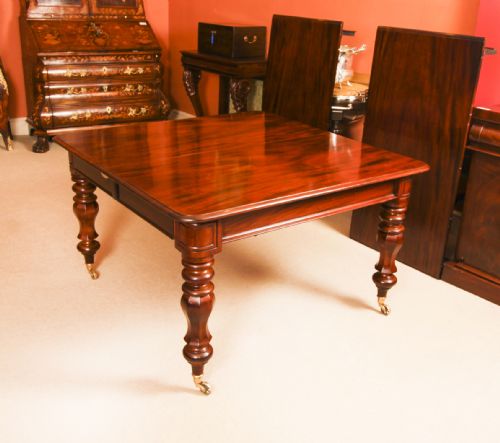
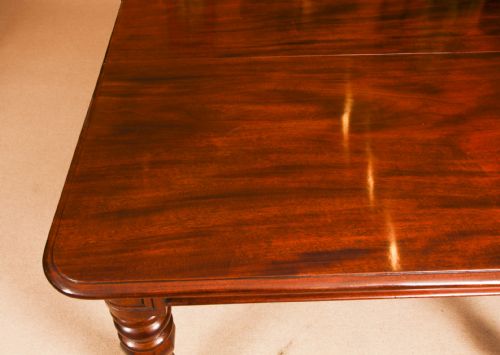
It is rectangular in shape, the top with rounded edge over a plain frieze. It is raised on four, hand carved, turned and inverted polygonal baluster tapered legs, terminating in brass cappings and castors
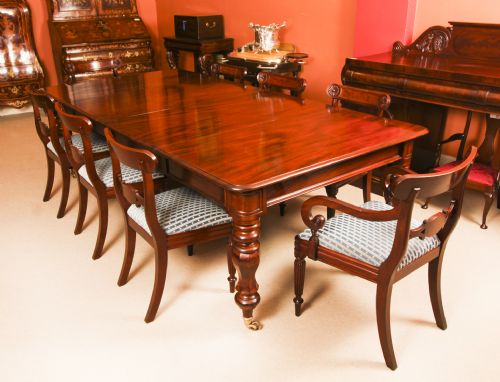
It is a very impressive table which is sure to contribute to successful dinner parties.
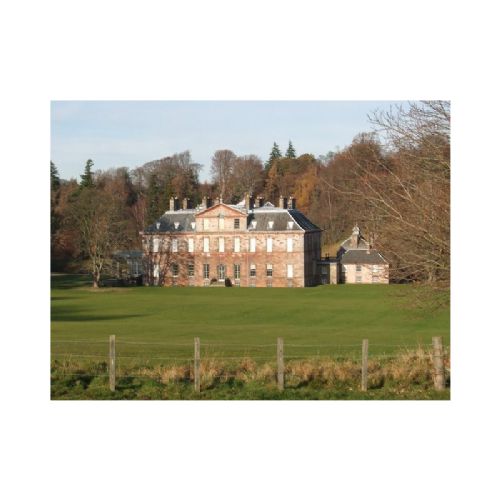
Provenance:
Yester House,
Gifford, East Lothian
Scotland
See Photo
Condition:
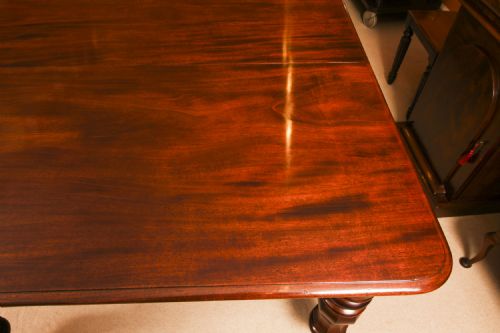
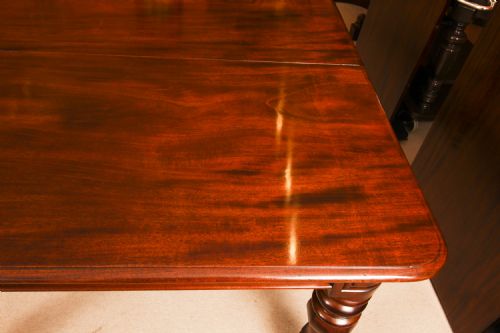
In really excellent condition having been beautifully cleaned, polished and waxed in our workshops, please see photos for confirmation.
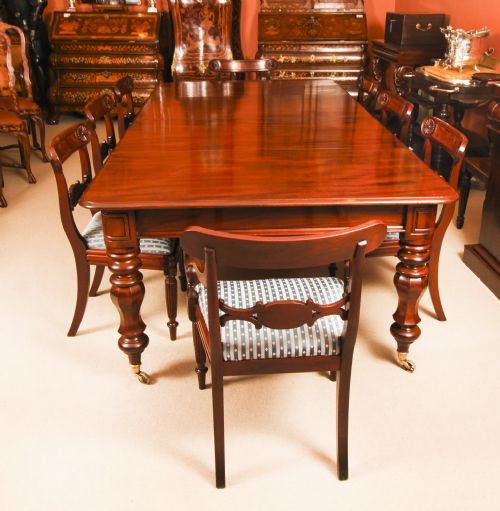
Dimensions in cm:
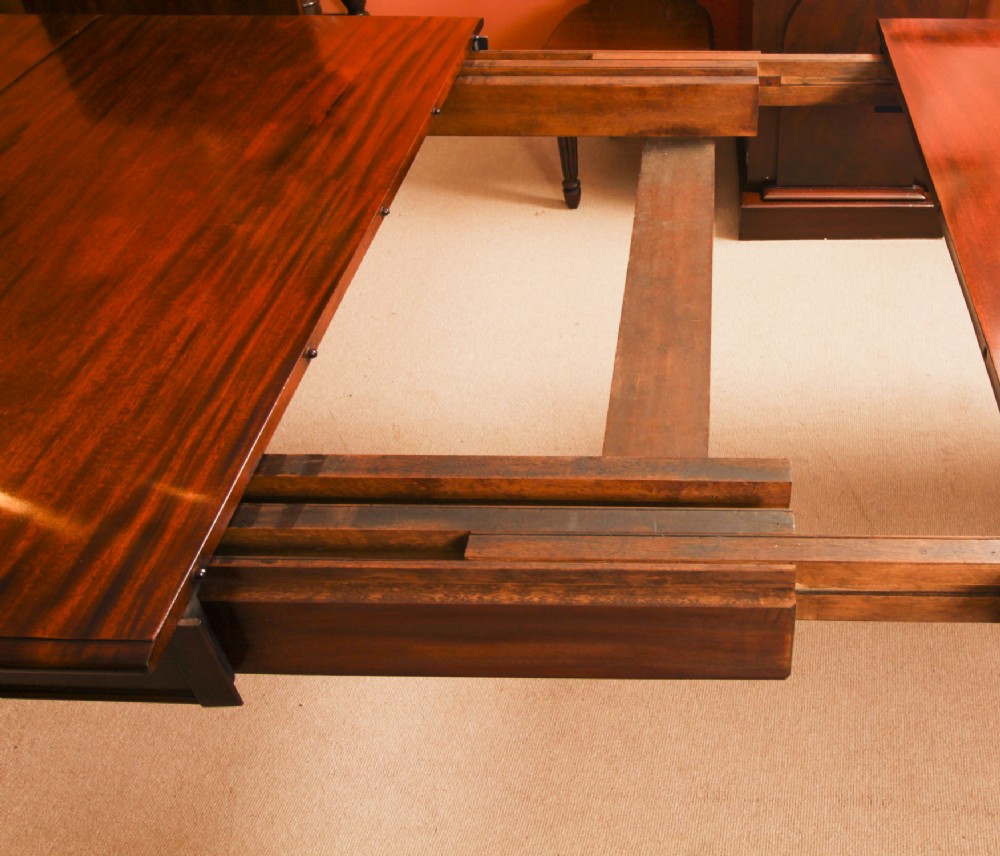
Height 77 cm x Width 260 cm x Depth 130 cm - Fully extended
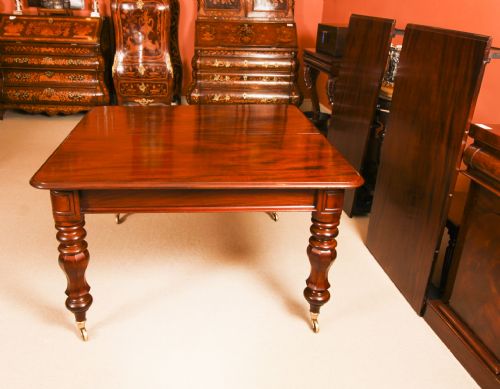
Height 77 cm x Width 130.5 cm x Depth 130 cm - With both leaves removed
Dimensions in inches:
Height 2 foot, 6 inches x Width 8 foot, 6 inches x Depth 4 foot, 3 inches - Fully extended
Height 2 foot, 6 inches x Width 4 foot, 3 inches x Depth 4 foot, 3 inches - With both leaves removed
Yester House
is an early 18th-century mansion near Gifford in East Lothian, Scotland. It was the home of the Hay family, later Marquesses of Tweeddale, from the 15th century until the late 1960s.
Construction of the present house began in 1699, and continued well into the 18th century in a series of building phases. It is now protected as a category A listed building, and the grounds of the house are included in the Inventory of Gardens and Designed Landscapes in Scotland, the national listing of significant gardens.
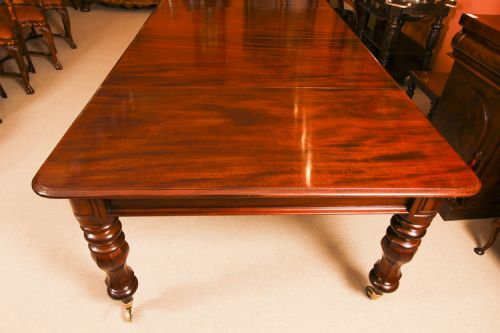
Flame Mahogany
Thomas Sheraton - 18th century furniture designer, once characterized mahogany as "best suited to furniture where strength is demanded as well as a wood that works up easily, has a beautiful figure and polishes so well that it is an ornament to any room in which it may be placed." Matching his words to his work, Sheraton designed much mahogany furniture. The qualities that impressed Sheraton are particularly evident in a distinctive pattern of wood called "flame mahogany."
The flame figure in the wood is revealed by slicing through the face of the branch at the point where it joins another element of the tree.
William IV - the brief reign of William IV (1830 – 1837) marked a period of transition between the Regency period (which had been an age of innovation based on revivalist styles such as ancient Egypt, and the Grecian designs) and the Victorian era.
William IV furniture is similar in style to Regency furniture with many of the designs from the Regency period being copied but often executed in a much heavier manner with chairs, tables and other items being coarser and clumsier in appearance when compared with those made during the Regency period.
Popular pieces produced during this period include tilt top dining tables and pillared extendable tables. Sofa tables and drum tables were also favoured at the time as were sideboards and card tables. Heavy brass fittings were a prominent feature such as lion’s paw feet on tables. Chairs frequently sported sabre legs to the back with stumpy bulbous turned legs to the front. The rope twist carved back was also much in favour.
This period also saw the introduction of the more exotic timbers such as zebra wood. With the Industrial Revolution getting under way furniture making saw the increased use of mechanisation a trend set to accelerate during the Victorian period.
This short, but important transitional period eventually gave way to the romanticism of the Victorians but the furniture it produced was usually of good quality and it remains sought after and desirable today.
Our referenc
Regent Antiques has dated this piece to the 19th Century.
We specialise in english and continental furniture, silver, porcelain and decorative items.
You can view the stock and full dealer information on the Regent Antiques Profile Page
Regent Antiques is a registered member of LAPADA CINOA
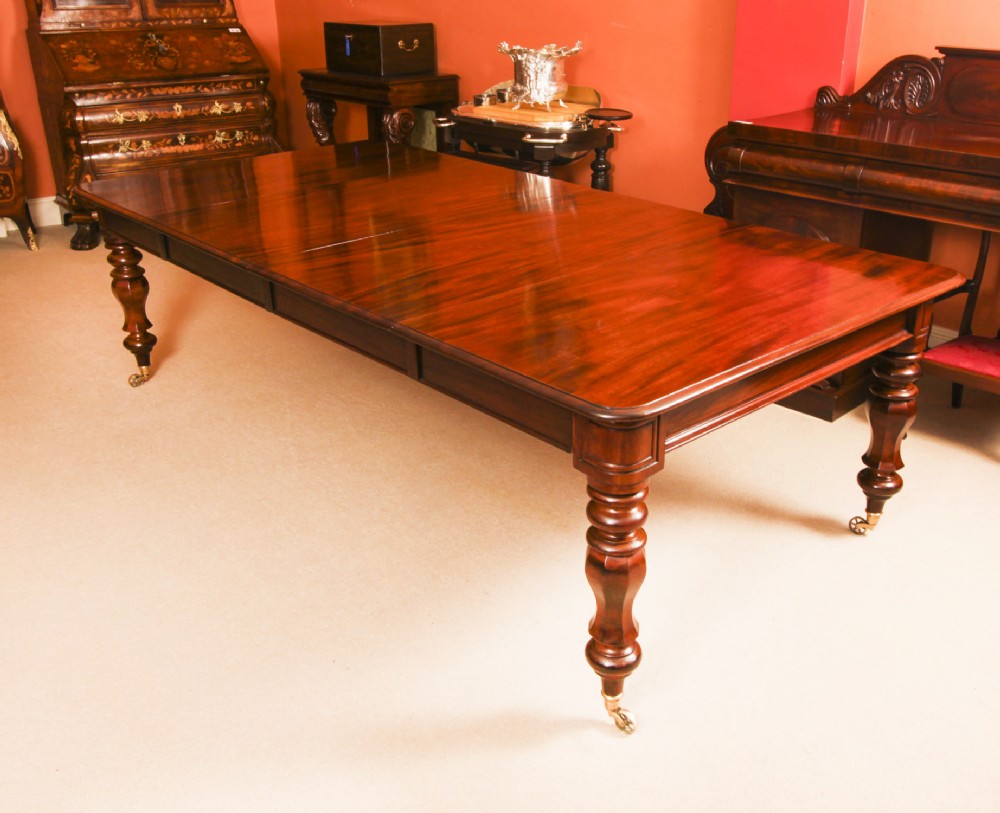
Antique 8ft6" William IV Mahogany Extending Dining Table C1830 19th C