19,077  PAGES BROWSED TODAY PAGES TODAY 14 ANTIQUES UPLOADED TODAYNEW ARRIVALS
14 ITEMS ADDED TODAY
Sort Order
Items Per Page
Browse Categories
Sort order
Items per page
ID #SA1056576
FOR SALE
£32,000
Email
Save
Museum Grade George I Cocus Wood Card Table, Circa 1725. England
Alexander George Antiques Ltd.
for sale €37,440     $40,640
£32,000
Alexander George Antiques Ltd.

Alexander George Antiques Ltd.

Sellingantiques Verified Since Aug 2019
View Dealers Stock Page
  • About Us
    Offering carefully selected antique masterpieces from the 17th & 18th centuries
  • Trade Associations
    Alexander George Antiques Ltd. is a registered member of LAPADA 
Id #SA1056576
PDF SHARE
SAVE

Museum Grade George I Cocus Wood Card Table, Circa 1725. England
18th century
Description

Museum Grade George I Cocus Wood Card Table (Partridge). -

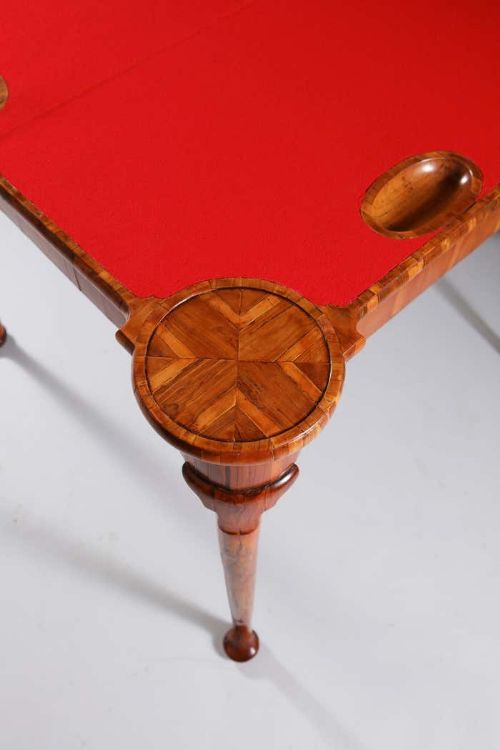
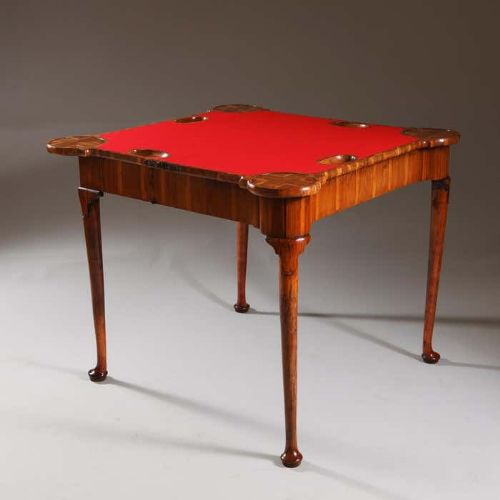
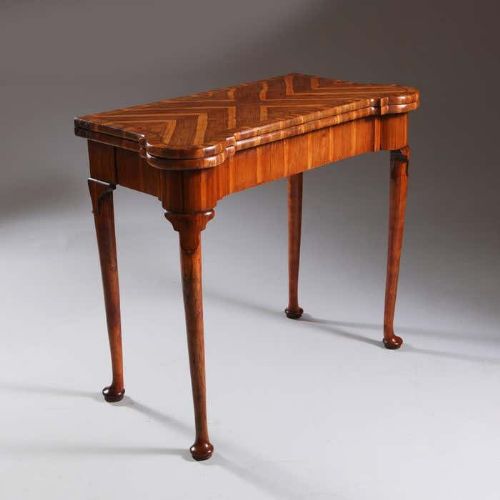
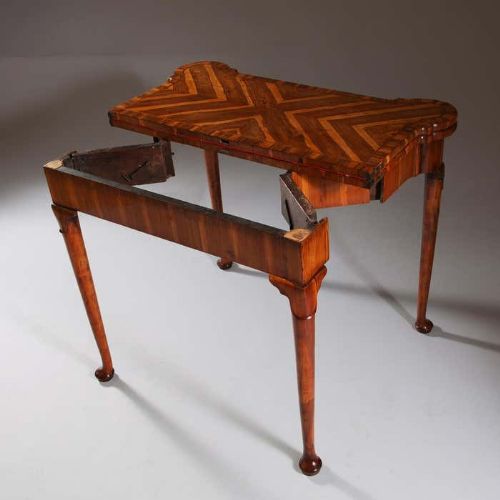
English Circa 1725. The folding top with outset rounded corners and banded in quarter veneered parquetry top above a shaped frieze with hinged folding concertina action to the back legs to hold the top open with dished outset corner coasters and indented counter pockets lined in burgundy baize. The table is raised on lappet carved and turned solid cocus legs terminating on pad feet.

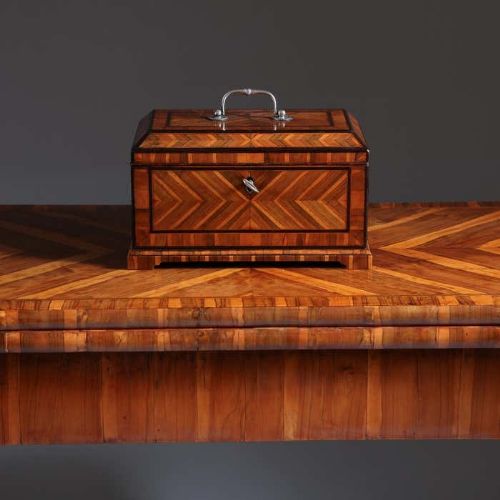
The card-table is veneered with cocus wood, a hard dense wood with dark brown heart and yellow sapwood, often referred to, erroneously, as laburnum. It was imported from the West Indies and was often known as West Indian ebony. It was used between 1660-1740 and in the present instance a section of focus wood has been sawn lengthways to provide a decoratively striped veneer which has been laid in quarters on the table top.

See Bowett, Myths of English Furniture History: Laburnum Wood Furniture’, Antique Collecting, June 1998, pp.22-23) Illustrated in Dictionary of English /Furniture (1954), Vol.3, p. 188, Fig.10.

Physical Dimensions
Height
74cm (29.13")
Width
86cm (33.86")
Depth
44cm (17.32")
Declaration

Alexander George Antiques Ltd. has dated this Cocus Wood Card Table to the 18th Century.

Reference Numbers
Sellingantiques Reference
SA1056576
Dealers Notes

Whether you are a collector or a first-time buyer the choice of pieces will inspire. Each has been carefully selected for its exceptional design and provenance, as well as in many instances its academic significance.

Originality and authenticity are paramount; and using our extensive knowledge and experience in furniture conservation and restoration we can ensure that our clients can buy with absolute confidence.

Description
Museum Grade George I Cocus Wood Card Table (Partridge). -

English Circa 1725. The folding top with outset rounded corners and banded in quarter veneered parquetry top above a shaped frieze with hinged folding concertina action to the back legs to hold the top open with dished outset corner coasters and indented counter pockets lined in burgundy baize. The table is raised on lappet carved and turned solid cocus legs terminating on pad feet.

The card-table is veneered with cocus wood, a hard dense wood with dark brown heart and yellow sapwood, often referred to, erroneously, as laburnum.
Alexander George Antiques Ltd.

It was imported from the West Indies and was often known as West Indian ebony. It was used between 1660-1740 and in the present instance a section of focus wood has been sawn lengthways to provide a decoratively striped veneer which has been laid in quarters on the table top.

See Bowett, Myths of English Furniture History: Laburnum Wood Furniture’, Antique Collecting, June 1998, pp.22-23) Illustrated in Dictionary of English /Furniture (1954), Vol.3, p. 188, Fig.10.

Height
74cm (29.13")
Width
86cm (33.86")
Depth
44cm (17.32")
Date of Manufacture

Alexander George Antiques Ltd. has dated this Cocus Wood Card Table to the 18th Century.

Reference Numbers
Sellingantiques Ref
SA1056576
Alexander George Antiques Ltd.
Sellingantiques verified Since Aug 2019

Offering carefully selected antique masterpieces from the 17th & 18th centuries

Dealer Profile

You can view the stock and full dealer information on the Alexander George Antiques Ltd. Profile Page

Trade Associations

Alexander George Antiques Ltd. is a registered member of LAPADA 

PDF SHARE
SAVE
A George I period cocus wood fold-over card table featuring geometric parquetry work, cabriole legs, and pad feet.
1 / 11
Archive I A George I period cocus wood fold-over card table featuring geometric parquetry work, cabriole legs, and pad feet.

Museum Grade George I Cocus Wood Card Table, Circa 1725. England
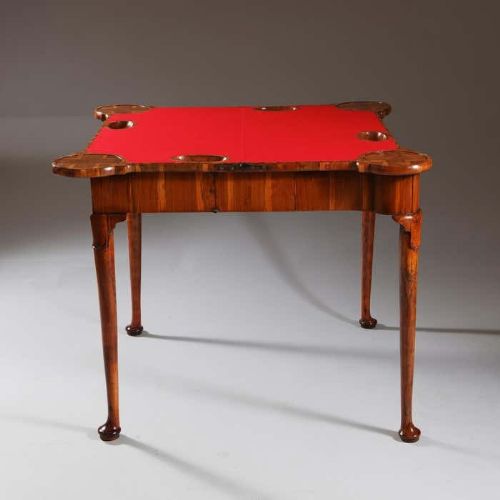
Archive II A George I period cocus wood fold-over card table featuring geometric parquetry work, cabriole legs, and pad feet. View II
Archive III A George I period cocus wood fold-over card table featuring geometric parquetry work, cabriole legs, and pad feet. View III
Archive IV A George I period cocus wood fold-over card table featuring geometric parquetry work, cabriole legs, and pad feet. View IV
Archive V A George I period cocus wood fold-over card table featuring geometric parquetry work, cabriole legs, and pad feet. View V
Archive VI A George I period cocus wood fold-over card table featuring geometric parquetry work, cabriole legs, and pad feet. View VI
Archive VII A George I period cocus wood fold-over card table featuring geometric parquetry work, cabriole legs, and pad feet. View VII
Archive VIII A George I period cocus wood fold-over card table featuring geometric parquetry work, cabriole legs, and pad feet. View VIII
Archive IX A George I period cocus wood fold-over card table featuring geometric parquetry work, cabriole legs, and pad feet. View IX
Archive X A George I period cocus wood fold-over card table featuring geometric parquetry work, cabriole legs, and pad feet. View X
Archive XI A George I period cocus wood fold-over card table featuring geometric parquetry work, cabriole legs, and pad feet. View XI
Enlarged Archival View
Telephone 07787 536199
Location
Buscot Manor
Buscot
Oxfordshire
SN7 8DA
United Kingdom

By appointment only.
Verified Since Aug 2019
Items For Sale 93
Items Sold 231
Alexander George Antiques Ltd.
Verified Since Aug 2019
View Dealer Info
Location: Buscot Manor, Buscot, Oxfordshire, SN7 8DA, United Kingdom, , By appointment only.
Verified
Aug 2019
For Sale
93
Sold
231
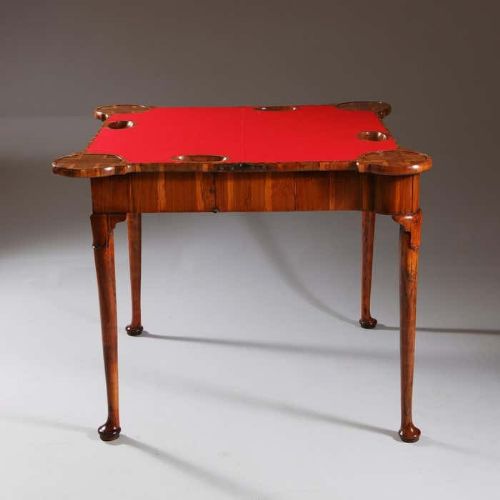
A George I period cocus wood fold-over card table featuring geometric parquetry work, cabriole legs, and pad feet.
Museum Grade George I Cocus Wood Card Table, Circa 1725. England
Ref: SA1056576
A George I period cocus wood fold-over card table featuring geometric parquetry work, cabriole legs, and pad feet.
Detail View 1
Detail View 2
Detail View 3
Detail View 4
Detail View 5
Detail View 6
Detail View 7
Detail View 8
Detail View 9
Detail View 10
Archival Detail
Every single antique dealer on our platform is individually approved by our internal team. We verify their professional trade history, ethical standards, and photographic quality to ensure a secure, high-standard buying environment. Upon joining, every dealer agrees to a strict 9-point code of conduct. While issues can occasionally arise, our dealers typically resolve them swiftly and directly with the buyer. In fact, since our founding in 2002, Sellingantiques has only had to step in to help resolve an issue on roughly five occasions—a true testament to the quality of our dealers and their dedication to your happiness.
Our dealers are highly experienced in packing and shipping fragile, high-value antiques. Because you are in direct contact with the dealer, you will be able to easily go through all available shipping and insurance options together to ensure your item arrives safely.
Antiques are the ultimate green purchase. By choosing historical pieces over newly manufactured goods, you completely eliminate the carbon footprint of modern mass production while preserving exceptional, timeless craftsmanship.

George I card tables, produced between 1714 and 1727, typically showcase restrained elegance, transitioning from late Baroque to early Rococo influences. Common design elements include cabriole legs terminating in pad feet, shaped concertina-action frames, and intricate geometric parquetry or veneer patterns on the top.

Early Georgian furniture makers relied heavily on imported exotic timbers such as cocus wood, rosewood, and high-grade walnut. Construction techniques featured hand-cut dovetail joinery, crossbanding, herringboning, and thick cuts of timber veneer laid over solid pine or oak carcases.

Authentic period tables display hand-sawn timber marks, original gate-leg or concertina iron hinges, and natural wood shrinkage along veneer joints. Additionally, unpolished undersides reveal hand-planed oak or pine drawer linings and original secondary wood patination.

When folded, a card table functions as a console or side table against a wall, positioned in a hallway, drawing room alcove, or behind a sofa. It provides a structured surface for displaying minimalist ceramic lamps, framed artwork, or decorative glassware to balance historical and modern aesthetics.

Preserve historical veneers by keeping the item in a climate-controlled room away from direct sunlight, radiators, and extreme humidity fluctuations. Dust regularly with a clean microfiber cloth and apply a high-grade natural beeswax polish once or twice a year to maintain moisture.
items
Add keywords to the filter
Price
£100
£250000
Era
Movements
Material
Origin
Stock Location
Freshness
Online Payments
Categories