


A 2026 Guide by Sellingantiques
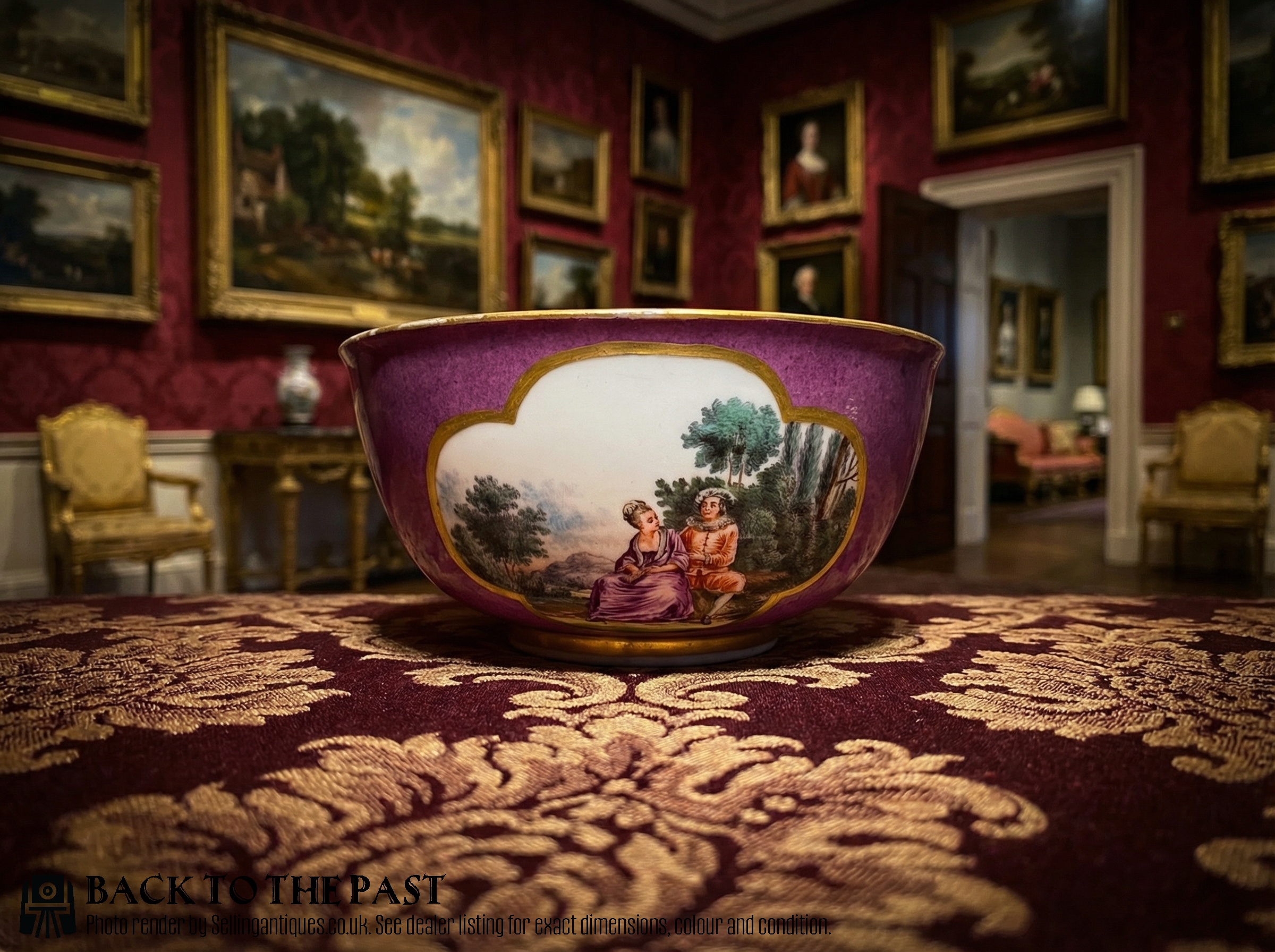
Meissen Porcelain Bowl, C. 1740. Puce Ground., 18th Century
Priced at £2,600 from Philip Carrol Antiques
First developed in China during the Tang dynasty, the formula remained a closely guarded secret for centuries.
Look for early European attempts to copy it. These soft-paste versions emerged in Italy and France before the hard-paste secret was unlocked in Germany.
True hard-paste antique porcelain finally appeared in Europe around 1710 at Meissen.
British factories often relied on bone ash to create their own distinct variant by the late eighteenth century.
Meissen operated near Dresden from 1710. They dominated European production with figures and wares modelled by Johann Joachim Kändler.
Sèvres started at Vincennes before moving in 1756. They supplied the French court with soft-paste items known for rich ground colours.
Worcester began in England in 1751. Early soapstone-based soft-paste antique porcelain resisted cracking with hot water.
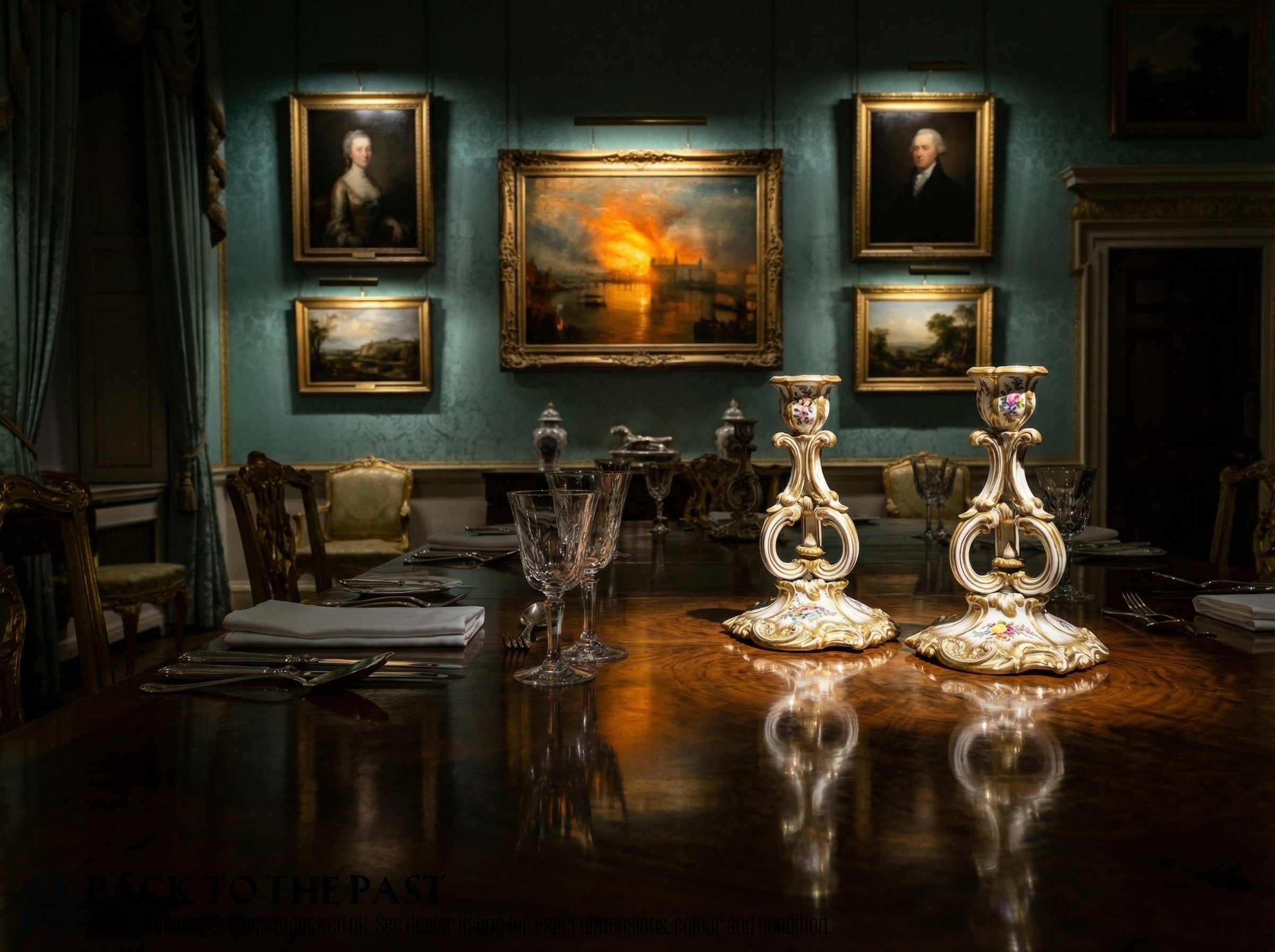
Pair of Derby Rococo Porcelain Candlesticks, C.1825–1830, Georgian
Priced at £400 from Ritas Bazaar
The 2026 retail price guide for Antique Porcelain is drawn from a proprietary archive of over 1.1 million retail prices indexed by Sellingantiques since 2003. This guide relies exclusively on their own internal data; no external sources or auction records are used.
Analysing nearly 25 years of UK antique market history alongside current retail values, the data indicates that typical UK retail prices for Antique Porcelain range between £300 and £2,400. Entry-level prices generally fall under £300 and premium examples upwards of £2,400.
Translucency is the classic test. Hold a plate up to a strong light to see the shadow of your fingers through the body.
Hand-painted enamels sit on top of the fired glaze. You can feel them slightly raised if you run a thumb over the decoration.
Underglaze blue designs sink into the body before the final firing. The colour appears flat and sealed beneath the glossy surface.
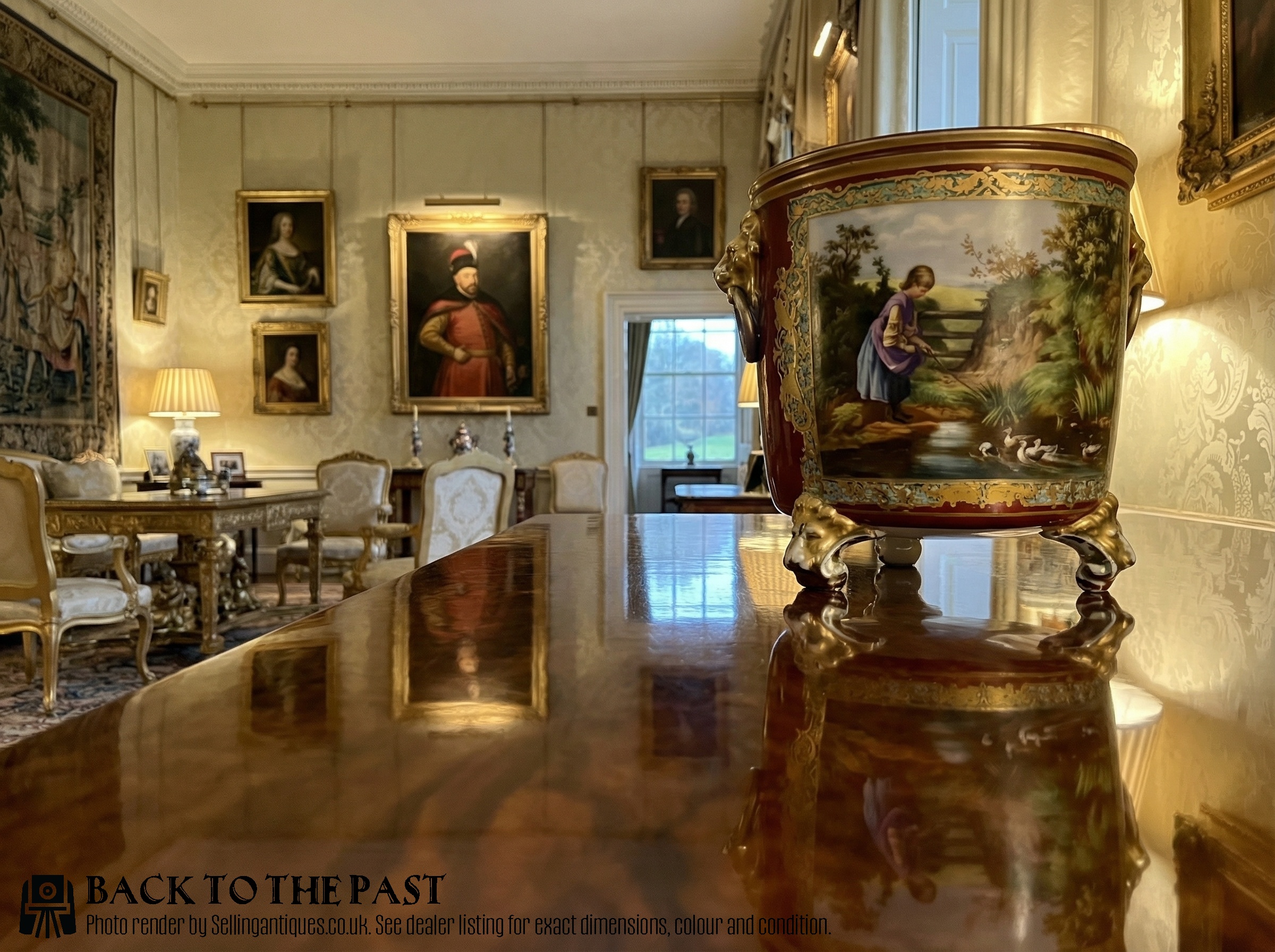
Superb Quality French Antique Victorian Hand Painted Porcelain Jardiniere, 1860
Priced at £725 from Unique Antiques by Emma Jade
Early figures were press-moulded in sections. Craftsmen joined the arms and heads using liquid clay slip before the first firing.
Throwing on a wheel shaped many basic bowls and cups. The turner then refined the profile on a lathe once the clay dried to leather-hard.
Transfer printing arrived in the 1750s. Engraved copper plates allowed factories to print detailed patterns onto the raw antique porcelain rather than painting by hand.
"Pattern books survived from many eighteenth-century factories. You can often match a painted border exactly to the original watercolour design."
"Broken sections were sometimes ground down at the factory and refired to salvage a usable plate or saucer."
"Vent holes sit discreetly in the bases of some early figures. This allowed hot air to escape and stopped the piece exploding in the kiln."
Based on almost 25 years of Sellingantiques UK antique market data, Antique Porcelain appeared 14406 times (out of 1,100,000 antiques) which gives it a rarity score of 6/100.
This score measures scarcity within the Sellingantiques archive only and is not a survey of the entire antiques market, so these statistics may not be indicative of the general availability of Antique Porcelain elsewhere.
Dust it first with a soft brush. If it needs washing, use warm water and a very mild soap in a plastic bowl.
Don't put them in the dishwasher. The harsh chemicals and heat will strip the overglaze enamels and ruin the gilding. Let items air dry on a soft towel.
You certainly can. Hard-paste antique porcelain handles hot liquids well.
Soft-paste requires a bit more care. Pouring boiling water straight into a cold soft-paste cup can cause it to crack. Warm the cup gently first.
Staining usually happens when the glaze gets scratched or crazed. Dirt and grease seep through those tiny cracks into the porous clay body underneath.
This is much more common with soft-paste or earthenware bodies. Hard-paste antique porcelain is vitrified, so even if the glaze chips, the body itself repels stains.
Painters applied blue marks directly onto the porous biscuit body before the glaze went on. The liquid cobalt pigment can spread slightly into the surrounding dry clay.
When the glaze is added and fired, it sometimes pulls the blue colour with it. This creates a blurred halo effect around the mark. It happens frequently with early underglaze painting.
Please note: This Antique Porcelain guide and its associated pricing data are provided for general informational purposes only. It does not constitute formal financial, investment, or appraisal advice and should not be relied upon as the sole basis for any commercial activity, purchasing, or sales decisions. Sellingantiques.co.uk accepts no liability for any actions taken in reliance on this information. Always consult with a qualified professional or independent appraiser.
