
There are no results to show on this page for that combination of filters:
Art Deco Ewers
A 2026 Guide by Sellingantiques
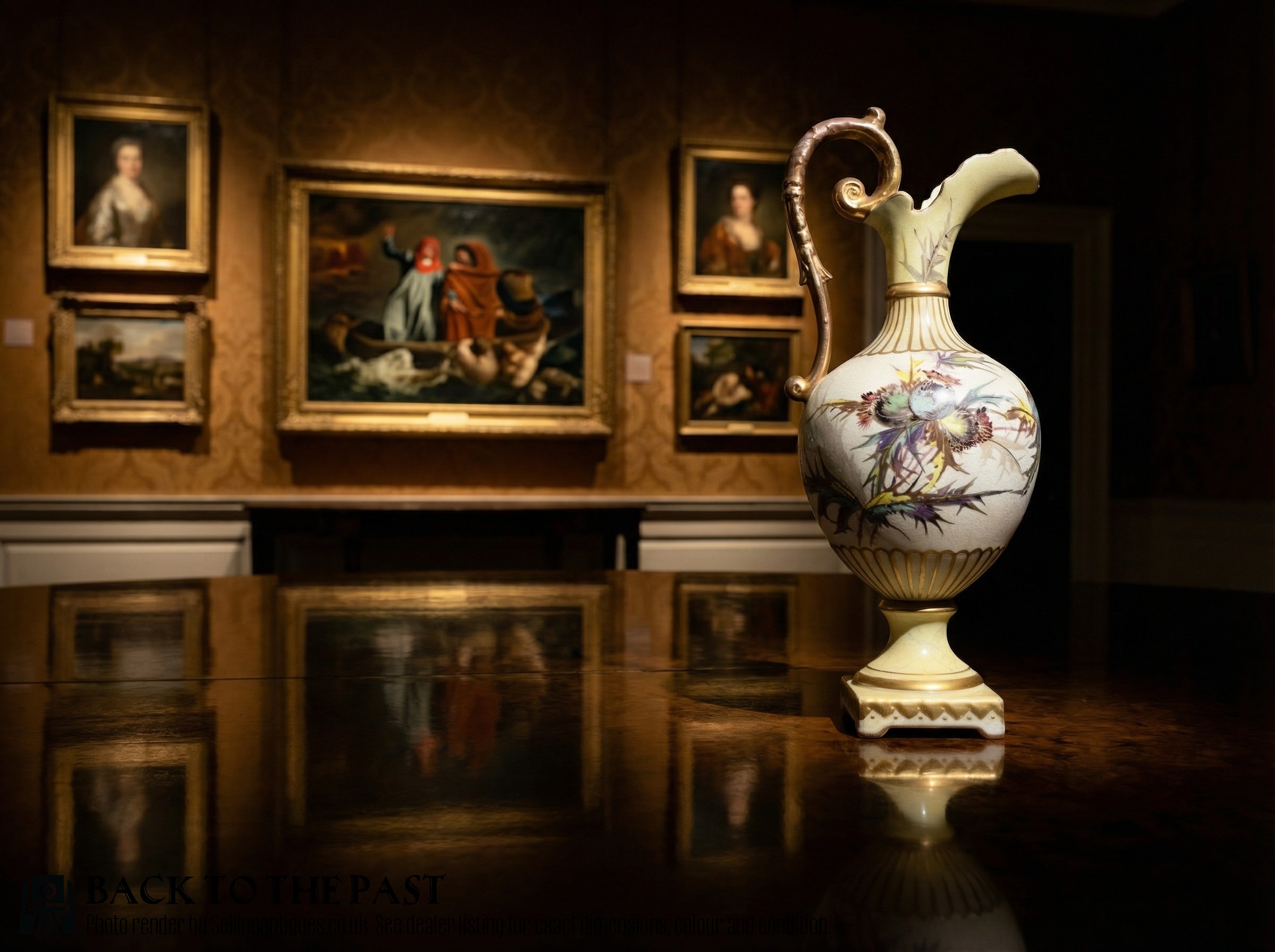
Fine Quality Antique Victorian Ewer, 1880
Priced at £345 from Unique Antiques by Emma Jade
Look at early ceramic examples to see shapes borrowed directly from ancient metalwork.
Most nineteenth-century households kept an antique ewer on a bedroom washstand, usually standing directly in a matching basin, ready to supply the morning wash.
Piped water rendered these large vessels redundant for daily hygiene routines by the early twentieth century.
You'll notice later Victorian pieces grow much broader and heavier than earlier Georgian designs.
Mason's Patent Ironstone produced thousands of these vessels during the nineteenth century, favouring robust octagonal shapes decorated with transfer prints.
Factories like Spode supplied full washstand sets including soap dishes and chamber pots alongside the main jug.
Seek out silver presentation pieces by Paul Storr heavily decorated with cast naturalistic motifs.
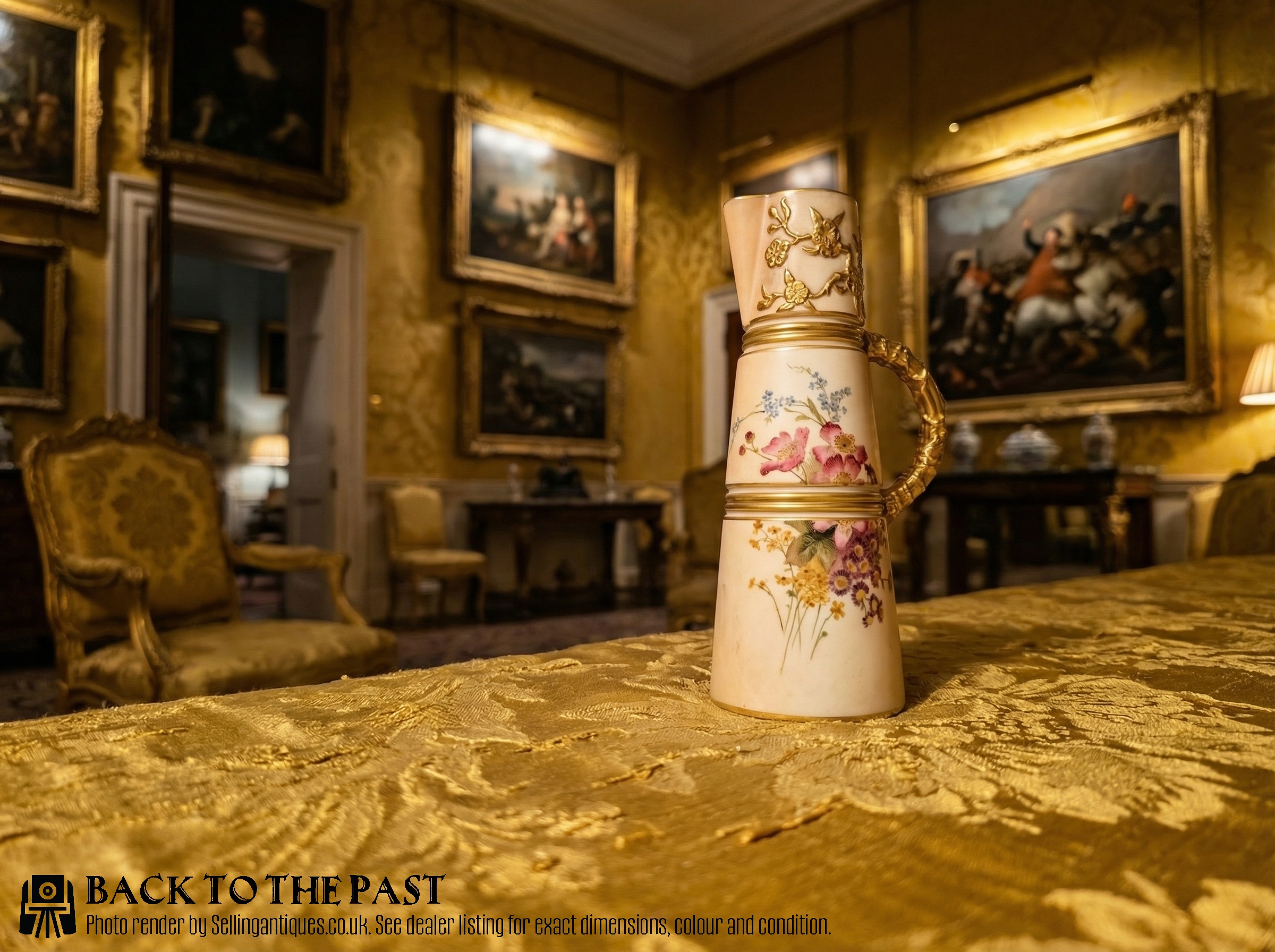
Exquisite Royal Worcester Ewer C1900, 1900
Priced at £80 from Lee Sherman Antiques
The 2026 retail price guide for Antique Ewers is drawn from a proprietary archive of over 1.1 million retail prices indexed by Sellingantiques since 2003. This guide relies exclusively on their own internal data; no external sources or auction records are used.
Analysing nearly 25 years of UK antique market history alongside current retail values, the data indicates that typical UK retail prices for Antique Ewers range between £300 and £2,900. Entry-level prices generally fall under £300 and premium examples upwards of £2,900.
A flared pouring lip directs the liquid straight down into the bowl rather than splashing across a table.
Tall neck profiles help build water pressure for a clean pour.
Lift an antique ewer by the handle to feel how the thick lower section balances the heavy base.

Superb Early 20thc Chinese Blue & White Ming Dynasty Style Porcelain Teapot Ewer, 1920
Priced at £390 from Artsonline
Throwing the main body on a wheel came first, followed by scoring the clay and attaching a separately moulded handle.
Factories mass-produced complex shapes later through slip-casting, pouring liquid clay directly into absorbent plaster moulds.
Silversmiths raised the best metal examples from a single flat sheet using successive passes with a hammer and stake.
"Many tall designs double as stable floor vases for long-stemmed dried flowers."
"Try using the solid weight of a nineteenth-century ironstone piece as an umbrella stand in a hallway."
"Surviving examples often feature thick interior glazing specifically formulated to stop sitting water leaving stubborn mineral deposits."
Based on almost 25 years of Sellingantiques UK antique market data, Antique Ewers appeared 1098 times (out of 1,100,000 antiques) which gives it a rarity score of 80/100.
This score measures scarcity within the Sellingantiques archive only and is not a survey of the entire antiques market, so these statistics may not be indicative of the general availability of Antique Ewers elsewhere.
Some ceramic wash sets were designed for communal sinks or hospital environments rather than private bedrooms. Potters added a small drainage hole near the handle to let trapped air escape during the firing process.
This stops the hollow handle section expanding and cracking in the kiln.
Victorian servants hauled these water jugs up several flights of stairs every morning. A wealthy household needed dozens of gallons distributed to bedrooms before the family woke up.
The weight was a deliberate design choice. A heavy base stopped the jug tipping over easily when placed down on a wooden washstand. You need that stability when pouring liquid near soft bedroom furnishings.
Soak the interior with warm water and a mild detergent for a few hours to loosen dirt.
A flexible bottle brush will reach the awkward curves inside the neck without scratching the old glaze. Don't use stiff wire brushes.
You likely have a hot water jug rather than a main wash ewer. These smaller metal vessels sat alongside the large ceramic bowl to provide a top-up of warm water for shaving.
Many antique ewers were sold as part of an extensive washstand suite. The primary ceramic jug held the bulk of the cold water while smaller lidded pitchers kept a supplementary supply warm.
Please note: This Antique Ewers guide and its associated pricing data are provided for general informational purposes only. It does not constitute formal financial, investment, or appraisal advice and should not be relied upon as the sole basis for any commercial activity, purchasing, or sales decisions. Sellingantiques.co.uk accepts no liability for any actions taken in reliance on this information. Always consult with a qualified professional or independent appraiser.
